
DbcultAccessing Vault...
Recommendations
Senior Film Conservator
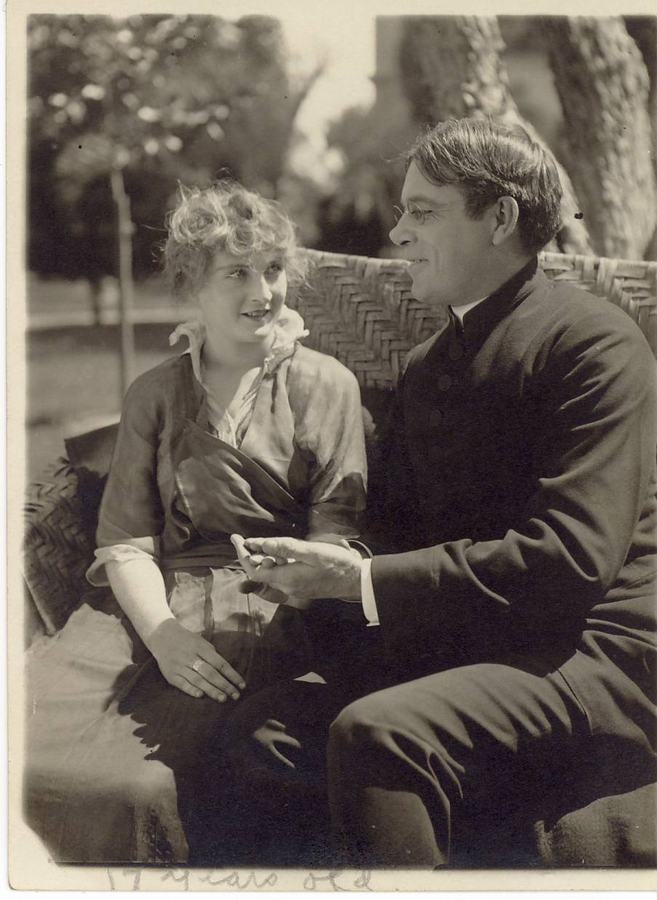
Delving into the atmospheric depths of Ghosts reveals a master at work, the artistic provocations of Ghosts demand a follow-up of equal intensity. These hand-selected movies are designed to satiate your craving for cult quality.
The enduring power of Ghosts lies in to transcend the limitations of its 1915 budget and technology.
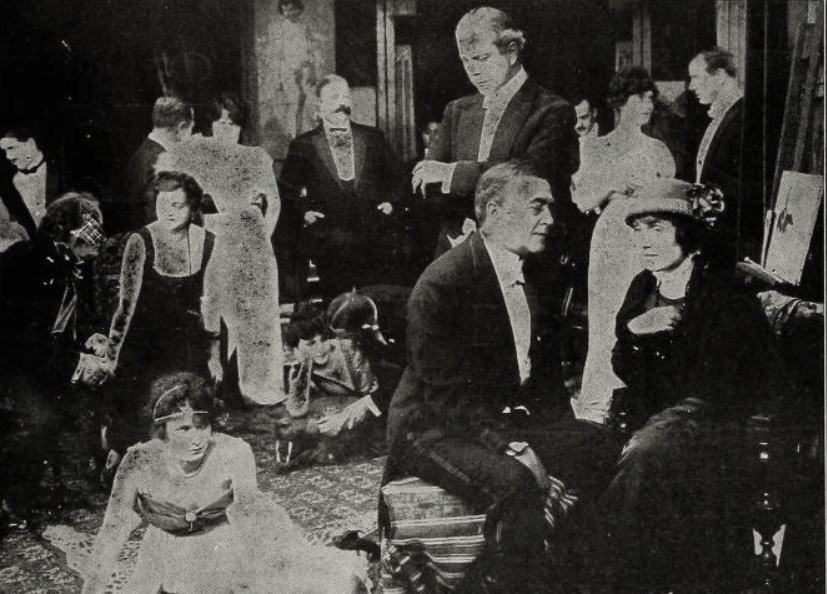
Helen and Manders are in love and wish to marry. Her parents object to his poverty and want her to marry Alving, a notorious rake, who is wealthy and powerful. Manders protests. The family physician also objects because of the result such a match would mean on the children, but Helen's parents laugh at these new-fangled notions. The doctor then appeals to Alving, who laughs him to scorn. Urged on by her parents, ambitious Helen, disregarding all warnings, marries Alving. Later Helen discovers a liaison between her husband and a young married woman. She contemplates leaving her husband and seeks her physicians advice, but he declines to give it. She then sees her pastor, who advises her to adhere to convention and her husband. Meanwhile, the young married woman gives birth to a child by Alving, and the physician agrees to bring the father to see it and keep the real parentage secret. Helen also bears a boy named Oswald. When Oswald is nine, Alving dies, a victim of his excesses. Oswald lives a clean life and studies art, but at times his mind seems affected. The mother remembers the doctor's warnings, but rejects them as silly. Knowing the boy has lived a clean life, however, she soon comes to accept the physician's predictions as fact, and schemes to save her son by marrying him to a sweet young girl. She picks out the daughter of her husband's paramour, and, totally unaware of the girl's parentage, draws the two young people together. They fall deeply in love and are to be wed. When the physician receives the wedding invitation, he realizes he must stop the wedding. He feels duty-bound to tell the truth, and does so to Oswald, his mother, his bride-to-be and her father. Realizing that he must protect the girl he loves and embittered by his inheritance, Oswald plunges into mad excesses. He grows to hate his father and then his mother for the past they have embedded in his nature, and his mother slowly realizes the truth of the physician's predictions. Horror stricken, she watches the gradual rotting of her son's brain. The girl, meanwhile, has retired to a convent. Against the oncoming insanity, Oswald fortifies himself with poison, but one day his mother finds him sitting on the floor, paralyzed, playing with the sunbeams, and runs for the pastor. During her absence, he succeeds in reaching the poison and mother and pastor find him dead. As her only hope of consolation, the mother turns to the pastor.
The influence of George Nichols in Ghosts can be felt in the way modern cult films handle cinematic excellence. From the specific lighting choices to the pacing, this 1915 release set a high bar for atmospheric immersion.
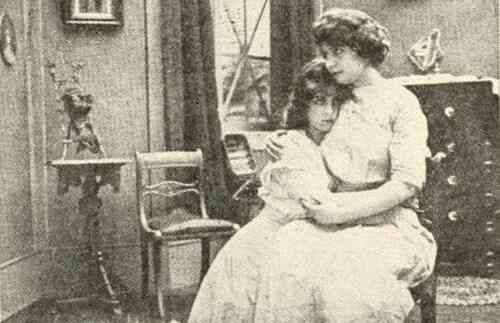
Based on the unique cinematic excellence of Ghosts, our vault has identified these titles as the most compelling follow-up experiences for fans of cult cinema:
Dir: George Nichols
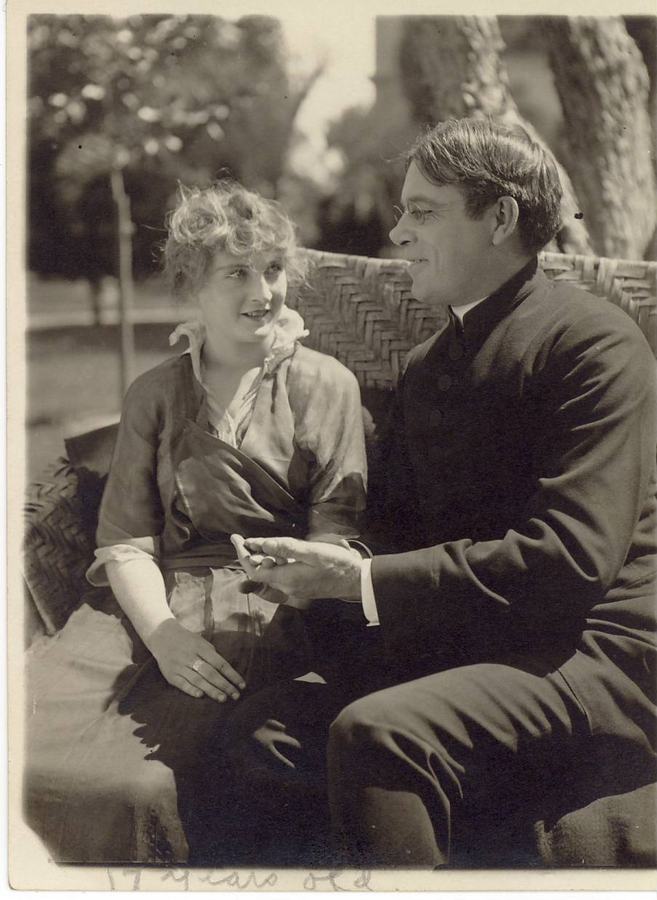
Oliver and Elizabeth wed. He is a famous lawyer, careless of his personal conduct, but has implicit faith in Elizabeth. She is a woman of strong mind, a magazine writer of repute, and believes he should guide himself by the same code that governs her. Two of their associates are profligates, Charles, an artist, and Catherine. Oliver trifles with Catherine and this so embitters Elizabeth, that she pretends to receive the attentions of Charles, although it is made clear that she has remained pure. Nevertheless, she purposely permits her husband to believe otherwise. He has considered her like Caesar's wife, but his faith is shattered. A child is born to her and the father doubts its parentage. Worse than this, society also believes her guilty. A divorce separates Oliver from Elizabeth. She is ostracized with her child. In the end the evidence of her purity, which she had purposely concealed, becomes known to Oliver through the dying confession of Charles, and the husband and wife are reconciled and Elizabeth is vindicated, but only after she has seen and regretted the folly of her rebellion against the first law of society. The death of their child plays a large part.
View Details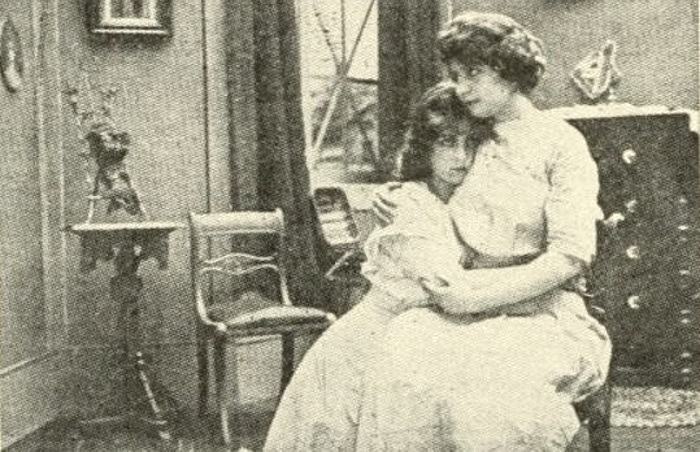
Dir: George Nichols
Silas Croft was a kindly old Englishman who had a farm in South Africa. With him resided his two nieces, whom he had taken from their drunken, worthless father when they were of a tender age. Jess, the elder, was brilliant and educated; Bess, the younger was beautiful, but frankly admitted that she did not possess the mental attainments of Jess. The two were great friends, and Jess, although the senior by only three years, had almost a motherly affection for her pretty little sister. Croft, finding old age stealing upon him, advertised for a partner, stipulating that he must be a gentleman. Probably it was his secret idea that the right man might come along, and fall in love with his favorite, beautiful Bessie. Captain John Neil, an English army officer, who had found his income insufficient to support him in his profession, heard of the business opportunity and accepted it. Jess, the unimpressionable, speedily fell in love with him, and her womanly intuition told her that she could win him, for he was fascinated by her. The girl was happy for a while, but suddenly learned that her little sister was also in love with the handsome Englishman. The elder sister realized that happiness for her, meant sorrow, probably life-long sorrow, for Bess. Accustomed to making sacrifices for the girl she so tenderly loved, Jess made another. On the pretext of a visit to an old school friend, she absented herself from home, knowing that Neil would be bound to fall in love with Bess, who was beautiful and amiable. The expected happened. At the time Jess departed, Neil liked both girls, but preferred Jess. Thrown into daily companionship with Bess, he soon grew to love her, and made her happy by proposing to her. And little sister wrote to big sister, telling her the glorious news, never even suspecting the truth. Jess received the letter in her place of refuge, and rejoiced that she had been able to ensure the happiness of Bess, while at the same time she wept in secret over the fate that had taken all romance out of her young life. At this time, the rebellion which freed the Transvaal from British rule was brewing. Croft, who at first doubted that any trouble was impending, at last realizes the gravity of the situation, and Neil consents to go to Pretoria and bring Jess home before it is too late. The gallant soldier arrives in the city, but is unable to leave with his charge, because the Boers have besieged the place, and even couriers cannot pierce the lines. A certain Frank Muller, son of a Boer and an Englishwoman, is one of the leaders in the revolt. He had proposed to Bess and been rejected. Learning that his successful rival is in Pretoria, he plans to dispose of him. Pretending great friendliness, he sends Neil a pass for Jess and himself, signed by Oom Paul Kruger. The unsuspecting Englishman falls into the trap, and with the girl, leaves under the charge of a Boer escort, furnished by Muller. These men have been tricked into believing that Kruger has ordered that the couple be killed, and while they are crossing a river, fire upon them and believe they are slain. Jess and Neil, however, have a miraculous escape. Following the crossing of the river under fire, on their way to Pretoria, Jess and Neil become separated, and the girl reaches the farm alone. There she finds that the villain Muller has been ahead of her, and that her uncle is a prisoner, on a charge of treason. Muller, who is military head of the district, tells Bess that Croft will be convicted and hanged unless Bess consents to marry him. The girl, however, refuses, the court-martial is held, and when Jess arrives, her uncle is under sentence to die at dawn, a few hours away. There is no one to whom she can appeal, and Jess, grief-stricken, decides to be her own avenger. Muller is asleep in his tent, waiting for the dawn when the last of the protectors of the girl he covets shall be separated from her by death. He awakes with a start. Bending over him is Jess. He believes it is a visitor from another world, for he could have sworn that he had seen her die a horrible death. Stricken with terror, unable to speak or make a motion, he goes to his death, his last thought being that there is a life beyond the grave, and that evil brings its own punishment. Jess wanders away into the desert and dies. Neil, searching, finds the body. The troubles of the others are finally swept away, and Neil and Bess live happily many years in their English home, never realizing that they owe everything to the self-sacrificing Jess, although they sincerely mourn and miss her.
View DetailsAnalysis relative to Ghosts
| Film Title | Atmosphere | Complexity | Similarity |
|---|---|---|---|
| A Man's Prerogative | Surreal | High | 92% Match |
| Jess | Tense | Linear | 85% Match |
This guide was algorithmically generated using the cinematic metadata of George Nichols's archive. Last updated: 6/21/2026.
Back to Ghosts Details →