
DbcultAccessing Vault...
Recommendations
Senior Film Conservator
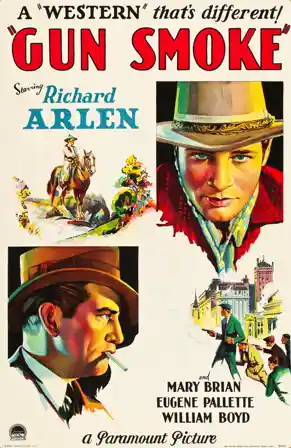
Ever since Gun Smoke hit screens in 1931, fans have sought that same unique vision, the search for similar titles reveals the deep impact of Edward Sloman's direction. These recommendations provide a deep dive into the same stylistic territory occupied by Gun Smoke.
Whether it's the unique vision or the thematic depth, this film to capture the existential zeitgeist of 1931.
Following a killing and robbery in a big city back east, gang leader Kedge Darvas and some of his henchies take a train to a small western town in Idaho, with intentions of hiding out there until things cool down back in Chi or NYC, or wherever they lammed from.They are welcomed with open arms by the citizens under the impression they are there as capital investors with money to spend. Before long, Darvas figures the town is ripe for the taking and sends word for reinforcements, and each arriving train unloads a few suits and snappy-brim hats.Then they get rough, kill Sheriff Posey Meed and rile up the citizens, led by cowhand Brad Farley, who had Darvas spotted for a wrong number just by the way he made moves on Sue Vancey.
The influence of Edward Sloman in Gun Smoke can be felt in the way modern Romance films handle unique vision. From the specific lighting choices to the pacing, this 1931 release set a high bar for atmospheric immersion.
Based on the unique unique vision of Gun Smoke, our vault has identified these titles as the most compelling follow-up experiences for fans of Romance cinema:
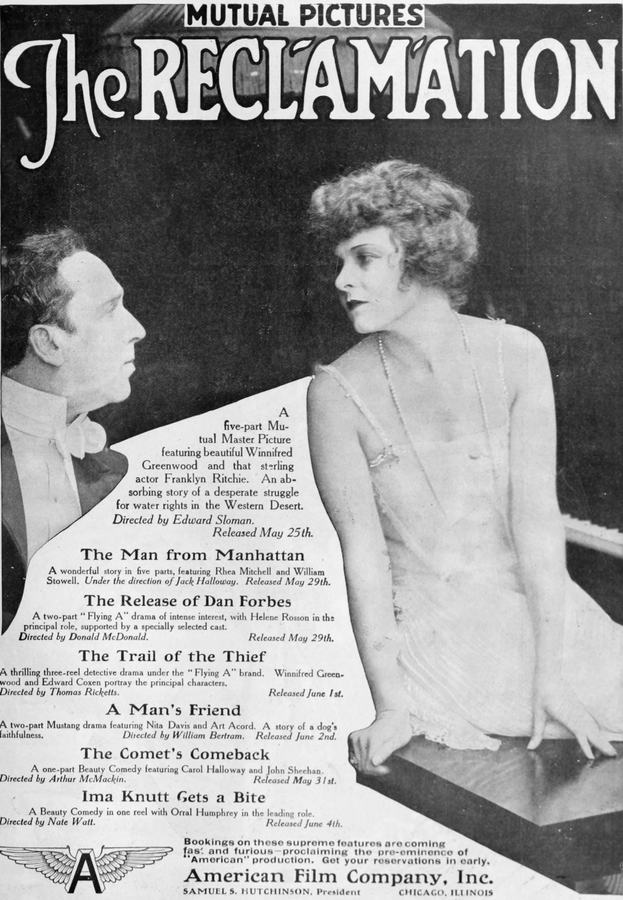
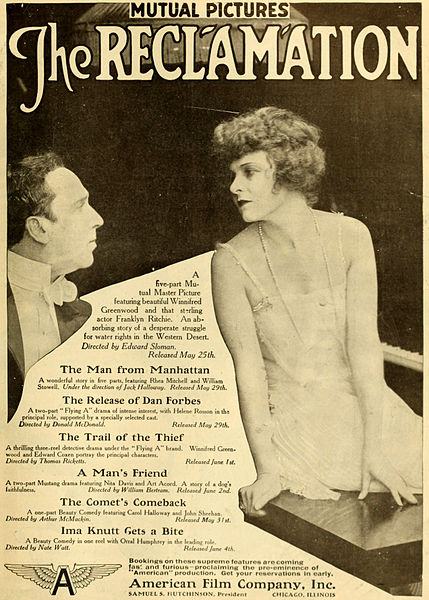
Dir: Edward Sloman
In the parched West, Louise MacLeod works as a secretary for Robert Powell, a lawyer defending businessman John Phelan, whom ranchers accuse of monopolizing water rights. Gordon, Louise's father, is one of the ranchers, and so Louise keeps him informed of Robert's strategy, with the result that the ranchers win their case. John, however, remains determined to control the area's water, and so he hires an engineer to dynamite a river in order to divert it from the ranchers and onto his own land. Robert then realizes the unscrupulousness of his former client, and defuses the engineer's bomb. Afterward, with the ranchers victorious, Robert concentrates less on water rights and more on Louise, with whom he soon begins a romance.
View Details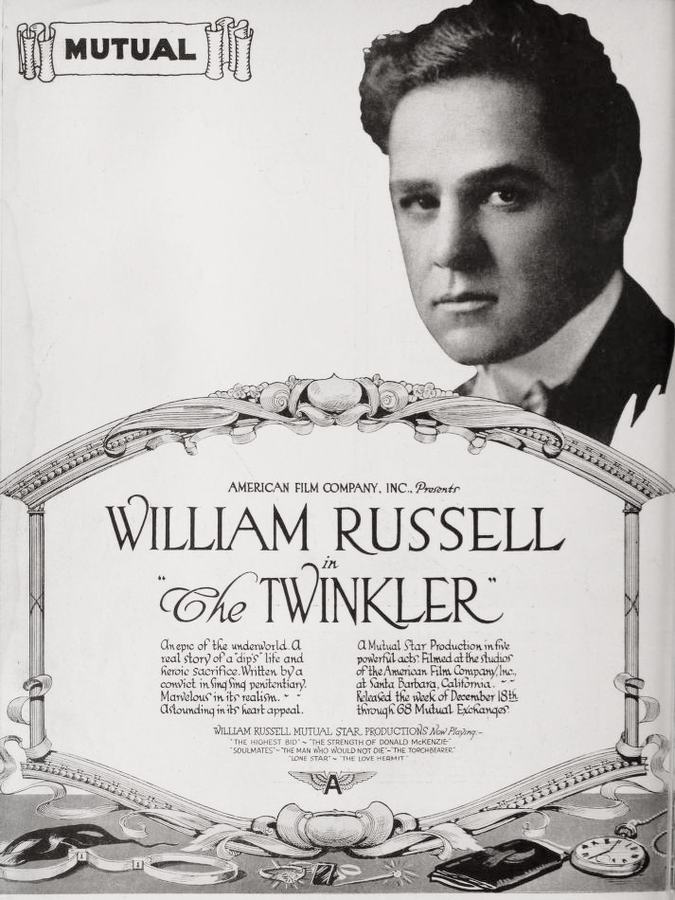
Dir: Edward Sloman
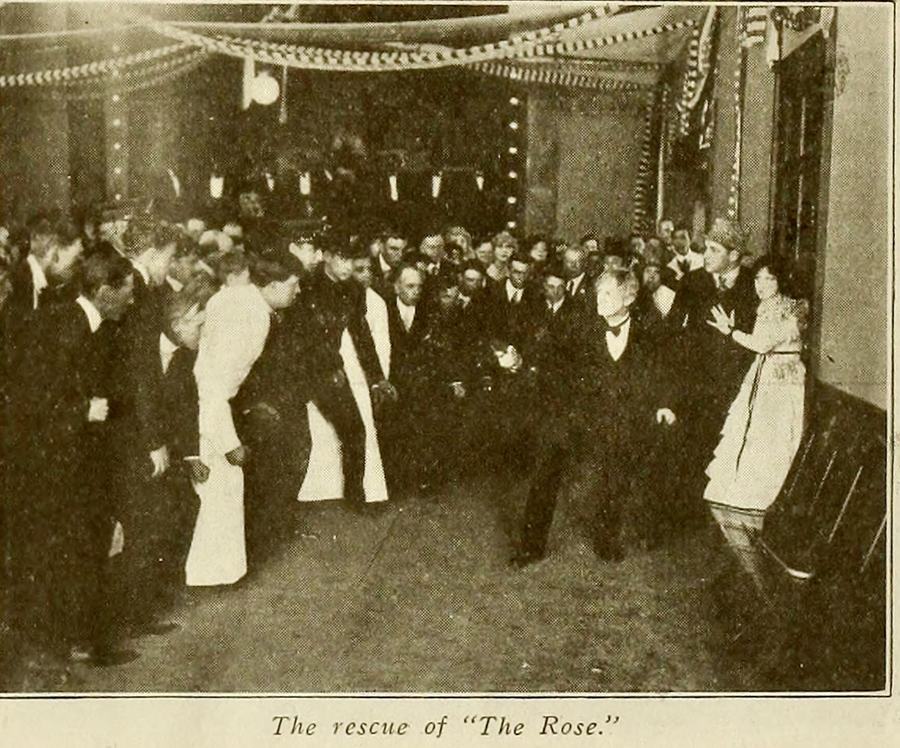
Bob Stephany, "The Twinkler," is completing a long stretch in prison. He has saved the life of Old Doc, in charge of the dynamo room, and the old man promises to repay Bob, should the opportunity present itself, Bob's fiancée, Rose Burke, whose father, Daddy Burke, has a prison record, comes to visit Bob. She tells him she has but one dream, and that comes to her every night. She pictures Bob in a responsible position, and their living in a vine-clad cottage. Bob is won over by the idea and promises to go "straight." Freed from prison, "The Twinkler" sets about to get honest work. A crooked detective discovers him and he is forced to submit to blackmail rather than lose his job. The chief, Boss Corregan, meets Rose and makes advances to her. At the Political Ball he annoys the girl and Bob comes to her rescue. Daddy Burke, Rose and Bob disappear. The next day Corregan tells Bob to send for Rose to come to his office because he wishes to apologize to her. Bob suspects that Corregan has designs on Rose and tells her to bring his revolver with her. Corregan has Bob jailed on a false charge, and when Rose comes to his office she is greeted by Boss, who takes her into his arms. In the struggle which ensues. Rose fires Bob's revolver and Daddy, who is at the window, also fires a shot and runs away. The police arrive at the scene and find Corregan dead and Rose in a faint. Rose is held for the murder and Bob is released. He is unable to find Daddy and resorts to stealing to secure the money to fight for Rose's freedom. However, Rose is sentenced to execution. On the day before Rose's scheduled execution Bob meets Daddy Burke. The old man has been seriously injured and when told of Rose's predicament confesses that he was responsible for the fatal shot. Bob hurries to the Governor with Daddy's signed statement. The Governor sends his secretary to the prison with a pardon for Rose. Bob boards a train tor the prison city. A fearful storm comes up and all telegraph and telephone communication is cut off. Bob sees a well-groomed man displaying a wallet and he cannot resist the temptation to steal it. He escapes from the train and finds his way to a deserted cabin. Here he opens the wallet and to his horror discovers that he has robbed the Governor's secretary and has Rose's pardon in his possession. Realizing that all communication is cut off, Bob hurries to a nearby town. Here he sees a train and boards it. He arrives at the prison an hour after the time set for Rose's electrocution. There he learns that Old Doc, who has learned of "The Rose's" identity, has been the means of saving her life. He had placed a file in the dynamo and when the switch was turned on, the armature had burned out and it was necessary to send to another town for a new one. "The Twinkler" makes a clean breast of his guilt and produces Rose's pardon. The prison officials agree to forget the incident and set both Bob and Rose free. Old Doc smilingly watches them go.
View Details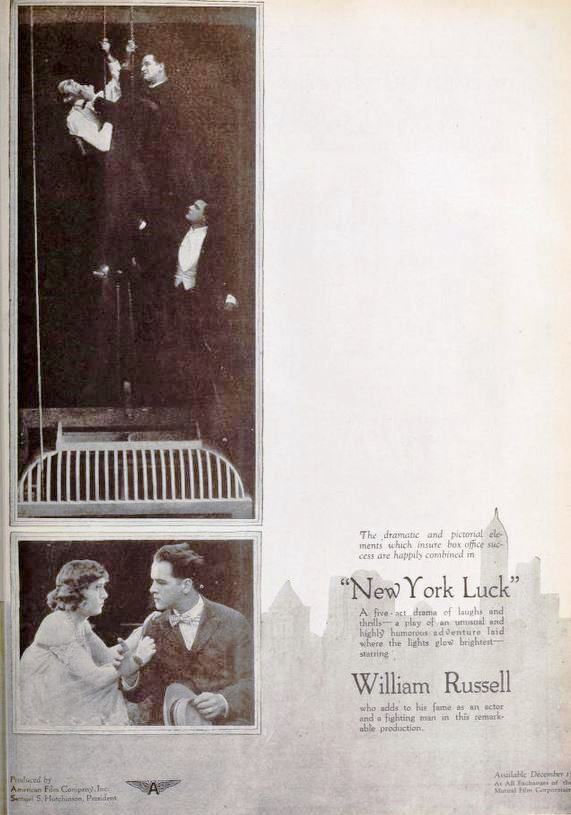
Dir: Edward Sloman
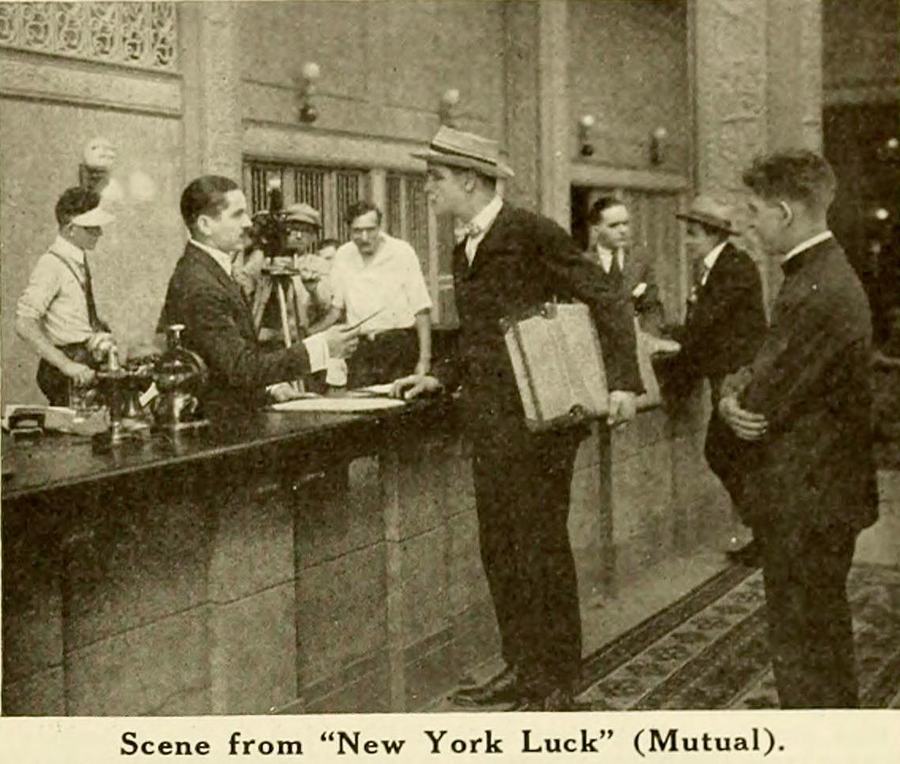
Anxious to see the world, Nick Fowler boards a train bound for New York. On board he meets Jimmie Keen, a motion picture director, and sees a mysterious beautiful girl who leaves her purse behind. Nick retrieves the purse and inside it discovers a photo of the girl, inscribed with the name Gwendolyn Van Loon. After arriving in New York, Nick pays Keen a visit, but an impertinent office boy prevents him from seeing the director. After a series of similar disappointments in the big city, Nick continues to write glowing accounts of his life to his family back home. While he's writing a letter to his father one day, a guest at an adjoining desk drops a photo of Gwendolyn. The stranger introduces himself as Lord Boniface Cheadle, and Nick becomes an unwitting tool of the man who is in reality Steve Diamond, a crook. Under Cheadle's instructions, Nick goes to the Van Loon house and presents himself as Steve Diamond, which initiates a train of events that culminates in the escape of the real Lord Cheadle while Nick grapples with the crooks until the police arrive. It is then revealed that the whole adventure was invented by Nick to impress his dad, but when Keen reads the story, he is so impressed that he offers Nick a job as a scriptwriter and introduces him to the leading lady: Gwendolyn Van Loon.
View Details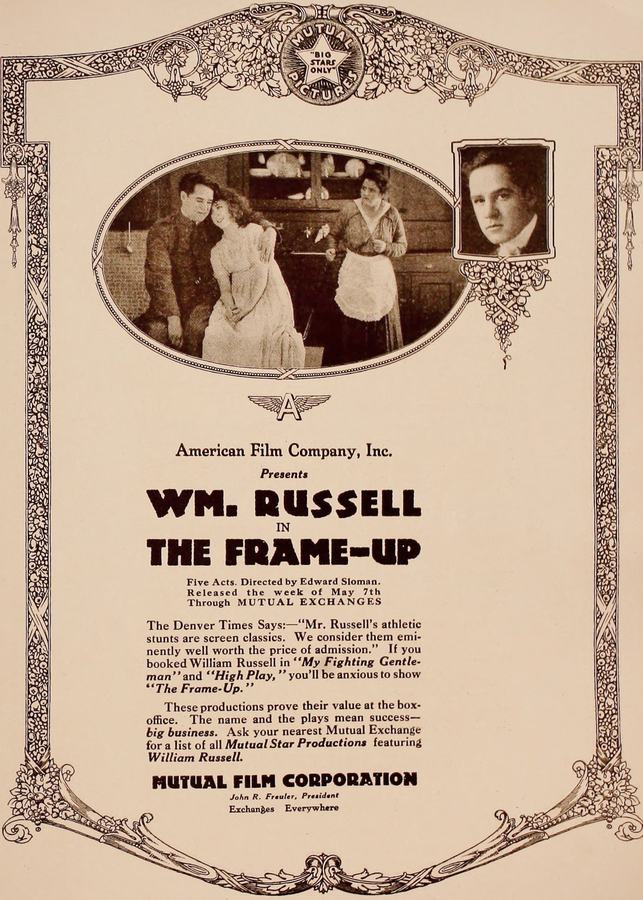
Dir: Edward Sloman
Young Jeffrey Claiborne, the son of a wealthy father, comes to the aid of pretty Betty Jane Moir, who is being bothered by a lecherous chauffeur. He accepts Betty's grateful offer of employment in her mother's taxi company. Smitten, Jeffrey proposes to her, but her mother, not knowing who he really is, dismisses him as not worthy of being her daughter's husband. Determined to prove his worth, he gets his chance when he discovers that Betty's mother is being blackmailed by a criminal gang.
View Details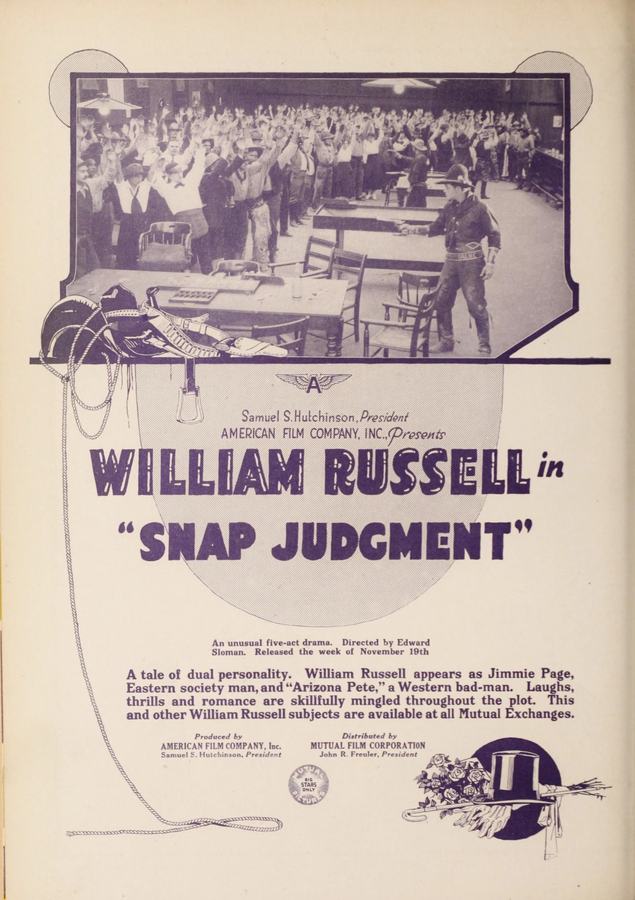
Dir: Edward Sloman
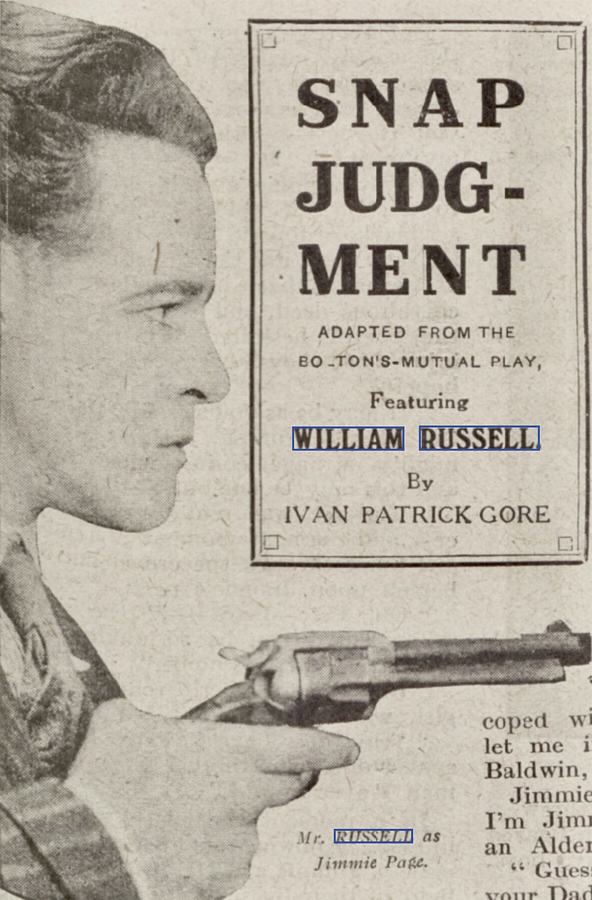
Having overslept on the morning of his wedding, James Page is rushing to the home of his bride, Marah Manning, when he sees Jed Baldwin being attacked. He goes to Jed's rescue and is arrested for his efforts. After being released, James discovers that Marah has called off the wedding; to console himself he ventures West with Baldwin. His troubles just begin when he arrives in Arizona and, mistaken for outlaw Pete Rawley, is thrown in jail. Meanwhile, the real Rawley holds up Marah and her father, who are searching for James and takes the two to his mountain retreat, where they believe that James is their captor. Then Pete's sweetheart Phoebe helps James escape, believing that he is Pete, and takes him to the mountain retreat where they find the real Rawley. After the couples straighten themselves out, Pete and Phoebe escape across the border and Marah forgives James.
View Details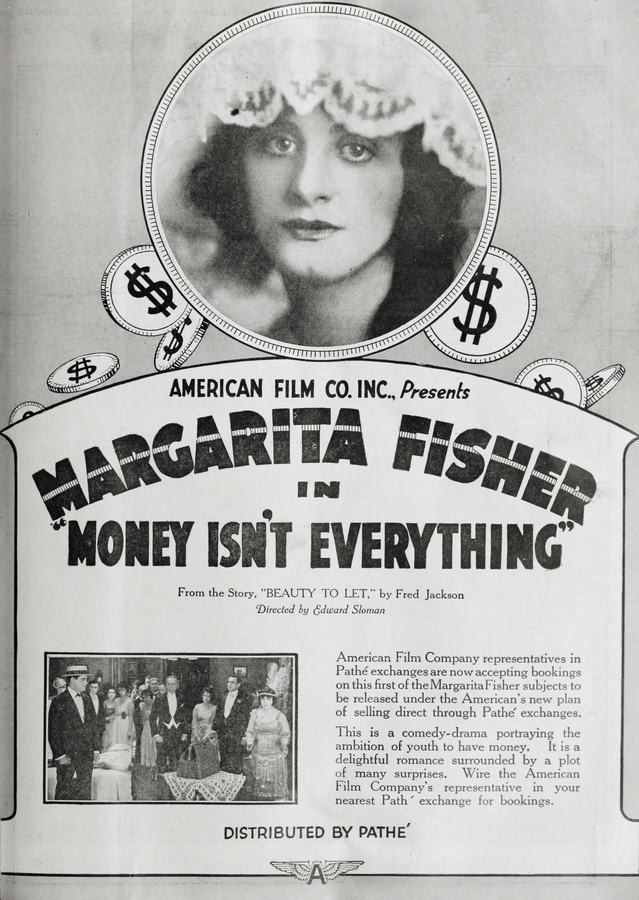
Dir: Edward Sloman
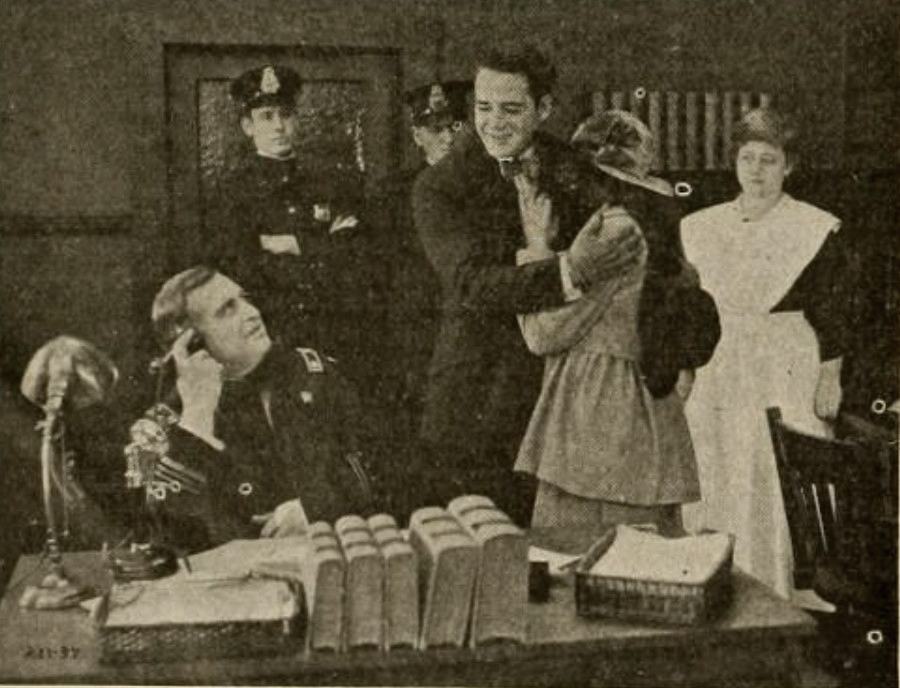
For advice on making money, down-on-her-luck Margery Smith visits Franklyn Smith, a lawyer who, although he appears prosperous, is equally hard-pressed for funds. Franklyn is struck by Margery's beauty and devises a plan whereby her services as a chaperoned partner at dances and teas may be purchased; however, because he believes her brainless, he forbids her to speak with the customers. The "Beauty to Let" corporation is a success, and soon two millionaires, Henry P. Rockwell and "Diamond Tim" Moody, ask to marry Margery. She has fallen in love with Franklyn and is distressed to learn that he has purchased bachelor's quarters from Tim. Diamond Tim forged the deed to the house, but when Margery sneaks into his room to retrieve Franklyn's money, her partner sees her and misconstrues her intentions. In the end, Margery and Franklyn outwit Tim, and Franklyn, realizing that his partner is bright as well as beautiful, proposes.
View Details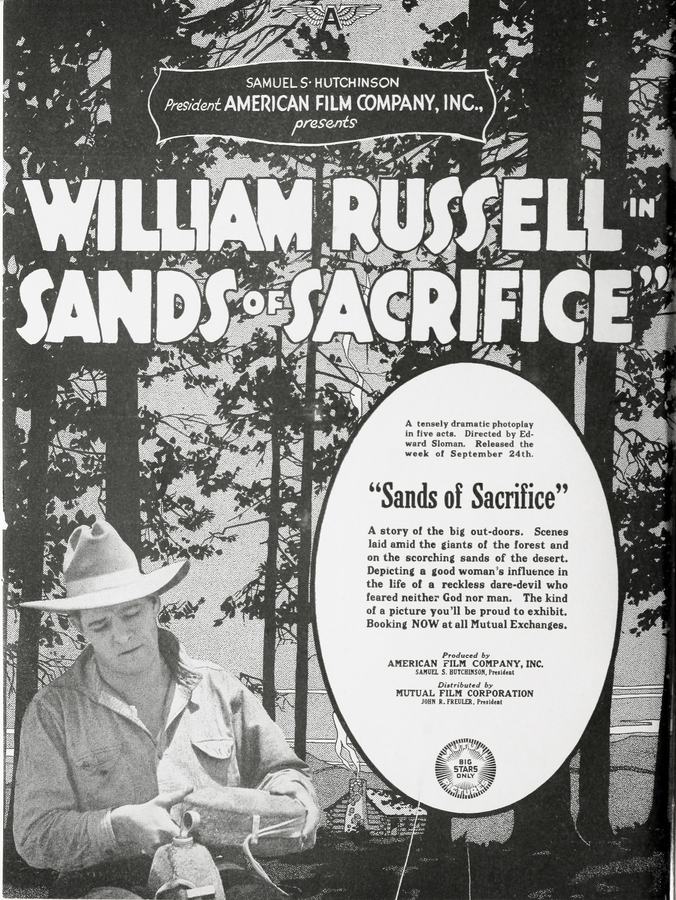
Dir: Edward Sloman
When the unruly drinking party at "Big Bill" Darcey's hunting lodge runs out of liquor, they move to the lodge of Darcey's agent, Enoch Foyle, and finding attractive Nora Farnes waiting alone, harass her. Bill, who previously was interested only in pleasure, with his consumptive friend Sammy Goode, protects Nora, who, armed with a revolver, intends to confront Foyle for swindling her mother. When Foyle returns, Nora wounds him slightly. Bill brings her to his lodge for the night, and falling in love, convinces her to marry him to protect her name. As he is preparing to leave on his honeymoon, Bill learns that Foyle fleeced him of his fortune. Finding Nora at Foyle's lodge, he loses faith in her, and leaves with Sammy for the desert because of Sammy's illness. Lost and exhausted, Sammy makes a dying request that Bill return and listen to Nora's explanation. After Bill's rescue, he finds Nora dining with Foyle, but upon learning that she has hidden detectives to overhear Foyle's confession, Bill is reconciled with Nora, and they finish the dinner.
View Details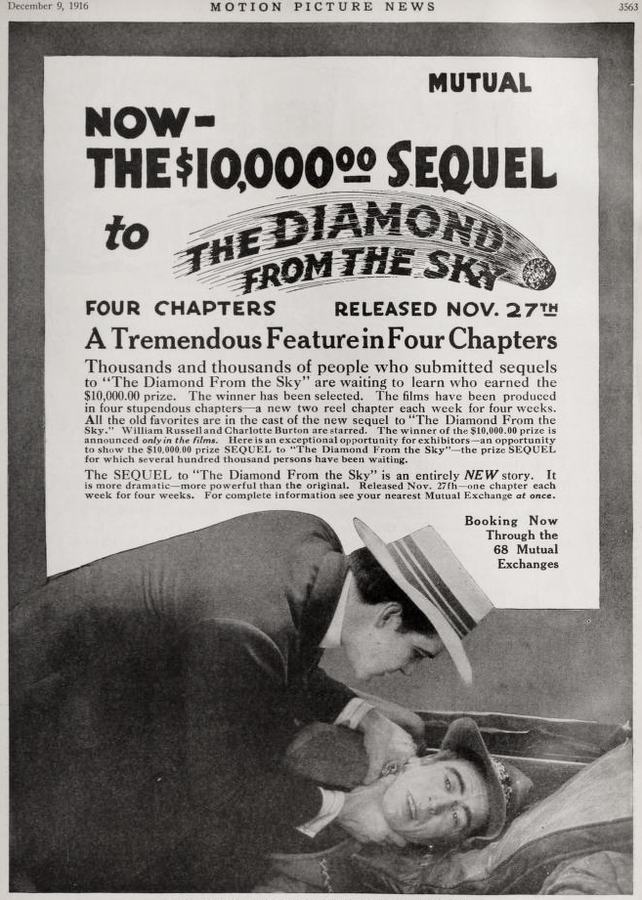
Dir: Edward Sloman
Episode 1: "Fate and Death" Arthur and Esther Stanley and son, little Arthur, en route from Virginia to England, are victims of a train wreck. Father and mother are killed but the child escapes death. Quabba, the gypsy, now the king of the band, learns of the accident from his followers. He hastens to the wreck and finds the bodies of Arthur and Esther Stanley but finds no trace of their son. De Vaux, the conspirator, who has been shadowing the Stanleys, is also present at the wreck. He finds little Arthur and discovers The Diamond From the Sky suspended from his neck. He transfers the jewel to his pocket and disappears into the night carrying off little Arthur. Later Quabba sees De Vaux carrying the child into an orphanage, temporarily used as a hospital. Quabba awaits his chance and steals the child.
View Details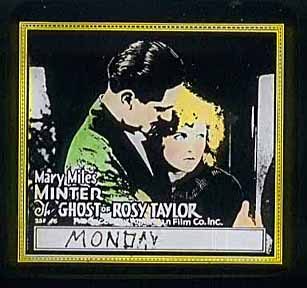
Dir: Edward Sloman
Rhoda Eldridge lives in the Paris Latin Quarter, learns at the death of her father Charles that her real name is Sayles and that she has an uncle somewhere in America. She travels to the States as a nursemaid but is discharged soon after her arrival. In the park, she finds an envelope containing a letter to Rosy Taylor from a Mrs. Du Vivier, along with a key, $2, and instructions to clean the Du Vivier mansion each week. When the penniless Rhoda learns that Rosy is dead, she cleans the home herself, and all is well until Jacques Le Clerc, Mrs. Du Vivier's brother, mistakes her for a thief and sends her to a reformatory. Rhoda, however, escapes and returns to the house. Upon discovering that Rosy has been dead for weeks, Jacques and his sister catch the mysterious housekeeper once again. Through the efforts of Jacques, who has fallen in love with her, Rhoda is united with her rich uncle, and to demonstrate her gratitude, she accepts the young man's marriage proposal.
View Details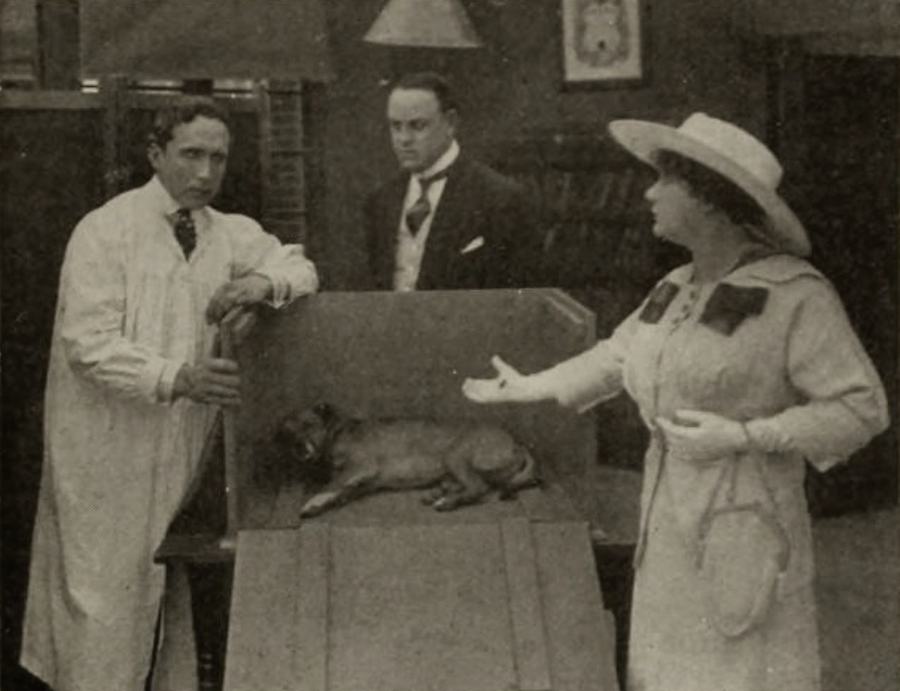
Dir: Edward Sloman
Dr. Grant, in charge of a leper colony in the far Pacific, had once loved a beautiful girl, Myra Hamilton. Then she met Harry Elliot, a dissipated young society man. Dared by the boys, Harry proposed to Myra. Grant warned her of Harry's character, but she would not listen. Myra and Harry visit Grant's laboratory, where she learns of the vivisection experiment Grant was working on. She bitterly berated him for his cruelty to his canine subject. While Grant explained to her, Harry chloroformed the dog. Grant, furious at this ruthless destruction of his months of labor, resolved that Harry would pay. Myra announced her engagement to Harry a few nights later. Myra soon found that she had a hopeless task before her in trying to reform Harry. One day she overheard Grant remonstrate with him for his actions in causing her pain, and she began to appreciate his nobility. Again she saw Harry with a cabaret singer. Overwhelmed with grief, she determined to see Grant and obtain comfort from him. Myra noticed that Harry was inclined to be jealous, and discussed with Grant a plan to bring him to his senses. Grant was to pay ardent court to Myra. Soon Harry began to notice Grant's attention to his wife. He found them together one day, and wild with rage, left a note stating that they would find his body at the country home. Grant raced after Harry to the country house. Harry, with an oath, rose and struck him, and cursed Myra. Grant, bleeding, made his way to the telephone, called up Myra, and told her he would bring Harry back to her a man. Grant then brought him to an insane asylum and showed him the ruin drink caused. After weeks of hard work Grant felt that Harry was ready for the test. He deliberately placed temptation in his way, but Harry conquered. And so Grant brought him back to Myra. She forgave him. Grant then quietly left. Soon Myra looked for him to thank him. He showed her a letter which stated that his application as physician at the leper colony had been accepted, and he left at once. Sometime later Grant received a letter from Myra asking him to come back to her as Harry had died. His first impulse was to go, but when he realized his mission he burned the letter.
View DetailsAnalysis relative to Gun Smoke
| Film Title | Atmosphere | Complexity | Similarity |
|---|---|---|---|
| The Reclamation | Tense | High | 87% Match |
| The Twinkler | Ethereal | Linear | 88% Match |
| New York Luck | Ethereal | High | 96% Match |
| The Frame-Up | Gritty | Layered | 90% Match |
| Snap Judgment | Gothic | Abstract | 89% Match |
This guide was algorithmically generated using the cinematic metadata of Edward Sloman's archive. Last updated: 6/25/2026.
Back to Gun Smoke Details →