
DbcultAccessing Vault...
Recommendations
Senior Film Conservator
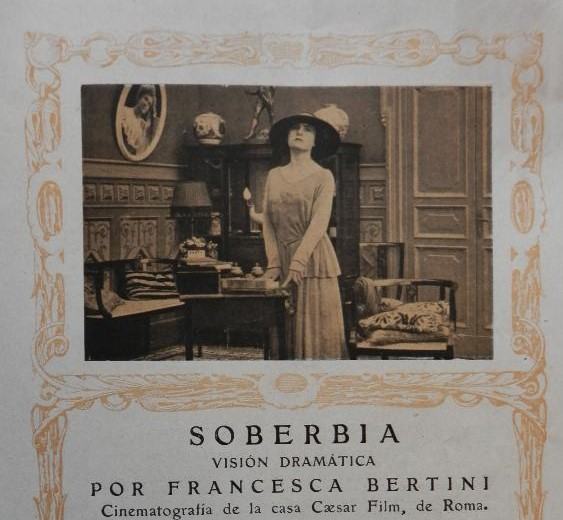
Ever since L'orgoglio hit screens in 1918, fans have sought that same unique vision, the search for similar titles reveals the deep impact of Edoardo Bencivenga's direction. These recommendations provide a deep dive into the same stylistic territory occupied by L'orgoglio.
Whether it's the unique vision or the thematic depth, this film to capture the existential zeitgeist of 1918.
A menaced politic leaves his child with another family who will raise her unaware of her true origin. When she grows up the son of a duchess falls in love with her, but the mother rejects her based on her supposed non-aristocratic origin. Little does she suspect what truth will unveil.
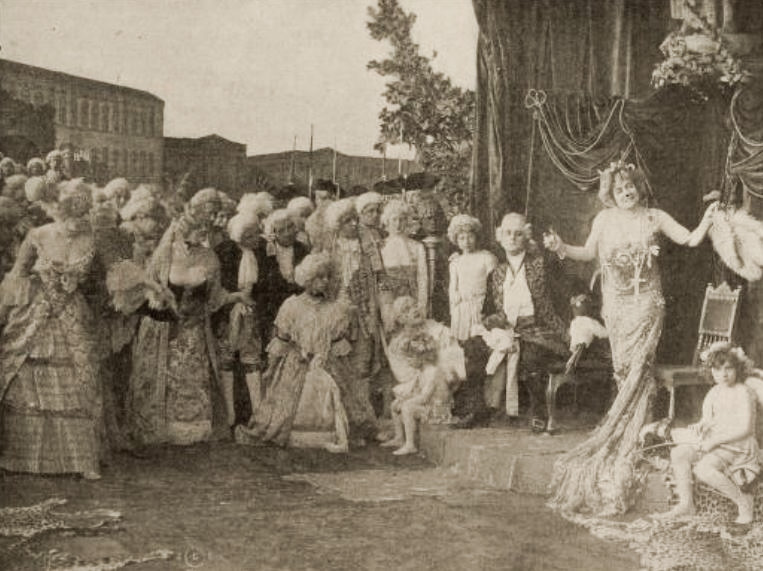
The influence of Edoardo Bencivenga in L'orgoglio can be felt in the way modern cult films handle unique vision. From the specific lighting choices to the pacing, this 1918 release set a high bar for atmospheric immersion.
Based on the unique unique vision of L'orgoglio, our vault has identified these titles as the most compelling follow-up experiences for fans of cult cinema:
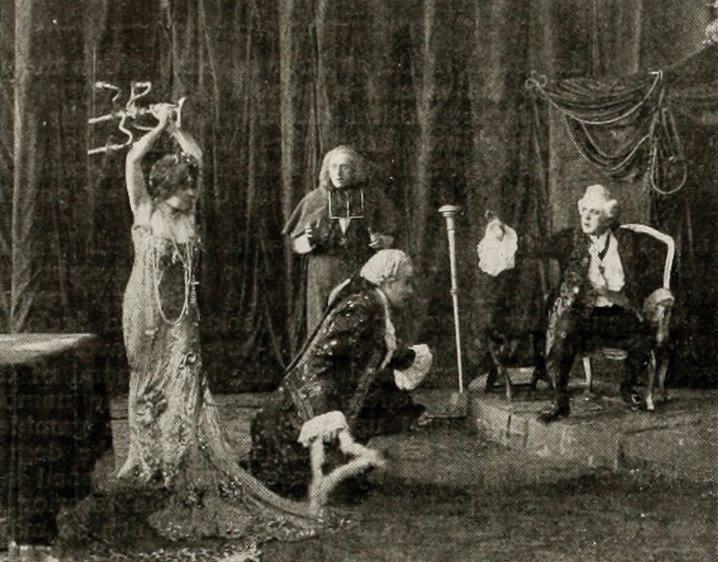
Dir: Edoardo Bencivenga
At a ball at Rampaumaux, Jean Du Barry, an impecunious nobleman operating a gambling house, sees Jeannette for the first time and is strongly attracted to her. He determines to lure her into his gambling house. Jeannette meets De Cosse Brissac, captain of the Guards, and the young couple fall in love. In the hope of bringing matters to a quick issue, Du Barry one day invites her to go out and see the King pass, after she had promised to go to the woods and pick violets with Cosse. The King is immediately smitten with Jeannette. That night she accompanies Du Barry to his gambling house. Jeannette falls easily into the new life. She goes to the opera where the King sees her and has her followed. Cosse also catches sight of her and refuses to recognize her. However, he later visits Jeannette and begs that she leave the life and marry him. About this time the King makes a visit in disguise and asks Jeannette to take dinner with him at a merry party that evening. Cosse leaves indignant, and later writes her reproachfully. In order to become the King's favorite, it is necessary for Jeannette to be titled. To accomplish this, Du Barry arranges for a consideration of one hundred thousand francs, to marry her to his brother. This is done and Jeannette is soon installed in the Royal Palace. Some time later, Cosse meets Du Barry and the men quarrel with the result that the now jealous King has Cosse thrown into prison. Cosse's message to Jeannette is intercepted by Du Barry and Jeannette never learns of his imprisonment. The days fly by. Cosse languishes in prison, and Jeannette becomes at once the most admired and despised woman in France. A revolution breaks out among the people, owing to the King's extravagance. By strangling a guard, Cosse escapes and becomes a leader of the people. Meanwhile, Du Barry begs more money of Jeannette and when she refuses, threatens to destroy her. Jeannette quarrels with the King and offers to sell her pretty baubles to buy bread for the people. At this time Cosse makes bold to scale the wall and enter Jeannette's room. He is wounded by a chance ball and is watched by Du Barry, who follows him. Jeannette hides him in her bed and bribes Du Barry with two hundred thousand francs to say nothing of the incident. In this extremity Jeannette calls upon her old friend, the Papal Nuncio, who is unable to help her, owing to Du Barry's close watch. In her effort to amuse the King and keep his mind from the subject of Cosse, Jeannette holds a great outdoor festival. In the midst of it, Du Barry tells the King of Cosse's presence in the Palace and Cosse is captured and taken out to be shot. The King suggests to Jeannette that by telling Cosse, in the presence of the Court, that she hid him in her bedroom merely to hand him over to the King, he will commute Cosse's death-sentence to life imprisonment in the Bastille. This sacrifice Jeannette makes. After a lapse of eighteen years the King dies and the people again revolt, freeing Cosse from the Bastille. He again becomes their leader and when they determine to behead Jeannette, he pleads for her life in vain. She is taken to prison and later guillotined.
View Details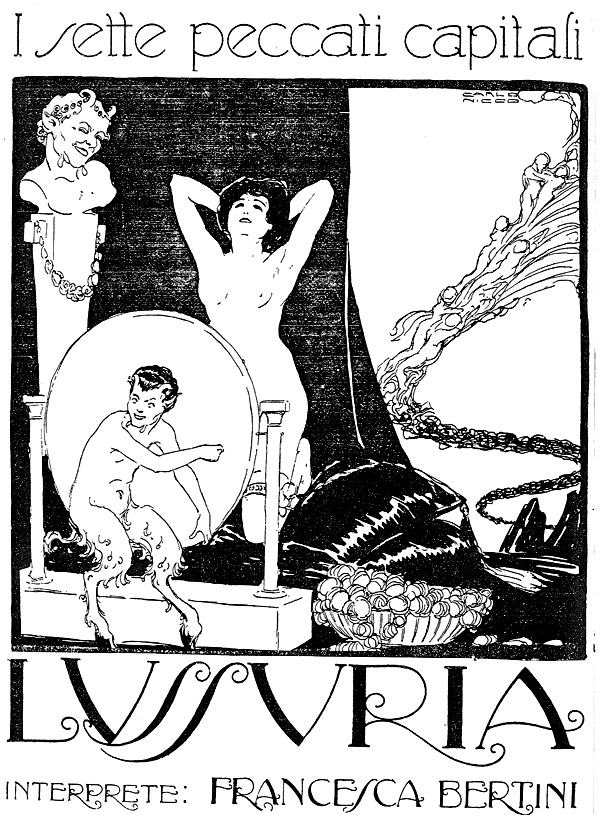
Dir: Edoardo Bencivenga
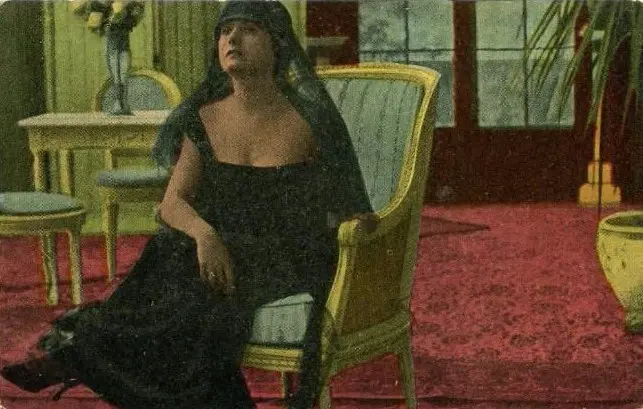
Leonard, a poor cashier, is ardourously attracted to beautiful but despising Magdalena Dutertre. When time goes by and he becomes a powerful banker her elusiveness turns to fire. Last of the Seven Capital Sins (I Sette Pecatti Capitali) series of pictures made by Francesca Bertini associated with Italian producers Caesar Films.
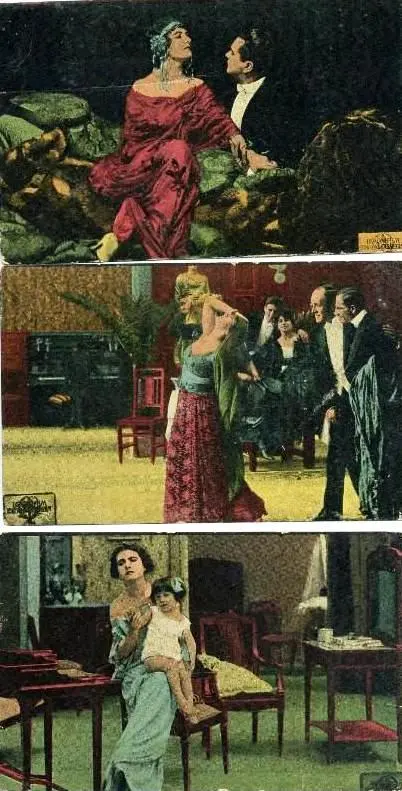
Dir: Edoardo Bencivenga
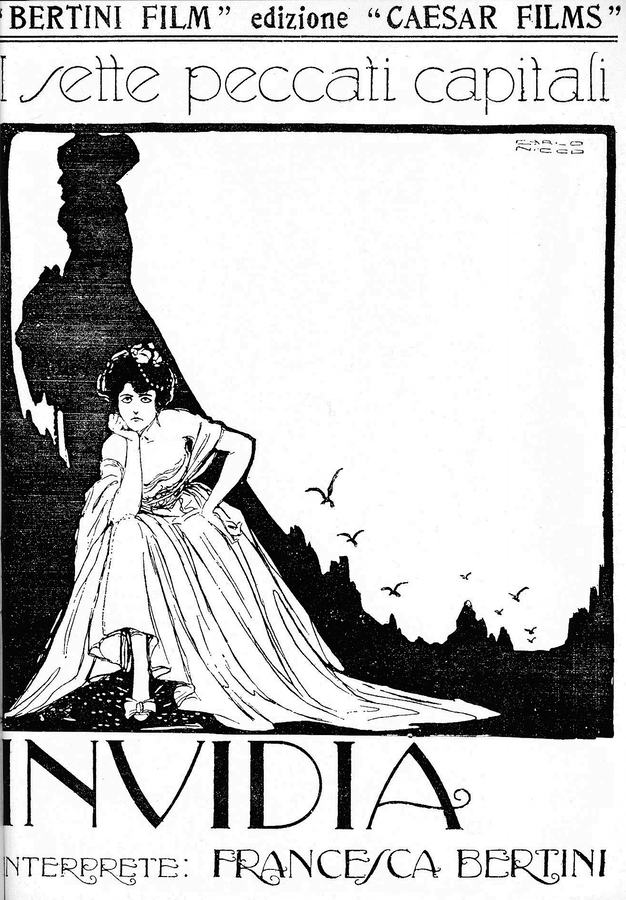
A dancer and a Count have an adventure and a child is born. Some years after the mother will return and fight to have her daughter back, after being told out of pure envy that the baby had died in an accident. When she finds out the truth she threats the Count to tell everything about their past.
View Details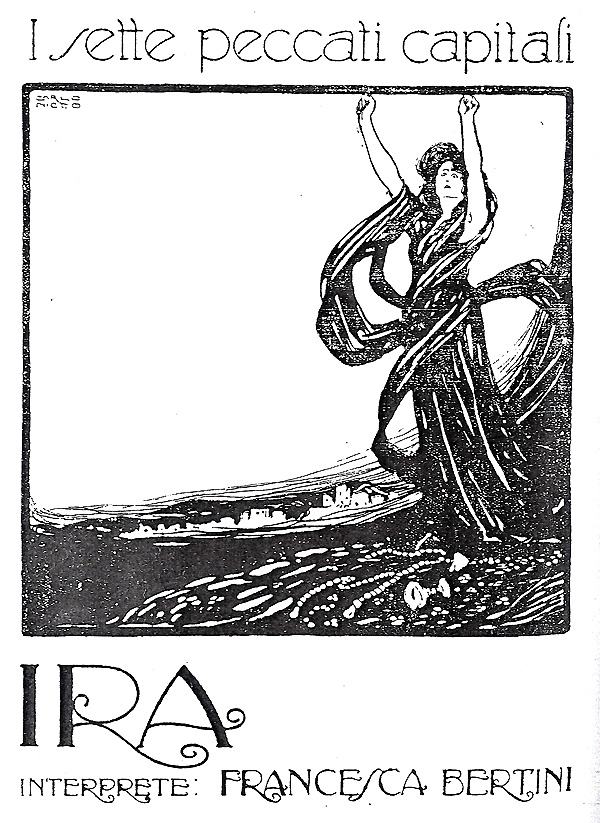
Dir: Edoardo Bencivenga
Elena and Zefor are brothers. They live with their mother in a wild country where smuggling reigns. At their modest home, Zefor plays the violin while she dances to entertain the bandits. Arturo, one of them, has conquered Elena's heart.
View Details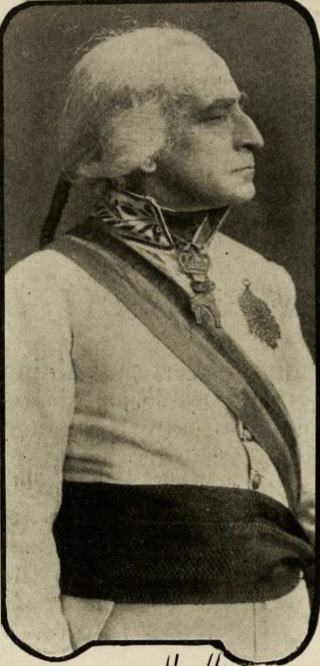
Dir: Edoardo Bencivenga
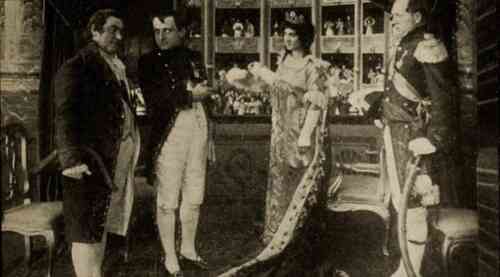
A young Bonaparte, who as Lieutenant of Artillery in the Republican army takes leave of his mother and returns to France. Then follows the siege and fall of Toulon and the riotous acts of the army, meaning death to the aristocrats. Bonaparte saves Eugenia of Chabrillant, orphan of one of the Royalist leaders from the attack of the rabble. News of this is brought to the Republican leader and he orders Bonaparte's punishment to be a diminution of his rank. Rather than suffer this, Bonaparte leaves the army but returns with the warning, brought him by Eugenia, that the Royalists are planning a movement against the Republic. In recognition of his worth, Bonaparte is named general and before leaving with his troops entrusts Eugenia to the escort of the officer Barras, who takes her to the home of Josephine Beauharnais for safe keeping. Returning victorious, Bonaparte calls to thank Josephine for the protection afforded Eugenia. It is the first meeting of the future great general with Josephine and the latter, interested, asks, "Is Eugenia of Charillant your fiancee?" And Bonaparte answers. "No, I shall never love her but as a sister." Eugenia who already has secretly given her affection to Bonaparte, overhears this answer and leaves the home of Josephine. Shortly afterward she dies, confessing in a letter to Bonaparte, her love for him. The army of the Republic is about to invade Italy. Bonaparte before leaving on this expedition secretly marries Josephine. It is at the conclusion of the march into Italy that Bonaparte gives expression to the quotation, "Hannibal crossed the Alps ; I went around them." Then occur the great victories of Mondso and Piedmont and Bonaparte's historic thanksgiving to his men: "Soldiers. In fifteen days you have gained six victories, taken twenty-one flags and eighty pieces of artillery; made fifteen thousand prisoners and conquered Piedmont. Mainstays of the Republic, soldiers of Liberty - the Country thanks you . - Signed, Bonaparte." Meanwhile, Barras, an admirer of Josephine continues to offer her attentions until she tells him she is the wife of General Napoleon. In her keeping is a casket of souvenirs belonging to Eugenia, and she writes to the Prince of Polignac, Eugenia's cousin, and tells him of her possession of the casket. The prince calls for it and Barras makes the occasion one upon which to arouse the jealousy of Bonaparte. It is after the liberation of Lombardy and the march on Venice that Napoleon rushes to Paris and disproves the suspicions of Barras. The prince is made captive and sentenced to death, however, when a document is found on him which tells of a plot to kill Napoleon. At the intercession of the prince's mother and of Josephine, the life of the prince is spared. Napoleon is now emperor. He destroys the Austrian power at Ekmul and Ratisbone and declares to the Emperor Francis of Austria, "I will shatter your monarchy as I shatter this cup," and the cup in question is shattered to pieces. Fouche. the advisor of Napoleon is anxious that Josephine be divorced and that Bonaparte marry Maria Louise of Austria. The reason is that there is no heir and he continually broaches the subject of divorce. For conciliatory purposes, Bonaparte visits the court of Austria and meets Princess Maria Louise. Urged on by Fouche and the good of his country, he consents to divorce Josephine. Bonaparte and Josephine meet for their respective signatures to the fateful paper. To the last, Josephine hopes that Bonaparte will refuse his signature. But when an eventful pause is terminated by his seizing the pen and signing his name, Josephine is made one of the saddest of history's women. The marriage of Napoleon and Maria Louise follows and eventually there is a son. But the happiness that should have been Bonaparte's is not, and the fighting general's spirit seems to reflect this condition. His triumphs terminate with the retreat from Moscow. Then there is the farewell at Fontainbleau, the general's leaving for the Isle of Elba and his invitation to the troops, "If anyone wishes to fire against his Emperor, do so . . . . Here I am !" But the response is "Vive l'Empereur!" Waterloo is the next event and the proclamation of June 2, 1815, "Napoleon Bonaparte exiled through the clemency of the Allied Powers to the Isle of Elba, has violated his sworn oath and returned to France. For the welfare of the peoples and for the re-establishment of order, Europe declares him a public enemy and invites war against him." The army of the Republic responds to Wellington's command to surrender, "The Old Guard will die, but not surrender." The eagle is shot off the flag of the Republic and Napoleon Bonaparte is the prisoner of Admiral Keith on board the Bellerophon. The closing scene of the film shows the stately ship as it sets out toward the island of Saint Helene. And in the prow of the boat stands the figure of that great little general of history - Napoleon Bonaparte.
Dir: Edoardo Bencivenga
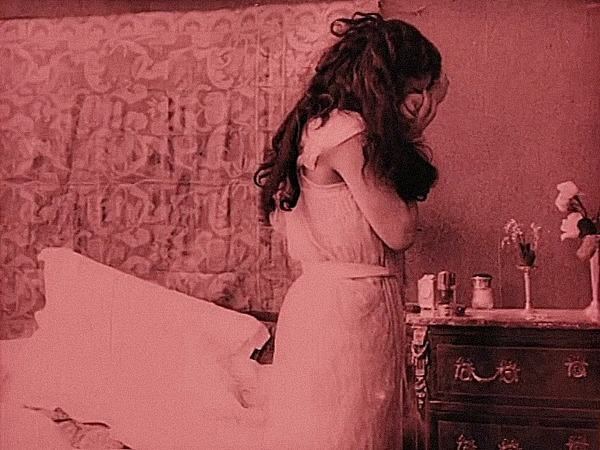
This is the account of a typical day of the diva Francesca Bertini in contrast to the story of Mariute, a single Friulian peasant girl with three children whose husband is at war. The poor woman suffers violence from three Austrian soldiers and is avenged by her father-in-law. The dramatic story, learned on set from an actor who has just returned from the front, leaves the actress so upset that she is induced to a surge of patriotic solidarity.
View DetailsAnalysis relative to L'orgoglio
| Film Title | Atmosphere | Complexity | Similarity |
|---|---|---|---|
| Du Barry | Tense | Abstract | 98% Match |
| La lussuria | Surreal | Layered | 88% Match |
| L'invidia | Gritty | Dense | 94% Match |
| L'ira | Ethereal | Dense | 86% Match |
| The Napoleonic Epics | Gothic | Abstract | 85% Match |
This guide was algorithmically generated using the cinematic metadata of Edoardo Bencivenga's archive. Last updated: 6/26/2026.
Back to L'orgoglio Details →