
DbcultAccessing Vault...
Recommendations
Senior Film Conservator
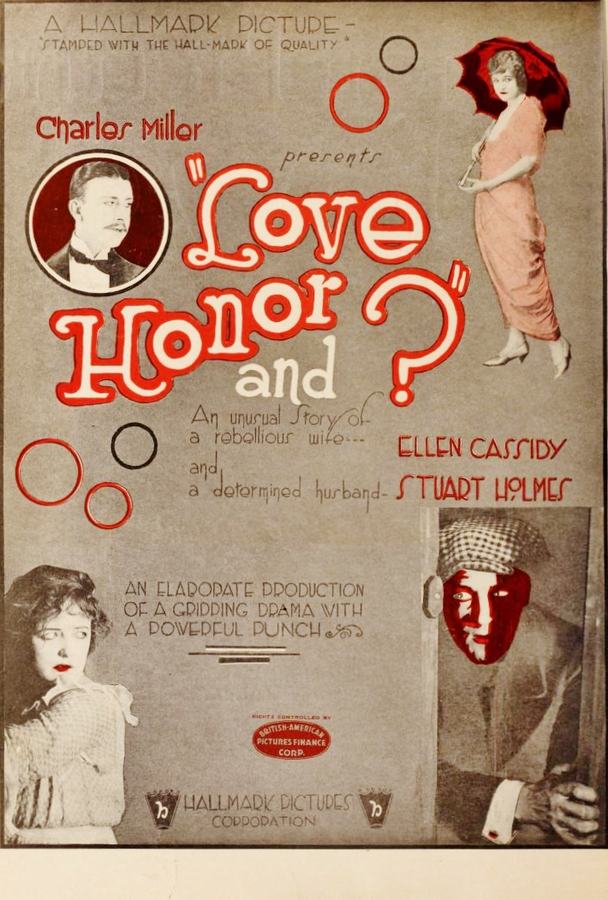
As a cultural touchstone of United States, Love, Honor and --? resonates with its cinematic excellence, audiences who connected with its message often look for similar thematic gravity. We've assembled a sequence of films that complement the tone of Love, Honor and --? perfectly.
For many, the first encounter with Love, Honor and --? is to establish Charles Miller as a true visionary of the 1919s.
Aviator Keith Elliot returns from serving in World War I in France to his Long Island estate to find that his wife Constance has tried to overcome her sorrow at his absence by giving house parties in which she and her guests indulge in drinking, gambling and cigarette smoking. Constance resents Keith's demands that she stop, and when he states that the word "obey" in her marriage vow has no meaning for her, she says that he has absorbed too much military atmosphere. When Keith orders her former suitor, Butler Hayes, who has designs on her, to leave, Constance accuses Keith of attempting a "social court-martial." Keith kidnaps Constance and flies to a small island on which he owns a hunting lodge. After he forces her to keep house there, she contacts Hayes in Keith's absence. Hayes arrives, but Constance repulses his advances, and when Keith returns, he thrashes Hayes. Constance stops Keith from leaving alone, and declares that she has learned her lesson as they fly away together.
Based on the unique cinematic excellence of Love, Honor and --?, our vault has identified these titles as the most compelling follow-up experiences for fans of cult cinema:
Dir: Charles Miller
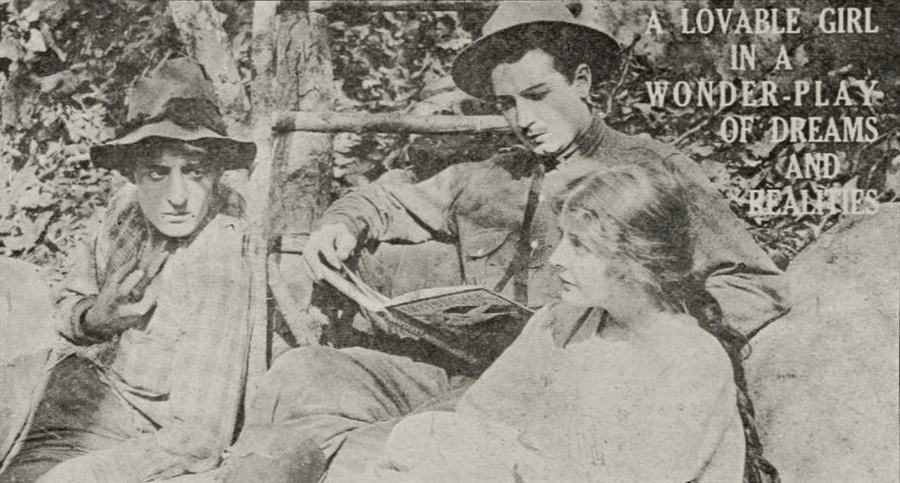
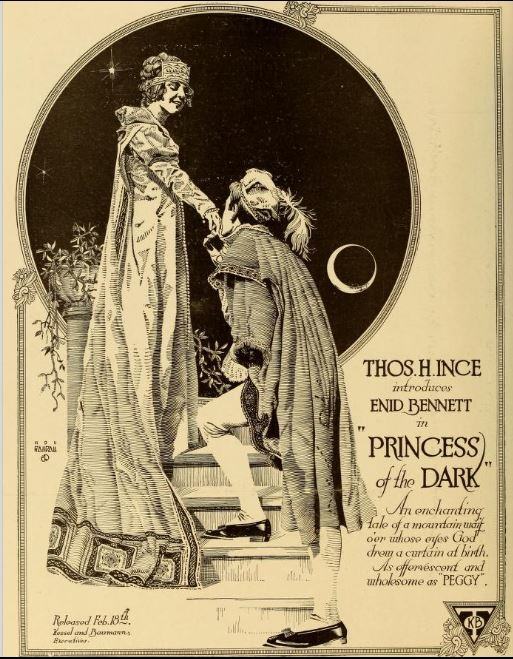
In a squalid mining town in West Virginia James Herron, a consumptive, has built a shack in the hope that the mountain air may prolong his life. With him dwells his daughter, Fay, whom he idolizes. Fay, who has been blind from her birth, has a wonderful imagination. Even the town and its sordid inhabitants become invested with romance and take their part in the stories of adventures that her father reads to her. While Fay goes about with security and fearlessness, which causes the ignorant to regard her with almost religious respect, her inner life is in sharp contrast. She has secret haunts, where she hides, and in thought recreates fairyland. Her favorite retreat is a cavern formed by an old abandoned tunnel which she peoples with knights and princesses, gnomes and fairy guardians. The one thing lacking is the Prince. And one day he comes. The "Prince" is a hunchback, "Crip" Halloran, the son of the village drunkard, who stumbles into Fay's imaginary fairyland, and is at once endowed by her with every heroic attribute. Finally Fay's father passes away and Fay becomes a drudge in the hut of ignorant aliens, and the meetings between her and the Prince are few and far between, and "Crip" is almost heartbroken. Jack Rockwell, son of a rich mine owner, comes to look after his property. Chance throws him in contact with Fay, and he becomes infatuated with her charm and idealism. He is admitted to the kingdom and gradually dethrones "Crip," to the hunchback's bitter distress. In love and pity for Fay's misfortune, Rockwell secures a great oculist and an operation opens Fay's eyes to the harsh world that her fancy idealized. She sees her two devoted admirers as they really are, and shrinks with horror from the poor misshapen "Crip." Broken-hearted, the hunchback seeks the old cavern and with a revolver ends a life that holds nothing but hopeless misery. Rockwell and Fay visit their old haunt, and with years of love and happiness opening before them discover the body of the poor hunchback, who had once for a few happy hours reigned as a Prince in a fairy realm of a girl's imagination.
View Details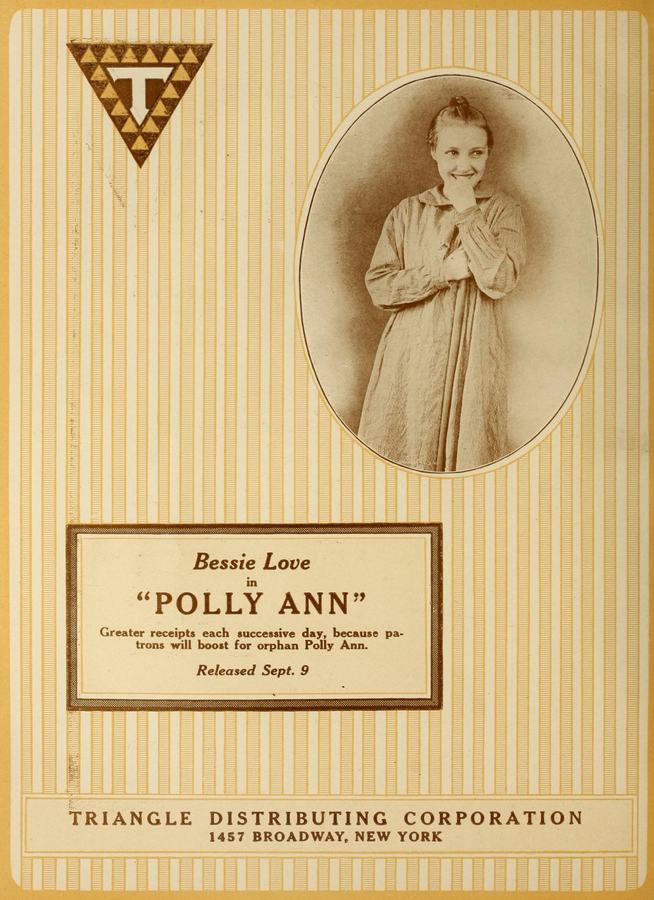
Dir: Charles Miller
Young Polly-Ann works in a small town inn as a maidservant. A troupe of actors comes to town and the innocent girl falls in love with one of its members. Howard Straightlane is sent to the small town by his father, to work as a schoolteacher in hopes of smartening up the young man from his wild ways. Howard soon meets Polly-Ann and saves her from the unscrupulous actor, meanwhile Howard's father has discovered Polly-Ann is his niece and sends for her. Another niece, greedily tries to force Polly to give her, all of her share of the family fortune. Upon hearing this the father insists that Polly return and since she and Howard have fallen in love, his son is now forgiven.
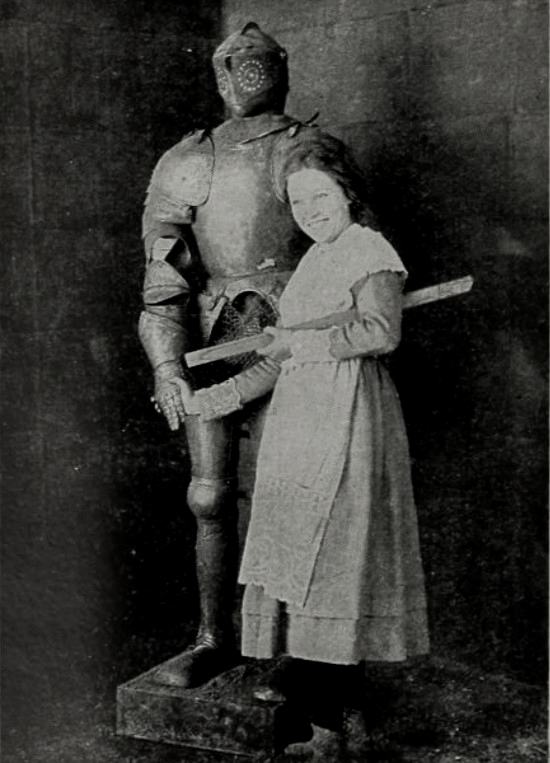
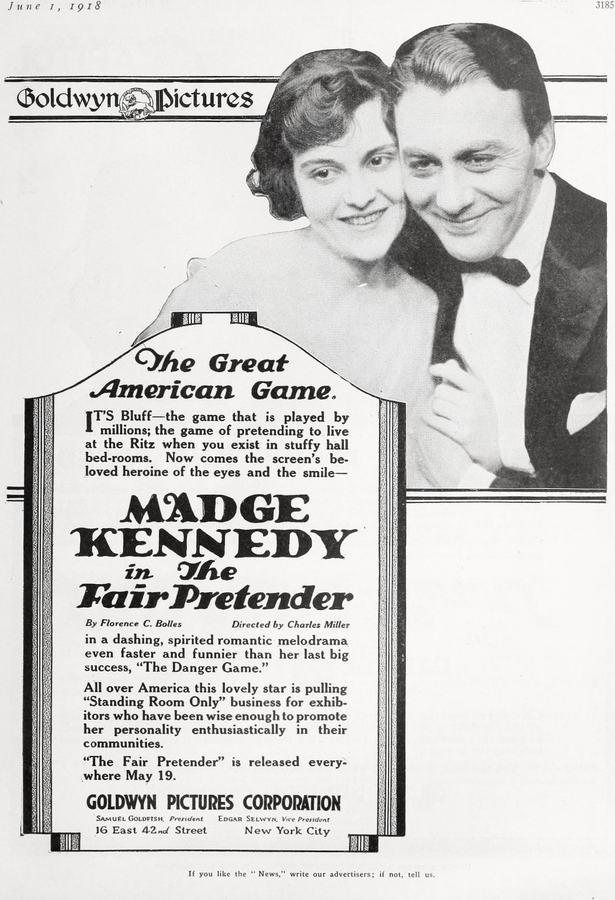
Dir: Charles Miller
Sylvia Maynard is a stenographer for a theatrical producer and tries to prove to her boss, that she can act by posing as a society woman at a lavish house party. Don Meredith, the struggling playwright who wrote the work in which Sylvia wishes to star, also masquerades as a famous writer at the party in order to prove that the central thesis of his play is valid: that one can pose in any role in high society and get away with it. Sylvia, introduced as the widow of Captain Milton Brown, falls in love with Don, but her joy turns to panic when her supposedly dead husband suddenly appears. The amused captain allows Sylvia to continue her impersonation for a time but advises her to leave the party. Don, heartbroken, also leaves, but after several adventures in which he helps Sylvia retrieve papers stolen during the party by a German spy, the two lovers are reunited in their true identities, and the play debuts successfully.
View Details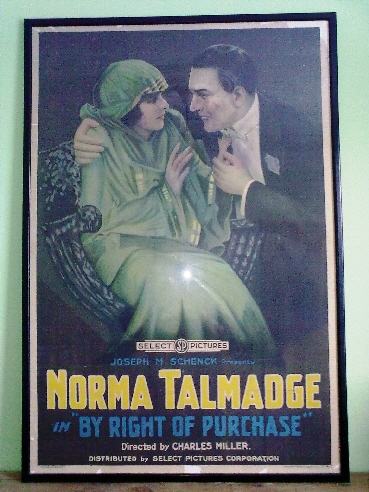
Dir: Charles Miller
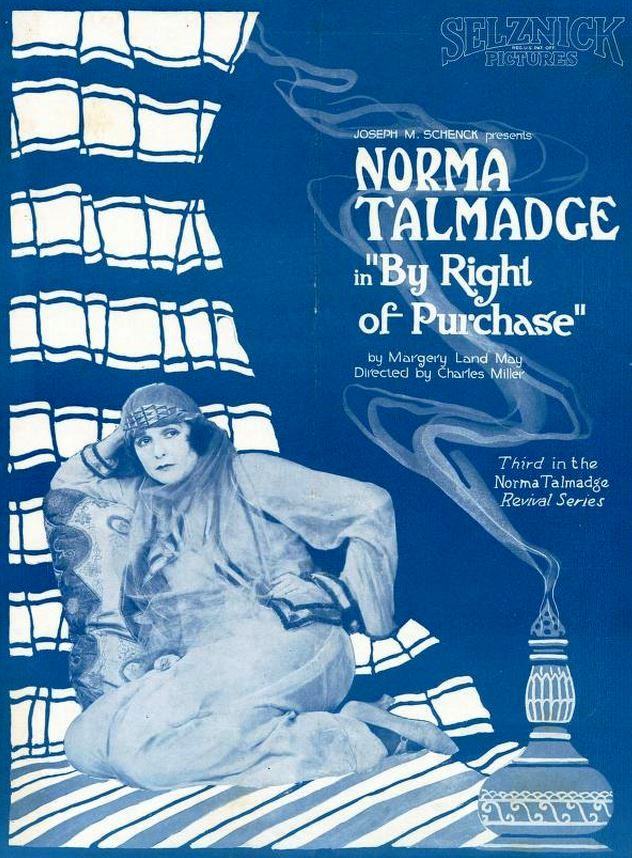
Margot Hughes is a butterfly society girl who sells herself to the highest bidder. Her husband does not press his ownership "by right of purchase," and she misunderstands his delicacy and she things that love is lost to her. She goes to France to serve the cause of humanity. There they meet again and understanding comes. For the Program: A loveless marriage that turned out differently. - Moving Picture World, February 2, 1918.
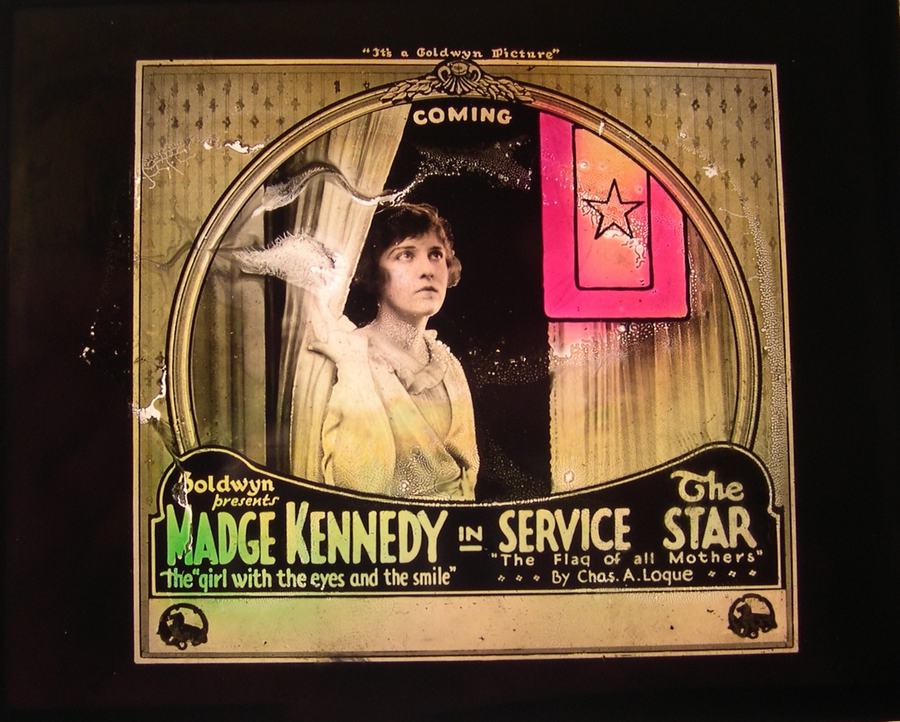
Dir: Charles Miller
A homely young girl, lonely and unhappy because she alone of all the girls in her town does not have a soldier sweetheart, pretends to be the fiancée of a famous combat aviator. When the flyer's mother learns of the "engagement," she accepts the girl as her future daughter-in-law, just in time for complications to arise in the form of the truth.
View Details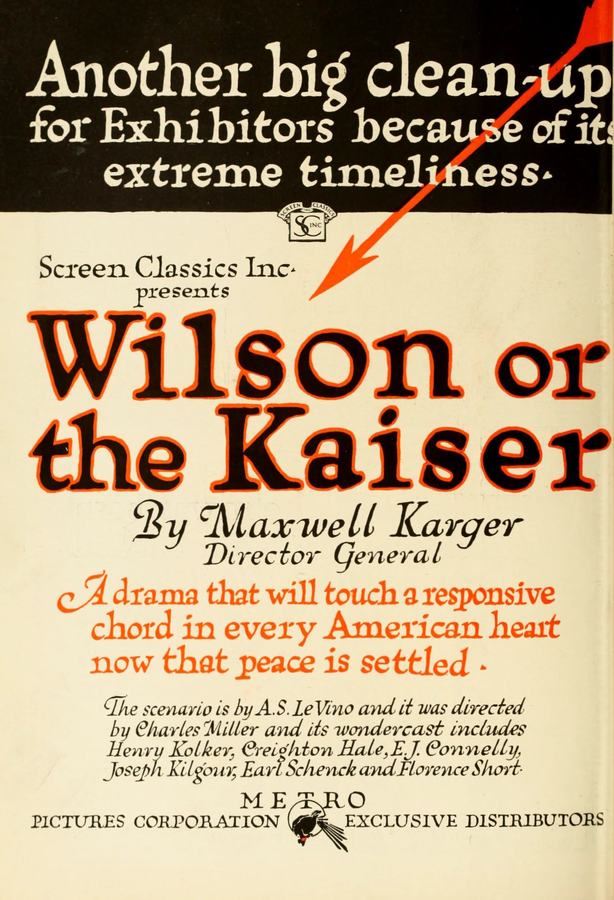
Dir: Charles Miller
In a prologue, Wilhelm II is born into opulence to continue the Hohenzollern dynasty of his father Frederick III, while Woodrow Wilson is born into the modest manse of his father, a Presbyterian reverend who tells his wife that the boy must be brought up "in the fear of the Lord." Conrad Le Brett from Alsace-Lorraine is forced to fight for Germany because his land has been conquered. Conrad, seeing other soldiers take girls into a church to rape them, kills one who murders a baby, and is then shot and taken to a Brussels hospital run by famous nurse Edith Cavell. He and his American nurse, Amy Gordon, fall in love. After Cavell helps Amy escape the pursuance of General von Bissing, the German governor, von Bissing has Lieutenant Ober execute Cavell. Learning of the Kaiser's order that all unmarried women be given to soldiers so they can bear sons for the army, Ober returns to Alsace-Lorraine, where he earlier insulted Conrad's sister Vilma. Ober kills Conrad's grandfather and rapes Vilma. Conrad honors her dying request that he go to America and defend Alsace-Lorraine's reputation. He marries Amy and convinces President Woodrow Wilson that Alsatians should be allowed to enlist. Fighting with the "doughboys," Conrad kills Ober, and after the armistice, returns to Amy.
Dir: Charles Miller
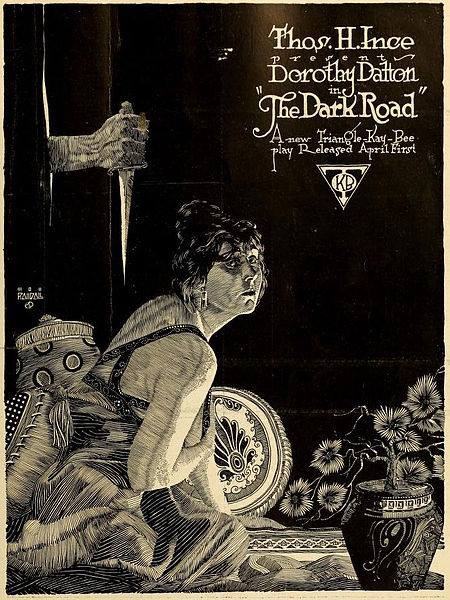
Jim Morrison, an English army officer who comes from a very old and prominent family, marries the ravishingly beautiful but unscrupulous Cleo, who has no qualms about using her sexual allure to get the luxuries she wants but that her husband can't provide. When Jim is sent off to war, Cleo embarks on a series of affairs, one of which results in her becoming the love slave of a German spy--the very spy that her husband has been assigned to track down.
View Details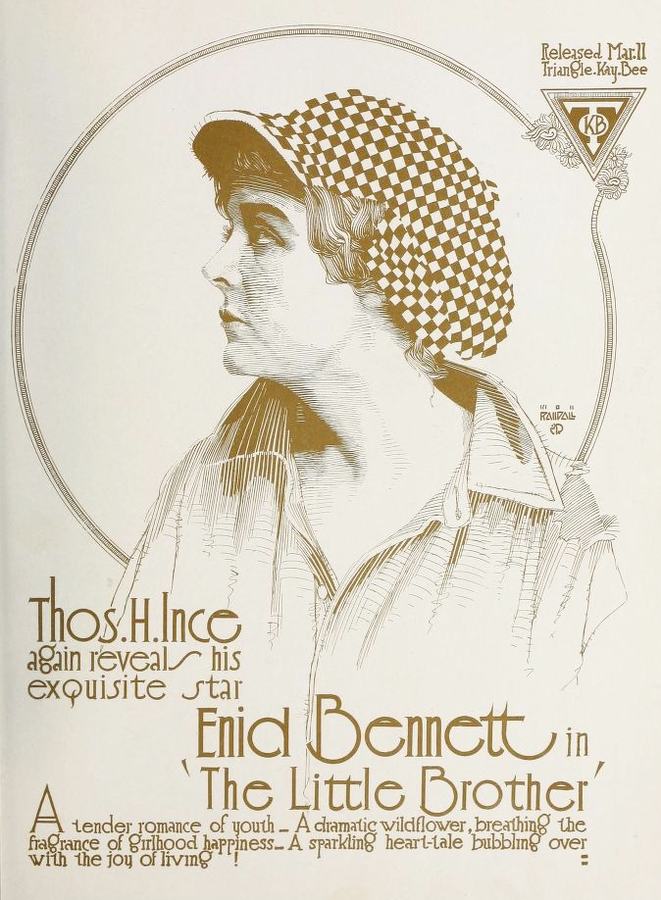
Dir: Charles Miller
Jerry Ross, the daughter of an East Side homemaker, decides to sell newspapers to earn money. She disguises herself as a boy, goes to one of the busiest street corners in the city, and soon captures the bulk of the business.
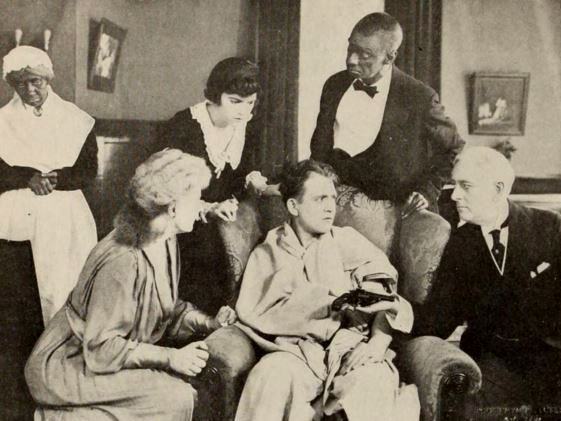
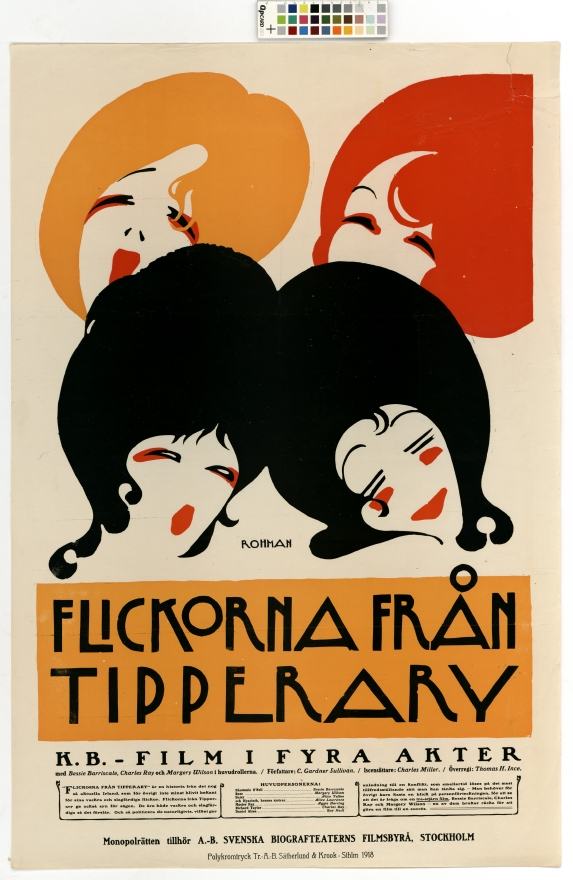
Dir: Charles Miller
When a distant Irish relative dies, a young American travels to Ireland to obtain his inheritance. He gets far more than he bargained for when a beautiful Irish colleen catches his eye.
View Details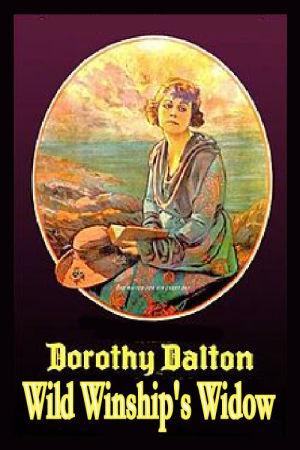
Dir: Charles Miller
Widow Catherine Winship treasures the memory of her late husband so greatly that she has given up her life to the adoration of his memory, spending her days strewing flowers on his grave. Catherine's idealism is rudely shattered, however, when she discovers a package of love letters in a secret drawer in Winship's desk. Deciding to throw aside her widow's weeds, Catherine's next hurdle is to choose a spouse from the many male admirers who are pursuing her. Among her suitors are the sentimental bore Archibald Herndon and Morley Morgan, a determined young man. After many misadventures, Morley finally beats out Herndon and marries Catherine in an impromptu ceremony at a hunting lodge.
View DetailsAnalysis relative to Love, Honor and --?
| Film Title | Atmosphere | Complexity | Similarity |
|---|---|---|---|
| Princess of the Dark | Surreal | Abstract | 92% Match |
| Polly Ann | Gritty | Layered | 96% Match |
| The Fair Pretender | Gothic | High | 90% Match |
| By Right of Purchase | Gothic | Layered | 86% Match |
| The Service Star | Gritty | High | 86% Match |
This guide was algorithmically generated using the cinematic metadata of Charles Miller's archive. Last updated: 6/25/2026.
Back to Love, Honor and --? Details →