
DbcultAccessing Vault...
Recommendations
Senior Film Conservator
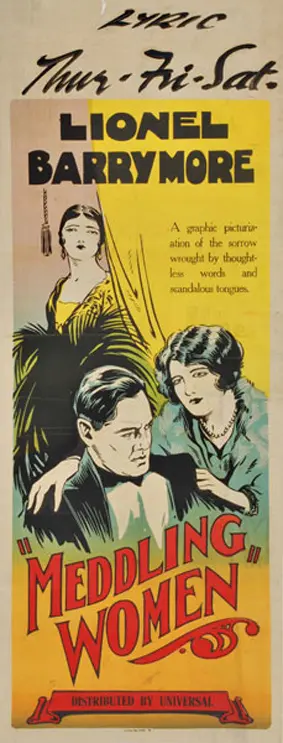
If you found yourself captivated by the thematic gravity of Meddling Women (1924), the quest for comparable cinema becomes a journey through the fringes of film history. Below, we've gathered a list of films that every fan of Ivan Abramson's work should explore.
Meddling Women remains a monumental achievement to create a hauntingly beautiful cinematic landscape.
A woman wants to resume her career as an opera singer, but her husband tries to talk her out of it.
Meddling Women was a significant production in United States, showcasing the immense talent of Hugh Thompson, Alice Hegeman, Sigrid Holmquist. It continues to be a top recommendation for anyone studying Drama history.
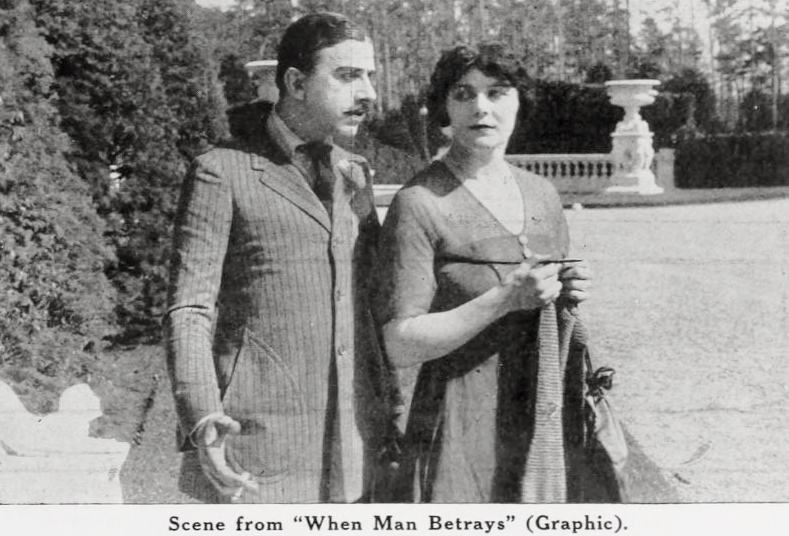
Based on the unique thematic gravity of Meddling Women, our vault has identified these titles as the most compelling follow-up experiences for fans of Drama cinema:
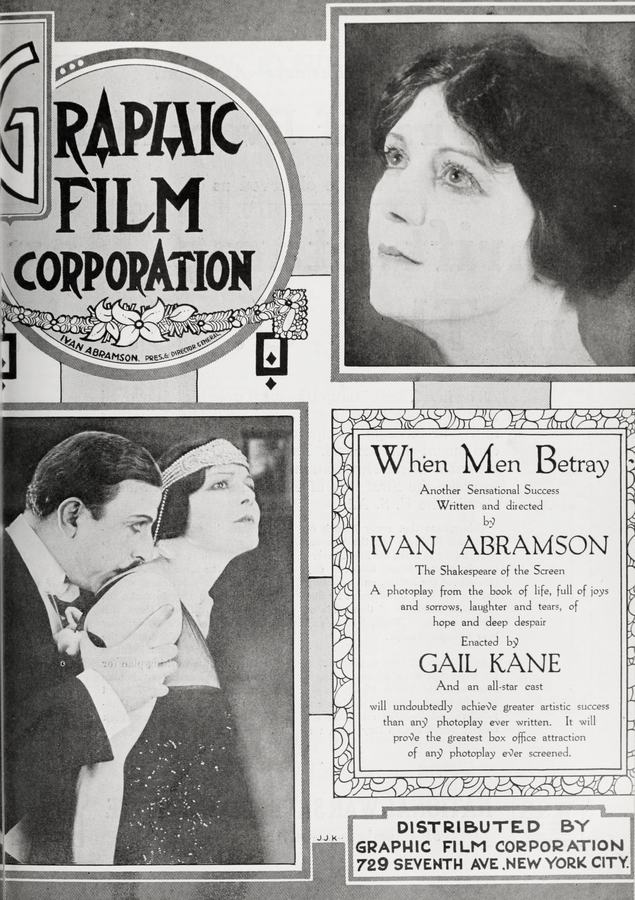
Dir: Ivan Abramson
Despite the pleading of his wife Marion and his little daughter Vivian, Raymond Edwardes intensifies his affair with a charming adventuress named Lucille Stanton. Marion attends a reception with Frederick Barton one evening, leaving Raymond free to visit Lucille and leaving Raymond's younger sister Alice alone in the house. Bob Gardner, who is engaged to Raymond's elder sister Florence, rapes Alice, and that same evening, Raymond finds Frederick in Lucille's room. Realizing the great pain he has caused his wife, Raymond asks for Marion's forgiveness. Bob is killed in a fight with Frederick, whereupon his brother, Dick Gardner, offers to marry Alice to atone for Bob's wrong.
View Details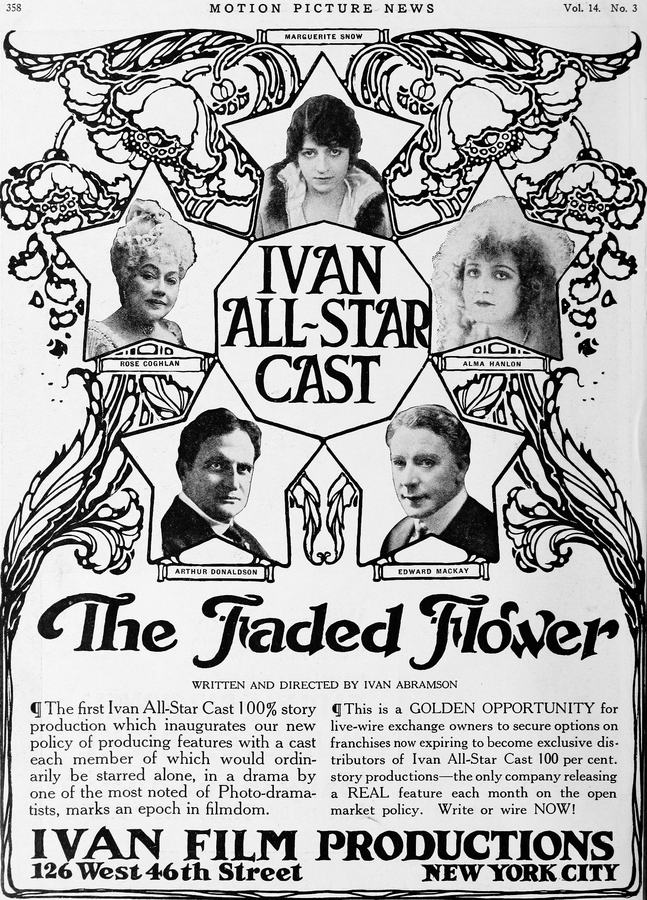
Dir: Ivan Abramson
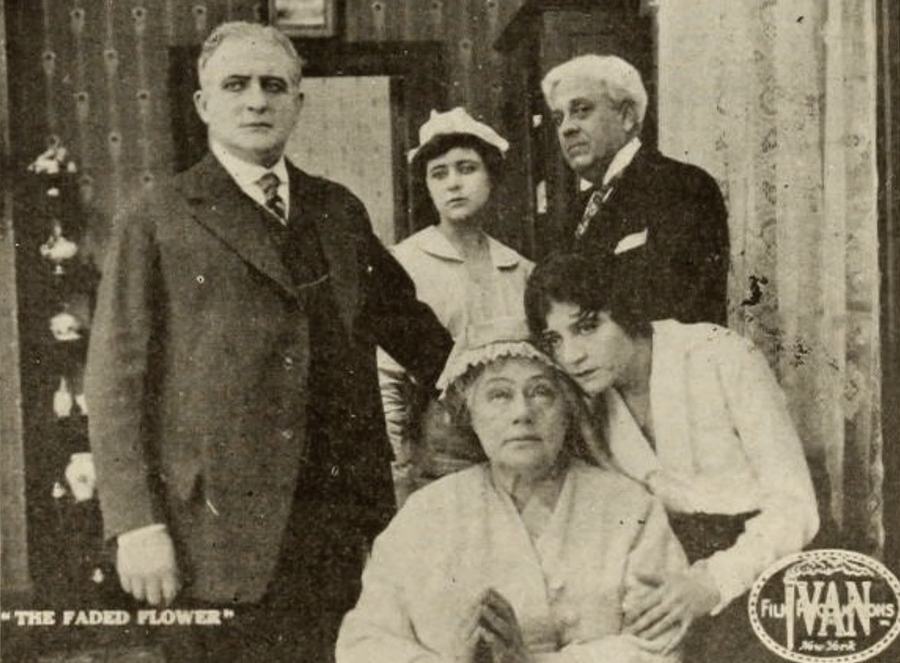
Elderly millionaire widower Wilbur Mason, father of only child Anne, proposes to his stenographer Lillian Hill, who accepts him because he declares that he will devote his fortune to restoring her blind mother's sight. In the presence of struggling playwright Henry Parker, Lillian introduces Mason to her mother as her future husband. Parker, who thinks himself in love with Lillian, imagines that his heart is broken. After the Masons' honeymoon, Mason engaged a renowned specialist whose operation on Mrs. Hill is unsuccessful. Lillian now sadly realizes that her sacrifice was in vain and becomes cold towards Mason. Two years later Lillian and Anne meet Parker, of whose great success they have read. Parker and Anne fall in love; at Anne's suggestion, Lillian invites him to call on them. He does, hoping to see Anne, but finds Lillian alone. She gives him a rose from among those Mason plucked for her that morning because he knew she loved them. Mason, unseen, sees this gesture and concludes that Lillian's love for Parker is the cause of her indifference toward him. His jealous rage becomes ungovernable and he makes his presence known and orders Parker from the house after tearing from the latter's coat the rose Lillian gave him. Mason thereafter repeatedly charges Lillian with being false to him and in love with Parker. Parker meeting Anne, accompanies her to the gateway of her home, where she leaves him. Mason discovering him there alone believes that Parker has clandestinely met Lillian, whom he later upbraids, again thrusting the rose before her. Lillian, as the result of Mason's accusations, becomes grief stricken and ill. Despondent she leaves her husband's home and returns to her mother where she fades like roses in the autumn winds. Mrs. Hill, fearing for her daughter's life, goes to Mason who is moved by her heart-broken and anguished appeal. He accompanies her, repentant and remorseful, to Lillian's bedside which he reaches in time to receive with her expiring breath the pardon for which he pleads and to hear the doctor pronounce her dead. Crazed with sorrow, scarcely hearing the doctor's words, Mason is about to lift the coverlet from Lillian's face when he is stricken with paralysis. Later at his home he weeps in secret at sight of the now-faded rose which to him has become a symbol of Lillian. Repenting his mistake, he bids Anne send for Parker and consents to their marriage. Troubled by his conscience, Mason's overwhelming woe permits him no rest, and he goes at dead of night to Lillian's burial place, carrying with him roses which in life she so dearly loved, which he tenderly places over her dust. "Lillian, my faded flower," he cries, "you died a martyr to my unfounded jealousy. May your soul find peace in the Kingdom of Heaven."
View Details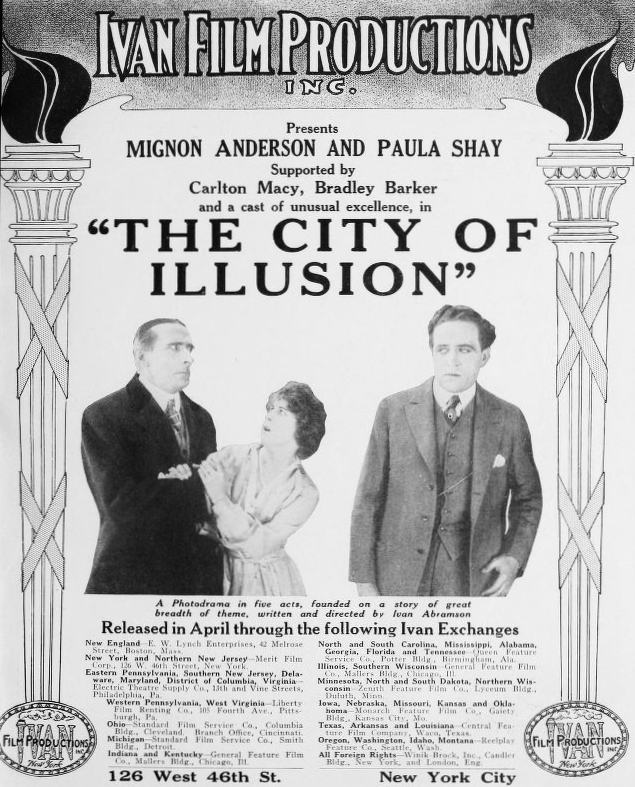
Dir: Ivan Abramson
Claire, a young Southern girl, marries wealthy plantation owner Paul but has always dreamed of moving to and living in New York City. She falls for Paul's New York lawyer Douglas, and when he goes back to "The Big Apple", she fibs to her husband that she had been having an affair with Douglas and wants a divorce. However, when she travels to New York to be with him, she finds that he's already married and is running for District Attorney. Complications ensue.
View Details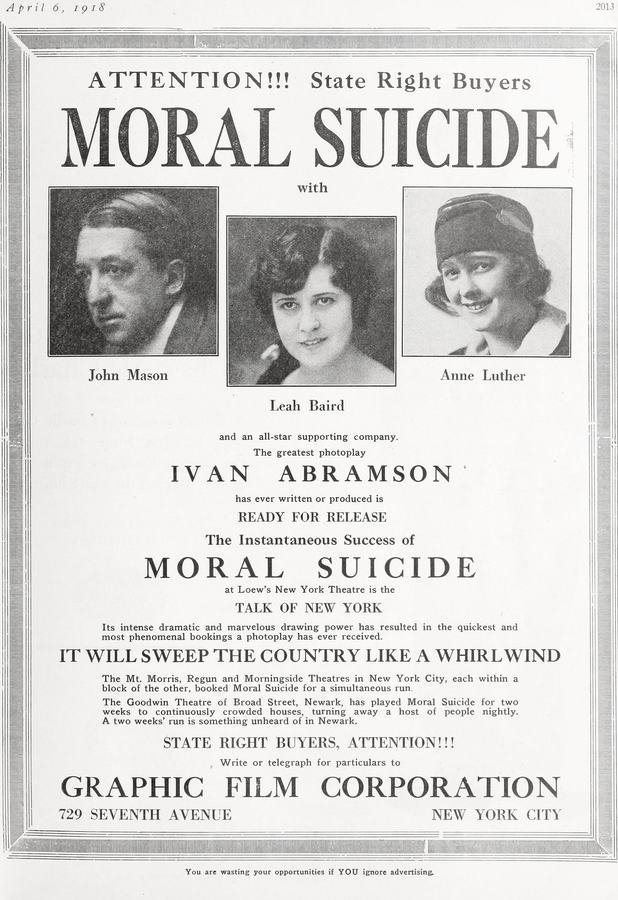
Dir: Ivan Abramson
Wealthy Richard Covington, although aging and lonely, distresses his children, Waverly and Beatrice, by marrying a heartless seductress named Fay Hope. Because Fay's extravagant spending threatens to ruin Richard, Beatrice confronts her, which prompts Richard, who is hopelessly in love with the beautiful vampire, to order his daughter from the house. Fay introduces her lover, "Lucky" Travers, into the Covington household as her brother, but Waverly catches them in each other's arms and, in a fit of insanity, shoots at Lucky. The bullet strikes and kills Fay, and Waverly is locked in an asylum, leaving Richard broken, penniless and completely alone. In New York, he finds work carrying sandwich boards that advertise a cabaret, where he sees Beatrice warmly conversing with Lucky. Beatrice consoles her distraught father by admitting that she now works for the Secret Service. After securing Lucky's arrest, Beatrice returns to her fiance, Rodman Daniels, who has arranged Waverly's release from the asylum, and the entire family is reunited.
View Details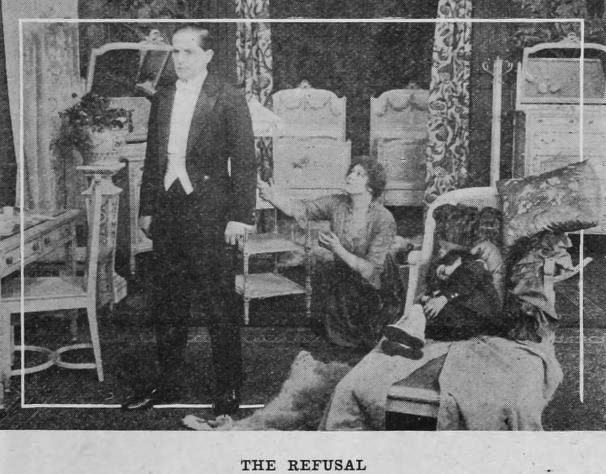
Dir: Ivan Abramson
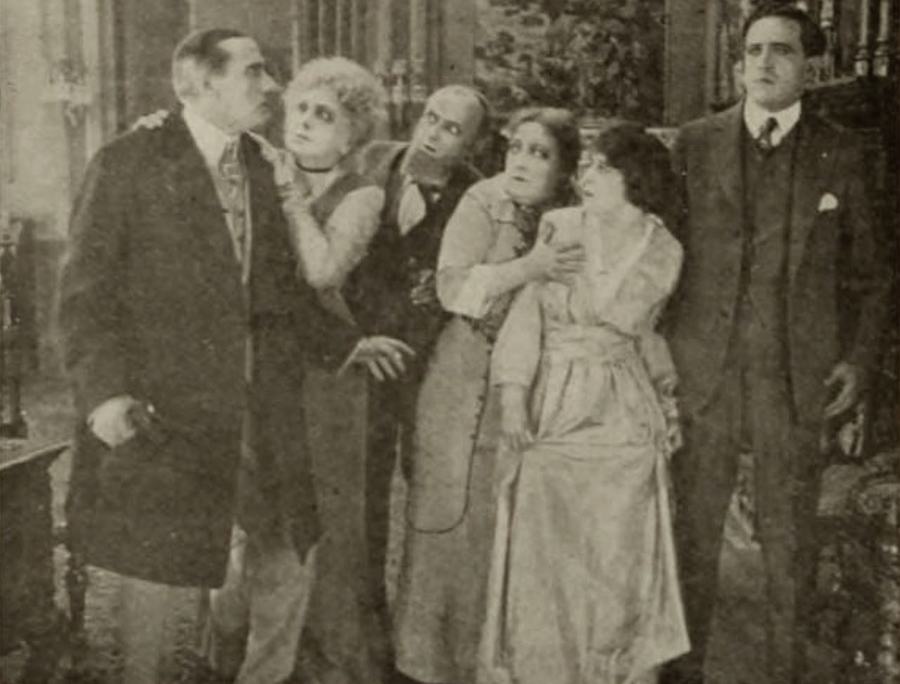
Ruth Ancaster is about to marry her fiance, Edward, when she discovers that he has been cheating on her with a variety of different women. Angered, she marries Henry, Edward's best friend. Edward sees a chance to take his revenge on both of them when Henry, in financial trouble, forges Edward's name on a stock certificate and is caught. He offers to drop the charges against Henry if Ruth agrees to "pay the price"--and he doesn't mean money.
View Details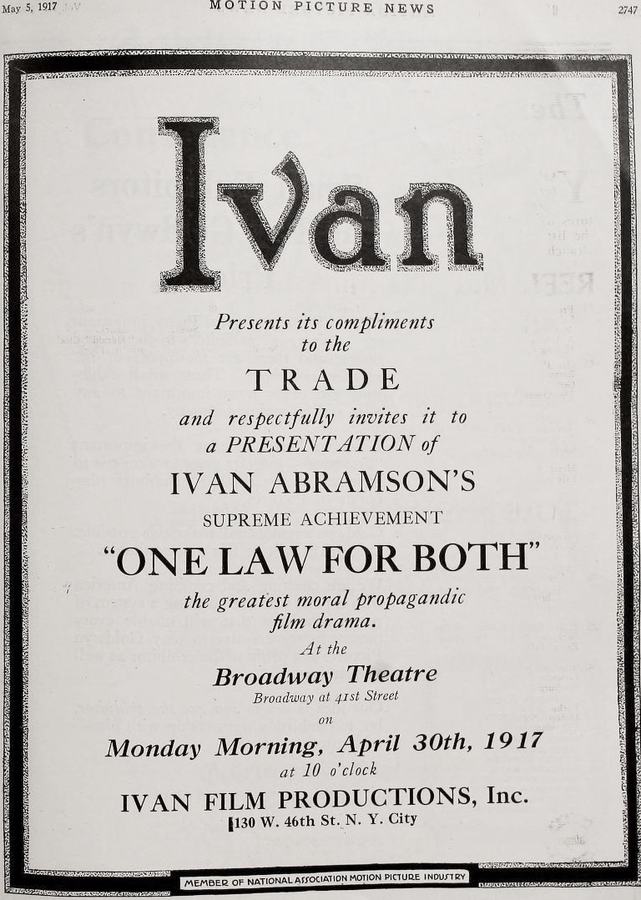
Dir: Ivan Abramson
Elga Pulaski and her brother Ossip live in Warsaw. They belong to a secret society whose goal is to liberate Poland and Russia from the Romanoffs. Elga is loved by Baron Jan Slozek. But Slozek is a spy who has Ossip and other members of the society arrested. When Slozek is slain, Ossip is the key suspect. He escapes to America with his sister. There, Elga meets Norman Hutchinson, and marries him without telling him her past. When Hutchinson learns the truth, he leaves Elga. Eventually, when Elga appeals to him, he sees the light.
View Details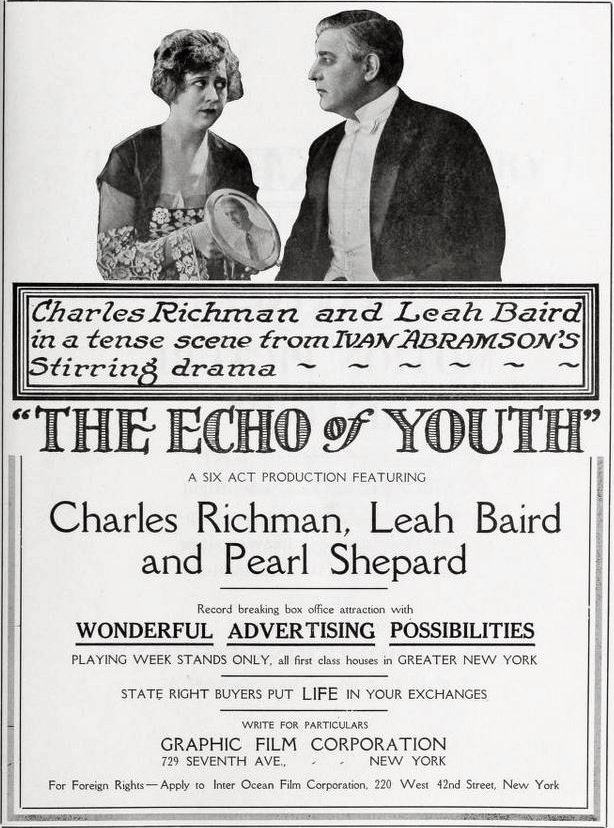
Dir: Ivan Abramson
After becoming a Supreme Court justice, Peter Graham is visited by Olive Martin, a singer from New Orleans, Louisiana, with whom he had an affair in his youth. Although Peter has been sending money to maintain Olive's silence and to support their son, she now sees an opportunity to join high society, and demands that Peter divorce his wife to marry her. Meanwhile, in Boston, Massachusetts, Olive's son, Harold, becomes engaged to Peter's daughter, Anita, but the young lovers are soon devastated by the news that they were both sired by the same man. Olive's dissolute brother-in-law, Thomas Donald, finds Peter on the brink of suicide and reveals that he is Harold's father. Thomas goes on to explain that Olive adopted the boy as a means to blackmail Peter. Harold and Anita marry, while Peter confesses to his wife and Olive leaves town.
View Details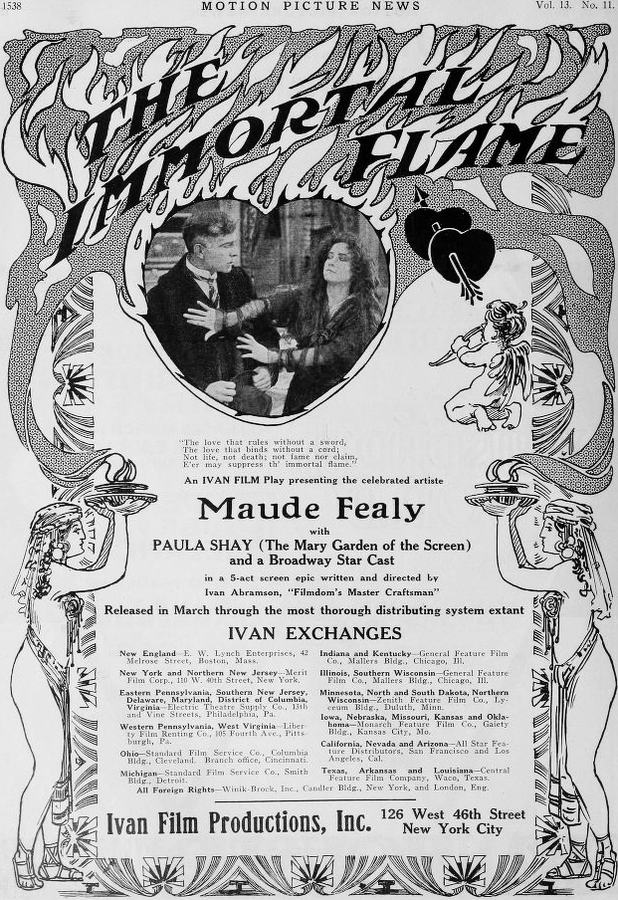
Dir: Ivan Abramson
Ada Forbes loves Eugene Cory, but she marries Stapleton, a political boss who promises Ada's father a Senate seat in return for his daughter. After several years of an unhappy marriage, Ada leaves Stapleton and returns to Cory, now married to Alice Wood, to be his mistress. Alice finds out about the affair and confronts Ada, who promises never to see Eugene again. Then, Ada learns that her mother is dying. The double shock of losing Eugene and her mother brings on a breakdown, and Ada is put under a doctor's care. Her round-the-clock nurse falls asleep, however, and a half-insane Ada wanders away, falls into a river and drowns.
View Details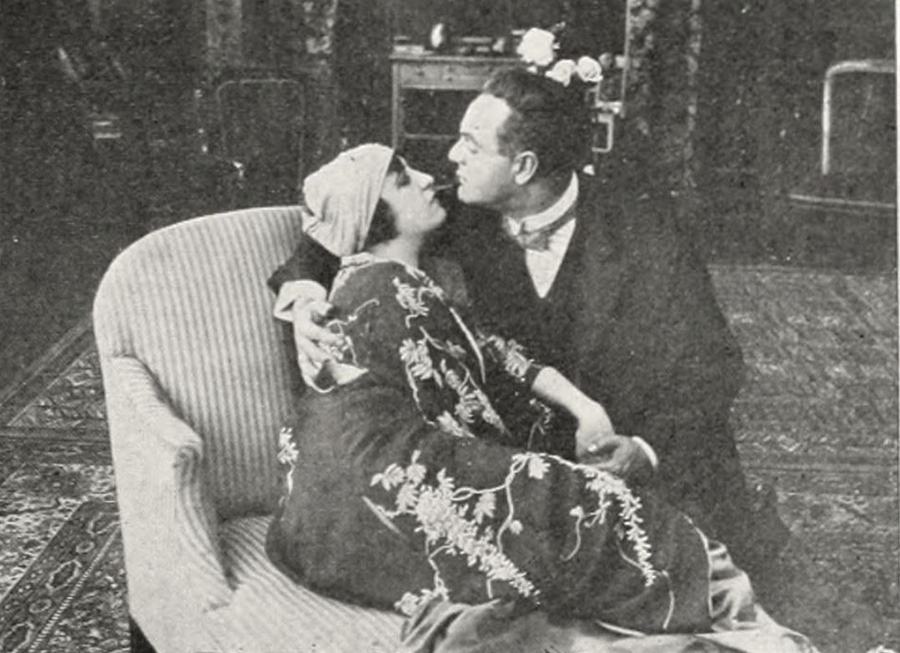
Dir: Ivan Abramson
Henry Patterson, living in Chicago with his wife, Lola, and infant boy, Harold, receives disturbing news regarding his mining interests at Denver. He goes there to investigate, and to avoid publicity, assumes the name of Henry Donovan. At Denver, he finds the mine is worthless, and faces ruin. He meets Louise Douglas, a wealthy woman, who becomes attracted to him. She makes overtures of marriage, unaware of his real identity. Henry, in a wild belief that he can save his family from poverty, marries Louise. He invents excuses to Lola, whom he still loves, for his long absence. The poor woman receives his money and affectionate letters, ignorant of his folly. In due course, Louise gives birth to a daughter, Muriel. The months lengthen into years, Lola in her solitude, has formed a strong friendship for Fred Warren, an artist, for whom she poses. The artist, believing Lola to be a widow, presses her to marry him. Her refusals arouse his suspicion, until one day Lola receives a letter which, Warren notices, agitates her. The letter is, indeed, from her husband, a confession of his bigamous union with Louise, and promising to make early reparation. Taking advantage of Lola's absence from the room, Warren purloins the letter and learns her secret. Meanwhile, Louise has entrusted Henry with a large sum of money for investment in New York. He goes instead to his wife at Chicago. In a touching scene, past sins are confessed and forgiven, and the couple make preparations for a hasty departure. At the moment of leaving, Warren pays Lola an unexpected visit. Furiously Warren denounces Henry, calls him "Bigamist," and threatens to turn over his letter of confession to his wife Louise. Henry, demanding the letter, draws a revolver, and in the struggle, the pistol is accidentally discharged, killing the bigamist. With a plea for forgiveness as he dies. Henry hands over to Lola Louise's money. In order not to implicate her in the murder. Warren orders Lola away from the scene. She, having in mind the $50,000, heeds his advice and immediately leaves with Harold for New York, where she assumes the name of "Gibson." Warren telephones the police, giving himself up as the murderer. Louise, notified by the Chicago police of her husband's death, comes to Chicago. Seeking revenge, she secures permission to see her husband's murderer. She enters the cell with a concealed weapon. There she learns for the first time the truth, from the written confession of her husband which the prisoner has concealed on his person. She is prostrated by grief, and her vow of vengeance becomes a promise to help the prisoner. The trial takes place. Warren, aided by Louise's counsel and her testimony, is declared "not guilty." With gratitude on the one side, and sympathy on the other, a strong bond of friendship is formed which soon gives way to love. Warren and Louise marry and come to live in New York. With the passing of years, Lola, giving way to extravagance, becomes penniless. Harold, now at Milan studying music, requests funds, and with her son's need in mind, Lola at a dance steals a necklace. Her theft detected, she is tried and sent to prison for two years. Harold, who has made a name for himself in Milan, meets a charming student, Muriel Warren. Unaware of each other's antecedents, they form a deep attachment and finally arrange to return to America to marry. Lola's prison term expired, she comes to New York. There, sitting on a park bench, she picks up a discarded newspaper, in which she reads the wedding announcement of Harold and Muriel, to take place that afternoon. She rushes to the church, breaks through the crowd, and in a most dramatic scene, before the altar, makes her confession to the priest. Muriel now learns for the first time that her stepfather, Warren, killed her father. Her soul, embittered by the guilt of her parents, she leaves her mother's house and becomes a nun. Harold, learning that his, father's misdeeds nearly caused the marriage of brother and sister, forgives his broken-hearted mother, takes her with him and makes a home for her.
View Details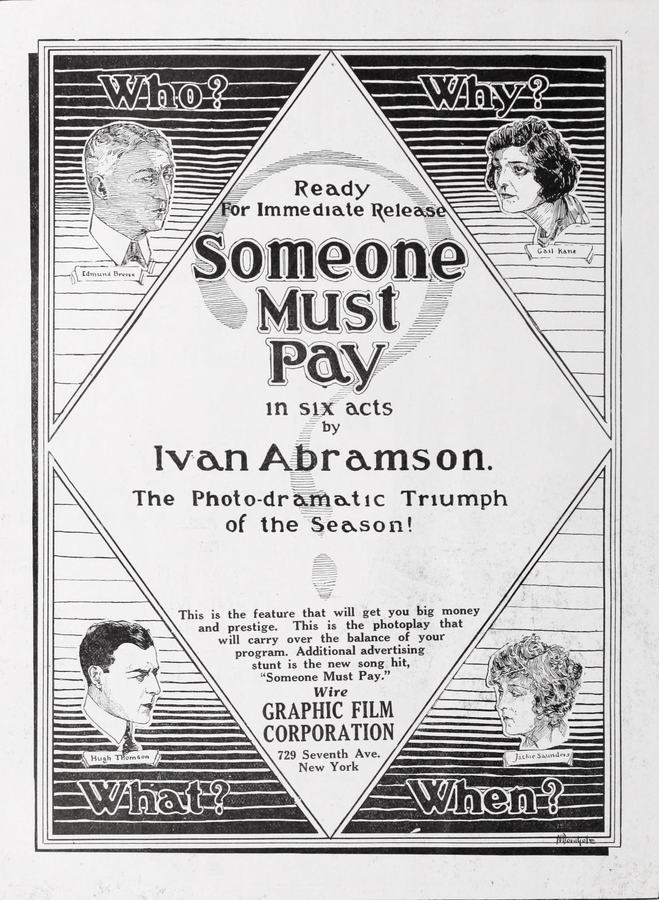
Dir: Ivan Abramson
Stockbroker Henry Taylor becomes insanely jealous when wealthy South African jeweler Charles Bryant shows friendly attentions to Taylor's wife Regina and adopted daughter Vivian. Henry banishes Bryant from the Taylor home. In order to lavish riches on his wife, Henry speculates wildly and then uses a client's stocks to raise funds. The client threatens Henry with arrest, but agrees to withdraw the charge if Regina raises the appropriate funds. Bryant comes to her aid, but Henry believes another friend is responsible. When he learns the truth, Henry drives Regina and Vivian from home and they seek shelter from a heavy rainstorm in the asylum in which Regina was reared. Vivian contracts pneumonia and dies. Meanwhile, Henry seeks out Bryant and shoots him. In the ensuing trial, Bryant reveals that he is Regina's father and that he had been compelled to flee to South Africa after being accused of a murder of which he was innocent. Examination of the criminal record reveals that his innocence has been made clear. Bryant brings about a reconciliation between Henry and Regina.
View DetailsAnalysis relative to Meddling Women
| Film Title | Atmosphere | Complexity | Similarity |
|---|---|---|---|
| When Men Betray | Ethereal | Dense | 85% Match |
| The Faded Flower | Tense | Layered | 94% Match |
| The City of Illusion | Surreal | Dense | 91% Match |
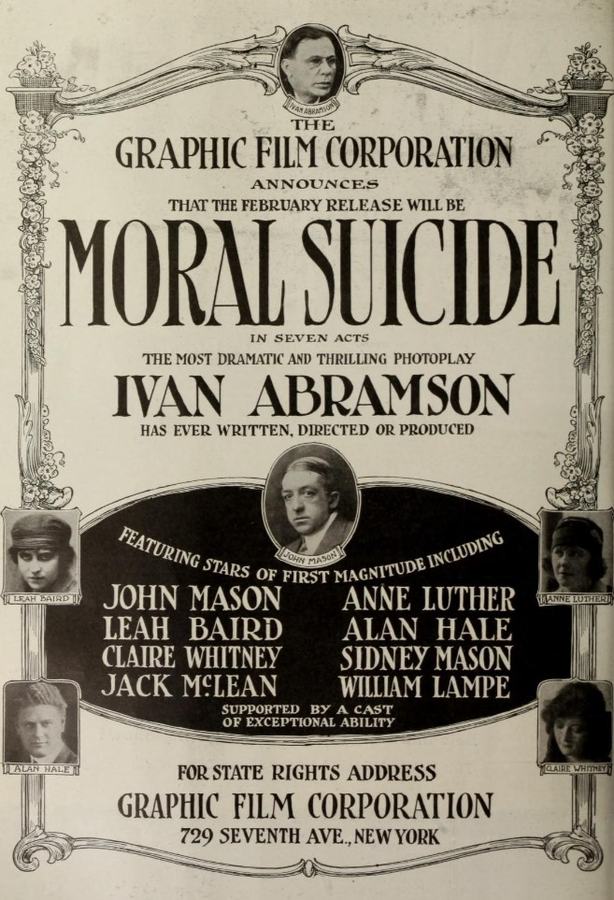
| Moral Suicide | Gothic | Linear | 94% Match |
| Forbidden Fruit | Gothic | High | 90% Match |
This guide was algorithmically generated using the cinematic metadata of Ivan Abramson's archive. Last updated: 6/20/2026.
Back to Meddling Women Details →