Summary
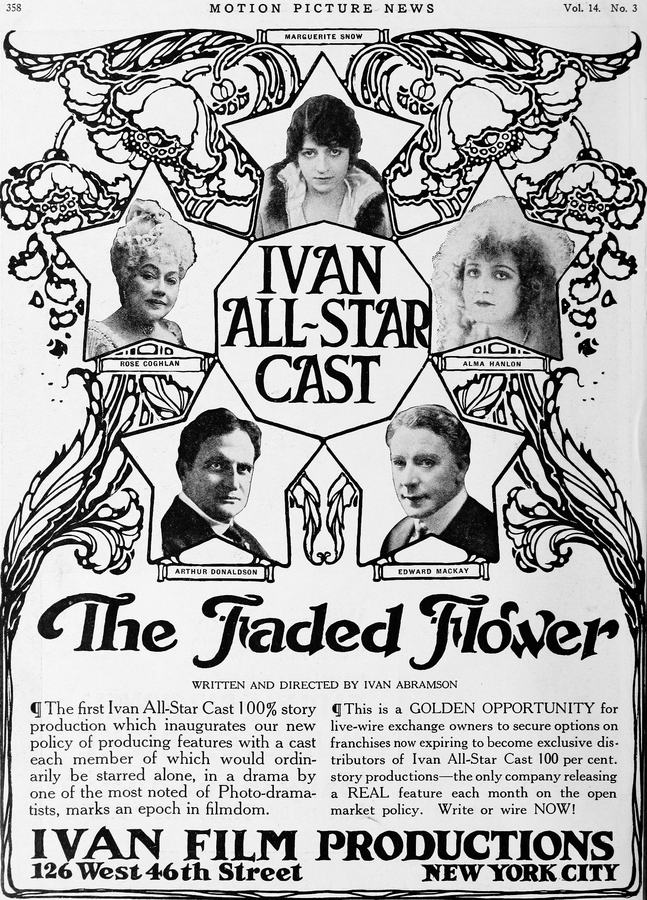
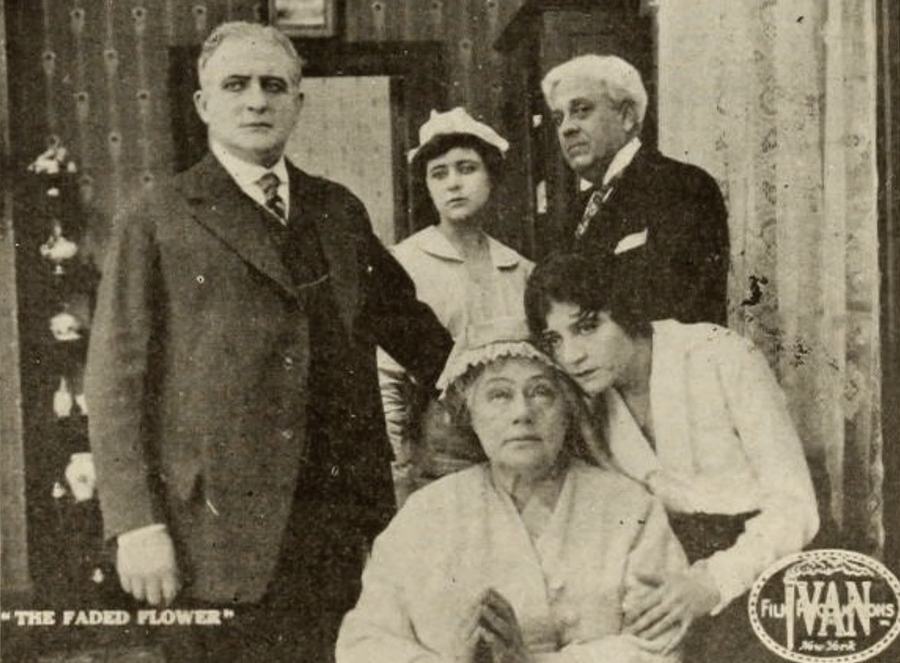
The Faded Flower unfurls a somber tapestry woven from the threads of sacrifice, misinterpretation, and ruinous jealousy. At its heart lies Lillian Hill, a stenographer whose pragmatic compassion compels her to accept the marital overtures of Wilbur Mason, an aging, affluent widower. Her assent is not born of affection, but a desperate hope: Mason's pledge to fund a groundbreaking operation for her blind mother. This transactional union, introduced to a heartbroken Henry Parker—a struggling playwright secretly enamored with Lillian—sets the stage for an inevitable cascade of tragic misunderstandings. Following a brief honeymoon, the promised medical intervention proves futile, plunging Lillian into a chilling realization of her profound, unrewarded sacrifice, which gradually manifests as an emotional distance from her husband. Two years later, the currents of fate bring Lillian and Mason's daughter, Anne, into contact with a now-successful Parker. A nascent romance blossoms between Parker and Anne, prompting Lillian to extend an invitation. A seemingly innocuous gesture—Lillian presenting Parker with a rose, a token of Mason's morning affections for her—is tragically witnessed by the unseen Mason. His mind, already fertile ground for suspicion, twists this innocent exchange into a damning indictment of infidelity, igniting an ungovernable, possessive rage. He humiliates Parker, expelling him and tearing the rose from his lapel, thus commencing a relentless campaign of accusations against his wife. Mason's pathological jealousy escalates, culminating in a misconstrued encounter between Parker and Anne near their home, which he again interprets as a clandestine tryst with Lillian. The incessant, baseless charges erode Lillian's spirit, rendering her grief-stricken and gravely ill. She retreats to her mother's care, a fragile bloom wilting in the autumn of her despair. Mrs. Hill, desperate, confronts Mason, whose hardened heart finally softens, spurred by her anguish. He rushes to Lillian's side, arriving just in time to receive her dying breath and her forgiveness, a moment immediately followed by the doctor's pronouncement of her demise. Overwhelmed by sorrow, Mason attempts to uncover her face but is felled by a paralytic stroke. In the aftermath, a faded rose, now a poignant emblem of his lost love, becomes the silent confidant to his secret tears. Repentance stirs within him; he orchestrates Anne's marriage to Parker, a final act of amends. Yet, his tormenting conscience offers no solace. In the dead of night, he seeks Lillian's grave, tenderly laying roses upon her resting place, his anguished lament echoing into the darkness: "Lillian, my faded flower, you died a martyr to my unfounded jealousy. May your soul find peace in the Kingdom of Heaven."
Synopsis
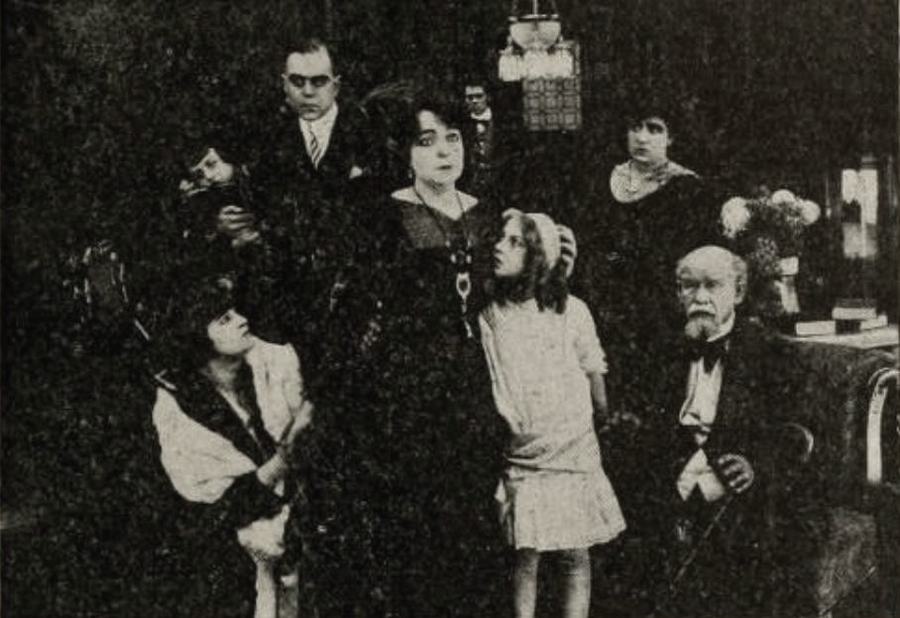
Elderly millionaire widower Wilbur Mason, father of only child Anne, proposes to his stenographer Lillian Hill, who accepts him because he declares that he will devote his fortune to restoring her blind mother's sight. In the presence of struggling playwright Henry Parker, Lillian introduces Mason to her mother as her future husband. Parker, who thinks himself in love with Lillian, imagines that his heart is broken. After the Masons' honeymoon, Mason engaged a renowned specialist whose operation on Mrs. Hill is unsuccessful. Lillian now sadly realizes that her sacrifice was in vain and becomes cold towards Mason. Two years later Lillian and Anne meet Parker, of whose great success they have read. Parker and Anne fall in love; at Anne's suggestion, Lillian invites him to call on them. He does, hoping to see Anne, but finds Lillian alone. She gives him a rose from among those Mason plucked for her that morning because he knew she loved them. Mason, unseen, sees this gesture and concludes that Lillian's love for Parker is the cause of her indifference toward him. His jealous rage becomes ungovernable and he makes his presence known and orders Parker from the house after tearing from the latter's coat the rose Lillian gave him. Mason thereafter repeatedly charges Lillian with being false to him and in love with Parker. Parker meeting Anne, accompanies her to the gateway of her home, where she leaves him. Mason discovering him there alone believes that Parker has clandestinely met Lillian, whom he later upbraids, again thrusting the rose before her. Lillian, as the result of Mason's accusations, becomes grief stricken and ill. Despondent she leaves her husband's home and returns to her mother where she fades like roses in the autumn winds. Mrs. Hill, fearing for her daughter's life, goes to Mason who is moved by her heart-broken and anguished appeal. He accompanies her, repentant and remorseful, to Lillian's bedside which he reaches in time to receive with her expiring breath the pardon for which he pleads and to hear the doctor pronounce her dead. Crazed with sorrow, scarcely hearing the doctor's words, Mason is about to lift the coverlet from Lillian's face when he is stricken with paralysis. Later at his home he weeps in secret at sight of the now-faded rose which to him has become a symbol of Lillian. Repenting his mistake, he bids Anne send for Parker and consents to their marriage. Troubled by his conscience, Mason's overwhelming woe permits him no rest, and he goes at dead of night to Lillian's burial place, carrying with him roses which in life she so dearly loved, which he tenderly places over her dust. "Lillian, my faded flower," he cries, "you died a martyr to my unfounded jealousy. May your soul find peace in the Kingdom of Heaven."
Review Excerpt
"
A Thorny Path: Unpacking the Poignant Tragedy of The Faded Flower
In the annals of early cinema, where narratives often leaned into grand melodrama and stark moral lessons, The Faded Flower emerges as a particularly potent and heart-wrenching exploration of human frailty, sacrifice, and the corrosive power of unfounded jealousy. Released in an era when film was still finding its voice, this picture, penned by Ivan Abramson, transcends mere plot mechanics to delve into the very ..."