
DbcultAccessing Vault...
Recommendations
Senior Film Conservator
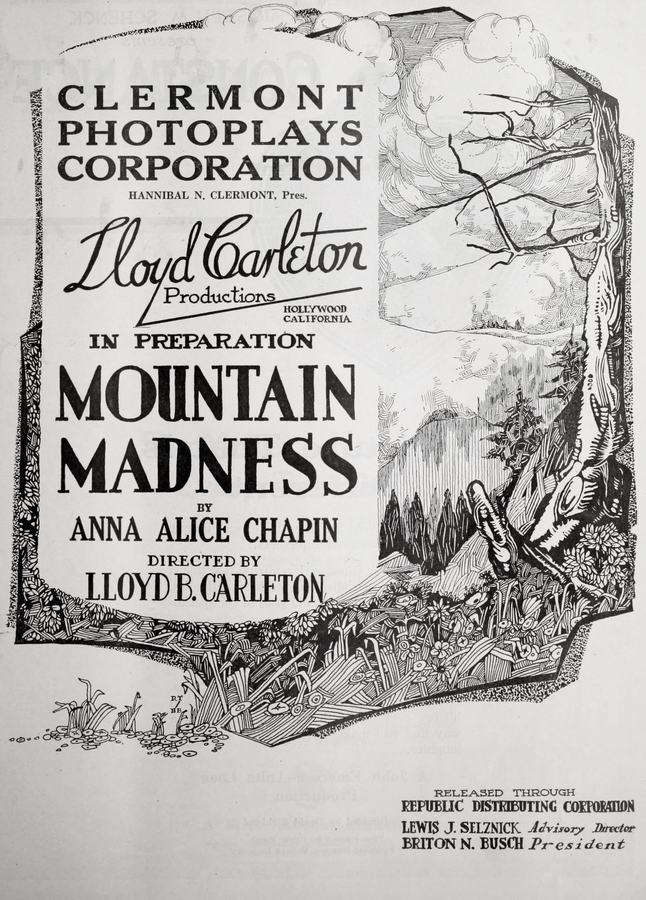
Witnessing the stylistic evolution of Lloyd B. Carleton through Mountain Madness is profound, audiences who connected with its message often look for similar thematic gravity. Each of these movies shares a piece of the thematic gravity that made Mountain Madness so special.
The synthesis of form and function in Mountain Madness to establish Lloyd B. Carleton as a true visionary of the 1920s.
After Enid and Jack Radnor, vacationing in the Virginia mountains, have a bitter quarrel, Enid meets Polly Mason and Martin Hale, who invite her to their cabin. There she discovers that something mysterious is happening in the mountains. When a train robbery occurs, the sheriff, believing that Martin is a member of the outlaw gang, demands his surrender. After many misadventures, Martin finally proves his innocence. Then Enid mysteriously disappears and is found unconscious at the edge of a cliff. Enid's mother comes to resolve her problems and recognizes Polly's father as an old sweetheart who quarreled with her many years before. Finally, Enid and Jack, after observing so many romantic separations, realize their deep love and are reconciled.
Mountain Madness was a significant production in United States, showcasing the immense talent of Jack Lott, Stuart Morris, Alfred Allen. It continues to be a top recommendation for anyone studying Drama history.
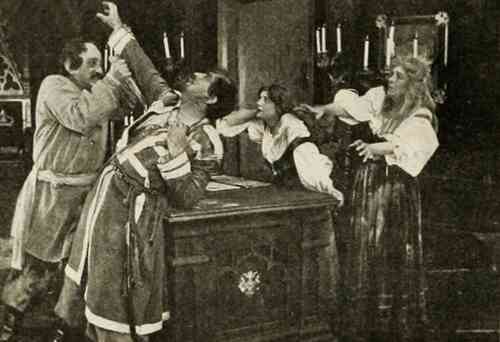
Based on the unique thematic gravity of Mountain Madness, our vault has identified these titles as the most compelling follow-up experiences for fans of Drama cinema:
Dir: Lloyd B. Carleton
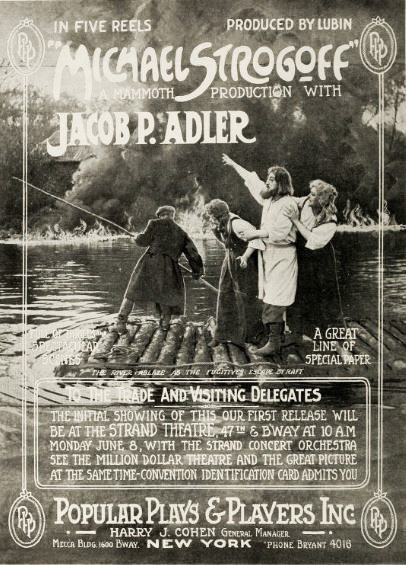
The Russian Czar sends his trusted confidant, Michael Strogoff, to warn his brother the Grand Duke of a Tartar rebellion that will be led by Feofar Khan and Ivan Ogareff.
View Details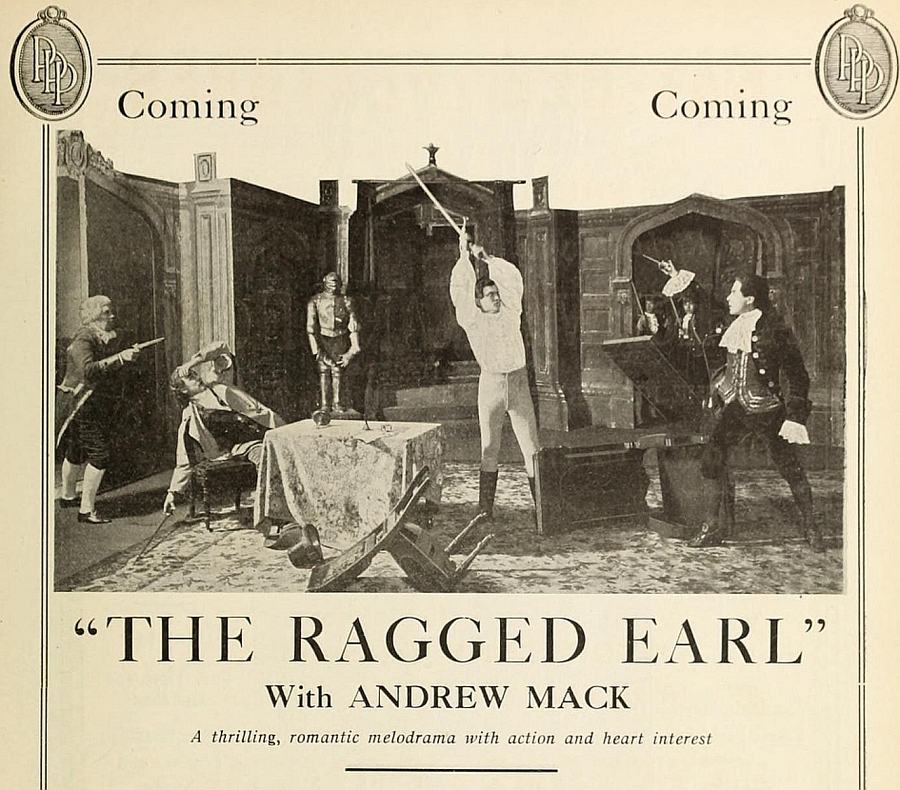
Dir: Lloyd B. Carleton
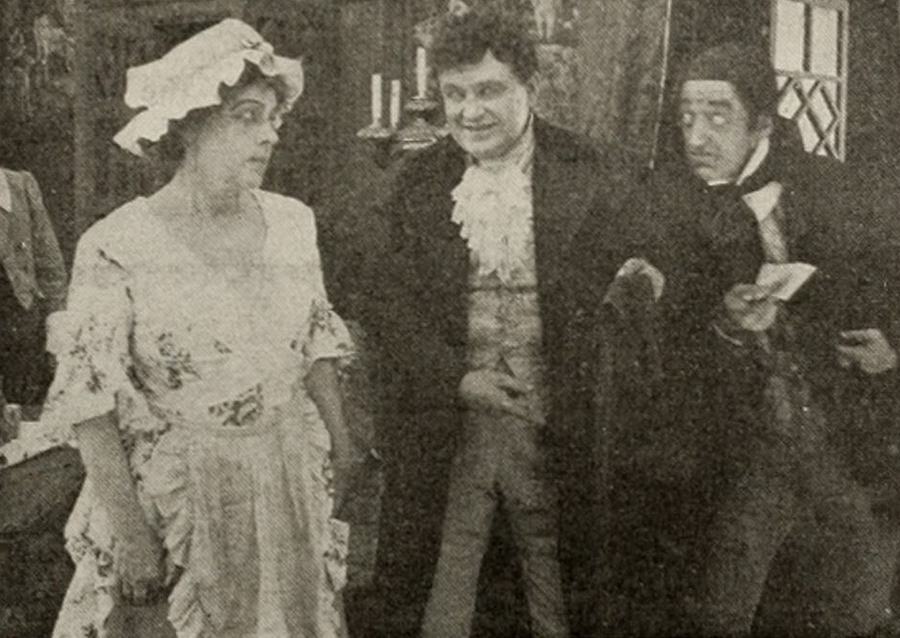
Gerald Fitzgerald, Earl of Kildare, whose estates are down-at-heel and out-at-elbows, owing to the improvidence of his ancestors, is known as "the ragged earl." Though creditors press and bailiffs threaten, he meets his problems with a laugh, trusting to a kind providence and his solicitors in Dublin to provide for his future. It had been the plan of Gerald's father that he marry a wealthy cousin, but the young Earl had always thought of marriage as a necessary evil in the life of every man, to be put off as long as possible. He heartily disapproved of a marriage prearranged. Bills have been piling up, however, and when he calls upon his solicitors for a remittance, he is surprised to receive a letter from them, enclosing the sum of twenty-three pounds, which is all that remains of the quarterly rent collection from the estate. In the letter, his solicitors respectfully suggest that it would be well for him to consider an early marriage with his cousin, in accordance with his father's wishes. Though he dislikes the idea, Gerald is forced to admit that it is the only means of saving the ancestral estates. At the nearby castle live Sir Henry Hardcastle, his mother, Mrs. Fitzmaurice, and her stepdaughters, Kathleen and Una. Sir Henry is also in financial difficulties, and aided by his mother, is endeavoring to persuade Kathleen to marry Lord Wildbrook, a wealthy old roué, who is willing to pay Sir Henry handsomely for his influence with the girl. Kathleen is heartbroken at the prospect, and after a stormy scene with her step-brother, disguises herself as a boy, and runs away, taking Una with her. In the morning Sir Henry discovers their flight, and sends one of his retainers, Ralph Forrester, after them. Ralph overtakes them, and is about to force them to return, when Gerald, who has heard Kathleen's screams, appears. He drives Ralph off, and takes the two girls to Kilkare Castle, never suspecting that Kathleen is other than she appears, a very handsome boy. At the castle Kathleen's manner arouses the suspicions of Sarah McHugh, the motherly old woman who had been Gerald's nurse, and who still thinks him a mere boy, in need of her protection and advice. She discovers Kathleen's true sex, but, greatly attracted by the girl, promises to keep it a secret from Gerald. The Ragged Earl has decided to contract the marriage with his cousin and writes a letter to his aunt, requesting permission to call upon them in Dublin. This letter falls into the hands of Ralph, who has been sent by Wildbrook and Sir Henry to kidnap the girls, with promises of a large reward if he succeeds. Ralph manages to reach Kathleen and shows her the letter. Gerald has already awakened her love, and when she sees this evidence of his intention to marry, she agrees to return with Ralph. That night she steals from the castle, with the sleeping Una in her arms, and returns to her step-brother's house. When Gerald learns of their departure, he makes a formal call upon Sir Henry, inquiring for "Edward," the name under which Kathleen has posed as a boy, but is told that "there is no such person as Edward in the castle." He is forced to accept this as the truth, and, believing that Kathleen has gone elsewhere, he returns to Kilkea. There he tells Sarah of his failure, and she, suspecting the truth, goes to Hardcastle's, where she sees Kathleen. She tells Gerald that the boy is there, and he dashes off with Larry and Patrick, two of his retainers, to rescue "Edward." When he arrives, he scales the balcony to the great hall of the castle, where he finds Kathleen in her true person. When he realizes that the "beautiful boy" is really an even more beautiful girl, he is determined to rescue her. He succeeds in abducting Wildbrook. and in getting Kathleen out of the castle in the care of Larry and Patrick, but his own escape is cut off by Ralph Forrester and Sir Henry. In the fight which follows, Gerald is disarmed. He is at the mercy of Sir Henry's blade when he spies a suit of ancient armor supported by a huge two-handed sword. He overturns tables and chairs in Sir Henry's path, reaches the armor and secures the sword. Fighting off his opponents, he manages to cut his way through the great window and escape. Gerald's retainers and peasants have been aroused by Sarah, and have come to his assistance. A fierce battle is in progress between his men and the Hardcastle retainers. The clubs of Gerald's forces are no match for the Hardcastle swords, however, and his men are slowly beaten off. Kathleen is enraptured by Sir Henry, and is taken to the castle. Gerald escapes and is returning to Kilkea, discouraged, when he overtakes Wildbrook, who is fleeing in terror. He conceives a plan and in a secluded spot he forces Wildbrook to change clothes with him. Then he returns to Sir Henry's castle. He learns that Kathleen has been taken to a neighboring church, and that a servant has been sent to find Wildbrook. in order that the marriage may take place at once. Believing Gerald to be the old Lord, the servant tells him to hurry to the church. He reaches the chapel, and manages to disclose his real identity to Kathleen and the priest. Kathleen of course agrees to the marriage, much to the surprise of Sir Henry. As the party leaves the church, Lord Wildbrook, dressed in Gerald's clothes, stumbles in. In the darkness he is mistaken for Gerald, and is nearly killed by Ralph before he can make himself known. When his identity is learned, Gerald is made a prisoner, but is saved by Mrs. Fitzmaurice, who arrives, declaring that he has fairly won Kathleen. She gives her blessing to the Earl and Countess of Kildare.
View Details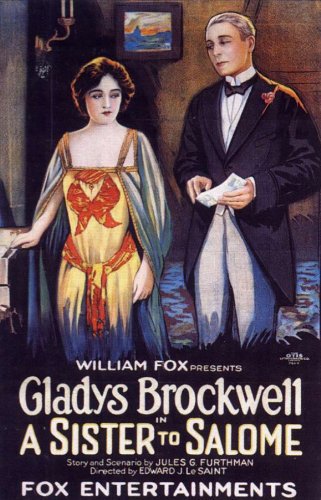
Dir: Edward LeSaint
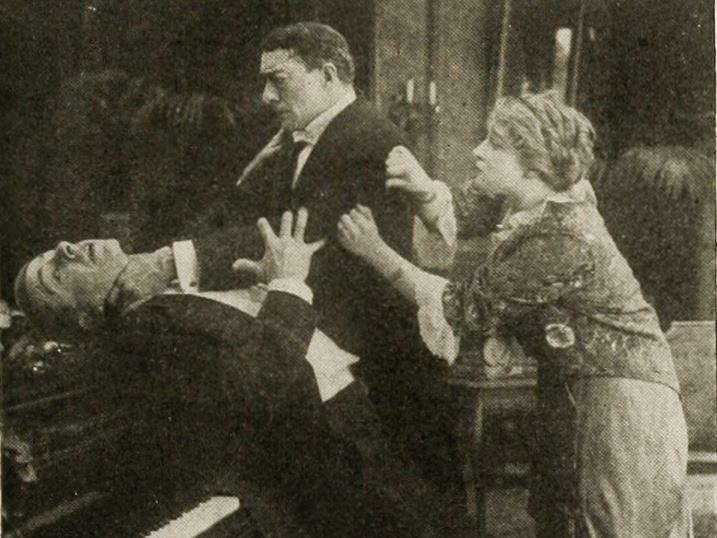
When famous opera singer Elinore Duane undergoes an operation on her throat, she has a series of ether-induced visions. In one, she is transported to ancient Rome where she appears as a much-admired woman in love with Paul, a young heretic, and at odds with Lutor, the high priest. To save her love, she poisons Lutor with her ring. After several other visions which involve variations on this love triangle, Elinore awakens to discover that Lutor is actually her doctor, Sascha Jaccard, and that Paul is the son of a friend who has come to visit the recovering prima donna.
View Details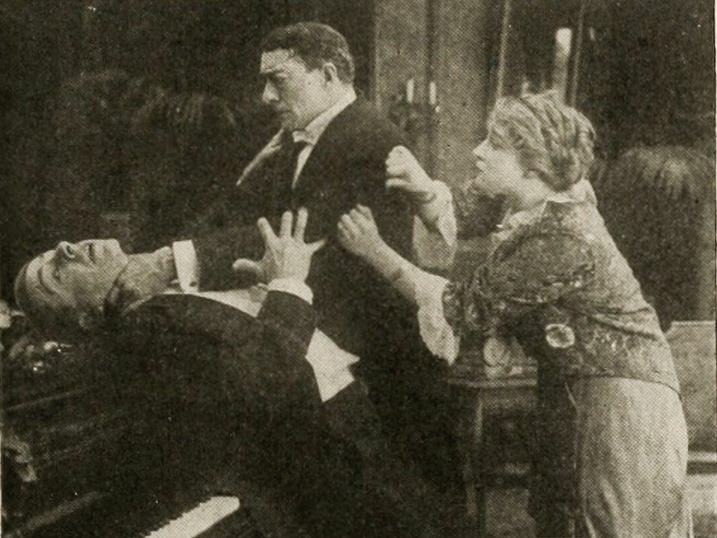
Dir: Lloyd B. Carleton
Jack Frobisher, a sheep farmer in Queensland, has returned to England a millionaire, bought his way into the inner circle of Vanity Fair, married the daughter of a marquis, and settled in Mayfair, with a country house outside, a shooting box in Scotland, and a yacht on the "Solent." Having accepted the patronage of a titled family, he is forced to lend money to his father-in-law, and having fallen in love with a society woman, he becomes a witness of the vacuous amusements of the smart set. He settles her score when she is a very heavy loser at bridge and watches her flirtations with fashionable idlers in general and with a contemptible rake, Harry Dallas, in particular. The return of Hanky Bannister, one of his Australian pals, and a millionaire like himself, opens the way for a patrician intrigue for the enrichment of the marquis' family by the marriage of Lady Lucy Derenham. Frobisher is unable to interest Eva, his wife, or her relations in his schemes for making a good use of his money in the erection of sanitary dwellings in the East End, and he is disgusted with the tendencies of fashionable life and anxious to keep his friend, Bannister, out of a marriage similar to his own. A sympathetic friend Lady Westerby, tells him that she is disappointed in finding him so tame a bear, and assures him that he has only to shout and the walls of Jericho will fall flat. At the marquis' house during a ball, and a game of bridge in Lady Alethea Frobisher's boudoir, during which one of her titled players cheats, wins a lot of money and suddenly discovers that he has an engagement and must go. The most serious flirtation of the smart wife ends in a declaration of love by Harry Dallas, which is interrupted by the gloomy, serious husband. The trumpets of rams' horns are blown, and the Australian shouts before the Jericho of smartness. The battle opens when Frobisher insists upon helping the titled brother-in-law to marry a girl whose honor his been compromised and to make a fresh start in the colonies. The Marquis is angry over the Australian interference with family coat of honor, and Lady Alethea attempts to reduce the rebel to submission by sarcastic flings at his tiresome virtue. The trumpets sound again when Frobisher attempts to prevent a marriage between his sister-in-law and the infatuated Bannister by telling him how heartless and mercenary she is, and there is another blast when the rake, Harry Dallas, is compelled to read to the indignant husband a love letter written to the wife. The Walls of Jericho are rent asunder and thrown down when Frobisher announces that he will sell his property in England and go back to Queensland with his wife and child. The welkin rings when this social Joshua guarding the ark of the covenant of manhood shouts in trumpet tones, "I have enough of these companions of yours, these wretched sexless women who do nothing but flirt and gamble. I've had enough of their brainless, indecent talk, where everything good is turned into ridicule and each word has a double meaning. I've had enough of this existence of ours, in town and country, where all the men make love to their neighbors' wives. I'm done with it. done with it all." Furious as is the onslaught, Lady Alethea offers stubborn resistance and refuses to surrender. Later, with the mediation of Lady Westerby, before a reconciliation can be effected and Frobisher enabled to carry her off to Queensland. By that time the Walls of Jericho are indeed fallen flat.
View Details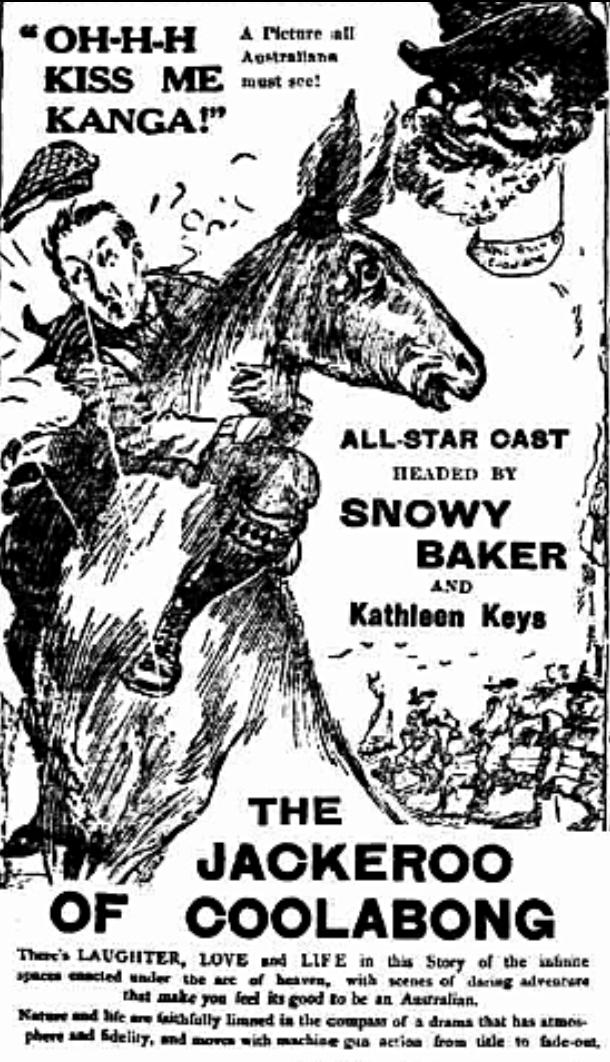
Dir: Wilfred Lucas
Brian O'Farrell (Snowy Baker), is an English 'new chum' who takes a job at an Australian cattle station. He is teased by station hands because of his appearance (including spats and a monocle) but he soon impresses them with his skills at riding and boxing. The station manager, John MacDonald (Wilfred Lucas), takes O'Farrell to Sydney to meet his daughter Edith (Kathleen Key) who is working in the slums. Edith is kidnapped by criminals after witnessing a crime but O'Farrell rescues her. It is later revealed he is the owner of the station.
View Details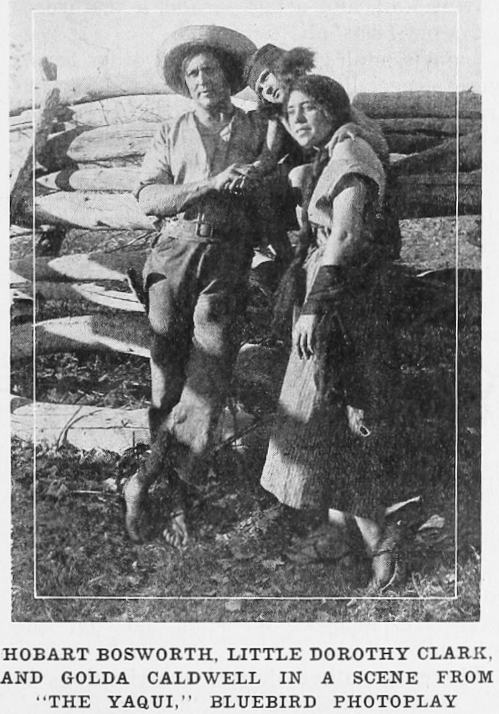
Dir: Lloyd B. Carleton
In Mexico, a poor Yaqui Indian loses his family through the actions of a racist Mexican officer named Martinez.
View Details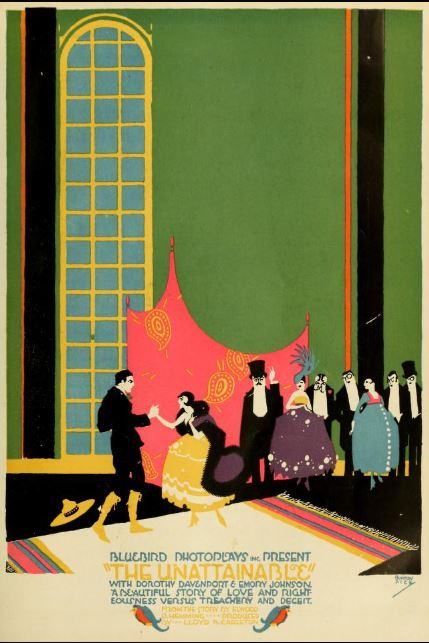
Dir: Lloyd B. Carleton
Bessie Gale, known in New York night life as "the unattainable," is pursued by Henry Morton, wealthy clubman. Morton follows Bessie across the continent, traveling with the theatrical company of which she is a member. In crossing the Sierra Nevada Mountains the girl is particularly impressed with the scenery, and at a way station where the train stops for a few moments Bessie alights and strolls so far away from the depot she is unable to return in time to board the train when it proceeds. She finds shelter for the night at Robert Goodman's home, intending to rejoin her company when the next train comes along the following day. The receipt of a telegram discharging her for missing her train changes her plans, and Bessie settles down at the Goodman home for a stay of indefinite duration. Robert Goodman's mother takes a great fancy to Bessie and Robert falls in love with her. Finally they are married, but the longing for her old life is never quite stifled within her and Bessie rejoices when she is sent to New York by her husband to negotiate the sale of his formula for preventing disease among sheep that is just then devastating the flocks throughout the country. Bessie collects an immense check and contracts for royalties that make Robert a millionaire, and is about to start home when she accidentally meets some of her former associates. The call of the stage is renewed with resistless vigor when Bessie is offered an engagement by her former manager. Morton hears of her presence in town and renews his efforts to attain "the unattainable." Bessie writes to her husband that she is going back to the stage. Robert senses trouble for her and comes to New York without notifying her. He finds her dining with Morton under conditions any husband would resent, and when Morton is unable to defend himself from the physical retribution Robert rains upon him Morton shoots the husband in the coward's target, his back. The tragedy restores Bessie to a realization of her perfidy and folly; Morton acquires a streak of unheard of manliness and when Robert is taken to the hospital the clubman offers his blood for transfusion to Robert's veins that the life of his victim may be saved. The blood test reveals that Morton's blood would poison the stricken Robert and then Bessie is accepted as a volunteer to give her blood to save her husband's life, an operation that is entirely successful.
View Details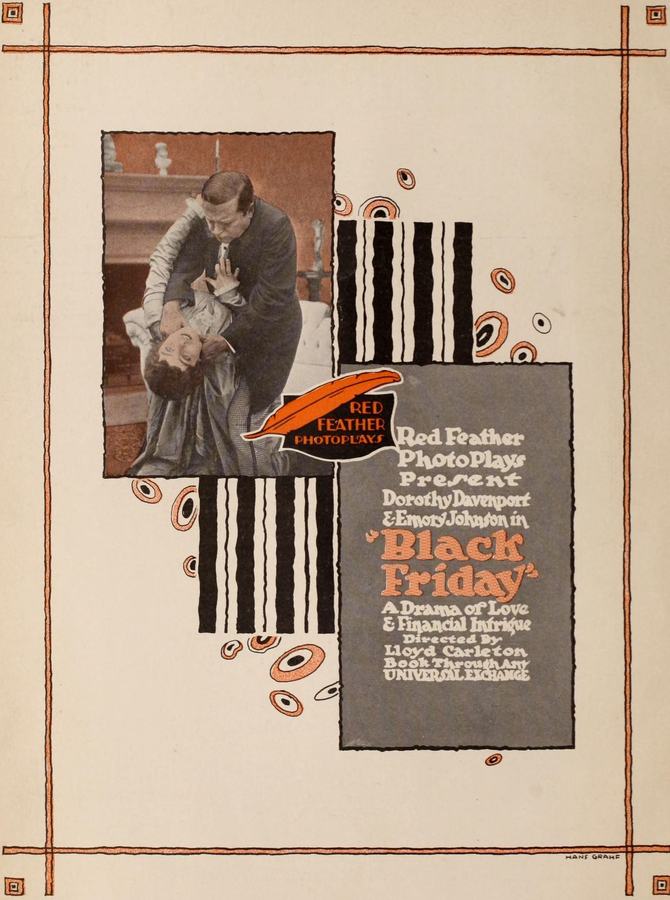
Dir: Lloyd B. Carleton
Railroad tycoon Richard Strong discovers that his enemies are scheming to bankrupt him. Strong enlists the help of Charles Dalton, and together they foil the plot. By chance Dalton meets Strong's wife, Elinor.
View Details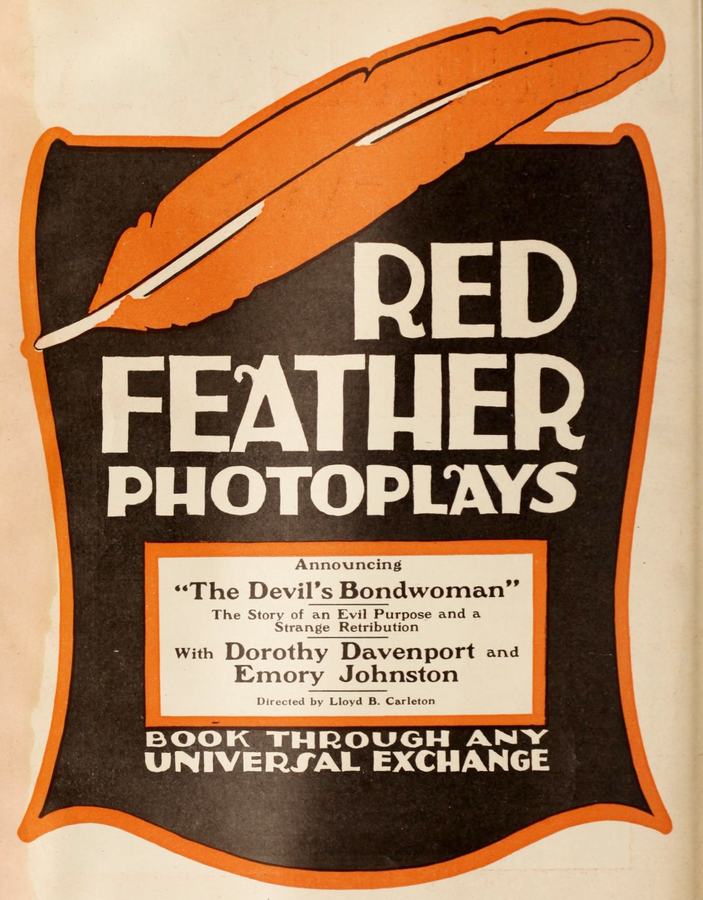
Dir: Lloyd B. Carleton
Satan has added his last touches to the mortal and feels the "Man" is ready to navigate the road of life. Satan returns to Hell, discovering the spirits have created another mortal. Satan declares this mortal a "Woman."
View Details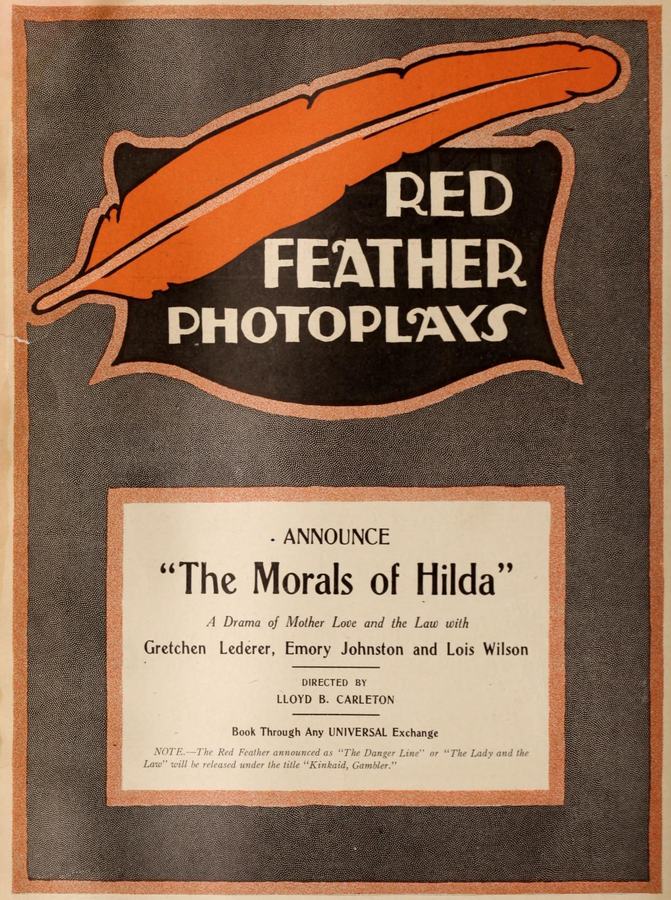
Dir: Lloyd B. Carleton
August and Hilda are recent immigrants who cannot understand the American emphasis on weddings, because in their country, couples never get married. Fearing that he will be arrested for living with a woman who is not his wife, August stows away on a ship and dies in a wreck at sea. Afterward, Hilda tries to commit suicide, but rich Esther Grail saves her, and then adopts her infant son Stephen. Years later, Esther tells him the circumstances of his birth, and so Stephen goes on a crusade for the rights of illegitimate children. He is soon elected governor, but during his inaugural speech, a fanatic tries to shoot him. Hilda, however, not having seen Stephen for years but deciding to come hear him speak out for the underprivileged, sees the madman and, jumping in front of her son before the bullet hits him, dies in his place.
View DetailsAnalysis relative to Mountain Madness
| Film Title | Atmosphere | Complexity | Similarity |
|---|---|---|---|
| Michael Strogoff | Tense | Dense | 90% Match |
| The Ragged Earl | Gritty | Layered | 93% Match |
| A Sister to Salome | Gothic | High | 88% Match |
| The Walls of Jericho | Tense | Abstract | 94% Match |
| The Jackeroo of Coolabong | Ethereal | High | 85% Match |
This guide was algorithmically generated using the cinematic metadata of Lloyd B. Carleton's archive. Last updated: 8/16/2026.
Back to Mountain Madness Details →