
DbcultAccessing Vault...
Recommendations
Senior Film Conservator
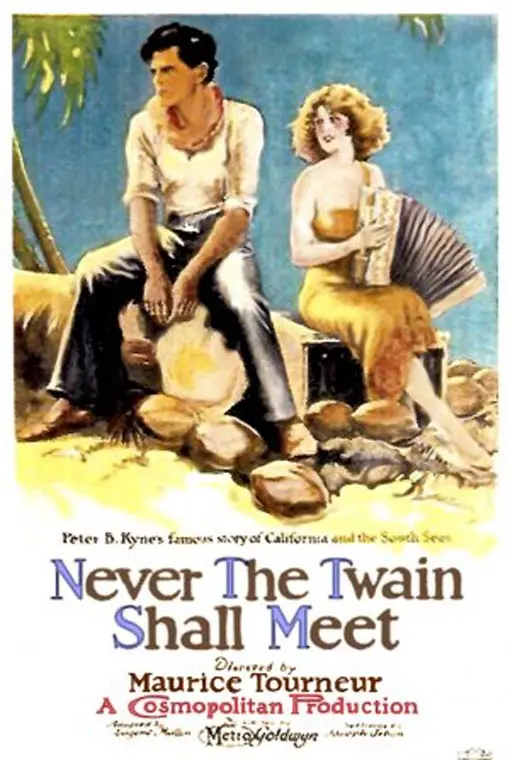
Exploring the nuanced performance in Never the Twain Shall Meet is a journey into United States cinema, its influence on Drama cinema remains a vital reference point for fans today. Below, we've gathered a list of films that every fan of Maurice Tourneur's work should explore.
With Maurice Tourneur at the helm, Never the Twain Shall Meet became to blend thematic complexity with stunning visual execution.
Exemplifying Kipling's adage, a white man falls to pieces when he is in the South Seas.
Based on the unique nuanced performance of Never the Twain Shall Meet, our vault has identified these titles as the most compelling follow-up experiences for fans of Drama cinema:
Dir: Maurice Tourneur
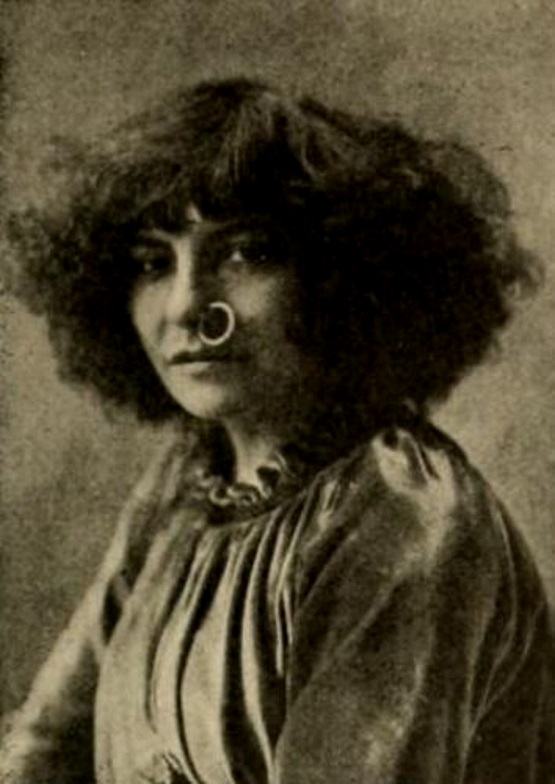
Mafflu, the old clown, out walking is greatly surprised to see a baby girl, fast asleep, holding in her hand a chunk of bread, at which a large number of sparrows are pecking. Mafflu decides to take the child away with him and care for it. He does this, but upon arriving at the circus where he is employed, the owner and the rest of the company have but a cold greeting for the little newcomer. However, Mafflu clings to the child. The Sparrow, as she is called, grows up and becomes the drudge of the circus. One evening, though worn out by fatigue and hunger, she must still prepare for the evening show. Scarcely has she mounted her horse and made a few rounds of the arena, when she falls and lies unconscious in the center of the arena. Romarin is in a rage and strikes the girl. Mafflu is disgusted and sends an official to the mayor. M. de Ganges, who that night happened to be a spectator. M. de Ganges takes the Sparrow with him to his home and she bids farewell to the only two beings she has ever loved, her adopted father and a poodle. Next morning, on awaking, she can hardly believe that all the beautiful things about her are a reality. The dream is indeed but a fleeting one. The Sparrow is received with jeers and mockery when she puts in an appearance in the servants' dining-room for her meals. A few days later a horse runs away in the park and the Sparrow cleverly manages to master it. This makes the groom, Charley, madly jealous. Charley abuses the Sparrow and a free fight ensues. M. de Ganges intervenes, and, disgusted with the groom's impudence, discharges him. The Sparrow is now received into the intimacy of the Mayor's family. She has fine clothes and jewels. A friend of the family, the banker Schlemmer, spends a few days at the mansion and is strangely attracted to the Sparrow. The attraction is not reciprocated, for, by degrees, the Sparrow falls in love with M. de Ganges. Alas, one day, she surprises him in a close embrace with his cousin. She is jealous. Schlemmer still persecutes the Sparrow to the extent of doing her violence. She decides to leave the house. In a few lines she thanks her benefactors for their goodness and announces her departure without, however, revealing its real cause. The Sparrow signs a very profitable contract with a new circus and she forgets, to a certain extent, her former disappointments. However, her troubles are not over yet. Charley, engaged as groom at the circus, finds occasion to exercise his hatred. After a first performance, the Sparrow goes to her dressing-room to change her costume for a second appearance. When, on hearing a noise, she turns around, and is horrified to see Schlemmer, introduced there by the groom, and who endeavors to abuse the girl, who defends herself energetically. Fortunately for her, Mafflu and the stage manager, wondering why she does not appear, enter her room and put an end to the trouble. Although not quite recovered from the shock, the Sparrow, nevertheless, takes her place on the central platform, where she is to perform her aerial act. M. de Ganges and his young wife are also spectators. In seeing the one she loves and who is forever lost to her, the Sparrow is painfully affected and, without ceasing to look at him, she makes a sudden leap, misses the rope along which she was to glide to earth, and crashes to the ground. Mafflu, in tears, picks up the girl, whose back is broken, and carries her away. M. de Ganges, deeply moved, comes to her and the Sparrow has, at least, the consolation of beholding before her death the dear face of the loved one.
View Details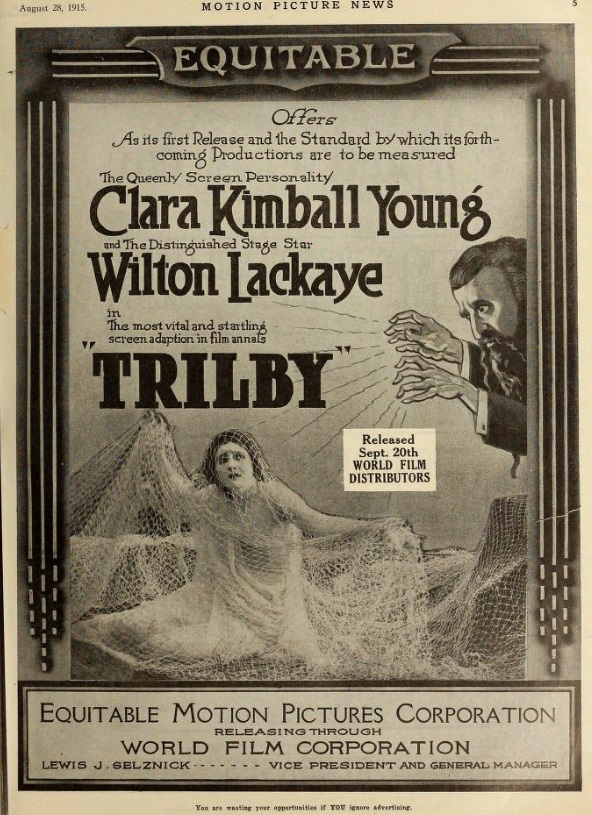
Dir: Maurice Tourneur
A hypnotic Svengali controls the singing voice of a young starlet, but he cannot control her heart.
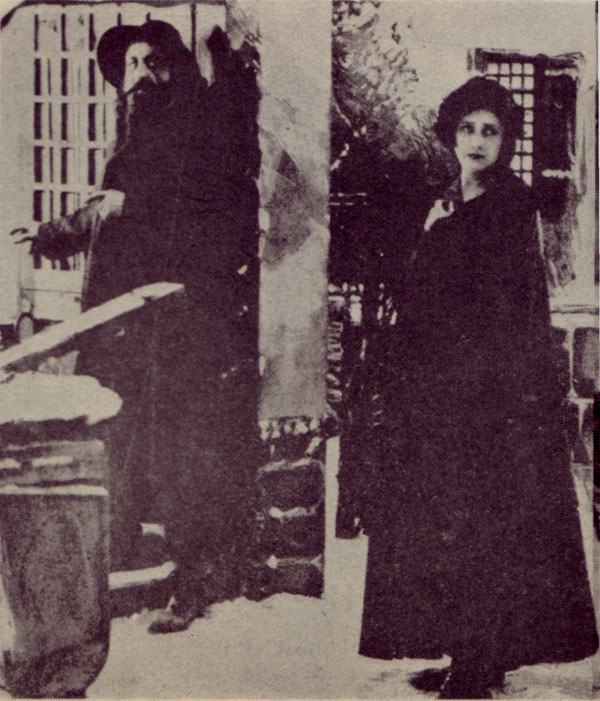
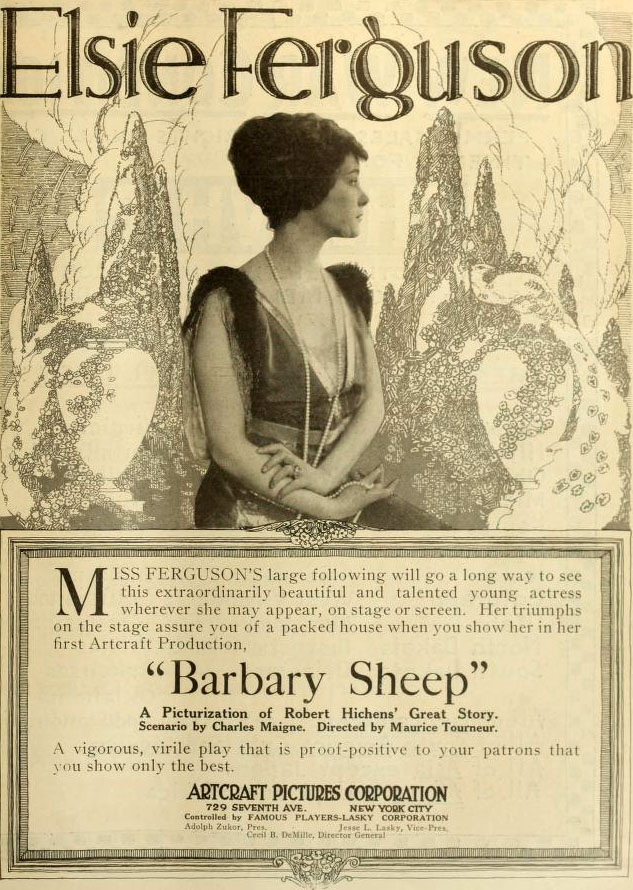
Dir: Maurice Tourneur
Arriving with her husband in Arabia, Katherine Wyvrne is ready for romantic times in the exotic Middle East, but her aristocratic husband prefers to be out hunting "Barbara sheep" than fulfilling his wife's desires. She soon meets up with the dashing Arab chief Benchaalai and falls for his charms, but he has a much more sinister goal in mind for her than romance.
View Details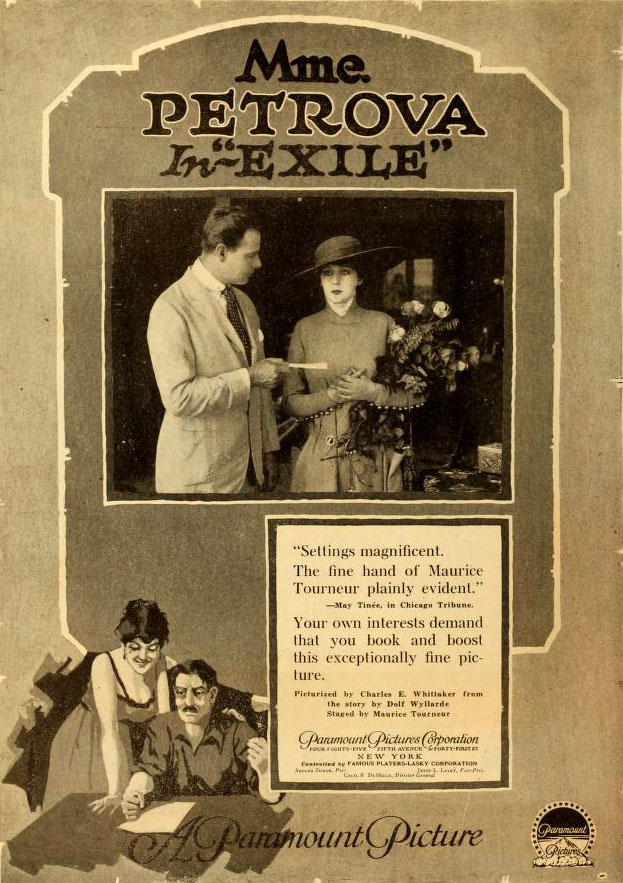
Dir: Maurice Tourneur
Vincento Perez, the governor of the Portuguese colony of Exile, is an unscrupulous and brutal man who is hated by the natives. Furthering his schemes, Perez tries to force silk dealers out of business, and reveals his plans to government engineer Richmond Harvey in a letter appealing for the American's help. The engineer threatens to expose the plot and Perez, facing ruin and death, sends his wife Claudia to Harvey to offer herself in exchange for the letter. In Harvey's bungalow, Claudia confesses her love for the American who, refusing to take advantage of the situation, offers her the letter. She returns to her husband, only to meet with humiliation. After much abuse, the natives finally rebel against the governor who is lynched by the mob. Claudia is rescued by Harvey and the two face a happy future together.
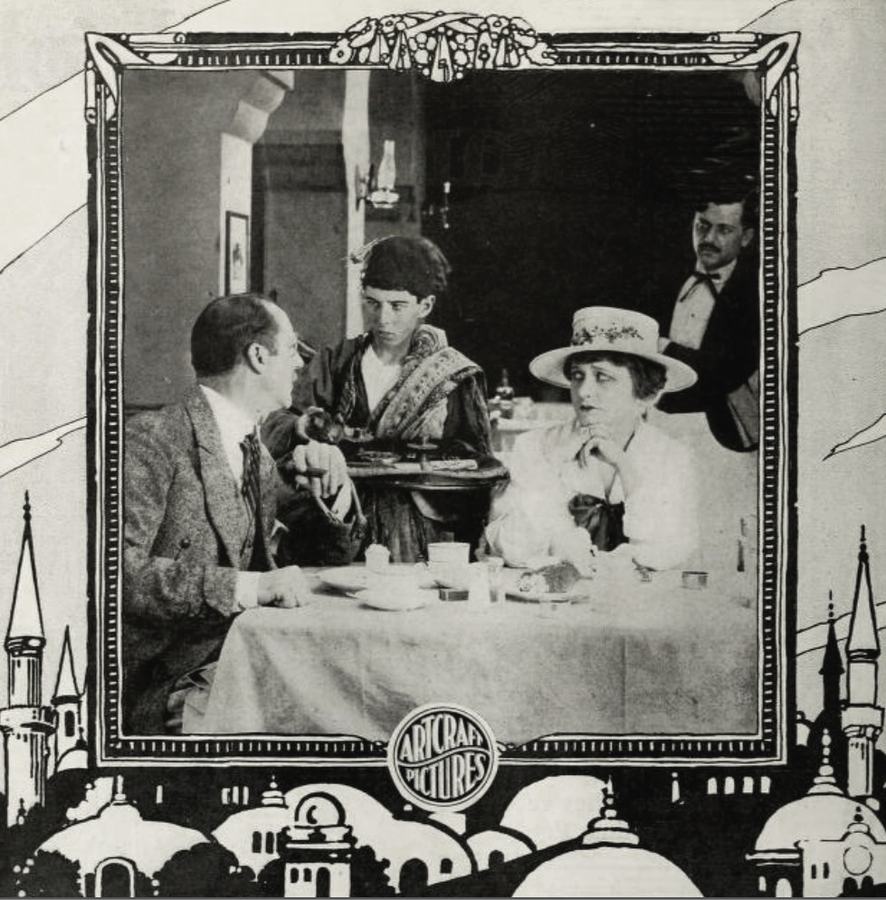
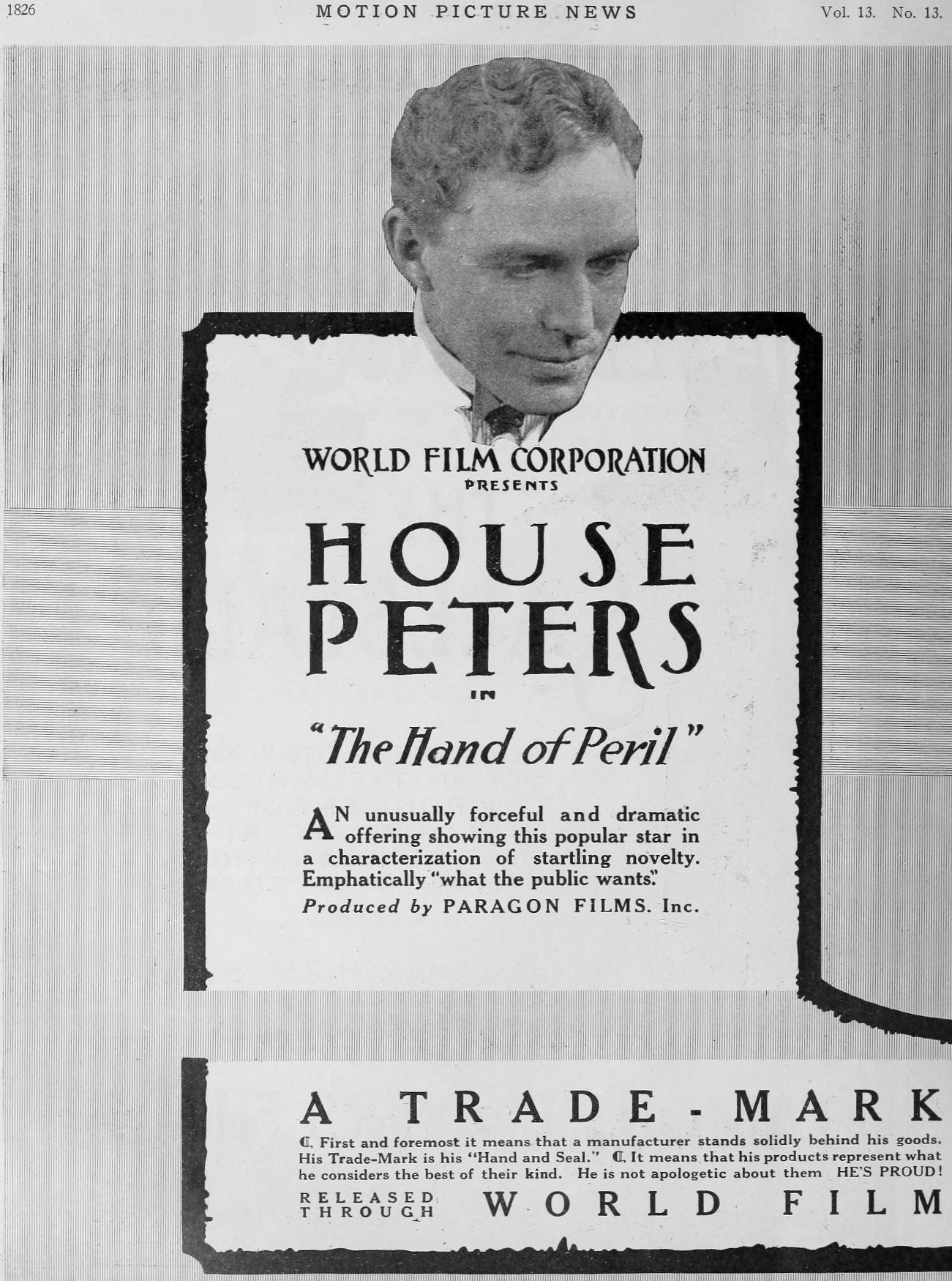
Dir: Maurice Tourneur
James Kestner is a government secret agent on the trail of a band of counterfeiters and particularly anxious to locate the head of the gang, Frank Lambert, who, in addition to his skill as a counterfeiter, is known to the underworld as the only man who can fill in the perforations of a used bank check. Kestner locates the band in their underground work shop near the river front. He cleverly maneuvers his way into the headquarters of the band when it is empty, but is caught in the act of searching for incriminating evidence by "Bull's Eye" Cherry, a clever girl crook, and one of the mainstays of Lambert's crowd. Lambert and his daughter, who has been educated in crime by her father, return to find Kestner held at the point of Cherry's revolver. Lambert is for killing the detective outright. Impressed by Kestner's brave demeanor, Maura intercedes in his behalf, but finding her father determined in his intention to kill the government agent, she pretends that the police are outside. The counterfeiters make their escape without settling accounts with Kestner. Kestner locates the criminals in their new quarters. One of his assistants trails "Bull's Eye," who has the new counterfeit plates in her possession, but she cleverly evades capture and returns the plates to Lambert's headquarters. Kestner forces his way into the gang's rooms, arriving just in time to witness a desperate battle between Lambert and Tony Morello, one of his accomplices, whose passion for Maura has led him to attempt to force his advances upon her. Lambert kills Morello with a knife, but before dying the man acquaints Maura with the fact that Lambert is not her real father, but that he stole her when a baby and reared her to this life of crime. Kestner places Lambert under arrest, but the crook evades capture a second time by a ruse. Kestner's assistant arrives with the police, but Kestner permits Maura to go free on account of her having saved his life on the occasion of their first meeting. Kestner is determined to capture Lambert single-handed. He trails him to a midnight rendezvous on a wharf, where he and Lambert fight it out to a finish. The revolver battle between the two men in the dark culminates in a hand-to-hand encounter in which Kestner ultimately proves victor, but has barely strength enough to handcuff himself to his unconscious opponent before collapsing. In the end Kestner induces Maura to return to the straight road, and she takes up her home with his mother. The story closes with the intimation that the romance so strangely begun will lead, as time passes, to a life of happiness for them, together.
View Details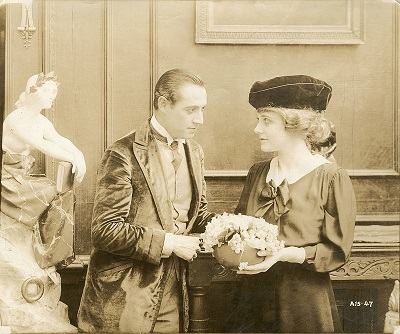
Dir: Maurice Tourneur
A resourceful young girl struggles to free herself from slum life.
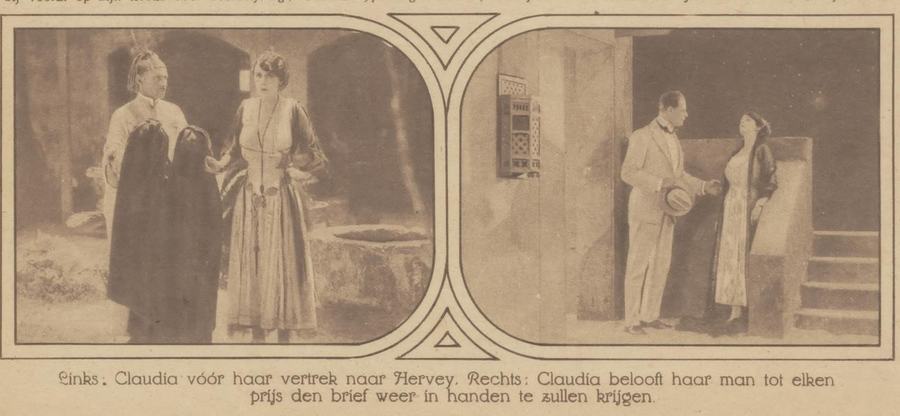
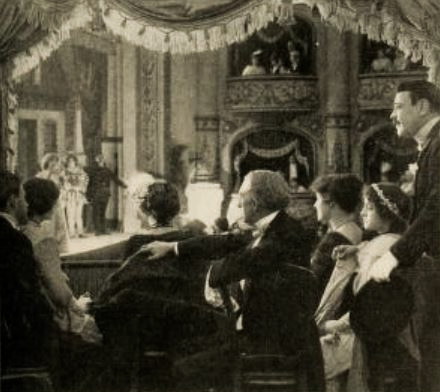
Dir: Maurice Tourneur
Novice businessman Curtis Jadwin ( Wilton Lackaye ) is introduced to the world of grain speculation by veteran broker Charles Cressler ( Alec B. Francis ). At a performance of Faust , Curtis meets and falls in love with Laura Dearborn ( Gail Kane ), the sweetheart of artist Sheldon Corthell ( Milton Sills ). Curtis pursues Laura and finally convinces her to marry him, but soon after their wedding, he neglects her for his business. In her loneliness, Laura renews her relationship with Sheldon and the lovers plan to elope. When Curtis is ruined on the market, however, Laura rejects her lover and comforts her husband.
View Details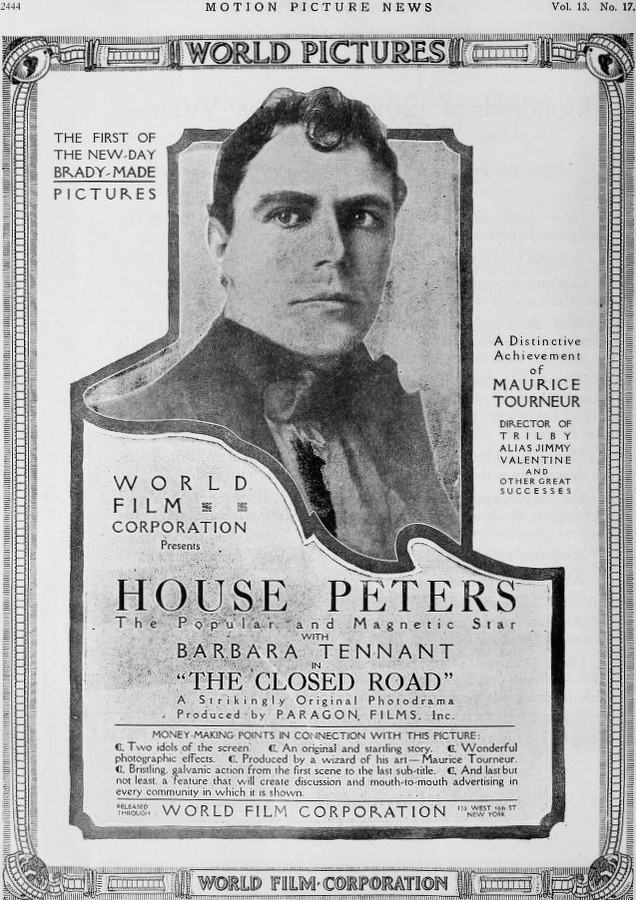
Dir: Maurice Tourneur
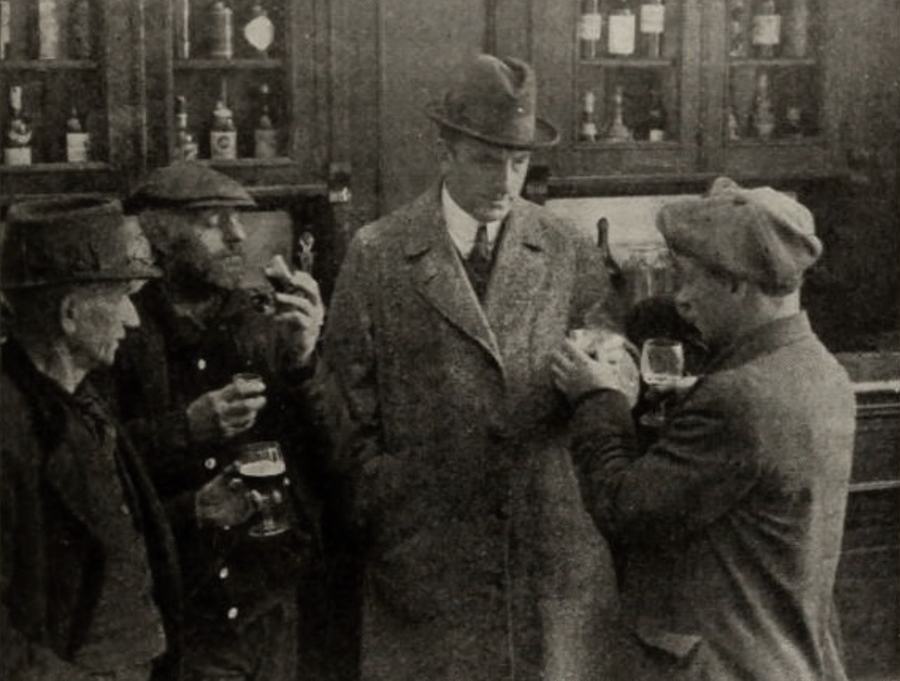
Dr. Hugh Annersley, assisted by Dr. Appledan, has succeeded in finding a cure for cancer. Julia, Dr. Annersley's sister, comes home with Griswold, a former client of the doctor, and to whom he still owes money. Griswold did not enter the house, Annersley saying to Appledan that if Griswold would pay him what he owes, he could then continue his work with the medical discovery. Griswold, now being attended by Appledan, Annersley decides to write him a letter, in which he states that unless he is paid within twenty-four hours, that he will go to Griswold's apartment to collect the account himself. Appledan takes the letter to Griswold himself. In giving medicine to Griswold, Appledan gives him an overdose, resulting in his sudden death. To ward off suspicion, Appledan places Annersley's letter threatening violence to Griswold on the latter's table, and firing two shots out of a revolver, the aged doctor leaves the room. When the police investigate they find the revolver on the floor, and on it is carved Hugh Annersley's name. Circumstantial evidence in the form of the revolver and letter points to Annersley. He is placed under arrest and charged with the murder. Julia, calling upon Appledan, notices the old doctor laughing hysterically as Frank Sargeant, a well-to-do young man, leaves his office. He tells Julia that he has just warned Sargeant he could not live more than a couple of months on account of the poor condition of his heart. With this knowledge, Julia starts in search of Sargeant, and finds him in an old quarry just as he was to commit suicide. She persuades him to listen to her. She unravels to him the story of her brother's plight, and of the fact that he could save millions of lives were he able to continue with his cancer cure. That as he, Sargeant, could not live long and was on the verge of committing suicide, would assume the murder of Griswold, clear Annersley of the charge, and thereby be of some good to humanity. Sargeant agrees and fabricates circumstantial evidence against himself so strongly that he is arrested and convicted of the crime. While awaiting electrocution, Sargeant learns that his heart was never affected, that old Doctor Appledan was mentally unbalanced, and then confined to an insane asylum. Upon learning this, Julia sets out to clear Sargeant and reverse the wheels of destiny against him. The old doctor confesses that he gave Griswold an overdose of medicine and to clear himself had placed Annersley's letter and pistol near him, thereby clearing Sargeant. How Julia repaid Sargeant for his great sacrifice by her love and affection brings the picture to a dramatic and happy ending.
Dir: Maurice Tourneur
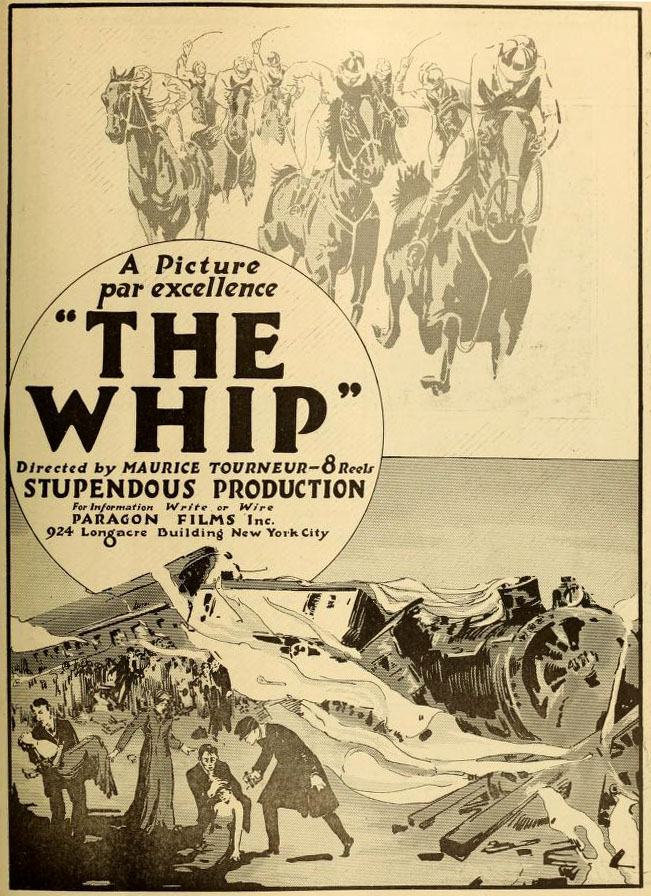
The story of the training of a racehorse, the Whip, of the amnesiac nobleman who loves the horse, and of the villains who attempt to keep it from racing.
View Details
Dir: Maurice Tourneur
The wealthy but selfish parents of a lonely young girl begin to rethink what is important to them after a servant's irresponsibility results in a crisis.
View DetailsAnalysis relative to Never the Twain Shall Meet
| Film Title | Atmosphere | Complexity | Similarity |
|---|---|---|---|
| The Sparrow | Gothic | Linear | 94% Match |
| Trilby | Ethereal | Dense | 97% Match |
| Barbary Sheep | Tense | Abstract | 91% Match |
| Exile | Surreal | High | 91% Match |
| The Hand of Peril | Surreal | Layered | 94% Match |
This guide was algorithmically generated using the cinematic metadata of Maurice Tourneur's archive. Last updated: 6/21/2026.
Back to Never the Twain Shall Meet Details →