
DbcultAccessing Vault...
Recommendations
Senior Film Conservator

The artistic legacy of Frank Powell was forever changed by Officer 666, this cult landmark continues to dictate the rules of its category. We've assembled a sequence of films that complement the tone of Officer 666 perfectly.
The vintage appeal of Officer 666 to maintain its cult relevance across several decades.
Travers Gladwin, a young millionaire, returns incognito from abroad with his Japanese servant, Bateato, after cabling his chum Whitney Barnes to meet him that evening at the Gladwin mansion. Al Wilson, a picture thief, arrives from Europe the same afternoon. He has obtained keys to the Gladwin mansion from a dismissed servant of Gladwin's and, parading under the other's name, wins the love of romantic Helen Burton with whom he plans to elope at ten thirty that night. Bateato goes to the mansion at once and excites the suspicions of Phelan, "Officer 666," whom he finally satisfies as to his identity. A few minutes later Whitney Barnes reaches the home, followed shortly after by Travers. This visit is interrupted by the arrival of Helen Burton and her friend, Sadie Small, and Helen explains that she intends that evening to elope with her sweetheart, Travers Gladwin. Amazed at first, Travers scents trouble and then pretends an intimate friendship with Gladwin. Barnes, under the influence of a brilliant idea, takes Sadie aside and advises that she tell her aunt of the proposed elopement. Both girls leave, promising to return at 10:30. Gladwin at once determines upon a plan, brings in "Officer 666," borrows his uniform and, sending Phelan to the kitchen with Bateato, goes into the street, where he purchases a false mustache and returns. Sadie and her aunt call and Gladwin hides, leaving Phelan and Barnes to face the music. After threatening to have them arrested, the two women leave in high dudgeon, the house is darkened and Barnes and Phelan go into the kitchen to entertain themselves in anticipation of Wilson's visit. Promptly at ten, Wilson slips into the house and begins cutting valuable oil paintings from their frames. He is surprised by the sudden appearance of Gladwin in Phelan's uniform and immediately puts the pseudo-policeman to work helping him pack the canvases. Helen arrives and does not recognize Gladwin in his false mustache and policeman's uniform, but when Wilson goes upstairs for a moment, Travers quickly explains the situation, advising Helen to be quiet to avoid scandal. In the meantime the excitable Japanese, Bateato, alarmed at the strange doings, brings a captain and two patrolmen toward the house. Phelan enters the parlor and demands the return of his uniform, explaining the matter to Wilson. Travers dares not tell the truth for fear of implicating Helen for whom he has already formed a strong attachment. Thus Wilson easily brands Gladwin as the real thief. Meantime at Phelan's approach, Helen hides herself in the hallway clothes closet. At this juncture the police enter with the Japanese and Phelan denounces Gladwin. The captain praised Phelan and sends him on his beat. The Japanese, seeing a door partly open, reaches in and drags Helen into the parlor. Barnes, attracted by the noise, enters from the kitchen and a patrolman promptly claps the handcuffs on that unfortunate gentleman, much to his subsequent misery and woe. Helen takes advantage of the confusion to slip into the closet. The situation is further complicated by the arrival of Sadie and her aunt with a half dozen policemen. One of them takes a long look at Wilson, recognizes him as an old offender and steps forward to arrest him. Instantly Wilson throws the room into darkness and jumps unseen into a large chest. The police scamper in all directions, leaving Gladwin alone in the parlor. A moment later Wilson emerges, revolver in hand, and exchanges some pleasantries with Gladwin, who for Helen's sake is anxious that the thief should escape. A fresh wagonload of police arrive and among them Phelan, who, seeing Galdwin at liberty in the parlor, promptly leaps upon him. The captain enters and upbraids Phelan and leaves with Gladwin to search the roof. Wilson takes advantage of the opportunity to step from behind the portieres, chloroform Phelan, don his uniform and toss him into the big chest. Then he calmly walks into the street, informs the wagon-driver that he is wanted inside by the captain, and coolly makes his escape on the driver's seat of the empty patrol. Meanwhile in the library Barnes, still handcuffed, after failing in his desperate effort to embrace Sadie, brings her into the parlor where Travers and Helen are engaged in rescuing the unhappy Phelan. And when Sadie makes a promise to Barnes and Helen to Travers, that wealthy young gentlemen makes another to Phelan, that uniform or no uniform there will always be a job waiting for "666."
Based on the unique artistic bravery of Officer 666, our vault has identified these titles as the most compelling follow-up experiences for fans of cult cinema:
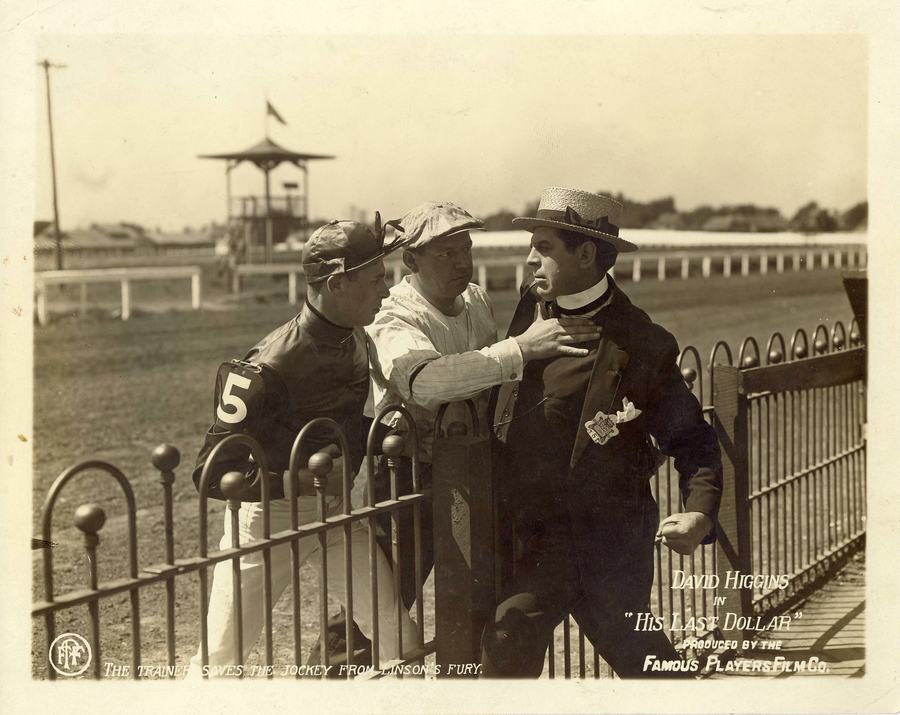
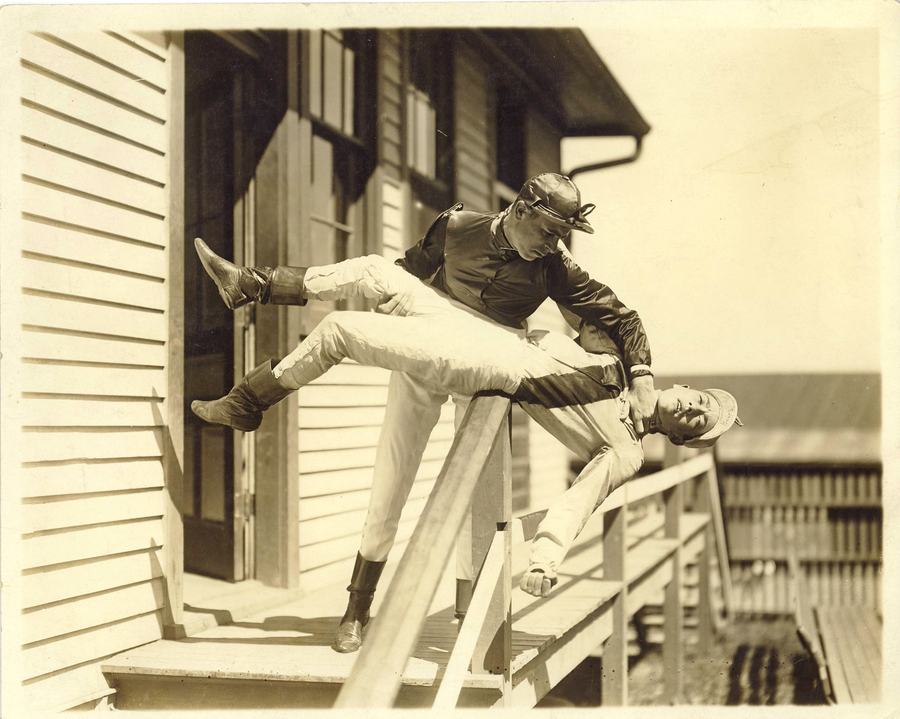
Dir: Frank Powell
Former newsboy and jockey Joe Braxton, becomes a millionaire rancher and decides to visit New York. He soon becomes the prey of swindler Tom Linson and socialite Viola Grayson. Linson defrauds Braxton's old employer, Colonel Downs, and attempts to corrupt Eleanor, the colonel's daughter. When Eleanor learns that Linson intends to destroy Joe on the stock exchange, she warns him, disregarding Linson's threat to ruin her reputation. Eleanor is too late, but Joe recovers his losses by riding Mongrel to victory in the Kentucky Futurity, after having stacked his last dollar on the horse's success.
View Details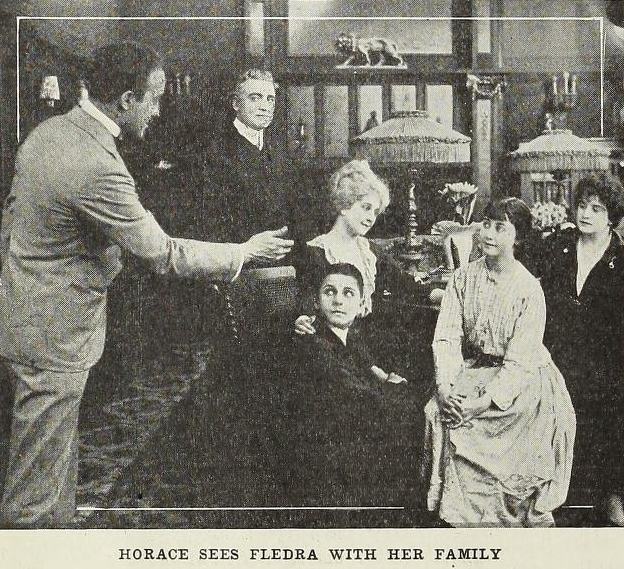
Dir: Frank Powell
A baby is left on the Brinbecombes' yacht while they are sailing up the Hudson River, and they adopt him and name him Everett. They are neighbors of Governor Floyd Vandecarm whose twin children, Floyd Jr. and Fledra, were kidnapped in early infancy. Their abductor was Lon Cronk, a man sent to prison by Vandecar when the latter was a district attorney of the county. The twins grow up in Cronk's shack as "Flea" and "Flukey." Despite her rough surroundings Fledra/Flea grows into lovely young womanhood and she and her brother run away from Cronk's cruelty. They reach Tarrytown and peer into the lighted windows of the home of siblings Horace and Anne Shellington. Anne brings the two young vagrants into the house and ultimately adopts them. But Cronk, aided by Everett, wages a long, evil campaign to regain possession of the children.
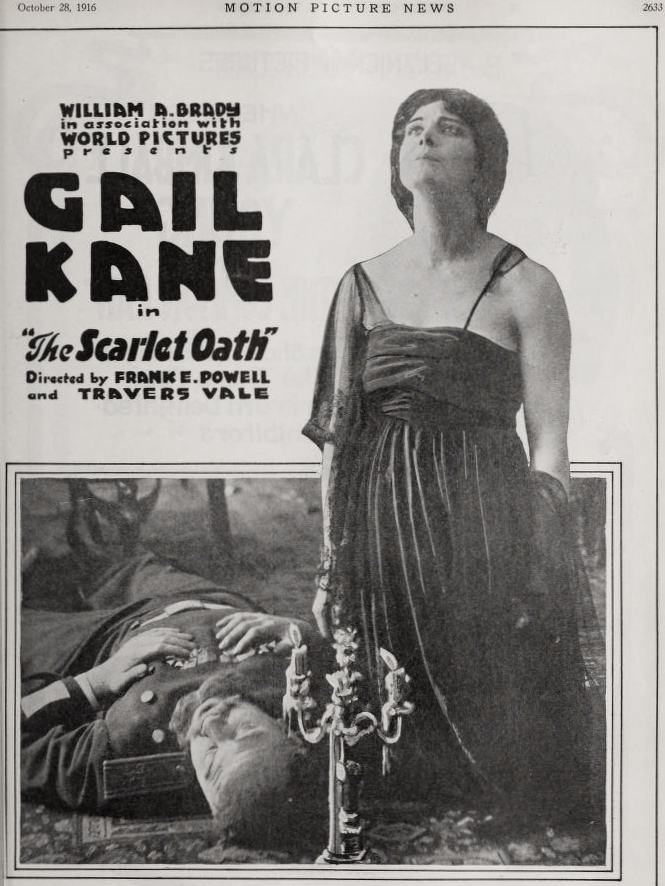
Dir: Frank Powell
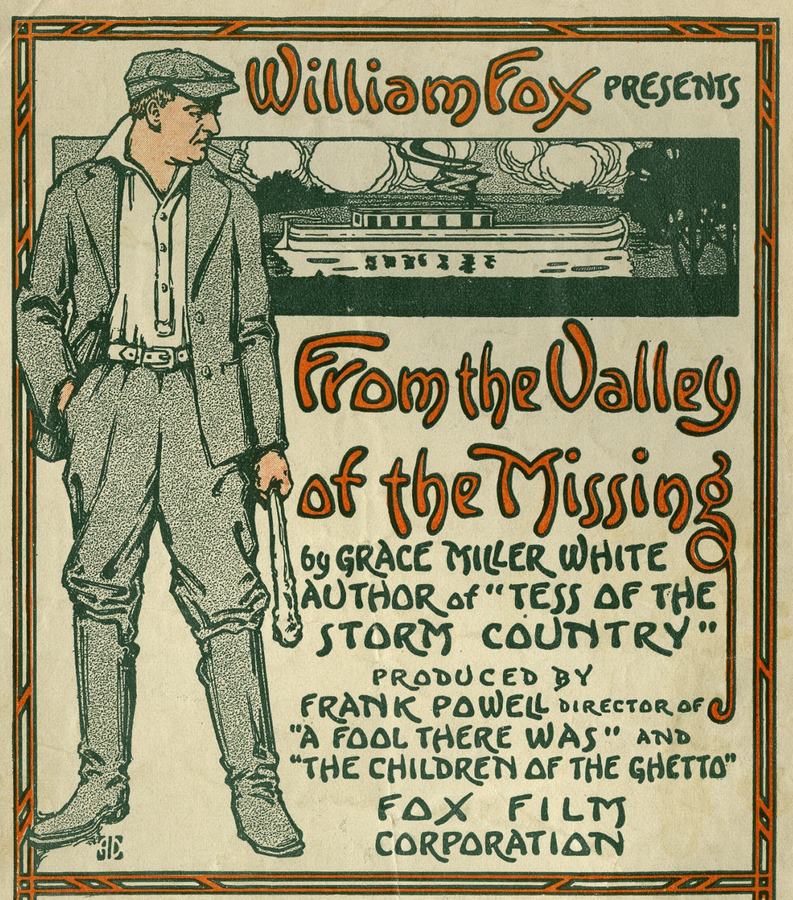
Driven from Russia by the persecution of the police, who had caused the death of his wife, was Ivan Pavloff, a Nihilist, accompanied by his two infant twin daughters Olga and Nina, en route to America in search of freedom. During the voyage Pavloff becomes acquainted with Mr. and Mrs. Victor Karenin, wealthy Russians returning from a tour of the Continent, and who had lost their only child while abroad. Mrs. Karenin becomes devoted to Pavloff's little daughter, Nina, and offers to help Pavloff when they arrive in America if he is unable to secure work. After becoming located in America, Pavloff finds that he cannot obtain employment, and goes to the Karenins to seek their aid. He consents to their proposition that they adopt Nina as their own child. Twenty years pass. Pavloff, now an American leader of the Nihilists, has won fame as a writer on Nihilism. His daughter, Olga, now educated, assists him in his work. Olga, through a newspaper discovers that her sister, Nina, is soon to marry John Huntington, connected with the State Department at Washington. As time passes Olga's father is induced to return to Russia and assist in the destruction of Savaroff, Chief of Police. The following day Olga and her father take solemn oath to revenge the death of her mother, and in order that they may not be discovered, or in case of arrest, that one or the other may reach Russia, and thus escape to fulfill their oath, they travel over different routes. They meet in Russia at the appointed time and place and become affiliated with the Nihilists. Back in America John Huntington has received an appointment to the diplomatic post in Warsaw. He pleads with Mr. Karenin to permit the marriage of his adopted daughter, Nina, to himself before he departs for Warsaw. Karenin objects, saying that he has arranged for Mrs. Karenin to tour Europe for the sake of her health, and he wishes Nina to accompany her. But upon their return he will consent to their marriage. A few weeks after Mrs. Karenin has sailed, Huntington receives final notice of his appointment and sails for Warsaw. At a meeting of the Nihilists, held at their headquarters in the Lamond Chateau, final arrangements are made for the killing of the chief. One of Savaroff's spies learns of the meeting and notifies him. The soldiers make a raid on the chateau. Pavloff and Olga are captured. Savaroff tries to secure the secrets of the Nihilists by torturing Pavloff with the horrible death rays. Pavloff refuses to reveal the secrets. Savaroff attracted by Olga's beauty agrees to save her father if she will give herself to him for the night. She finally consents and Pavloff is rewarded. Olga goes to Savaroff's home and awaits his arrival. While there she overhears a conversation between Savaroff's secretary and the Assistant Prefect of Police, and learns that her father has died. Savaroff enters, and she asks him what has become of her father. He tells her that he has recovered. During a struggle in which she pretends to appreciate his embrace, she slabs him to death with a knife. Savaroff having previously given instruction to the guards to permit Olga to leave the palace unmolested, she escapes easily. She goes to the Bristol restaurant, the rendezvous of the Nihilists, to meet Gaganov, a comrade. The same evening, John Huntington, having arrived in Warsaw to undertake his duties at the American Consulate, goes forth on pleasure bent, and drops in at the Bristol restaurant for refreshments. He is recognized by Olga as her sister's fiancé. It immediately occurs to her that if she can convince him of her peril he will aid her to escape to America. Huntington sees her, and knowing that Nina is in Europe, mistakes her for his sweetheart and rushes over to greet her. Instantly she conceives of a scheme to get out of the country without trouble, and permits Huntington to believe that she is Nina. Through this misidentification they escape to America. Meanwhile in Paris, Nina and her mother having failed to locate Huntington, decide to return to America before the holidays. In Warsaw the police are making every effort to locate Olga and send detectives, one to Hamburg and one to Paris. Petrovitch, the spy of the Russian police, on arrival in Paris, mistakes Nina for Olga. He determines to follow her to America and avenge the death of his cousin Savaroff. Amazov, the Hamburg detective, having lost the trail, proceeds to America in the hope of doing his duty after locating Olga. As the story ends the real destroyer of Savaroff pays the penalty, while Nina and her sweetheart are reunited in eternal happiness.
View Details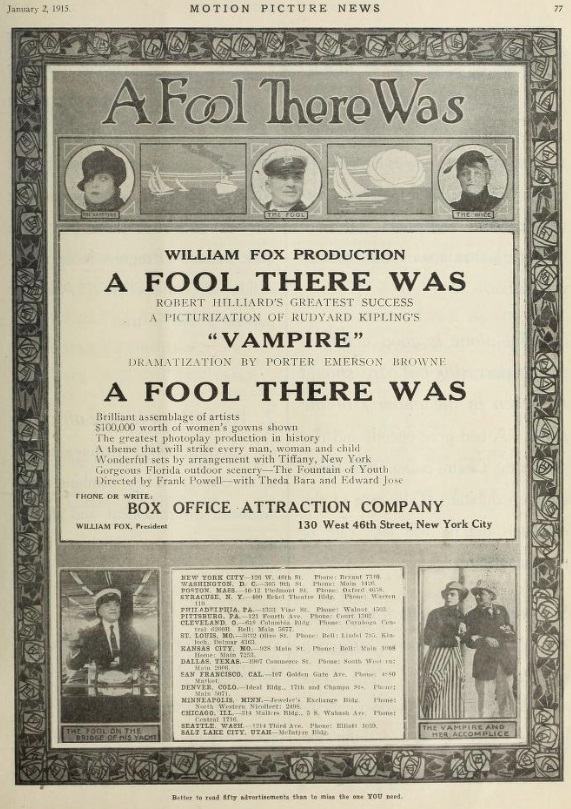
Dir: Frank Powell
A married diplomat falls hopelessly under the spell of a predatory woman.
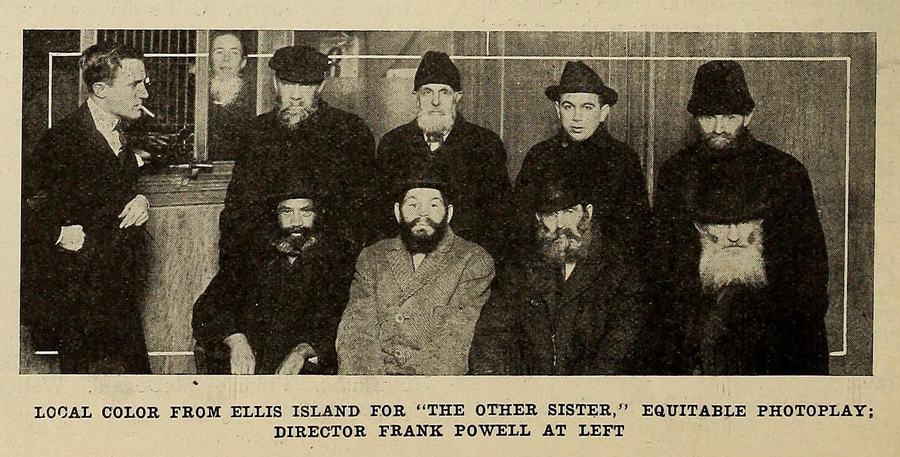
Dir: Frank Powell
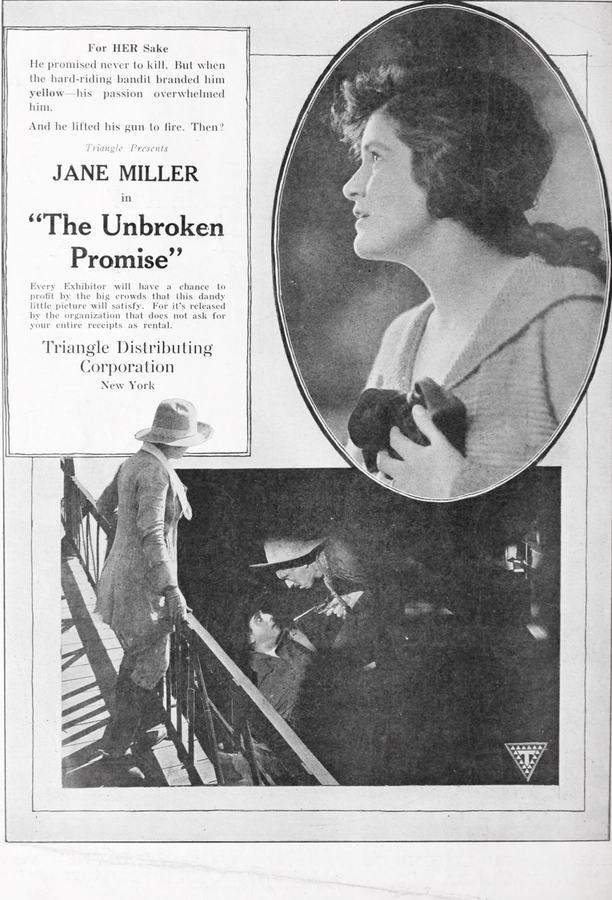
Nell Loring, a Texas sheep rancher's daughter, stops a fight between her father and his neighbor John Corliss, a cattleman, who have feuded for years. Although John loves Nell, he keeps it secret when she promises to marry his errant brother Billy if he stops drinking. After John rescues Nell from a runaway horse, though, she confesses that she really loves him. Worried about the feud, Nell makes John promise never to kill anyone. After Billy is wounded in a barroom brawl, John refuses him money until he reforms. Angered, Billy plots with Fadeaway, a cowboy John dismissed, to rob John's safe. John remembers his promise during his subsequent fight with Fadeaway and only punches him soundly. After Fadeaway is killed by the sister of a woman he betrayed, John, believing that Nell killed him, plants evidence to convict himself. Although Billy, now reformed, tries to take the blame, the murderer's written confession frees John to marry Nell.
View Details
Dir: Frank Powell
A reception given by the Count to celebrate his daughter Ann's engagement to Baron Moreno is disrupted by the news that a mine in which the whole village has invested is worthless. When the Count, who persuaded the townspeople to invest their savings in the venture, commits suicide, the baron jilts the now-destitute Ann. She marries Slater, an American promoter, and they move to the United States, hoping to earn enough to pay off her father's debts, but the baron follows Ann and forces his attentions on her. This provides Slater's mother, who is insanely jealous of her son's love for his wife, with the opportunity to break up their marriage. Slater orders his wife from the house and the baron offers her sanctuary. Ann's baby's incessant crying for her mother forces Slater to attempt a reconciliation, and when he looks for her, he finds her with the baron. In the ensuing fight, both men are mortally wounded. Ann returns to her child; she finds her mother-in-law repentant, and the three return to France to repay the debt.
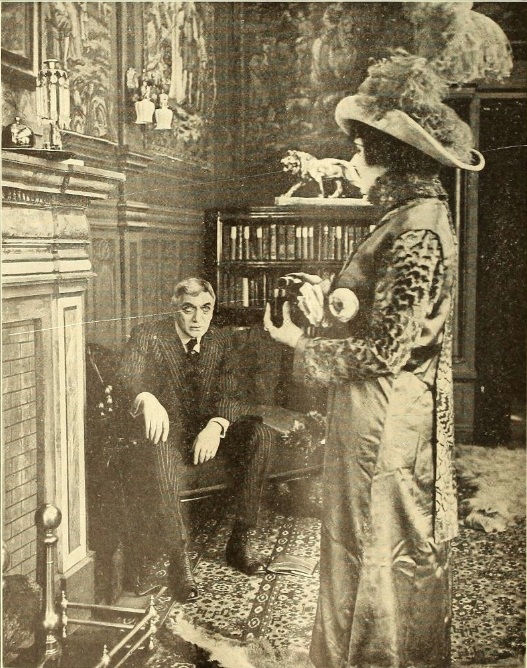
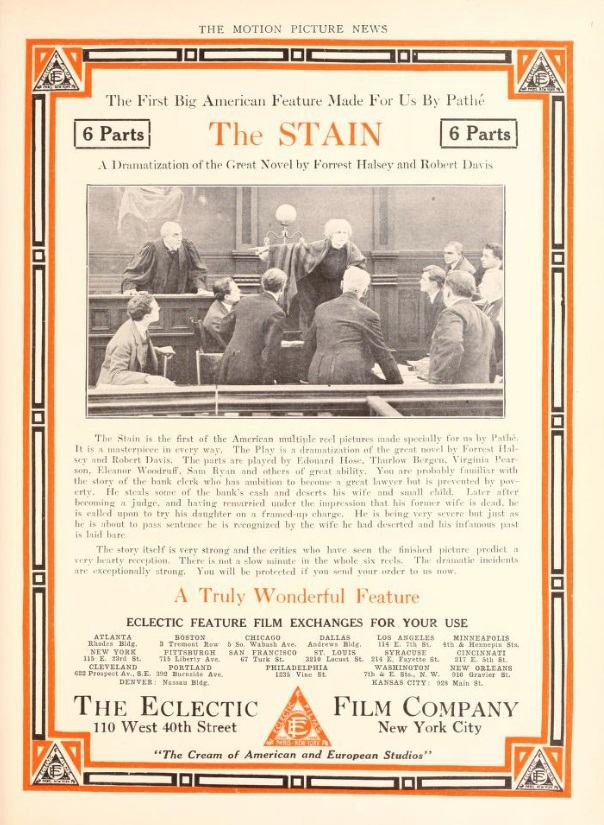
Dir: Frank Powell
Stevens, the bank clerk, is ambitious. His great desire is to become a lawyer. He stays at the bank at night to study, but is unable to take a course at college owing to his poverty. He handles immense sums of money every day and is strongly tempted to steal some, but fights off the desire till one evening when a belated customer comes late to the bank with a deposit of several thousand dollars. He sees a way for his ambition to be gratified and takes the money. His wife refuses to go with him, so he deserts her and his small daughter and goes away. Some time later we see him in a strange town living under an assumed name. His ambition has been gratified and through the good will of the political boss he has been made a judge. He falls in love with the daughter of his friend, the boss, but is deterred from marriage by the thought of his wife whom he had deserted. In the meantime Mrs. Stevens has become destitute and unable to support her daughter. She takes her daughter to an orphan asylum and releases all claim on her. Mrs. Stevens is unable to obtain work and at last is found unconscious and taken to a hospital. Her handbag, containing her identification papers, is lost and picked up by another woman who is in the last stages of exhaustion. The woman succumbs to the cold and on being found is thought to be Mrs. Stevens. Her death as Mrs. Stevens is reported to the papers. Judge Harding (formerly Stevens) sees the report of the death and marries the daughter of the boss. The boss decides to run Judge Harding for governor of the state, but his choice is attacked very strongly by a young lawyer, Norris. The boss and Harding try to buy Norris, but finding that he cannot be reached they decide to "frame up" his sweetheart in order to break his determination to prevent the election of Harding. They get her into trouble and Judge Harding is appointed to try the case. He is conducting the case in a very severe manner with a decided feeling against the prisoner. The superintendent of the orphan asylum has followed the course of the little girl's life and comes to the city to see her. She recognizes Mrs. Stevens as the woman who left the child at the orphanage and takes her to see the trial. As Mrs. Stevens enters she recognizes in Judge Harding the man who deserted her so many years ago. While the jury have retired to settle the case Mrs. Stevens accuses Judge Harding. The sudden excitement causes an attack of heart failure just as the jury return with a verdict of "Not Guilty."
View Details
Dir: Frank Powell
Alaire Austin runs a cattle ranch along the Texas-Mexican border with her corrupt husband Ed. After Texas ranger Dave Law saves her from dying of thirst in the desert, the two fall in love. Mexican bandit Longorio, who longs to possess the beautiful Alaire, orders his men to kill her husband and take control of the ranch. The bandit captures Alaire and forces an old priest to marry them, but before the ceremony can be performed, Dave arrives and secretly marries her himself. The couple escapes and seeks refuge in a little house just inside the Mexican border, but Longorio's men pursue them and set the building on fire. Just in time, a force of United States cavalrymen arrives and conducts the couple across the Rio Grande to safety.
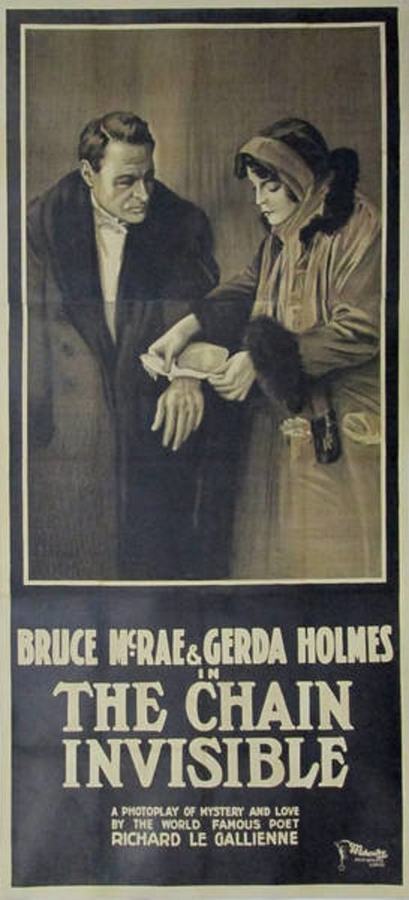
Dir: Frank Powell
James Wadsworth sets his sights on lovely society girl Anna Dalton and determines to marry her. To achieve that goal, he follows her everywhere she goes, including on a ship to South America. He comes up with a plan to make her love him: he throws her overboard, follows her over the side, and swims with her to a deserted island. His somewhat unorthodox method works and he wins over Anna, but problems arise when Richard Towne, Anna's fiancé who has been searching for her, finds the island and discovers the two.
View Details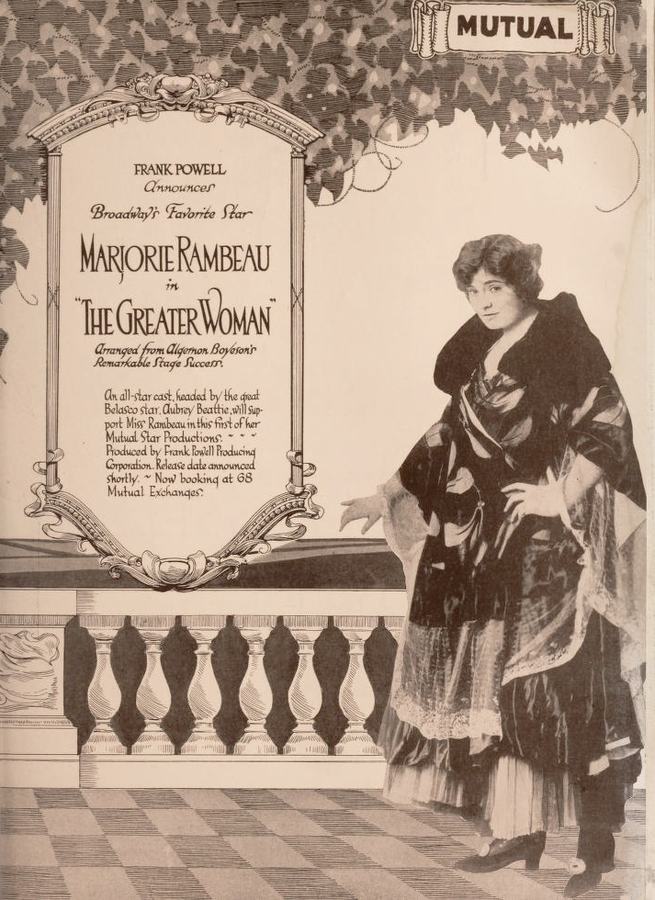
Dir: Frank Powell
Farmer Leo Bannister is crazy about his neighbor Auriole Praed, but she finds him to becoming on too strong. She travels to Paris to see her brother, and there falls in love with and marries Otto Bettany, a young painter. When the couple return home, Bannister--still carrying a torch for Auriole--plots to claim Auriole for himself by using a beautiful young actress to work her "charms" on Otto and then showing Auriole how untrustworthy her new husband is.
View DetailsAnalysis relative to Officer 666
| Film Title | Atmosphere | Complexity | Similarity |
|---|---|---|---|
| His Last Dollar | Gritty | High | 86% Match |
| From the Valley of the Missing | Ethereal | Dense | 85% Match |
| The Scarlet Oath | Ethereal | Linear | 87% Match |
| A Fool There Was | Gritty | Abstract | 97% Match |
| The Unbroken Promise | Gritty | High | 88% Match |
This guide was algorithmically generated using the cinematic metadata of Frank Powell's archive. Last updated: 8/17/2026.
Back to Officer 666 Details →