
DbcultAccessing Vault...
Recommendations
Senior Film Conservator
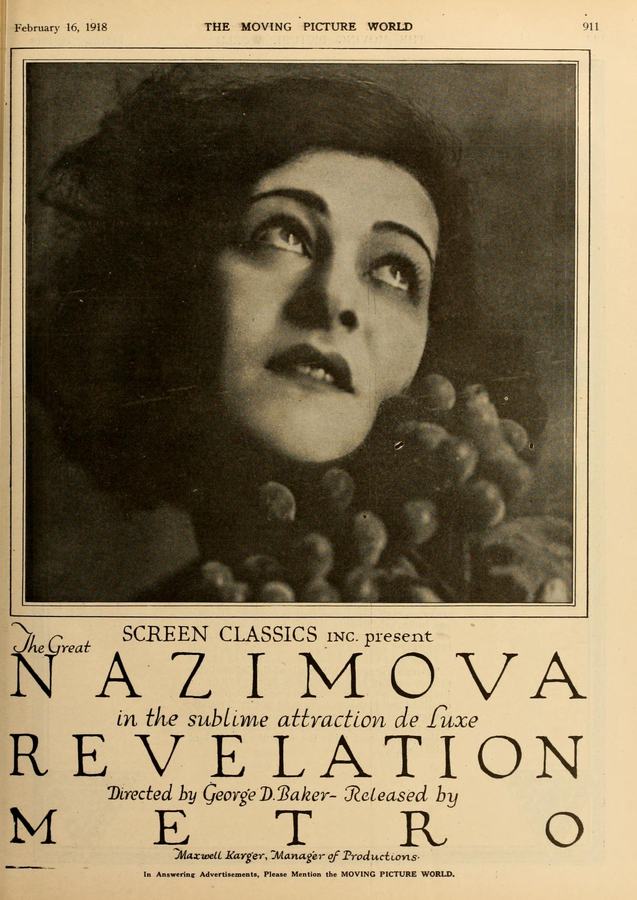
If you found yourself captivated by the artistic bravery of Revelation (1918), the quest for comparable cinema becomes a journey through the fringes of film history. Below, we've gathered a list of films that every fan of George D. Baker's work should explore.
Revelation remains a monumental achievement to create a hauntingly beautiful cinematic landscape.
Joline, a "Daughter of Joy," becomes enamored of Paul Granville, a poor artist, and as his model enables him to win fame in a series of startling canvases. A wealthy patron of art commissions Paul to paint "The Madonna of the Rose Bush," and he feels that a new model is needed, but the jealous Joline drives them away, and they start for the monastery, where the miracle of the rose bush is supposed to have occurred. There a monk declares that in Joline he has seen the Virgin, and some chord in her better nature is touched. She leaves Paul, but is reunited when she, a Red Cross nurse, finds him wounded upon the battlefield.
Revelation was a significant production in United States, bringing a unique perspective to the global stage. It continues to be a top recommendation for anyone studying cult history.
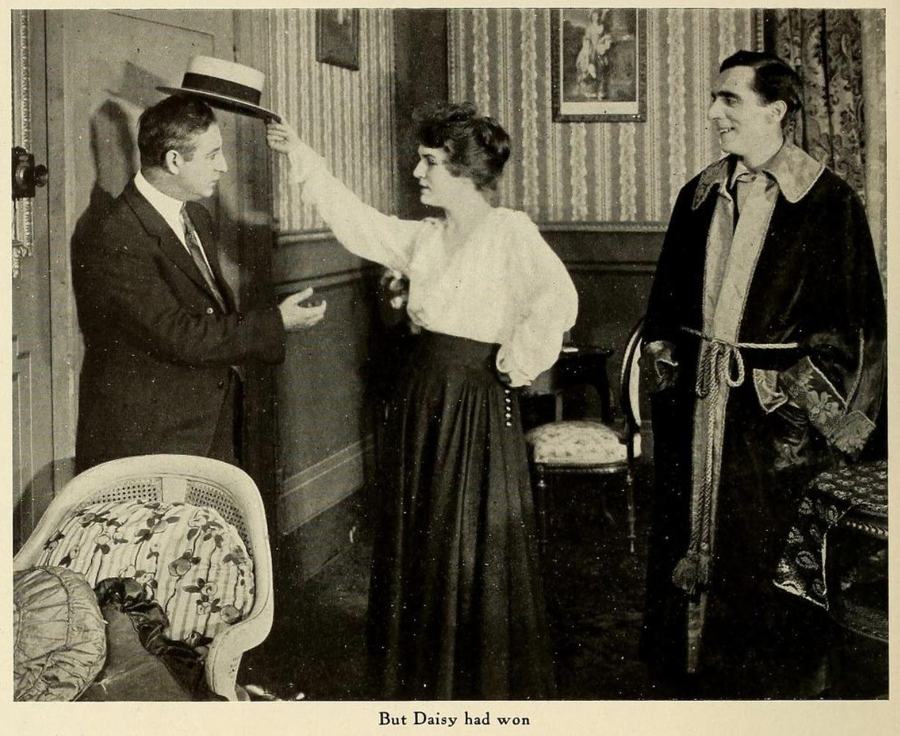
Based on the unique artistic bravery of Revelation, our vault has identified these titles as the most compelling follow-up experiences for fans of cult cinema:
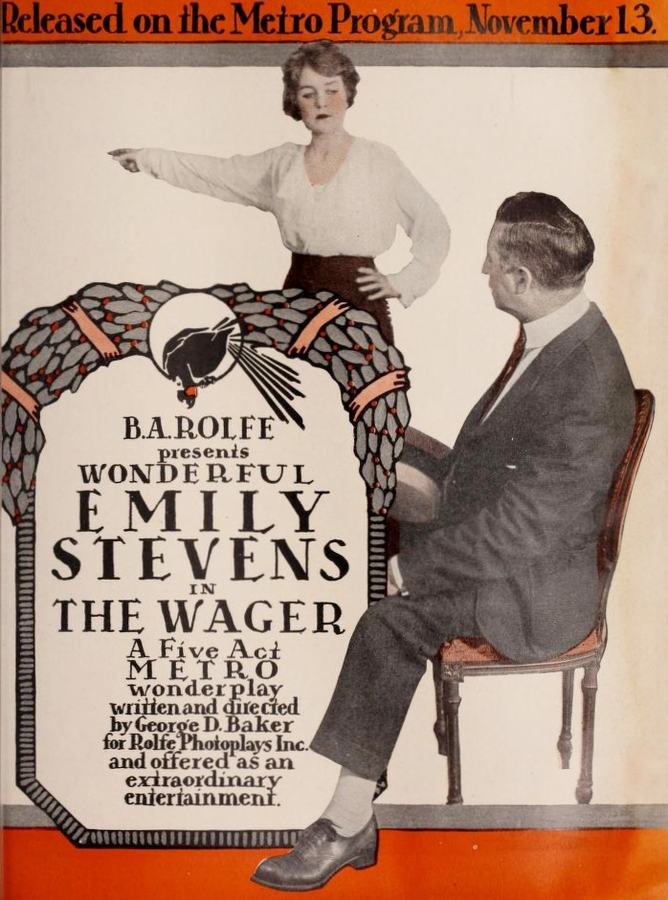
Dir: George D. Baker
A fascinating piece of cinema that shares thematic elements.
View Details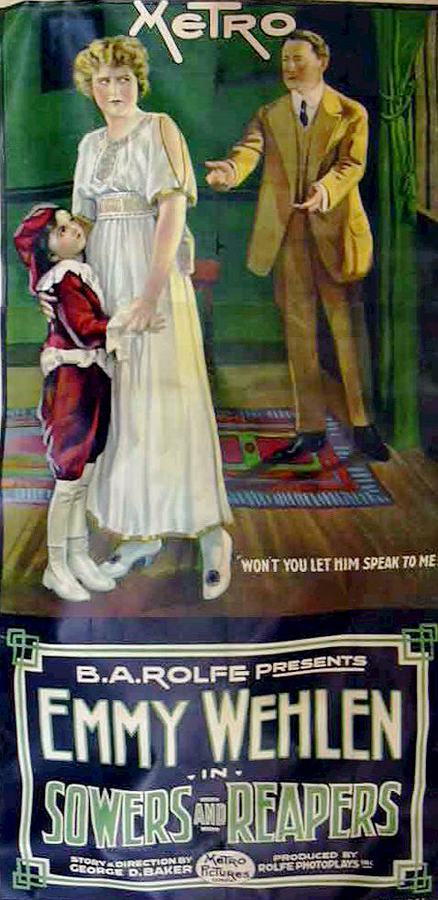
Dir: George D. Baker
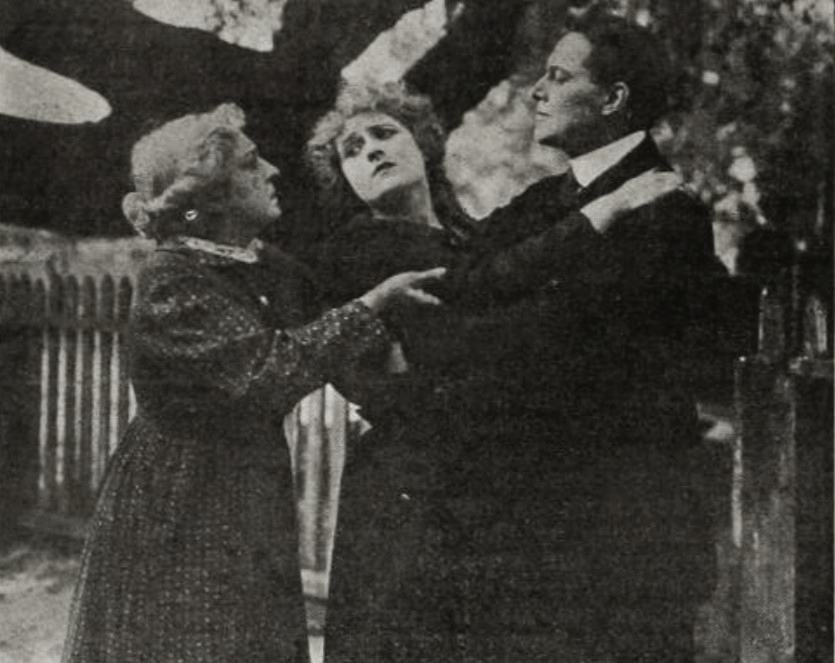
Although Earle Courtney has married factory girl Annie Leigh, his millionaire father, Major James Courtney, is determined that Earle will marry the wealthy Ethel Ainsworth. Courtney kidnaps his son and sends a message to Annie requesting an annulment, to which he signs Earle's name. All records of the marriage are then destroyed and Earle is led to believe that his wife has perished in a factory fire. Meanwhile, Annie goes to the city looking for her husband and there her child is born. While in the hospital, she reads an announcement of the wedding of Earle and Ethel. Obtaining employment in a film studio, Annie soon soars to stardom. When Mexican investments result in financial disaster for the Courtneys, Annie takes over the mortgage on their estate and produces a picture based on the story of her betrayal. When Earle views it, he learns of his father's treachery and the major, overcome with remorse, begs Annie's forgiveness. Nothing can undo Earle's unhappy marriage, though, until Ethel elopes with artist Paul Roubais, thus removing all obstacles in the path of Annie and Earle's reconciliation.
View Details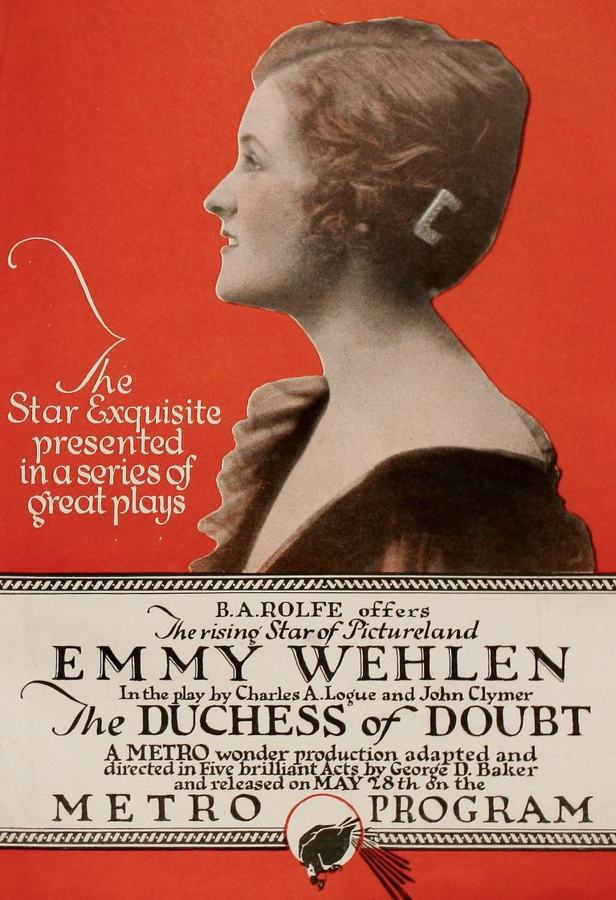
Dir: George D. Baker
Clover Ames's life consists only of the drudge work that she performs at her Aunt Sarah's boardinghouse. No longer able to withstand her aunt's abuse, Clover runs away and obtains a job as a maid to a wealthy woman. Willed $7,000 by Pierre Dubois, a boarder at her aunt's house, Clover, inspired by a novel that she has read, poses as a duchess at a fashionable winter resort. There she meets and falls in love with Walter Gray, who is also traveling incognito as a ribbon clerk. When Clover's money runs out, her trick is discovered and she vanishes. Obtaining employment in Gray's department store, Clover learns that her ribbon clerk is actually the owner's son, who rushes her to the wedding bureau.
View Details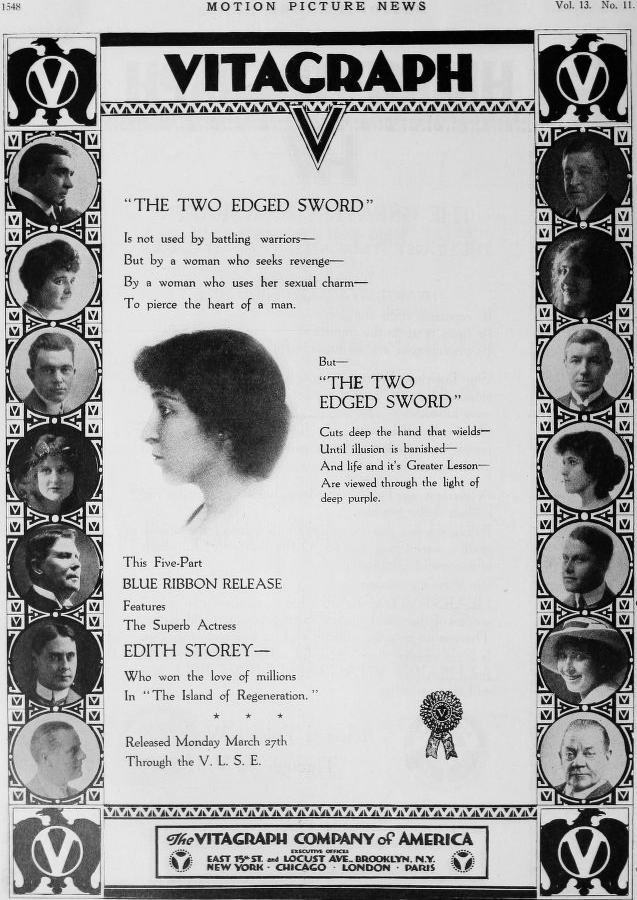
Dir: George D. Baker
Gordon Allen works hard to support his wife Dorothy, but she becomes bored with Gordon and her marriage. She takes a trip with her friend Evelyn to a farm for a vacation, and there meets and flirts with handsome but native farmer Jed. She thinks nothing of it, but Jed takes it very seriously, and his sister Mary tries to break up the relationship. When Gordon pays a surprise visit to the farm to see Dorothy and she greets him warmly and kisses him, Jed realizes that he's been played, and after Gordon beats him in a fight, Jed kills himself. Mary, outraged, vows vengeance on Dorothy.
View Details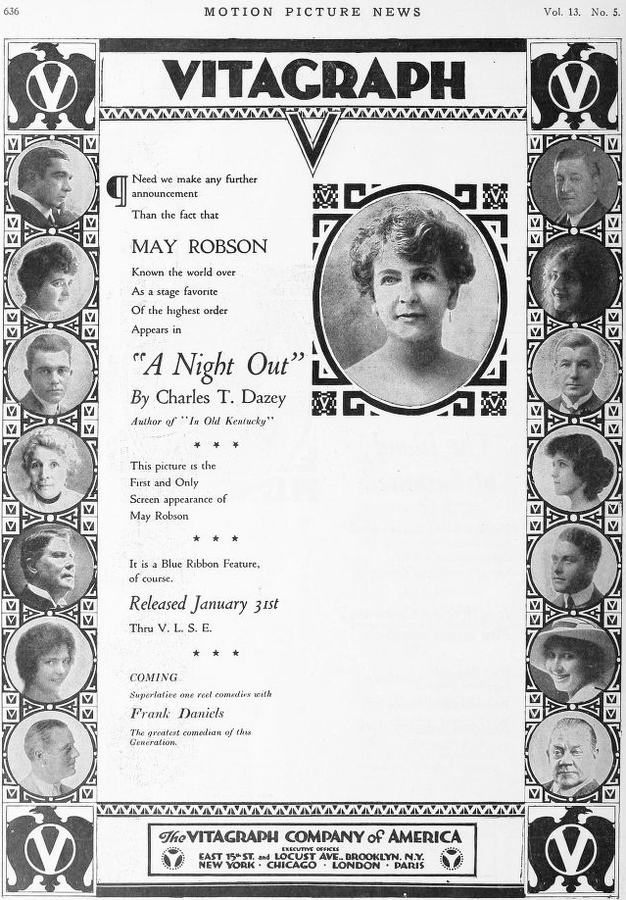
Dir: George D. Baker
A grandmother has an adventure for the first time in her life when she decides to have a night out.
View Details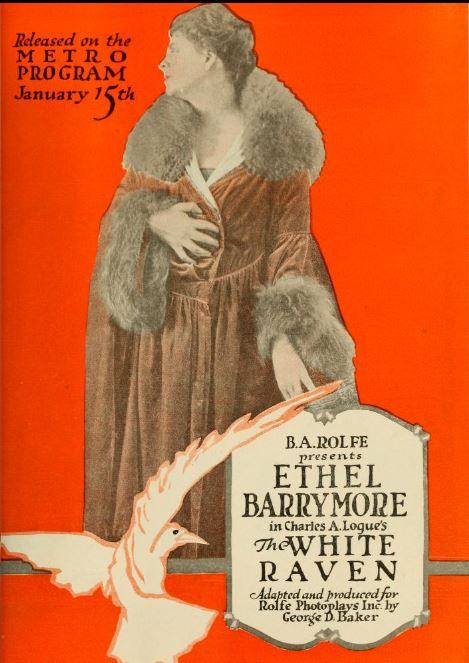
Dir: George D. Baker
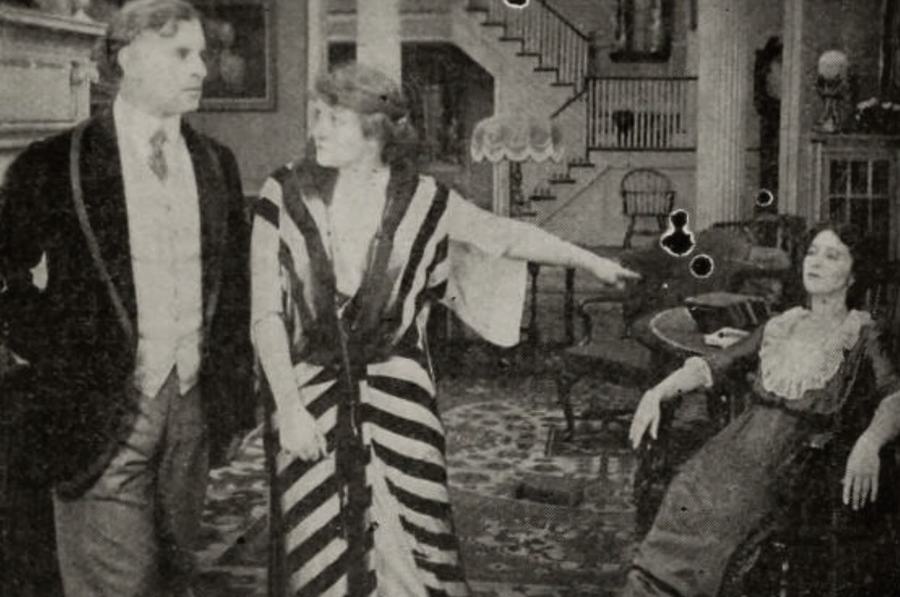
William Baldwin, ruined in business by his partner John Blaisdell, implores Blaisdell's aid and receives in answer a five-dollar bill inscribed with "Spend this for a gun and use it on herself." Hopelessly, Baldwin and his daughter Nan go to the Yujon, where the father dies and Nan earns a living in a rough dance hall where as "Nightingale Nan" she is the miners' idol. When she discovers that the little claim on Bear Creek, the only thing her father has left her, is worthless, at first she collapses; then she becomes defiant and tells the miners who have been forcing their attentions upon her that they may have her, the lucky man to be the winner in a card-game, she to take the money won in the game and go away to seek fame and fortune. A bearded stranger wins the game with a pair of deuces and pays her $1,000 a card, and she leaves with him for her cabin. Once there, however, she repents her rash bargain, and implores him to release her, offering the money in return. He makes her sign an I.O.U. for herself, promising to pay the debt at any future time that he sees fit. "You'll win success," the stranger tells her, "but in the hour of your greatest triumph I shall claim you, and you must return." She leaves on this condition. Nan's voice wins success for her all over the world. Five years later, as Mlle. Nanon Boldini, she is the reigning operatic queen at La Scala, Milan, then comes to the Metropolitan Opera House, New York, to make her American debut in "Lucia di Lammermoor." Her success is instantaneous. Two of the most important patrons of the opera house, business rivals John Blaisdell and James Van Brunt, are united in their admiration of Mlle. Boldini, and obtain an introduction. When Nan discovers the identity of Blaisdell, the man who ruined her father, she quietly plans his downfall. She encourages his attention, even at the risk of displeasing a young stranger with whom she has fallen in love. She refuses an offer of marriage from the man who won her heart, telling him of her promise made under amazing conditions to a man in Alaska five years ago. That promise, she tells him, must be fulfilled, no matter how great the sacrifice she makes in doing so. Inviting Blaisdell to her apartment to dinner, she has a telephone connection so arranged that James Van Brunt, at his downtown office with the receiver at his ear, hears Blaisdell's answers to the carefully prepared questions Nan asks, betraying all his business secrets. As Blaisdell falls across the table in a drunken stupor, after having told everything, Nan's triumph is complete. It is at this moment that two fateful cards, the deuces with which the Alaskan won his game, are thrust under the door, and Nan falls fainting. The next day she prepares for her journey to the Northland, ready to pay the price of her five years' freedom. The man she loves insists on accompanying her. Going to her little cabin, she finds it sumptuously furnished. As she turns to her lover in surprise, he places on the table a crumpled "I.O.U." then tears it in two, giving her the pieces. As the realization slowly dawns on Nan that the man she has learned to love is the bearded stranger of so long ago, she fits the two pieces of the "I.O.U." back together, presents them to him, and creeps into the arms of her stranger-lover.
View Details
Dir: George D. Baker
The disgrace and suicide of her father drives Eleanore Marston from her comfortable existence into a life as a department store clerk in New York. There she meets wealthy Powers Fiske, who offers her a life of luxury if she will consent to an operation on her brain which would deprive her of her memory. Eleanore agrees, and after the operation, Fiske is horrified to learn he has robbed her of her individuality and that she has become cruel, selfish and remorseless. Dr. Trow, a friend of Fiske, hypnotizes Eleanore to learn of her previous incarnations. Eleanore first remembers herself as a heartless Viking woman, then progresses to a Borgian princess, ending as a woman persecuted as a witch in Salem. Continuing to exercise his power over her, Trow draws Eleanore to the edge of a cliff. They are followed by Henry Johnson, one of Eleanore's compatriots from the department store, who traced the girl to Fiske's house. At Eleanore's plea for help, Johnson leaps upon Trow and the two plunge to their death over the cliff. Fiske arrives just in time to lead Eleanore back to the house. He appeals to a great scientist who restores her memory by means of a second operation, and Eleanore then becomes Fiske's bride.
View Details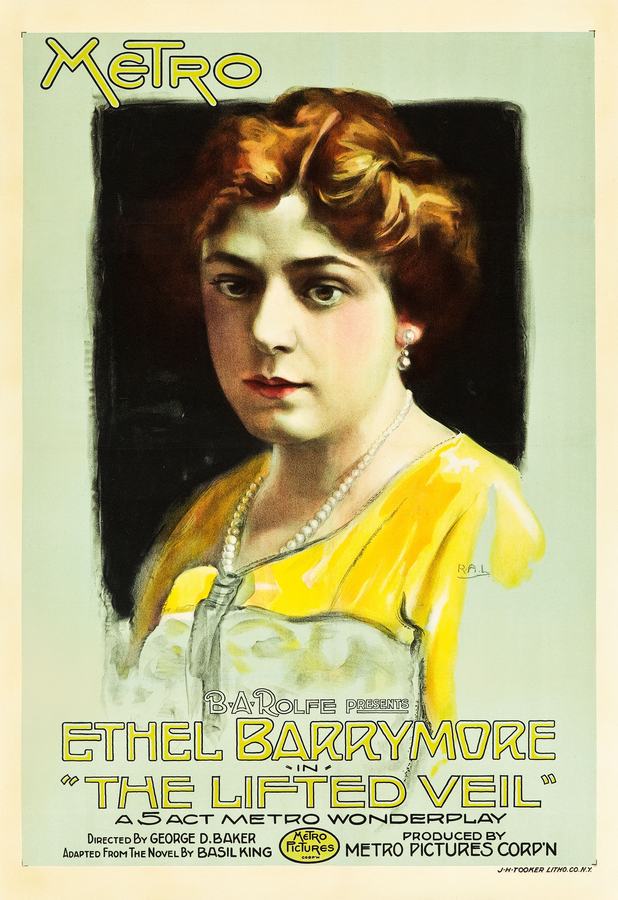
Dir: George D. Baker
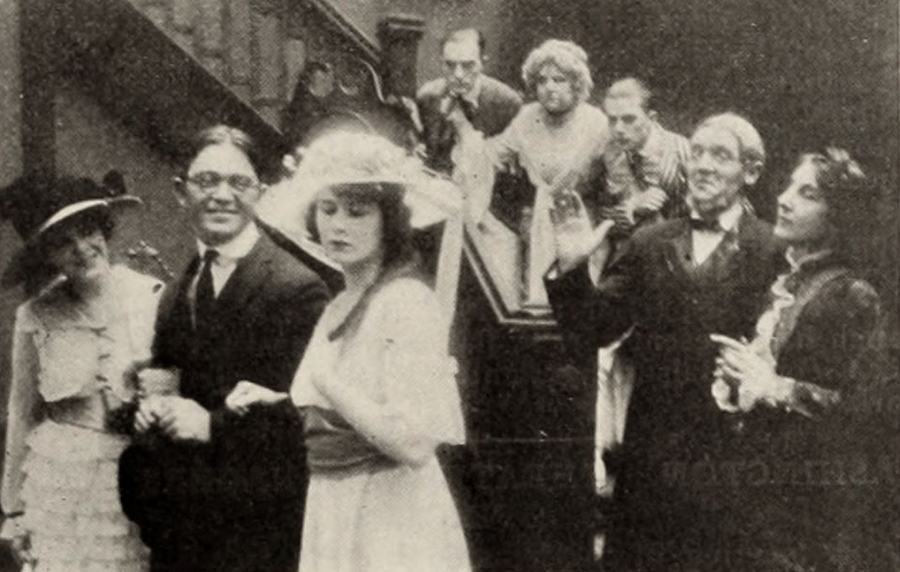
Overcome with guilt after having an affair with her best friend's husband, Clorinda hopes to escape her past by moving to Europe, where she meets Malcolm, a decent man who falls in love with her. Unable to accept his love, she returns to America and confides her sin to Rev. Bainbridge. Malcolm has followed her, but when she discloses her past, he turns his back. Rev. Bainbridge proposes and before the marriage takes place, Malcolm returns, begging Clorinda's forgiveness. Preferring the worldly man over the minister, Clorinda marries Malcolm and they begin their new life together in France.
View Details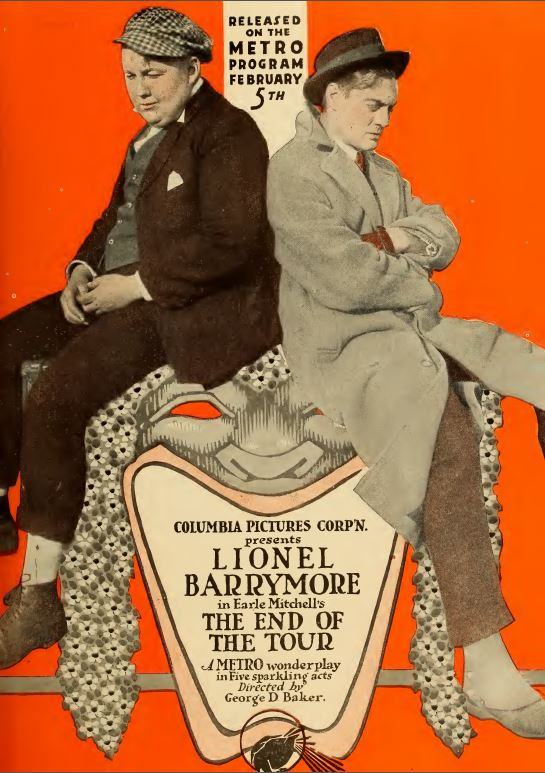
Dir: George D. Baker
Col. Jessup of Mayville does not waste any affection on his young wife, who finally runs away with a theatrical company, taking her son with her, but leaving her baby daughter. Later, she dies, and the boy, Byron Bennett, known as Buddy, is leading man for a theatrical company playing one-night stands, but this season has been disastrous and the company is about to disband when they receive word that the house is sold out for the performance at Mayville, so they hang on. However, the manager collects the receipts for the performance and takes the first train, leaving the company stranded. Buddy secures a position as Instructor for the Jessup Volunteer Hose Company which is to give an amateur theatrical performance. He persuades Grace Jessup's father to allow her to take the leading part in order to out-do Hose Company No. 1, which also plans a performance. Grace becomes interested in traveling salesman Percy Pennington. He tries to persuade her to elope, but she refuses until he makes a definite promise of marriage. He boasts to Buddy and his friend Skinny and intimates that the promise will not be carried out. Soon after, he starts out riding with Grace. Buddy is suspicious and follows on a bicycle, but is outdistanced. At last, however, he sees the horse tied by the roadside, and hears Grace scream. Rushing to her assistance he overcomes Percy, and carries a wilting Grace home.Col. Jessup, thinking Bud is the culprit, fires at him twice. One bullet lodges in the shoulder; the other is stopped by Buddy's watch in which he carries a picture of his mother. Grace regains consciousness and explains matters, and Jessup is amazed to find that the picture in the watch is that of his wife. The doctor advises that Buddy will recover, and there is a reconciliation among father, son, and daughter.
View Details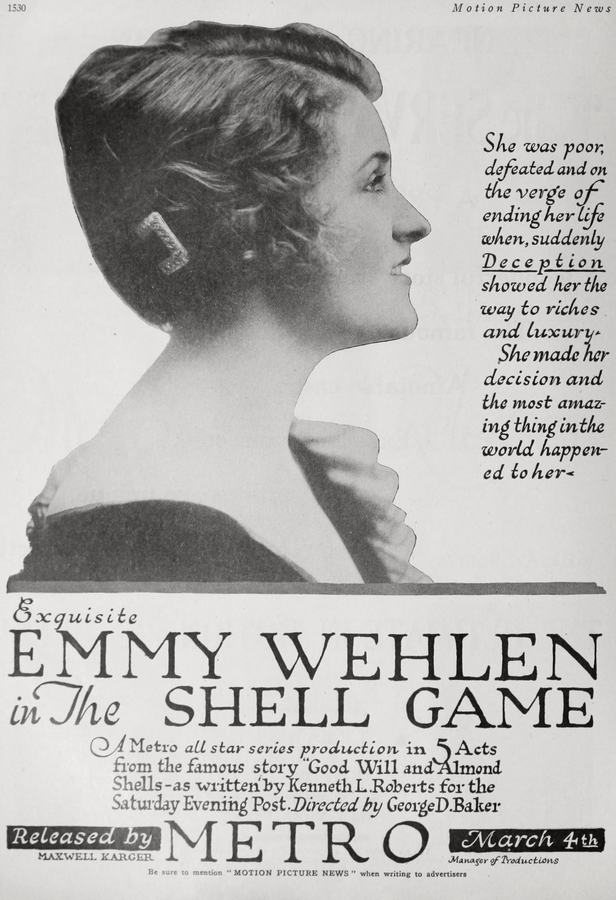
Dir: George D. Baker
Acting on his belief that most people become sentimental at Christmas time and are therefore easy prey, New York confidence man "Silk" Wilkins ingratiates himself with millionaire Lawrence Gray, whose wife and little daughter Zelda were lost in a flood eighteen years earlier. After promising to find Gray's daughter, Silk returns to his boardinghouse, where he finds Alice Sheldon attempting to escape her desperate financial straits through suicide. Silk convinces Alice to pose as Zelda Gray and then notifies Lawrence via a note placed in an almond shell that he has found the lost daughter. Lawrence treats Alice so kindly that when Silk demands payment from her on Christmas morning, she refuses. Lawrence, who has overheard the conversation, enters and laughingly reveals that he had known of the frame-up all along. Grateful to Silk for finding him a wife, Lawrence writes the confidence man a large check.
View DetailsAnalysis relative to Revelation
| Film Title | Atmosphere | Complexity | Similarity |
|---|---|---|---|
| The Wager | Gothic | Layered | 94% Match |
| Sowers and Reapers | Gothic | High | 92% Match |
| The Duchess of Doubt | Surreal | Abstract | 88% Match |
| The Two Edged Sword | Gothic | High | 86% Match |
| A Night Out | Gothic | Linear | 91% Match |
This guide was algorithmically generated using the cinematic metadata of George D. Baker's archive. Last updated: 6/27/2026.
Back to Revelation Details →