
DbcultAccessing Vault...
Recommendations
Senior Film Conservator
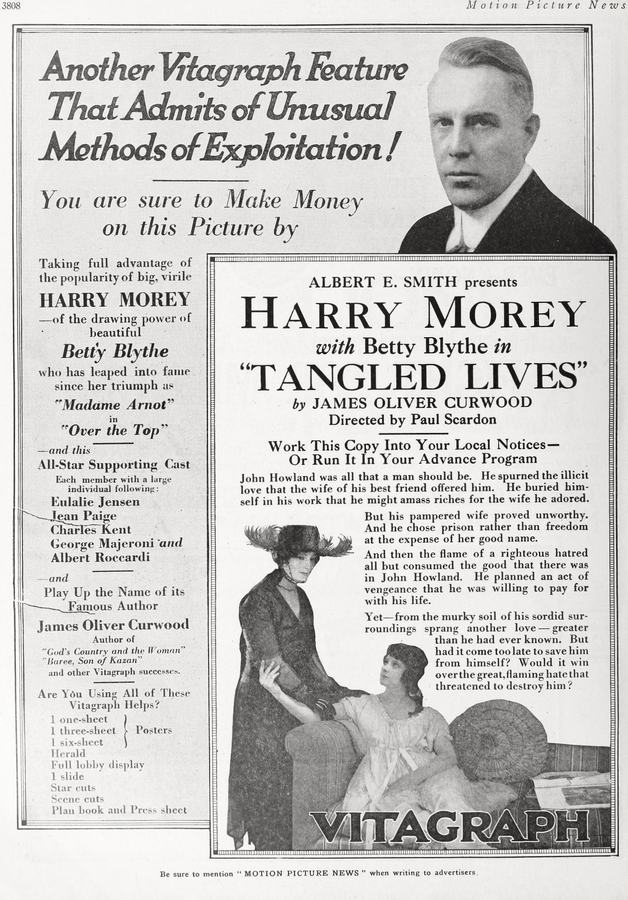
For those who were mesmerized by Tangled Lives, a true cult masterpiece from 1918, the quest for comparable cinema becomes a journey through the fringes of film history. Our curated selection of recommendations echoes the very essence of Tangled Lives.
The legacy of Tangled Lives is built upon its ability to create a hauntingly beautiful cinematic landscape.
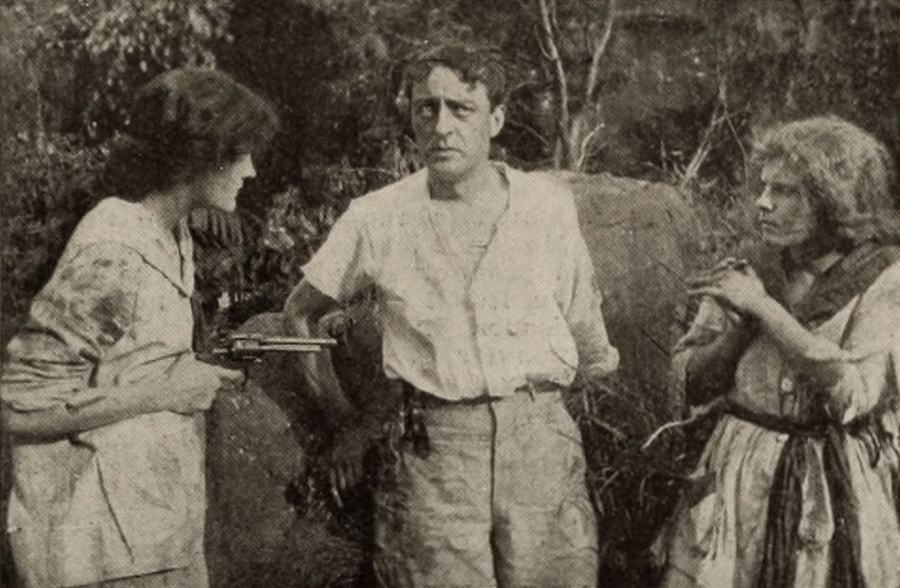
Seeing his wife Cora in the arms of John Howland, Colonel West commits suicide, not realizing that John actually has been trying to discourage Cora's attentions. When John saves Lola Maynard from the two ruffians who have attacked her on the street, she also gives him her heart, although she elects to keep her love a secret. Still hopeful of winning John, Cora informs him that his wife Hilda is carrying on an affair with a young millionaire named Paul Wescott, whereupon the outraged husband threatens to kill his wife's lover. While John serves time in prison for "murderous assault," a charge of which he is innocent, Hilda obtains a divorce and marries Paul. Upon John's release, he goes to Paul's home, this time intending to carry out his threat, but Lola and his friend, Peter Hyde, detain him. John then learns that lightning has killed Paul and permanently blinded Hilda. Finally realizing his love for Lola, John forgets his anger, and Lola completes his happiness by declaring her love for him.
Based on the unique stylistic flair of Tangled Lives, our vault has identified these titles as the most compelling follow-up experiences for fans of cult cinema:
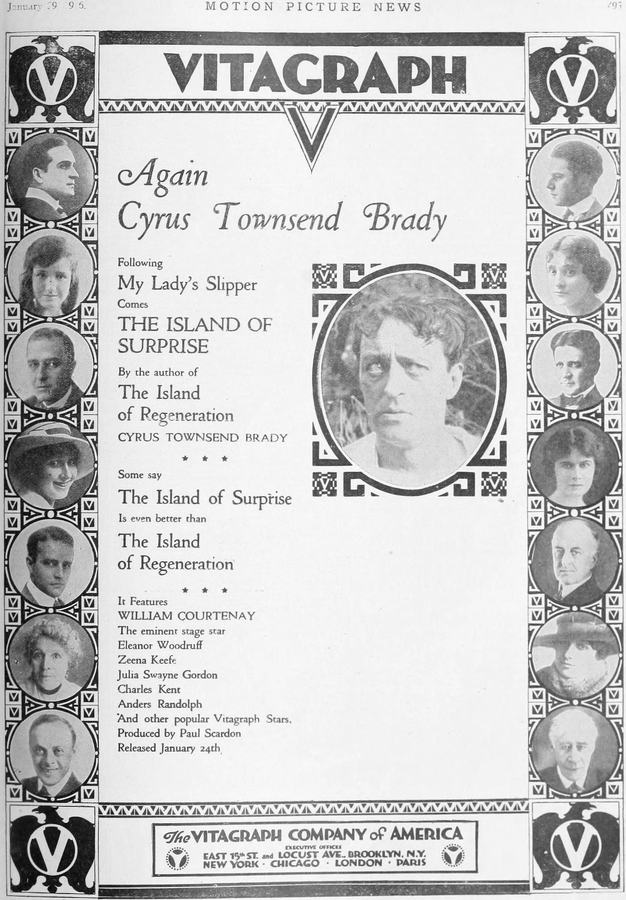
Dir: Paul Scardon
Dorothy Arden is private secretary to Godfrey Lovell, known as the Croesus of Wall Street. His Western partner is Daniel Casselis, who has a daughter named Dorothy. Lovell has a son, Robert, and the two financiers are trying to arrange a match between their children. But Robert falls in love with his father's secretary and marries her, but on returning home to tell dad, he finds that Lovell is ill and has gone on a long sea voyage to recuperate. Bob is sent to Chicago to see Casselis and invite him and his daughter to come on the cruise with Lovell, and Dorothy is greatly distressed at this turn of events. Bob reassures her, however, and still they do not tell his father. Bob meets Miss Casselis on the Limited as she is returning from an Eastern trip and they become friends. Meanwhile, Dorothy has determined to go on the yachting trip, so when the whole party arrive at Frisco Bob finds his wife awaiting them. Many amusing complications occur during the voyage and jealousies are aroused. The yacht anchors off a lonely island in the Pacific and Bob, with the two Dorothys, goes ashore. The yacht is driven out to sea by a terrible storm, leaving the three stranded on the Island of Surprise. Bob is hurt in a terrific landslide and the blow causes him to lose his memory. Dorothy tries in vain to call to mind his marriage to her, and Miss Casselis, thinking Dorothy is merely bluffing, is not to be outdone and claims Bob is her husband. Bob finally settles an uncomfortable situation by telling the women he will simply remain their friend and protector. Meanwhile, the yacht has had to send out a boat for the nearest land, owing to engine trouble, and a man-of-war is met. She is directed to the island, and arrives just in time to drop a shrapnel among a horde of island savages who are attacking the three castaways and just about to annihilate them. Rescued by the navy men, the three castaways are reunited with their party. Bob recovers consciousness and recognizes his wife, and all ends in forgiveness and happiness.
View Details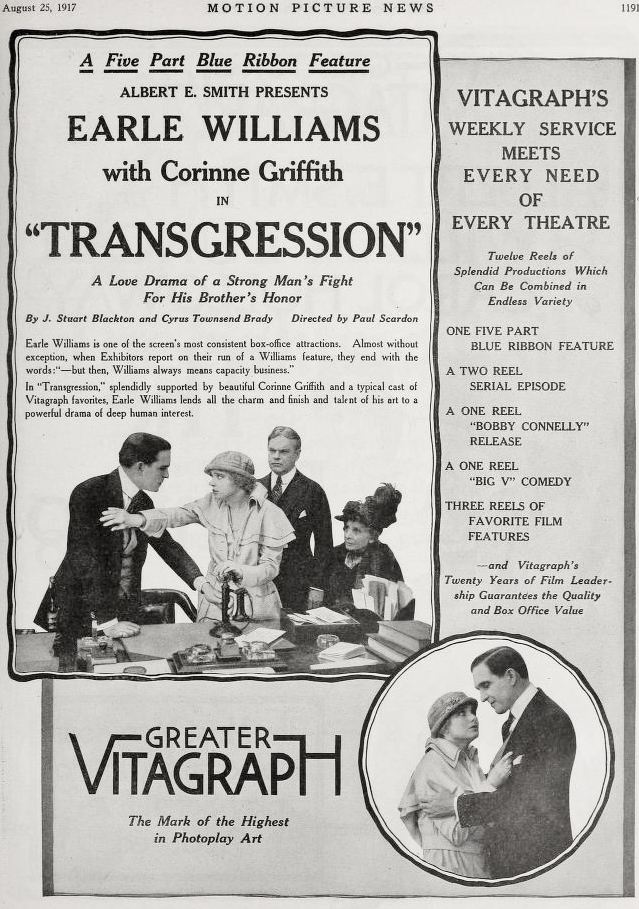
Dir: Paul Scardon
Hal Page, the weakling brother of Stephen Page, the town mayor, falls in love with Carline Shrefton, who throws over Burt Staley to entangle Hal in her self-serving schemes. Furious over her abrupt departure, Staley shows up at Carline's, and a jealous fight with Hal ensues in which Staley is shot and killed with Carline's gun. After Hal confesses to the deed, Stephen quietly sends him off to Spain. One year later, Stephen announces his engagement to Marion Hayward, the daughter of the district attorney, who is pressing charges against James Reed, a corrupt politician and Carline's new husband. To save Reed, Carline threatens Stephen with exposure, but he refuses to bend to her demands. Just days before Carline is to reveal her story about Staley, Hal appears and confesses to Hayward that Carline is the true killer. After verifying Hal's story, Hayward grills Carline, who finally admits her guilt. A matured Hal is restored to his family and Reed is sent away for his crimes.
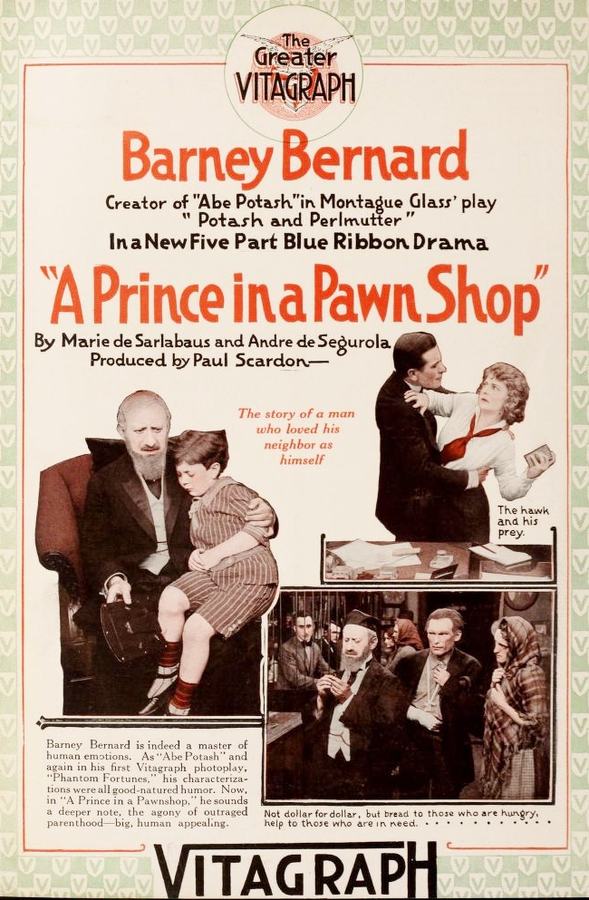
Dir: Paul Scardon
David Solomon, a wealthy banker, is merciless in his dealings with his rich clients, from whom he exacts the highest interest. He aids the poor as much as possible. To facilitate his kindness among the people of the Ghetto, he runs there a pawnshop, unlike all others, for to the needy he measures out money, not according to the value of the articles they offer, but according to their needs. David's son, Maurice, is given to high living. It grieves his father, who is, however, consoled by the fact that his daughter, Ethel, seconds her father's charities by maintaining a day nursery for the children of the poor. One day David sees a young girl fall unconscious in the street. He takes her to the hospital where the doctor tells him that the girl, Mary, is suffering from exhaustion. David's heart is touched and he resolves to make Mary's future his own care. When she has regained her strength he finds her a position as a model in a dress house of a friend, Silver. Ethel visits the dress house to buy gowns, bringing Maurice with her. He sees Mary for the second time, having noticed her upon the street. Maurice arranges to meet Mary under an assumed name, and pursues his courtship with all seeming love. She so learns to worship Maurice that she gives him all, not stopping to count the cost, nor to demand the wedding ring. For a brief while Mary tastes of a great happiness, but Stevins, the man for whom she once worked, and who, because she would not encourage his advances, drove her from every honest position, naming her as a thief, visits the dress house to get gowns for "The Bunch of Flowers," a set of girls so termed by Maurice who has been much in their company. He recognizes Mary, repeats the accusation, and her employer discharges her. Mary returns to the little flat supported by Maurice, where she tells her story. Maurice has begun to tire of her. He seeks Stevins, who tells a seemingly truthful story. Maurice believes it and leaves Mary, writing to this effect. He, however, does not know that the girl he has wronged is about to become a mother. Six years elapse, and we find Mary and her little son, living in poverty. Again she is rescued by David Soloman, who has called to see a deserving case next door to Mary, the object of his charity being Mrs. Payne, the landlady who drove Mary from her door, and who is now a paralytic. Mary tells David her story, showing him the letter from her lover. He recognizes the writing of his own son. He takes his grandson home with him where the child is seen by Maurice, who is conscience stricken. Heinstitutes a search for Mary. Stevins, the man who hounded Mary, needs a further extension of his loan from David. But David, having learned what he has done, Mary forces him to the wall and ruins him. Goldstein, who has been a faithful secretary to David, resigns. He loves the daughter of David, but being a poor man does not declare his love and so decides to leave for other parts of the country. David has watched the love which has existed between Ethel and Goldstein, and gives Goldstein a check for a large amount, quite sufficient to start them on their honeymoon. David informs Maurice by telegraph, not signing his name, where Mary may he found. He then goes to her with her little son. Maurice arrives, and makes reparation by marrying Mary.
View Details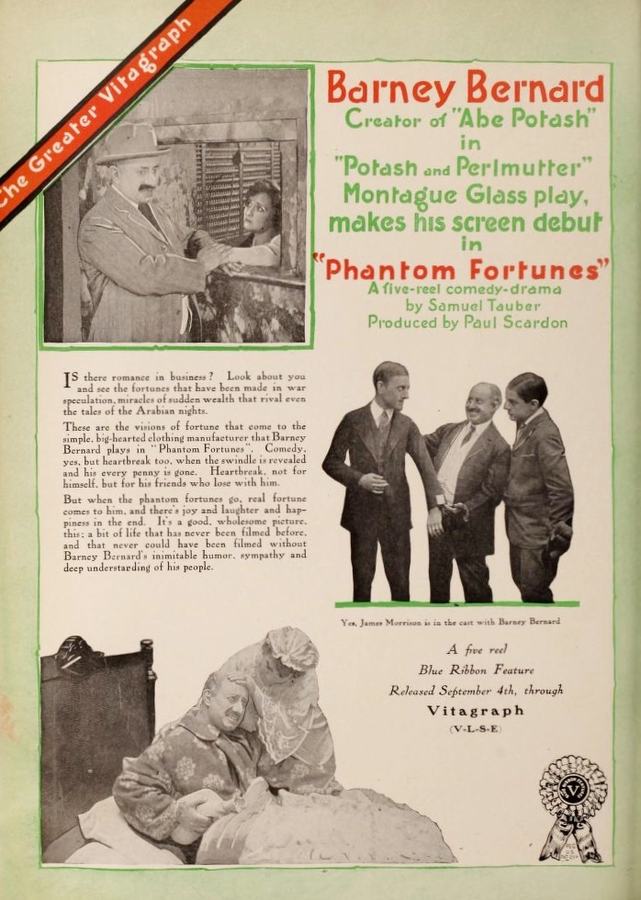
Dir: Paul Scardon
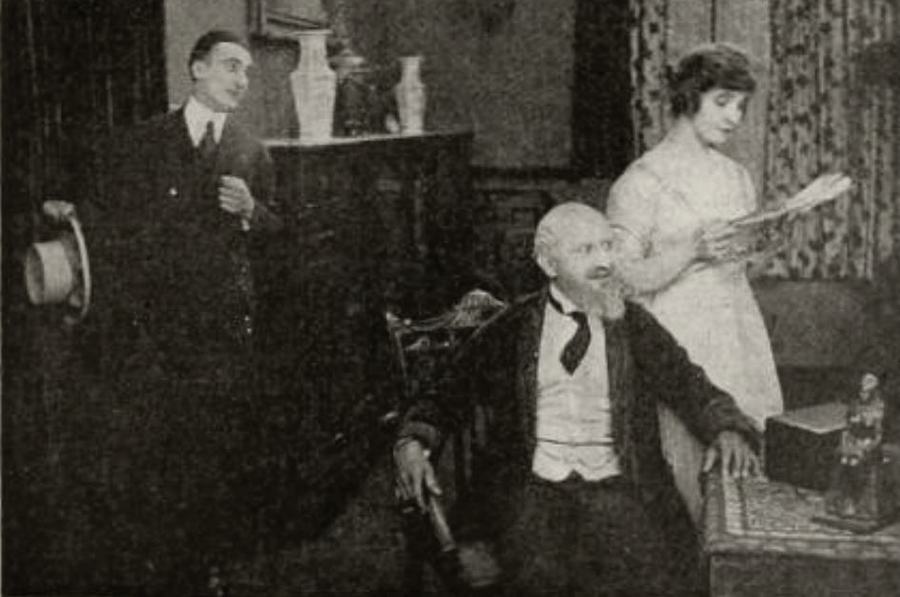
Bob Deering on his way to business meets his sweetheart, Molly Sherman. He arrives at Milliken and Co., stockbrokers, his place of employment, just in time to save Herman, Zalmon Pinsker's 14-year-old son, from a very rough engagement with the other messengers in the office. For this act Herman takes him to his father's shop and obtains a suit at wholesale, and it is here that Bob meets Ike Mandell, who is in love with Dora, the daughter of Pinsker. Previous to this meeting Pinsker re-engaged Mandell after having hired and fired him at least ten times, and also just previous to Bob's arrival with Herman, Moses Hecht and Israel Classman had an argument with Mandell, who, trying to look after Pinsker's business, tried to force them to pay certain notes which had been endorsed by Pinsker. Mrs. Pinsker and Dora arrive and realize that if Pinsker keeps up this pace of unorganized charity they will have little if any chance of obtaining the new dresses for which they came. Later the stock market closes on account of the war, and both Herman and Bob are out of a job. Bob calls upon Molly, who is a telephone operator in a hotel. There he meets "Red" Dorgan, who interests him in war orders. Clothing, sweaters, and shirts are needed for the allied armies, so Bob goes to Pinsker and agrees to get him a contract that will at once make him a rich man. Pinsker is overjoyed. Bob returns to Dorgan, and it is arranged that the manufacturer shall meet the commission. Ike Mandell has a cousin, Abie Lefkowitz, another clothing manufacturer, and he feels that if he can give Pinsker the double cross and get the business for Lefkowitz he will be able to marry Dora. Ike arranges with Dorgan to switch the order to Lefkowitz, who has to give Ike an advance commission of $8,000 for his work. Bob apprises Molly of what he has done for Pinsker, but she has her misgivings about Dorgan. The contestants for the big war order is requested by the commission, which has quarters in the hotel in which Molly is a telephone operator, to have samples of their goods at the commission's offices. The different clothing manufacturers comply, and when each at different times receives most encouraging reply concerning their samples each refuses domestic orders so that all time possible may be devoted to the commission's order. The hotel detective becomes suspicious and after a short conversation with a Scotland Yard man who has been on Dorgan's trail for months, they, with Bob, examine the commission's quarters. They are now firmly convinced that the scheme is a fake, and Bob conveys this information to Pinsker. He is greatly discomfited over the revelation, but Bob gets an idea which will net Pinsker a considerable sum. All the other clothing manufacturers are refusing domestic orders pending advices from the commission, so Bob helps Pinsker to corner the home market. This scheme is successfully executed. Ike Mandell, jealous, is busy instituting a strike among the employees, but his plan is soon frustrated by Bob. Lefkowitz scenting that something is wrong, goes to the hotel, where he is told of the fake affair. The crooks are captured. It is then that Lefkowitz tells of a $6,000 check and that it was made out to Bob. The police now go with Lefkowitz to the shop of Pinsker, where they try to fasten the check upon Bob, but he has given it to Dorgan, and Pinsker agrees that if his is the only signature on it, he, Pinsker, will make good for Bob. Molly goes to Pinsker, who introduces her to his new partner, Bob Deering, and assures her that she need not "hello" any more if she will marry this live businessman. Molly is pleased, and is further glad to know that Mandell has lost out with Dora, who is going to marry Glassman, who is now making his fortune through Bob's methods of wide-awake business.
Dir: Paul Scardon
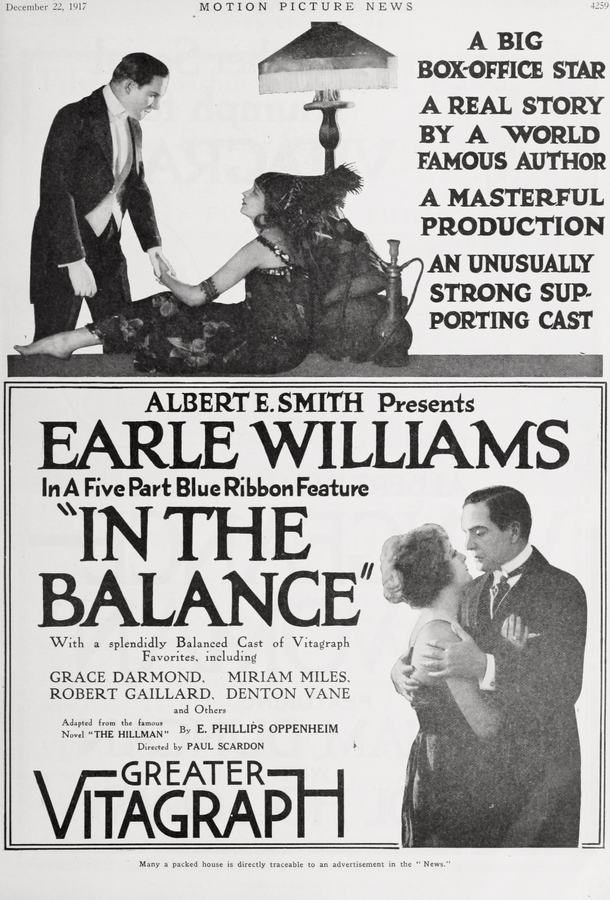
The actress is on her way to visit the Prince in his castle when she is stranded on a lonely road by an accident to her motor car. The Hillman happens along and takes her to Peak Hall. He is still young and handsome, but marked by the stern fanatical belief of his family that no member of it ever should leave the hills. In an exchange of confidence, the Hillman warns the actress not to visit the dissolute Prince, and she in turn tells him that for once he should try the broader life of the cities. Both heed the other's advice. She returns to the city, and he, in a brief period, follows. The Prince, still pursuing the actress, seeks to entangle the Hillman by throwing a notorious dancer in his path, but fails. Strangeway, the Hillman, proposes to Louise, the actress, but she withholds her answer. His brother comes from the hills to reclaim him, but his mission is vain. Again the Hillman proposes to Louise, who is always in the company of the Prince, and this time is accepted. Angered at his apparent loss of the actress, the Prince makes a scandalous remark about her at his club, which is resented with blows by the Hillman, whose love is all but crushed, when hurrying to Louise she admits what the Prince said is true. The Hillman returns to Peak Hill where a few months later as he is reading in a paper of the engagement of the actress and the Prince, she arrives at his home. She assures him that she is good, not bad, and that she did make the promise to the Prince when she believed he loved her, and both the Hillman and his brother receive her as one of them.
View Details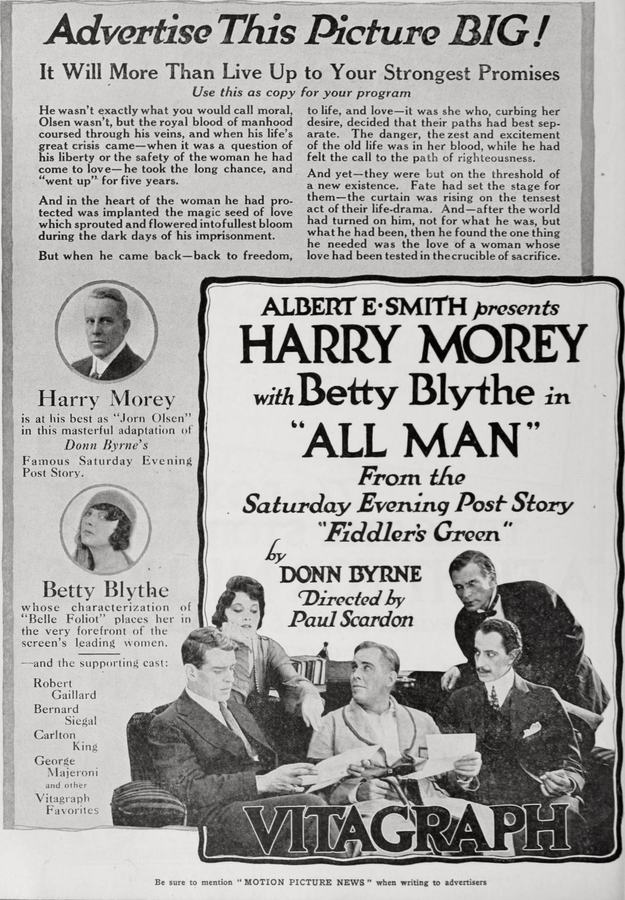
Dir: Paul Scardon
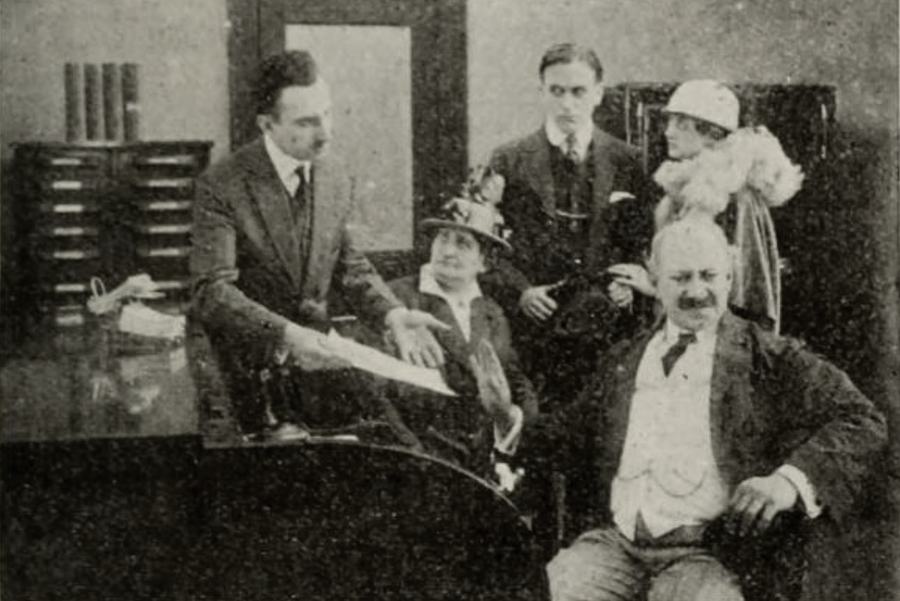
John Olsen, the foreman in an iron foundry, is persuaded by two of the workmen to rob the company safe, an operation so successful that the three decide to embark on a career of safe cracking. While pulling a job, John breaks his leg and is forced to take refuge in the home of Belle Foliot, whose husband is serving a life sentence. As she tends John's injured leg, Belle falls in love with him and decides to join the gang, and when she becomes trapped during a robbery, John remains at the scene of the crime so that she can escape. Following his five year prison term, John declares that he is going straight, whereupon Belle leaves him. John marries and buys a farm, but one day his arresting officer, Lieut. Reilly, appears and reveals his past to his wife and the townspeople. As a result, the farmers shun him and his wife divorces him. He is about to break into the bank when Belle and Reilly arrive. Promising to go straight, Belle accompanies John out West to a new life.
Dir: Paul Scardon
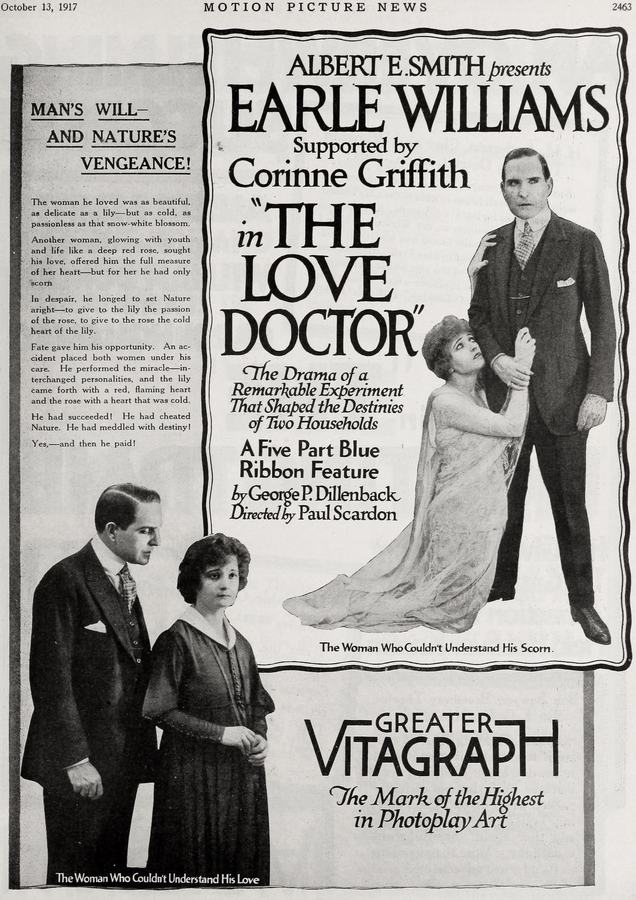
A doctor transplants the brain of a girl who is in love with him into a girl he is in love with.
View Details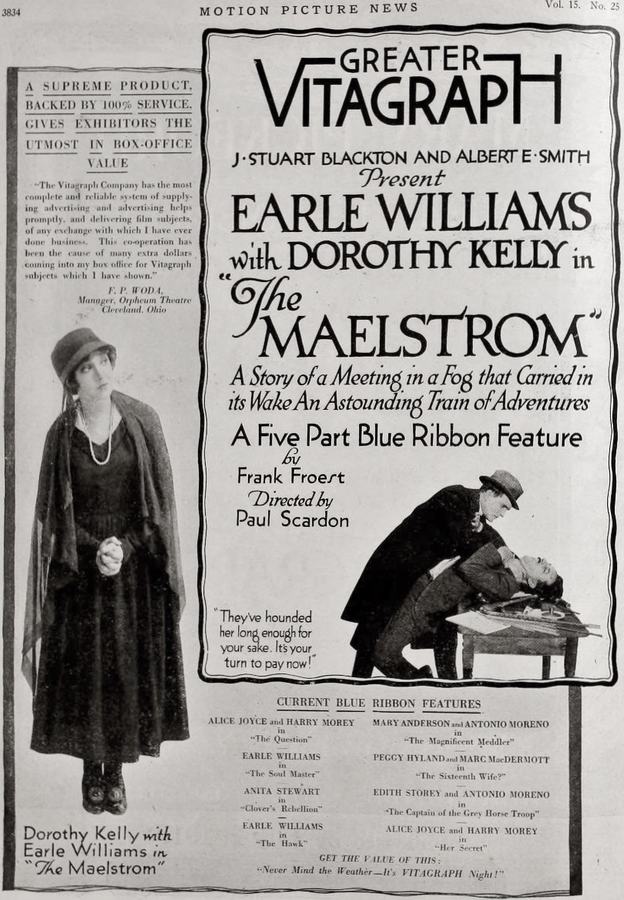
Dir: Paul Scardon
Jimmie Hallet is walking through a heavy fog one night when, seemingly out of nowhere, a girl appears, shoves a bundle of papers and a slip of paper with an address on it into Jimmie's hands, then disappears. Intrigued, he goes to the address on the paper, and is promptly knocked out by a blackjack. When he wakes up the next morning he discovers the dead body of a man named Greye-Stratton and learns that the "mystery girl" was Stratton's daughter Peggy. Jimmie soon finds himself questioned by the police about her father/s murder and mixed up with a gang of thieves and killers led by a mysterious thug named Ling.
Dir: Paul Scardon
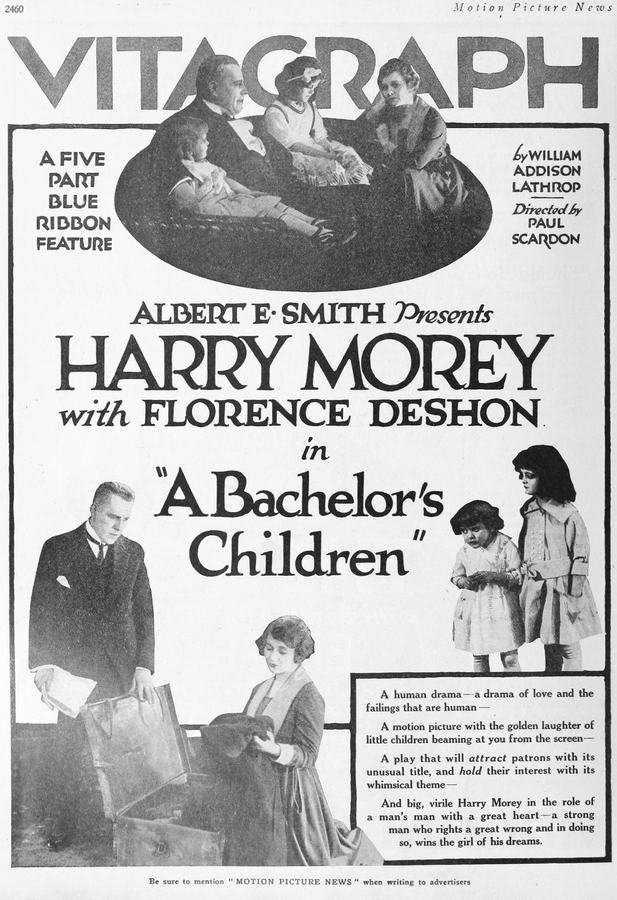
Young Hugh Jordan, the nephew of the man who robbed the Winthrop children, is earning his living out west when he comes into the millions of his thieving old uncle. Hugh goes east and settles down to a life of ease and enjoyment. He is entertaining a stag party at his home when the butler announces the arrival of the Misses Winthrop. A letter left by their father told them to go to Hugh Jordon, as he held a mining claim in trust for them. Penelope, the oldest girl, shows the letter to Hugh and he invites the orphans to remain until he has investigated the matter. It is all plain sailing after that, and Hugh marries Penelope and the fortune is kept in the family. There is a slight underplot involving a handsome widow, who tries to capture Hugh, and a most despicable specimen of the wealthy class who tries to ruin Penelope.
View Details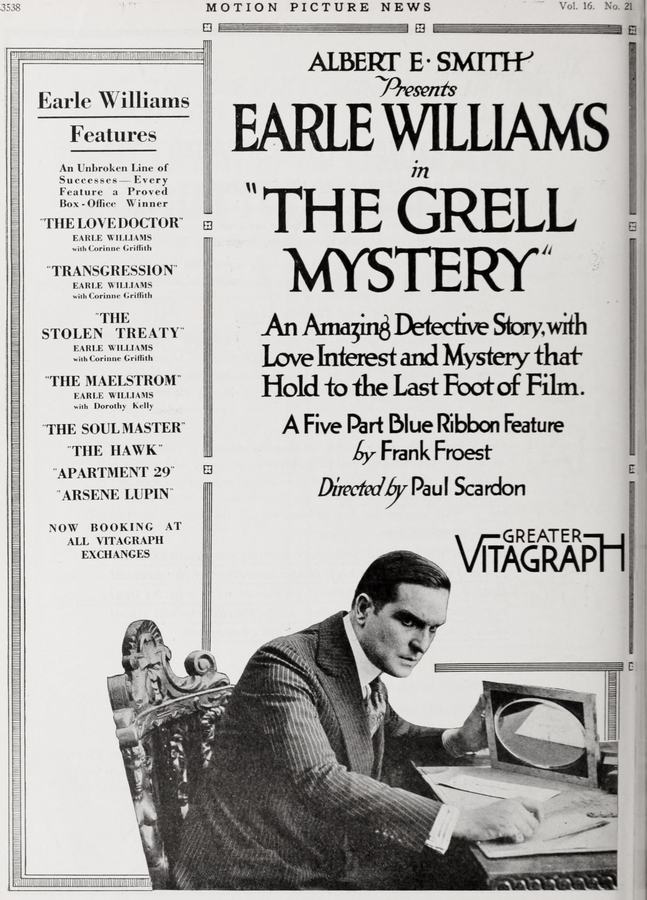
Dir: Paul Scardon
Eileen Meredith receives word from an "unknown friend" to call at the house of her fiancé, Robert Grell, where she will discover something of great importance. Unable to go, Eileen sends her sister Helen in her place. Helen enters the library where she finds a dead body resembling Grell. The real Grell then enters and, seeing Helen holding the dagger, mistakes her for Eileen and flees, hoping to cast suspicion on himself. Criminologist Heldon Foye takes the case. Foyle is in love with Helen, and when he finds her prints on the dagger, finds himself in a struggle between love and duty. Meanwhile, Grell locates the real murderer, a woman who clears up the mystery by explaining that the murdered man was Harry Goldenberg, her husband and Grell's dissolute brother who had come to blackmail him. In a struggle, she had stabbed Goldenberg, but because she had worn gloves, no fingerprints were visible on the dagger. The mystery thus resolved, Grell marries Eileen while Helen forgives Foyle for misjudging her.
View DetailsAnalysis relative to Tangled Lives
| Film Title | Atmosphere | Complexity | Similarity |
|---|---|---|---|
| The Island of Surprise | Surreal | Dense | 95% Match |
| Transgression | Surreal | Abstract | 90% Match |
| A Prince in a Pawnshop | Ethereal | High | 96% Match |
| Phantom Fortunes | Gritty | Dense | 90% Match |
| In the Balance | Gothic | Linear | 90% Match |
This guide was algorithmically generated using the cinematic metadata of Paul Scardon's archive. Last updated: 8/17/2026.
Back to Tangled Lives Details →