Summary
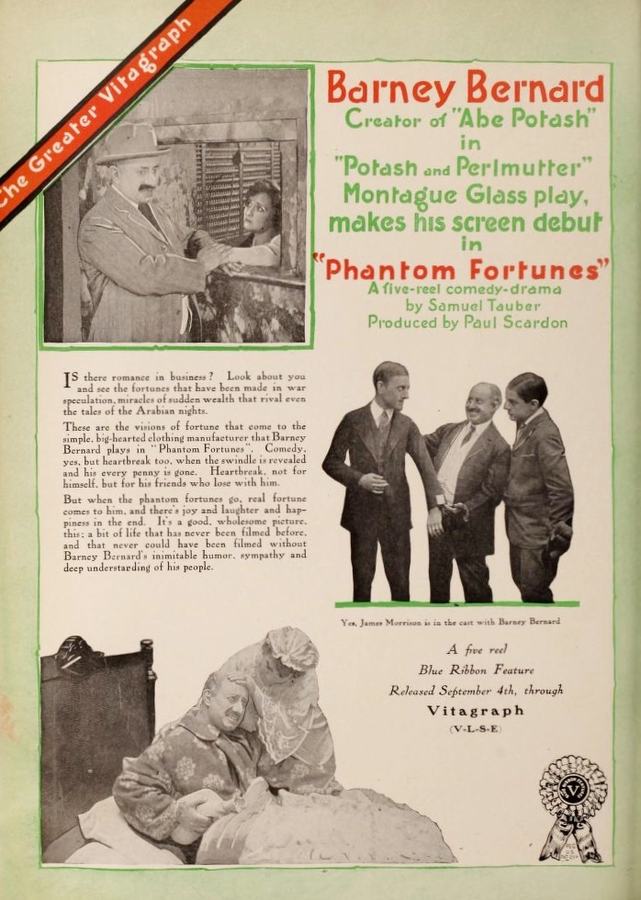
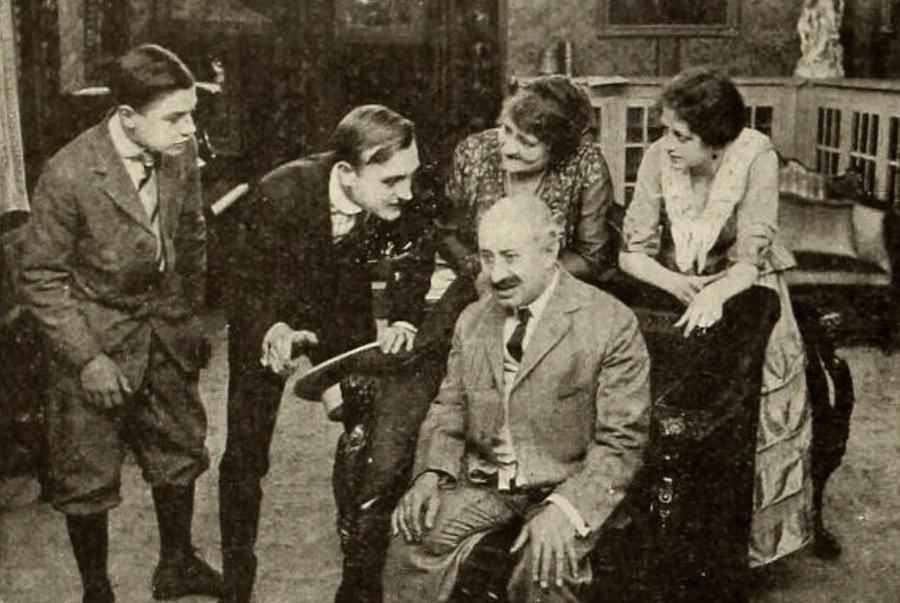
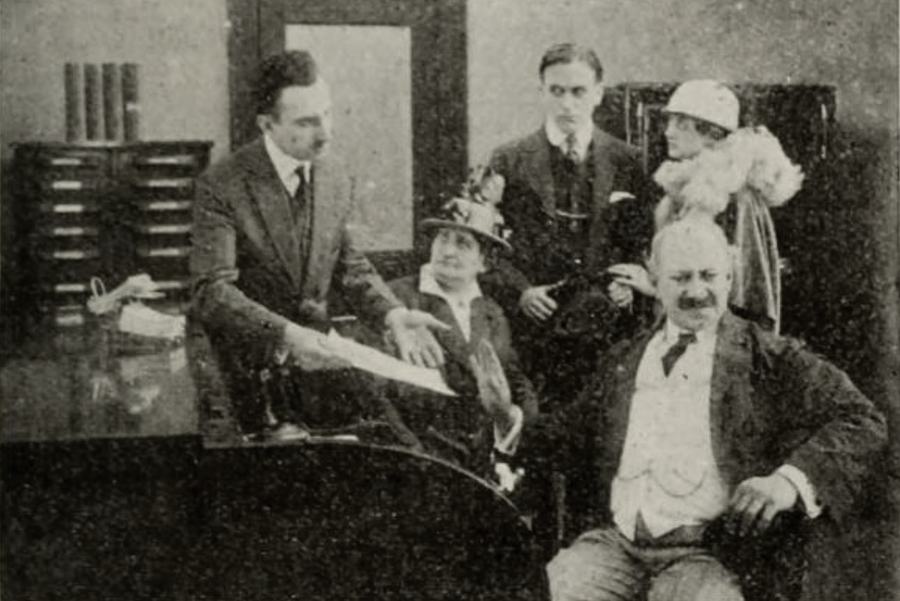
A nickelodeon-era kaleidoscope of Lower-East-Side mercantile chaos, Phantom Fortunes stitches together immigrant hustle, wartime profiteer paranoia, and threadbare romance into a single restless reel. Bob Deering, natty everyman with the gift of gab, commutes from subway steam to stock-ticker clamor; on the same dawn he rescues Herman Pinsker—scrawny messenger, human yarmulke on crooked shoulders—from a wolf-pack of office boys. Gratitude flows in gabardine: the kid drags Bob to Pinsker’s sweatshop where sewing machines clack like castanets and bolts of serge exhale linted sunbeams. Enter Ike Mandell, tailor-cum-machiavelli, smitten with Dora the shop-princess; he plots, rehired for the umpteenth time, while Moses Hecht and Israel Classman bark over overdue paper. Mrs. Pinsker and Dora swoop in, silk-starved, sniffing bankruptcy in every “charity” stitch their patriarch hands out. War shutters Wall Street; Bob and Herman are tossed into the breadline. Salvation arrives wearing crimson: “Red” Dorgan, scarlet-haired confidence man, dangles Allied uniform contracts worth king’s ransoms. Bob, smelling opportunity, sells Pinsker on the dream, pockets a finder’s promise, then watches Ike slip the rug: cousin Abie Lefkowitz fronts the bribe, eight grand up front, order rerouted. Manufacturers ditch local clients, pinning futures on phantom commissions. Hotel switchboard humming, Molly eavesdrops static of deceit; a Scotland Yard bloodhound tracks Dorgan’s cologne of fraud. Bob, detective, tailor, lover, stitches a counter-scheme—corner the domestic market while competitors twiddle thumbs over nonexistent war bales. Ike retaliates with a strike; Bob smothers it. Lefkowitz smells smoke, demands cash, brandishes a six-thousand-dollar check payable to Bob—proof of complicity or forged bait? Police swarm Pinsker’s loft; signatures point fingers, but Bob has already slid the paper back to Dorgan. Pinsker, cornered yet grateful, indemnifies his surrogate son. In the final iris, Molly trades headset for wedding veil; Dora ditches Ike for Glassman, whose coffers now overflow with Bob’s brash acumen. Fortunes, phantom or not, have married hustle to happy-ever-after.
Synopsis
Bob Deering on his way to business meets his sweetheart, Molly Sherman. He arrives at Milliken and Co., stockbrokers, his place of employment, just in time to save Herman, Zalmon Pinsker's 14-year-old son, from a very rough engagement with the other messengers in the office. For this act Herman takes him to his father's shop and obtains a suit at wholesale, and it is here that Bob meets Ike Mandell, who is in love with Dora, the daughter of Pinsker. Previous to this meeting Pinsker re-engaged Mandell after having hired and fired him at least ten times, and also just previous to Bob's arrival with Herman, Moses Hecht and Israel Classman had an argument with Mandell, who, trying to look after Pinsker's business, tried to force them to pay certain notes which had been endorsed by Pinsker. Mrs. Pinsker and Dora arrive and realize that if Pinsker keeps up this pace of unorganized charity they will have little if any chance of obtaining the new dresses for which they came. Later the stock market closes on account of the war, and both Herman and Bob are out of a job. Bob calls upon Molly, who is a telephone operator in a hotel. There he meets "Red" Dorgan, who interests him in war orders. Clothing, sweaters, and shirts are needed for the allied armies, so Bob goes to Pinsker and agrees to get him a contract that will at once make him a rich man. Pinsker is overjoyed. Bob returns to Dorgan, and it is arranged that the manufacturer shall meet the commission. Ike Mandell has a cousin, Abie Lefkowitz, another clothing manufacturer, and he feels that if he can give Pinsker the double cross and get the business for Lefkowitz he will be able to marry Dora. Ike arranges with Dorgan to switch the order to Lefkowitz, who has to give Ike an advance commission of $8,000 for his work. Bob apprises Molly of what he has done for Pinsker, but she has her misgivings about Dorgan. The contestants for the big war order is requested by the commission, which has quarters in the hotel in which Molly is a telephone operator, to have samples of their goods at the commission's offices. The different clothing manufacturers comply, and when each at different times receives most encouraging reply concerning their samples each refuses domestic orders so that all time possible may be devoted to the commission's order. The hotel detective becomes suspicious and after a short conversation with a Scotland Yard man who has been on Dorgan's trail for months, they, with Bob, examine the commission's quarters. They are now firmly convinced that the scheme is a fake, and Bob conveys this information to Pinsker. He is greatly discomfited over the revelation, but Bob gets an idea which will net Pinsker a considerable sum. All the other clothing manufacturers are refusing domestic orders pending advices from the commission, so Bob helps Pinsker to corner the home market. This scheme is successfully executed. Ike Mandell, jealous, is busy instituting a strike among the employees, but his plan is soon frustrated by Bob. Lefkowitz scenting that something is wrong, goes to the hotel, where he is told of the fake affair. The crooks are captured. It is then that Lefkowitz tells of a $6,000 check and that it was made out to Bob. The police now go with Lefkowitz to the shop of Pinsker, where they try to fasten the check upon Bob, but he has given it to Dorgan, and Pinsker agrees that if his is the only signature on it, he, Pinsker, will make good for Bob. Molly goes to Pinsker, who introduces her to his new partner, Bob Deering, and assures her that she need not "hello" any more if she will marry this live businessman. Molly is pleased, and is further glad to know that Mandell has lost out with Dora, who is going to marry Glassman, who is now making his fortune through Bob's methods of wide-awake business.
Review Excerpt
"
The ghosts of 1915 still rattle their tinsel chains inside Phantom Fortunes, a one-reel marvel that most historians misfile between The Frame-Up and The Student of Prague, as if all silent morality plays were interchangeable shadows. Yet this Lower-East-Side fable—patched together from war jitters, rag-trade ambition, and garter-snapping romance—has the breathless metabolism of a newsboy shouting extra editions. It is capitalism’s origin myth shot at 18 frames per second: a place where contract..."