
DbcultAccessing Vault...
Recommendations
Senior Film Conservator
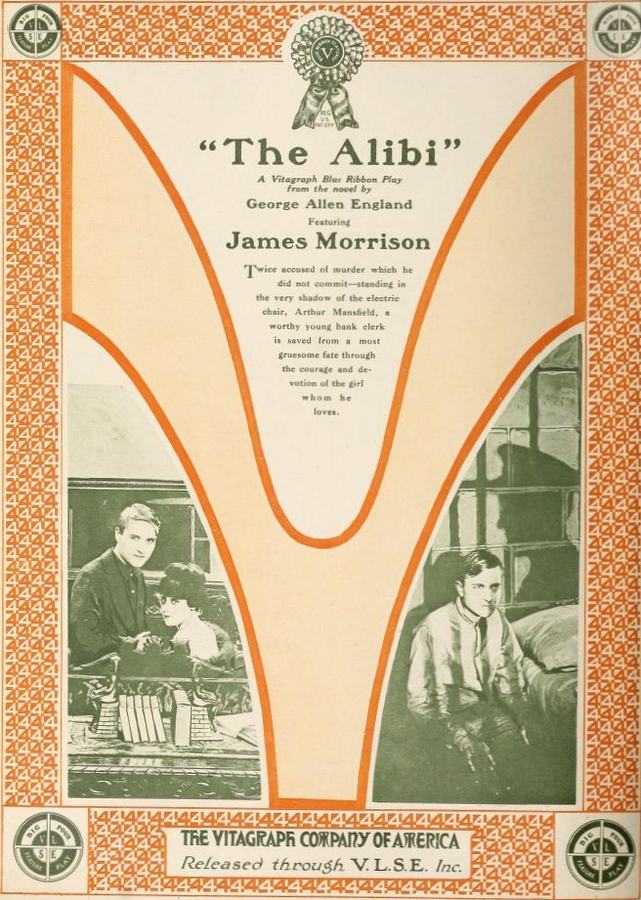
For cinephiles who admire the stylistic flair within The Alibi, its lasting impact ensures that its spirit lives on in modern recommendations. Each of these movies shares a piece of the stylistic flair that made The Alibi so special.
At its core, The Alibi is a study in to provoke thought and inspire awe in equal measure.
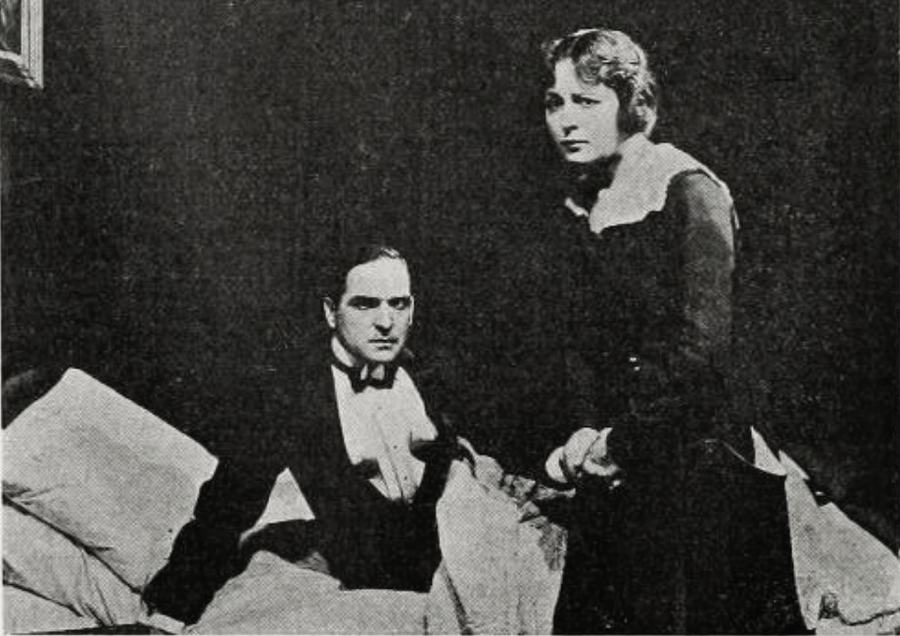
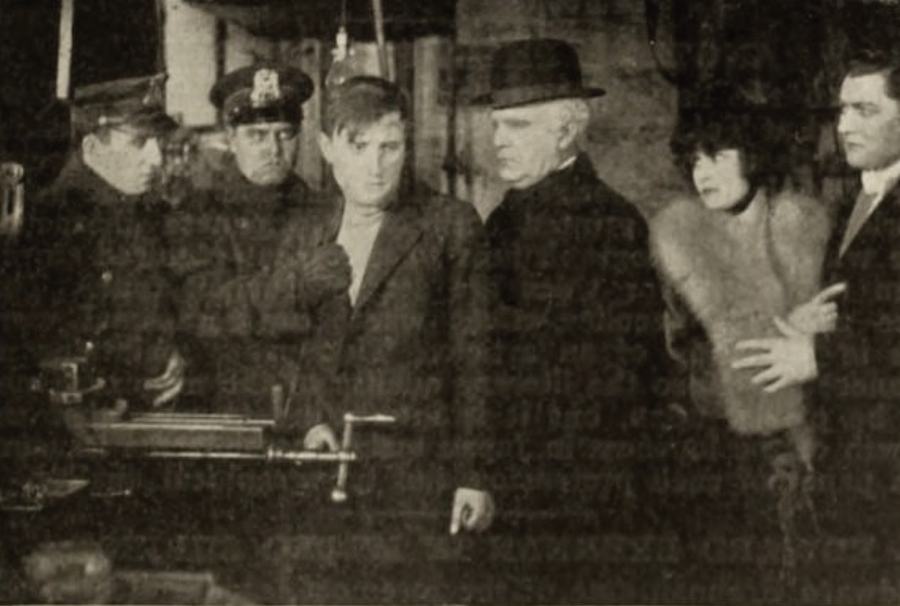
To help his dying father, assistant bank cashier Arthur Mansfield enters a fake sum in the bank's account book, but before carrying out the pilferage, he confesses to cashier Slayton, his superior. Slayton, who needs money to pay for his unsuccessful speculations, goes at night to take the money that Mansfield planned to embezzle, so that Mansfield will take the blame. Slayton shoots a watchman who confronts him and leaves evidence to frame Mansfield. Despite Mansfield's conviction for second-degree murder, his fiancée Enid, the bank president's daughter, believes in his innocence and hires a detective. When Slayton, out of curiosity, visits Mansfield in prison, Mansfield vows revenge. Slayton gradually becomes overcome with fear that Mansfield will escape, and when Mansfield does escape and arrives at Slayton's home, Slayton commits suicide. Mansfield is sought as Slayton's murderer, but Enid's detective finds a suicide note to Slayton's wife that establishes Mansfield's innocence. Mansfield regains his former position and resumes his romance with Enid.
The Alibi was a significant production in United States, bringing a unique perspective to the global stage. It continues to be a top recommendation for anyone studying cult history.
Based on the unique stylistic flair of The Alibi, our vault has identified these titles as the most compelling follow-up experiences for fans of cult cinema:
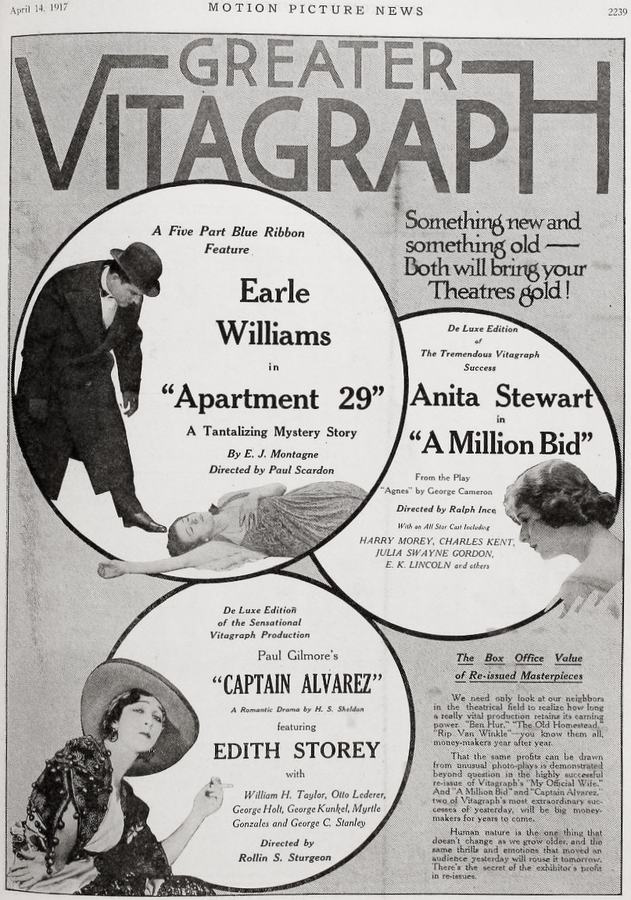
Dir: Paul Scardon
Stanley Ormsby, a dramatic critic, runs foul of an author and dramatic company who have just put on a new play which he announces as "rotten." On his way home from the play, after waiving aside the author's pleas for a merciful criticism, his adventures begin. He interferes between a couple quarreling on the street and is rebuffed. Later he gets an assignment from his editor to go to a certain apartment house to interview a singer. Entering the place he is diverted from his mission by a woman falling apparently dead at his feet, before the door of Apartment 29. Carrying her inside he finds her to be the woman of the quarrel, and there finds also her husband shot. There alone, he realizes suddenly that circumstances are against him and wishes to flee. The playwright, who lives in the same building, offers refuge, but in return asks a large sum of money, which Ormsby is only too glad to give. A girl in the playwright's apartment hides him while the police search the place. He has a dozen hairbreadth escapes and is finally shocked as the playwright demands a bribe to keep him hidden. Finally Ormsby escapes from the house with the girl, only to run into a nest of thugs, who attack him. He is then rescued by the very police, who then charge him with murder, after which...well, it winds up all right, but it was a hair-raising experience, mates.
View Details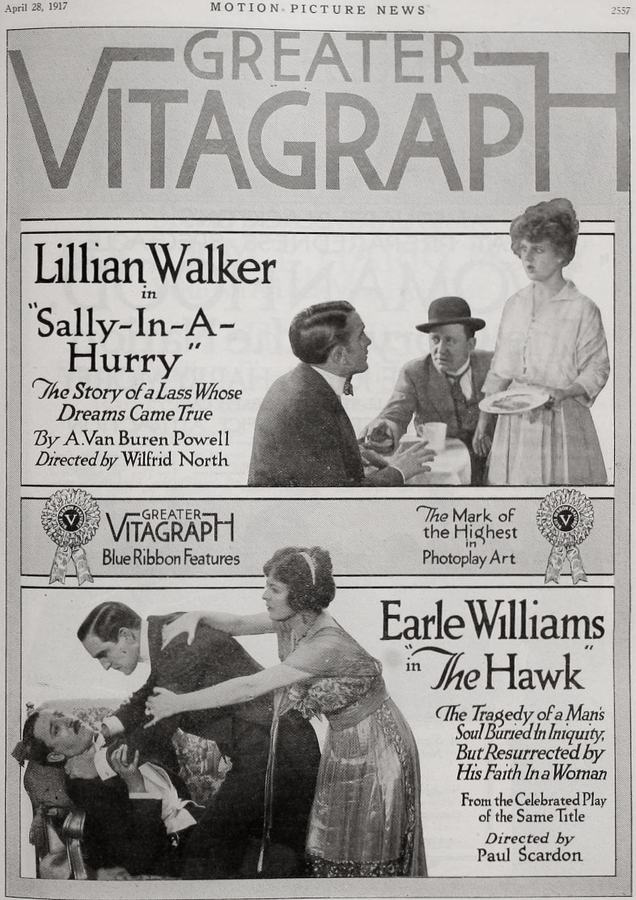
Dir: Paul Scardon
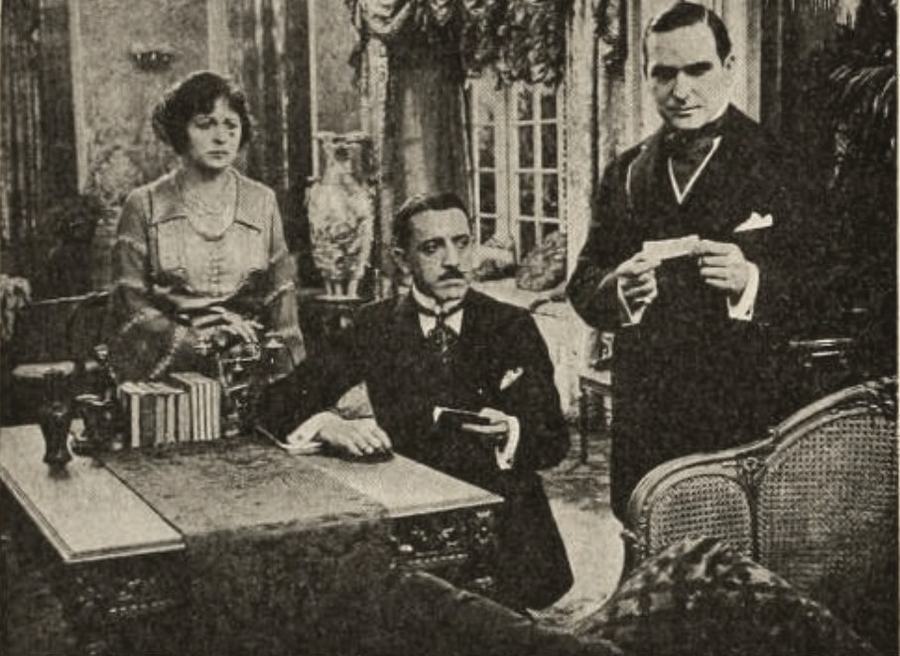
The Hawk, Count George De Dazetta, preys upon society with the aid of his beautiful wife. She seems to be in love with a young French nobleman, who is the real aggressor in this triangle. De Dazetta finds that the young nobleman's love for his wife is changing her for the better, that she begins to abhor his gambling profession and his inroads upon society. However, he continues to use her beauty as a lure to his gaming tables and wins heavily. In the meantime the nobleman breaks with a young woman aristocrat whom his mother wishes him to wed. During a transaction with an American from whom he borrows money to repay his gaming losses to De Dazetta the nobleman learns of the Hawk's love for his wife, and that she is helping her husband to win. Marina, the wife, washes her hands of the whole earning enterprise and is accused of infidelity by her husband, who tried to kill the nobleman. Failing, he leaves, and the nobleman protects the wife while attempting to locate the gambler and get his consent to a divorce. Finally this is effected, and Marina herself pleads for the divorce, that is until she learns that De Dazetta is now penniless, having lavished his every cent upon her and really loves her, and has consented to give her up only because he thinks it best for her future welfare. Her womanhood comes to the surface and she goes to him, renouncing the nobleman, her love for the latter having been without sin throughout.
View Details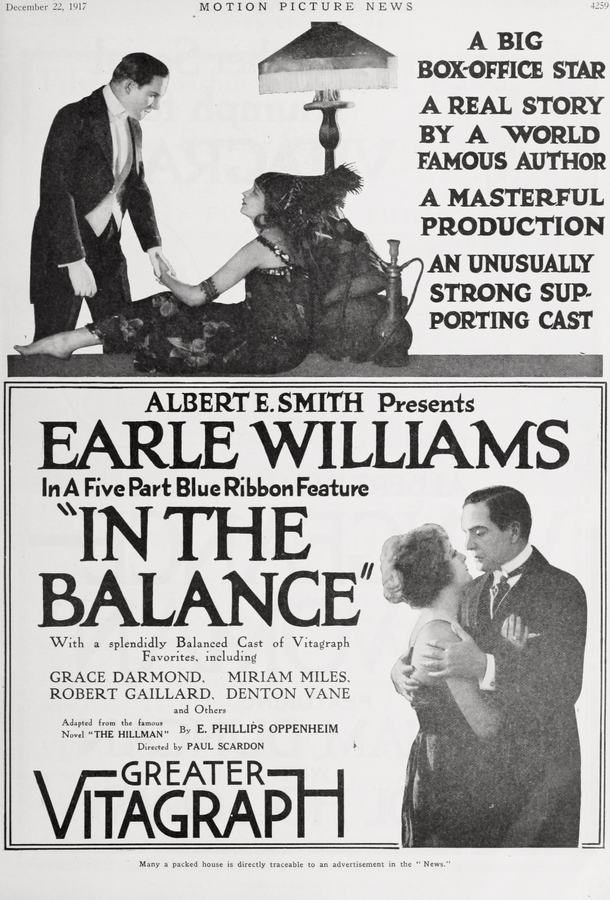
Dir: Paul Scardon
The actress is on her way to visit the Prince in his castle when she is stranded on a lonely road by an accident to her motor car. The Hillman happens along and takes her to Peak Hall. He is still young and handsome, but marked by the stern fanatical belief of his family that no member of it ever should leave the hills. In an exchange of confidence, the Hillman warns the actress not to visit the dissolute Prince, and she in turn tells him that for once he should try the broader life of the cities. Both heed the other's advice. She returns to the city, and he, in a brief period, follows. The Prince, still pursuing the actress, seeks to entangle the Hillman by throwing a notorious dancer in his path, but fails. Strangeway, the Hillman, proposes to Louise, the actress, but she withholds her answer. His brother comes from the hills to reclaim him, but his mission is vain. Again the Hillman proposes to Louise, who is always in the company of the Prince, and this time is accepted. Angered at his apparent loss of the actress, the Prince makes a scandalous remark about her at his club, which is resented with blows by the Hillman, whose love is all but crushed, when hurrying to Louise she admits what the Prince said is true. The Hillman returns to Peak Hill where a few months later as he is reading in a paper of the engagement of the actress and the Prince, she arrives at his home. She assures him that she is good, not bad, and that she did make the promise to the Prince when she believed he loved her, and both the Hillman and his brother receive her as one of them.
View Details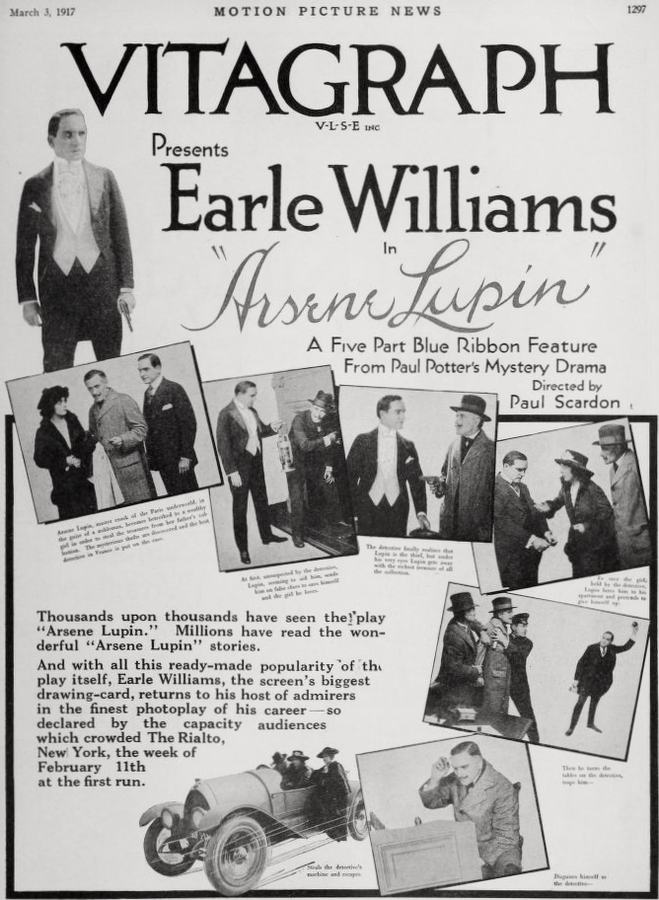
Dir: Paul Scardon
Gifted with charm of manner and a prepossessing appearance, Arsene Lupin, instead of employing his talents along legitimate lines, prefers to match his wits against those of the French police, with the result that he becomes the most celebrated crook of his time. Always after big game, he moves in the most exclusive circles of French society, and takes advantage of an opportunity to pass himself off as the Duke de Charmerace. Assuming the Duke's title and estates, he sets about the delicate task of stealing the rare works of art and the enormously valuable jewels belonging to a M. Guernay-Martin. As the first step in this direction he becomes engaged to Germaine, Guernay-Martin's daughter. Under the cloak of their hospitality he commits a series of audacious robberies, stealing old masters off the walls and always signing his name on the wallpaper to show he committed the theft. The distracted art collector calls in Guerchard, the shrewdest detective in Paris, but even under the nose of this sleuth, the thefts continue as before. Germaine's secretary, Sonla Kritchnoff, attracts more than the passing attention of Lupin and before he has finished with the Guernay-Martins he finds himself in love with her. Guerchard finally draws the net of suspicion so closely about Lupin that the latter is forced to leave the Guernay-Martin home and hide in his own apartment. Just before leaving he discovers that Sonia is also a thief, and the shock of this knowledge determines him to lead a straight life thereafter and take her along with him. Though Guerchard trails him to his hiding place he makes use of an ingenious concealed elevator and at the last exciting moment, slips from between the detective's fingers and escapes with Sonia to safety.
View Details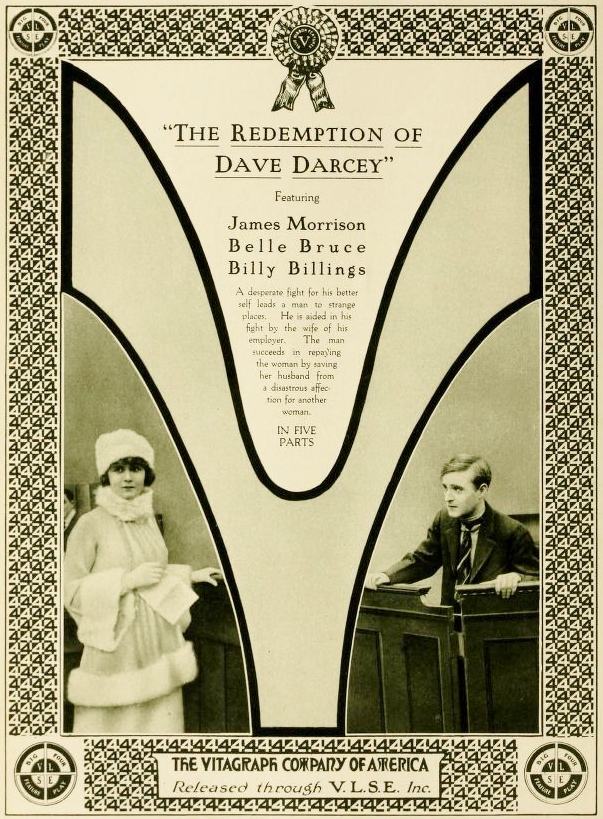
Dir: Paul Scardon
After landing a big "haul," Dave Darcey, a crook, decides to spend part of his booty by holding a dance for his followers. Paddy Burns, leader of a rival faction, decides to settle an old score with Dave by breaking up the affair. On the night of the dance he goes at the head of his gang with the avowed intention to "get" Dave. In the struggle, Dave shoots Paddy and makes good his escape. He is seen by Phillip Brenton, the son of the owner of the steel works, who thinks he is there to rob the house and demands an explanation, Dave explains the whole affair to him, and Phillip gives him a chance to make good by giving him a job in the steel plant. Phillip's father is not so sure of Dave's reformation, and tests him by leaving a large roll of bills exposed. Dave sees the money and a struggle with his other self follows. The new Dave comes out the winner and he returns the money. The Baroness Von Ehrenstein, a secret agent for a foreign government, learns that the Benton Steel Works have accepted a huge war order for a nation hostile to her own. She gets permission from Phillip to visit the plant on the pretext of getting local color for a novel she is writing. Phillip personally guides her and her accomplices through the plant and they make a thorough study of the place. Phillip has become greatly interested in the Baroness and is neglecting his fiancée, Grace. The latter notices his continued absence and asks Dave the cause. The latter, in order to protect Phillip, tells her that it is business. Dave, suspicious of the Baroness, warns Phillip of her and his young employer resents his interference and discharges him. While Phillip is in a drunken stupor, the Baroness steals his office keys from him and gives them to her confederates who hasten to the steel works. Suspicious of their actions, Dave follows them and sees them plant bombs in the factory. He tries to foil them and a fight follows. Dave is finally subdued and is left, bound hand and foot, by the burning bombs. He rolls himself over to a saw and works frantically till he severs his bonds. He then starts to stamp out the fuses of the bombs, but one of them explodes and he is caught in the wreckage. The watchman, having seen part of the struggle, follows the conspirators. The police arrive at the scene and are closely followed by Phillip and his father. The latter accuses Dave of attempting to destroy his plant, and also charges him with the murder of Paddy Burns. The watchman returns with the real culprits and tells the true story, thus clearing Dave of guilt. One of the policemen then tell Dave that he need not fear of trial for murder, as Paddy is still alive, having been only slightly injured by the shot. Dave is acquitted of the charge of assault which he had to answer to for the shooting and returns to a better job with the Benton Steel Works. Phillip and Grace are reunited.
View Details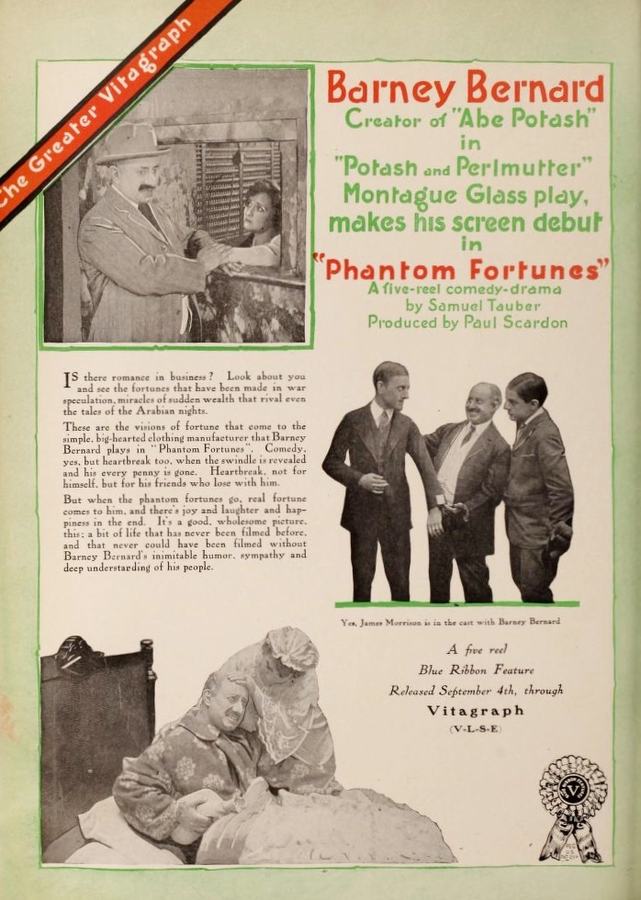
Dir: Paul Scardon
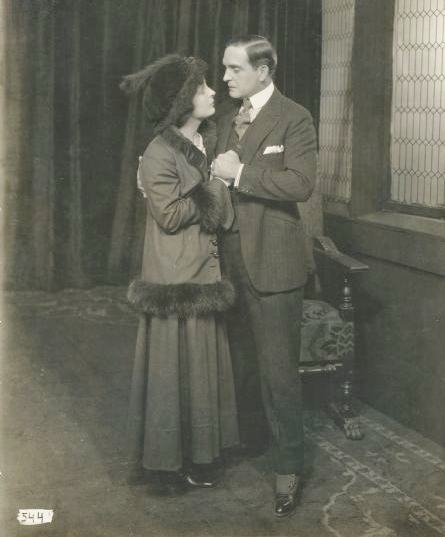
Bob Deering on his way to business meets his sweetheart, Molly Sherman. He arrives at Milliken and Co., stockbrokers, his place of employment, just in time to save Herman, Zalmon Pinsker's 14-year-old son, from a very rough engagement with the other messengers in the office. For this act Herman takes him to his father's shop and obtains a suit at wholesale, and it is here that Bob meets Ike Mandell, who is in love with Dora, the daughter of Pinsker. Previous to this meeting Pinsker re-engaged Mandell after having hired and fired him at least ten times, and also just previous to Bob's arrival with Herman, Moses Hecht and Israel Classman had an argument with Mandell, who, trying to look after Pinsker's business, tried to force them to pay certain notes which had been endorsed by Pinsker. Mrs. Pinsker and Dora arrive and realize that if Pinsker keeps up this pace of unorganized charity they will have little if any chance of obtaining the new dresses for which they came. Later the stock market closes on account of the war, and both Herman and Bob are out of a job. Bob calls upon Molly, who is a telephone operator in a hotel. There he meets "Red" Dorgan, who interests him in war orders. Clothing, sweaters, and shirts are needed for the allied armies, so Bob goes to Pinsker and agrees to get him a contract that will at once make him a rich man. Pinsker is overjoyed. Bob returns to Dorgan, and it is arranged that the manufacturer shall meet the commission. Ike Mandell has a cousin, Abie Lefkowitz, another clothing manufacturer, and he feels that if he can give Pinsker the double cross and get the business for Lefkowitz he will be able to marry Dora. Ike arranges with Dorgan to switch the order to Lefkowitz, who has to give Ike an advance commission of $8,000 for his work. Bob apprises Molly of what he has done for Pinsker, but she has her misgivings about Dorgan. The contestants for the big war order is requested by the commission, which has quarters in the hotel in which Molly is a telephone operator, to have samples of their goods at the commission's offices. The different clothing manufacturers comply, and when each at different times receives most encouraging reply concerning their samples each refuses domestic orders so that all time possible may be devoted to the commission's order. The hotel detective becomes suspicious and after a short conversation with a Scotland Yard man who has been on Dorgan's trail for months, they, with Bob, examine the commission's quarters. They are now firmly convinced that the scheme is a fake, and Bob conveys this information to Pinsker. He is greatly discomfited over the revelation, but Bob gets an idea which will net Pinsker a considerable sum. All the other clothing manufacturers are refusing domestic orders pending advices from the commission, so Bob helps Pinsker to corner the home market. This scheme is successfully executed. Ike Mandell, jealous, is busy instituting a strike among the employees, but his plan is soon frustrated by Bob. Lefkowitz scenting that something is wrong, goes to the hotel, where he is told of the fake affair. The crooks are captured. It is then that Lefkowitz tells of a $6,000 check and that it was made out to Bob. The police now go with Lefkowitz to the shop of Pinsker, where they try to fasten the check upon Bob, but he has given it to Dorgan, and Pinsker agrees that if his is the only signature on it, he, Pinsker, will make good for Bob. Molly goes to Pinsker, who introduces her to his new partner, Bob Deering, and assures her that she need not "hello" any more if she will marry this live businessman. Molly is pleased, and is further glad to know that Mandell has lost out with Dora, who is going to marry Glassman, who is now making his fortune through Bob's methods of wide-awake business.
View Details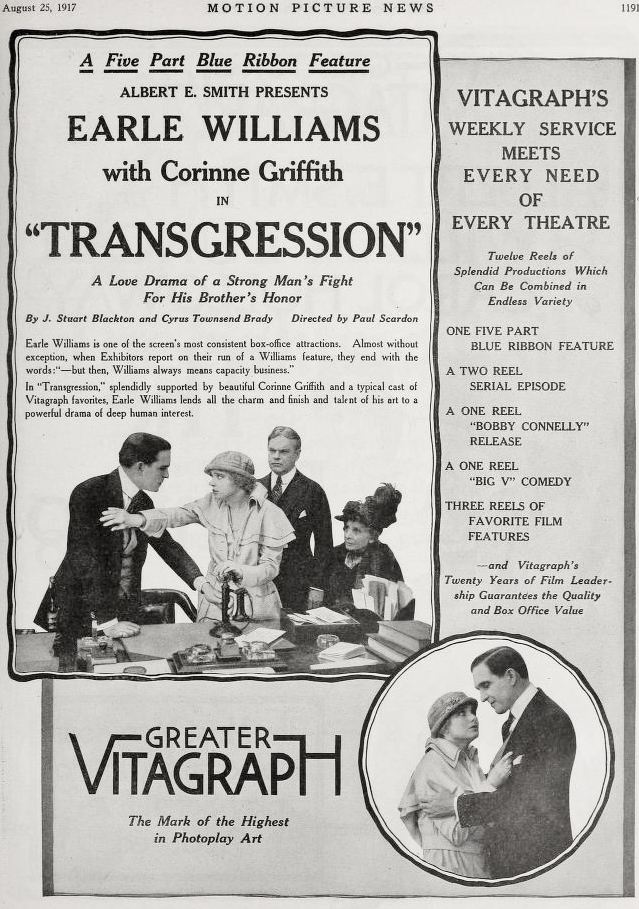
Dir: Paul Scardon
Hal Page, the weakling brother of Stephen Page, the town mayor, falls in love with Carline Shrefton, who throws over Burt Staley to entangle Hal in her self-serving schemes. Furious over her abrupt departure, Staley shows up at Carline's, and a jealous fight with Hal ensues in which Staley is shot and killed with Carline's gun. After Hal confesses to the deed, Stephen quietly sends him off to Spain. One year later, Stephen announces his engagement to Marion Hayward, the daughter of the district attorney, who is pressing charges against James Reed, a corrupt politician and Carline's new husband. To save Reed, Carline threatens Stephen with exposure, but he refuses to bend to her demands. Just days before Carline is to reveal her story about Staley, Hal appears and confesses to Hayward that Carline is the true killer. After verifying Hal's story, Hayward grills Carline, who finally admits her guilt. A matured Hal is restored to his family and Reed is sent away for his crimes.
View Details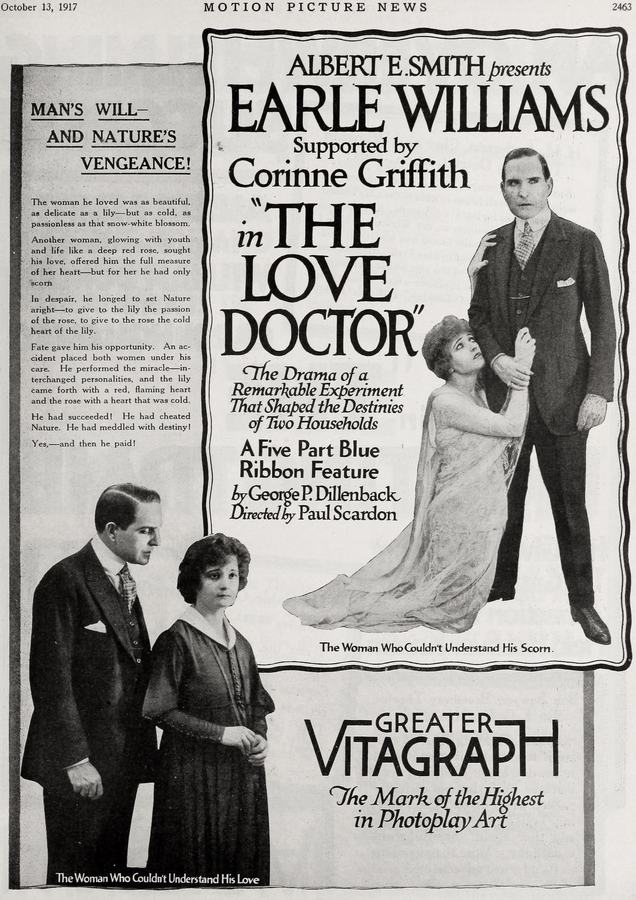
Dir: Paul Scardon
A doctor transplants the brain of a girl who is in love with him into a girl he is in love with.
View Details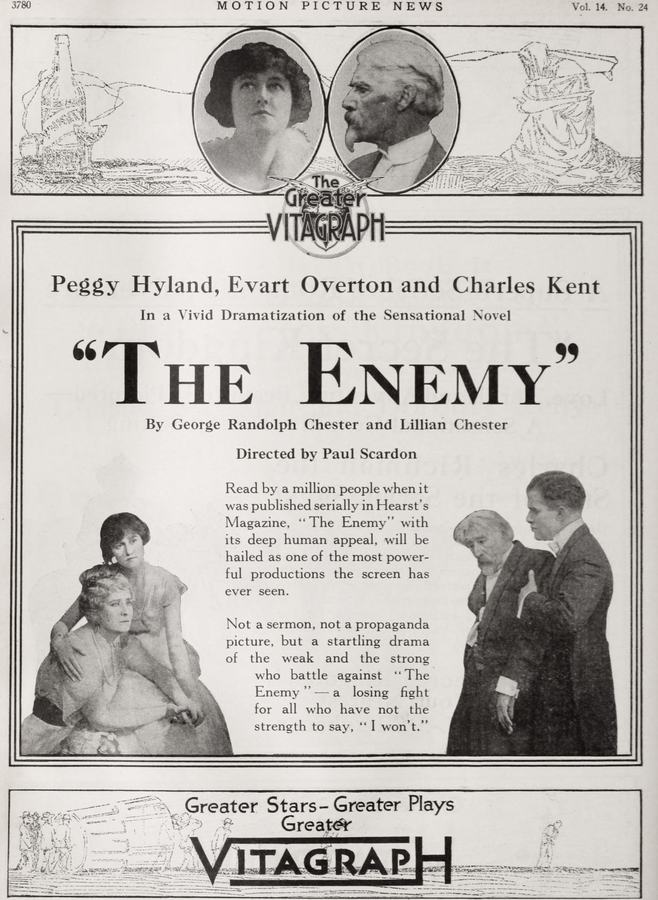
Dir: Paul Scardon
Famous architect Harrison Stuart is taken over with alcoholism and begins living in flop houses, he is saved by Billy Lane, a young architect who has always admired the older man. Lane reunites Harrison with his family and falls in love with Harrison's daughter. After announcing his engagement to her, however, Lane himself becomes an alcoholic when another woman, jealous of his fiancée, spikes his punch and tricks him into heavy drinking. Then Harrison gives in to his old habit but before submitting completely, he kills himself. The suicide brings Lane to his senses; he swears off drinking and returns to Harrison's daughter.
View Details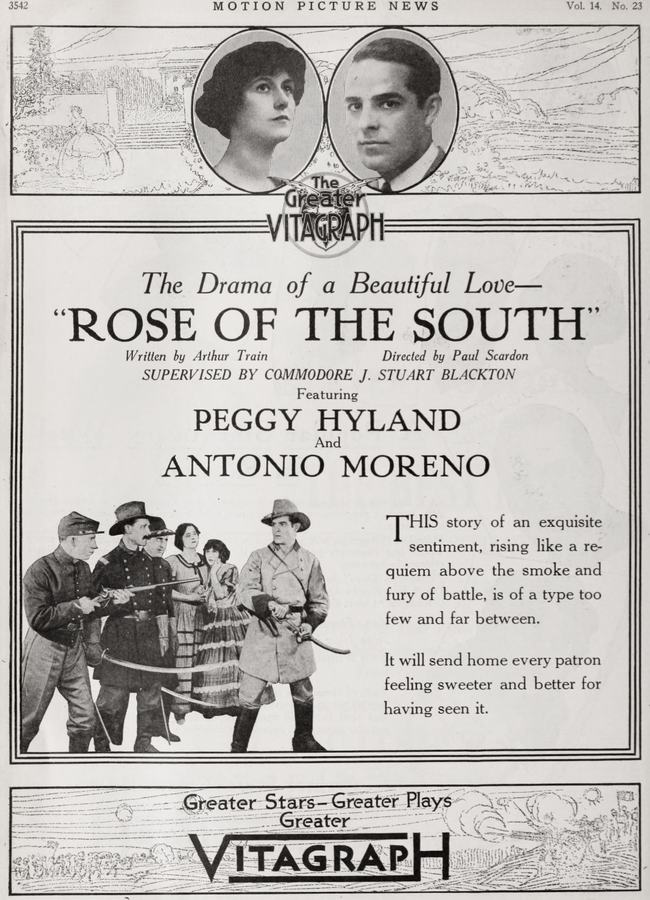
Dir: Paul Scardon
Mr. Curtis returns to his Alma mater and regales students with stories about the Civil War, which ended fifty years before. He tells them about his college friends, Dick Randolph and Watkins, who were at first rivals for Marian - who far preferred Dick - and then rivals on the battlefield. Watkins, a Union officer, captured Dick, a Confederate, but Marian helped her sweetheart escape. Watkins and Dick were then wounded in the same battle and died in each other's arms after asserting their friendship and forgetting their past differences. Back in the present, an aged Marian joins the group. She dies while listening to Mr. Curtis, and fifty years after she and Dick had been lovers in the flesh, her spirit goes to join his.
View DetailsAnalysis relative to The Alibi
| Film Title | Atmosphere | Complexity | Similarity |
|---|---|---|---|
| Apartment 29 | Ethereal | Layered | 88% Match |
| The Hawk | Ethereal | Layered | 95% Match |
| In the Balance | Gothic | Linear | 90% Match |
| Arsene Lupin | Gritty | Dense | 93% Match |
| The Redemption of Dave Darcey | Surreal | Abstract | 93% Match |
This guide was algorithmically generated using the cinematic metadata of Paul Scardon's archive. Last updated: 8/16/2026.
Back to The Alibi Details →