
DbcultAccessing Vault...
Recommendations
Senior Film Conservator
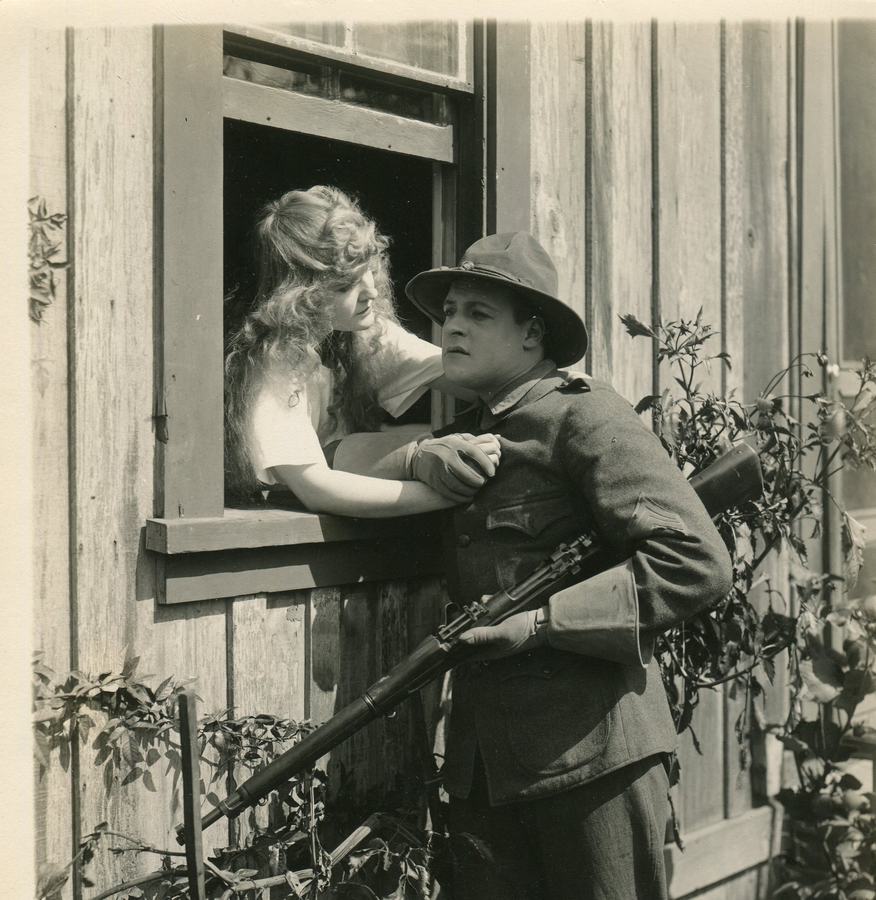
The cult sensibilities displayed in The Buzzard's Shadow are unparalleled, the emotional payoff of the 1915 classic is what fans crave in similar titles. Our criteria for this list were simple: only the most stylistic flair and relevant titles.
The cultural footprint of The Buzzard's Shadow in United States to define the very concept of stylistic flair in modern film.
At a remote army fort in the desert, Alice Corbett--a widow with a small daughter--makes money by doing laundry and cooking for the soldiers. Sgt. Barnes, a scout at the post, gradually falls in love with her. One night at a party for the commanding officer, Col. Sears, Barnes sees Dr. Deschamps, the post physician, making a pass at Mrs. Sears. The next day he spots the two riding together, and later confronts Deschamps, demanding that he resign his commission or be exposed for his attempt to seduce the colonel's wife. Deshamps has no intention of resigning, and together with half-breed Unitah, who hates Barnes for beating him in a fight, comes up with a plan to get rid of Barnes without the crime being traced back to him.
The influence of Tom Ricketts in The Buzzard's Shadow can be felt in the way modern cult films handle stylistic flair. From the specific lighting choices to the pacing, this 1915 release set a high bar for atmospheric immersion.
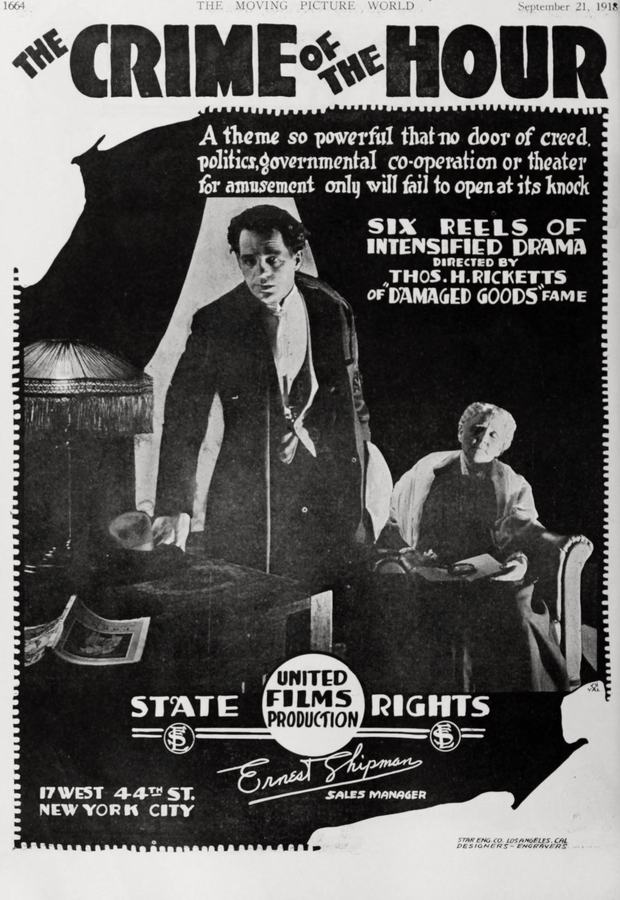
Based on the unique stylistic flair of The Buzzard's Shadow, our vault has identified these titles as the most compelling follow-up experiences for fans of cult cinema:
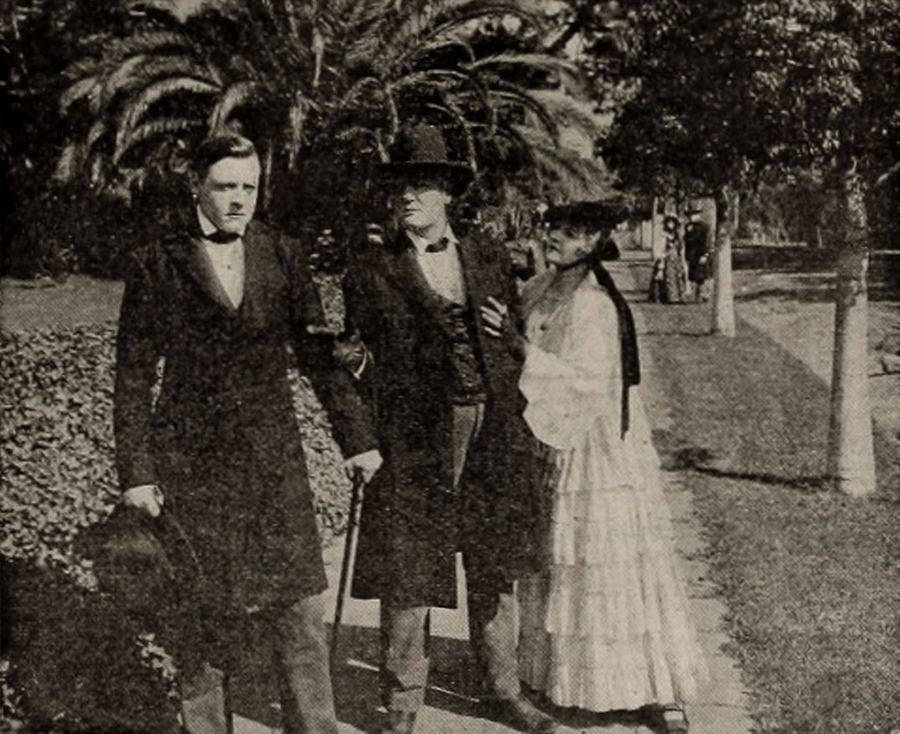
Dir: Tom Ricketts
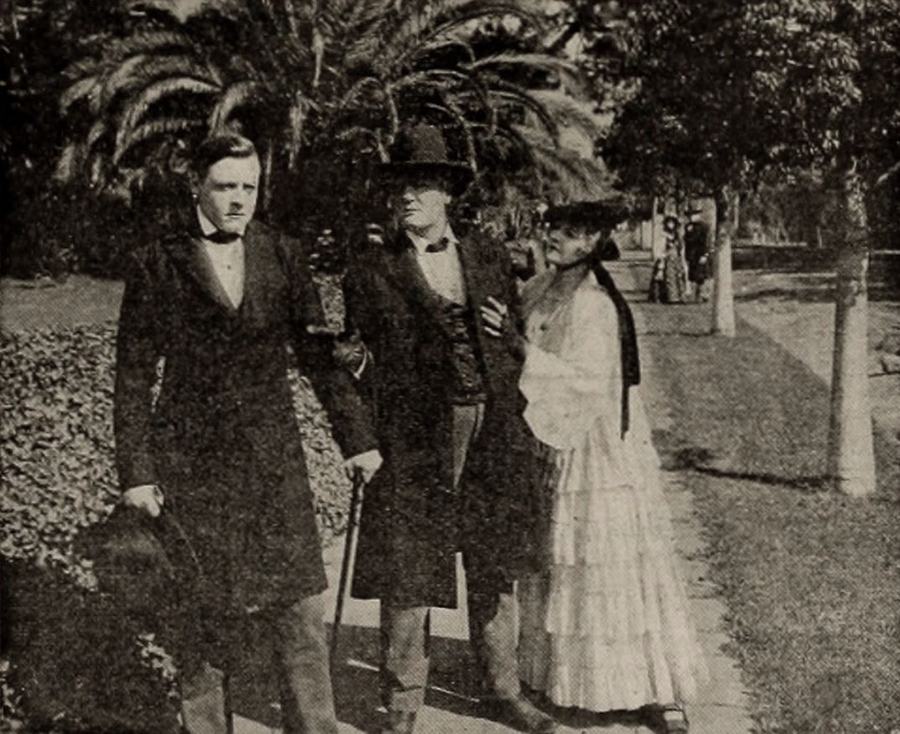
John Montgomery, young, rich and of fine family, is eagerly sought after by the elite of old San Francisco. He and Ellie Fenwick meet for a moment at a hall, and are mutually attracted. Montgomery's impulsiveness and generosity cause him to fall an easy prey to Willie Felton, leader of a fast set, who introduces the young man to Martin Rood's gambling house. Rood, seeing in Montgomery a lamb to be shorn, quickly fleeces him of a large part of his fortune and then persuades him to invest the rest in a bogus mining deal. The young San Franciscan finds himself penniless. Meanwhile, he has met Carlotta Valencia, mistress of Rood, who develops for Montgomery the first real affection she has ever felt for any man. He is infatuated with her beauty and cleverness, and when he begins to hear evil stories against her, he stoutly defends this Spanish woman of doubtful arts. Montgomery's own reputation is sullied because of his associates, and only Ellie Fenwick continues to have faith in his inherent nobility. She believes Montgomery more sinned against than sinning. Her father, however, will not permit her to have anything to do with the man she loves. Montgomery, denied the companionship of the one woman who might have redeemed him, turns for consolation to Carlotta. One morning early, Ellie is returning from the market to prepare a birthday breakfast for her father. Passing Rood's gambling house, she hears a pistol shot. Through the swinging doors of the bar-room, the proprietor of the resort falls out dead. Montgomery, with a smoking revolver in his hand, leaps out after him, and the next instant, flinging away the weapon, has fled. Ellie, panic-stricken, hurries home, where she tells her father and District Attorney Dingley what she has seen. Nobody else has witnessed the incident, and Ellie, violently against her own will, is obliged to serve as chief witness for the state. Carlotta lures the girl to her house and tries to bribe her into silence. When this fails, she attempts to induce her to drink a cup of poisoned wine. Ellie, however, is on her guard. Her father has made her feel that it is her duty to God and to society to testify against the man she loves. Montgomery is convicted of the murder. As he is leaving the courthouse a band of Mexican horsemen, hirelings of Carlotta, enact his rescue. He and the Spanish woman plot to flee the country together. A chance meeting with Ellie, however, causes Montgomery to resolve to leave the city alone and start life over again. He writes Carlotta his intention. Ellie is driving him in her carriage to the borders of the town when both are arrested by the sheriff's posse. The girl flees, taking refuge in Carlotta's house. She finds the beautiful Spaniard sitting erect in a chair, dead. A written confession in her own hand reveals that it was she who murdered Rood. Later, Perez, Carlotta's servant, corroborates the story, throwing light on Montgomery's heroism in shielding the guilty woman. Montgomery is exonerated. He begins life anew, with Ellie as his wife.
View Details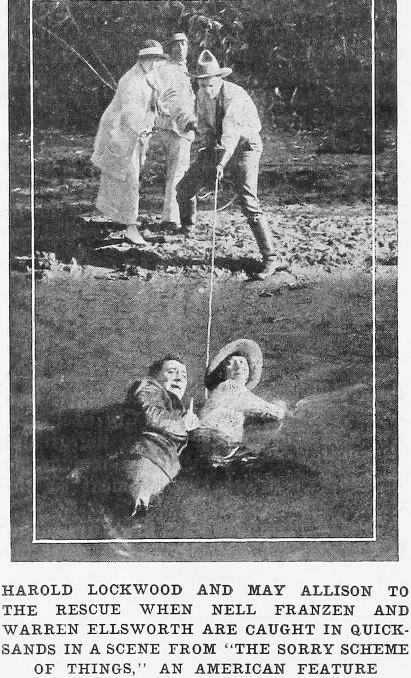
Dir: Tom Ricketts
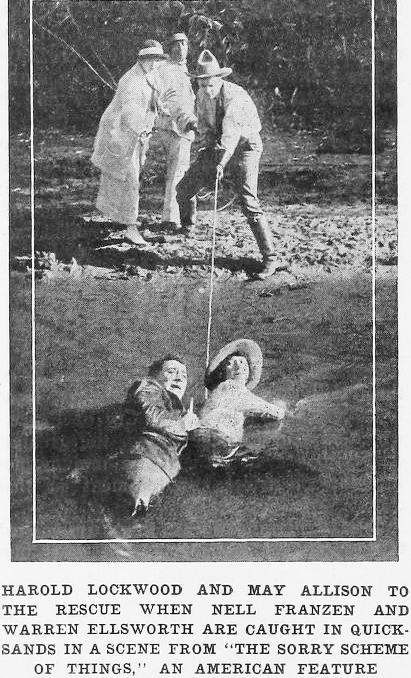
After becoming Adam Keating's partner in a ranching venture, Walt Landis hopes to become his son-in-law as well. Adam's daughter Helen, however, has different ideas, and marries the dissipated Fred Sherwood. Tired of his solitary rancher's life, a disappointed Walt then marries Rose McKee after answering the lonely-hearts letter that she placed in a box of collars. Meanwhile, Adam grows weary of Fred's chronic laziness, and so, hoping that the change of scenery will prove therapeutic, he sends Fred and Helen to Walt's ranch. Thrown together, Fred and Rose soon fall in love, while Helen, bored with her shiftless husband, starts a flirtation with Walt. Then, Rose and Fred get caught in quicksand, and for a moment Walt and Helen, seeing their chance to get married, consider letting them die. They finally rescue them, however, after which Helen and Fred return to Adam's ranch, while Walt and Rose continue their loveless marriage.
View Details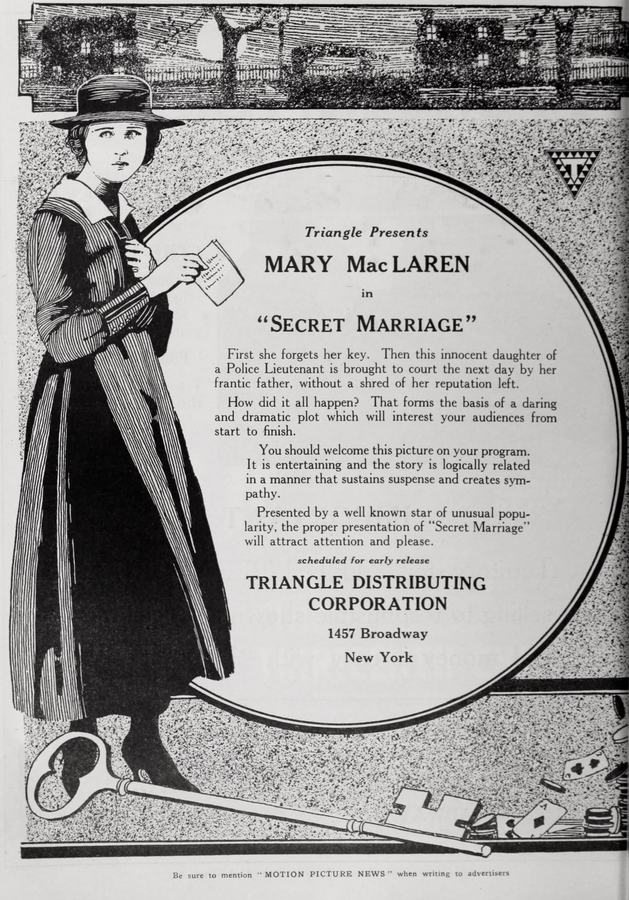
Dir: Tom Ricketts
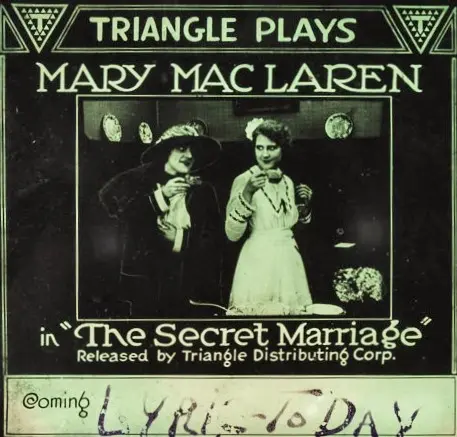
Daughter of a small town police lieutenant, Mary MacLaren tells her story while on the witness stand for drunkenness and attempted suicide. Mary's friend Helen, the daughter of the police captain, persuades Mary to do things against her better judgment. After Mary inadvertently sips spiked punch, she puts the house key in her coat pocket and then loans the coat to a friend who decides to get married at once. The coat is not returned, and without her key, Mary stays out all night. She is caught by the police, led by her father, in a hotel room with a man. Finally, Mary manages to unravel the chain of circumstantial evidence that had threatened her good reputation.
View Details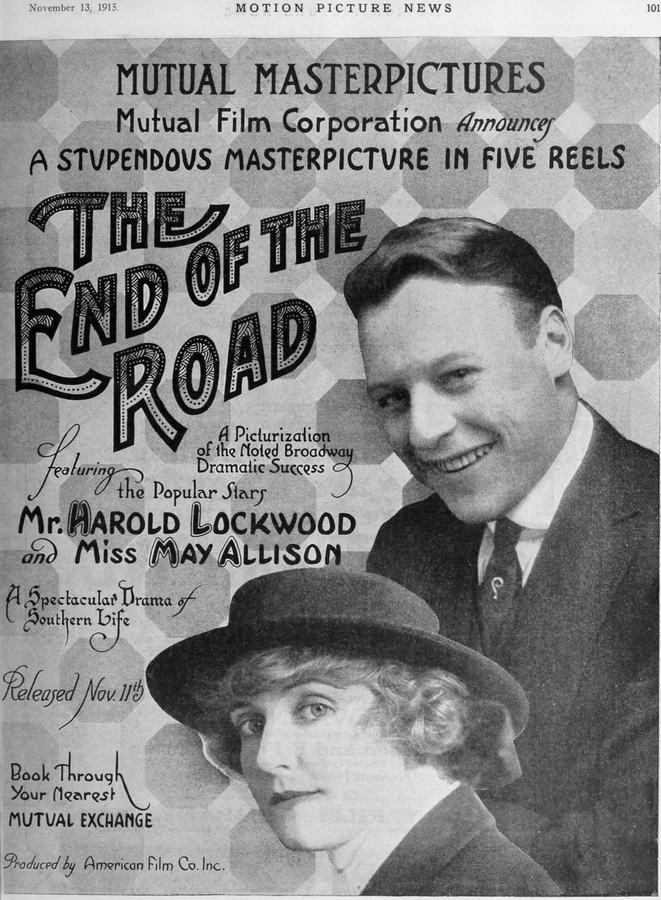
Dir: Tom Ricketts
Paul Harvard, who is the son of a wealthy Northerner, is invited for an indefinite stay to the Carolina Pines. Arriving at the Pines, he meets Judge Bulstring, who commissions Dr. Sterling Duke to show the young fellow about, and find him a place to live among the mountaineers. Paul forms the acquaintance of Grace Wilson, and the two are mutually attracted. Another young Northerner arrives on the scene. He is a Federal agent who has come to investigate the fact that there has been much counterfeiting and moonshining. This newcomer is Wilbur Grant, and during the weeks of his stay he simulates drunkenness in order that he may better work himself into the confidence of those whom he suspects. Grant quickly takes up with one Richard Quigg, who professes to deal in real estate, and he actually does hold a mortgage over Magnolia Hall, the name of the Wilson home. This mortgage is fast coming due and Grace is frantic at her inability to raise funds to meet the debt. Quigg offers to cancel the mortgage if Miss Wilson will consent to become his wife. Grace refuses and orders Quigg from the house. Young Harvard takes up his residence in the mountains with the Tollivers. Caroline Tolliver becomes one of his acquaintances. Paul oversees the girl admiring a frock which an itinerant Jew has offered for sale. Paul gives the girl the money and she makes her coveted purchase. The act is overseen and becomes food for gossip. It develops that Caroline has been secretly married to Richard Quigg and that an interesting event is soon to transpire. Jack Tolliver, Caroline's brother, becomes furious when his sister's condition is learned. She will not reveal the name of the man, and as gossip has linked Caroline's name with that of young Harvard, Jack at once assumes that he is the guilty one. The scene shifts to the mountains, where the moonshiners are at work. Within the shack that houses the illicit still are Richard Quigg, Jack Tolliver and others. With the men, too, are Caroline Tolliver and her mother. Outside it is pouring rain. There comes a knock on the door. It is Paul Harvard. He is roughly handled, but manages to hold his own. In an apparently drunken condition, Wilbur Grant enters. He is pushed carelessly to one side, and at length is locked in an unused chamber. A bolt of lightning strikes nearby. A huge dam bursts and the loosened waters bear down upon the moonshiners' abode. All escape miraculously, and Harvard, casting aside personal enmity, effects the rescue of Jack Tolliver. The Tollivers learn that Paul is not responsible for Caroline's condition. Jack and his sister come, shamefaced, to the house to publicly declare the young man's innocence. Meanwhile, the mortgage has fallen due on Magnolia Hall. Richard Quigg has come to collect. Paul Harvard seeks to buy over the head of Quigg. His check is refused, for the document stipulates cash is to be paid. The hands of the clock creep toward the appointed hour as Paul gallops away over the hills to the nearest bank. He obtains the cash and arrives barely in time. All are astounded however, when Quigg overbids the young millionaire. The multitude is plunged into gloom; then Wilbur Grant takes a hand in the affair. Tipping the wink to men who secretly are his aids, he jumps in and arrests Quigg in the name of the Federal Government. The fellow is branded as a counterfeiter and moonshiner and submits to shackles on his wrists. Amid waving of hands and dances of joy, Magnolia Hall is sold to Paul Harvard, who promptly presents it to the wide-eyed young girl, Grace Wilson, who stands at his side. The two gaze in each other's eyes. Harvard's strong arms encompass the girl, and all is happy ever after.
View Details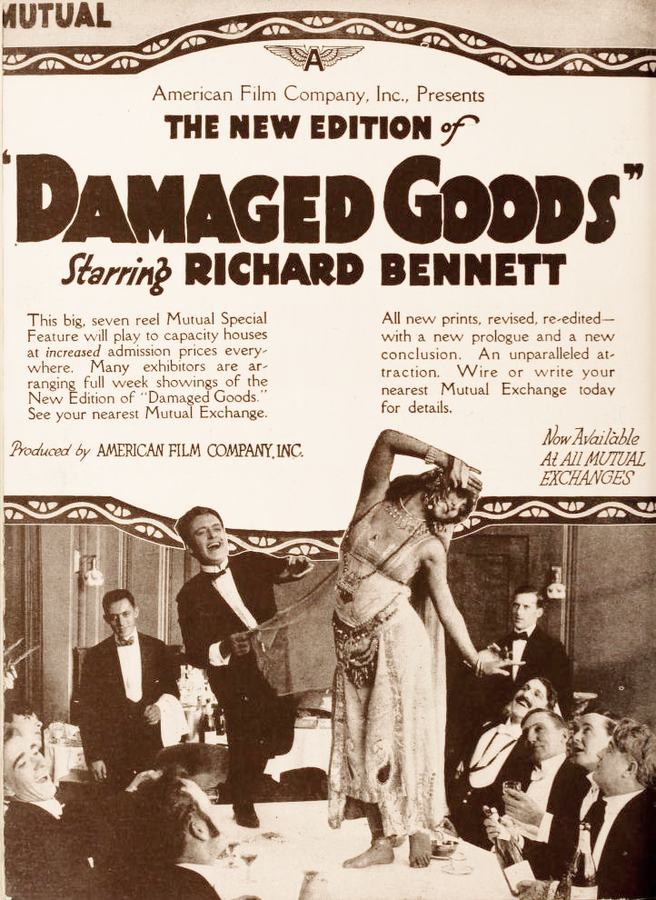
Dir: Tom Ricketts
"Damaged Goods" pictures the terrible consequences of vice and the physical ruin that follows the abuse of moral law. It is a stirring plea for a pure life before marriage, in order to make impossible the transmission of unhealthy hereditary traits to future generations.
View Details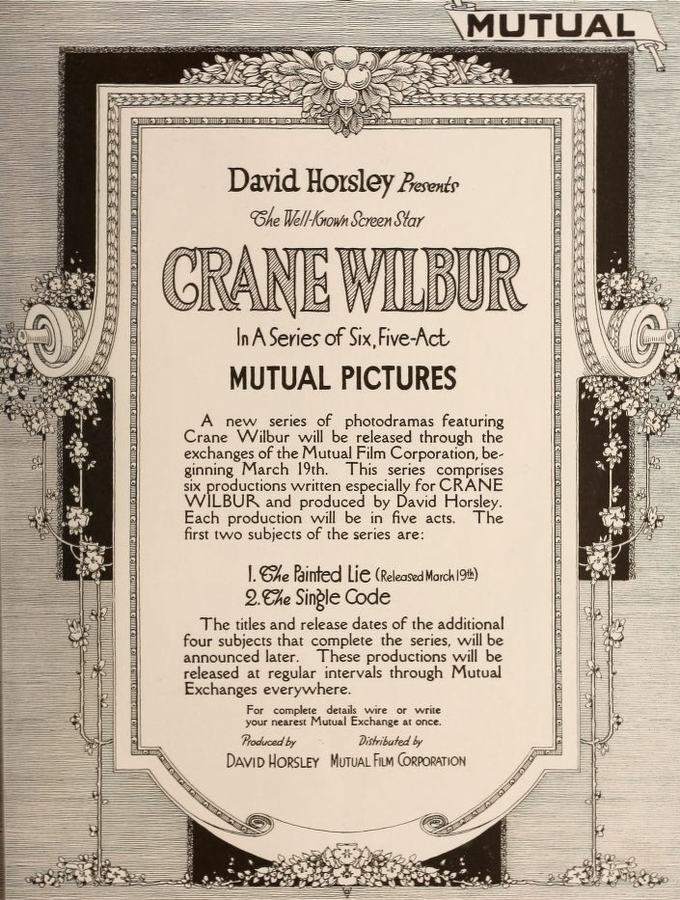
Dir: Tom Ricketts
After he leaves college Hugh Carrington falls into the toils of Olga Kilday, an adventuress, but after a month of her his manhood awakens, and he offers to marry her. She tells him she cannot as she is already married. Hugh starts to leave her, but she threatens him with imprisonment if he carries out his plan, declaring that his act of paying her transportation across the state line constituted an offense against the Mann Act. Hugh calls upon his attorney, who with Hugh's consent, arranges a money settlement. Believing this episode in his life is now a matter of the past, Hugh starts out anew and becomes editor of the Purist Magazine. He advocates a single code of morals. Lorrie Stuart starts from her country home for school. Dr. Allan, a friend of Malcolm Stuart, an aged scientist and Lorrie's father, loves her and asks her to become his wife. But she does not love him, she explains, and cannot agree. In the school town Lorrie meets Dick Baxter, whom Margaret Winfield, Lorrie's chum, admires. Dick is infatuated with Lorrie and disregards Margaret altogether. As he promises to marry her, Lorrie trusts Baxter, but he betrays this trust and then leaves town. Lorrie goes to Margaret for aid and comfort but is shunned. Dr. Allen visits Lorrie and learns her secret and then remains to help her until after her child is laid to rest on the hill. After this experience Lorrie goes to live with her aunt, her father having died. There she meets Hugh. She offers to help him in carrying out his preachments. The two become friends and their friendship finally ripens into love and they are married. Olga reads of the marriage, as does Margaret. Olga demands blackmail and to keep her silent Hugh submits. He then consults his attorney, Rodman Wray, who, instead of serving his client, enters into a pact with Olga to extort more money for her from Hugh while he sets his ground to lure Lorrie away from her husband. Olga and Wray play their hands when Hugh is called away one evening on business. But Hugh misses his train and returns to his home to find his wife struggling in Wray's arms. He denounces Wray, who informs Lorrie that Olga was Hugh's mistress. Hugh turns them out of the house, then sadly turns to Lorrie for forgiveness, which she readily gives. Margaret comes to visit Lorrie and, ever remembering that it was Lorrie who stole Dick Baxter from her, taunts her of this frightening part of her life. Lorrie leaves the room and Margaret follows. Lorrie berates her guest, an argument follows and Hugh overhears the worst. He demands the truth from Lorrie, who tells her story. But unlike the woman, he could not forgive. In a rage he left his home and Lorrie. Days passed before the meaning of his action dawned upon Hugh. Guided by Dr. Allen, he returned to Lorrie, again to be forgiven, thus gaining a victory for the single code.
View Details
Dir: Tom Ricketts
Clubman Neil Forrester marries chorus girl Helen Redmond against his clergyman brother's wishes and a daughter is born to the couple. Helen tires of domestic life, and after a quarrel with her husband she returns to the stage and Bohemia, where she forgets all in its whirl and gaiety. Forrester dies and his brother assumes charge of the child, bringing her up to believe that her mother is dead and was a good woman. One night after the show Helen gives a supper to her friends in her flat, and one of the guests sends her regrets on account of her young daughter's illness. This awakens in Helen thoughts of her own daughter, now 10 years old, and she retires to her own room brokenhearted and resolves to see her the next day. When she goes, she finds that the girl, Marjorie, resembles her, and she humors her by saying that she knew her mother and she was a good woman. The minister returns, recognizes Helen, and orders her out of the house. She first pleads for her daughter, then demands her. The minister changes his tone and tells Helen that it would be wrong to disillusion Marjorie, and a greater wrong to bring her up among Helen's own kind. Helen sinks under these reproaches, but is persistent. While Marjorie is being brought in Helen lapses in a deep reverie. In this state she has visions of bringing her home. The inherited taint manifests itself and Marjorie grows up like her mother, with a weakness for paint, frills, and men's smile, and later Helen's friend elopes with Marjorie. When the minister returns with Marjorie, she tells him she realizes what he says is true and that it is better for her to continue to grow up under his care. She renounces the stage, gives music lessons as a means of livelihood, and is soon reunited with her daughter in the enjoyment of a happy future.
View Details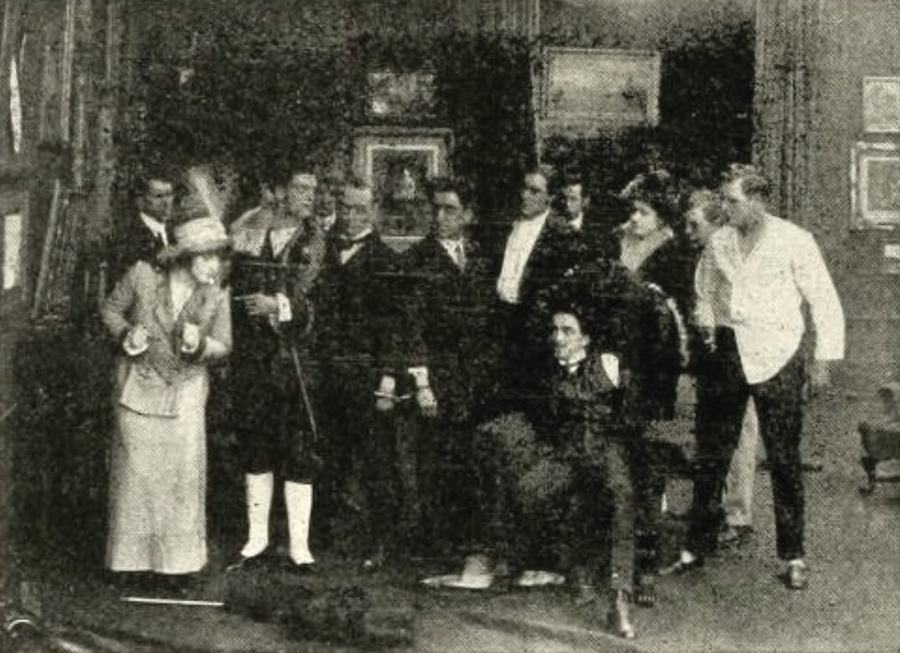
Dir: Tom Ricketts
Loulie, suddenly impoverished, becomes Mrs. Hazard's social secretary, her chief duties being to separate Mrs. Hazard's son and daughter from undesirable matrimonial choices they have made. Loulie pleases everyone, but several mysterious thefts cast suspicion on her. These thefts are finally traced to Winthrop, the young author engaged to Miss Hazard. He denies them, but is chased by the authorities in his motorboat. Meanwhile, Hap has transferred his affections from Natalie, who is older than he, to Loulie. Loulie hears a noise at night and goes downstairs in her kimona. She surprises some picture thieves at work, is overpowered and kidnapped. Hap goes to her rescue, but is injured. The chase becomes very exciting. Loulie is locked in a deserted house, but shoots at the guard through the door and escapes only to faint on the beach, where Hap discovers and rescues her. Back in the house Thomas, the new footman, discovers the Duc de Trouville and a gang of thieves at work cutting the paintings from their frames. The Duc and Thomas fight. The new footman, who turns out to be a detective, is saved by the party returning with Loulie. It is now made clear that Mrs. Cutler, a guest in the house, belongs to the gang and by a trick fastened guilt on Winthrop who is restored to favor. Loulie accents Hap.
View DetailsAnalysis relative to The Buzzard's Shadow
| Film Title | Atmosphere | Complexity | Similarity |
|---|---|---|---|
| The Crime of the Hour | Gothic | Dense | 97% Match |
| The Other Side of the Door | Ethereal | High | 87% Match |
| Life's Blind Alley | Tense | Layered | 93% Match |
| Secret Marriage | Ethereal | Dense | 91% Match |
| The End of the Road | Gritty | High | 98% Match |
This guide was algorithmically generated using the cinematic metadata of Tom Ricketts's archive. Last updated: 8/16/2026.
Back to The Buzzard's Shadow Details →