
DbcultAccessing Vault...
Recommendations
Senior Film Conservator
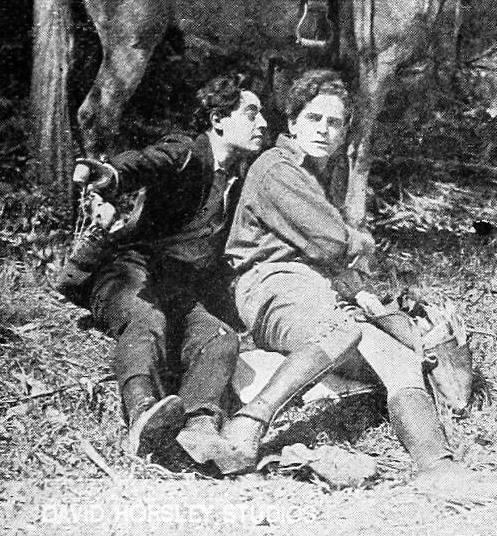
The United States-born brilliance of The Conscience of John David offers a unique artistic bravery, the profound questions raised in 1916 still require cinematic answers today. Our curated selection of recommendations echoes the very essence of The Conscience of John David.
In the Pantheon of cult cinema, The Conscience of John David to provide a definitive example of Crane Wilbur's stylistic genius.
John David, a spender, promises marriage to the Worldly Woman. He suggests by letter that their engagement be announced at a big dinner he will give. The Worldly Woman is also admired by the Libertine, who calls at the Worldly Woman's apartment and is admitted by a Japanese butler whom he abuses, arousing a hatred which the Jap keeps well under control. The Libertine attempts to make love the Worldly Woman but she holds him off by flaunting David's offer of marriage in his face. When she leaves the room the libertine turns his attentions to a Japanese maid, the wife of Yamato, the Jap butler. His attempt to caress her frightens her and she screams, bringing Yamato into the room and between the two struggling people. The Libertine slaps Yamato across the face for what he terms insolence. The little Jap bows his way out but with suppressed anger in His heart. The night of the big dinner arrives and John announces his coming marriage. One of the suddenly discovers that there are but thirteen people at the table, and John leaves the party to go out and find the fourteenth. He chances to meet the Wanderer, an individual he once knew but who he does not recognize. John meets a pretty girl and grabs her by the arm and begs her to join his party. The Wanderer makes John let her go. John is furious but the soothing words of reproach of the Wanderer change his mind, whereupon he smilingly admits his wrong, gives him his hand and takes him to the banquet room. The newcomer is greeted with hilarity and is called upon to speak. After a toast he turns to John and quietly but forcibly berates him for his waste. He describes how this waste would give life to starving families and as he finishes a butler enters with a telegram which reads: "Cut expenses immediately. Your entire fortune swept away. Letter explains." The guests leave, and John is left alone with the Wanderer, and he asks the Wanderer's identity. The Wanderer answers: "I am your conscience." Thereafter the Wanderer is called Conscience. John and Conscience go to the home of the Worldly Woman, Conscience remaining at the door. John discovers her in the arms of the Libertine. She says that the Libertine is now her accepted lover. John attacks the Libertine and flinging him over a couch attempts to throttle him. From under the draperies of the couch a brown hand steals. It clutches a long needle which it plunges into the neck of the Libertine. The head of the Libertine falls back dead. John thinks he has strangled his adversary. He and Conscience leave for the west. Days pass. On the train he reads in a newspaper that evidence points to the Woman's guilt and that she has been indicted for murder. The presence of Conscience torments him and to escape he leaps from the train and boards a freight train going in the same direction. Conscience follows, however. They take refuge in an open coal car where they are held up by two tramps and forced to exchange their clothing and to give up their valuables. The town of Laurel Run is in the throes of excitement, a string of horses belonging to the sheriff having been stolen. The unknown criminal is the Gambler and he has sold the horse to two Mexicans. One of the horses, a pony, and the Sheriff's favorite mount, escapes the Mexicans and wanders into an open plain. John and Conscience, discovered by the train crew, are thrown from the car and wandering along come upon the pony. John mounts it and with Conscience at his side, goes to Laurel Run. The sight of two vagabonds entering the town, one of them riding the Sheriff's pony, is positive proof to the villagers that the strangers are the thieves; that is, all except the Sheriff's daughter, the postmistress of the village. Instinctively she feels they are innocent. The Gambler proclaims that they be punished, and incites a mob to wreak its vengeance. The Girl steps in, however, and at the point of a gun stays them off, pending the return of her father, who, with a posse, has gone after the thieves. Meanwhile the Sheriff returns with the stolen horses and the crowd's temper changing, it disperses. In time John becomes a popular citizen. He has fallen in love with the Girl, much to the chagrin of the Gambler. Through the Girl's efforts John gets a place as a rural free delivery letter carrier. Meanwhile the Gambler's antipathy for John has increased, and he attempts to find a way to discount him in the eyes of the Girl. One day he spies John intently reading a newspaper which carries a story to the effect that the Woman had been acquitted in the Libertine murder case and that a search has been instituted for John David, whom she has accused. John hurries away leaving the paper lying on the ground. The Gambler picks it up and divines through the story the cause of John's agitation, wires the New York police department of John's whereabouts. John proposes marriage to the Girl and is accepted. Some days elapse when a long legal-looking envelope addressed to the Sheriff arrives. John discovers it as he sorts the mail. Fearing the worst, he succumbs to temptation, opens it and finds an announcement of a reward for his capture. Resolving to keep his secret he places the envelope in his pocket. Later a stranger arrived in the city. His mission was unknown, though he posed as an automobile salesman. The Gambler, still alert for evidence, shadows John and one evening finds him alone in his cabin gazing meditatively at the reward sheet and the photo of the Girl laying on the table before him. The Gambler enters and at the point of a gun obtains the sheet. A fight follows, a lamp is knocked down, the house is set into flames and John, after overcoming the Gambler, escapes just before the house collapses. The next day John and the Girl are to be married. The Stranger enters the post-office, obtains his mail from John and leaves. At noon the wedding ceremony is held. In the midst of it John suddenly draws back in horror and shouts that the marriage cannot continue, that he is a murderer. At this point the Stranger introduces himself to the Sheriff as a detective, and taking from his pocket a letter from his chief reads an announcement of John's innocence; that the Libertine was killed by Yamato, who confesses on his death bed. So the Conscience of John David was satisfied and glorified. John turns to go out but the Girl holds out her arms to him and the Sheriff clasps his hand and gently moves him into the arms of the Girl.
Based on the unique artistic bravery of The Conscience of John David, our vault has identified these titles as the most compelling follow-up experiences for fans of cult cinema:
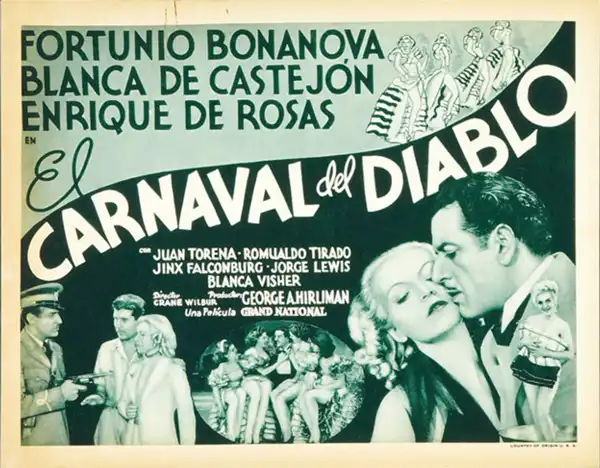
Dir: Crane Wilbur
A fascinating piece of cinema that shares thematic elements.
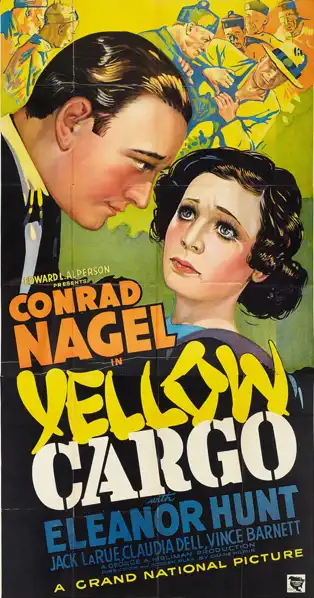
Dir: Crane Wilbur
An investigator looks into the activities of a movie producer he believes is involved in smuggling Asians into the U.S.
View Details
Dir: Crane Wilbur
Money was what gangster Vince M. Falcone wanted most and he did lay hands on millions of dollars by fair means or (mostly) foul. But once he became rich what he craved for was respectability. So why not marry a lovely society lady? And with a young daughter as a bonus Mister Falcone could show off among the creme de la creme. Of course when times got rough he felt free to desert his wife and little girl. Fortunately "Traps," a lawyer working for the underworld, will console them both.
View Details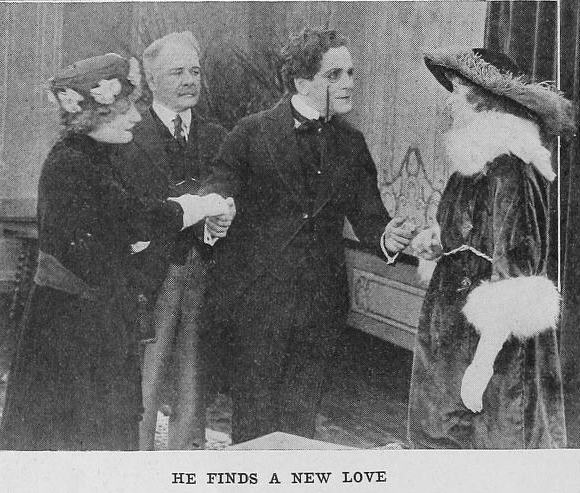
Dir: Crane Wilbur
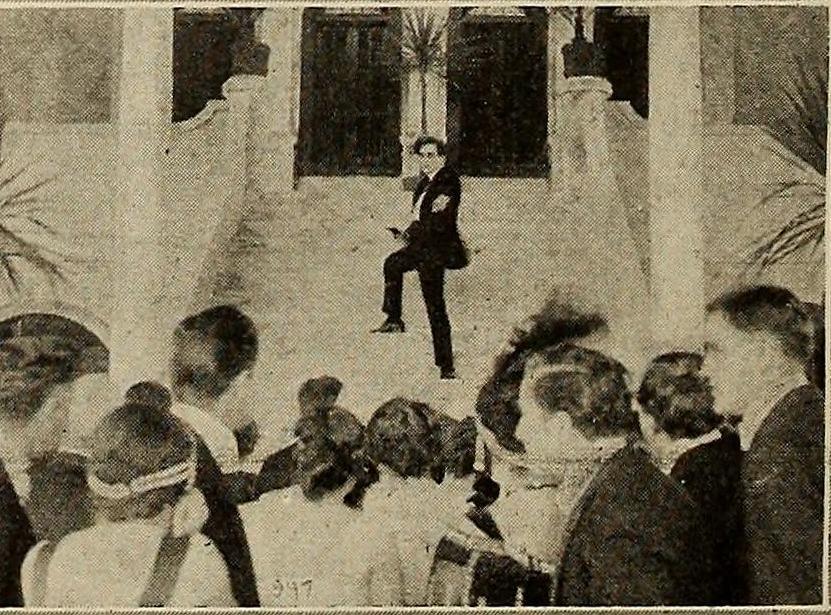
David McCare, the love liar, is a musical genius, the idol of society, hated by men and worshiped by women. He casts off his mistress, Margie Gay, for a new love, Diana Strongwell, an heiress. Margie pleads with him to take her back, but McCare gets rid of her through the services of Ludwig, his valet, and a broken-down musician. Ludwig is also in love with Margie. McCare marries Diana, much to the chagrin of Edna Carewe, a friend of Diana's, who is also attracted by the musician. They live happily for a short tune until McCare becomes discontented and makes advances to Edna. Meanwhile Margie finds the narrow path a stony one. A woman of the streets suggests the easiest way. Margie shrinks but finally consents. The first man she accosts is Ludwig, who leads her to her home and offers marriage. She is reluctant at first, but eventually agrees, and they are married. At a dinner dance given by Diana, she catches McCare making love to Edna. Diana denounces Edna and demands that she leave her home. McCare answers that if Edna goes he, too, will leave. And so husband and wife are parted. In time Diana divorces the "love liar" and he marries Edna. Diana advises Edna later that McCare is an overgrown child, and that in order to keep his love he must be pampered. A year passes. Edna, with the aid of Diana's advice, has made the "love liar" happy. One night in a café he sees Arlene Allaire, a hall-room dancer. At home Edna has given birth to a baby and though it will live, it is evident that its birth will bring death to the mother. Diana, who is at the side of Edna, rushes out to find McCare, and locates him in the café, where he has assumed the leadership of the orchestra and is directing Arlene's dance music. At the news of his wife's illness McCare is stricken with dumb surprise and hurries home. Edna dies in his arms. For days McCare lived in an abstracted mood, watched over by Ludwig and Diana. One day as he plays his violin a vision of Arlene passes before his eyes. He throws off hid brooding mood and goes back to the café and to Arlene. Her bills have been paid by McCare's checks until one day a number of them come back stamped "No Funds," and from that moment on Van Allen, who had been previously paying for everything for the dancer, finds himself again welcome at her apartments. It is here that McCare finds him one evening. The men fight; the police are called and McCare is arrested, but Arlene refuses to make any charge and McCare is simply put out into the street. Ludwig takes McCare home, and there Margie and he care for the wrecked man. But McCare cannot blot the image of Arlene from his mind and he returns to the café where Arlene is dancing, securing employment as a musician. Here Diana finds him. She begs him to tell her his troubles. He breaks down and confesses his love for Arlene. In time drink claimed him, too, and McCare sank lower. Time passed and McCare became desperate with love and jealousy. One night while Arlene is dancing a madness overcomes him. He dashes his violin to the floor, takes Arlene up in his arms and starts with her up the grand stairway to the café. The attendants attempt to overpower him, but he throws them off, and drawing a revolver, compels Arlene, who has scurried away, to come to the foot of the stairs. Covering the startled crowd, he speaks to Arlene, "You've taken all my heart, my honor, my manhood. At your feet I fling the dregs." He shoots himself and falls down the stairway to Arlene's feet. Diana took him home and the "love liar" lived another day, forever calling upon the name of she who had shown him Hell. Diana, ever his friend, went to Arlene's apartment and pleaded with her to come to McCare's bedside. She refuses at first, so Diana poured the contents of her purse at her feet. Thus bribed, Arlene consented to go, and in her arms the soul of the "love liar" passed. When all are gone and Diana is left alone with her dead, she takes him in her arms, for at last he belongs to her, to her alone.

Dir: Crane Wilbur
Two petty gangsters trying to elude their enemies join the French Foreign Legion.
View Details
Dir: Crane Wilbur
A biology teacher helps two teenagers who have strict and neglectful parents.
View Details
Dir: Crane Wilbur
A movie star visits a small Latin country with her press agent, and a local bandit who has a crush on her invites her to visit his hacienda. Her press agent decides to spread the story that she's been kidnapped, which brings out the army.
View Details
Dir: Crane Wilbur
A young woman wishes to marry her boyfriend and raise a family, but because her own family has been deemed "defective" by the state health authorities--her parents are lazy alcoholics who continue to have children, and her brothers are crippled, have mental problems or are jailed--she is ordered by a court to undergo sterilization so that her family's "defective genes" won't be passed on to any more children. Her boyfriend and a kind priest desperately search for a way to stop the forced sterilization before it's too late.
View DetailsAnalysis relative to The Conscience of John David
| Film Title | Atmosphere | Complexity | Similarity |
|---|---|---|---|
| El carnaval del diablo | Gothic | Dense | 86% Match |
| Yellow Cargo | Tense | Linear | 97% Match |
| The People's Enemy | Gritty | Abstract | 85% Match |
| The Love Liar | Ethereal | Linear | 87% Match |
| We're in the Legion Now | Gritty | Linear | 89% Match |
This guide was algorithmically generated using the cinematic metadata of Crane Wilbur's archive. Last updated: 6/24/2026.
Back to The Conscience of John David Details →