
DbcultAccessing Vault...
Film History
Archivist John
Senior Editor
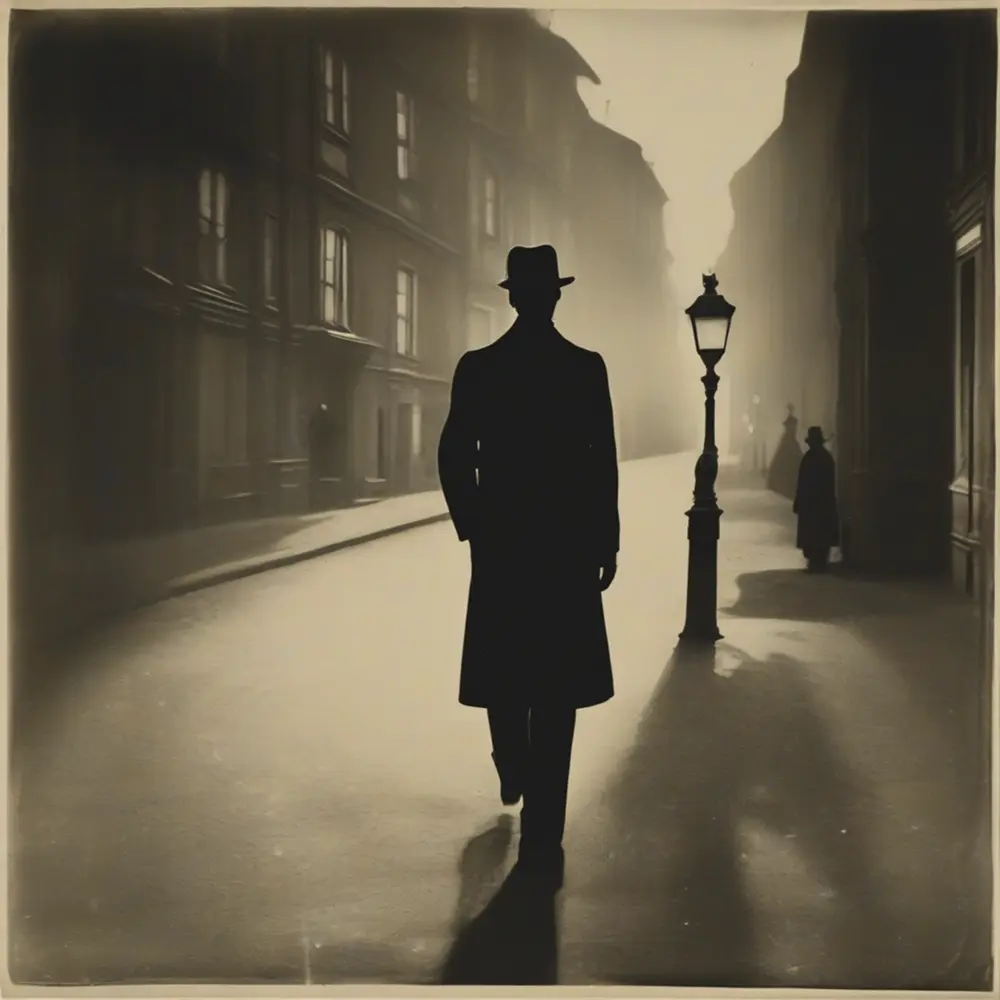
We often trace the lineage of cult cinema's anti-hero to hardboiled American noir, the morally ambiguous figures of the French New Wave, or even the grand, stylized villains of German Expressionism. But what if the true architects of our enduring obsession with the psychologically complex, morally compromised protagonist lie in a far earlier, often overlooked corner of cinematic history? I'm talking about the nascent, pre-Expressionist German psychological crime films of the 1910s and very early 1920s – a period where the seeds of dread, identity crisis, and the 'villain-as-hero' were planted with a startling, almost prophetic, clarity. These weren't just genre exercises; they were urgent, often unsettling experiments in human depravity and internal conflict, speaking to a post-war European psyche grappling with its own fractured morality. If you want to understand why we're still drawn to the dark side, you need to dig deeper than Caligari's cabinet.
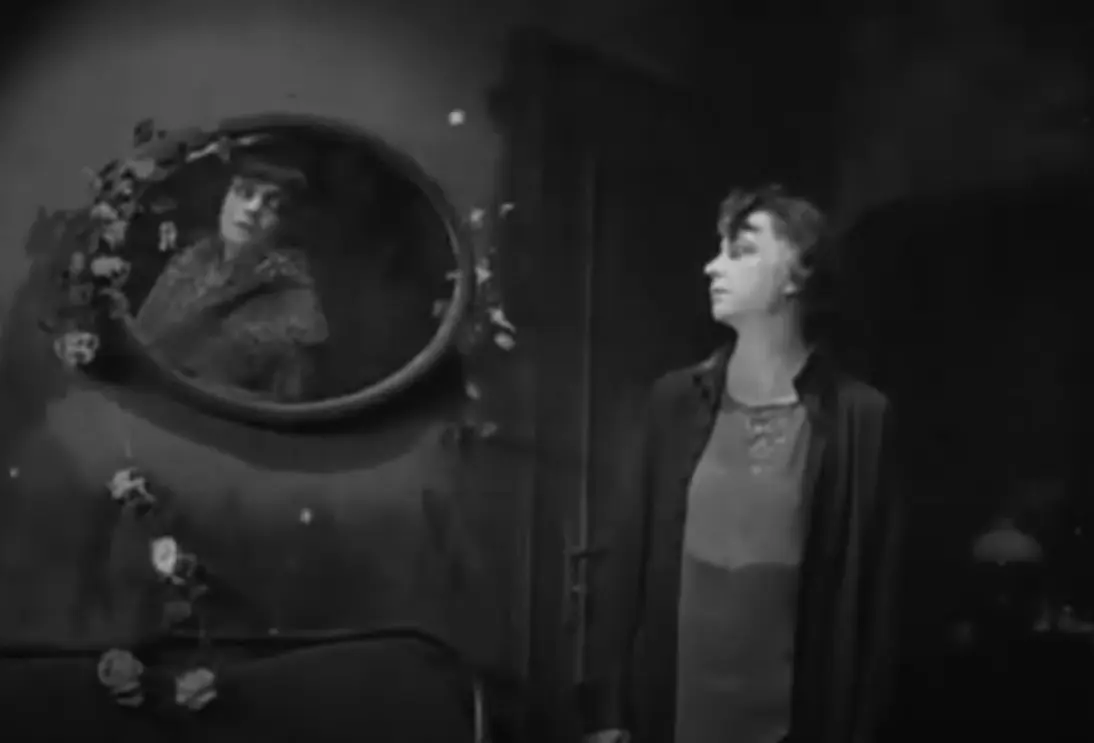
Long before the jagged sets and distorted perspectives became synonymous with German cinema, a profound psychological darkness was already brewing. The early 1910s saw filmmakers like Stellan Rye, Paul Wegener, and even a young Robert Wiene dabbling in tales of the uncanny, the criminal, and the morally adrift. These weren't yet the fully formed Expressionist masterpieces, but rather a nascent 'proto-noir'—films steeped in urban menace, personal disintegration, and a creeping sense of fatalism. Think of the chilling internal struggle of Balduin in Stellan Rye's 1913 masterpiece, Der Student von Prag. Here, a desperate student sells his reflection to a sorcerer for wealth, only for his doppelgänger to haunt and ultimately destroy him. This isn't just horror; it's a deep dive into self-alienation and the inherent criminality of a Faustian bargain. The reflection, a literal manifestation of Balduin's darker impulses, commits murders and torments him, effectively making the protagonist an anti-hero who is both victim and perpetrator of his own downfall. It's an exploration of guilt, identity, and the destructive power of one's own shadow, rendered with a visual poetry that foreshadows much of what we now associate with psychological thrillers. The film's final moments, where Balduin shoots his reflection only to commit suicide, are a stark, brutal statement on the inescapable nature of one's inner demons.
Another crucial, albeit sprawling, example is Otto Rippert's six-part serial, Homunculus (1916). This ambitious project introduced the titular artificial man, a being of immense intellect and physical prowess who, upon discovering his manufactured origin, turns against humanity in a vengeful quest for power. Homunculus is the ultimate early anti-hero: tragic, powerful, and utterly ruthless. His initial desire for love and acceptance sours into a bitter hatred, leading him to incite wars and manipulate nations. The sheer scope of his destructive ambition, driven by existential angst, makes him a figure of terrifying fascination. His cold, calculating cruelty, contrasted with his underlying despair, is a blueprint for countless cinematic villains and morally complex protagonists to come. This film serial, though largely lost, reveals a profound engagement with the idea of a 'superman' corrupted by his own origins, a theme that would resonate throughout Weimar cinema and beyond.
What sets these films apart, even from their contemporaries, is their nascent ability to translate psychological states into visual language. They understood that the mind's labyrinthine horrors could be made manifest through light, shadow, and staging, long before the term 'Expressionism' became a critical buzzword. In Siegfried Dessauer's Im Banne des Andern (In the Power of the Other, 1917), the protagonist is enslaved by hypnotic control, his actions no longer his own. The film uses close-ups and stark contrasts to convey this loss of agency, portraying the character as a puppet, a tool for another's criminal will. The camera often lingers on the eyes, suggesting the unseen forces at play, and the protagonist's gradual moral corruption is depicted not through grand gestures, but through subtle shifts in his demeanor and increasing desperation. This was a radical approach, placing the audience directly into the subjective experience of a morally compromised individual, rather than merely observing from a distance.
I would argue, controversially perhaps, that these early German psychological crime films, often overshadowed by the more overtly stylized Expressionist works that followed, are more influential in shaping the psychological anti-hero archetype than many later, more celebrated films. They plumbed the depths of internal conflict with a raw, almost documentary-like intensity that was often smoothed over by the theatricality of later movements.
Even Paul Wegener's The Golem: How He Came into the World (1920), though a fantasy, is steeped in this proto-noir sensibility. The Golem itself, a created being, becomes an instrument of both protection and horrifying destruction. Its eventual rampage, driven by its own burgeoning, uncontrollable will, mirrors the anti-hero's destructive agency. The film's visual design, while certainly Expressionistic in parts, emphasizes the heavy, oppressive architecture of the ghetto and the Golem's lumbering, inexorable power, creating a sense of inescapable doom. The Golem is not inherently evil, but its existence and actions are morally ambiguous, an embodiment of the consequences of human hubris and the fear of the 'other.'
The true innovation of these films lay in their willingness to center narratives around characters who defied simple categorization. They weren't just villains; they were complex, often tragic figures driven by dark impulses, societal pressures, or a twisted sense of justice. Robert Wiene's Genuine (1920), released the same year as his more famous Caligari, is a prime example. It tells the story of a high priestess who, after being sold into slavery and experiencing trauma, becomes a femme fatale, enthralling men and driving them to madness and murder. Genuine is a captivating figure of destructive beauty, a victim turned perpetrator, whose actions are both reprehensible and, in a twisted way, understandable given her past. Her hypnotic gaze, her exotic allure, and her relentless manipulation make her a compelling anti-heroine, a woman who reclaims power through ultimate transgression. The film revels in her moral ambiguity, refusing to condemn her outright but instead exploring the psychological landscape that forged her.
These protagonists, whether manipulated like the man in Im Banne des Andern or existentially tormented like Homunculus, challenged audiences to confront the darker aspects of human nature. They were reflections of a society reeling from war, where traditional moral frameworks had shattered, and the lines between good and evil, victim and aggressor, blurred into an unsettling grey. This wasn't just about sensationalism; it was about grappling with the profound psychological shifts of a new era. The films dared to suggest that the monster might not be an external force, but an internal one, or a product of societal trauma. They weren't afraid to make their heroes deeply flawed, even reprehensible, forcing the audience to grapple with uncomfortable truths about complicity and motivation. This was a radical departure from the clear-cut morality plays that dominated much of early cinema.
So, why did audiences flock to these unsettling narratives? In a world grappling with the aftermath of the Great War, these films offered a strange form of catharsis. They provided a controlled, albeit disturbing, space to confront the psychological chaos and moral relativism that permeated society. The appeal wasn't just fear; it was recognition. The fragmented psyches and destructive impulses on screen mirrored the anxieties of a generation. The urban settings, often depicted as labyrinthine and oppressive, became characters in themselves, reflecting the alienation of modernity.
It's an unconventional observation, but these proto-noir films, with their often melodramatic trappings, served as an early form of 'true crime' fascination. They allowed audiences to safely explore the mechanics of evil and the motivations of the morally broken, predicting our modern obsession with psychological thrillers and the dark side of human behavior decades before the genre fully crystallized. They were the first cinematic therapists for a traumatized populace.
Consider the massive success of Fritz Lang's Dr. Mabuse, der Spieler (Dr. Mabuse, the Gambler, 1922). While technically released just after the initial wave of full-blown Expressionism, it perfectly encapsulates this proto-noir spirit. Mabuse is the ultimate criminal mastermind, a psychological manipulator and master of disguise who thrives on chaos. Lang doesn't just show his crimes; he delves into Mabuse's calculating mind, his addiction to power, and his eventual descent into madness. The film’s sprawling narrative, depicting a society teetering on the brink of moral collapse, resonated deeply. Audiences weren't just watching a crime story; they were watching a reflection of their own anxieties, personified by a charismatic, terrifying anti-hero who seemed to embody the very forces unraveling their world. Mabuse's power lies not in brute strength, but in his psychological grip over others, a terrifying concept for a populace still recovering from the collective trauma of war and societal upheaval.
The impact of these early German psychological crime films cannot be overstated. They didn't just lay groundwork; they built the very foundations for the complex anti-hero we obsess over today. The narrative structures, the visual techniques for conveying internal states, and the willingness to explore moral ambiguities became part of cinema's genetic code. When German émigré directors like Fritz Lang, Robert Siodmak, and Billy Wilder fled to Hollywood, they brought this sensibility with them, directly influencing the burgeoning film noir movement. Lang's own American films, like Fury (1936) or Scarlet Street (1945), are direct descendants, featuring protagonists driven by dark impulses, fate, and societal pressures, often spiraling into inescapable doom. The shadows and fatalism of these American films owe a clear debt to the German precedent.
It is my firm conviction that the American film noir movement owes a greater, often unacknowledged, debt to these specific German pre-Expressionist psychological crime films than to the more overtly stylized Expressionist blockbusters. It was the psychology and moral ambiguity, the deep dive into the fractured human condition, not just the dramatic chiaroscuro, that truly translated across the Atlantic and shaped what we now recognize as the archetypal anti-hero.
From the vengeful Homunculus to the tormented Balduin, these characters established a powerful cinematic lineage. Their influence ripples through the anti-heroes of modern cinema, from the morally grey protagonists of prestige television to the complex, often broken figures that populate our contemporary thrillers. Think of the psychological depth given to characters like Travis Bickle in Taxi Driver or Walter White in Breaking Bad—men whose inner lives and moral compromises are central to their appeal. These are not heroes in the traditional sense, but figures whose struggles, however dark, resonate with an audience eager to explore the uncomfortable truths of the human psyche. The cipher of the soul, first unlocked in the shadows of early German cinema, continues to fascinate and haunt us.
So, the next time you find yourself drawn to a character who walks the line between good and evil, remember the forgotten pioneers of German proto-noir. They were the ones who first dared to show us the darkness within, making it not just scary, but profoundly compelling. They didn't just create films; they crafted a new way of seeing ourselves, flaws and all, and for that, their legacy remains an indispensable cornerstone of cult cinema.