
DbcultAccessing Vault...
Recommendations
Senior Film Conservator
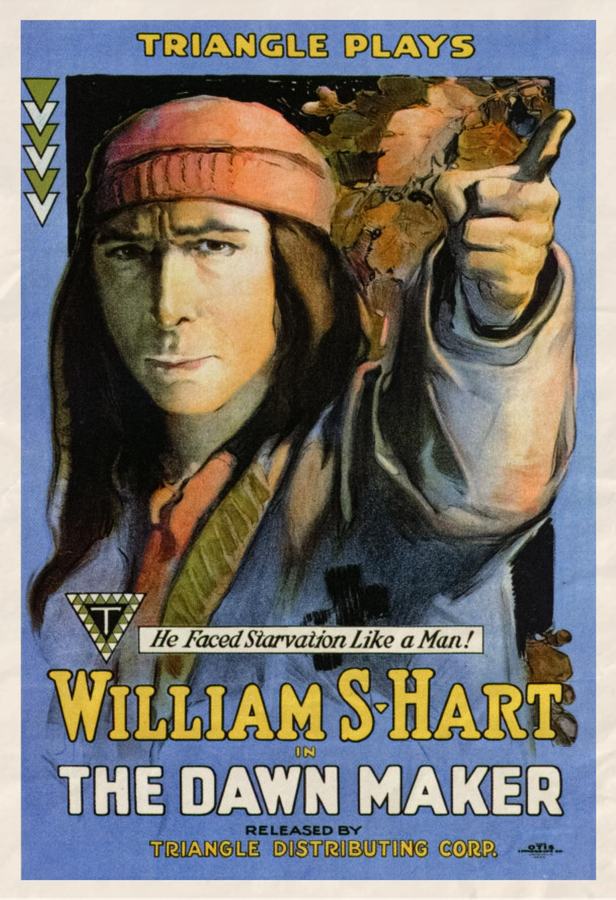
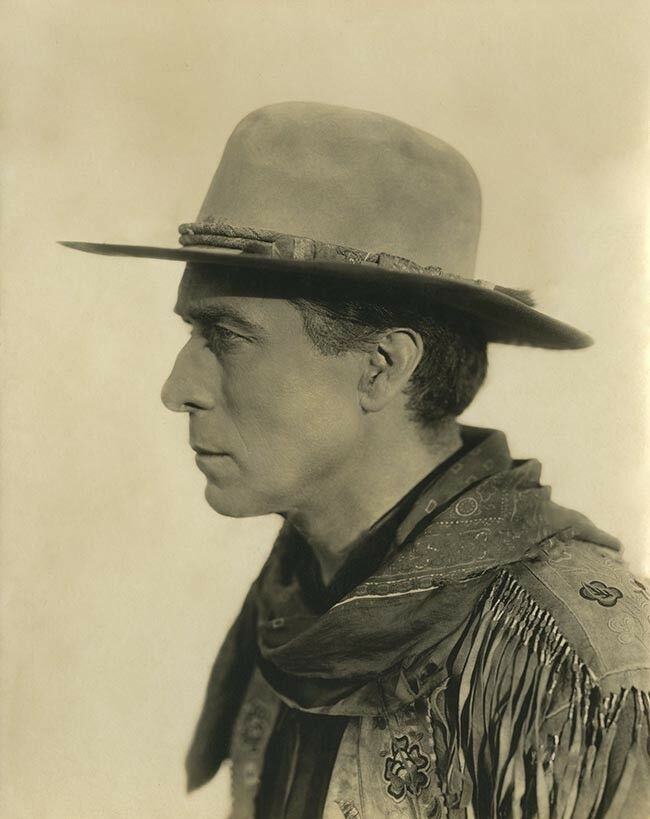
If the unique vision of William S. Hart's work in The Dawn Maker left an impression, the juxtaposition of unique vision and narrative makes it a cult outlier. Experience the United States influence in these recommendations that echo The Dawn Maker.
By merging unique vision with cult tropes, it to elevate cult to the level of high art.
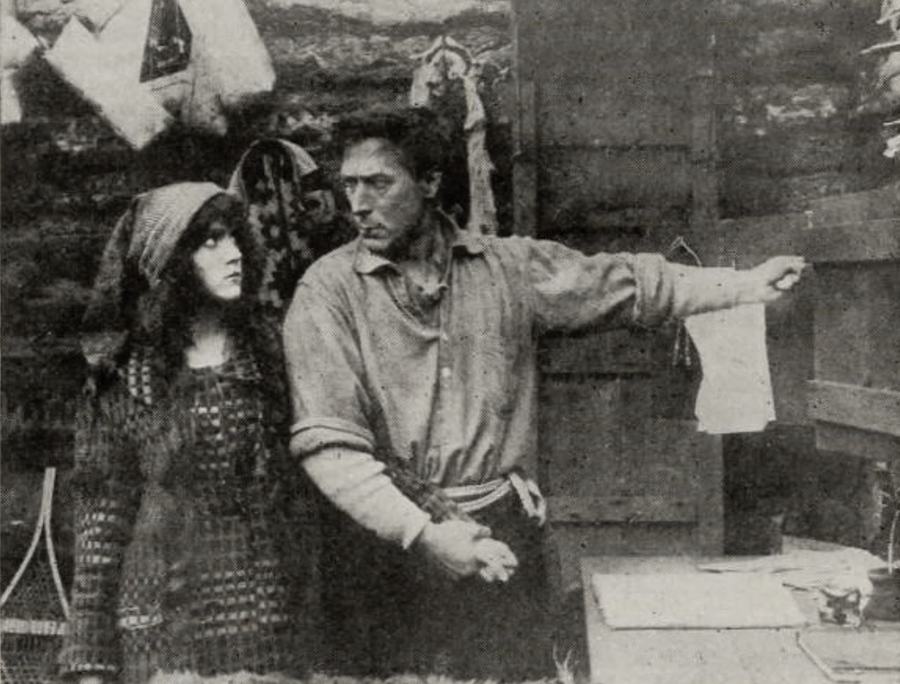
Joe Elk was a half-breed Indian and greatly admired by Walter McRae, factor of the Big Otter Trading Station, the farthest north of the outflung posts of the Hudson Bay Fur Company. Joe Elk, despite his white blood, had been accepted by the Indian tribe of which his uncle, Troubled Thunder, was chief, and it was settled that upon the death of the uncle, Joe Elk would become chief. Joe Elk had a great longing to visit the cities of the white men and above all worshiped at the shrine of McRae's daughter, Alice. She, unaware, of the feelings she inspired in the Indian, liked him impersonally, as did her father. Joe Elk visited Montreal with McRae, and when the factor, his daughter, and the Indian returned to the north, they were accompanied by Bruce Smithson, an acknowledged favored suitor for the girl's hand. Joe Elk brought back with him a determination to erect schools and give the children of his tribe the advantages of the white men he had seen in Montreal. The ideals of Joe Elk were not received in any too friendly a spirit by the Indians, however, and he met with no assistance in his desire to erect his schoolhouse. He learned that the feelings of the white girl for him were not the same as he held for her, but that, instead, it was Smithson who was the favored suitor for her hand. The unwillingness of his people to aid him in his desire to uplift them embittered Joe Elk, but encouraged by his white friends he stuck doggedly to his task and completed his schoolhouse. His determination to follow up the ideals of the whites, caused the tribe to cast him off. Then, he in turn, apprised by Alice McRae that he could never hope to win her, turned from the whites and sought to revert back to the ideals of the Indians. There came a blizzard. The Indians, shut off from their food supplies, robbed the storehouse of the company, leaving the factor, his daughter and Smithson without food. The protests of Joe Elk were unheeded and in the middle of the night, he was bound captive and forced to desert the outpost with the other Indians. A day's march away he was given his share of the stolen food and then offered the choice of accompanying the tribe or of returning to the whites. He chose the latter course. McRae, in attempting to protect the food, had been killed. The girl and Smithson faced death from starvation when Joe Elk suddenly appeared and took command of the situation. Followed many days of privation and untold suffering while the three walked many miles across the frozen lands of the north. Unknown to the others, Joe Elk saved his own meager food supply for them. When all three faced death, he forced his food on the man and the girl, sending them on, while he remained behind to meet his Maker. The girl and the man were saved and Joe Elk, though he died, was the Dawn Maker for his tribe, for the ideals for which he had really died were eventually carried out by the whites, whose devoted admirer he had been.
The Dawn Maker was a significant production in United States, bringing a unique perspective to the global stage. It continues to be a top recommendation for anyone studying cult history.
Based on the unique unique vision of The Dawn Maker, our vault has identified these titles as the most compelling follow-up experiences for fans of cult cinema:
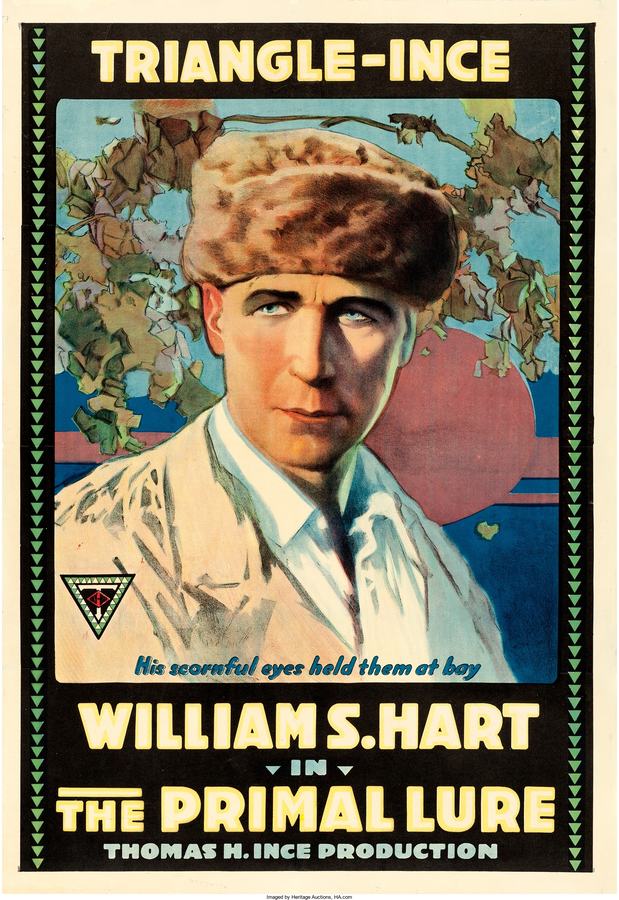
Dir: William S. Hart
Angus McConnell is factor of the outpost of the Hudson Bay Company which is dignified by the name of Fort Lu Cerne. The summer has been disastrous for the trappers, and they are deeply in the company's debt for provision. Angus keeps account of what they owe in a little book, and one night this precious book disappears. Angus vows all manner of vengeance on the culprit who has taken it. He keeps close watch on the office, and at last he beholds Lois Le Moyne, belle of the outpost, rummaging about his desk. Unknown to him, she has come to make him a gift of a beautiful pair of moccasins, made with her own fair hands, so he concludes she is the thief, and has her thrown into the goal. Then Richard Sylvester, the company inspector, comes to Fort Lu Cerne on the rounds. He sees Lois, falls in love with her, and has her released. On his promise that he will have Angus dismissed as factor and himself appointed, she agrees to wed him. This he accomplishes, and Angus takes to the trail alone. But before the wedding can take place an epidemic of sickness breaks out, and in terror the cowardly Sylvester flees with his bodyguard. Angus, who has heard that the Blackfeet Indians are about to descend on the outpost to demand a white person to be sacrificed as an offering to the god who has brought down the plague, happily returns at this time and resumes the reins of authority. The Indian attack takes place, and after a thrilling fight, in which the whites are greatly outnumbered, Angus goes forth to offer himself as the victim. He is miraculously saved, however, and returns to the fort. But he finds that all the garrison have gone save Lois; and with these two great enemies along in a terrible situation there comes about a great finish to a remarkable film. -- Moving Picture World, June 3, 1916.
View Details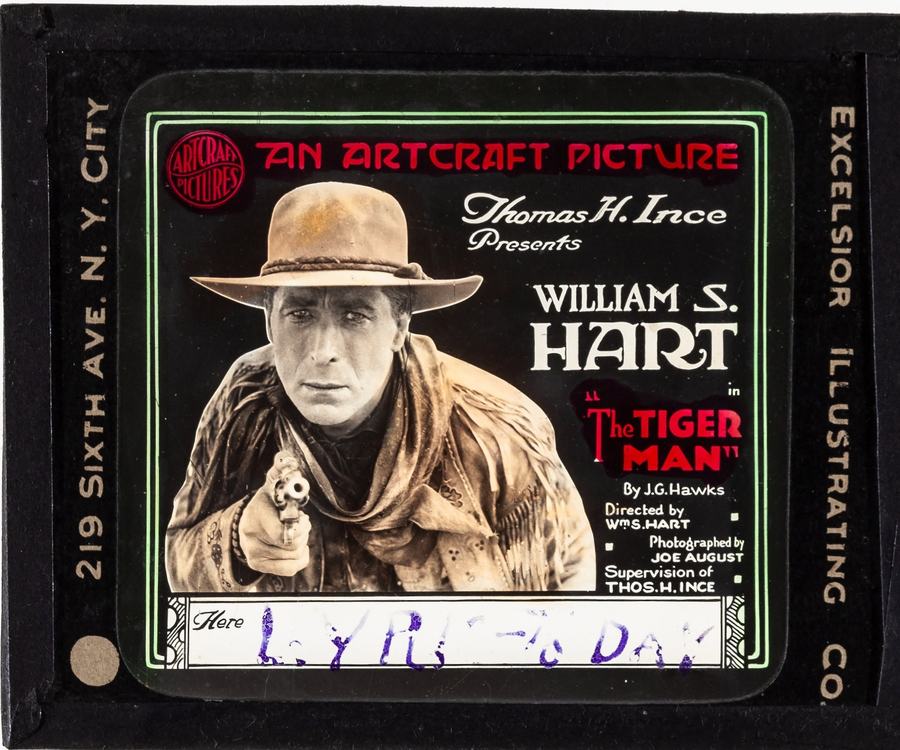
Dir: William S. Hart
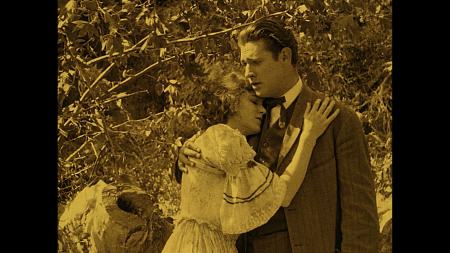
Hawk Parsons and his gang of ruthless outlaws escape from jail and ride far into the New Mexican desert, where they discover a band of emigrants stranded without water. Hawk is so smitten with Ruth Ingram, the wife of the Rev. Luke Ingram, that he agrees to lead the wagon train to safety, but on the way, the party is attacked by Indians. In the distance, Hawk sees U.S. cavalry troops on horseback, but because several members of the posse assigned to track him down are included in the band, he hesitates to send them a distress signal. Finally, Hawk allows the travelers to send their message on the condition that he may leave with Ruth, and as the wagon train is rescued, he reaches his mountain lair with the woman he loves. When Ruth attempts suicide, Hawk then realizes his selfishness, and after returning her to her husband, he turns himself over to the sheriff.
View Details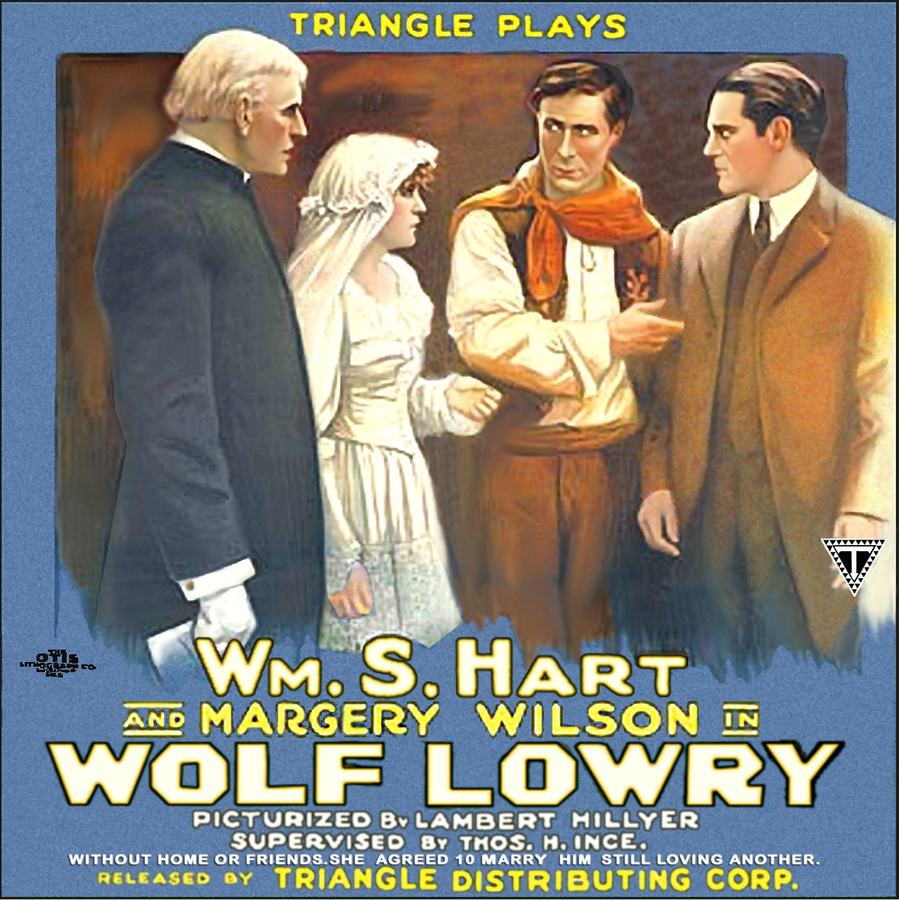
Dir: William S. Hart
Tom "Wolf" Lowry, the owner of the Bar Z ranch, tolerates no intruders into his life. When he hears that settlers have entered his valley, he goes to confront them but has a change of heart when he sees Mary Davis, a young woman who has come West to find her missing sweetheart, Owen Thorpe. Mary nurses Lowry back to health after he is wounded by Buck Fanning, the real estate agent who sold Mary her claim, when Lowry prevents Banning from raping Mary. Lowry soon falls in love with Mary and she agrees to become his wife, having lost all hope of finding her former sweetheart. By coincidence, Lowry finds Owen, but when Owen and Mary meet and plan to run away together, Lowry insists that she honor her agreement to wed him. On the day of the wedding, however, Lowry has a change of heart and takes Owen and Mary to the minister and tells him to marry the two lovers instead. Lowry then leaves Mary a note saying that he is going to Alaska. Five years later, Mary and Owen are the parents of a young son, named Tom, and the recipients of a letter from Lowry who now lives in isolation in Alaska.
View Details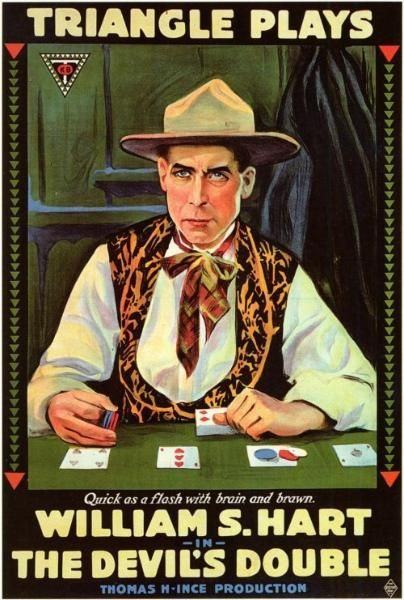
Dir: William S. Hart
Van Dyke Tarleton is an artist. He is absorbed body and soul in his latest creation, "Lucifer, Son of the Morning," but lacks a model to depict the brooding evil, the smoldering, sardonic sin that he has visualized in the spirit's face. Naomi Tarleton, his wife, is a beautiful and gentle creature. Tarleton has an attack which necessitates a sojourn in the desert, and he, with his wife, arrive in Tophet, an Arizona border town, where "Bowie Blake," bad man, witnesses their arrival. Tarleton recognizes in Blake a Lucifer in the flesh, and insists that "Bowie" become his model. His demand is refused. Later Blake becomes enthralled when he sees Naomi. Tarleton witnesses the meeting from a window and determines that his wife shall accomplish what he has failed to do. He sends her to the gambler, telling her to beg Blake to come. She does this, and Blake becomes the model. Tarleton insults his wife continually in Blake's presence to prevent the brooding evil, sardonic hardness, and the grim deadliness in the eyes and face of his model from disappearing. One day Tarleton faints at the canvas and the doctor advises that he be taken to the mountains. The three find an ideal camp, and the painting goes on, Tarleton insulting his wife more and more, until Blake decides to leave them, as he can stand it no more. He hesitates on the road, not willing to leave Naomi alone with Tarleton, and eventually returns to find that "Red" Gleason and Jose Ramirez, two outlaws, have killed the painter and are drawing cards to see who shall possess the woman. He kills them both, and takes Naomi to a cave farther in the mountains. Through an injury, Naomi loses her mind. Blake treats her as a child, until her mind becomes clear. He then tells her that he intends to have her as his own. Naomi exerts her influence, and he fights his battle, and wins over himself, upon which he agrees to take her back to town. They stand where the trail leads to the desert town. She holds her hand out to him: "What can I say?" she cries plaintively; "What is there for you and me to say to each other?" Bowie remarks: "I'm sayin' just this: some day I'm comin' after you." She looks at him and answers softly: "Yes, I think you will do that, but I make no promise, there are things to be done, that time and striving will do. It is in your hands, Bowie." "That's all I ask," he answers. "I'm takin' that chance."
View Details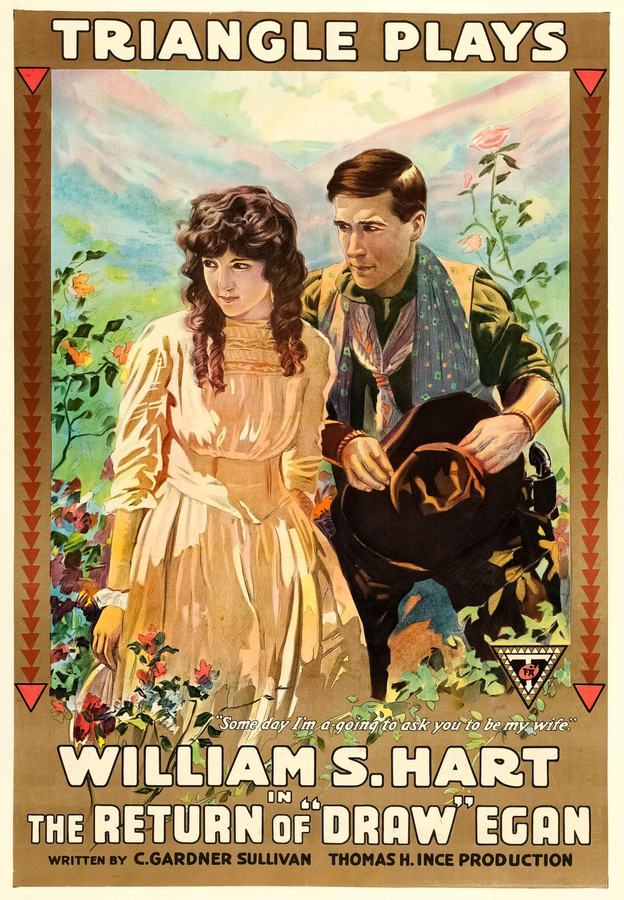
Dir: William S. Hart
"Draw" Egan, a notorious bandit of New Mexico, has come to the end of his tether. His gang has been dispersed, many slain, and more in jail, and there is a reward of $1,000 offered for Egan, "dead or alive." While drinking in a saloon at Muscatine, Egan chances across Matt Buckton, a leading citizen of the neighboring village of Yellow Dog. Yellow Dog is a town infested with gunmen who make life miserable for the few respectable citizens. Buckton is on a still hunt for some strong men who will shoulder the unenviable responsibilities of sheriff, and put the fear of God and the law into the hearts of his undisciplined fellow-citizens. While Buckton is thinking over his seemingly impossible quest, the bully of Muscatine enters the saloon and accosting "Draw" Egan, finds himself crumpled upon the floor without opportunity for repartee. Buckton is so much impressed by the quietude and deftness of Draw Egan's work that he immediately offers him the job of cleaning out Yellow Dog. So Draw Egan, as William Blake, is installed as sheriff of Buckton's promising community. William Blake soon has the bullies and gunmen of Yellow Dog well in hand, with law and order restored by the capable ex-bandit. At the time when the respectable citizens are singing the praises of the new sheriff, one of the worst of Egan's old gang, Oregon Joe, strolls into town, sizes up the situation, and holding a threat of betrayal over the sheriff's head, proceeds with the aid of the tough element to undo the sheriff's good work. For himself Egan cares little, but while endeavoring to live down his past and lead a clean life, he has fallen in love with Buckton's daughter Myrtle. Day by day he submits to Oregon Joe's insults and the tough element gradually gets the upper hand. Things have reached such a pitch that one day the gunmen, headed by Oregon Joe, decide to drive the respectable citizens out of town and run the place for themselves. It is up to the sheriff to decide, and his manhood asserts itself. He confesses the evils of his past life, throws himself on the mercy of his fellow citizens and promises to surrender to the government if they will allow him one day to restore order. He makes good; the gunmen are whipped into submission and Oregon Joe, the blackmailer, meets his just reward. The sheriff surrenders and is locked up in the caboose, but the next morning a delegation of citizens greets him with the assurance that to them Draw Egan has ceased to exist and that Yellow Dog only recognizes Sheriff William Blake. Myrtle Buckton is one of the delegation.
View Details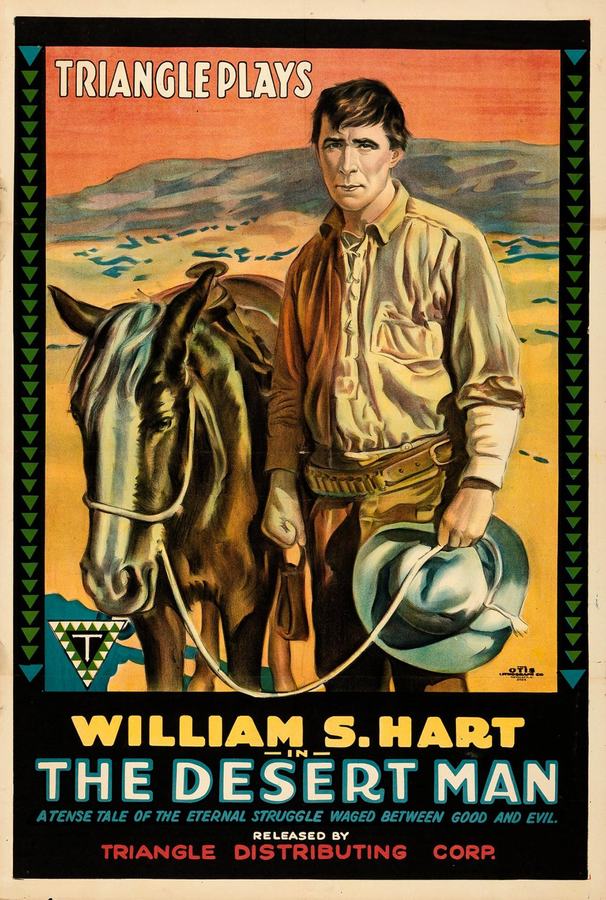
Dir: William S. Hart
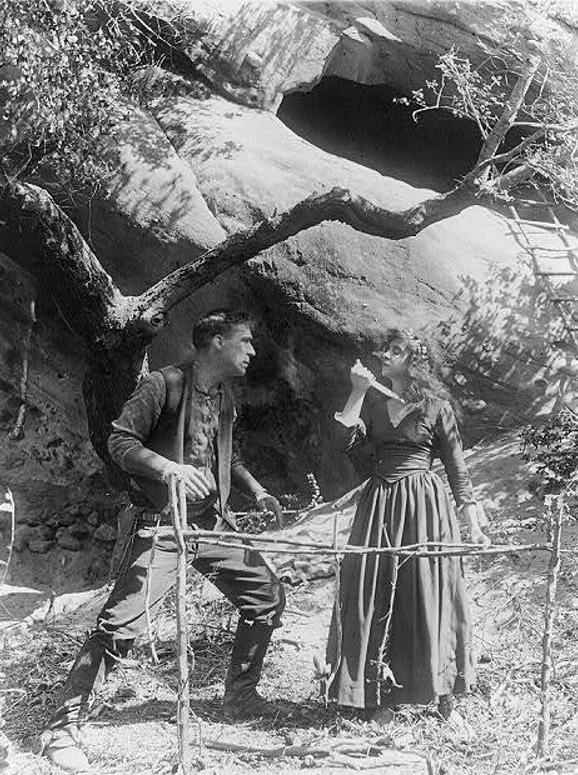
Prospector Jim Alton stumbles upon a dying woman, while traveling across the desert, she implores him to care for her little boy Joey. Jim takes the boy to town, where he encounters Joey's brutal father, Razor Joe, and falls in love with Jennie, a young girl whose father is dying. After running Joe out of town, Jim settles down to make a home for Joey. Jim rides to the neighboring town to bring back Dr. Howard after Jennie's father takes a turn for the worse. Soon after, the old man dies and the doctor convinces Jennie to return to his home and marry him. Upon discovering that the doctor already has a wife in New York, Jennie leaves him, but, too proud to go home, accepts a position in a dance hall. Meanwhile, Razor Joe and his gang kidnap Joey. Jim follows, confronts them with his guns drawn, and rescues the boy. All ends well as Jim and Jennie are reunited and, together with Joey, begin life anew as a family.
View Details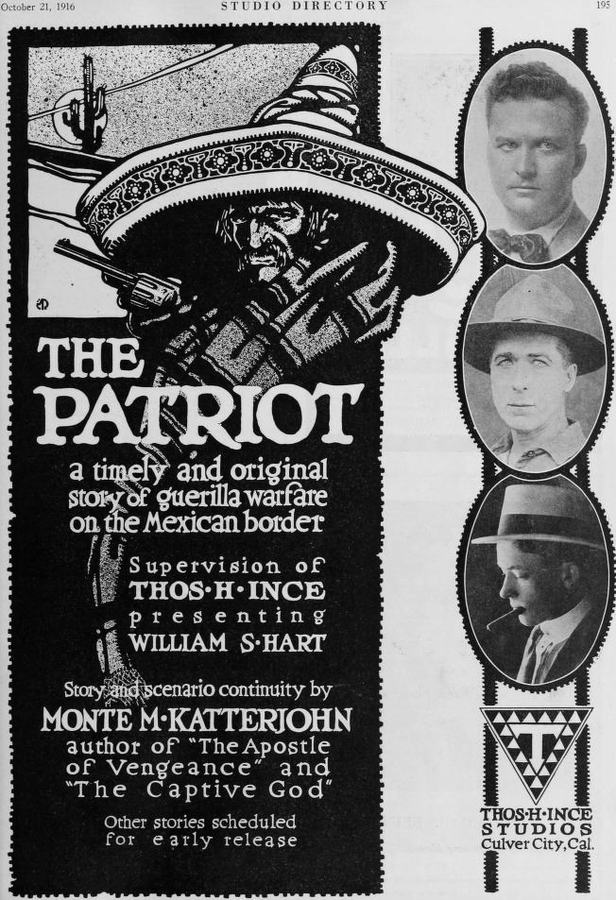
Dir: William S. Hart
Bob Wiley had staked out a homestead in New Mexico, five miles from the border town of Lawton's Ridge. Wiley was a pioneer, a veteran of the Spanish-American War, and a devout believer in the superiority of his country to any other land on the face of the globe. He lived in a whitewashed cabin, over which the Stars and Stripes forever waved, with his little son, Bobby, and a faithful Indian, Joe Good-Boy. Wiley had lost his wife in the rough pioneer days. When his boy was yet a baby, he chanced on gold in the bed of a stream that ran through his clearing which gave him another incentive to save all he could and make his boy a rich man. While, however, he was drawing out more gold daily and his bank account in Lawton Ridge was growing steadily, a pair of corrupt local politicians, attracted by the wealth of the find, conspired to rob him of his homestead on a technicality. In this they succeeded and Bob Wiley finds himself dispossessed by the agents of a government he has served in its hour of need. He goes to Washington to prove his claim, gets no redress, and returns to find his land preempted and his little boy dead. His heart is filled with bitterness against his own country and he seeks revenge by joining the bandit forces of Pancho Zapilla who is preparing to raid Lawton's Ridge. Entering the village as a spy he tells the colonel in command of the American troops that Zapilla contemplates a raid on a town several miles distant. This information sends the troops off on a false scent and leaves Lawton's Ridge open to an attack by the bandits. But Wiley gradually awakens to the enormity of his offense and by courage and devotion he saves the town, thwarts the bandits, pledges his allegiance to the flag, and becomes once again a loyal, patriotic American.
View Details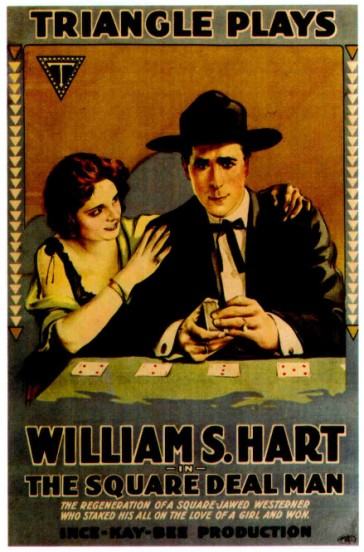
Dir: William S. Hart
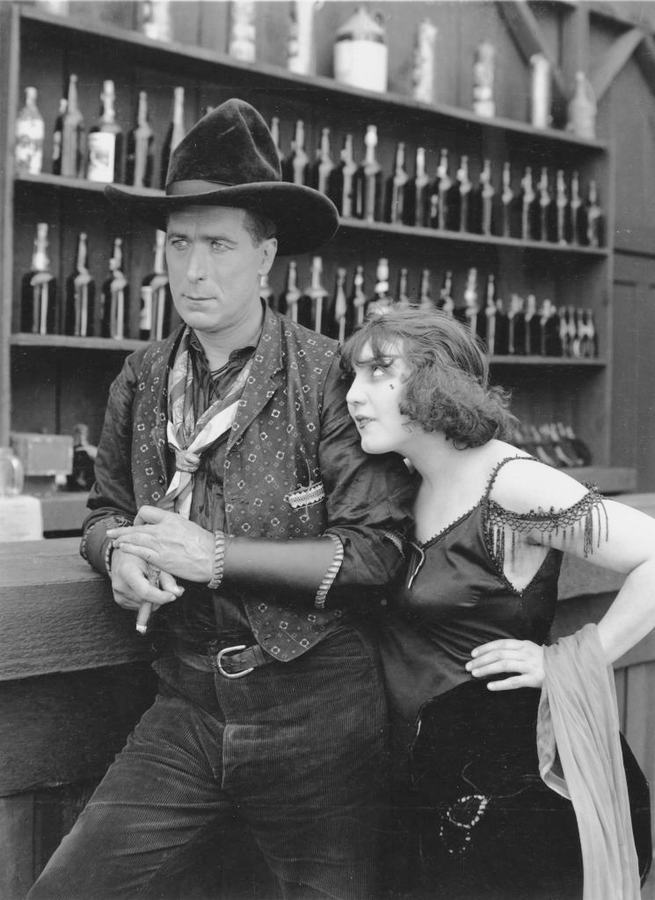
Jack o' Diamonds and his partner, Two Spot Hargis, are known as square sports in the desert town of Oxide. Jack gives liberally to all charities, and is surprised when one day a pioneer missionary refuses to take his money as he considers it ill-gotten. About this time Col. Ransome enters Jack's gambling place. The colonel, a big ranch owner, intoxicated and loaded down with money received in a cattle deal, insists on a game for the highest stakes. Jack consents, wins the colonel's money and also a deed to the ranch. In the fight that follows Colonel Ransome is shot by one of his own foremen, Anastacio, who has previously planned to rob his master and hates to see the money get away from him. The onlookers think that Jack killed the colonel, but as there is a general shooting no fuss is made about the matter. Jack becomes disgusted with his present mode of life and quits the gambling game. He takes up the ranch that has been deeded to him by the dead colonel. When Jack and his partner, Two Spot, arrive at the ranch they discover that the colonel has left an only daughter, Virginia Ransome, who is being educated in New York. Jack determines to put the ranch in order and hand it over to the rightful heiress. When things are in shape he writes to Virginia to come west. When Virginia arrives she treats Jack as a hired servant. He still keeps on with the work around the ranch, but is hampered by Virginia's attitude, as this encourages Anastacio and the hands to almost open mutiny. After plotting to dethrone Jack and secure both the ranch and Virginia for himself, Anastacio tells Virginia that Jack Diamond is the murderer of her father. Virginia dismisses Jack and makes Anastacio her foreman. Jack and Two Spot leave the ranch, but determine not to leave "the little lady" to the mercy of Anastacio. Jack dispatches Two Spot to the nearest fort for the rangers and returns in time to rescue Virginia from Anastacio and the rangers arrive in time to clear up the ranch. One of Anastacio's associates tells Virginia that her father was shot by Anastacio and not by Jack. Virginia apologizes to Jack for her past unkindnesses and offers to turn over the ranch to him as rightful owner. Jack will only entertain a proposition that involves a half ownership, and eventually wins Virginia as his wife.
View Details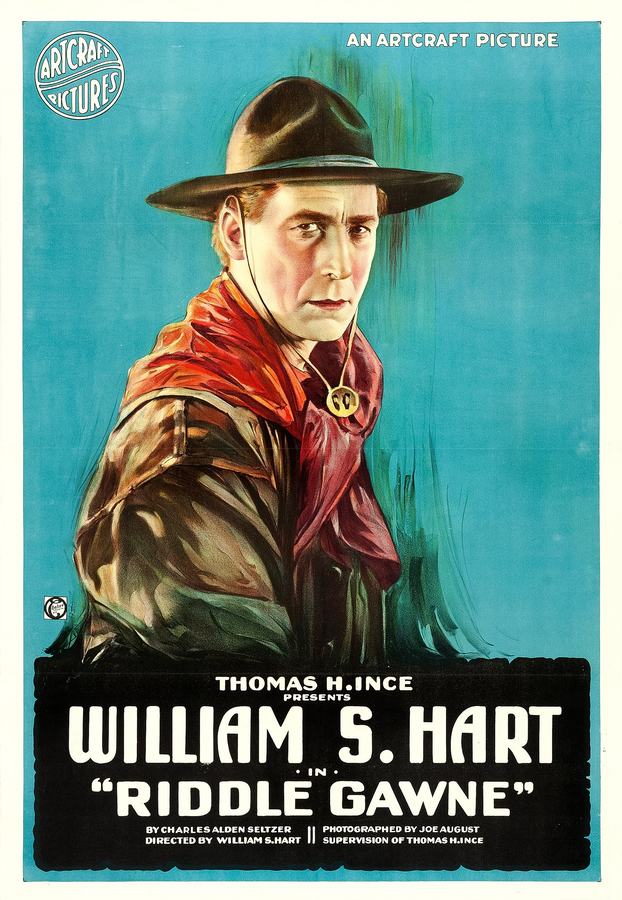
Dir: William S. Hart
Riddle Gawne seeks revenge on the man who stole his wife and killed his brother. Gawne saves Kathleen Harkness from cattle rustler Bozzam and discovers that Bozzam is the man he seeks.
View Details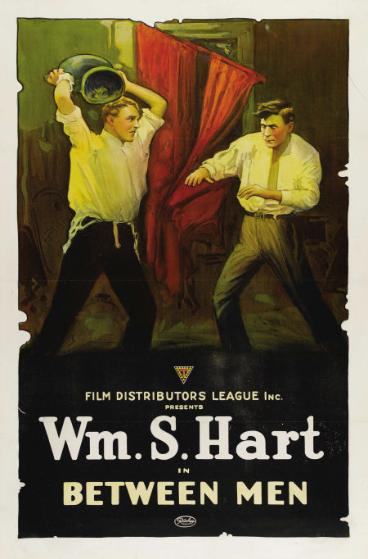
Dir: William S. Hart
Ashley Hampdon, a Wall Street financier, has a daughter named Lina. Gregg Lewiston wants to marry the girl. The father tells him that the girl can please herself. As he does not seem to progress in his love-making, Lewiston puts through a scheme to ruin Hampdon in the market, so that the father will bring pressure to bear on his daughter to marry the suitor as he has lots of money. Hampdon is distracted by his losses. While aimlessly looking over his papers Hampdon comes across a little note signed by a western mining man, Bot White. It is an offer from White to assist Hampdon at any time and in any place, physically or financially. Hampdon had once befriended White and as he would not take anything else in return, White gave him the written offer. Hampdon sends a message to White to come to New York at once. When White appears, Hampdon tells him of his suspicion, that Lewiston injured him through an accomplice who had given him a wrong tip. Lina takes offense at a conversation she hears between Lewiston and White and tells White that she objects to him. He is put up at a club by Hampdon. There Lewiston sends Rankin (the same broker that he used to ruin Lewiston) to White with a tip on the market. White sends for detectives. They connect White's room with that of Lewiston's on a floor above by means of a wire and with the aid of a Dictaphone they overhear Lewiston and Rankin concocting a scheme to ruin White as a friend of Lewiston and a possible rival to Lina's hand. White and Hampdon use this information to make a fortune much to the discomfiture of Lewiston. As his treachery is now revealed, Lewiston is unable to win Lina. He goes to the club and insults White by saying in a loud tone of voice that this is the first case he has known of a man trying to buy a girl. White wants him to fight, but Lewiston excuses himself by remarking that it is a gentlemen's club. Finally Lewiston strikes White for calling him a coward, but spectators separate the men. Lewiston goes to his uptown home and White follows him. There is a fight and White gets the best of it till Lewiston hits White over the head with a bronze vase. Just then John Worth, who is a friend of White's and is half crazed from losses due to the villainy of Lewiston, appears at a window and shoots Lewiston in the arm. White having accomplished his mission, goes to bid his friend, Ashley Hampdon, good-bye. Lina has come to admire White for his loyalty to her father and for his efficiency. He does not seem to understand the change in her and bids her farewell. She, however, gets her father to take her on the same train on which White goes. They meet on the platform of the observation car where the misunderstanding is cleared.
View DetailsAnalysis relative to The Dawn Maker
| Film Title | Atmosphere | Complexity | Similarity |
|---|---|---|---|
| The Primal Lure | Surreal | Layered | 86% Match |
| The Tiger Man | Gritty | Abstract | 88% Match |
| Wolf Lowry | Ethereal | Dense | 88% Match |
| The Devil's Double | Ethereal | Linear | 93% Match |
| The Return of Draw Egan | Ethereal | Dense | 95% Match |
This guide was algorithmically generated using the cinematic metadata of William S. Hart's archive. Last updated: 6/26/2026.
Back to The Dawn Maker Details →