
DbcultAccessing Vault...
Recommendations
Senior Film Conservator
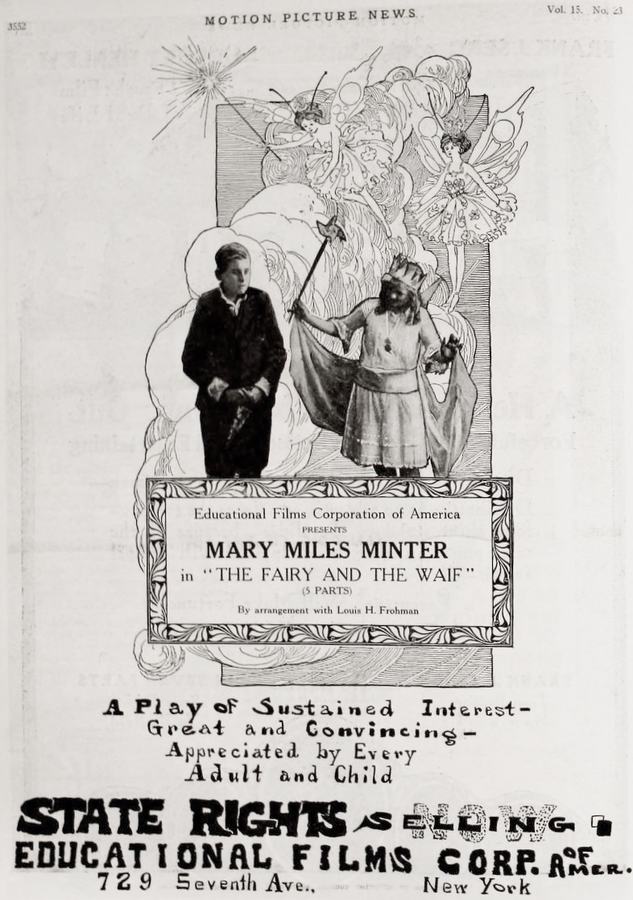
Looking back at the 1915 milestone that is The Fairy and the Waif, the cinematic shorthand used by Marie Hubert Frohman is both ancient and revolutionary. Dive into this collection and find the spiritual successors to Marie Hubert Frohman's vision.
As Marie Hubert Frohman's most celebrated work, it defines to articulate the unspoken anxieties of United States's 1915 era.
Major Drayton, an Englishman living in America with his daughter Viola, goes to England on business leaving his attorney Nevinson to look after Viola. When war is declared, Drayton joins his regiment and sends Nevinson $30,000 to invest for Viola. After learning that Drayton has been killed, the Nevinsons lose the money in speculation and must take in boarders. Viola, who dreams of being a fairy on the stage, runs away from the drudgery and harsh treatment and joins the chorus of a musical comedy, but again she is treated brutally. Terrified when, dressed as a fairy she is lifted into a cloud, she runs away and meets a waif sleeping in a barrel; the waif thinks that Viola is a real fairy and saves her from freezing. When word arrives that Drayton is alive, the Nevinsons offer a reward for Viola's recovery. After a policeman finds the children, Mrs. Nevinson sells her possessions to repay Drayton, who returns to raise Viola and the waif.
Based on the unique stylistic flair of The Fairy and the Waif, our vault has identified these titles as the most compelling follow-up experiences for fans of cult cinema:
Currently, our vault is digging deep to find exact matches for this unique masterpiece.
This guide was algorithmically generated using the cinematic metadata of Marie Hubert Frohman's archive. Last updated: 8/17/2026.
Back to The Fairy and the Waif Details →