
DbcultAccessing Vault...
Recommendations
Senior Film Conservator

For those who were mesmerized by The Forfeit, a true cult masterpiece from 1919, its influence on cult cinema remains a vital reference point for fans today. This list serves as a bridge to other cult experiences that are just as potent.
The legacy of The Forfeit is built upon its ability to blend thematic complexity with stunning visual execution.
Disinherited by his father, Jeffrey Masters leaves his New York home and amasses a fortune in Texas cattle country. When his younger brother Bob marries Elvine Van Blooren, known as Effie, contrary to his father's wishes, he also is disinherited. Like Jeffrey, Bob goes West, but turns to rustling and becomes the leader of a gang. When Effie, who knows nothing about Bob's involvement with the gang, learns about their hiding place, she informs on them for a much needed $10,000 reward. Only after Bob is hanged does she learn that she caused his death. Jeffrey, searching for Bob, arrives to find him hanging. He cuts the body down and vows vengeance on his betrayer. Four years later, Jeffrey and Effie meet at a cattle convention, fall in love, and marry, but when he learns about her from Sikem Bruce, an ex-member of Bob's gang, Jeffrey tells her to forget their marriage. After Effie is wounded attempting to save Jeffrey from Sikem's ambush, Jeffrey bests Sikem, and seeing Effie unconscious, realizes his love for her.
Based on the unique cult status of The Forfeit, our vault has identified these titles as the most compelling follow-up experiences for fans of cult cinema:
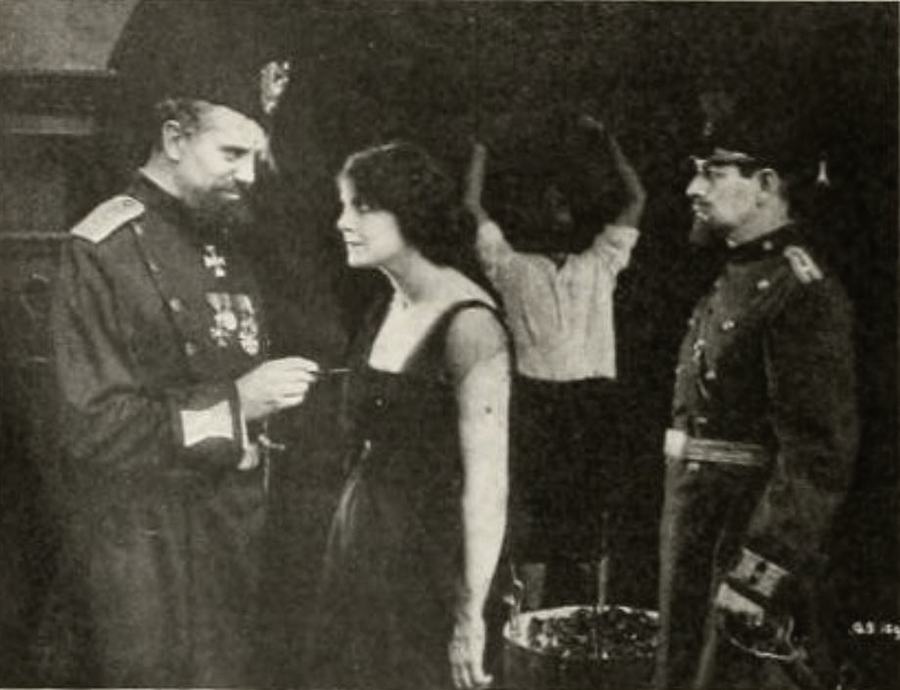
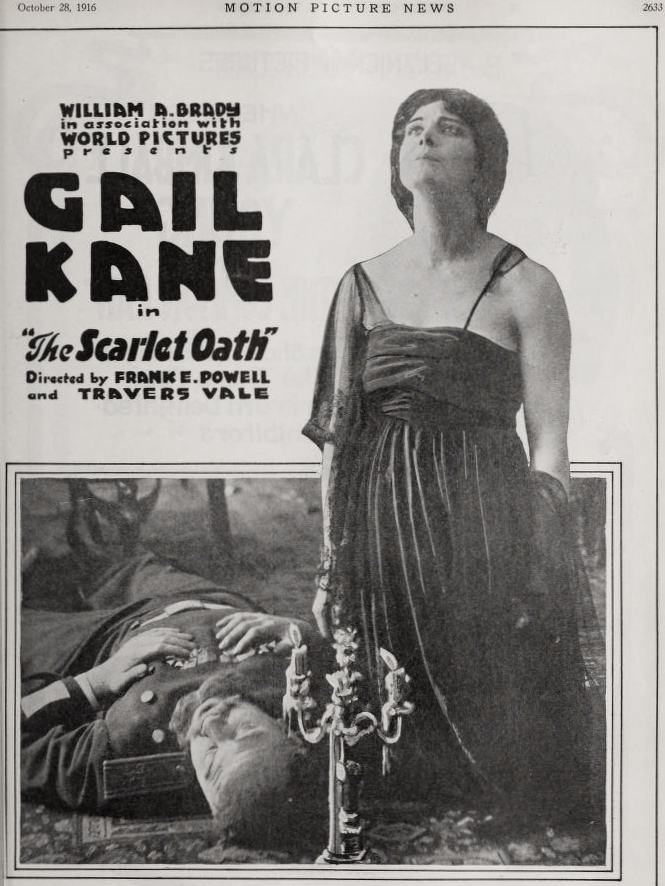
Dir: Frank Powell
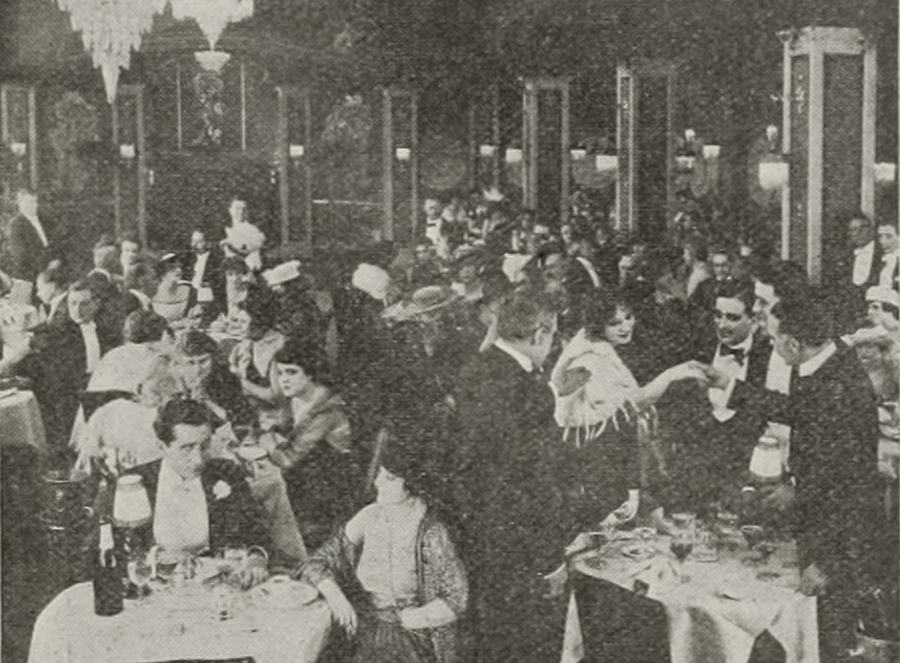
Driven from Russia by the persecution of the police, who had caused the death of his wife, was Ivan Pavloff, a Nihilist, accompanied by his two infant twin daughters Olga and Nina, en route to America in search of freedom. During the voyage Pavloff becomes acquainted with Mr. and Mrs. Victor Karenin, wealthy Russians returning from a tour of the Continent, and who had lost their only child while abroad. Mrs. Karenin becomes devoted to Pavloff's little daughter, Nina, and offers to help Pavloff when they arrive in America if he is unable to secure work. After becoming located in America, Pavloff finds that he cannot obtain employment, and goes to the Karenins to seek their aid. He consents to their proposition that they adopt Nina as their own child. Twenty years pass. Pavloff, now an American leader of the Nihilists, has won fame as a writer on Nihilism. His daughter, Olga, now educated, assists him in his work. Olga, through a newspaper discovers that her sister, Nina, is soon to marry John Huntington, connected with the State Department at Washington. As time passes Olga's father is induced to return to Russia and assist in the destruction of Savaroff, Chief of Police. The following day Olga and her father take solemn oath to revenge the death of her mother, and in order that they may not be discovered, or in case of arrest, that one or the other may reach Russia, and thus escape to fulfill their oath, they travel over different routes. They meet in Russia at the appointed time and place and become affiliated with the Nihilists. Back in America John Huntington has received an appointment to the diplomatic post in Warsaw. He pleads with Mr. Karenin to permit the marriage of his adopted daughter, Nina, to himself before he departs for Warsaw. Karenin objects, saying that he has arranged for Mrs. Karenin to tour Europe for the sake of her health, and he wishes Nina to accompany her. But upon their return he will consent to their marriage. A few weeks after Mrs. Karenin has sailed, Huntington receives final notice of his appointment and sails for Warsaw. At a meeting of the Nihilists, held at their headquarters in the Lamond Chateau, final arrangements are made for the killing of the chief. One of Savaroff's spies learns of the meeting and notifies him. The soldiers make a raid on the chateau. Pavloff and Olga are captured. Savaroff tries to secure the secrets of the Nihilists by torturing Pavloff with the horrible death rays. Pavloff refuses to reveal the secrets. Savaroff attracted by Olga's beauty agrees to save her father if she will give herself to him for the night. She finally consents and Pavloff is rewarded. Olga goes to Savaroff's home and awaits his arrival. While there she overhears a conversation between Savaroff's secretary and the Assistant Prefect of Police, and learns that her father has died. Savaroff enters, and she asks him what has become of her father. He tells her that he has recovered. During a struggle in which she pretends to appreciate his embrace, she slabs him to death with a knife. Savaroff having previously given instruction to the guards to permit Olga to leave the palace unmolested, she escapes easily. She goes to the Bristol restaurant, the rendezvous of the Nihilists, to meet Gaganov, a comrade. The same evening, John Huntington, having arrived in Warsaw to undertake his duties at the American Consulate, goes forth on pleasure bent, and drops in at the Bristol restaurant for refreshments. He is recognized by Olga as her sister's fiancé. It immediately occurs to her that if she can convince him of her peril he will aid her to escape to America. Huntington sees her, and knowing that Nina is in Europe, mistakes her for his sweetheart and rushes over to greet her. Instantly she conceives of a scheme to get out of the country without trouble, and permits Huntington to believe that she is Nina. Through this misidentification they escape to America. Meanwhile in Paris, Nina and her mother having failed to locate Huntington, decide to return to America before the holidays. In Warsaw the police are making every effort to locate Olga and send detectives, one to Hamburg and one to Paris. Petrovitch, the spy of the Russian police, on arrival in Paris, mistakes Nina for Olga. He determines to follow her to America and avenge the death of his cousin Savaroff. Amazov, the Hamburg detective, having lost the trail, proceeds to America in the hope of doing his duty after locating Olga. As the story ends the real destroyer of Savaroff pays the penalty, while Nina and her sweetheart are reunited in eternal happiness.
View Details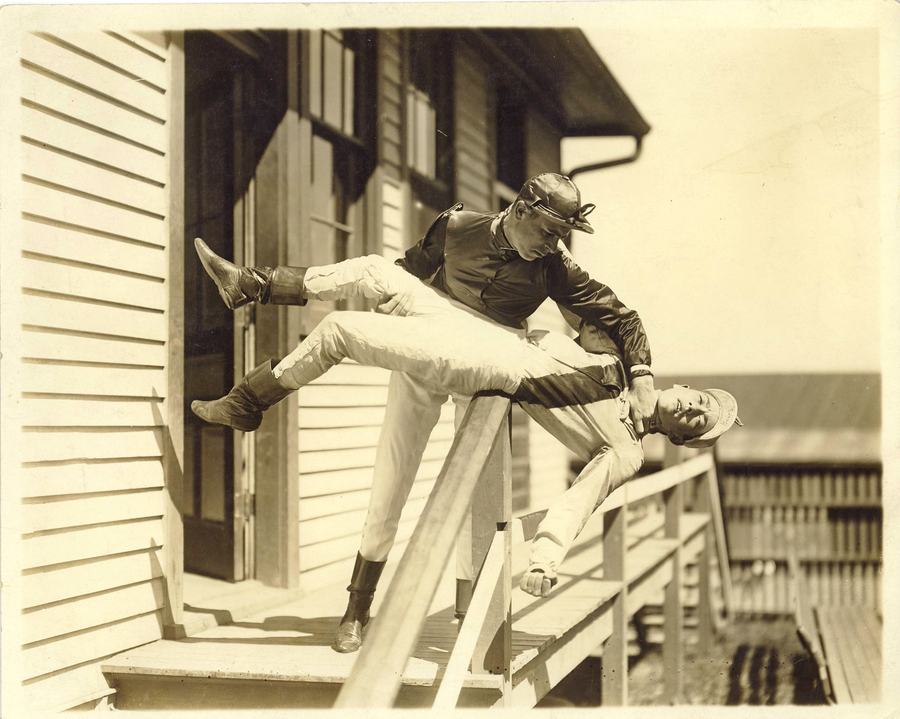
Dir: Frank Powell
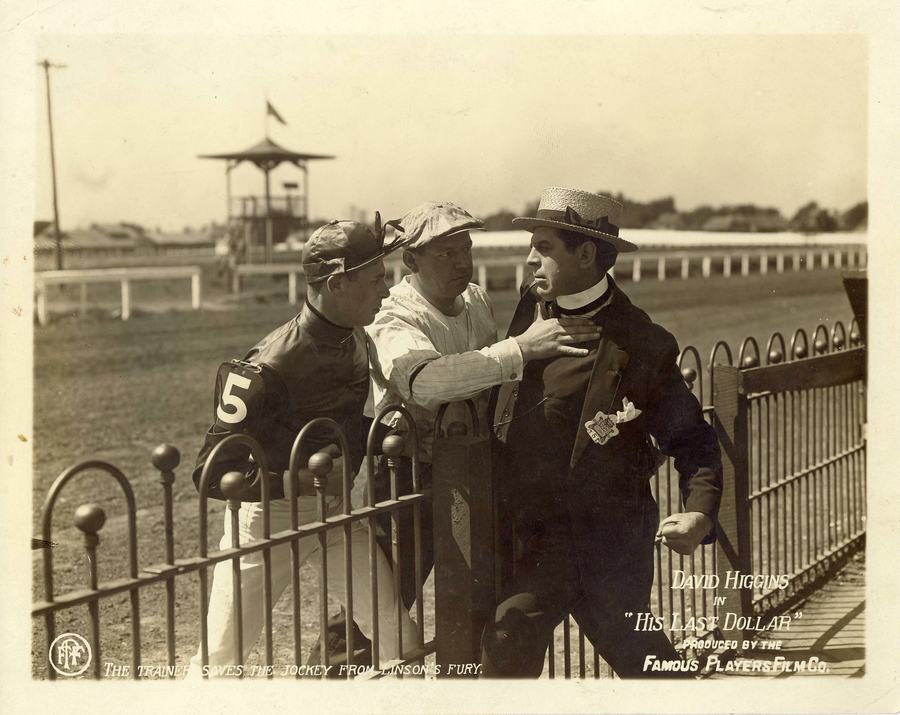
Former newsboy and jockey Joe Braxton, becomes a millionaire rancher and decides to visit New York. He soon becomes the prey of swindler Tom Linson and socialite Viola Grayson. Linson defrauds Braxton's old employer, Colonel Downs, and attempts to corrupt Eleanor, the colonel's daughter. When Eleanor learns that Linson intends to destroy Joe on the stock exchange, she warns him, disregarding Linson's threat to ruin her reputation. Eleanor is too late, but Joe recovers his losses by riding Mongrel to victory in the Kentucky Futurity, after having stacked his last dollar on the horse's success.
Dir: Frank Powell
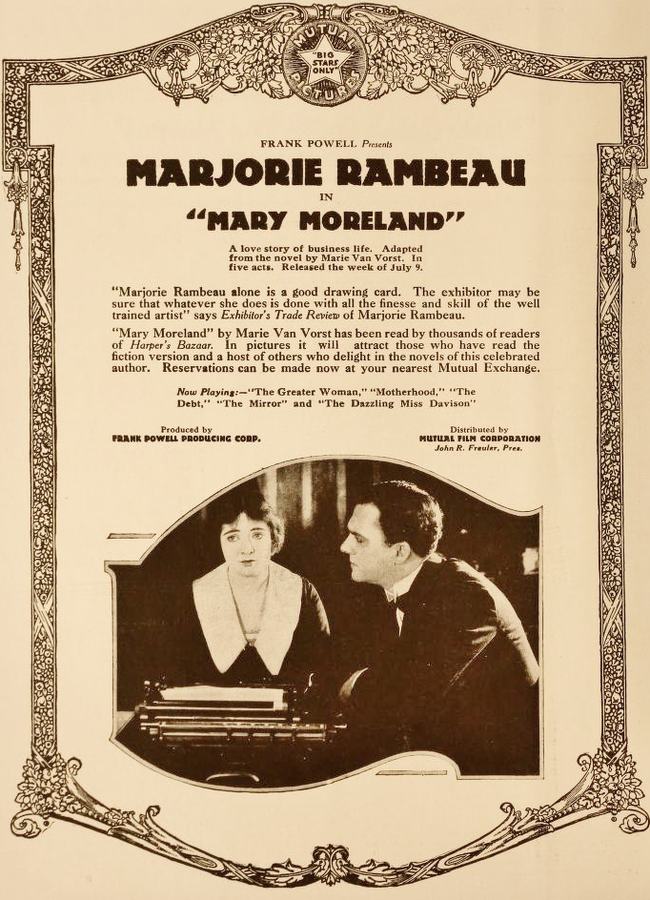
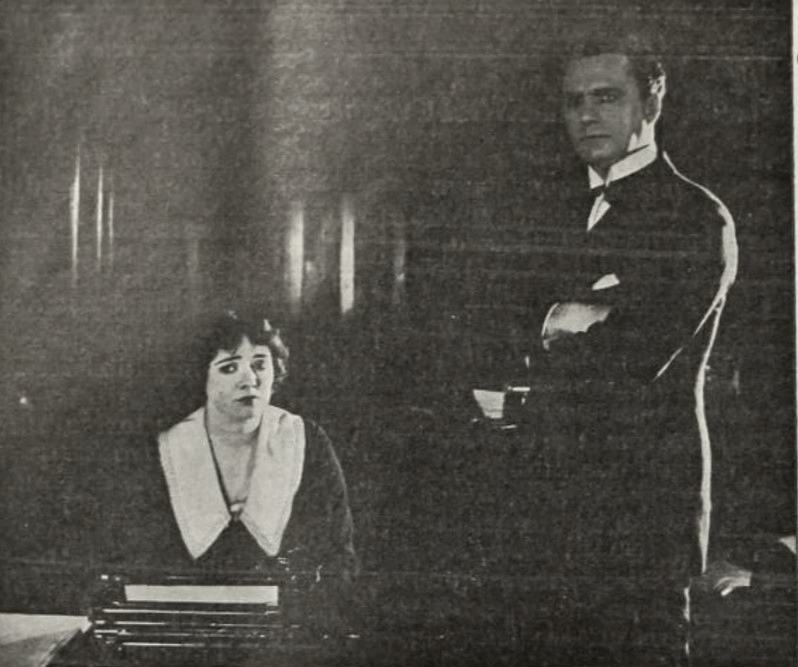
Wealthy Wall Street broker Thomas Maughm finally decides to divorce his spendthrift and reckless wife, and dictates a letter to that affect to his stenographer, Mary Moreland. While dictating the letter, he realizes that he is actually in love with Mary; when he tells her this, she confesses that she loves him, also, The pair make plans to meet in Boston later that night, but before Mary leaves, Maughm's wife confronts her and tells Mary that she still loves her husband. Ashamed, Mary convinces Maughm to go back to his wife. Complications ensue.
View Details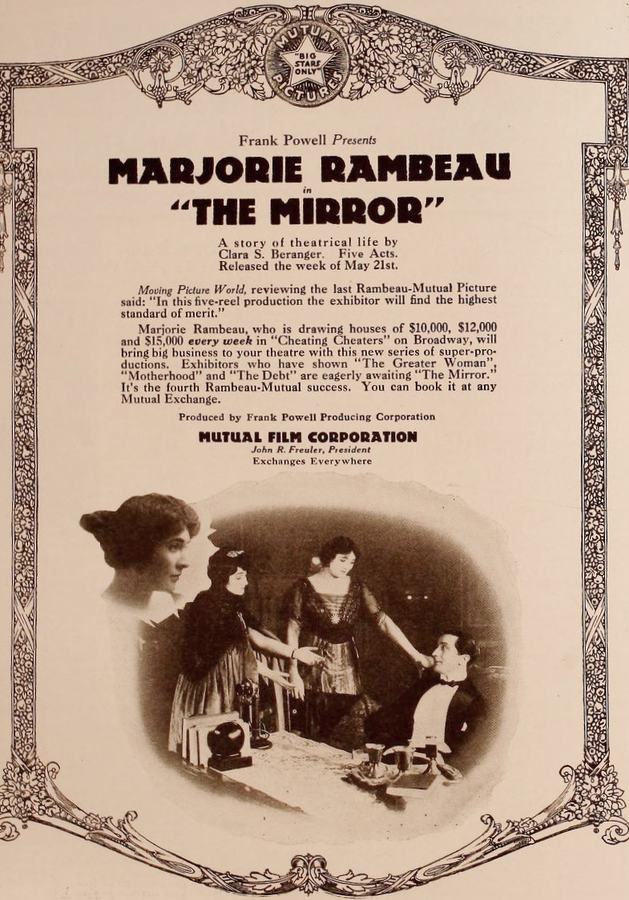
Dir: Frank Powell
Blanche Merrill, the handsome wife of a young artist who is seeking his way to fame, is surprised when her husband Bob, seeing her standing before a mirror, insists upon painting her portrait. The painting is exhibited and attracts the attention of Boyd, a theatrical manager and playboy who seeks Blanche out and entices her to leave her husband with promises of a theatrical career. Blanche leads a life of indulgence with Boyd until, feeling the pangs of dissolution, she awakens in her husband's arms to discover that it was all a dream.
Dir: Frank Powell
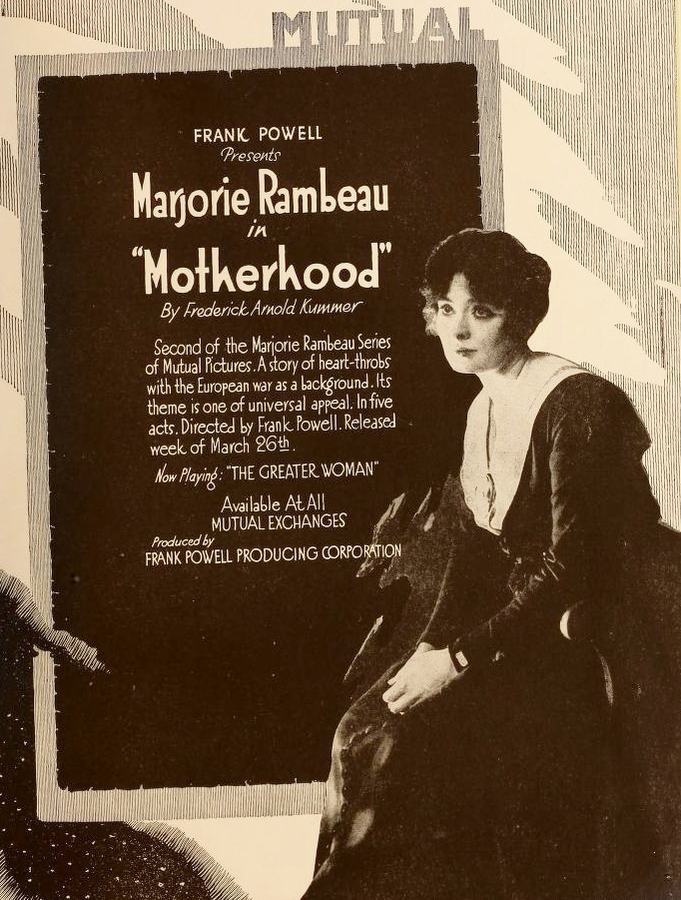
The husband and wife of a typical American family read the story of Albert and Louise, European peasants. Albert, called to war, is able to come home but once during the conflict. The captain of the enemy takes up his headquarters in Albert's house and forces his attention upon Louise. War over, Albert returns home rejoicing in the news of the birth of a son. He is told Louise has never looked at or touched the baby. Demanding an explanation Louise tells of the visit of the captain. Albert would kill the child, but Louise's motherhood asserts itself and she saves its life. The American family rejoice on completing the story that America is at peace.
View Details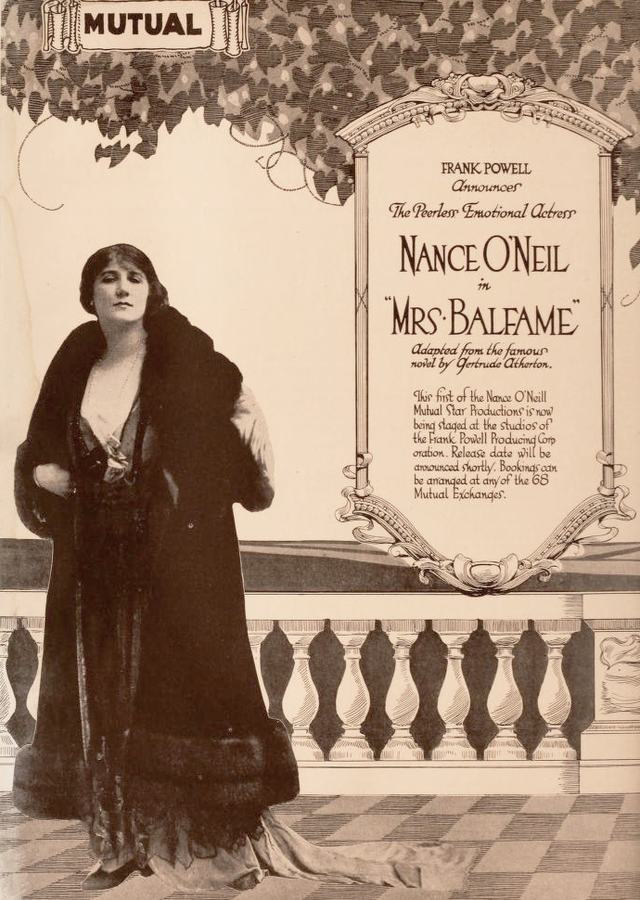
Dir: Frank Powell
Mrs. Balfame is the social leader of the small town of Elsinore, and David Balfame, her husband, is the political leader, a drunken loutish man his wife has hated during their sixteen years of married life. While attending a club meeting Mrs. Balfame listens to a speech by Dr. Anna Steuer, her friend, stating that many of the women on the other side are glad to be rid of their beasts of husbands who made war possible. Later in her home Dr. Steuer shows Mrs. Balfame an untraceable poison. With these two facts in her mind, and urged on by a disgraceful scene at the Country Club caused by Mr. Balfame's drunkenness, Mrs. Balfame decides to kill her husband. Meanwhile, Mr. Balfame has wandered into Old Dutch's saloon and insults the proprietor and his son, Conrad, and also arouses the ire of a tough young man who is dancing with a girl. Discovering that he must go to Albany on political business he phones Mrs. Balfame and asks her to fix him a bracer and pack his grip. She replies that a glass of lemonade and aromatic ammonia will be left on the table for him. Mr. Balfame, still drunk, then starts for home, followed by the young man from Old Dutch's. Mrs. Balfame make a glass of lemonade, putting in the poison, and places it on the table. Then, discovering a man lurking on the grounds, she takes a revolver and hurries out to scare him off. Frieda, the maid of all work, sees Mrs. Balfame leave the house. As Balfame nears the house there is a shot and he falls. Mrs. Balfame rushes in and, still watched by Frieda, pours out the lemonade and rinses out the glass. On the testimony of Frieda and Conrad Mrs. Balfame is arrested, charged with her husband's death. Dwight Rush, a young lawyer who has long been in love with Mrs. Balfame, represents her. Mrs. Balfame does not love Rush, but promises to marry him if he obtains her freedom. Alys Crumley, a young artist, is in love with Rush, and through her jealousy of Mrs. Balfame tells of the conversation she overheard in which Dr. Steuer told Mrs. Balfame of the poison. Dr. Steuer is called as a witness, but is sick in a hospital, and from her dying bed makes a confession that she shot and killed Mr. Balfame because she could no longer see her dear friend abused by the brute. Rush finds his love for Mrs. Balfame has been diminishing as his interest in Alys is strengthened, but goes to claim Mrs. Balfame after the acquittal. Realizing the disparity in their ages, she sends him to seek happiness with Alys Crumley.
Dir: Frank Powell
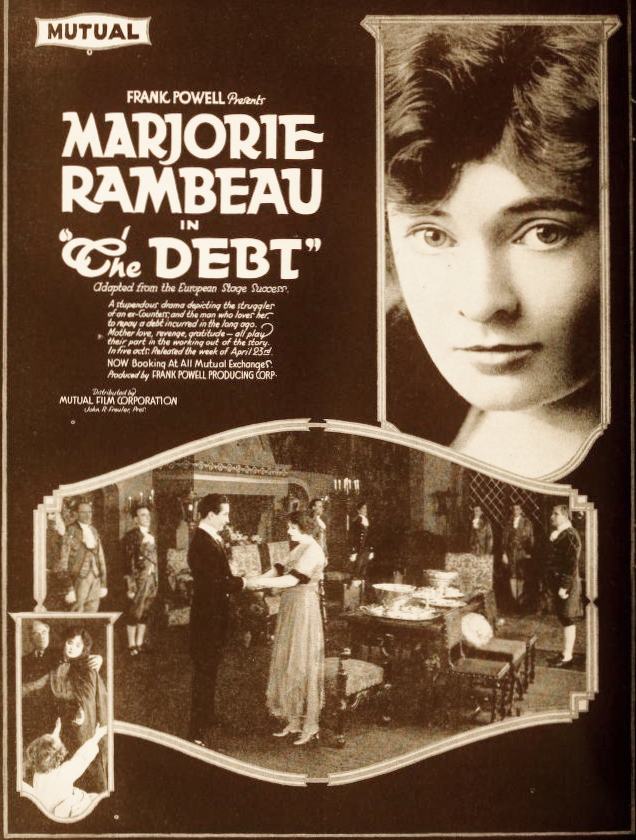
A reception given by the Count to celebrate his daughter Ann's engagement to Baron Moreno is disrupted by the news that a mine in which the whole village has invested is worthless. When the Count, who persuaded the townspeople to invest their savings in the venture, commits suicide, the baron jilts the now-destitute Ann. She marries Slater, an American promoter, and they move to the United States, hoping to earn enough to pay off her father's debts, but the baron follows Ann and forces his attentions on her. This provides Slater's mother, who is insanely jealous of her son's love for his wife, with the opportunity to break up their marriage. Slater orders his wife from the house and the baron offers her sanctuary. Ann's baby's incessant crying for her mother forces Slater to attempt a reconciliation, and when he looks for her, he finds her with the baron. In the ensuing fight, both men are mortally wounded. Ann returns to her child; she finds her mother-in-law repentant, and the three return to France to repay the debt.
View Details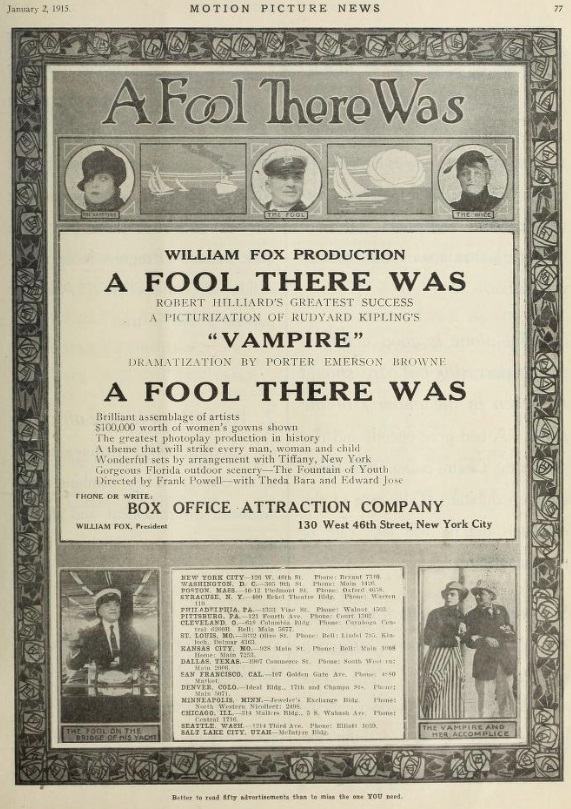
Dir: Frank Powell
A married diplomat falls hopelessly under the spell of a predatory woman.
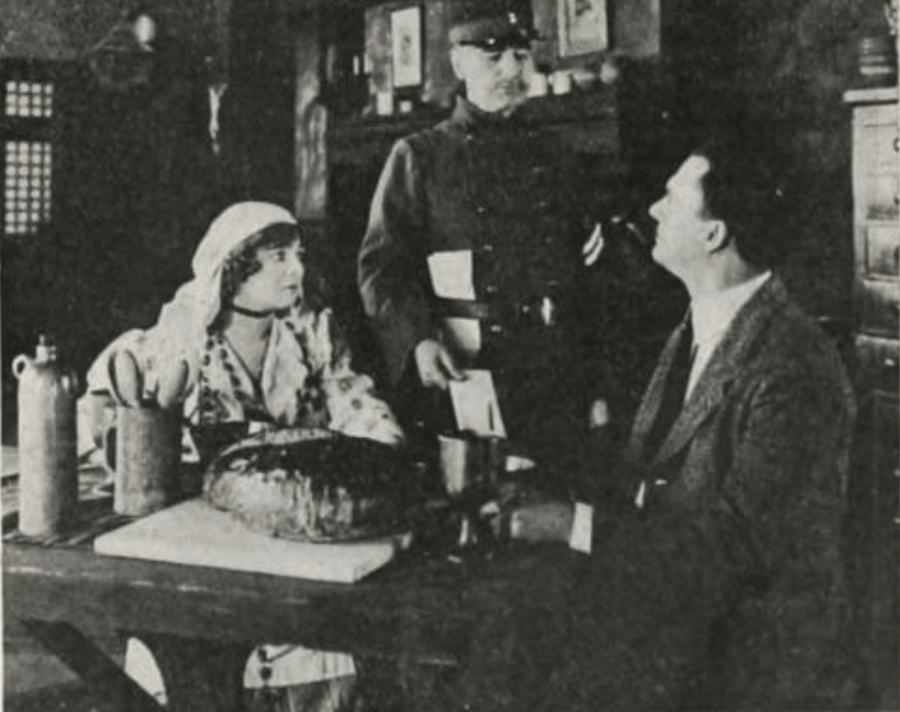
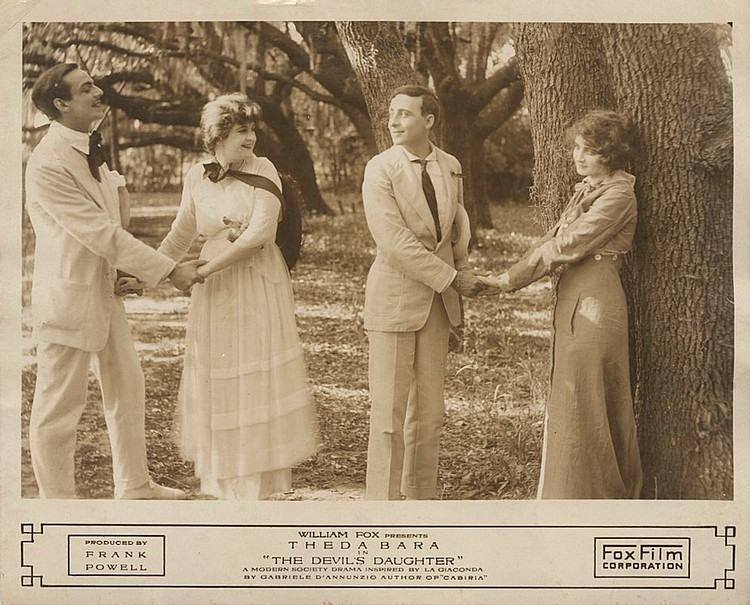
Dir: Frank Powell
When her lover deserts her, Gioconda Dianti seeks revenge by wrecking the lives of other men. When famous sculptor Lucio Settala meets her and asks her to pose for him, she sets out to ruin him. She captivates the artist with her charms, and he soon forgets his wife Silvia, their daughter Little Beata, and even his work. After Gioconda defies Silvia to take her husband back, Lucio shoots himself in a fit of desperation. Although Silvia nurses him back to health, Lucio soon returns to the enticing Gioconda. When Silvia's subsequent quarrel with Gioconda becomes a fight, Gioconda attempts to destroy Lucio's statue, but it falls on Silvia and is saved. Silvia, however, is crippled for life. Because of this, Lucio's sanity is affected and he becomes a raving maniac. Later, cast aside by her "man of the world," Gioconda also descends into madness.
View Details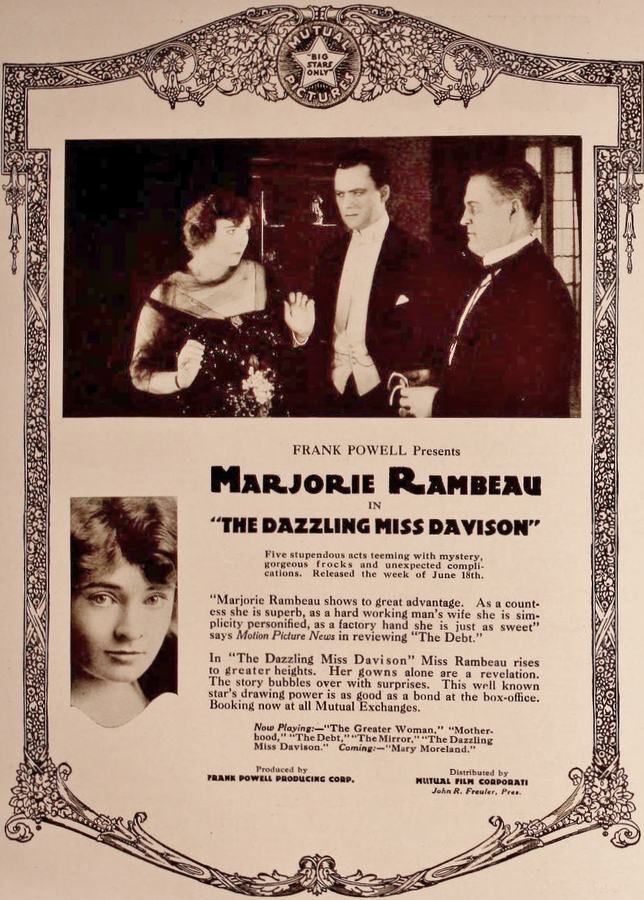
Dir: Frank Powell
Young society rake Gerard Buckland spies a pretty girl walking down the street. As he tries to figure out a way to approach her, he sees a disreputable-looking man surreptitiously hand her a diamond necklace, which she hides on her person before fading into the crowd and disappearing from sight. Later that day he visits a friend's home, and is astounded to meet that same girl. During their conversation she claims that, as a lark, she picks her friends' pockets of valuables and gives them back later--but Gerard doesn't quite buy it. It turns out that she is, in fact, not what she says she is, but not in the way Gerard thinks.
View DetailsAnalysis relative to The Forfeit
| Film Title | Atmosphere | Complexity | Similarity |
|---|---|---|---|
| The Scarlet Oath | Ethereal | Linear | 87% Match |
| His Last Dollar | Gritty | High | 86% Match |
| Mary Moreland | Surreal | Dense | 94% Match |
| The Mirror | Tense | Linear | 93% Match |
| Motherhood | Gritty | Abstract | 87% Match |
This guide was algorithmically generated using the cinematic metadata of Frank Powell's archive. Last updated: 6/25/2026.
Back to The Forfeit Details →