
DbcultAccessing Vault...
Recommendations
Senior Film Conservator
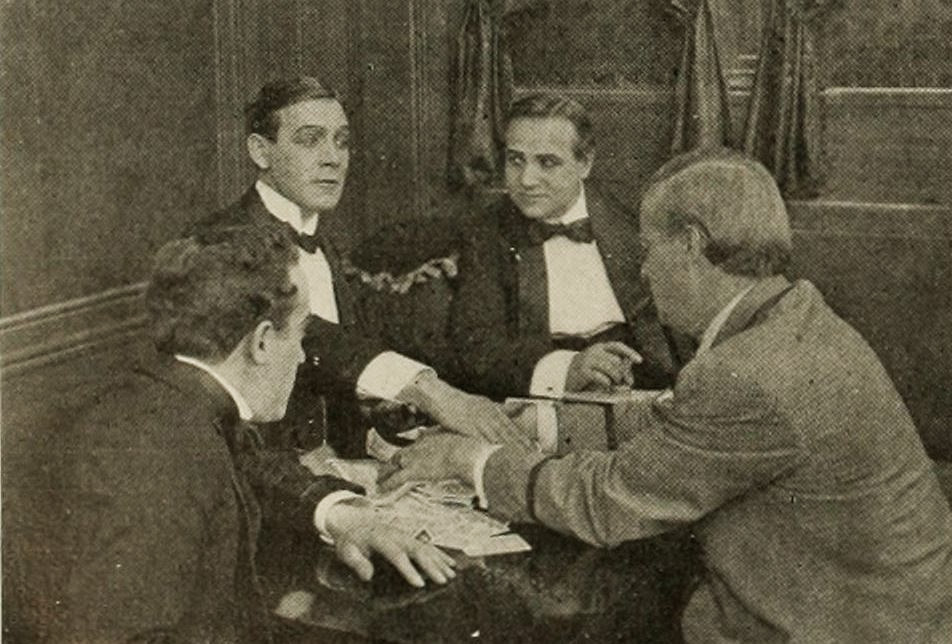
If you found yourself captivated by the cinematic excellence of The Greyhound (1914), the profound questions raised in 1914 still require cinematic answers today. Experience the United States influence in these recommendations that echo The Greyhound.
The Greyhound remains a monumental achievement to provide a definitive example of Lawrence B. McGill's stylistic genius.
Claire Fellman, wife of Louis Fellman, alias "The Greyhound," after unsuccessfully pleading with her husband, confidence man and card sharp, to forsake his ways, determines to leave him, yet watch his movements. Her pleadings being of no avail, she determines to inform the police in advance of every contemplated scheme of her husband, in order to frustrate them. Associated with "The Greyhound" is Jack Fay, alias "The Pale Face Kid," an uncouth crook, J. Crawford Alexander, alias "Whispering Alex," a suave gentlemanly, intelligent card sharp, and Baroness Von Hilde, alias "Deep Sea Kitty," an adventuress. The various preconceived plans of the quartet all go astray because of the timely intervention of the police, until finally suspicion is aroused that Claire, the Greyhound's wife, has had a hand in the frustrating of their plans. Claire, awakening to the fact that her final endeavors to reform Fellman are of no avail, determines upon suicide. She is about to consummate the act when McSherry, formerly a card sharp, but now reformed, and in the employ of "The Eye," a police inspector, and who has always loved Claire, intervenes, and persuades her to permit him to act as her protector. Because of Fellman's brutal treatment of his wife, McSherry vows vengeance and thereafter devotes his time shadowing Fellman and his clan. "The Greyhound," before leaving for Europe, entered into a death pact with his wife, who still loved him. Claire drinks the poison potion, while Fellman leads her to believe that he has taken his. However, the dose is not fatal, and merely renders her unconscious. A letter of introduction to Mrs. Allen and her son, Porter, and daughter, Bess, is forged by "Whispering Alex," giving Fellman entry into their circle. A scheme is hatched whereby the Allens are to be defrauded of a vast sum of money, and "Deep Sea Kitty," on her part, intrigues to ensnare young Porter Allen into a promise of marriage. On board the S.S. Olympic, going to Europe, the Allens, Fellman and his associates meet. McSherry and Claire are on the same boat, Claire going to Europe to recover her health, under McSherry's protection. The card sharps inveigle Bob, Bess Allen's fiancé, into a poker game. McSherry, seeing that the boy is in bad company, joins the game and by one of his old tricks, gives Bob the winning hand. On board ship, Fellman sees his wife, and believes that she is the ghost of herself come to haunt him. The plans of Fellman and his clan are frustrated by McSherry, and they are exposed. Things go from bad to worse for them, until finally Fellman, laboring under the delusion that his wife's ghost continually pursues him, in a fit of despondency and desperation, falls overboard and is drowned.
The Greyhound was a significant production in United States, bringing a unique perspective to the global stage. It continues to be a top recommendation for anyone studying cult history.
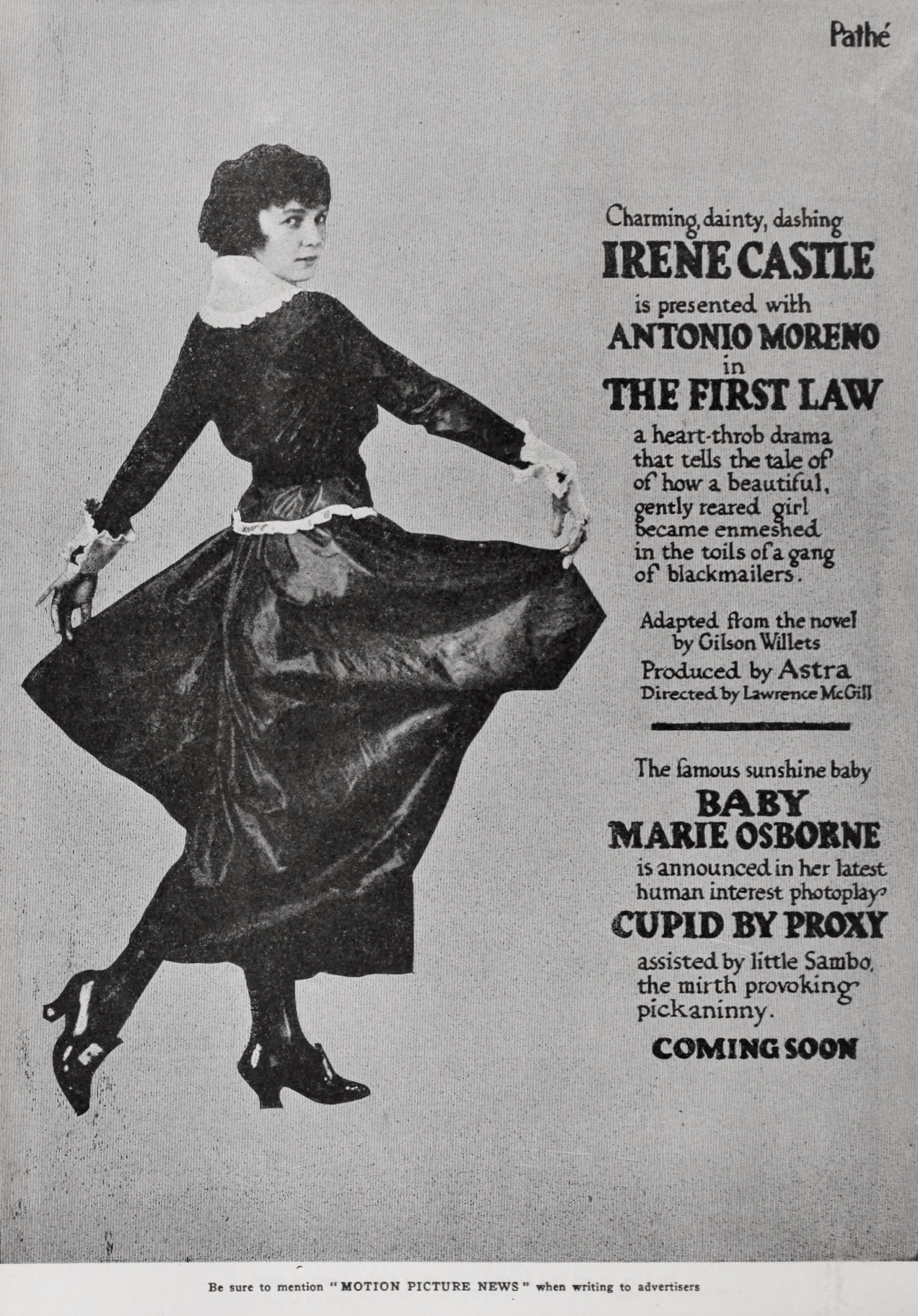
Based on the unique cinematic excellence of The Greyhound, our vault has identified these titles as the most compelling follow-up experiences for fans of cult cinema:
Dir: Lawrence B. McGill
After her father suffers financial ruin, Norma Webb advertises for boarders and finally accepts the application of young philanthropist Hugh Godwin. Norma is deeply in love with Hugh, but she mysteriously refuses his proposal of marriage. Later he learns that some time ago she had married the scoundrel who swindled her father. One night the husband enters her room and tries to force his attentions on her, whereupon she shoots him and flees. A detective discovers the body and threatens to expose Norma unless she uses her influence to secure for him Hugh's financial secrets. Desperate, Norma marries Hugh and obeys the blackmailer's orders until finally, unable to endure her own dishonesty any longer, she confesses everything to her new husband. Hugh and Norma track the detective to his home just in time to witness him murder the first husband, who merely had been wounded by Norma's shot. The detective is arrested, leaving Hugh and Norma free to enjoy their happiness.
View Details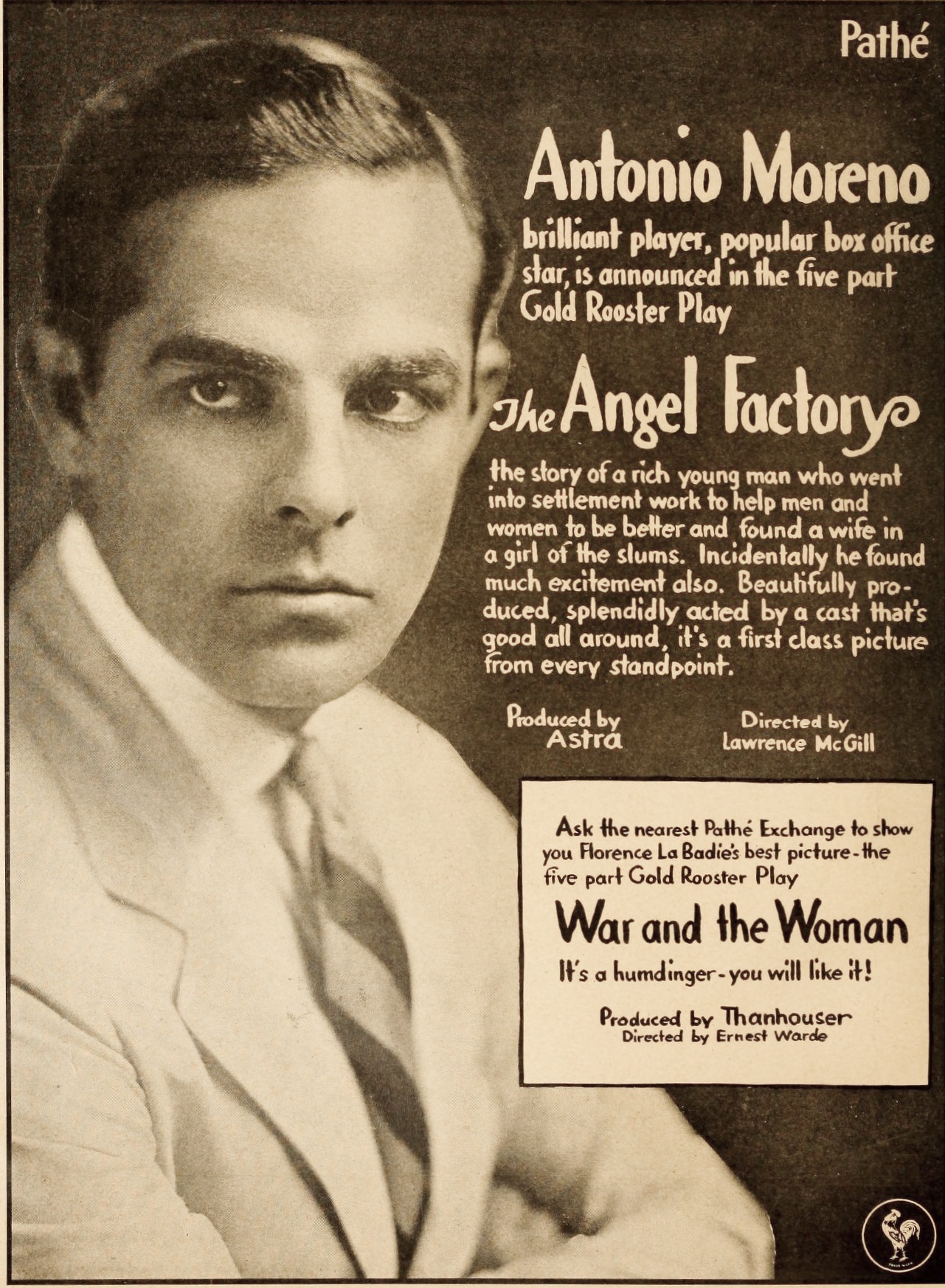
Dir: Lawrence B. McGill
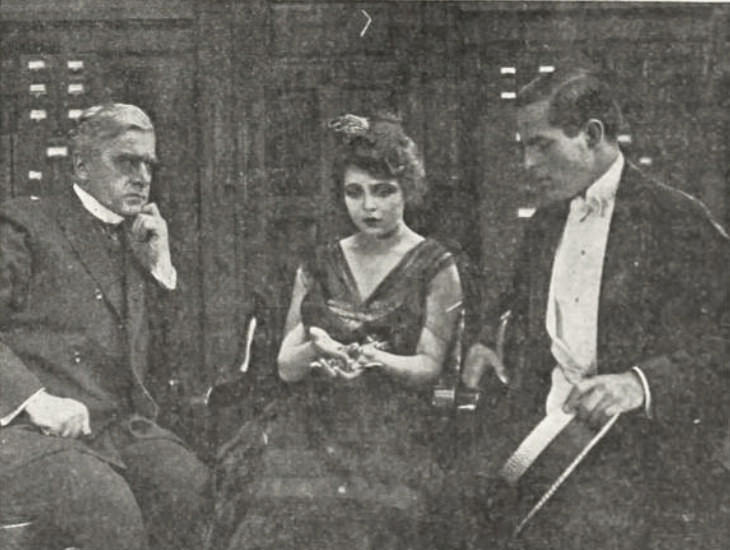
In the slums of New York, David Darrow runs a settlement house called "The Angel Factory" in which he tries to help those oppressed by tenement life. In the course of his work, Darrow meets Florence, an innocent young girl of the slums, and is attracted to her sweetness. Betty, Darrow's snobbish fiancée, becomes jealous and invites Florence to a reception, hoping to embarrass the girl. Florence comports herself admirably, however, and wins the respect of all present. The next day, on his way to the settlement house, Darrow is followed by gangster Tony Podessa, a jealous man from Florence's past. As Florence watches the two men confront each other, Tony is killed by a mysterious shot. The police arrive and arrest Darrow for the murder. Florence, determined to prove his innocence, remembers Sailor Bill, a long-time enemy of Tony. She finds Bill after he has been mortally wounded in a brawl. Bill confesses to the crime before he dies, Darrow is freed, and after breaking his engagement to Betty, asks Florence to be his partner at the settlement house.
View Details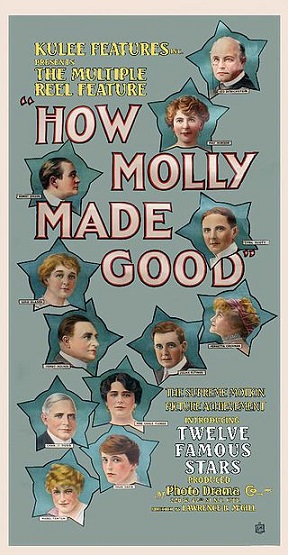
Dir: Lawrence B. McGill
Molly, an Irish girl just hired by a New York newspaper, is assigned as a test a chain interview of celebrities that must be accomplished within a set amount of time. She goes through innumerable paths and obstacles to achieve the goal.
View Details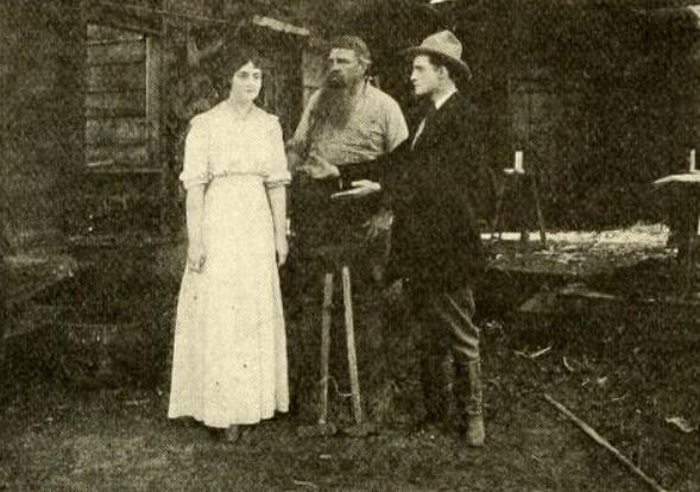
Dir: Lawrence B. McGill
In the town of Bowling Green, Missouri, there lives Jo Vernon, a village blacksmith, his wife and daughters. Kate and Elizabeth. Jim Radburn, a native and resident of the same town, is sheriff of Pike County. Since childhood he has planned that some day he and Kate Vernon are to be married, and unbeknown to her, although with the sanction of her father, he pays for her tuition through college. Sam Fowler an express messenger on the Missouri Pacific R.R., is in love with Jim Radburn's sister, Emily, and with the beginning of the story he becomes engaged to her. Robert Travers, alias "Jim Cummings," a holdup man, forges the signature of the railroad division superintendent to an order permitting the bearer to ride in the express car with the express messenger, Fowler. As the train speeds on its way, Travers attacks and overpowers Fowler and robs the car. Travers makes his escape and Sam, accused by the express company of having been an accomplice, is thrown in jail. The hold-up happens in Pike County, and Radburn, the sheriff, sets out to run down the criminal. Through newspaper accounts of the robbery, Travers learns that Fowler has been unjustly imprisoned, and in accordance with his usual practice, writes to the editor advising him of Fowler's innocence, enclosing one of the express envelopes which were stolen as proof. Shortly after Travers drifts to the town of Bowling Green and by chance becomes acquainted with the Vernon family. He becomes enamored of Kate, who in turn gives him her love, discarding Jim Radburn for the thought of the bigger, gayer and brighter life which Travers has pictured. A letter sent to Kate by Travers planning their elopement comes to Kate's mother's attention, and she demands to see it. She shows it to Jim, who immediately recognizes a similarity in the handwriting of this note and the forged order which was delivered to the express messenger, Fowler, at the time of the robbery. Jim immediately begins to run down the clue to get his man. Through the efforts of Jim, Sam is exonerated and reinstated by the railroad company, and during one of his trips to Bowling Green he accidentally meets up with and recognizes Travers in the village drug store. Travers makes his getaway in a wild fight, and jumping through the window, turns toward Kate's home for a hiding-place. Her father and family joining the mob in search of Travers, have left her alone. Jim, close on the trail of his man, traces him to the Vernon home, and there corners him. Because of his love for Kate, and to prevent possible injury to her name, he permits the escape of Travers, aiding him by giving him his own horse to ride across the border. Through a strange coincidence, shortly after the robbery while working for Sam's release, Jim, in caring for a homeless pup which has had its leg broken, discovers that the mud of the river bottom, or gumbo, if baked, would make a wonderful railroad red ballast. He visits the railroad officials at St. Louis and closes a most profitable contract. Because of his newer fields he resigns his position as sheriff a day before he meets up with Travers. Travers is arrested in a neighboring town by two countrymen, who recognize Jim's horse. Jim is telegraphed, and replies that everything is all right and that he has given the horse to the man Travers. Questioning Jim's explanation, the two men prepare to take Travers back to Bowling Green. He attempts escape and is shot. Jim has been nominated for legislator, and when his action in permitting Travers to escape becomes known, he is denounced in a public meeting by Col. Bollinger for having failed to fulfill his duties as sheriff. Jo Vernon, knowing of Jim's resignation, addresses the meeting and exonerates him. The townspeople, incited by Bollinger's speech, turn against Jim and start for his house to seek their vengeance. Jim meets them at the gate and warns them off, just as Jo arrives to explain to them that Jim Radburn had resigned as sheriff the day before. The better way is evidenced to Kate, and she learns that her love belongs to Jim.
View Details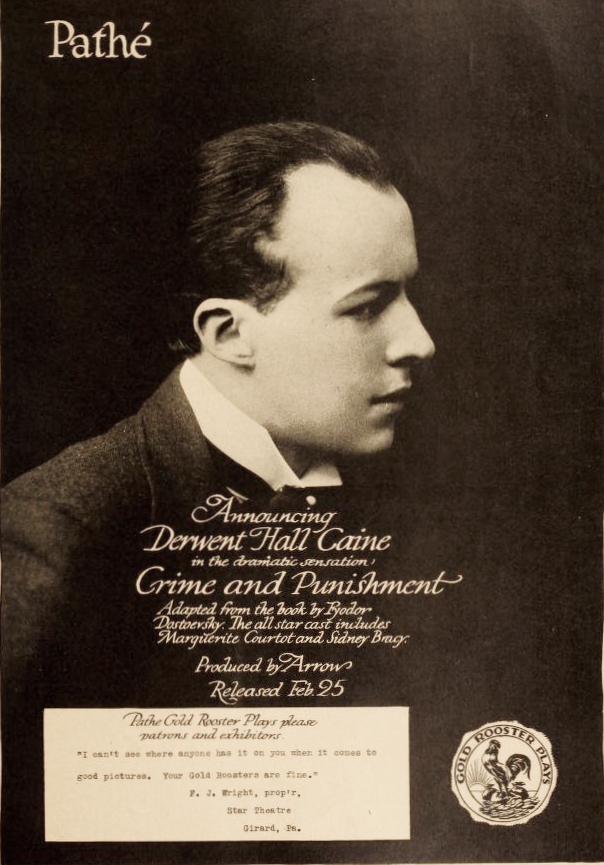
Dir: Lawrence B. McGill
"One death, and thousands of lives restored to existence. For some useless life a thousand lives saved from decay and death. Shall not one little crime be effaced and atoned by a million good deeds?" So ran Rodion Raskolnikoff's creed in the book which was responsible for his being expelled from the University, but which elected him the leader of a secret brotherhood which admired him. The law proving too hot for him, he is finally forced to flee to America, still preaching his same doctrine. Rodion's heart is touched by the poverty on the East Side and he determines to kill a pawnbroker who mercilessly squeezes the poor unfortunates to their last cent. He accomplishes the deed, takes money from the safe, uses it for the needy and manages to keep the guilt from himself. But the crime is fastened on an innocent man, who, to escape further torture of a relentless third degree confesses to a crime he had no hand in. Then comes Rodion's struggle between his conscience and his creed, and through the guidance of a "lost sister of the streets," he rejects the faith he founded and acknowledges his guilt.
View Details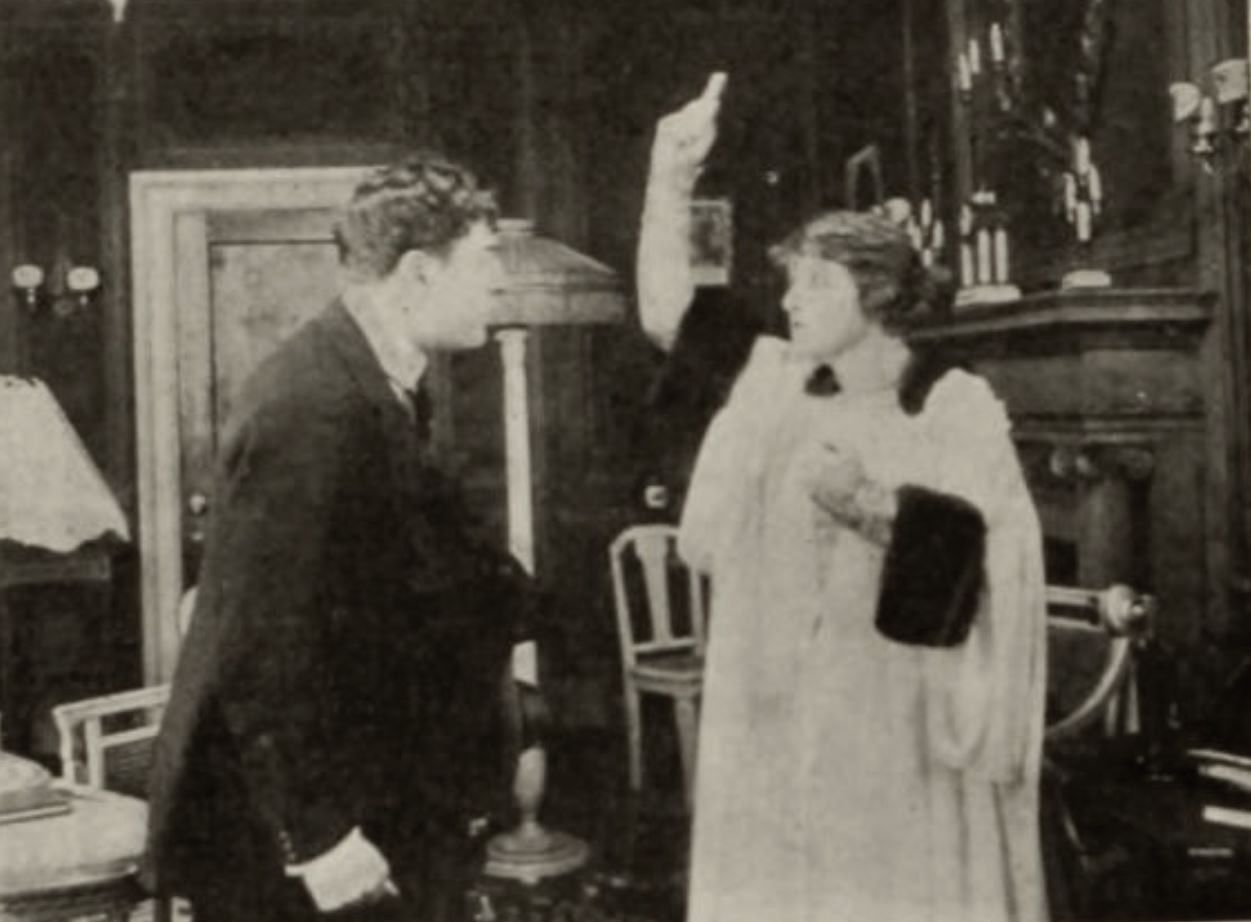
Dir: Lawrence B. McGill
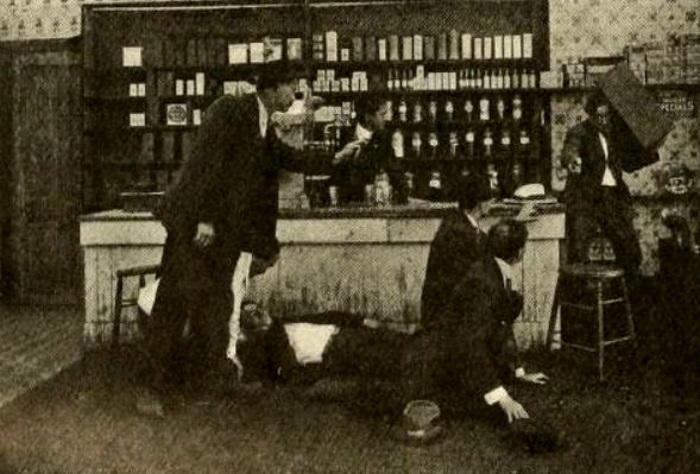
After dissolute millionaire George Orcutt stabs his friend artist Lucas Emmet to death during a quarrel over Emmet's girlfriend, Orcutt confesses to his wife Gail. She finds a dazed man on a park bench who looks like her husband, and recalling a dinner conversation in which some judges and her friend, District Attorney John Kent, argued that everyone has a double, lets her husband escape for their son's sake, and has the man, who suffers from amnesia, take his place. The impostor is declared insane and sent to a sanitarium. Upon his release, he lives with Gail as her husband, still without remembering his previous life. Reporter Frank Fisher sees Orcutt in a saloon, and investigates. When Orcutt, jealous of the impostor, breaks into his home to demand money from Gail, the butler, thinking that he is a thief, shoots and kills him. Seeing that the impostor, really Keith Edgerton, who now remembers that he went into shock upon learning that his parents died, and Gail are in love, Fisher and Kent agree to keep the matter secret.
View Details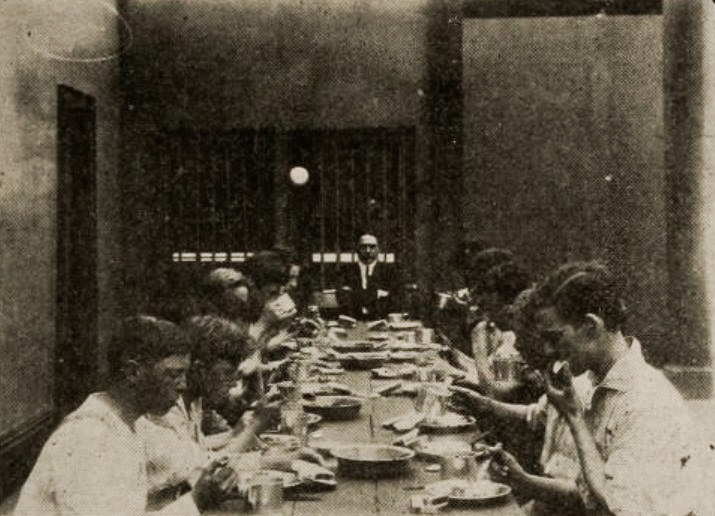
Dir: Lawrence B. McGill
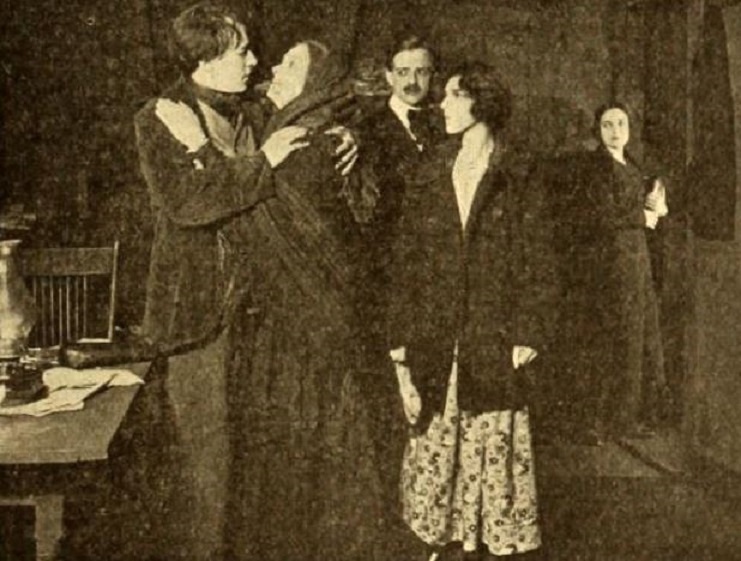
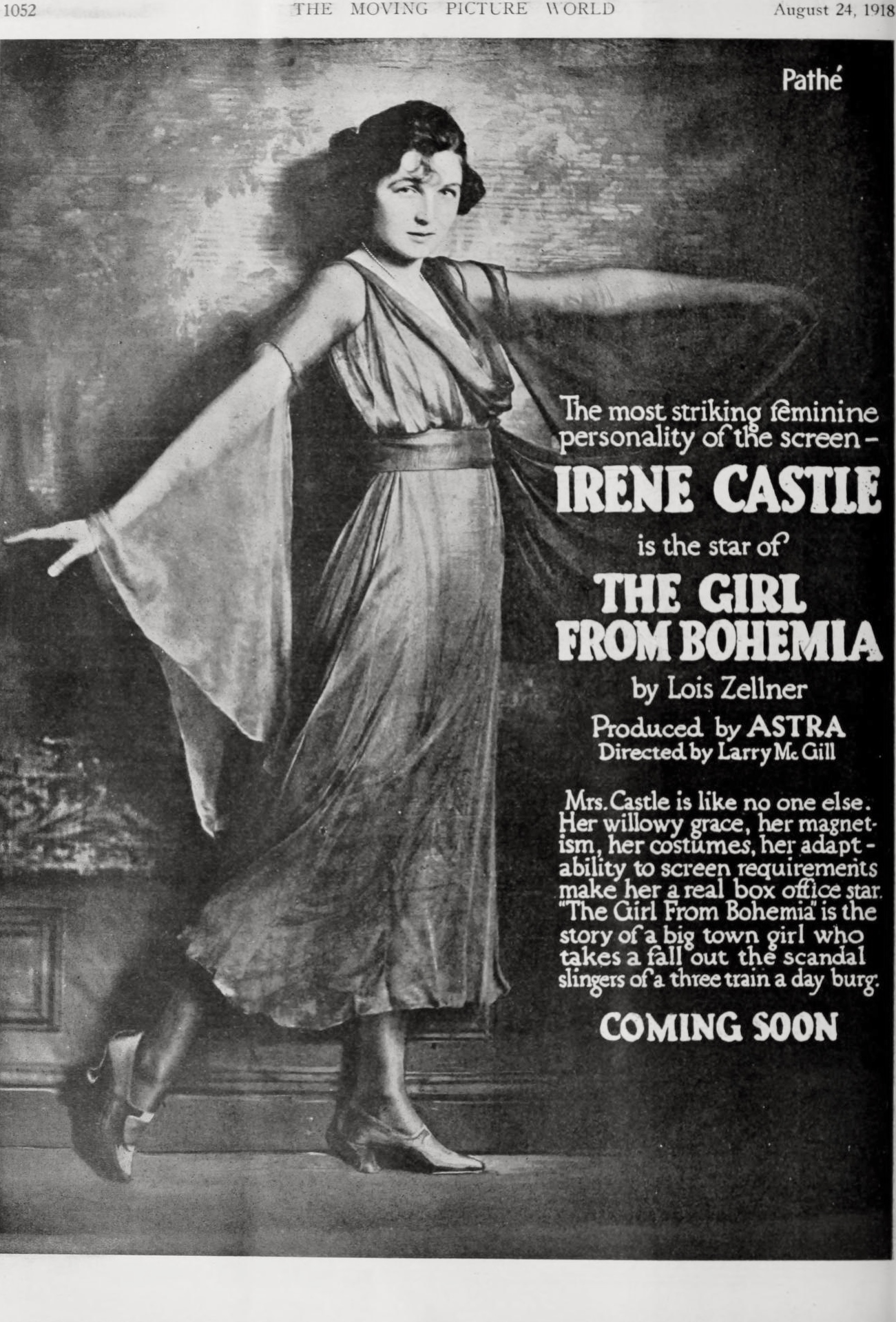
Alice Paige lives the Bohemian life in New York's Greenwich Village until she receives a letter informing her that she soon will inherit a fine country estate, provided that she lives on the property with her maiden aunt. Alice reluctantly leaves New York for the provincial Southern town of Mayport, where she shocks the local inhabitants with her unconventional ways. She does, however, succeed in winning the friendship of the saloonkeeper's little daughter and in captivating the owner of a large shipyard, Canton Leigh. When the little girl becomes trapped on the rocks by the high tide, Alice rescues her and returns to town just as a strike on the shipyard, incited by the saloonkeeper, is mushrooming into a riot. Alice climbs onto the roof, and unfurling the American flag, reminds the strikers that the government is in dire need of the ships they are building. Their patriotism aroused, the men cheer for Alice, and Canton takes her in his arms.
View Details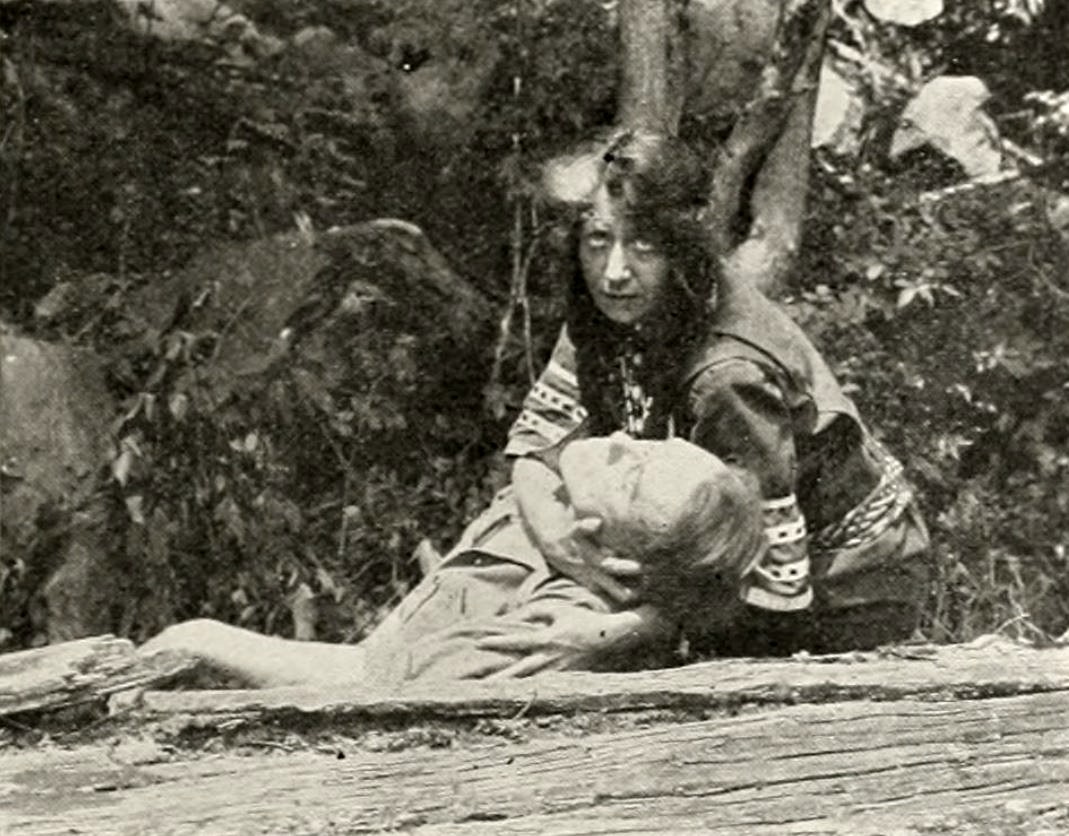
Dir: Lawrence B. McGill
A fascinating piece of cinema that shares thematic elements.
View DetailsAnalysis relative to The Greyhound
| Film Title | Atmosphere | Complexity | Similarity |
|---|---|---|---|
| The First Law | Ethereal | Linear | 91% Match |
| The Angel Factory | Surreal | High | 96% Match |
| How Molly Malone Made Good | Gothic | Abstract | 91% Match |
| In Mizzoura | Tense | Abstract | 97% Match |
| Crime and Punishment | Gothic | Dense | 92% Match |
This guide was algorithmically generated using the cinematic metadata of Lawrence B. McGill's archive. Last updated: 8/17/2026.
Back to The Greyhound Details →