
DbcultAccessing Vault...
Recommendations
Senior Film Conservator
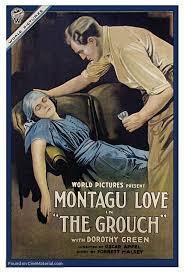
Delving into the atmospheric depths of The Grouch reveals a master at work, the visual language established by Oscar Apfel is something many try to emulate. From hidden underground hits to established classics, these are our top picks.
The enduring power of The Grouch lies in to synthesize diverse influences into a singular artistic statement.
Donald Graham, imprisoned for a crime that actually was committed by John Cabin Branch, the man who stole Donald's acquisitive wife Corinne, joins a southern surveying team upon his release and becomes known as "the grouch." Following his dismissal, he works in a clubhouse situated on the edge of Okefenokee Swamp, and there he meets Fleurette, who has escaped from a band of pirates. Donald, who has become soured and misanthropic through his misfortune, treats Fleurette gruffly at first but finally softens towards her, marries her and takes her to the city. Upon learning that he has inherited a fortune, Donald uses the money to ruin Branch on the stock market, whereupon Corinne offers to return to him. Fleurette sets fire to Branch's house, but Donald arrives in time to save them both. Cured of his desire for revenge, Donald begins a new life with his beloved Fleurette.
Critics widely regard The Grouch as a cult-favorite piece of cult cinema. Its cult status is frequently cited as its strongest asset, solidifying its place in United States's film legacy.
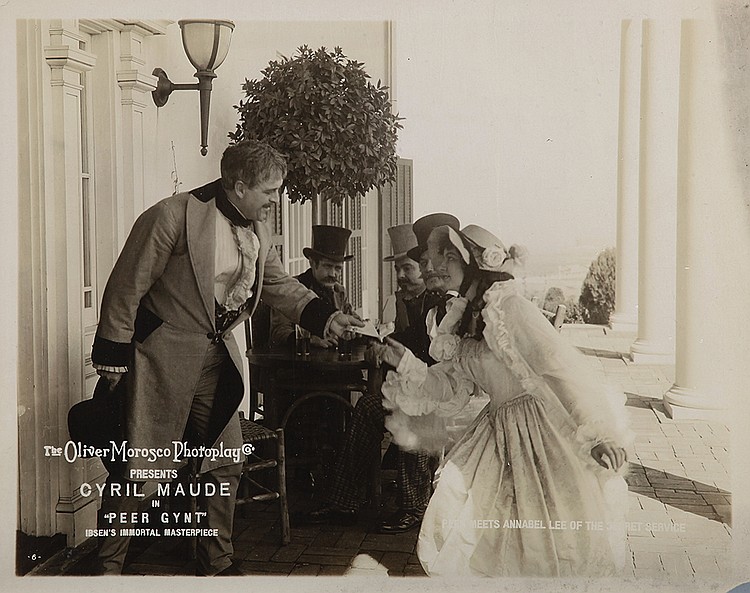
Based on the unique cult status of The Grouch, our vault has identified these titles as the most compelling follow-up experiences for fans of cult cinema:
Dir: Oscar Apfel
A fantasy from Ibsen's verse drama. Ne'er-do-well and braggart Peer Gynt has many adventures in varied countries, making and losing money, gaining fortune at others' expense, until he finds salvation in the love of Solveig.
View Details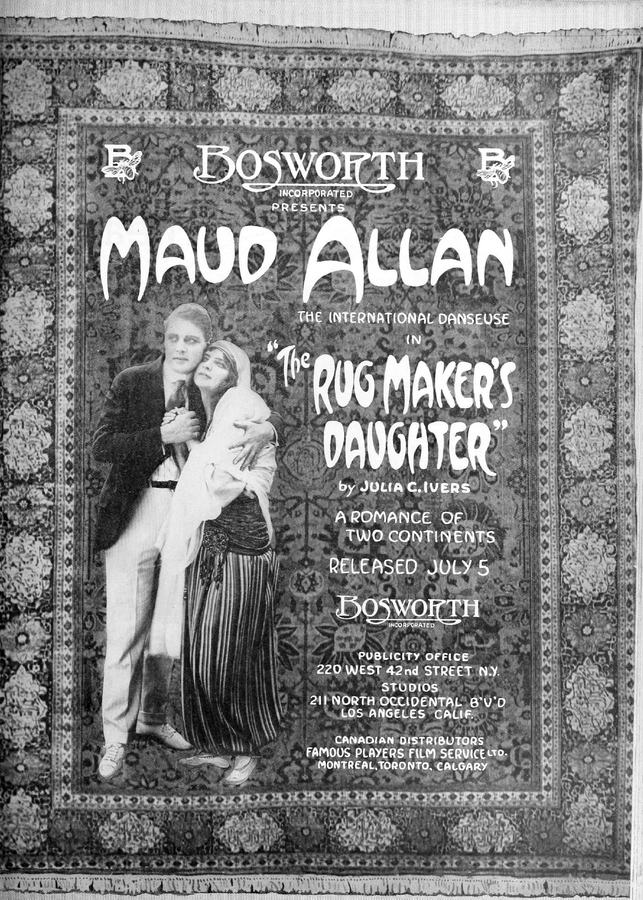
Dir: Oscar Apfel
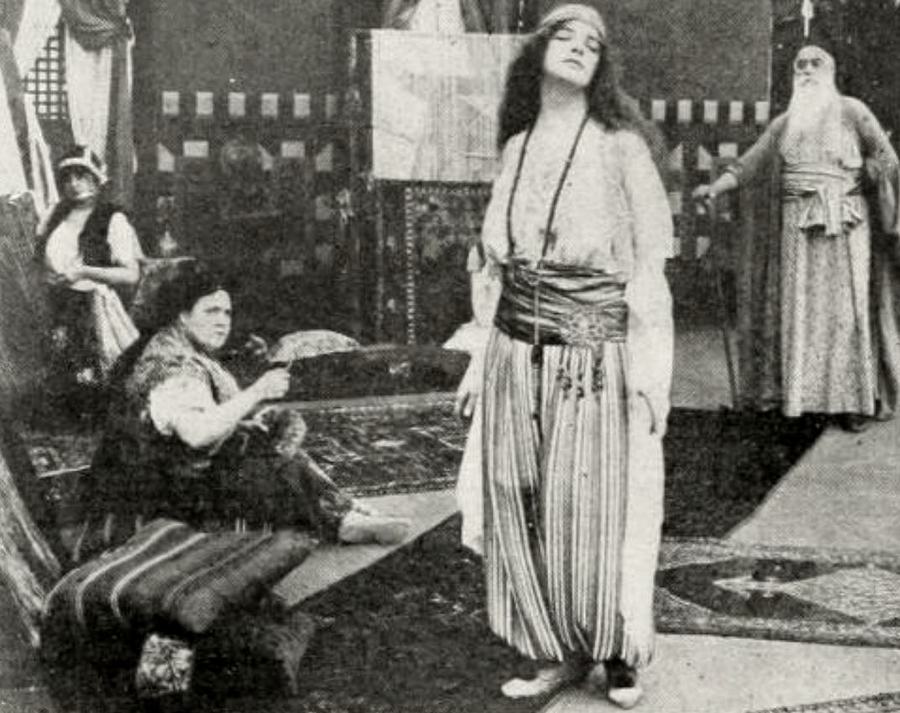
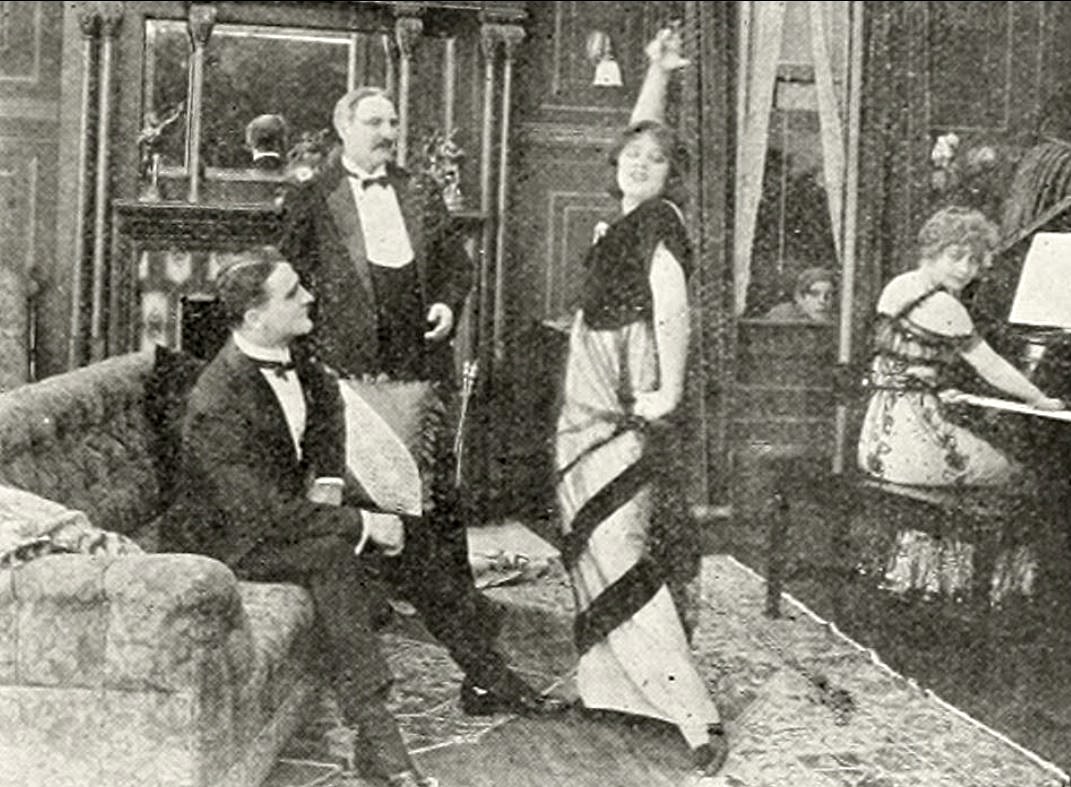
Bob Van Buren's rescue of an upper-class Turkish girl and her duenna in Constantinople when they are waylaid by robbers paves the way for a romance between them. The romance progresses rapidly despite the hullabaloo raised by Demetra's father and by the Turk fiancé he is trying to force upon her; but the very thought of a girl, so highly educated, so gifted with needle and loom, so famously graceful as a dancer ending up in a harem instead of a respectable home, drives Bob Van Buren to desperation. At length he persuades Demetra to elope with him to America, where Demetra could be married at his mother's in New York. Getting wind of it, the malicious Osman hires a band of ruffians who make away with Bob Van Buren on the very eve of departure. With her young American mysteriously vanished, and the day of her now-all-the-more-odious wedding to Osman drawing near, Demetra can stand it no longer, and taking her duenna, flees to a cousin's in New York on the P. and O. boat on which Bob had reserved sailings. Osman pursues the little refugee, corners her in New York, and with oriental cunning sets a trap into which Demetra walks blindly. Having her in his toils again Osman summons a second Turkish priest and is just forcing Demetra to her knees before him when the door bursts open and in rushes Bob Van Buren, who had finally escaped the dungeon in Constantinople to which he had been consigned. He routes Osman and takes Demetra to his mother's. Mrs. Van Buren suggested that the lovers wait until September, but their hearts were set on June. And so, as you may very well imagine, June it was.
View Details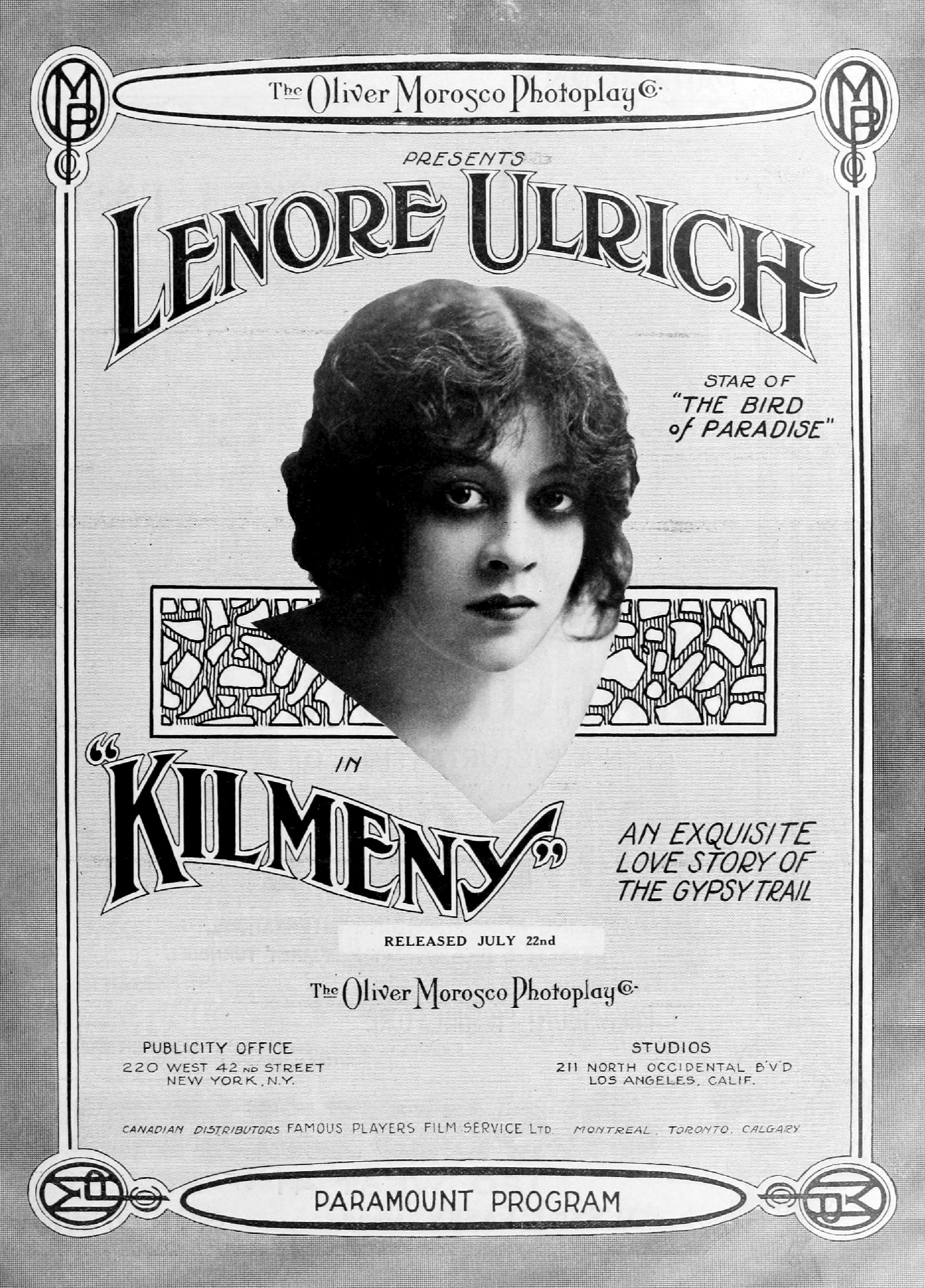
Dir: Oscar Apfel
Little Doris Calhoun, of a wealthy English family, makes a playmate of Pierre, a crippled gypsy boy, and drifts away with him and the gypsy band on their wanderings and is seen no more. In twelve years she becomes a great favorite with the gypsies, who have named her Kilmeny, but rather than be married to a brutal fellow, Barouche, she flees the camp. Kilmeny is found wandering in the woods, by Lord Leigh, and he persuades the rather reluctant Lady Leigh to give the ragged little wild thing shelter in the manor. The child of camps and trails at first finds naive delight in mysteries like electric light switches, bath tubs with fickle showers and rugs upon which she can slide beautifully over the hardwood floors. But long dresses trip her, the butler is a thundercloud, and at night she cannot sleep in the closed-in room unless she pulls her little white bed to the window. To make it worse, Lady Leigh becomes jealous of her husband's protegee, and so does her brother, Bob Meredith, a dashing chap with whom Kilmeny is very much in love. The sensitive girl who cannot bear to hurt birds, beasts or any living thing, cannot bear to hurt her benefactors either, and so in a pathetic self-sacrifice turns her back upon the manor and returns to the angry gypsies, and to Barouche. But just as the gypsy wedding ceremony is about to begin the father of the long-lost Doris Calhoun appears and calls a halt, and proves the beautiful Kilmeny is his own daughter. To prove it, he produces the poor cripple, Pierre, who has braved the wrath of the clan to balk the brutal Barouche and carry word to Kilmeny's father of her whereabouts.
View Details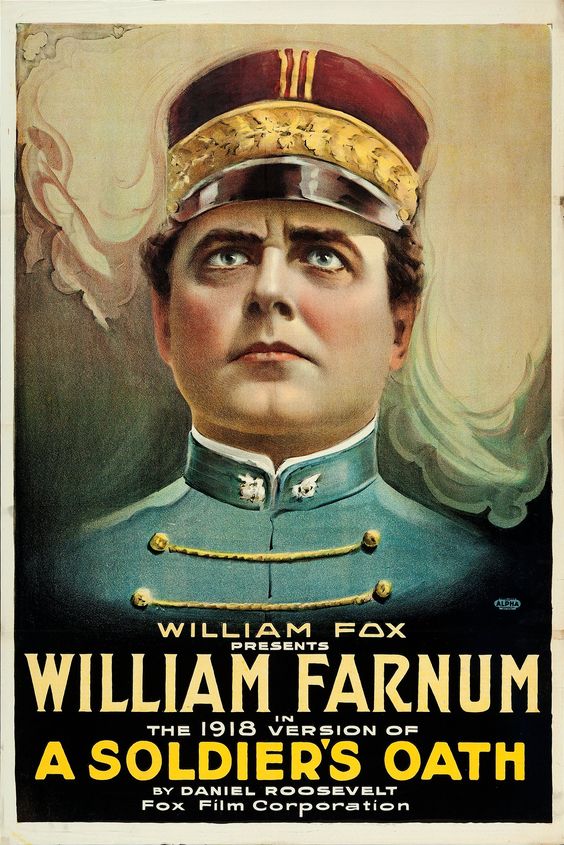
Dir: Oscar Apfel
While engaged in battle, Pierre Duval, a French soldier, stumbles onto the mortally wounded Count de Morave. Before dying, the count begs Pierre to deliver some family jewels and papers to the Vicomte Raoul de Reyntiens. At home, Pierre places the jewels in a box that also contains a necklace given to Margot, his wife, by the Duke D'Auberg. While stealing the box, Lazare, a war correspondent who witnessed Pierre's scene with the count, attacks and kills Margot. Found guilty of the crime, Pierre is sentenced to life imprisonment but is pardoned after performing a dangerous jailhouse rescue. Mavis, his daughter, who has been adopted by the duke, falls in love with the poor vicomte but is courted by Lazare, now posing as the Count de Morave. To win her love, Lazare gives her some of the stolen jewels, including the duke's necklace, but when Pierre sees the necklace later, he exposes Lazare and wins retribution.
View Details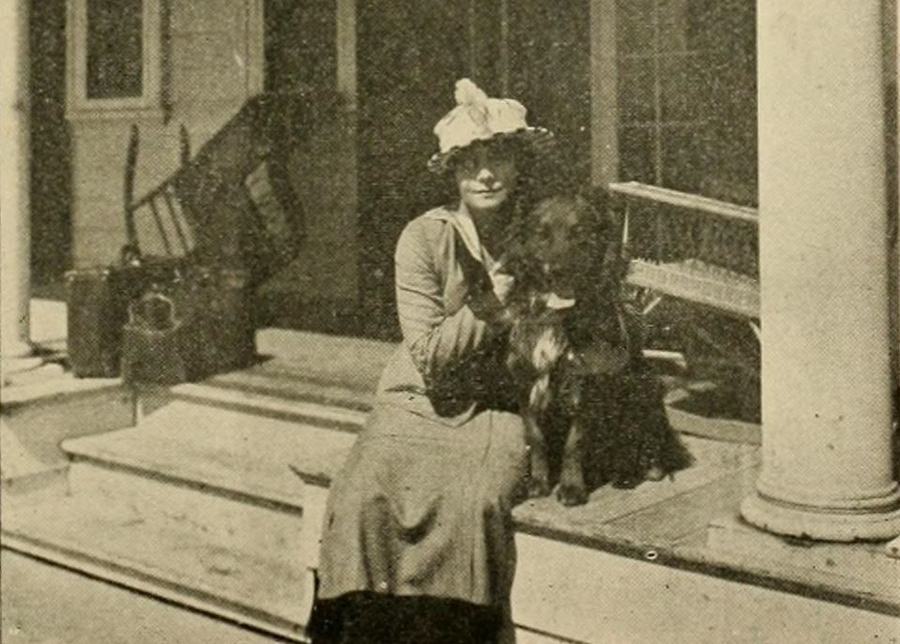
Dir: Oscar Apfel
Nicknamed "Wild Olive," Miriam Strange learns that her mother was an Indian, she moves to a hut near an Allegheny lumber camp. Norrie Ford, fresh from college, visits his uncle, the bullying boss of the camp, and meets Miriam. After his uncle is murdered with a knife found hidden under Norrie's mattress, Norrie is sentenced to die. He escapes a guard and, after staying a night in Miriam's hut, leaves for Buenos Aires with her letter of introduction for employment. Although he vowed to marry her, after his letters to "Wild Olive" return undelivered, Norrie, sporting a beard and an assumed name, becomes engaged to Evie Wayne, Miriam's stepsister. When Norrie is sent to be his firm's New York manager, he meets Miriam again. She sacrifices her love and agrees to marry lawyer Charles Conquest, if he will prove Norrie's innocence. After Evie learns about Norrie's past and breaks the engagement, the murderer makes a deathbed confession. Conquest releases Miriam when he sees that she loves Norrie.
View Details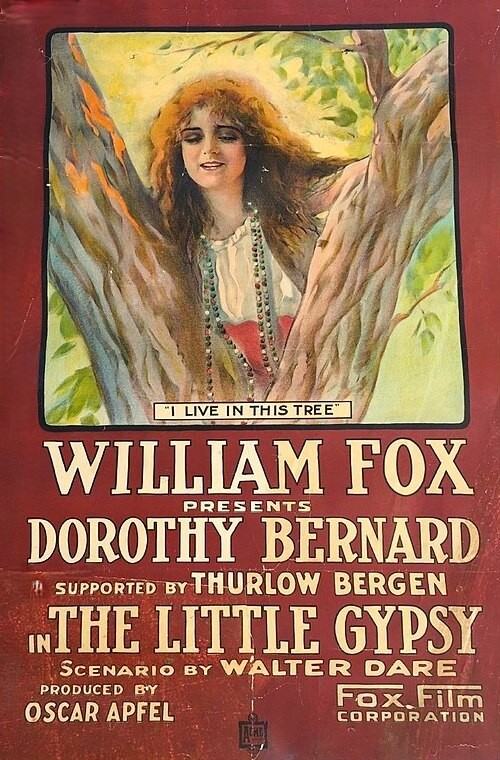
Dir: Oscar Apfel
A gypsy girl brought up by a Scottish Lord is arrested for rioting escapes jail and refugee with a young Minister who falls in love with her.
View Details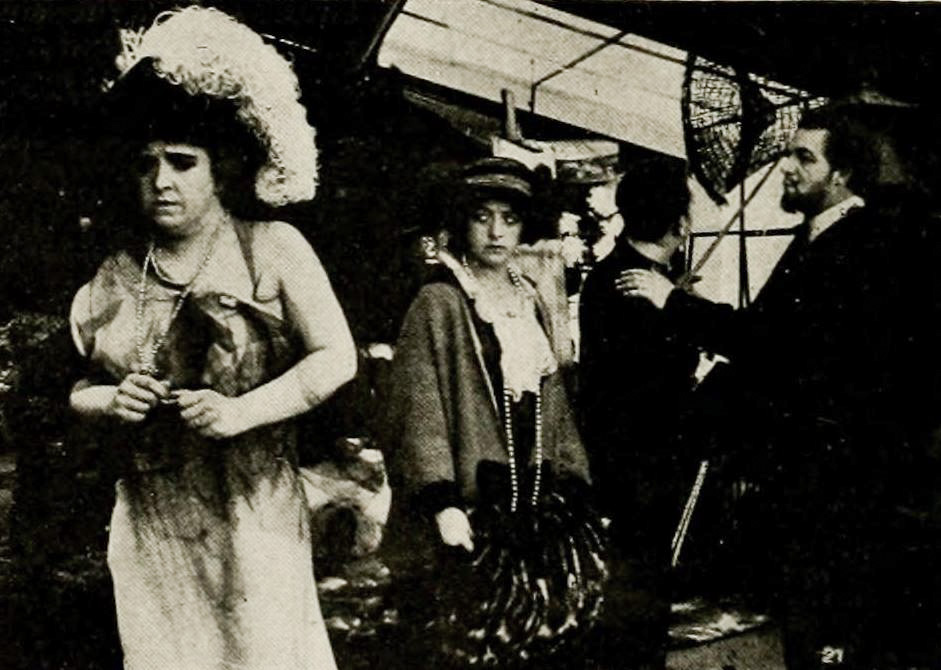
Dir: Oscar Apfel
Thomas Brainerd, Sr., as a prospector, is a dutiful and loving husband and father. Two children, Gertrude and Thomas, Jr., are born while the Brainerds live in a log cabin in the mountains. Brainerd strikes gold, goes to New York, where he becomes a financial power. He neglects his wife, devotes every moment of his time to his growing industries, simply supplies funds to his family, and his wife, alone and melancholy, is fascinated by an artist and consents to "sit" for a painting. Feeling her neglect keenly, Mrs. Brainerd becomes a victim to the wiles of the artist, who, however, is killed by the husband of a former victim before the affair has progressed too far. Brainerd, learning of his wife's affair with the artist, orders her from the house. Thomas, Jr. sides with and accompanies his mother. Heretofore a worthless spendthrift, Thomas now becomes ambitious and joins interest with a penniless inventor, goes west, establishes a factory, makes a go of it, sells out to his father at an enormous advance, convinces his father that his mother is innocent and, as he transfers the invention to his father's firm, sees his mother in his father's arms, which example he immediately follows by proposing to the girl he has always loved.
View Details
Dir: Oscar Apfel
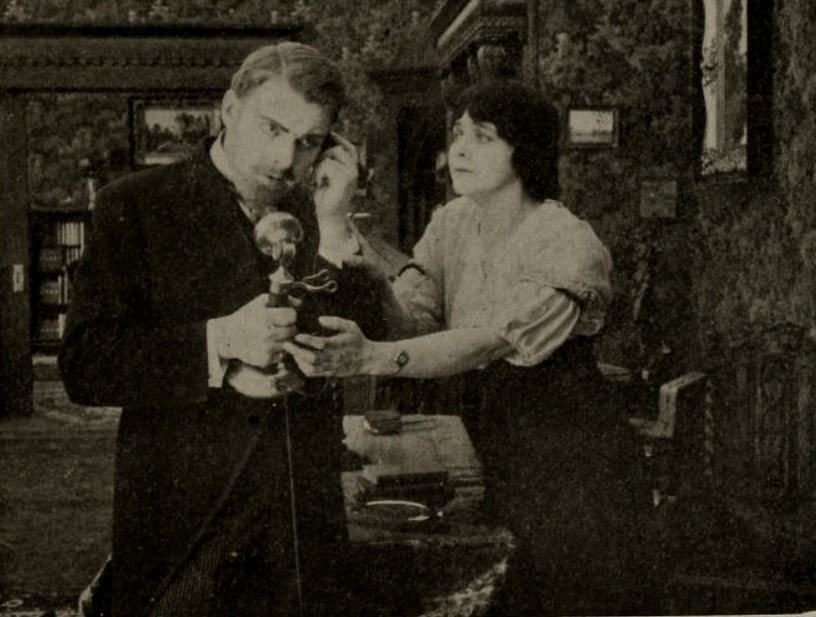
Ted Ewing, a young New Yorker, is the guardian of Nora Hildreth, with whom he is in love. He invests her fortune of $50,000 and an equal amount of his own money (constituting almost his entire property) in a stock exchange speculation. When this speculation apparently fails he seeks to reimburse the girl by taking out a life insurance policy in her favor and then killing himself. But, as the policy has a clause invalidating it in case of suicide, he has to arrange an "accidental death" for himself, and, to this end, enters into an arrangement with the chief of the S.S.S., a blackmailing society which has already threatened his life. The humorous complications really begin when it develops that the money has not been lost but doubled, so that Ted, instead of wishing to die, has every reason imaginable for wishing to live. It is, however, almost impossible to break his sworn pact with the S.S.S. and his own Japanese valet, to whom he gave the money to pay for his death, refuses to divert the money from the one use to which it has been pledged. The manner in which Ted manages to escape from his own plots against his own life, and the details of his romance with Nora form the concluding episodes of this highly amusing photodrama.
View Details
Dir: Oscar Apfel
Robert Brewster, scion of a well-to-do family, elopes with Louise Sedgewick. Peter Brewster disinherits Robert and refuses to be reconciled to the marriage, and later drives the young couple from their home. A little son, "Monty," blesses the union. When Monty is a full-grown man, Peter Brewster dies and bequeaths a million dollars to him. The newly-acquired wealth staggers young Monty Brewster, and he is about to launch into the new life as one of the predatory rich when he receives a communication from an attorney in the West, advising him that his uncle, George Brewster, has left him $7 million, contingent upon his getting rid of the million dollars left him by Peter Brewster. "Peter Brewster mistreated your mother and father and I do not want you to touch a dollar of his money. If you spend the million left to you by him and can, at the end of a year, show by receipts that you have judiciously spent, not squandered this million dollars, my attorneys will turn over to you my worldly possessions, aggregating seven millions. You must own nothing of value at the end of the year," said George Brewster, and Monty, learning for the first time that Peter Brewster had mistreated his parents, begins to spend the million. He invests the money in a sure losing proposition in Wall Street in an effort to dispose of some of his unwelcome money, and the proposition turns out a winner. He backs a flabby fat pugilist, hoping to lose, and wins. There is a clause in the will of George Brewster which says that Monty must not tell anyone of his desire to spend the million and his friends think he has suddenly lost his mind. Everything Monty touches with the hope of losing some of his money, turns out just the reverse, and he wins. He has a most terrible time disposing of the undesired millions. Finally, in a desperate attempt at magnificent spending, Monty hires a palatial yacht, invites several dozen friends to accompany him and goes on a long cruise. The friends mutiny in mid-ocean, thinking him suddenly insane the way he is squandering his wealth, and threaten to lock Monty up, but Monty, to frustrate them, runs up a signal of distress. It costs him two hundred thousand dollars to be salvaged by a passing steamer, and the end of the year rolls around with Monty flat broke. He has squandered the entire million dollars, possesses a room full of receipts to show for every dollar spent, and his sweetheart, Peggy, believing him to be a pauper, consents to marry him. His friends, believing him broke, endeavor to press money and jewelry upon him, all of which he must not have in his possession or he loses the seven million. He dodges his friends, is met by the attorney and presented with seven million dollars, and everything turns out happily.
View Details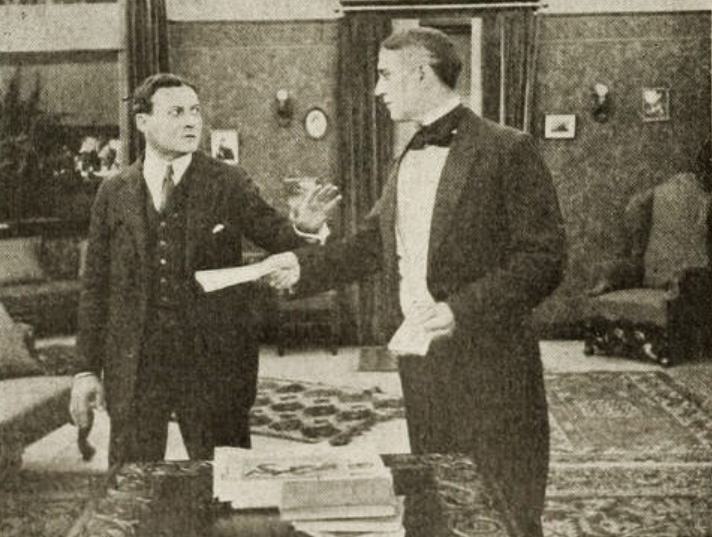
Dir: Oscar Apfel
Steve Baird travels West, and with miner Mike Reardon, buys an abandoned mine called The Skyrocket. Hoping to raise money to cover his notes, Steve goes to New York where he meets forger Jackson Ives. Ives gives Steve $50,000 in counterfeit money for stock in the mine just before the notes are due. When Grace Tyler and other wealthy friends see the money they also buy stock, believing that Steve is a success. Meanwhile, neighboring mine owner James Morgan discovers that The Skyrocket contains gold, and he sets off an explosion, hoping to kill Mike before he discovers it. Instead of killing Mike, the explosion uncovers the gold and everyone becomes wealthy, including Ives who now has the money to make his forgeries good. At the end, Steve and Grace are married with Ives as best man.
View DetailsAnalysis relative to The Grouch
| Film Title | Atmosphere | Complexity | Similarity |
|---|---|---|---|
| Peer Gynt | Gothic | Dense | 91% Match |
| The Rug Maker's Daughter | Gritty | Dense | 95% Match |
| Kilmeny | Gothic | Linear | 85% Match |
| A Soldier's Oath | Ethereal | Dense | 92% Match |
| The Wild Olive | Gritty | High | 92% Match |
This guide was algorithmically generated using the cinematic metadata of Oscar Apfel's archive. Last updated: 6/20/2026.
Back to The Grouch Details →