
DbcultAccessing Vault...
Recommendations
Senior Film Conservator
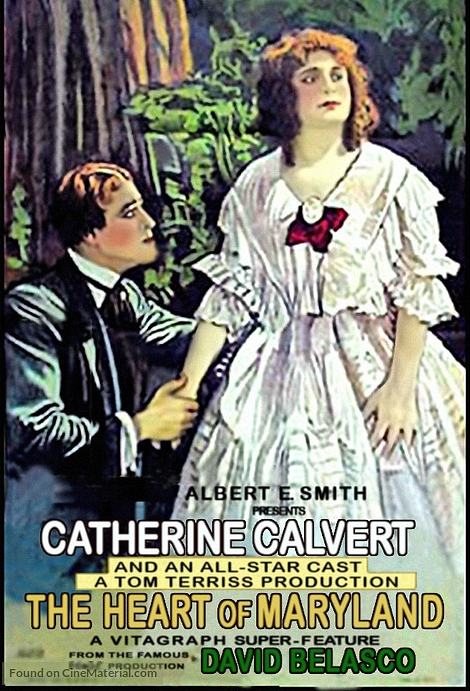
If the nuanced performance of Tom Terriss's work in The Heart of Maryland left an impression, the cinematic shorthand used by Tom Terriss is both ancient and revolutionary. We've prioritized films that capture the 1921 aesthetic with similar precision.
By merging nuanced performance with Drama tropes, it to articulate the unspoken anxieties of United States's 1921 era.
When the Civil War breaks out, Alan Kendrick, an army officer born in the South, stays in the army to fight for the Union, but his sweetheart Maryland sides with the South. She soon discovers that Alan was captured by Confederates in a battle near her home and is to be executed. Although he's fighting for her enemy, she can't bring herself to let him be killed and devises a plan to help him escape.
Based on the unique nuanced performance of The Heart of Maryland, our vault has identified these titles as the most compelling follow-up experiences for fans of Drama cinema:
Dir: Tom Terriss
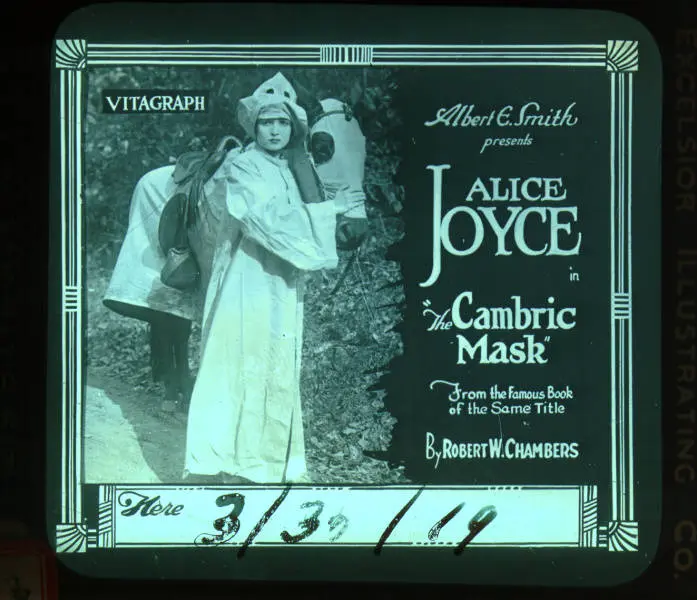
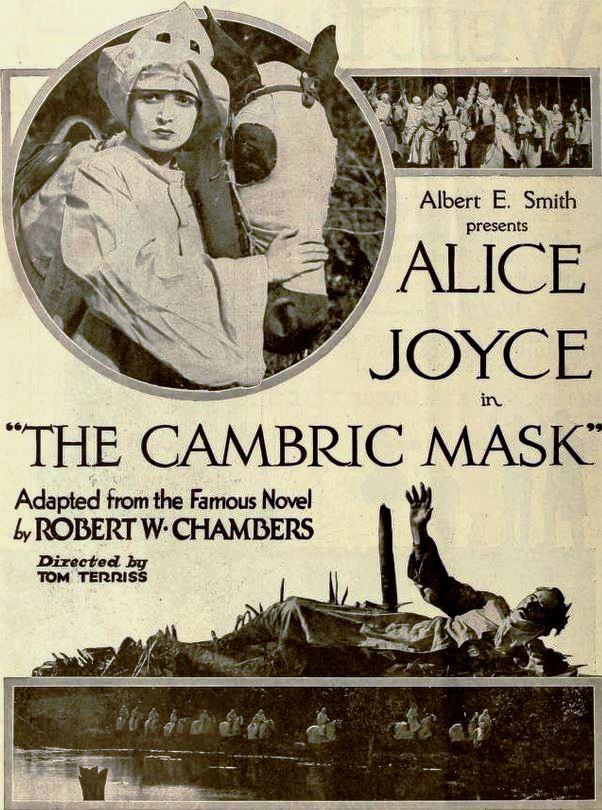
John Sark is the owner of a piece of land coveted by Henry Murden, leader of the band of "White Riders," who has purloined the information that a railroad wishes to buy the property. Sark is a naturalist and has for an assistant Rose Ember. He discovers one of the rider's masks which is made of one of Rose's handkerchiefs, and this introduces a mysterious element into the love affair. The mask belonged to her father. The riders try to force Sark's hand, but are obliged to capture him. Rose, seeing Sark lead away, dons a mask and riding close to his horse, cuts his bonds. Sark kills Murden, and, finding that his savior was Rose, is once more happy in his love. - Moving Picture World 1919.
View Details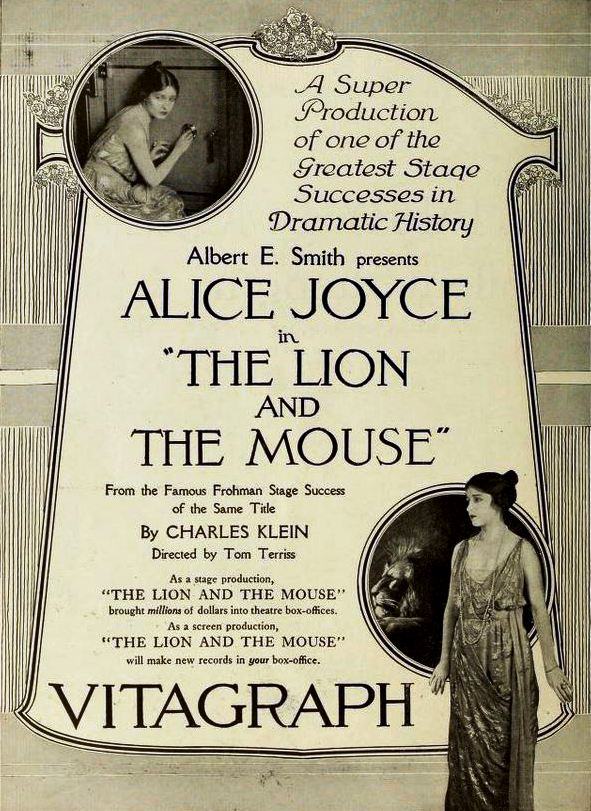
Dir: Tom Terriss
John Burkett Ryder, "the richest man in the world," determines to discredit a judicial decision which works against the interest of his millions by discrediting its author, Judge Rossmore, and causes impeachment charges to be laid against him in Congress. The judge's daughter Shirley Rossmore, learns of his trouble and returns home from Paris, where she has won success as a writer. She is loved by Jefferson Ryder, son of the magnate who is slowly killing her father. Determined to force the millionaire's hand, she publishes "The American Octopus" under a pseudonym, using Burkett's character as the central figure. He is attracted by the book and brings Shirley, whom he knows as Sarah Green, to his home to write his biography. This is the opportunity she is seeking, as it gives her a chance to obtain the two letters which will clear her father's name. Jefferson Ryder helps her secure the desired papers, but his father catches him and denounces him as a thief. Shirley, who loves Jefferson, cannot stand to see him so branded and confesses her identity to his father. The "Lion" had long since been won by the charm of the "Mouse," and the story is cleared up in pleasing style. - Moving Picture World 1919.
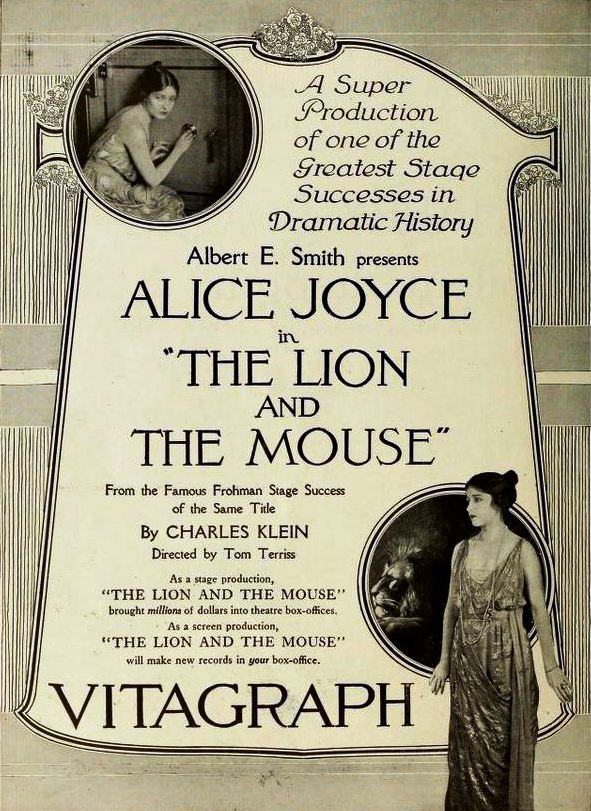

Dir: Tom Terriss
William Lanyon, a West Indian planter, dies and leaves all his estate to his nephew, Dick Lorient, a New York society rounder, who is engaged to be married to his cousin, Dulcie Lanyon. Dick leaves to inspect his property and John Stark, the overseer, to whom the estate has been left in the event of Dick's death, conspires to gain possession of the property. In Jamaica, Dick meets the "Woman," and in the Flame of Passion, passes through rushing waters and fires of hell. How he escapes the siren's deadly fascination and the villainous scheming of Stark is depicted herein.
View Details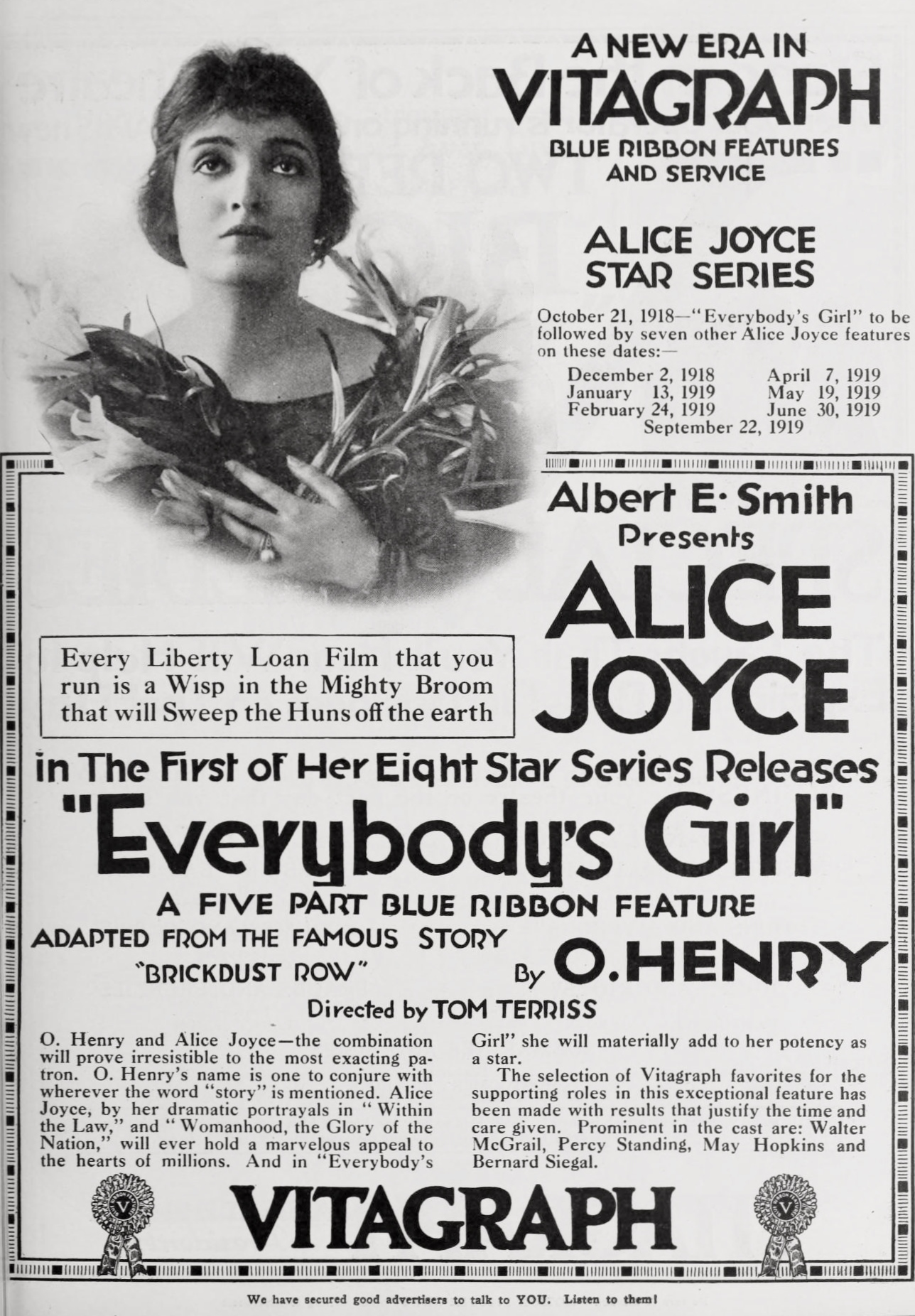
Dir: Tom Terriss
Florence is a little milliner who shares a room in "Brick Dust Row" with Ella, a fellow worker. It is all the home she has and the girls have to receive their company in the parks because there is no reception room, the millionaire owner of the Row having sublet the parlors. They see no harm in chance acquaintances. Then Florence meets Blinker, and real love comes into her life; but Blinker learns of what to him seems her promiscuous acquaintances and makes it plain that he cannot marry such a woman. There is a fire on the excursion boat on which they are traveling, and Bill, a gun-packing husky, who has constituted himself Florence's champion, saves them both. Then he learns Blinker's attitude, and a visit to the young millionaire owner of the Roy shows Blinker that his own greed is basis for Florence's actions and a changed Row is Florence's wedding present. - Moving Picture World 1918.

Dir: Tom Terriss
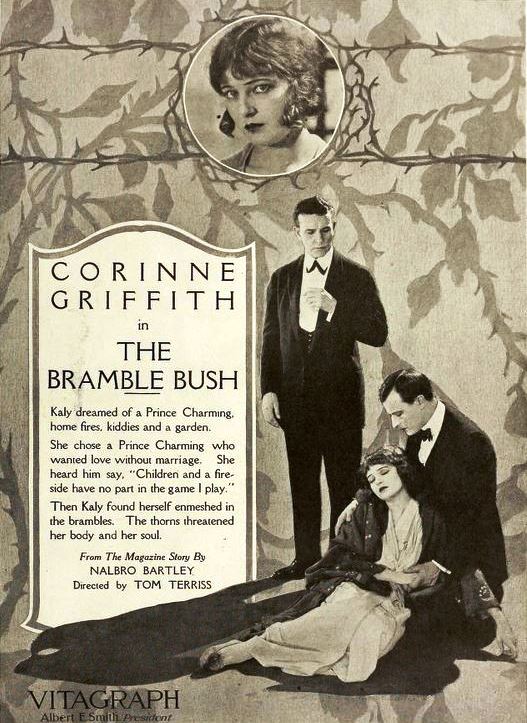
Innocent Kaly Dial comes to New York from the Cumberland Mountains and gets employment at a fashionable dress shop owned by a friend of her deceased mother. Peter Vernon, the brother of the owner, falls in love with her, but Kaly becomes attracted to suave John Crispen, not knowing of his reputation as a Lothario and his shady business deals. Crispen scoffs at conventional marriage and rearing children, preferring "comradeship," while Vernon offers marriage. Kaly finds herself attracted to Crispen's unconventionality and, believing that he loves her, goes with him to a hotel, but soon realizes that his love is not right and asks to be taken back. Crispen complies even though he knows he will face imprisonment when he returns. Vernon takes Crispen's case and after finding out that Crispen is already married, gets him off with the promise that he will never see Kaly again. After a year, Kaly falls in love with Vernon and they are married.
View Details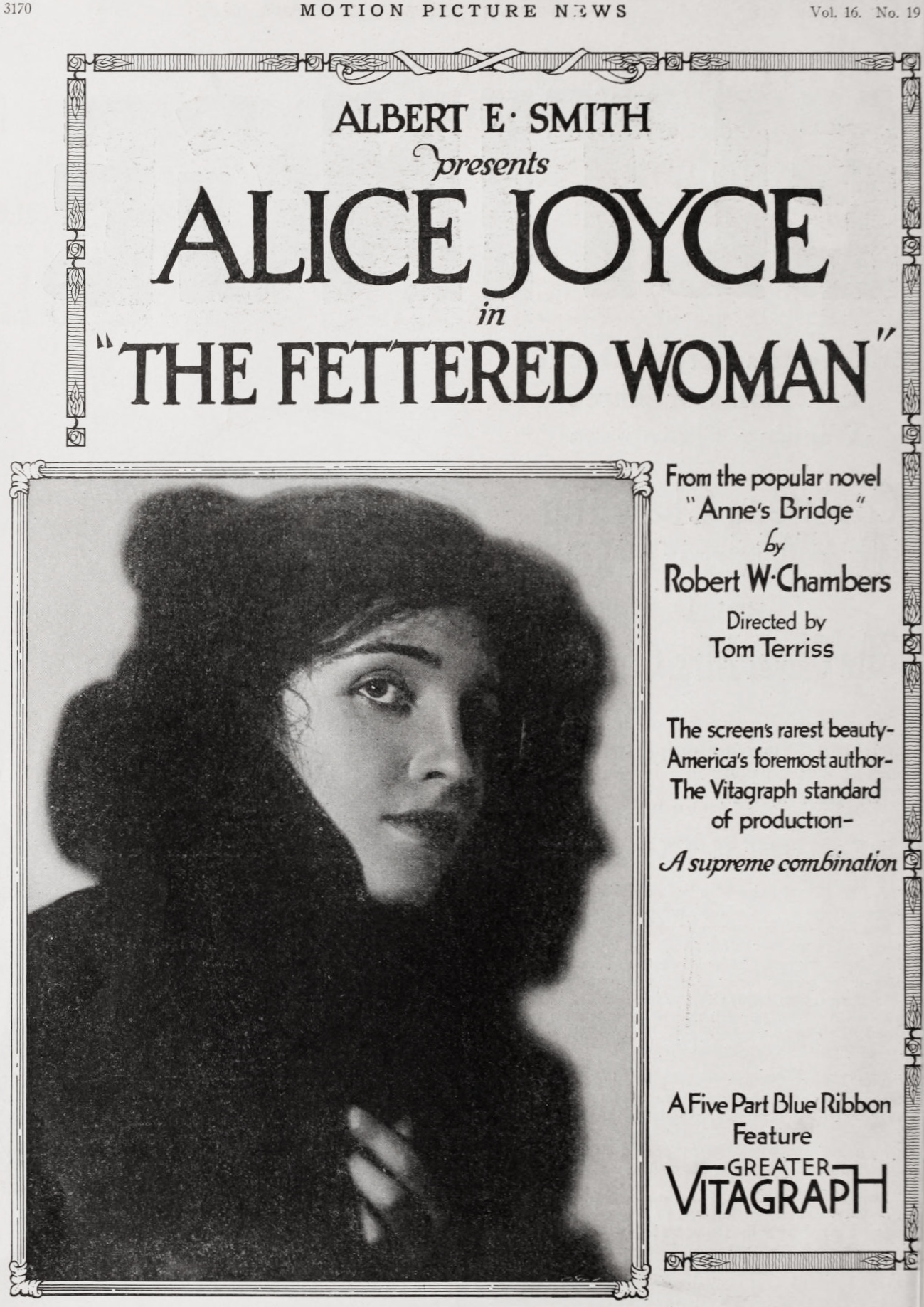
Dir: Tom Terriss
The story is of Angelina Allende, who is left an orphan by the suicide of her father, a real-estate visionary who has beggared not only himself but his friends in a vain attempt to "boom" the deserted hamlet of Anne's Bridge. Receiving news of his death, Angelina returns home, where she is presently inveigled into a trip to New York by two men, one of whom wants the property and the other of whom wants Angelina. In a restaurant scene which follows, Bink, the elder of the conspirators, makes advances to Angelina, is repulsed and then is shot by Wolver his fellow conspirator. The police enter, Angelina is accused of the shooting, and she is sentenced at length to a three-years' term in a home for delinquent girls. Emerging at the expiration of her sentence, she returns to Anne's Bridge. Here, in the lonely days that follow, she advertises for boarders and is at last rewarded by the appearance of James Deane. It is here that the love story begins; and it progresses until Angelina is cleared, through Deane's efforts, and, finally, is free to marry him. - New York Dramatic Mirror, November 10, 1917.
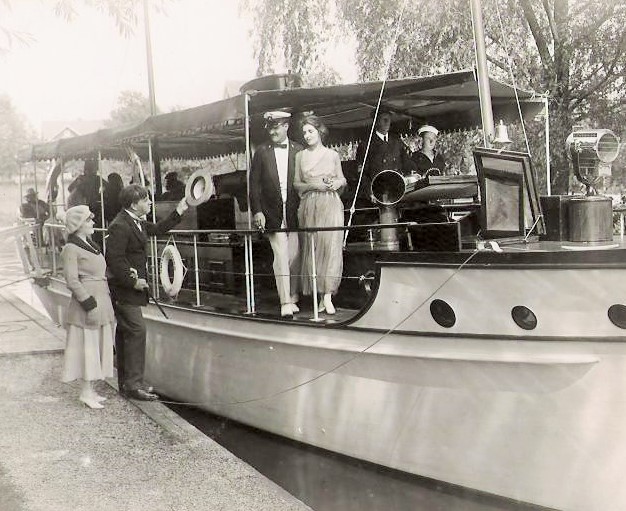
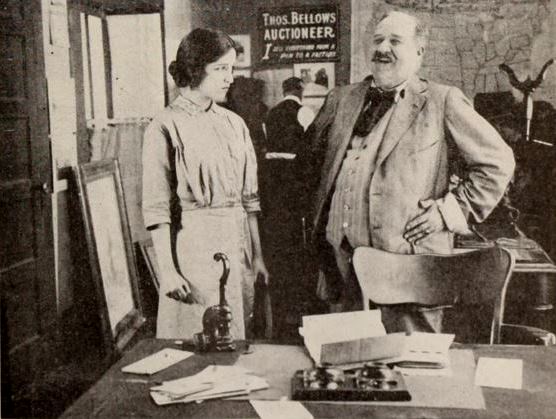
Dir: Tom Terriss
The story concerns a young girl who spends her entire life in trying to obtain money to pay off the mortgage on her farm. But the day comes when she can no longer meet the claims, and Jarvis, the man who holds the mortgage, gives her the alternative of selling herself to him in return for the land. She spurns his offer, but adopts a plan to sell herself in service for one year to the highest bidder. Her old sweetheart arrives too late to save her and later proves that he was not worthy of her. The year passes without her "master" claiming her. Then the girl learns that Jarvis had bought her services because he had really loved her and she, having learned to care for him, marries him. - New York Dramatic Mirror, July 27, 1918.
View Details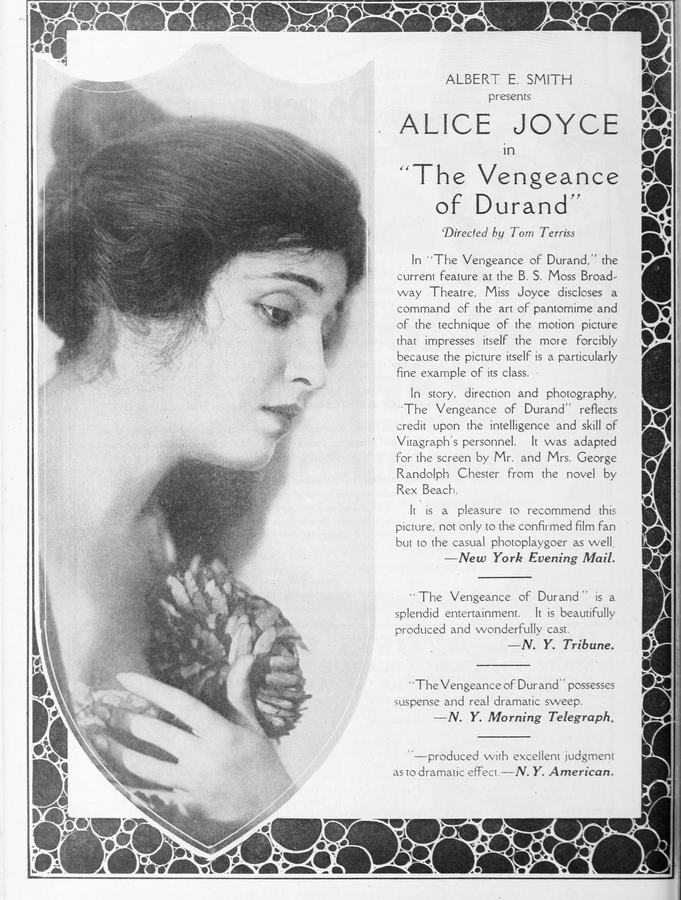
Dir: Tom Terriss
Henri Durand of the French nobility is insanely jealous of his beautiful American wife Marion's innocent conversations with her many male admirers. Durand provokes her suicide when, egged on by a rejected suitor of Marion's, he accuses her of having illicit relations with her visiting childhood friend, Tom Franklin. Twelve years later, when Tom returns after a long expedition, the vengeful Durand coaches his daughter Beatrice, who resembles Marion, to court Tom. After they become engaged, Durand forces Beatrice to flirt with other men, but when Tom, overcome with jealousy, is about to kill himself, Beatrice admits her real love for him. Durand is at first furious with Beatrice's supposed betrayal, but he is pacified when he receives a confession from Marion's refused suitor that absolves Tom of any guilt. Durand then permits the marriage of Beatrice and Tom.

Dir: Tom Terriss
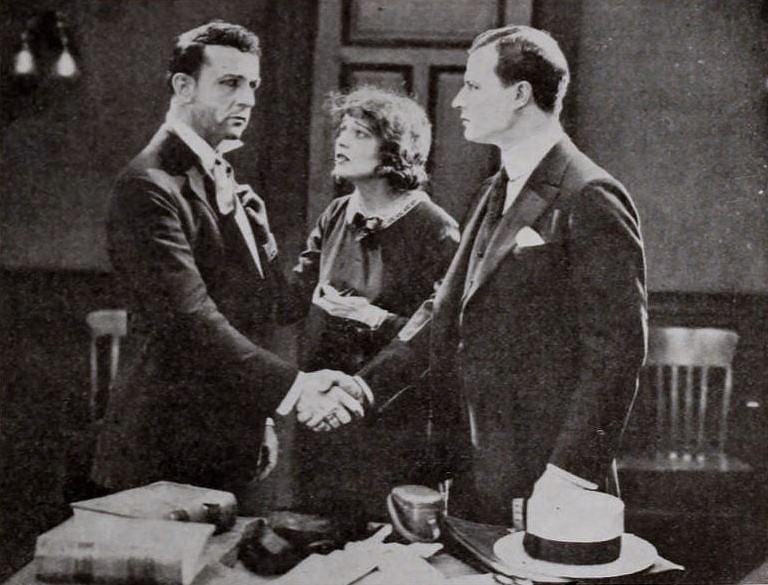
The opening picture finds Edith (Alice Joyce) in prison where she has been for the last three years. She is a widow and her baby has been placed in an institution. She is paroled, finds her child and steals him from the asylum. After wandering around she finally obtains a position in a department store, where Jim Roberts, superintendent, falls in love with her. They are married, but she fails to tell him of her past. Mabel, also freed from prison, demands that Edith join with her and her side partner in a crime, under threat of exposing her past to Jim. Jordan, a friend of Jim's visits them. He is a detective, and recognizes Edith as a former thief. Further to involve her, Mable, hiding from the police, forces Edith to give her refuge in her home, where she immediately proceeds to steal everything in sight, money being her particular passion. Jordan tells Jim he is harboring a thief and he tells Edith she must leave, but Edith, still fearing Mabel, confesses to the theft of money and Mable is allowed to stay. The two men then plan to trap Mable by placing $400 in a desk. As Edith takes the money from the desk, lights are flashed on and she stands before the two men as the thief. The distracted girl now tells her husband of her first theft to save her baby and of her present attempt to keep her past from him. The men have a battle, the detective gets badly beaten up, but is moved by her great courage, gives her back to Jim and the child and through his efforts she obtains a free pardon. - Review from Variety, May 10, 1918.
View Details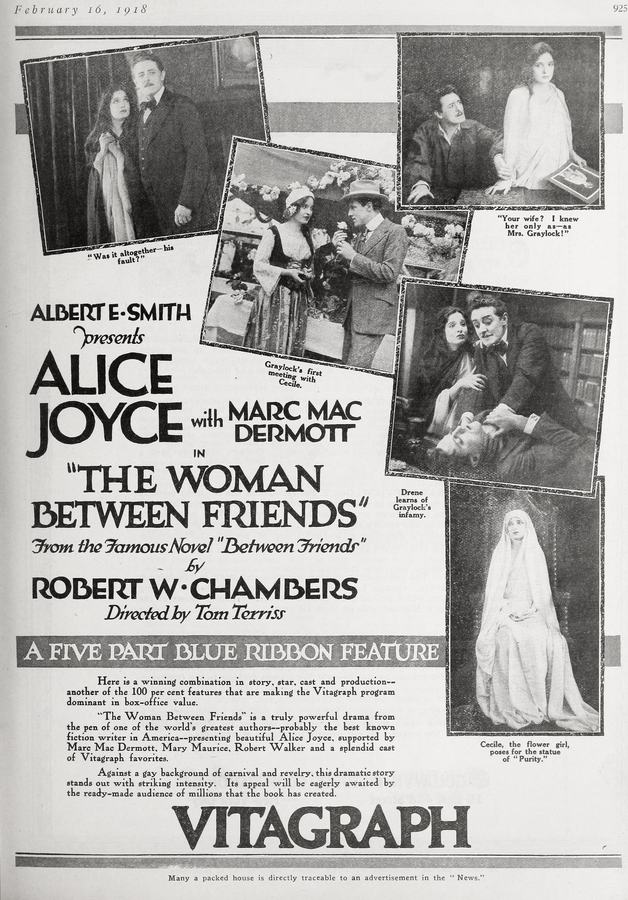
Dir: Tom Terriss
The friends of the story are John Drene, a sculptor, and Jack Graylock, a painter. Both men swear eternal friendship on the night before Drene's marriage. Later on the artist runs away with the sculptor's wife. The couple tire of each other, and the woman becomes an outcast. Then Graylock falls honestly in love with a flower girl, one of those sweetly innocent young women found in romance of the Chambers school Her name is Cecelie, and she follows the painter back to Paris. He installs her with the housekeeper of the studios where he lives, and introduces her to Drene, who is at once inspired to employ her as the model for a half completed statue posed by his wife. Drene, who was present when the runaway woman paid for her folly be being accidentally burned to death, has never suspected his friend, but Cecelie unintentionally betrays him. Drene is filled with a determination to kill Graylock at once. He then concludes that this would not be sufficient punishment, and informs the artist that on a certain day he must shoot himself or be killed. As a further revenge, Drene makes up his mind to wind Cecelie away from Graylock. He starts to put his plan in operation, not knowing that the girl has already fallen in love with him. Her gentleness and devotion soften his heart toward his one time friend, and he tries to prevent Graylock from carrying out the compact. The artist fires the shot as agreed, but only wounds himself, and Drene finds peace and happiness with Cecelie. - Moving Picture World.
View DetailsAnalysis relative to The Heart of Maryland
| Film Title | Atmosphere | Complexity | Similarity |
|---|---|---|---|
| The Cambric Mask | Gothic | Layered | 96% Match |
| The Lion and the Mouse | Gothic | Linear | 97% Match |
| The Flame of Passion | Surreal | Linear | 95% Match |
| Everybody's Girl | Gritty | Abstract | 87% Match |
| The Bramble Bush | Surreal | Abstract | 98% Match |
This guide was algorithmically generated using the cinematic metadata of Tom Terriss's archive. Last updated: 6/27/2026.
Back to The Heart of Maryland Details →