
DbcultAccessing Vault...
Recommendations
Senior Film Conservator
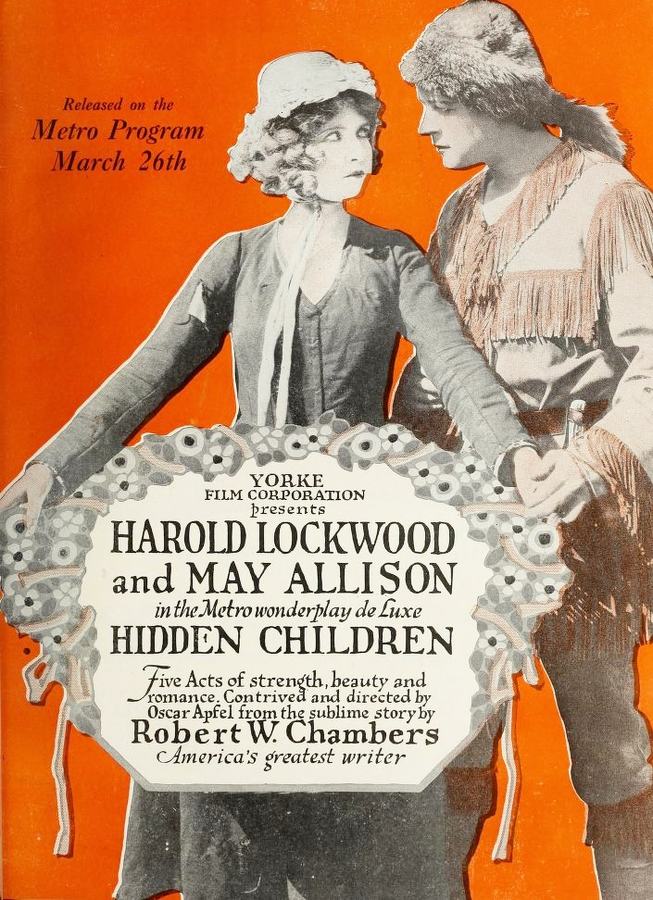
Since its 1917 debut, The Hidden Children has maintained a unique vision status, you are likely searching for more films that share its specific artistic vision. We have meticulously scanned our vault to find hidden gems that resonate with this work.
The 1917 landscape was forever altered by the arrival of to push the boundaries of conventional storytelling.
Two women unknown to each other, in the early history of the nation, decide to make of their babies "hidden children," in accordance with the Indian custom of giving children to foster-parents until maturity. A girl and a boy thus "hidden," when informed of the truth, returned to their people and were expected by marrying to bring a fresh spirit into the tribe. Marie Loskiel, hard beset by the St. Regis Indians, gives her child, Euan, before she dies, to Guy Johnson, an English Colonial officer. He and Mayaro, a Sagamore of the Mohicans, who is Johnson's chief scout, take charge of the child. Jeanne de Contrecoeur, wife of the commandant of the French garrison at Lake George, amuses the officers and their wives by her gift of clairvoyance. She implores her husband not to go out to battle with the Indians, as she has a premonition that he will be killed, and that the child to be born will never know a father. But duty calls Capt. de Contrecoeur, and he is slain by the Iroquois. Jeanne herself is captured by them, and taken to the stronghold of the Six Nations at Catherinestown. The Erie sorcerer Amochol is about to sacrifice Jeanne's new-born daughter, Lois, to the Moon Witch, but she makes of Lois a "hidden child," sending her to a colonist named Calvert. Jeanne is about to be killed by Amochol when she correctly interprets a dream for him, and she becomes the White Sorceress of the Iroquois. Each year Jeanne sends secretly to little Lois a pair of moccasins, embroidered with a symbol indicating that she is a hidden child. Calvert cannot read the inscription, but when he dies he tells Lois of her origin, and it becomes the girl's one thought to find the trail to Catherinestown where her mother is held captive. Euan Loskiel, grown to manhood, is given a commission in Morgan's rifles as Lieutenant and Chief of Indian Scouts. General Sullivan wishes to crush the tribes of the Six Nations in the "Long House" of the Iroquois Confederacy, and the only man who can lead him to Catherinestown is Mayaro the Sagamore, whom Euan brings to the General, and the Sagamore becomes the trusted messenger of the northern Colonial army. Lois disguises herself as a camp-follower in rags to follow Euan, Mayaro and Lieut. Boyd to Catherinestown. Mayaro saves her from the insults of a drunken officer, and though she has thus far distrusted all men, she has complete faith in the Sagamore. He reads the message of the moccasins, discovering that she is a hidden child, and protects her from all the mischances of the journey. Euan Loskiel falls in love with this strange girl in rags, but it is with difficulty that he wins her confidence, since, wandering alone since Calvert's death, she has seen nothing but the baser side of men's natures. Finally, however, her fears are stilled by Euan's nobility of character, and she, Euan and Mayaro, become close friends, the red man and Euan going through the sacred ceremonial of the blood brotherhood. Lois at last confesses her love for Euan, but will not permit his caresses until she has found her mother. She undertakes the perilous journey into the heart of the Iroquois empire, following the army secretly, since they will not consent to her accompanying them on such a dangerous mission. Mayaro, who shares the secret, blazes the trail so that she may find the way. When she overtakes them, the Indians insist that the ceremony of the White Bridal be performed over these two sacred "hidden children," Lois and Euan. They reach Catherinestown in time to witness the Feast of the Dreams. Amochol is about to put the White Sorceress of the Iroquois (Jeanne de Contrecoeur) to death for interpreting ill fortune. Her prediction comes true when the warriors of the Six Nations defeated by Sullivan's men return. The executioner is about to strike her when his arm is transfixed by a shaft from Mayaro's bow. The priests take Jeanne prisoner, but Euan and Mayaro, following them to the Vale Yndaia, kill them and rescue her, and Mayaro slays Amochol in hand-to-hand combat. Lois is at last folded in the arms of the mother who has watched and waited for her all these years, and then Jeanne de Contrecoeur, having been reunited with her "hidden child," puts her hand in that of the gallant scout, Euan Loskiel, and their White Bridal is completed.
The influence of Oscar Apfel in The Hidden Children can be felt in the way modern cult films handle unique vision. From the specific lighting choices to the pacing, this 1917 release set a high bar for atmospheric immersion.
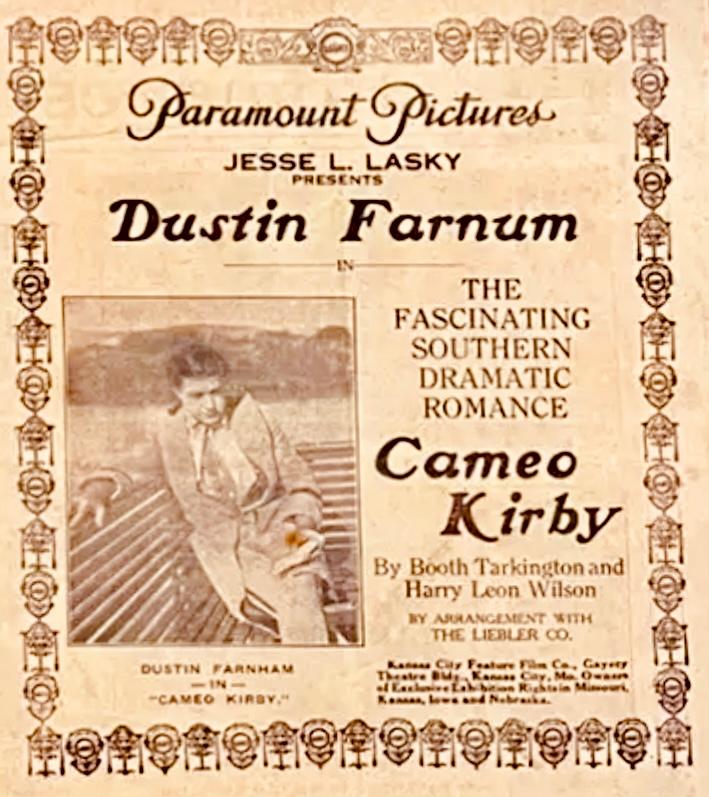
Based on the unique unique vision of The Hidden Children, our vault has identified these titles as the most compelling follow-up experiences for fans of cult cinema:
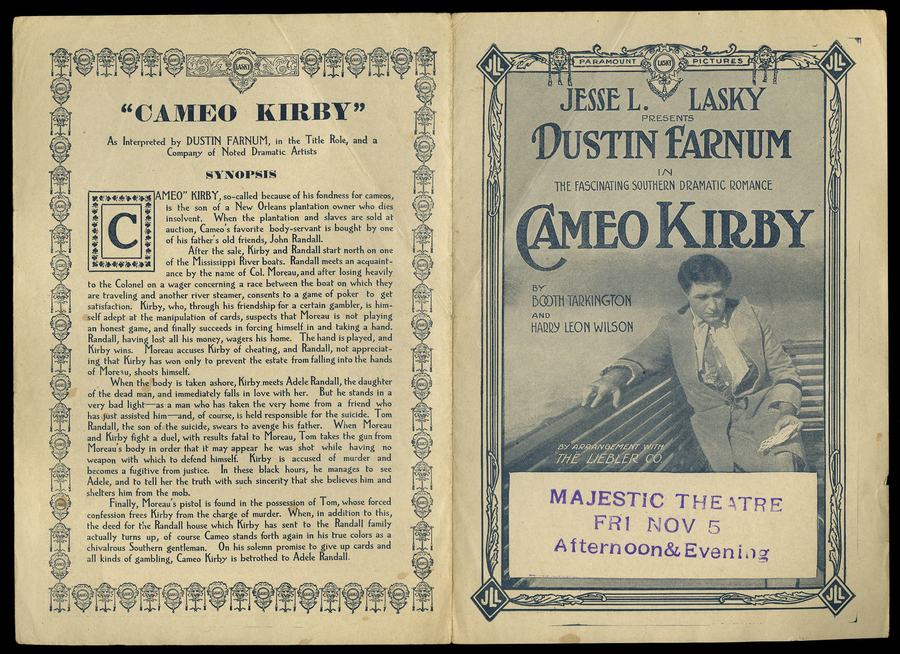
Dir: Oscar Apfel
"Cameo" Kirby, so called because of his fondness for cameos, is the son of a New Orleans plantation owner who dies insolvent. When the plantation and slaves are sold at auction, Cameo's favorite body-servant is bought at auction by one of his father's friends, John Randall. John and Kirby head north on a Mississippi river boat where Randall meets Colonel Moreau. There he loses heavily on a wager and consents to a game of poker hoping to get back his losses. Kirby, through his friendship with another gambler, is adept at the manipulation of cards and suspects that Moreau is not an honest player. He joins the game and soon Randall, having lost all of his money, wagers the old homestead. Kirby wins the hand and Moreau accuses him of cheating while Randall, unappreciative of the fact that Kirby won the hand to keep Randall's estate falling into Moreau's hands, shoots himself. When his body is taken ashore, Kirby meets Randall's daughter, Adele, and instantly falls in love with her. But Kirby is on very shaky ground as he is known as the man who caused Adele's father to commit suicide, and she treats him to some southern disdain. Her brother, Tom, vows to take revenge on Kirby. He and Moreau have an un-witnessed duel and Colonel is shot dead by Kirby, who is somewhat of a dead shot among his many other talents. But Tom takes the gun from Moreau's hand so it will appear he was unarmed. Kirby, slave-owner becomes a fugitive from justice. This also deals a blow to his courtship of Adele. But, a true-blue southern gentleman such as Kirby should be able to win the day, sooner or later.
View Details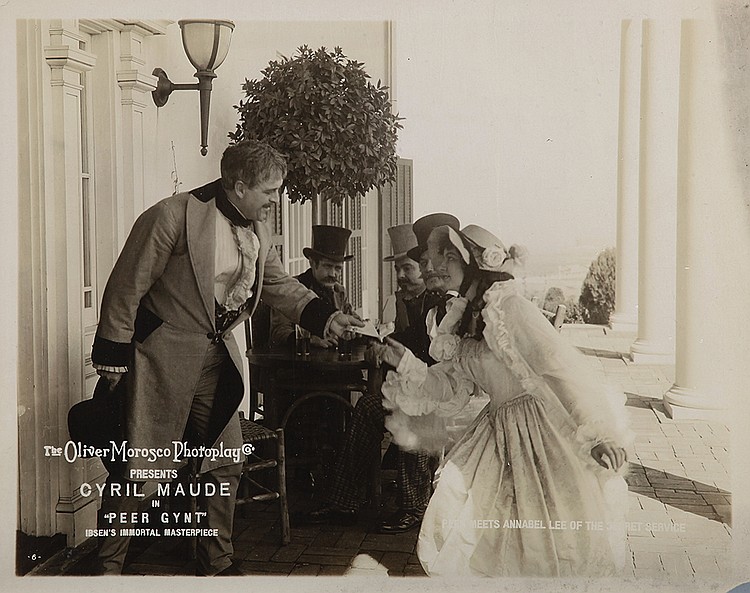
Dir: Oscar Apfel
A fantasy from Ibsen's verse drama. Ne'er-do-well and braggart Peer Gynt has many adventures in varied countries, making and losing money, gaining fortune at others' expense, until he finds salvation in the love of Solveig.
View Details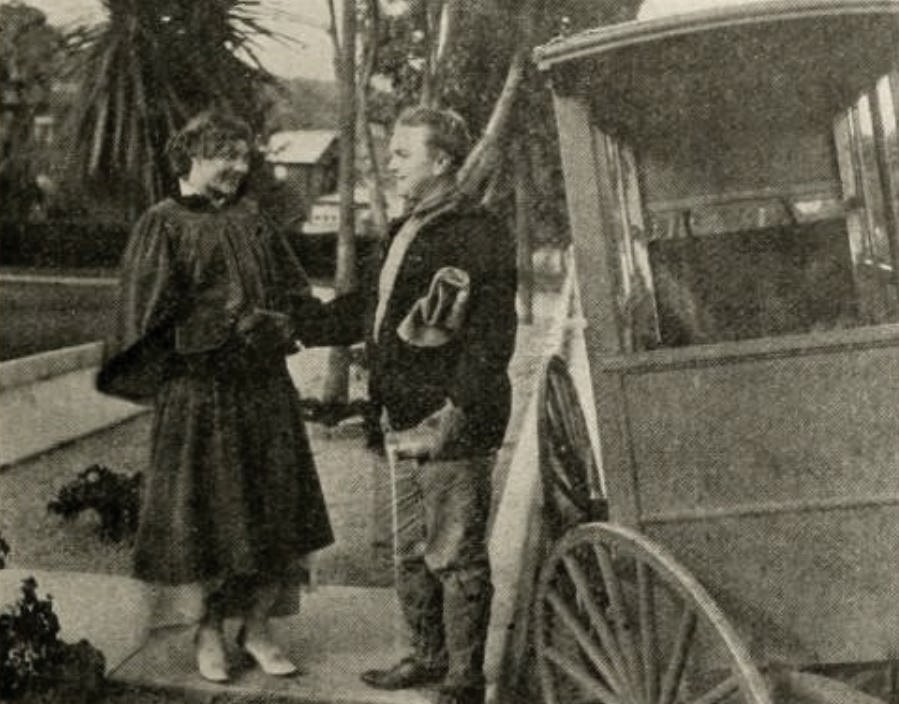
Dir: Oscar Apfel
Henry Disney, a milkman residing in a small city, is discovered by Phipps, a lawyer, to be the heir to the title and fortune of the Duke of Walshire. Phipps and his sister Laura, being pressed for money and anxious to maintain their social position, conspire to arrange a marriage between the sister and the milkman before he knows that he is the Duke. Phipps has Disney assaulted and arranges to be near in order to rescue him and take him to the Phipps house. In the meantime, however, Disney has met Ethel Hamilton, one of the young social leaders of the town, and has fallen in love with her, although he doesn't dare to speak of his love on account of the great difference in their social positions. His love for Ethel, however, prevents him from falling victim to Laura's wiles, and he finally escapes from Phipps' house, where they are trying to keep him on the pretense that he is very ill. He then discovers that he is the Duke. The efforts of the milkman to be a Duke and to win the girl he loves lead to many humorous complications, and, finally at a ball which the milkman gives in honor of Ethel, his conduct so displeases her that she refuses his love and tells him very plainly that the social snobs who have been fawning upon him on account of his title have been making a fool of him. The milkman then begins to see a great light, and, after resenting an insult to Ethel by one of the snobs, takes occasion to tell them what he thinks of them. The dance breaks up in confusion and the milkman, sore at heart, sees that he is being used by the snobs, while they are making fun of him behind his back. He renounces his wealth and title and goes back to his milk route, where Ethel finds him. He agrees to do this on condition that Ethel will act as his instructor and teach him how to be a Duke. This she finally consents to do and he drives her home in the milk wagon, after an understanding between them which promises a happy ending to his love story.
View Details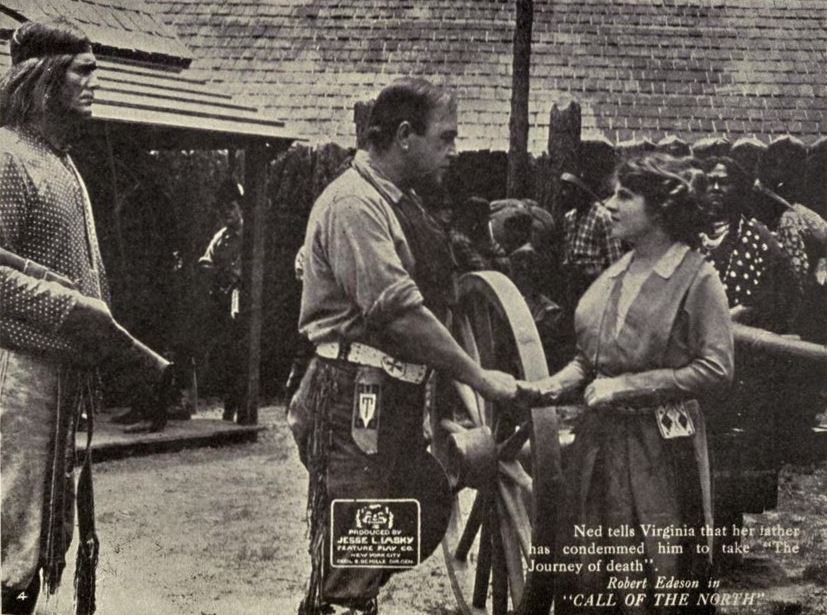
Dir: Oscar Apfel
Trader Ned Stewart's father Graehme was unjustly accused of adultery and killed. Ned sets out to avenge his father but is captured and send on "la longue traverse," the long journey to death. Virginia saves Ned, and the villain confesses Graehme's innocence on his deathbed.
View Details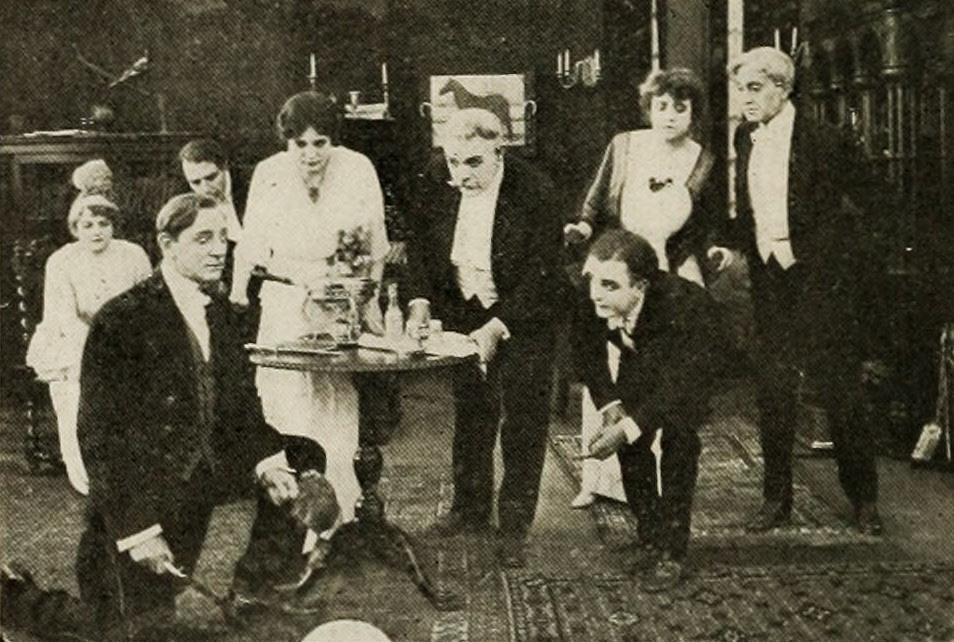
Dir: Oscar Apfel
Lieutenant Bob Warburton is wounded during an encounter with the Indians and taken to the home of Col. Annesley for medical treatment. Recovering, Bob finds that his service in the army has expired and he says he is penniless. However he is rich in romance and becomes fascinated by the Colonel's daughter, Betty. Betty, not knowing who Bob is, offers him a position as coachman, which he accepts. Many and varied are Bob's experiences as "The Man on the Box" of the Annesley coach. Becoming implicated in a plot to defraud the United States Government of important plans, he thwarts the attempts of a Russian Count and saves important plans. Betty, while visiting Bob's sister, who is a dear friend, learns from Bob's photograph who he is, but allows him to continue as coachman. Bob is entirely ignorant of Betty's knowledge of his identity. Betty's father loses his money, then Bob discloses his identity and admits he is the possessor of a large fortune in his own right. However, Betty's and Bob's romance is one of pure love and, after a series of intrigues, plots and counter-plots, all of which "The Man on the Box" foils, the couple are married and live happily ever after.
View Details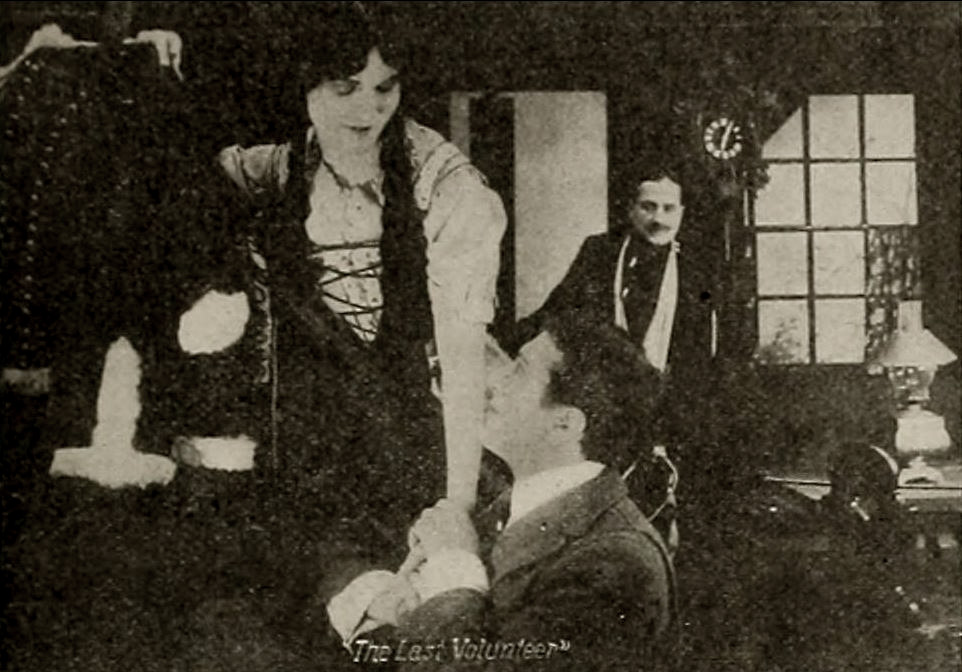
Dir: Oscar Apfel
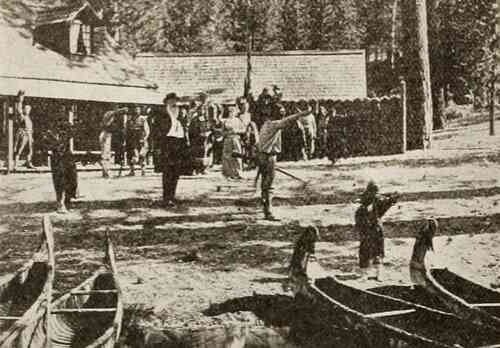
While traveling incognito through his kingdom, Prince Ludwig of Saxe-Tholberg becomes infatuated with Katrina, the daughter of innkeeper Hermann Ardelheim, but their idyll is interrupted by the arrival of a courier bearing the news that Austrania has threatened war. Katrina is heartbroken to discover the identity of her sweetheart whom she can never hope to marry. After Ludwig's departure, Katrina overhears the plotting of two spies and with the help of her brother Raolf, she confronts them. In the ensuing struggle, Katrina kills one of them, who turns out to be the Austranian ambassador. Although Katrina admits her crime, Marshal von Trump plans to execute Raolf in order to pacify the Austranians. Katrina appeals to Ludwig, who pardons Raolf over the advice of his counselors causing Austrania to declare war. A crucial battle is fought near the Ardelheim inn, during which Katrina becomes a heroine by signaling the advance of Ludwig's troops. She is fatally wounded by the Austranians and is then brought to the inn where she dies with Ludwig at her side. He then eulogizes both Katrina and Raolf, who has also died in battle.
View Details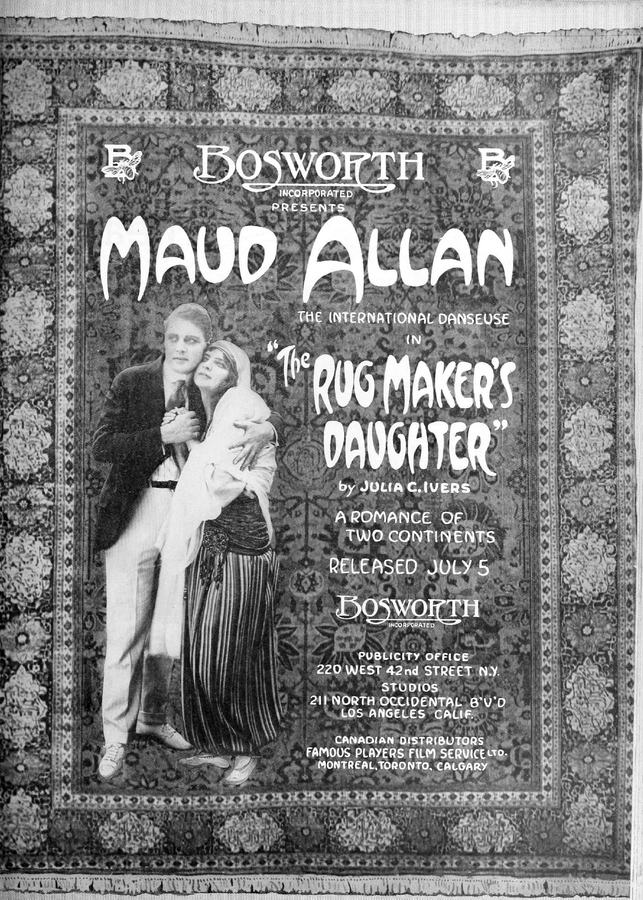
Dir: Oscar Apfel
Bob Van Buren's rescue of an upper-class Turkish girl and her duenna in Constantinople when they are waylaid by robbers paves the way for a romance between them. The romance progresses rapidly despite the hullabaloo raised by Demetra's father and by the Turk fiancé he is trying to force upon her; but the very thought of a girl, so highly educated, so gifted with needle and loom, so famously graceful as a dancer ending up in a harem instead of a respectable home, drives Bob Van Buren to desperation. At length he persuades Demetra to elope with him to America, where Demetra could be married at his mother's in New York. Getting wind of it, the malicious Osman hires a band of ruffians who make away with Bob Van Buren on the very eve of departure. With her young American mysteriously vanished, and the day of her now-all-the-more-odious wedding to Osman drawing near, Demetra can stand it no longer, and taking her duenna, flees to a cousin's in New York on the P. and O. boat on which Bob had reserved sailings. Osman pursues the little refugee, corners her in New York, and with oriental cunning sets a trap into which Demetra walks blindly. Having her in his toils again Osman summons a second Turkish priest and is just forcing Demetra to her knees before him when the door bursts open and in rushes Bob Van Buren, who had finally escaped the dungeon in Constantinople to which he had been consigned. He routes Osman and takes Demetra to his mother's. Mrs. Van Buren suggested that the lovers wait until September, but their hearts were set on June. And so, as you may very well imagine, June it was.
View Details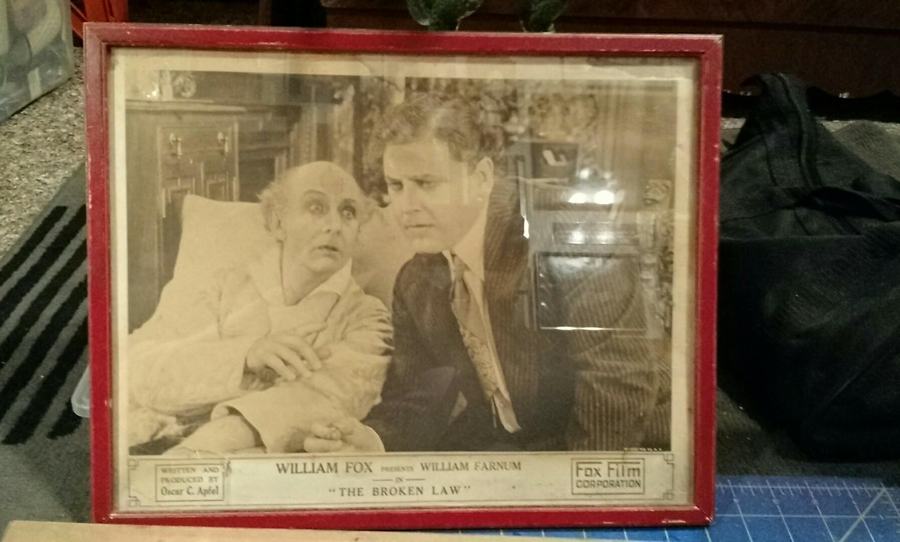
Dir: Oscar Apfel
Daniel Esmond, an English writer, discovers he has a half-sister who is a gypsy. He joins a gypsy clan to find her, and eventually becomes chief of the clan.
View Details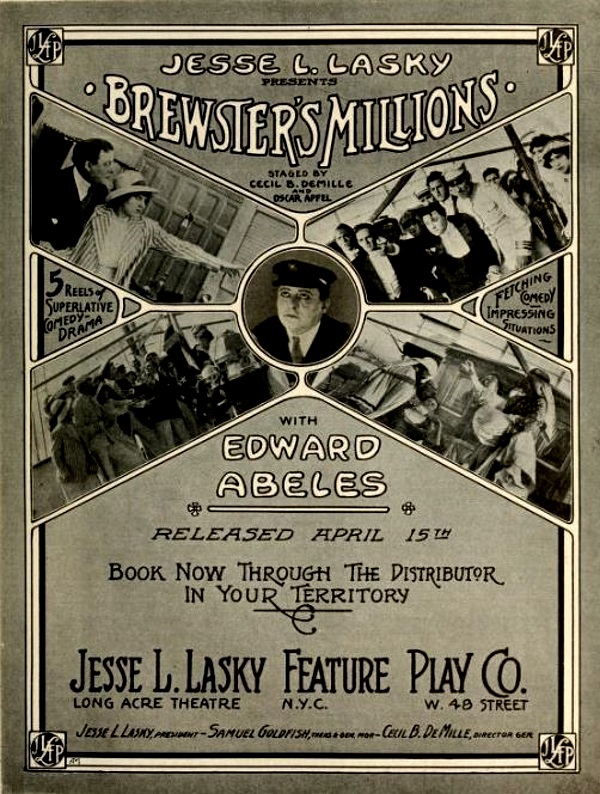
Dir: Oscar Apfel
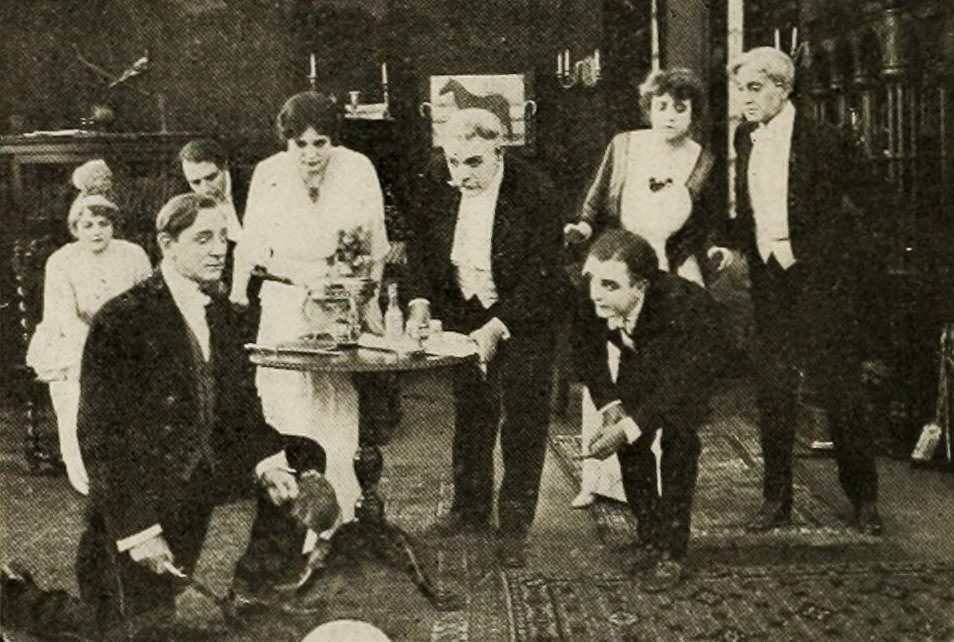
Robert Brewster, scion of a well-to-do family, elopes with Louise Sedgewick. Peter Brewster disinherits Robert and refuses to be reconciled to the marriage, and later drives the young couple from their home. A little son, "Monty," blesses the union. When Monty is a full-grown man, Peter Brewster dies and bequeaths a million dollars to him. The newly-acquired wealth staggers young Monty Brewster, and he is about to launch into the new life as one of the predatory rich when he receives a communication from an attorney in the West, advising him that his uncle, George Brewster, has left him $7 million, contingent upon his getting rid of the million dollars left him by Peter Brewster. "Peter Brewster mistreated your mother and father and I do not want you to touch a dollar of his money. If you spend the million left to you by him and can, at the end of a year, show by receipts that you have judiciously spent, not squandered this million dollars, my attorneys will turn over to you my worldly possessions, aggregating seven millions. You must own nothing of value at the end of the year," said George Brewster, and Monty, learning for the first time that Peter Brewster had mistreated his parents, begins to spend the million. He invests the money in a sure losing proposition in Wall Street in an effort to dispose of some of his unwelcome money, and the proposition turns out a winner. He backs a flabby fat pugilist, hoping to lose, and wins. There is a clause in the will of George Brewster which says that Monty must not tell anyone of his desire to spend the million and his friends think he has suddenly lost his mind. Everything Monty touches with the hope of losing some of his money, turns out just the reverse, and he wins. He has a most terrible time disposing of the undesired millions. Finally, in a desperate attempt at magnificent spending, Monty hires a palatial yacht, invites several dozen friends to accompany him and goes on a long cruise. The friends mutiny in mid-ocean, thinking him suddenly insane the way he is squandering his wealth, and threaten to lock Monty up, but Monty, to frustrate them, runs up a signal of distress. It costs him two hundred thousand dollars to be salvaged by a passing steamer, and the end of the year rolls around with Monty flat broke. He has squandered the entire million dollars, possesses a room full of receipts to show for every dollar spent, and his sweetheart, Peggy, believing him to be a pauper, consents to marry him. His friends, believing him broke, endeavor to press money and jewelry upon him, all of which he must not have in his possession or he loses the seven million. He dodges his friends, is met by the attorney and presented with seven million dollars, and everything turns out happily.
View Details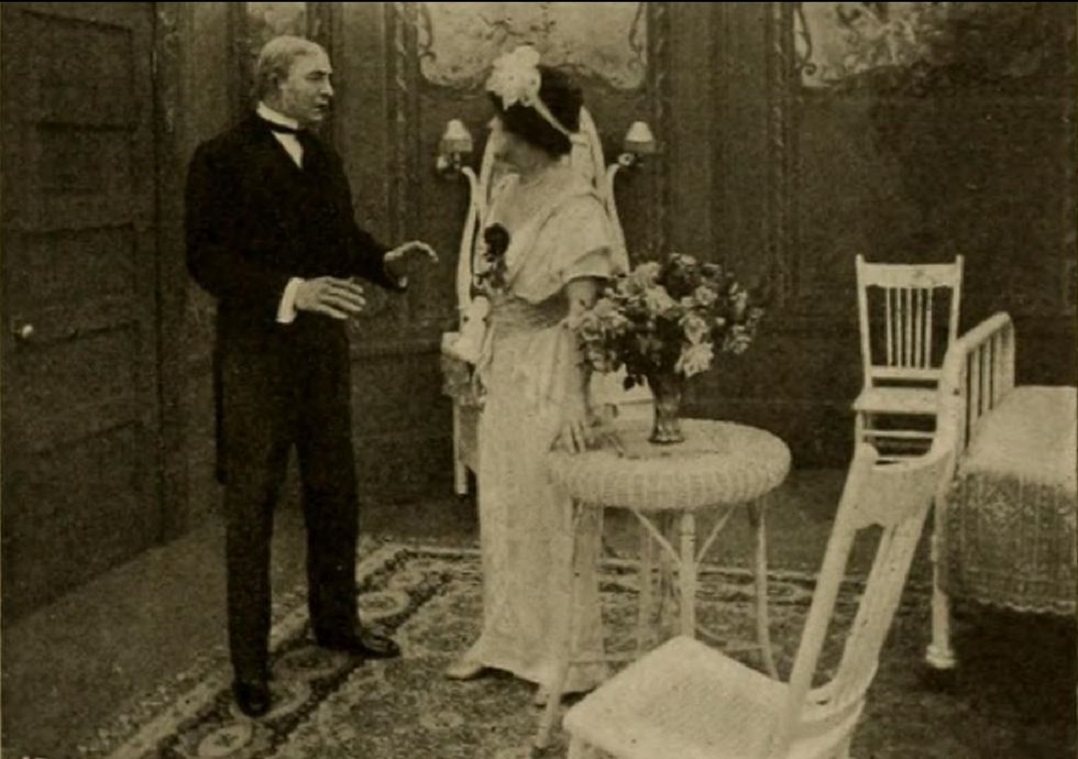
Dir: Oscar Apfel
The defense attorney who was unable to obtain the acquittal of an innocent young man concocts a complicated and diabolical scheme to get revenge on the prosecutor.
View DetailsAnalysis relative to The Hidden Children
| Film Title | Atmosphere | Complexity | Similarity |
|---|---|---|---|
| Cameo Kirby | Gritty | High | 89% Match |
| Peer Gynt | Gothic | Dense | 91% Match |
| Snobs | Surreal | Dense | 87% Match |
| The Call of the North | Gothic | Linear | 88% Match |
| The Man on the Box | Ethereal | Layered | 96% Match |
This guide was algorithmically generated using the cinematic metadata of Oscar Apfel's archive. Last updated: 6/20/2026.
Back to The Hidden Children Details →