
DbcultAccessing Vault...
Recommendations
Senior Film Conservator
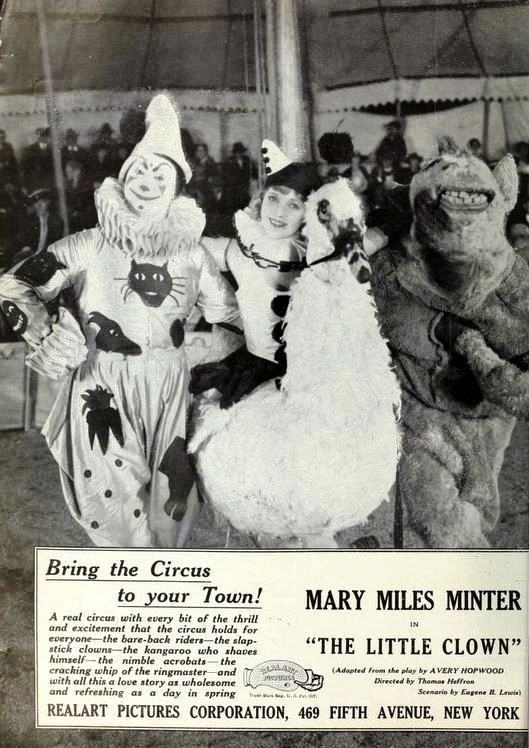
The Comedy sensibilities displayed in The Little Clown are unparalleled, its status as a United States icon makes it a perfect starting point for discovery. These hand-selected movies are designed to satiate your craving for Comedy quality.
The cultural footprint of The Little Clown in United States to serve as a cornerstone for Comedy enthusiasts worldwide.
Pat, an orphan born and reared in the circus, is the protégé of Toto, the clown, who cherishes the hope of marrying her. In a southern town, Pat meets Dick Beverley, son of an aristocratic family, who joins the circus as a trick rider after a quarrel with his parents, and the two fall in love. Although finally accepted by the Beverleys, she is required to learn the social graces in their home. When her circus friends pay a visit, they are expelled for being intoxicated, but when Dick's younger brother confesses to spiking the punch all is forgiven and the couple are married.
Critics widely regard The Little Clown as a cult-favorite piece of Comedy cinema. Its stylistic flair is frequently cited as its strongest asset, solidifying its place in United States's film legacy.
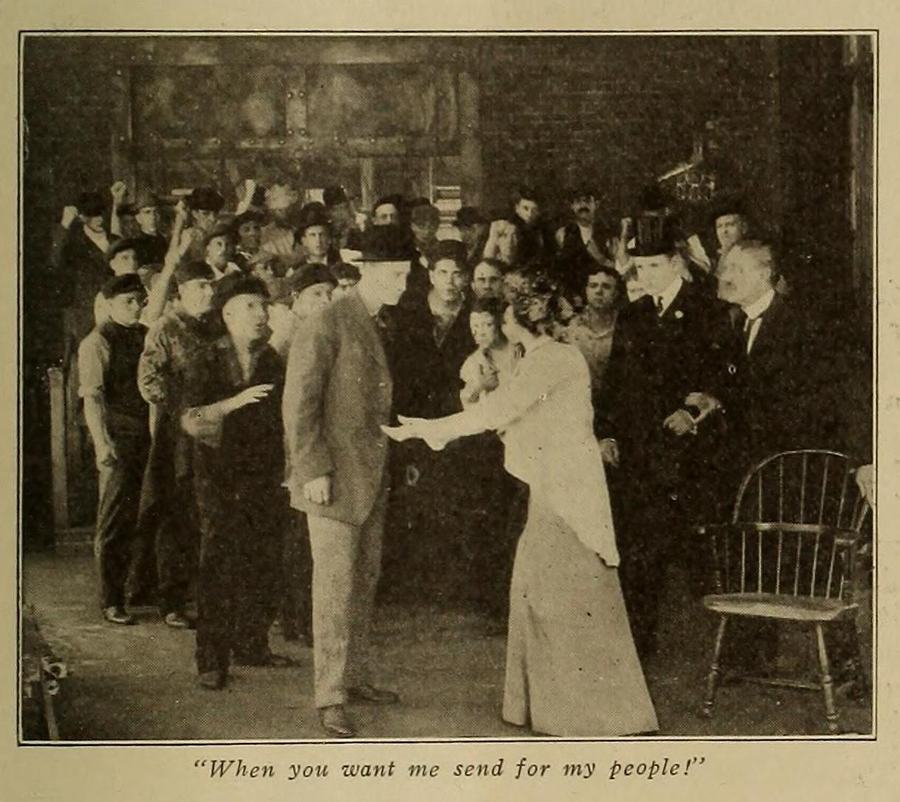
Based on the unique stylistic flair of The Little Clown, our vault has identified these titles as the most compelling follow-up experiences for fans of Comedy cinema:
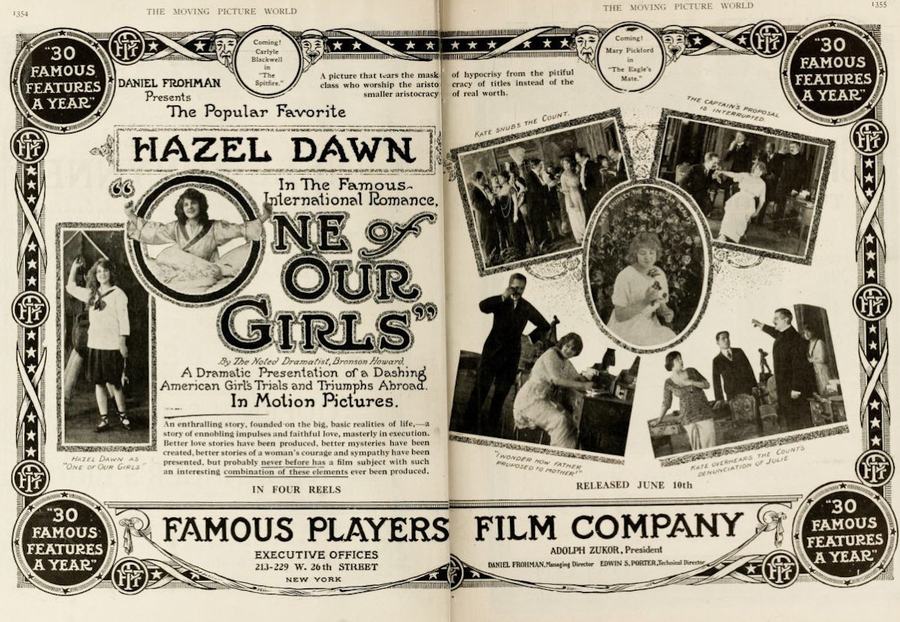
Dir: Thomas N. Heffron
American heiress Kate Shipley crosses the Atlantic to attend the wedding of her little cousin Julie in France, little knowing what Fate holds in store when she leaves her Fifth Avenue home for the Foublanques' chateau. Julie marries the profligate Comte de Crebillon, though she loves her cousin Henri, and Kate grieves to see her little cousin grow sadder and paler every day through the realization of her grave mistake. A great happiness, however, comes to the American girl, for she is loved by Capt. John Gregory, a dashing British officer, no less noble than he is brave and handsome, to whom she is soon betrothed. The Comte de Crebillon conceals a secret in his past, a broken and beautiful woman, who suddenly appears one night at the chateau and confronts him, after which she is never seen alive again. Old Dr. Girodet, the family physician, dislikes the Comte. Hearing a woman's scream on the fatal night, and being told of a mysterious, haggard face that had peered through the window of the chateau, he notices the Comte's nervousness and fear, and begins investigations which end in the finding of the woman's body in the old wishing-well in the garden of the estate. Suicide is the verdict given in the woman's death, and the Comte breathes freely for a time. He is harsh, suspicious and cruel to his girl-wife, and poor little Julie, driven desperate by his treatment and her love for Henri, decides to leave France with her sweetheart cousin. Julie writes Kate she is eloping, and the impulsive and generous American girl goes to Henri's room to save Julie from her folly. There she is discovered by the Comte and her own betrothed, Capt. Gregory. To shield her cousin from the Comte's fury, Kate conceals Julie's presence in Henri's room, and takes the awful situation upon her own shoulders, at the risk of her good name and her fiancé's faith and love. The development of the play thrillingly portrays a series of dramatic situations that culminate in the triumph of Kate over the insulting Comte, and the revelation of his mysterious and sinful past, which sets Julie free to marry Henri. Kate is made doubly happy by her gallant captain's faith through all her trying experiences, and "one of our girls'' at last weds one of England's bravest officers.
View Details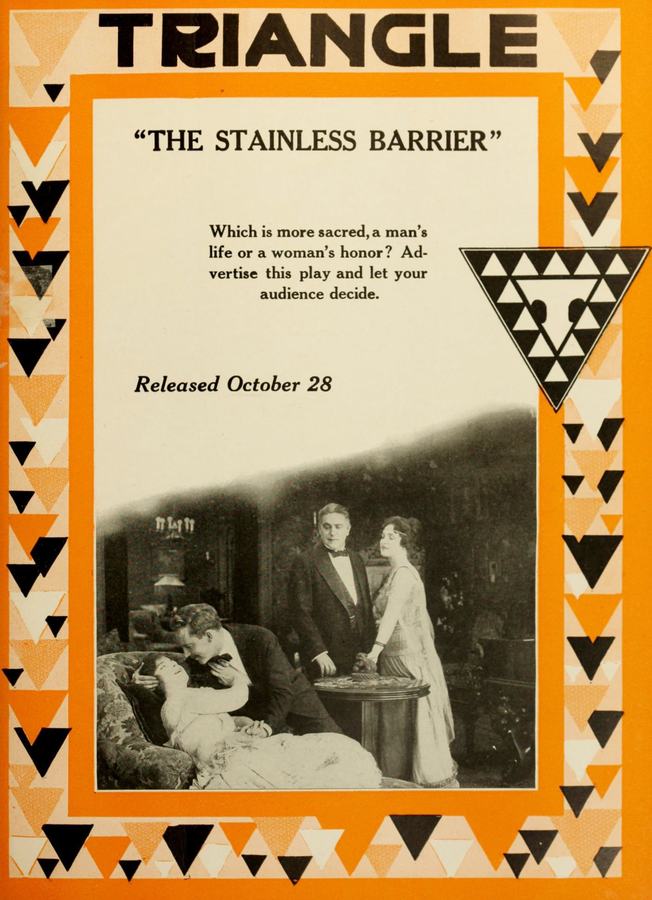
Dir: Thomas N. Heffron
Betsy Shelton, an orphan since early childhood, lives in Myrtleville with her aunt, and is engaged to marry Calvin Stone, a young lawyer. Betsy's brother, Dick, ostensibly working in New York to recover the family fortune, becomes involved with one Roger Enderleigh, a shyster promoter, who because of crooked dealings, is forced to flee from the postal authorities. He induces Dick to take him to Myrtleville, where Dick introduces Enderleigh as a prosperous banker promoting a munition plant, thus swindling the townsmen. The visit terminates in a vivid climax when the postal authorities track Enderleigh, who prepares to flee leaving Dick to bear the brunt. Dick kills Enderleigh and then asks for mercy on the plea that Enderleigh has ruined Betsy. Stone, true to the code of Southern chivalry, does not lose faith in his fiancée, and in the closing scenes of this photodrama, restores her good name and brings her erring brother to punishment.
View Details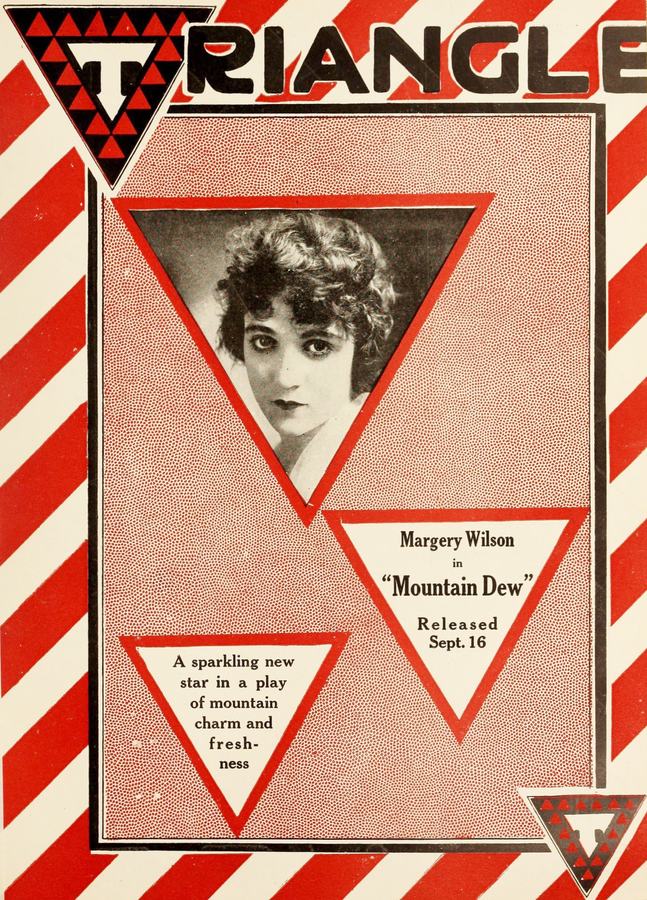
Dir: Thomas N. Heffron
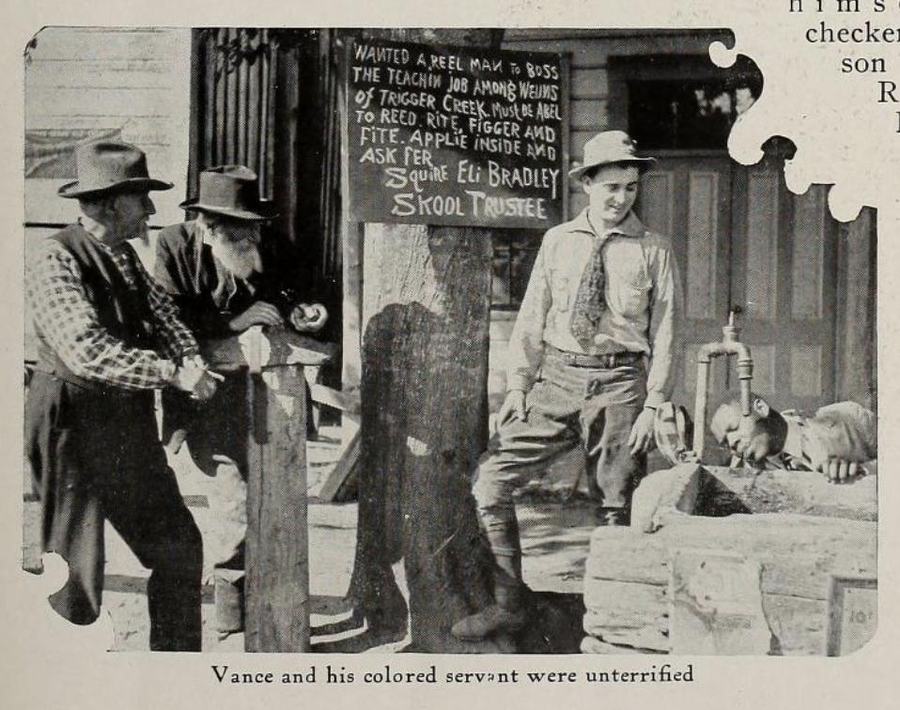
Magazine writer J. Hamilton Vance travels to the mountains of Kentucky to get local color for his stories, and falls in love with Roxie Bradley, the daughter of a moonshiner. Regarded at first with suspicion by the mountaineers, Vance finally wins their confidence and is appointed teacher in the little log school house. The former teacher, resentful at the intrusion, attempts to shoot Vance through the schoolhouse window, but Roxie intercepts the bullet. Vance nurses her back to health, engendering the jealousy of Lily Bud Raines, who starts a rumor that Vance is a federal agent spying on the moonshiners. As the mountaineers plot to extract vengeance on Vance, Roxie and he are married, and when his antagonists discover that Vance is now one of them, they accept him as part of the mountain community.
View Details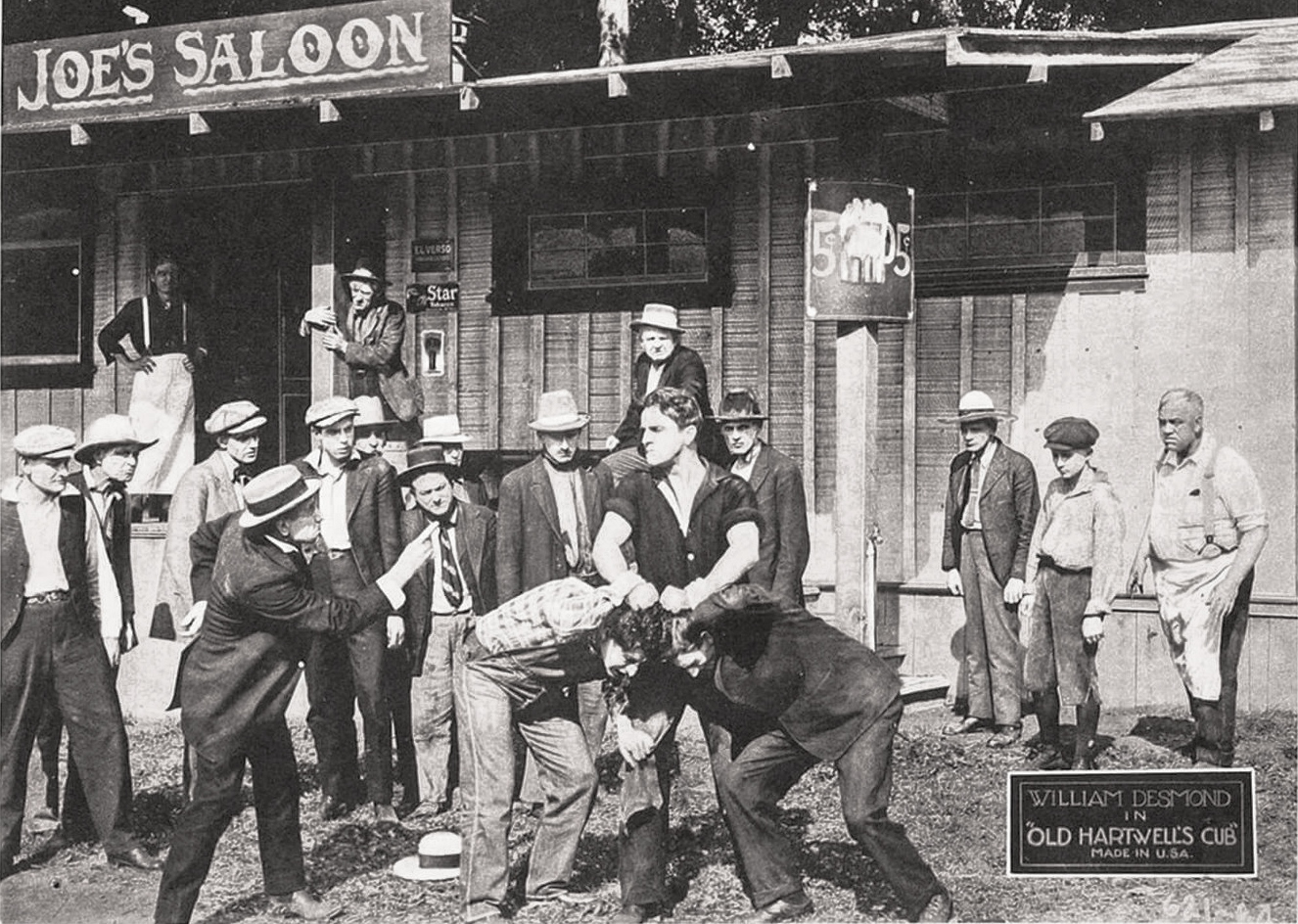
Dir: Thomas N. Heffron
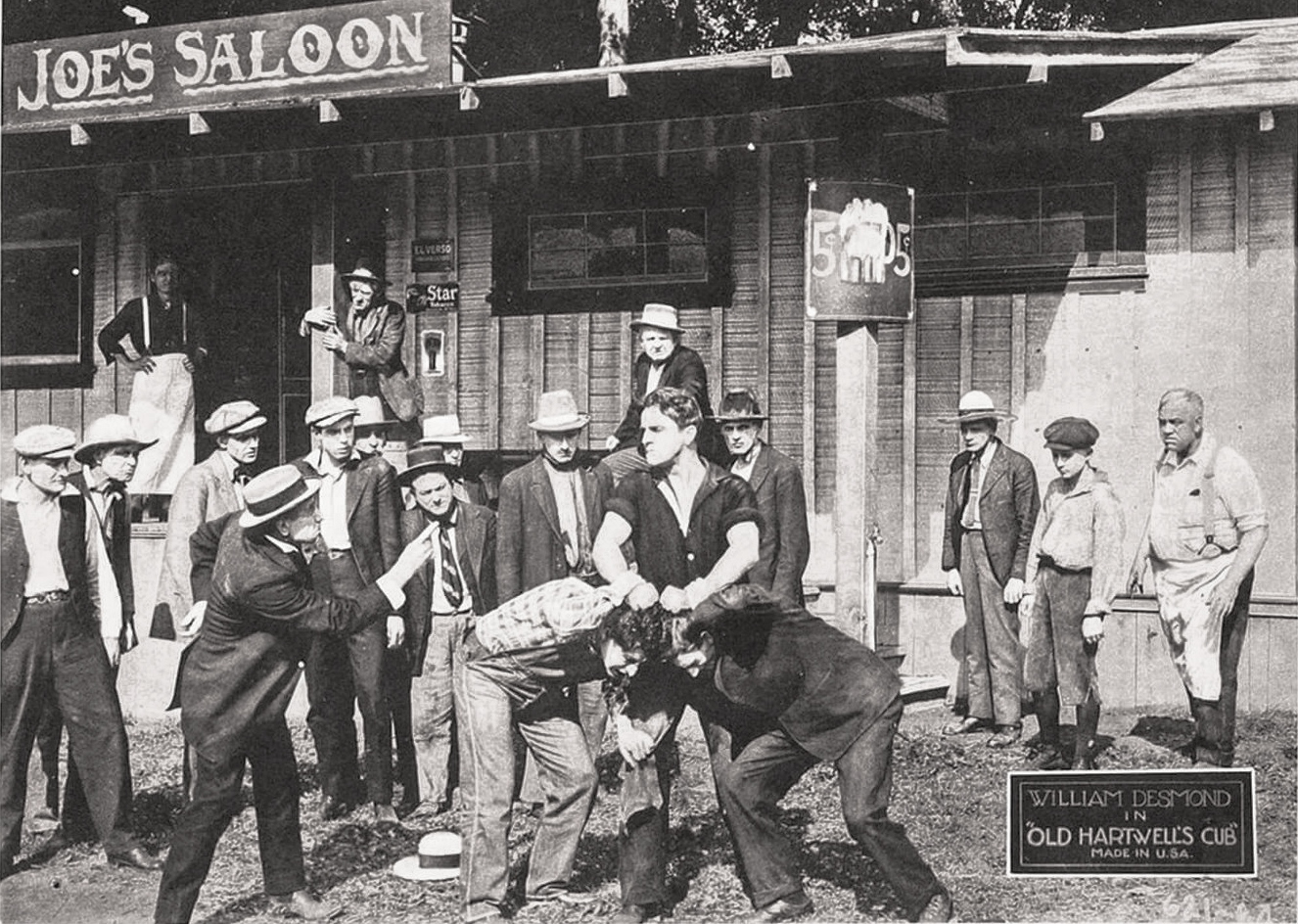
Although Tom Hartwell is the town drunk of Matherville, his son Bill, a blacksmith, loves him and batters down the jail door when the old man is arrested. In an effort to drive them both out of the village, the narrow-minded townspeople attack Bill, but the Rev. David Lane defends him and then invites him to dinner. Bill falls in love with the reverend's daughter, Mary Lane, but she becomes infatuated with Edward Jones and marries him. Edward robs Mary and flees to Chico, Arizona, and when Mary follows him, she learns that he has a wife there. Following his father's death, Bill travels to Chico, where he and Mary become entangled in several adventures. Finally Bill is accused of stealing a horse, and after Mary rescues him just as he is about to be hanged, the two return to Matherville as man and wife.
View Details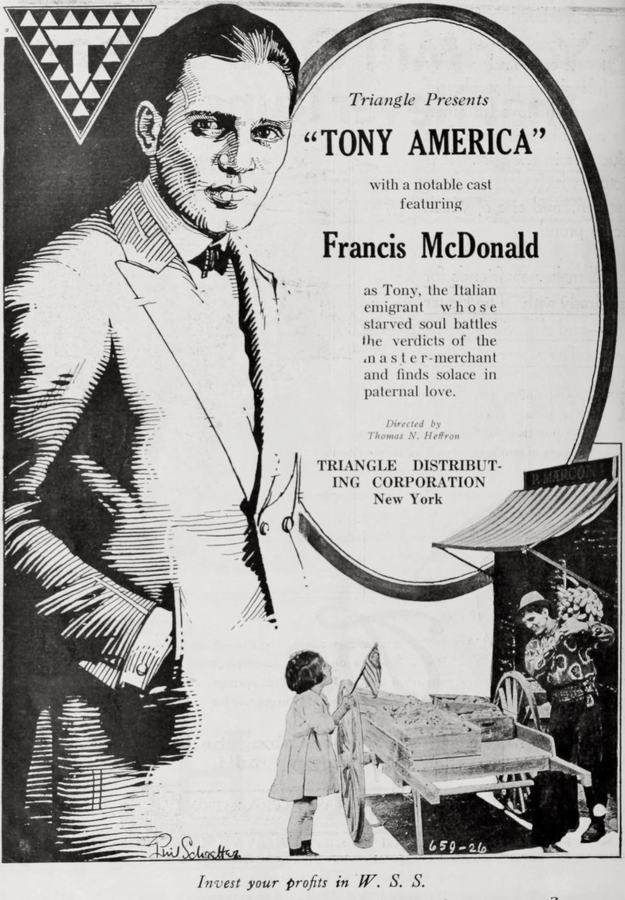
Dir: Thomas N. Heffron
Tony comes to America virtually the slave of his padrone, who holds him in debt for his passage money. But Rosa Picciano marries him to escape parental discipline and Tony hopes for freedom at last, but Rosa makes it plain that she does not love him. When the bambina comes, he lavishes all his love on little Giulia and is heartbroken when Rosa divorces him on a trumped-up charge and gains possession of the child. But Tony wins her back from her heartless mother and has her to thank that his hands are not stained with blood.
View Details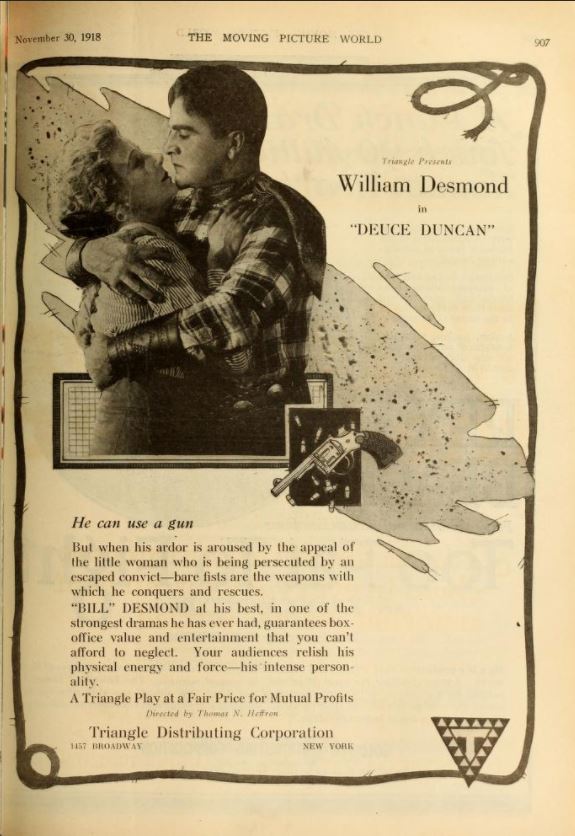
Dir: Thomas N. Heffron
Ann Tyson leaves her little cabin and goes West with her brother John, whom she has not seen in fifteen years during his imprisonment for a crime he did not commit. Ann becomes a barmaid in the local saloon, where she meets cowboy Deuce Duncan, and the two fall in love. Deuce correctly suspects that John is involved with a gang of cattle rustlers but remains silent because of his love for Ann. In a drunken rage, John attacks Ann, admitting that he is not her brother and demanding that she marry him. Deuce arrives and rescues Ann just as Clements, the head cattle rustler, sneaks up on the cabin and shoots John.
View Details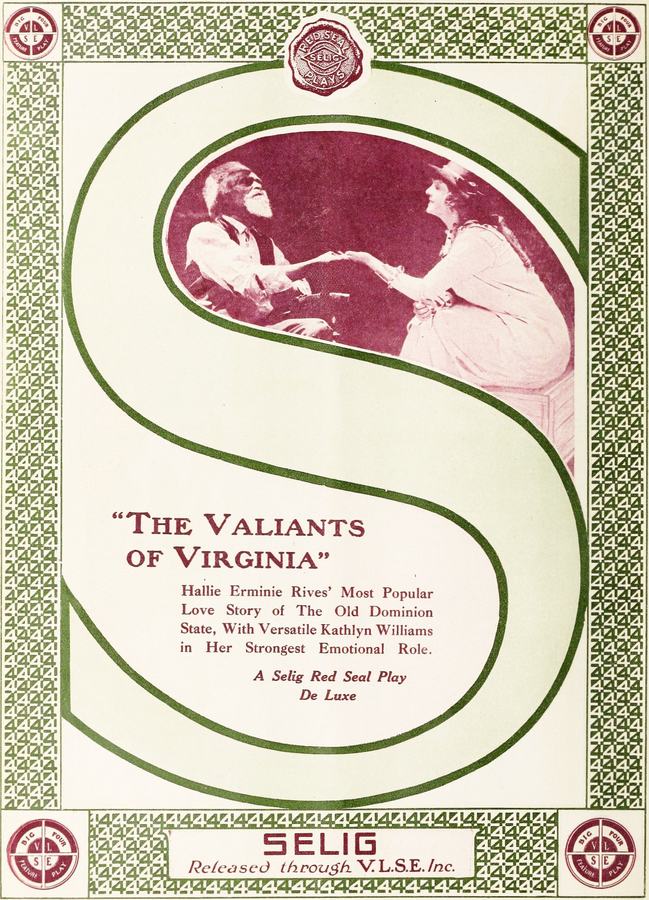
Dir: Thomas N. Heffron
During a dance, John Valiant challenges duel Edward Sassoon to defend the honor of Virginia beauty, Judith Fairfax, John promises Judith he won't take the life to his opponent, but when the smoke clears, Sassoon lies dead and John must flee North. Before he leaves, John entrusts Major Bristow to deliver an explanatory note to Judith, but, torn by his own desire for the Southern belle, Bristow pockets the letter instead. In the North, John founds a successful business and marries, but his young wife dies while giving birth to a son. Filled with hatred for John, Judith marries Tom Dandridge and has a daughter, Shirley. Many years later, John, Jr., now head of the Valiant Corporation, becomes engaged to Katherine Fargo. In order to save his company during a business panic, John must stake his entire fortune and, with his financial situation looking dim, loses Katherine's interest. In despair, John returns to his father's estate and falls in love with Shirley Dandridge. To rekindle her romance with John, Katherine tells Shirley of the family feud and Shirley suddenly cools toward John. On his deathbed, Barstow finally gives Judith John's letter in which John reveals that Edward had shot himself during the duel. John and Shirley are happily reconciled.
View Details
Dir: Thomas N. Heffron
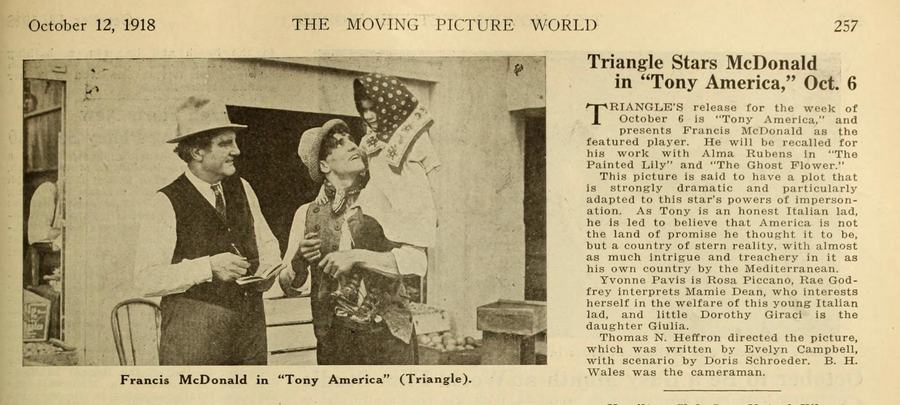
A fascinating piece of cinema that shares thematic elements.
View Details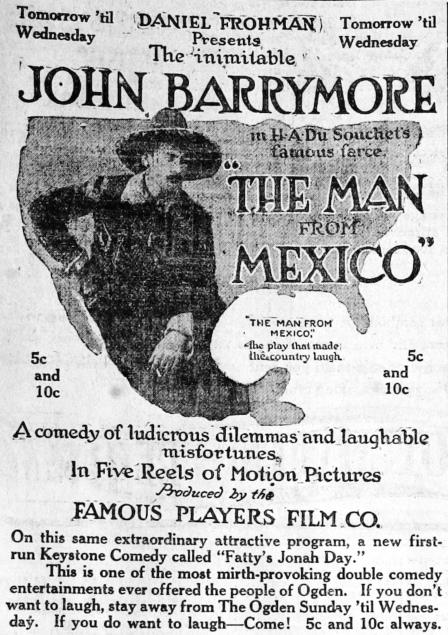
Dir: Thomas N. Heffron
A young man gets arrested after a drunken night. Sentenced to 30 days in jail, he tells his wife he has to go to Mexico for a month.
View Details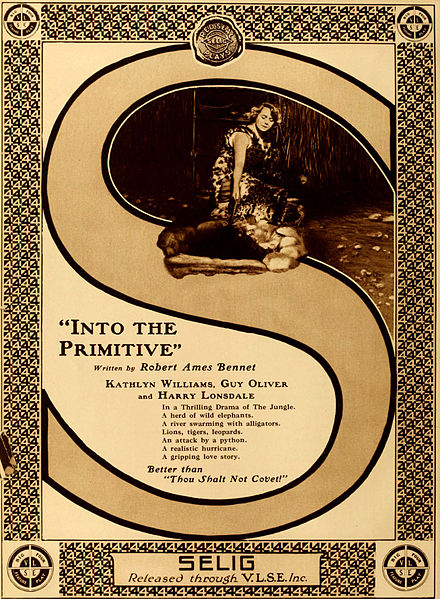
Dir: Thomas N. Heffron
American heiress Jennie Leslie, the Honorable Cecil Winthrope, and the alcoholic Thomas Blake are washed ashore on a deserted island after a shipwreck. At first, Jennie sticks close to Cecil, preferring his upper-class British breeding to Thomas' man-of-the-people approach. Cecil, however, turns out to be completely ineffective when it comes to survival, and so both he and Jennie depend on Thomas for food, clothing, and protection. The surroundings bring out the "caveman" in Cecil in one respect, however; he tries to rape Jennie. During the attempt, which takes place during a storm, Cecil is crushed by a falling tree, and just before he dies, he reveals that he was merely a valet posing as an aristocrat. Then, Jennie and Thomas realize that they are in love with each other, and when a rescue ship picks them up, they begin making plans for their marriage.
View DetailsAnalysis relative to The Little Clown
| Film Title | Atmosphere | Complexity | Similarity |
|---|---|---|---|
| One of Our Girls | Ethereal | Dense | 85% Match |
| The Stainless Barrier | Ethereal | High | 98% Match |
| Mountain Dew | Ethereal | Abstract | 94% Match |
| Old Hartwell's Cub | Gritty | Abstract | 97% Match |
| Tony America | Gritty | Dense | 93% Match |
This guide was algorithmically generated using the cinematic metadata of Thomas N. Heffron's archive. Last updated: 6/27/2026.
Back to The Little Clown Details →