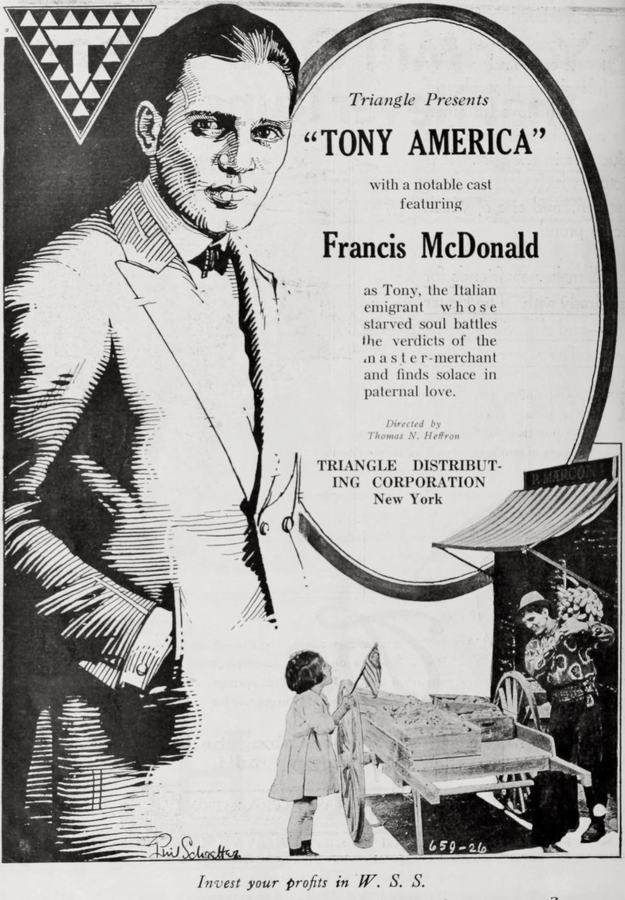
Tony comes to America virtually the slave of his padrone, who holds him in debt for his passage money. But Rosa Picciano marries him to escape parental discipline and Tony hopes for freedom at last, but Rosa makes it plain that she does not love him.
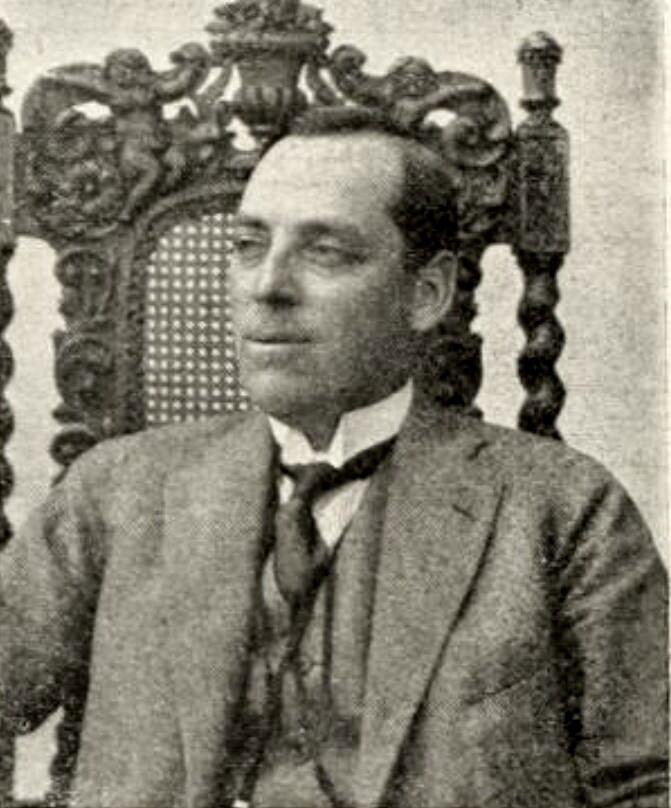
Evelyn Campbell, Doris Schroeder
United States
Every third frame of Tony America feels soaked in Atlantic brine; you can almost taste the steerage-class despair crystallizing on the projector bulb. Director William Parke, armed with a scenario by Evelyn Campbell and intertitles sharpened by Doris Schroeder, turns what could have been a dime-novel morality play in...
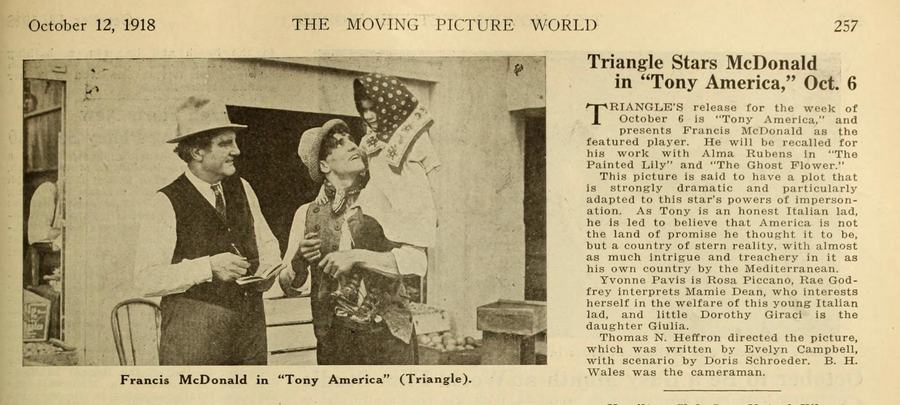
publicity
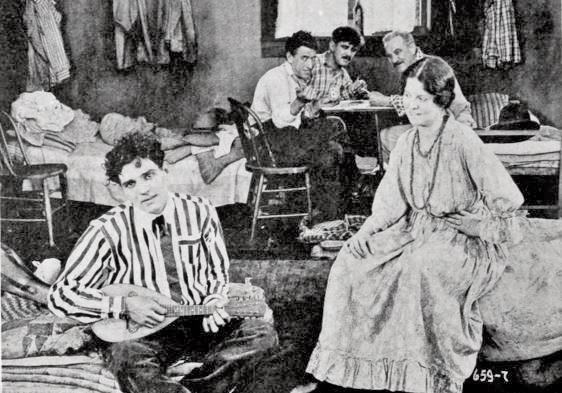
still_frame
Comparing the cinematic DNA and archive impact of two defining moments in cult history.
Thomas N. Heffron
Thomas N. Heffron
Community
Log in to comment.
" Every third frame of Tony America feels soaked in Atlantic brine; you can almost taste the steerage-class despair crystallizing on the projector bulb. Director William Parke, armed with a scenario by Evelyn Campbell and intertitles sharpened by Doris Schroeder, turns what could have been a dime-novel morality play into a feverish palimpsest of early‐twentieth‐century anxieties—xenophobia, predatory capitalism, and the terrifying moment when matrimony mutinies into marketplace. The film opens ..."