
DbcultAccessing Vault...
Recommendations
Senior Film Conservator
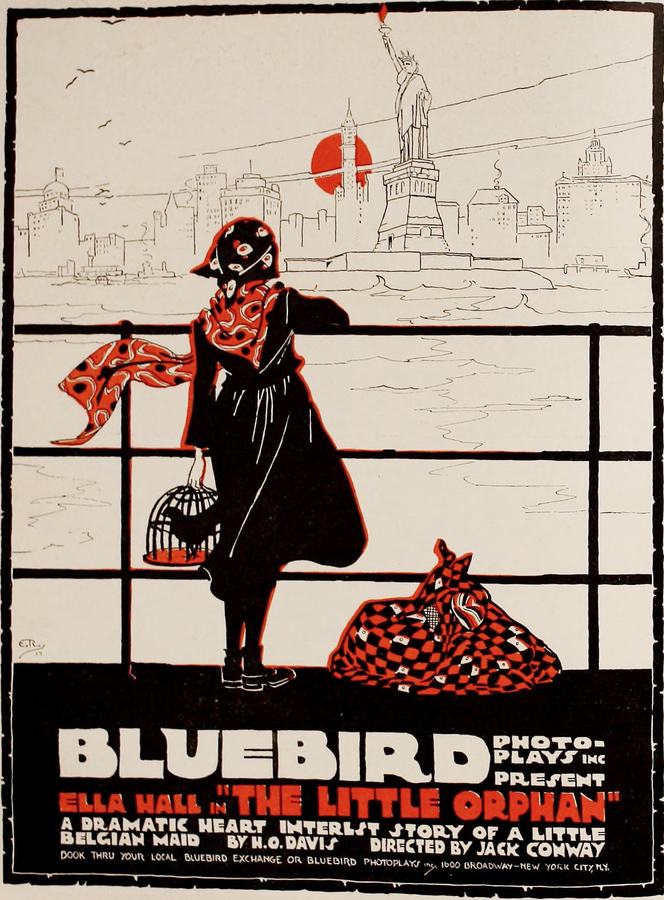
As a cultural touchstone of United States, The Little Orphan resonates with its artistic bravery, its lasting impact ensures that its spirit lives on in modern recommendations. Our archive is rich with titles that mirror the artistic bravery of Jack Conway.
For many, the first encounter with The Little Orphan is to provoke thought and inspire awe in equal measure.
When bachelor friends David Clark, Dick Porter and Jerry Mathers agree to adopt Belgian war orphans, David unexpectedly finds himself the guardian of a little girl, Rene Lescere. After David is pursued by Mrs. Hardwick, a divorcee, Rene is determined to find him a more suitable wife and introduces him to Emmeline Warren. David and Emmeline are engaged, but the engagement is broken after Emmeline meets Jerry, her old beau, and their romance is rekindled. David, sad but resigned, sends Rene to boarding school and retires to his hunting lodge with Dick Porter. Later, Emmeline and Jerry, now married, visit the lodge and suggest that Rene accompany them on a trip abroad. At the moment of parting between Rene and her guardian, both realize that they love each other and Rene becomes David's wife.
Based on the unique artistic bravery of The Little Orphan, our vault has identified these titles as the most compelling follow-up experiences for fans of cult cinema:
Dir: Jack Conway
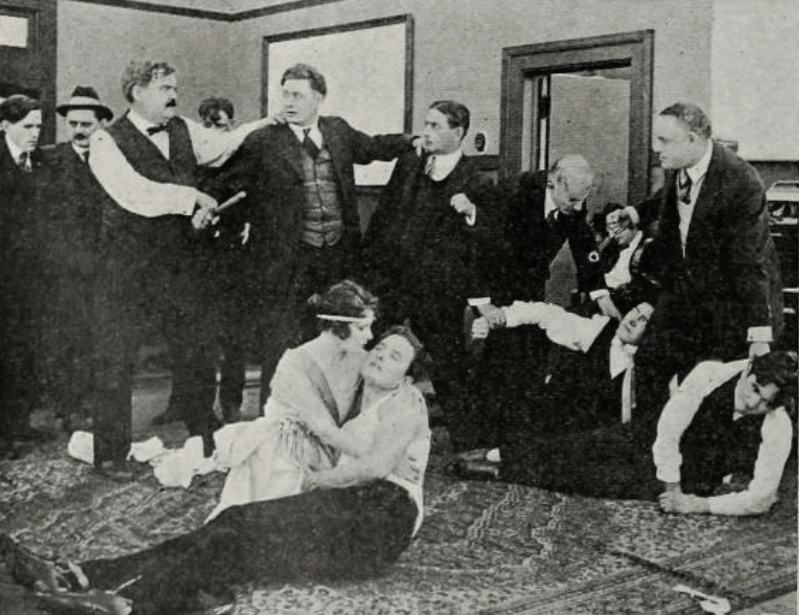
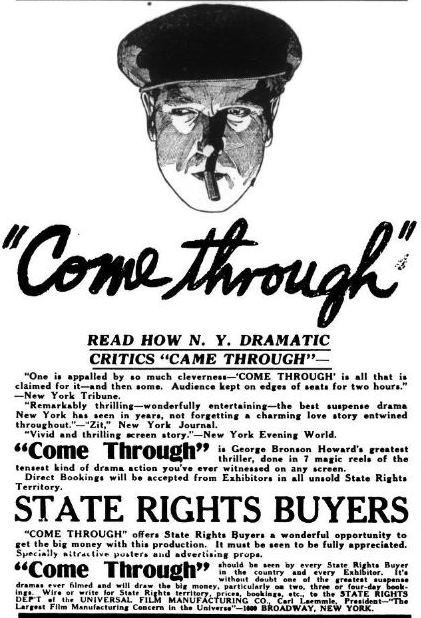
From a Montana mining camp, a young man progresses to the society heights of New York, making his mark publicly as a dancer, but secretly as a gentleman burglar.
View Details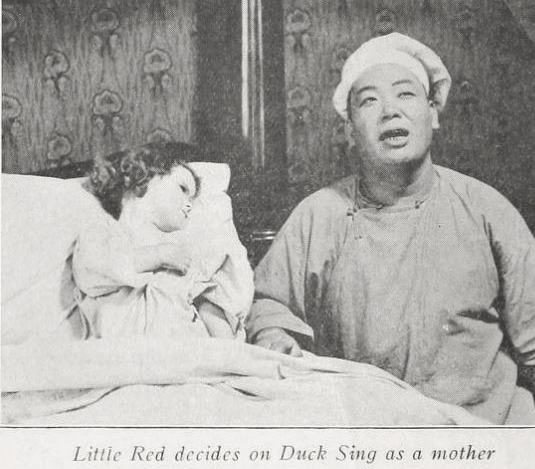
Dir: Jack Conway
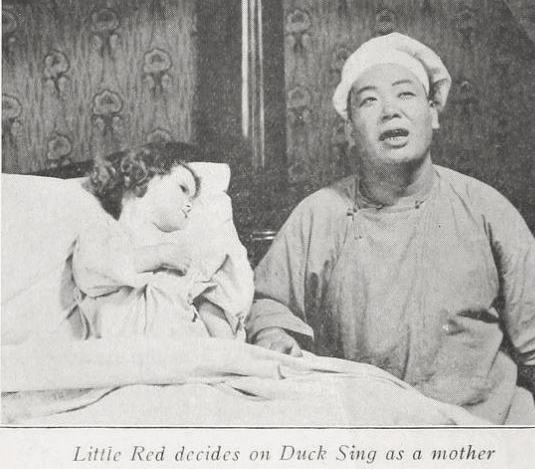
Upon learning that the parents of "Little Red" have died, the cowboys of Colonel Ferdinand Aliso's ranch adopt the boy. Parson Jones and his church committee protest that the child should be brought up in more refined surroundings, but the cowboys, particularly Duck Sing, Aliso's Chinese cook, are so enamored of Little Red that they donate their poker money to the church in order to placate the congregation. After Little Red catches pneumonia and nearly dies, however, Dr. Kirk insists that the boy either live with the minister or acquire a mother through the marriage of one of the cowboys. While Little Red is recuperating at the parson's home, ranch hand Tom Gilroy courts the only marriageable women in town -- a widow and two spinsters -- but much to his relief, they all turn him down. In the end, Duck Sing, whom the child much prefers to the parson, kidnaps Little Red, after which the colonel legally adopts him.
Dir: Jack Conway
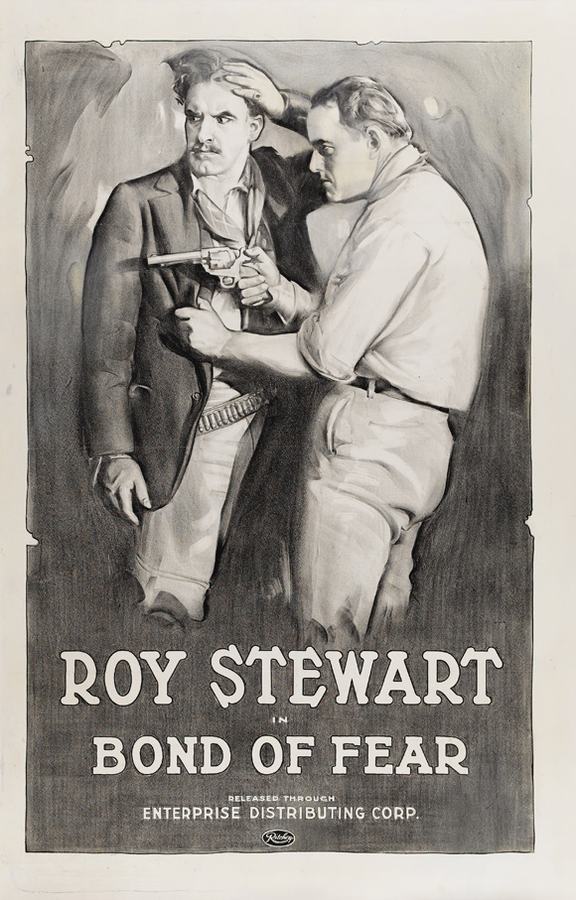
Judge of the Circuit Court, Camden McClure is a extremist advocate of law enforcement until he kills his brother during a fight. Fleeing from his crime, the judge hires Cal Nelson as his guide through the Western badlands. While crossing the desert, they meet Mary Jackson, who is lost and exhausted. Mary recovers, but the judge suffers heat stroke and, in his delirium, confesses his crime to Mary. To ease his guilt, Mary admits that she is a murderer, too, and the couple decide to get married. However, when the judge reads that his brother is alive, he once again adheres to the letter of the law and denounces Mary to the authorities. Cal, who has fallen in love with Mary, carries her to the desert to escape the sheriff, and there Mary admits that she fabricated her crime to relieve the judge. The judge then discovers that his brother is actually dead, and follows the fugitives into the desert, but is killed in a sandstorm, thus freeing Mary to wed Cal.
View Details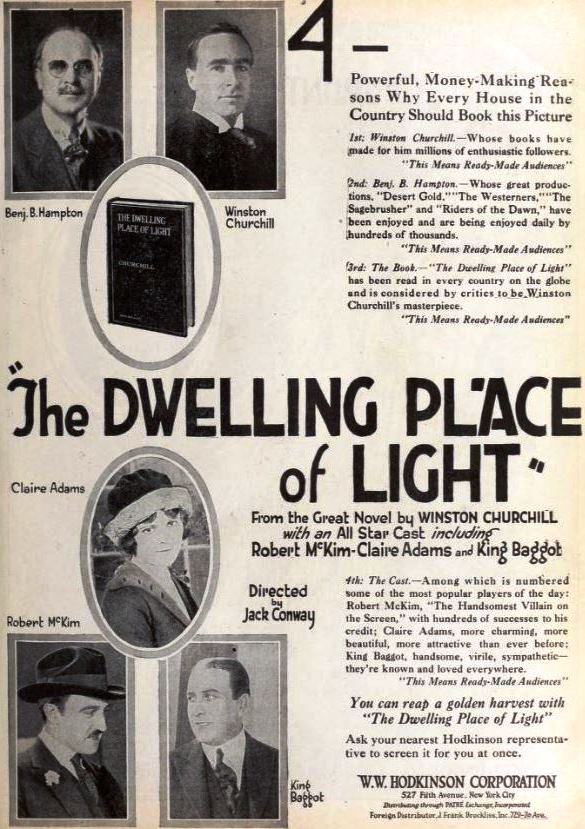
Dir: Jack Conway
When stenographer Janet Butler's malevolent employer, Claude Ditmar, starts to sexually harass her after carrying on an affair with her younger sister Elsie, Janet decides to quit her job and join forces with the disgruntled mill workers. While attempting to avert a looming strike, Brooks Insall, one of the mill's major stockholders, meets Janet and the two fall in love. In the ensuing chaos of the strike, Ditmar is shot by Janet's deranged mother, and Janet is imprisoned for the crime. Insall exonerates her, replaces Ditmar as the mill's manager and rescues Elsie, whose shame had forced her into exile. Elsie's return restores Janet's mother's sanity, and they all face a happy future together.

Dir: Jack Conway
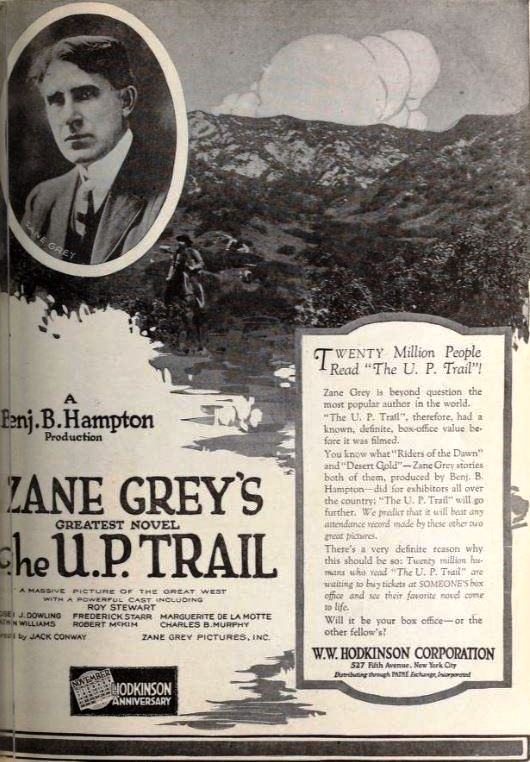
Warren Neale, an expert civil engineer, is working on the first transcontinental railroad when he rescues Allie Lee after her family has been killed by an Indian massacre. Through Warren's care, the girl recovers and their friendship ripens into love. Warren leaves Allie at trapper Slingerland's cabin when he goes to the nearby town of Benton to buy provisions. In his absence, Jose Durade, claiming that Allie is his daughter, goes to the trapper's cabin, kills Slingerland and abducts the girl. Returning to find Allie gone, Neale, half crazed, searches for her until he collapses in exhaustion and is cared for by "Beauty" Stanton, the dance hall mistress who loves the engineer. Beauty learns that Durade is holding Allie at his dance hall, rescues the girl and brings her to Neale. Durade, in revenge, gathers his gang together at Beauty's place where in the ensuing battle, both Durade and Beauty are mortally wounded. In her dying moments, Beauty offers the lovers her blessing and they set out together to finish Neale's work on the U.P. Trail.
View Details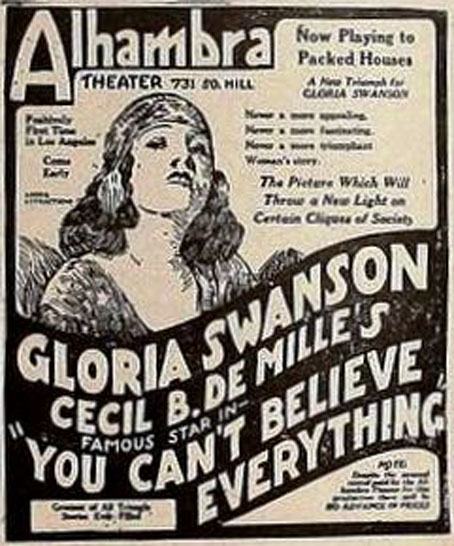
Dir: Jack Conway
Patricia Reynolds, the belle of the summer resort she is visiting with her friend, Amy Powellson, attracts the attention of Arthur Kirby, whom Amy loves. On an evening drive, Arthur tries to kiss Patricia , whereupon she leaps from the car and walks home. While Amy, disguised in Patricia 's clothing, accompanies Arthur to a roadhouse, Patricia , walking near the beach, sees her invalid friend, Jim Wheeler, jump into the ocean intending to kill himself. After rescuing him, Patricia persuades Jim to visit a specialist, but when she later is accused of spending the night with Arthur, she refuses to defend herself in order to conceal Jim's attempted suicide. Hastings Carson tries to save her reputation, but he subsequently attacks her, and she is forced to swim from his yacht to shore. Cured, Jim returns to remove Patricia from this social quagmire by marrying her.


Dir: Jack Conway
Aside from the fact that Polly had red hair in abundance, she was not otherwise an exceptional child, save for one thing. She was willing to work and slave, if need be, to keep her baby brother, affectionately termed "The Lump," from being sent to the poor house. So she did housework and prepared breakfasts for John Ruffin, an attorney, and Hon. Gedge-Tompkins. John Ruffin's sister, Lady Osterly, has separated from her husband, and he holds their child. When Lady Osterly calls on Ruffin she is struck with the remarkable resemblance Polly bears to her own child. Ruffin and Lady Osterly formulate a plan to come into possession of her daughter, by using Polly as a substitute. When they offer Polly twenty sovereigns to go to the Duke of Osterly's home and impersonate the other child, the amount of money fairly staggers Polly and she accepts. By changing the children when the child of the Osterly's is out riding with her nurse. Polly gains access to the Duke's home and the Osterly child comes to John Ruffin's apartments to stay until her mother can get her ticketed to the continent and travel away with her. Polly does the best she can under strange conditions, but despite her resemblance to the Osterly child, the servants are suspicious and the Duke falls to wondering what has happened. Young Lord Ronald, visiting the Duke, is above all suspicious of Polly. The Osterly girl is under similar suspicion at Ruffin's home. "The Lump" positively declines to have anything to do with her. There is a blunder in the preparations Lady Osterly and John Ruffin make for the European trip. Polly disregards positive instructions and leaves the Osterly mansion before plans can be worked out. The Duke follows Polly in his automobile, searching for her in a nearby park where she has liked to go with young Lord Ronald to play. Finding Polly where he thought he would the Duke carries her back to his home. Here John Ruffin directly arrives, to tell the Duke that his wife and child must, by that time, be well on their way across the Channel. Lady Osterly, through miscalculation, has become worried because Ruffin does not arrive with the tickets and telephones him at the Duke's (her husband's) home. The servants call the Duke in answer to the summons and thus husband and wife find themselves talking to each other, much to their mutual surprise, as well as secret delight. As a result of this accidental 'phone call, a reconciliation is effected and everything ends happily for everybody, including Polly Redhead, who has made a great conquest of young Lord Ronald's heart.
View Details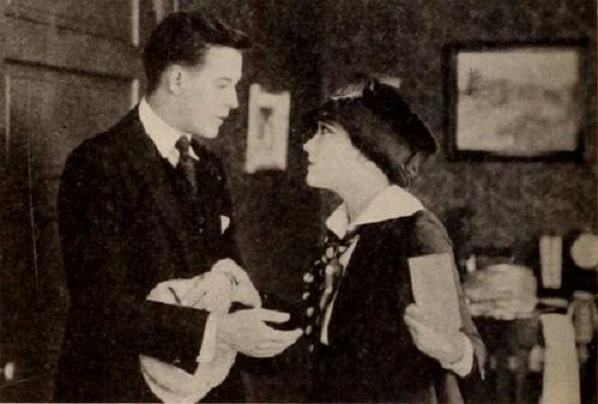
Dir: Jack Conway
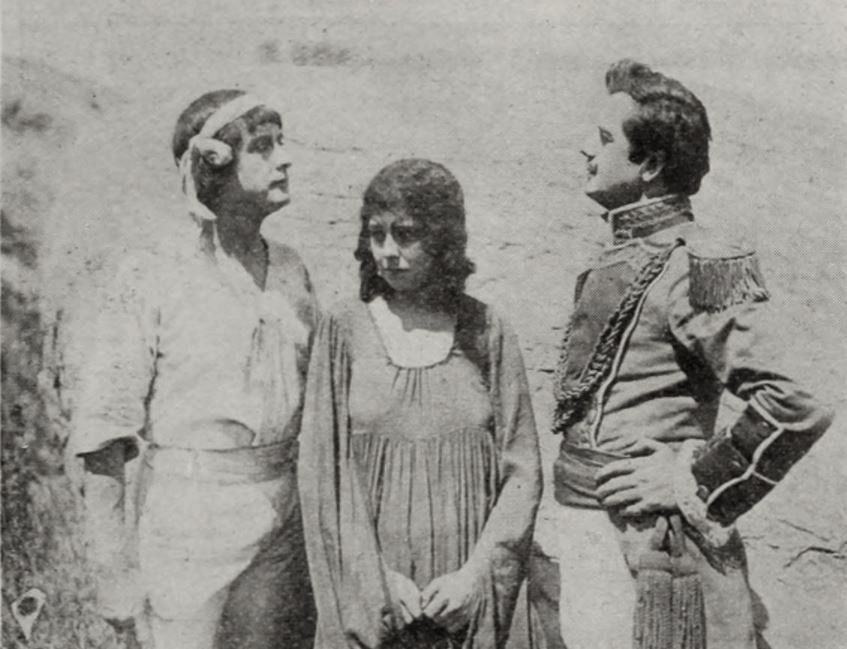
A secretary (Gloria Swanson) uses her boss to get money for her unfortunate sister (Ann Kroman) but eventually falls in love with him.

Dir: Jack Conway
In a seventeenth century New Mexico village, after Indians attack and kill everyone except two monks and a baby named Manuel, the neighboring Penitentes, a violent, fanatical Catholic sect, lay claim to all property, including the estate belonging to Manuel's family. Years later, during a regional fiesta, Father David, the local religious leader, notices the striking Manuel, now grown, and questions the Penitentes' chief about his background. Fearing exposure, the chief induces his followers to choose Manuel as their annual sacrificial victim, to be crucified on the upcoming Good Friday. Dolores, Manuel's sweetheart, attempts to sway him from the group, but he insists on participating in the ceremony. At the urging of Father David, Colonel Banca orders his troops to stop the ceremony, and Manuel narrowly escapes crucifixion. Later, the confession of one of the old monks reveals the true identity and heritage of Manuel.
View Details
Dir: Jack Conway
John Fairmeadow has been expelled from a theological seminary because of his evident unfitness for the ministry. He goes West and finally winds up in a lumber camp. Pattie, the pet of the woodsmen, is praying for a parson to come perform her father's burial service--he was killed by a falling tree. Fairmeadow's clerical appearance makes his arrival seemingly providential, for Pattie declares when she beholds him that her prayers have been answered, so Fairmeadow is compelled to conduct the burial service and thereafter pose as a parson. Having gone to the woods to fight out his own battles, Fairmeadow gains help for himself in helping others. The "parson's" reputation as an exhorter has traveled to a nearby camp and he is urged to go there and conduct revival services. Jack Flack, the "boss" of the neighboring camp, objects to Fairmeadow's activities and undertakes to physically expel him from the community. In this encounter Flack comes off second best, and Fairmeadow's record is enhanced. Flack is living with a girl he has enticed from the camp where Fairmeadow makes his headquarters. This girl is moved by Fairmeadow's sermons to leave her environments and return home. She leaves her baby where Fairmeadow will come upon it in the woods, and when the "parson" takes it in his arms and carries it to his home camp, she follows. Going directly to Pattie's home, Fairmeadow is arranging for the care of the child when its mother is discovered by Pattie looking in at the window. Thus mother and child are reunited and Fairmeadow and Pattie go with her to her father's home, where a reconciliation is effected. Flack comes to the camp to find the girl and have vengeance upon the "parson." One of the converts Fairmeadow has made kills Flack in a fight, and the "parson'" witnesses that the deed was committed in self-defense. While Fairmeadow has been at the neighboring camp, his congregation has built him a church and cabin to live in, and soon after his return the "parson" is called upon to perform a marriage. Then it is that he makes clear his standing; that he has studied for the ministry but has never been ordained. When one of the lumbermen leaves the woods to visit his mother, he goes to Fairmeadow's father, who is a Bishop, and explains how matters stand with his son. The Bishop hastens to the lumber camp, ordains his son and performs two marriages, one of which unites Fairmeadow and Pattie.
View DetailsAnalysis relative to The Little Orphan
| Film Title | Atmosphere | Complexity | Similarity |
|---|---|---|---|
| Come Through | Ethereal | Dense | 88% Match |
| Little Red Decides | Surreal | Abstract | 98% Match |
| Bond of Fear | Gritty | Dense | 86% Match |
| The Dwelling Place of Light | Surreal | Linear | 97% Match |
| The U.P. Trail | Tense | Layered | 92% Match |
This guide was algorithmically generated using the cinematic metadata of Jack Conway's archive. Last updated: 6/27/2026.
Back to The Little Orphan Details →