
DbcultAccessing Vault...
Recommendations
Senior Film Conservator
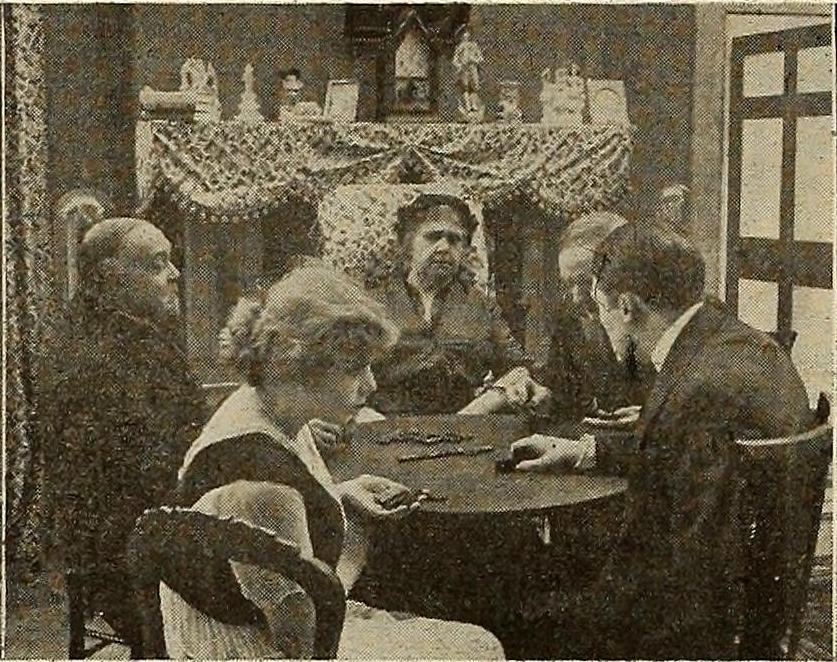
Since its 1916 debut, The Marble Heart has maintained a cult status status, the legacy of The Marble Heart is a beacon for those seeking the unconventional. Our criteria for this list were simple: only the most cult status and relevant titles.
The 1916 landscape was forever altered by the arrival of to sustain a sense of mystery that persists after the credits roll.
Therese Roger is the daughter of a West Indian planter. When she is a baby her parents are murdered and she is adopted by her aunt, Madame Roger, keeper of a haberdashery shop in one of the smaller villages in southern France. She grows up with Madame Roger's son Camille, a sickly, sexless creature she ultimately marries in deference to her aunt's wishes. The monotony of Therese's married life tells on her. The uninteresting Camille each day drones out his existence in an office. At night he returns ever at the same hour, ever in the same enfeebled health and depressed spirits. Two neighbors, Dr. Gribet and Michaud, the prefect of police, drop into the Roger household for their weekly game of dominoes with Madame Roger. Suzanna, daughter of Dr. Grivet and Oliver, son of Michaud, who are in love, call frequently on the aged Madame Roger to pay their respects. Therese, full of youth and life, tires of her environment and its unchanging cycle of events. Camille collapses one day at the office and is brought home by his friend Laurant, Camille's opposite. When Laurant meets Therese, they are attracted to each other, and when he becomes a frequent visitor, a liaison develops between them. Seeing Camille as the only obstacle to their happiness, the two evil lovers decide to kill him. When the opportunity arises, they drown him. They manage to escape suspicion from the murdered man's mother and in course of time marry with the old woman's consent. But they have not attained the happiness which they thought would be theirs with Camille out of the way, for their crime haunts them. It shows in their faces. It stalks through their home. It leads them into quarreling with each other. During one of their stormy scenes they are overheard by Madame Roger, who becomes stricken with paralysis and the total loss of speech upon learning how her son died. The helpless old mother gloats over the torture which Therese and Laurant suffer from their consciences. In time, when guests are present, she tries to write her accusation of them upon the tablecloth with the edge of a domino, but her fingers cannot complete the sentence. She sees distrust continue to grow between the unhappy pair. Therese and Laurant plan to kill each other, but both are too-great cowards to add a new crime to their records, and they drink poison together, paying at last with their own lives for their earlier crime.
Critics widely regard The Marble Heart as a cult-favorite piece of cult cinema. Its cult status is frequently cited as its strongest asset, solidifying its place in United States's film legacy.
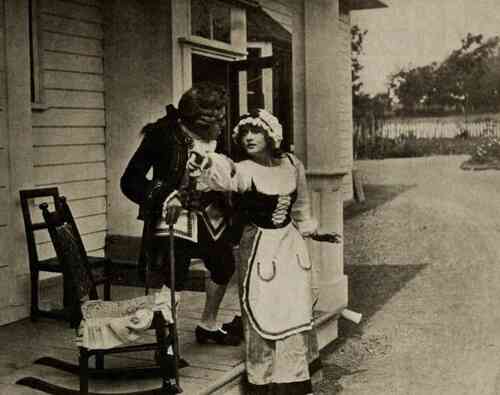
Based on the unique cult status of The Marble Heart, our vault has identified these titles as the most compelling follow-up experiences for fans of cult cinema:
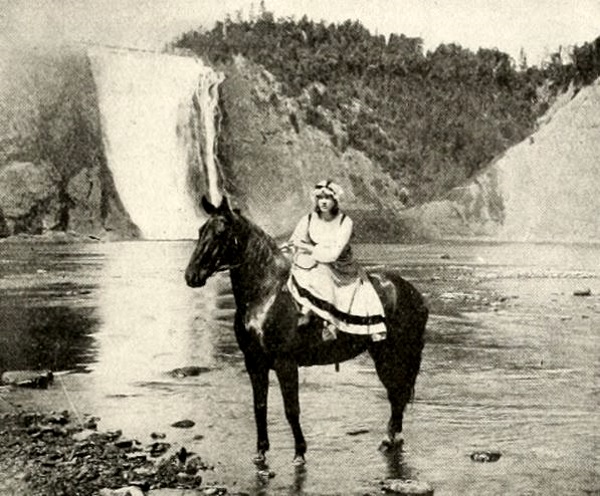
Dir: Kenean Buel
General Wolfe, appointed commander of the expedition against Quebec, comes to bid his mother goodbye. Before sailing, the general calls upon his sweetheart, Katherine Lowther. She presents him with a locket containing a miniature of herself. Wolfe places the jewel on a chain about his neck. Mignon Mars and her brother, Hubert, of a Canadian family, are captured by a body of men attached to the Royal Americans. Lieutenant Arleigh, the officer in charge, secures their release. Mignon loses her heart to the young officer. General Montcalm arrives at Quebec and takes command of the French forces. Under his supervision, fortifications are erected on the isle of Orleans, to protect the approach to the city. The general gains the enmity of Vaudreuil, the vainglorious governor, when he protects Mignon Mars from the unwelcome attentions of the latter. Mignon's brother enlists in the French army and is made an officer. The English fleet carrying Wolfe's men arrives off the Isle of Orleans. Wolfe entices the Canadian pilots aboard his vessel by raising the French flag. The pilots are compelled to take the fleet up the river, under penalty of death. Mignon discovers Wolfe's ruse and rides to warn Montcalm of the approach of the English fleet. Wolfe lands his soldiers on the Isle of Orleans, twelve miles below Quebec. The fleet then proceeds up the river and anchors before Quebec. In an effort to destroy the fleet, Montcalm prepares to fire the ships. But the wind and the tide are against the French, and the fire ships drift ashore. Under orders from the young commander-in-chief, Monckton, one of the British generals, seizes Point Levis, overlooking Quebec. Wolfe offers amnesty to the Canadians who lay down arms. The inhabitants, however, prove unruly. Later, the English batter away at Quebec, with the fortifications at Point Levis and the guns of the fleet. The bombardment does terrific destruction, houses being rattled by the shot and shell, while fires, caused by the rain of death, spring up everywhere. Bushwackers attack the Chateau Mars, on the Isle of Orleans, the home of Mignon. The girl and her father are in dire peril, when Wolfe and his men approach and drive the renegades before them. Wolfe makes the chateau his headquarters. Wolfe orders an attack on the French redoubts above Montmorenci Falls. The impetuosity of the Grenadiers leads them to disobey orders, with the result that the English are compelled to retreat, after a desperate battle. The approach of the Highlanders, who cover the retreat of the army, saves the English from annihilation. Lieutenant Arleigh strives in vain to check the retreat. Fighting like a hero, he is shot by an Indian, a Caughnawaga ally of the French. The redskin is about to scalp the young soldier when Hubert Mars comes to the rescue. The Canadian saves Arleigh's life, but is himself desperately wounded. Wolfe is greatly downcast by the defeat. He returns to the chateau in dejection. Mignon looks in vain for her English lover. She learns that he is among the missing. Setting forth, she searches the battlefield among the dead and wounded. Mignon hears that Hubert is wounded and goes to the hospital to see him. To her delight, she sees Arleigh lying on the cot next to her brother. Mignon returns to the chateau and reports to Wolfe that his young aide is captured. That night, Arleigh makes his escape by changing cots with a French soldier who has died. He dons the man's uniform and leaves the hospital. Later, Arleigh succeeds in escaping through the French lines. He swims out to the English fleet. The following day, Mignon returns to the hospital and is informed that Arleigh is dead and has just been buried. Heartbroken, she returns home with the sad news. Wolfe is stricken with a fatal illness and learns that he cannot recover. During his sickness, his brigadiers recommend an attack without his knowledge. Wolfe learns of it. Despite his weakness, the commander-in-chief rises from his bed and goes to take command. In his escape, Arleigh has learned of Montcalm's intention to send boats and supplies down the river at nightfall. He returns to the chateau and delivers his information to Wolfe. Mignon is overjoyed to find her sweetheart safe. Wolfe learns of a narrow path leading up the mountain side to the Plains of Abraham. The English troops are sent down the river and due to the password given by Arleigh are enabled to slip by the French sentries. All night long the English toil up the mountainside. When morning dawns, they are drawn up in battle array on the Plains of Abraham. The fight commences. Montcalm, emerging from his tent, grows uneasy when he hears the sound of firing. He learns of the state of affairs. The bugles summon the French troops to battle and they march forth to the Plains of Abraham. Montcalm calls upon Vaudreuil, the governor, for assistance, but that cowardly official refuses to render aid. The French approach within firing distance of their foe. Wolfe delivers a stirring address to his men as the French approach. The battle commences. The opposing forces come together with a clash that sends both sides reeling. Forward they spring, slashing and stabbing like madmen. Wolfe is in the thickest of the fray. A shot strikes him. He falls. A tremendous shouting arrests his agony. "They run, they run," cries one of his aides. "Who runs?" gasps Wolfe. "The enemy." "Now God be praised," the dying man whispers, "I die happy." At the same moment, Montcalm, desperately striving to check the rout, is mortally wounded. The French commander is carried to his headquarters. He is informed that his wound is mortal. "How long shall I live? Twelve hours more or less? So much the better. I am happy that I shall not live to see the surrender of Quebec," he gasps. Wolfe's body is placed aboard the English flagship to commence its journey to the land for which he gave his life. Seated in a boat on the river, Arleigh and his bride, Mignon, watch the vessel sailing out towards the setting sun.
View Details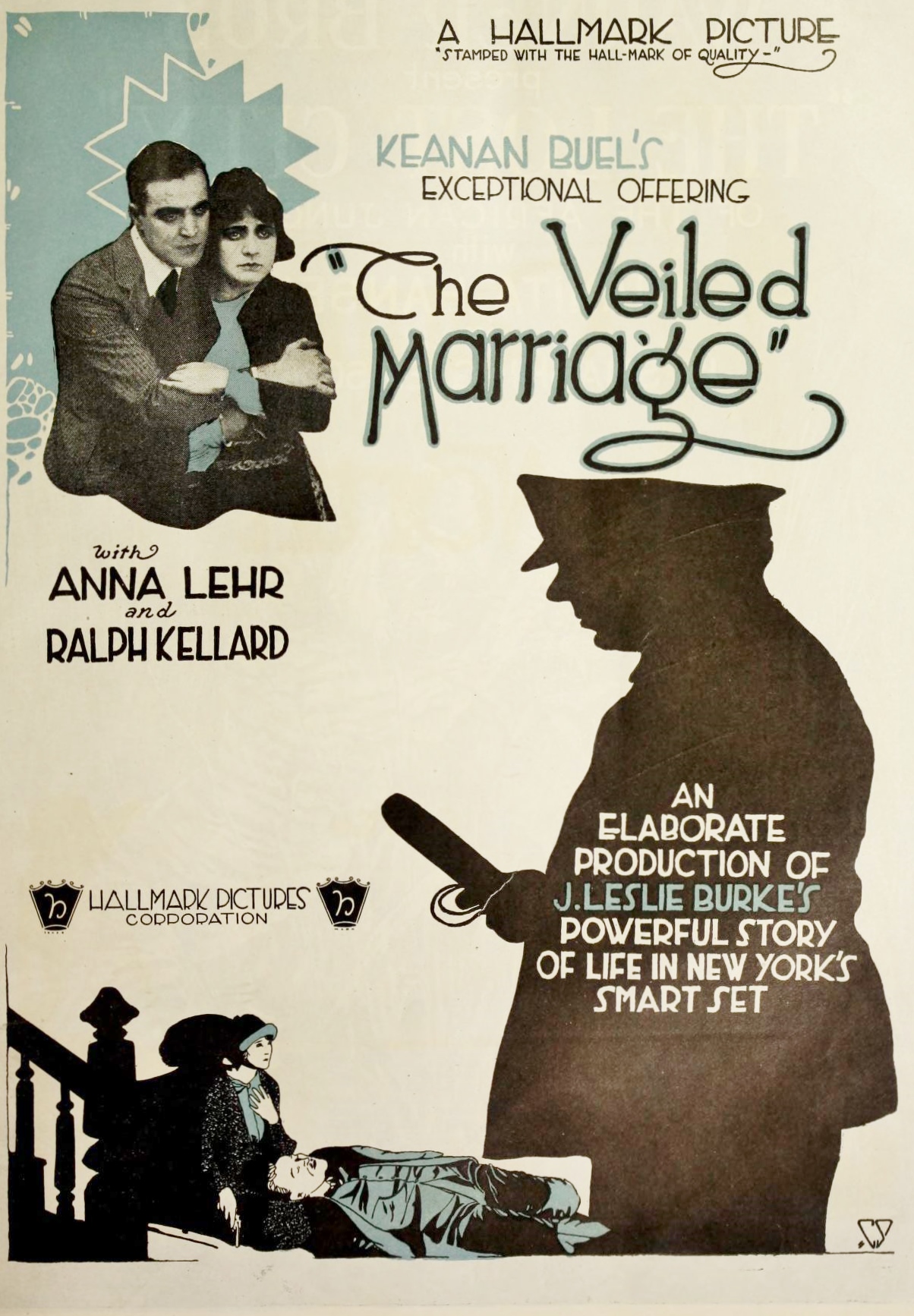
Dir: Kenean Buel
Drinking pals Fred Peyton and John Browning are both members of high society. Upon meeting impoverished Margaret Fallon, Peyton is so impressed with her beauty that he becomes a frequent visitor at the Fallon house. One evening, while returning from dinner, an explosion overturns their automobile and Margaret is temporarily blinded. Meanwhile, Browning has become engaged to a wealthy woman whom Peyton covets for her wealth and Margaret's blindness provides the opportunity for him to obtain this prize. Stealing his friend's wedding license, Peyton substitutes Margaret's name for that of Browning's intended bride and after intoxicating his friend, Peyton sends for Margaret and marries her to Browning. The next day, Peyton lies to his friend that he had drunkenly insisted upon the marriage. Later, when Margaret's eyesight is restored and she is seeking employment, she meets Browning and the two fall in love, unaware that they are husband and wife. Eventually, Browning learns that the woman from whom he is seeking a divorce is actually the woman he loves and, after Peyton is shot by a former mistress, all ends happily.
View Details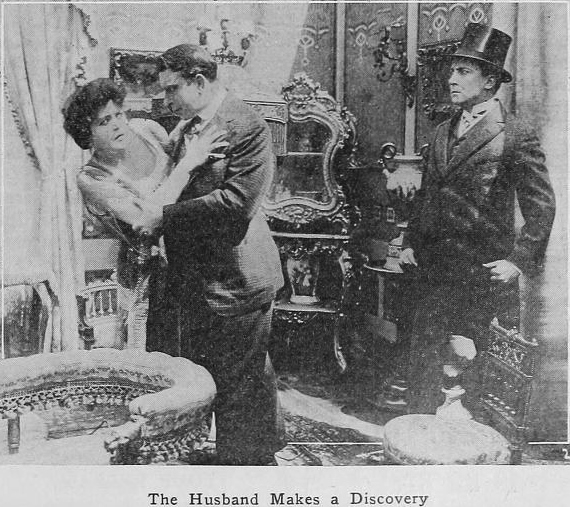
Dir: Kenean Buel
A fascinating piece of cinema that shares thematic elements.
View Details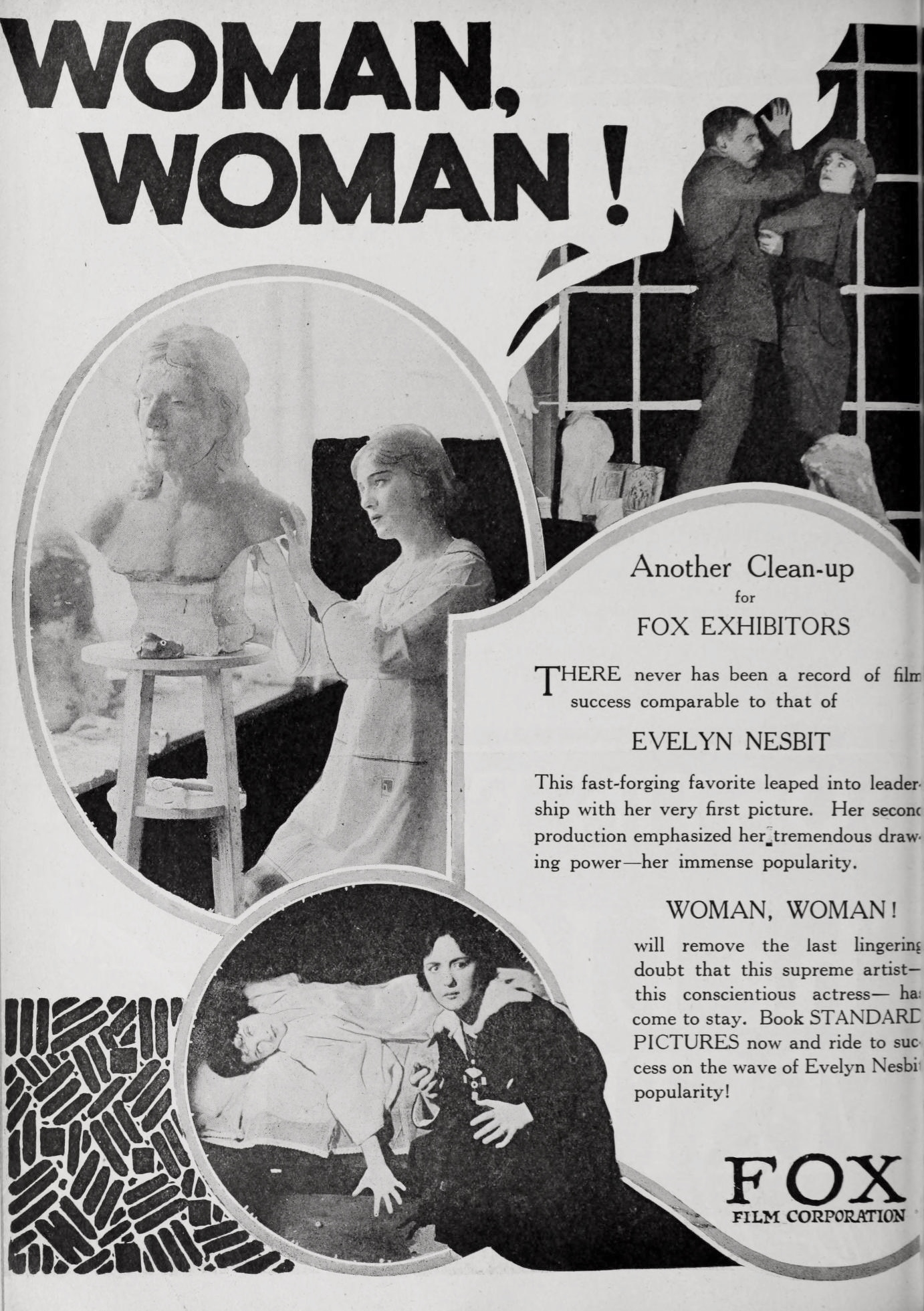
Dir: Kenean Buel
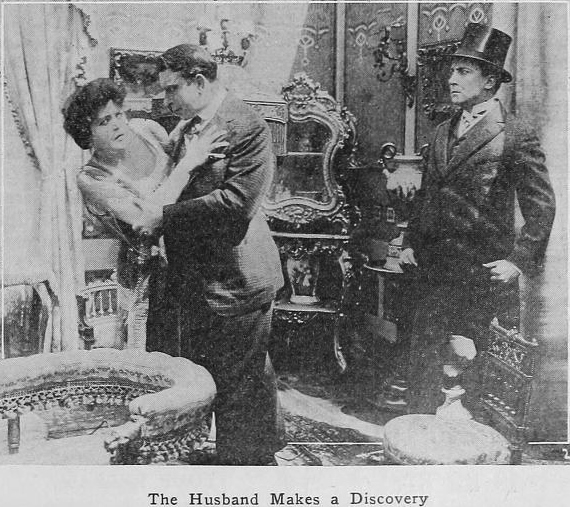
Alice Lindsay arrives in New York from a small town and becomes part of Greenwich Village Bohemian life. Alice resists the advances of Gwenne Stevens, an advocate of free love, and marries civil engineer Samson Rathbone.
View Details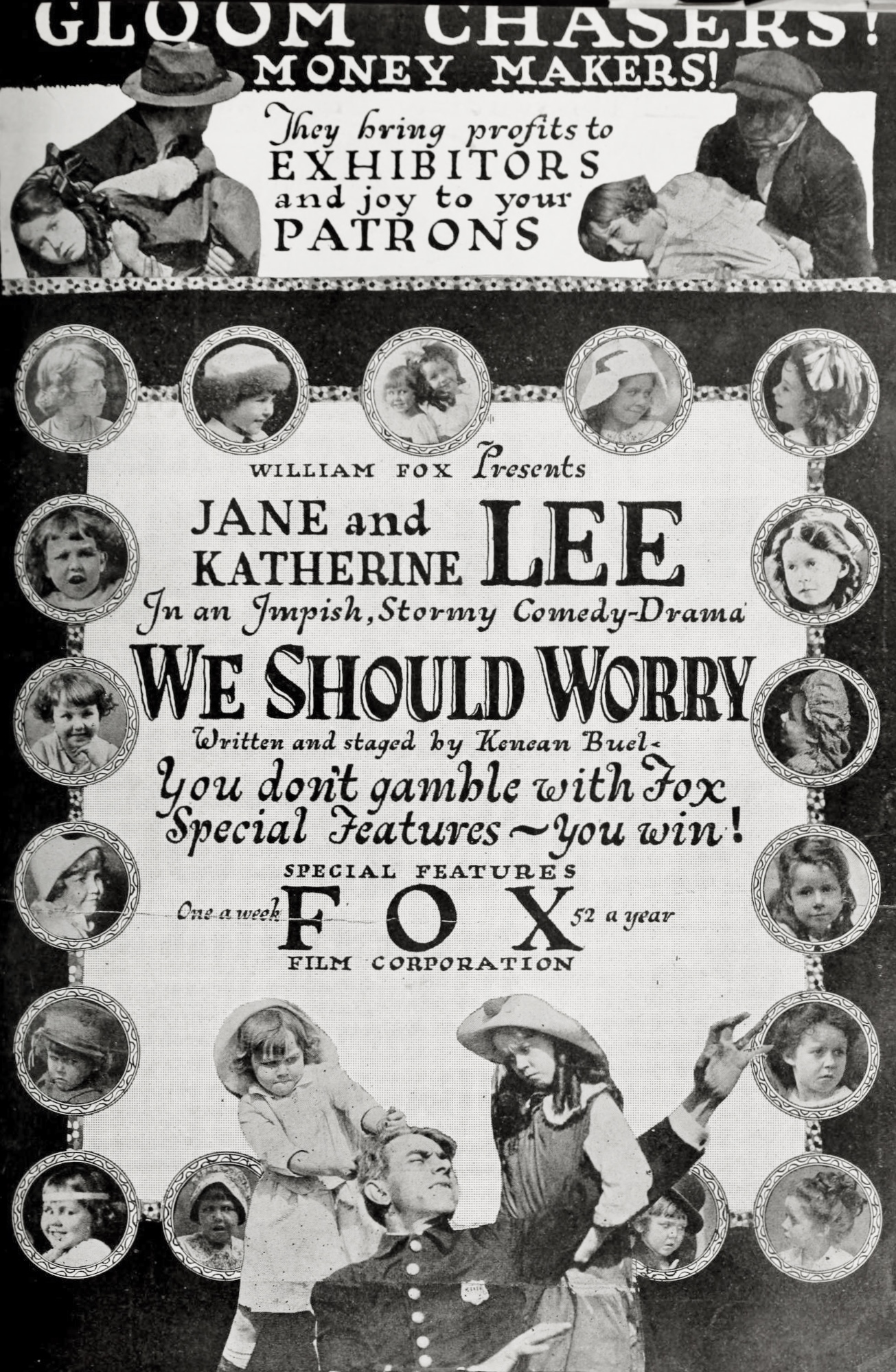
Dir: Kenean Buel
Little Jane and Katherine approve of the romance of Miss Ashton, their rich and beautiful aunt, with Jack Fenton, but when she becomes distracted by the debonair Percival Gilpatrick, whom the children detest, they decide to intervene. After the children interrupt his attempted marriage proposals several times, Percival, actually a crook, orders his accomplices, Mike and Bill, to keep the girls occupied. Annoyed that Percival would rather court Miss Ashton than rob the bank, however, Mike and Bill decide to kidnap the children and hold them for ransom. Imprisoned in a cellar, Jane and Katherine torment the two men with their pranks until the crooks willingly release them, but Percival stages a rescue that, much to the girls' dismay, impresses Miss Ashton. Later Percival and his men rob the bank, but the youngsters aid the police in catching them. Miss Ashton then happily agrees to marry Jack.
View Details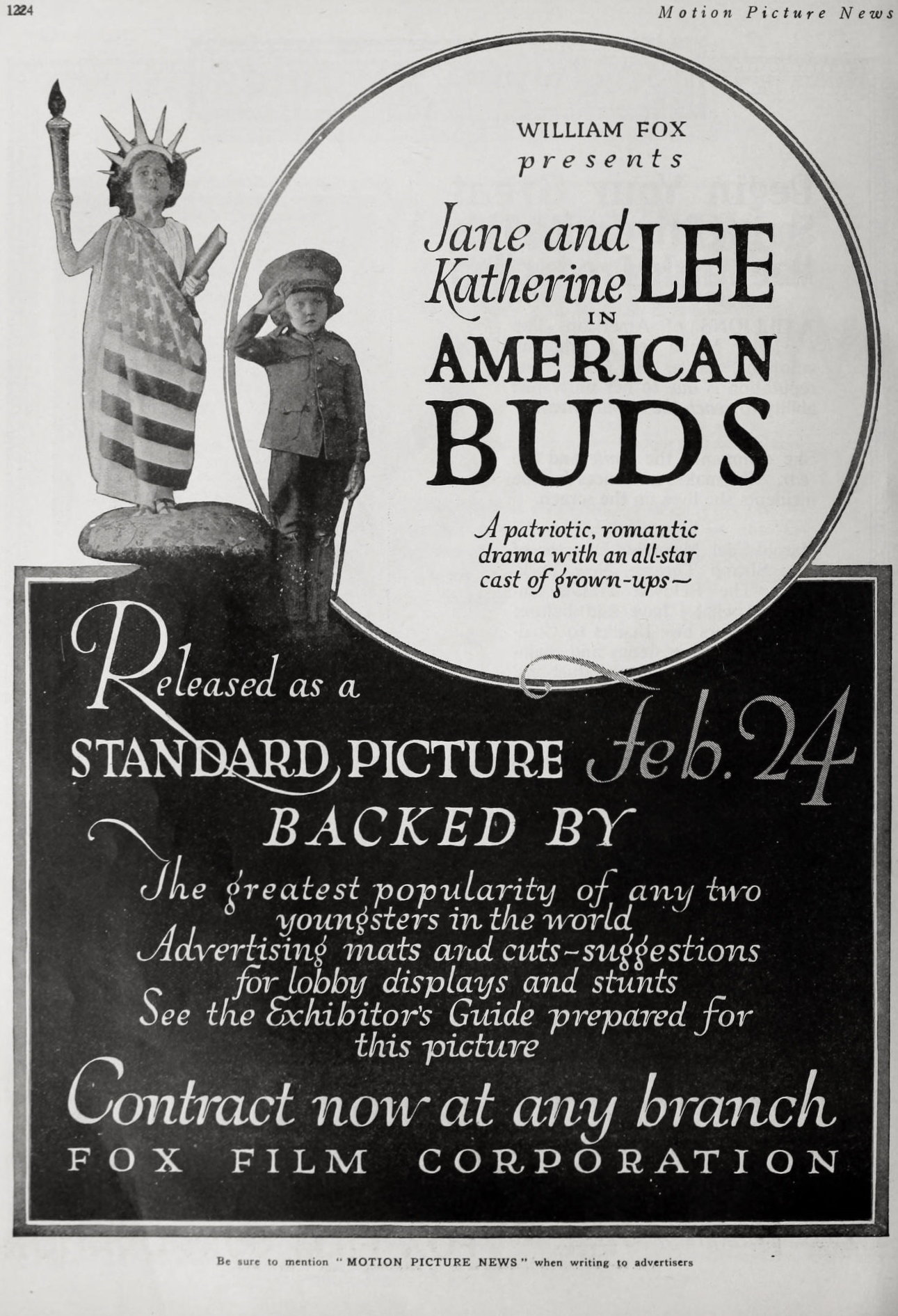
Dir: Kenean Buel
Letters from the late mother of orphaned sisters Jane and Katherine seem to indicate that their father is Capt. Bob Dutton. Under orders from his superior, Colonel Harding, to acknowledge the children or quit the service, Dutton accepts responsibility for them. Shocked by his presumably checkered past, Cecile Harding, Dutton's fiancée and the colonel's daughter, breaks their engagement. One evening Jane surprises Capt. Robert Duncan, Dutton's rival for Cecile, stealing Bob's papers. Subsequently shot, the dying Duncan reveals that he is an Austrian agent, as well as the father of Katherine and Jane, having eloped years earlier with Ethel Harding, the colonel's older daughter. The colonel assumes the care of Jane and Katherine, and Dutton and Cecile are reconciled.
View Details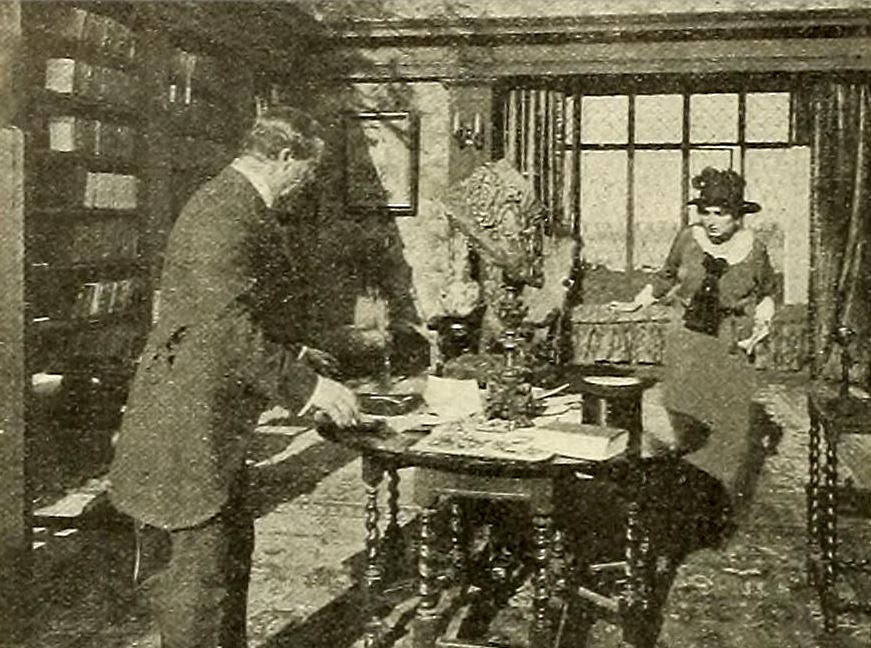
Dir: Kenean Buel
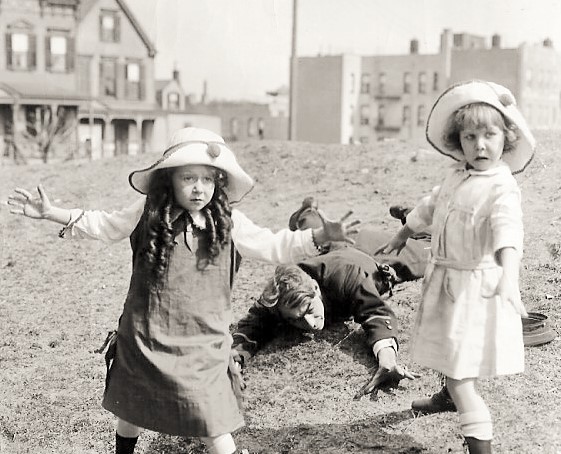
Ethel Andrews is interested in settlement work. Her father refuses to cooperate with her. Ethel kidnaps her five-year-old brother Archie and places him in a tenement as an object lesson. To make the kidnapping appear the work of criminals, Ethel sends her a father a note demanding $10,000. Gangsters learn of the plan. Andrews engages Madelyn Mack, a girl detective, to find his son. Madelyn unearths several clues, among which are fragments of a tin soldier belonging to Archie. She strongly suspects Ethel of being implicated in the matter. Ethel, regretting her rash act, goes back to the tenement to bring Archie home. The gangsters capture them both, and send a note to Andrews telling him his son and daughter are prisoners. One of the gangsters shoots the note into the Andrews' library with a sling shot, just as Madelyn is telling the father of her suspicions concerning Ethel. The note upsets her theories. Madelyn discovers that the paper on which the gangsters' note is written has contained powdered Jasco berry, an Oriental drug used in cigarette form. Later, she succeeds in tracing Ethel and Archie to the tenement, but finds them gone. Passing a crowd collected on a corner, Madelyn scents the odor of Jasco berry and finds the man who is smoking it. She follows him and discovers the cottage in the suburbs where Ethel and Archie have been taken. She slips into the house and enters the room where the two are confined. Discovering a telephone wire outside the window, Madelyn taps the line with a pocket phone and summons assistance. She is discovered by the gangsters, who are just about to break into the room when the police arrive. A desperate battle ensues, which ends in the capture of the kidnappers. Andrews presents Madelyn with a check for $10,000 for her splendid work. The detective gives the check to Ethel for settlement use, but Andrews, returning the check, smilingly donates the money himself.
View Details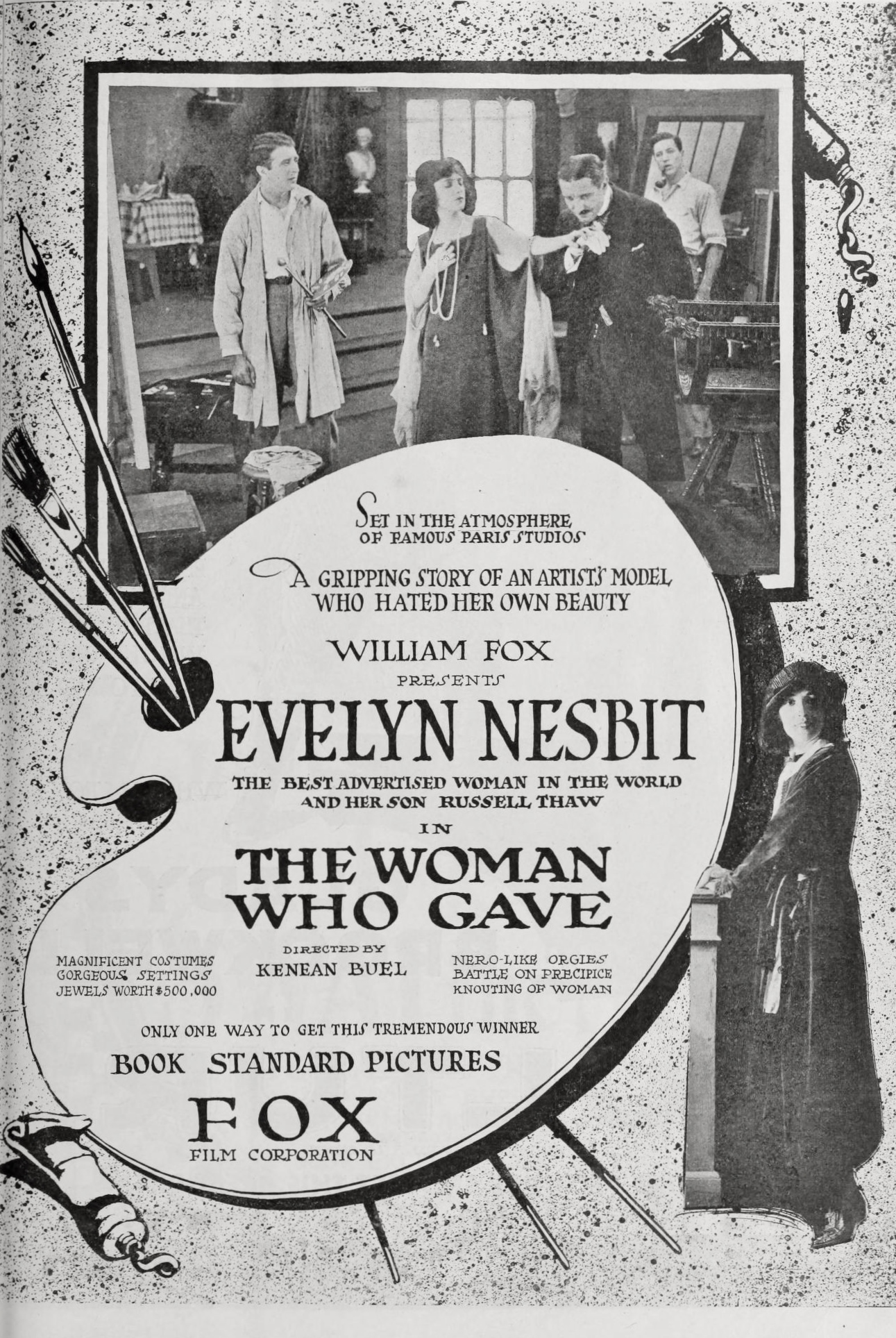
Dir: Kenean Buel
Colette is a model who poses for two artist brothers, Don and Andrien Walcott. Andrien, a hunchback, creates a beautiful portrait of her which is seen by evil Bulgarian Prince Vacarra. The prince tracks her down and locks her in.
View Details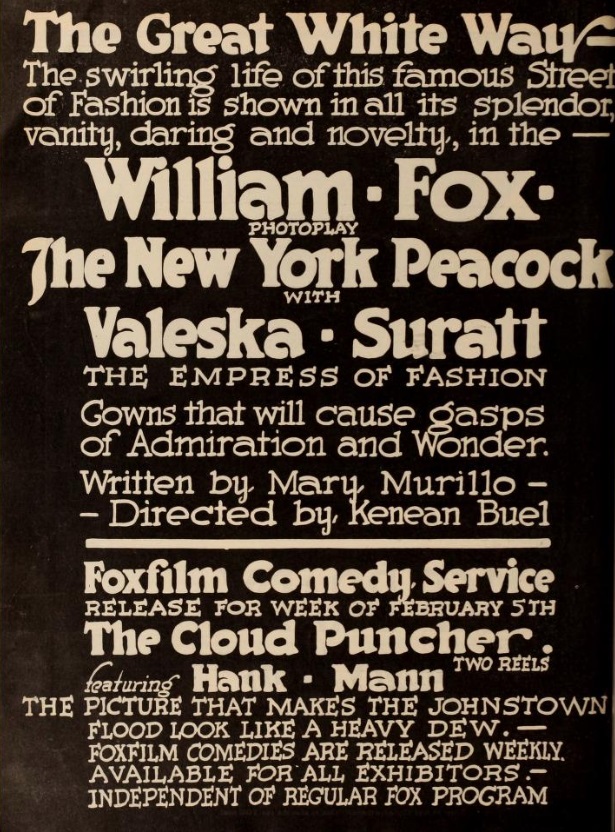
Dir: Kenean Buel
Billy Martin is sent to New York to put through a war contract for his father, a new England manufacturer, and takes $100,000 as a security. The munition broker's secretary, a crook, tells Graham, a gambling house keeper, of Billy's coming. Miller is detailed to lure him to the gambling house. Miller, posing as the broker's representative, meets Billy and offers to show him New York life. He meets Zena and is so captivated that he consents to try his luck at the roulette wheel. After his first success he loses rapidly. At last Zena drags him away with only $15,000 left. Zena repentant, tries to comfort Billy. She finds he is determined to win back his losses and is captivated by his pluck. Reluctantly she takes him to the gambling house. Billy loses all. When the mail brings no word from Billy, his wife comes to New York. She enters his room just after he and Zena arrive. Zena hides in a closet. Billy refuses to return with his wife until he has recovered his father's money. Zeena returns to her apartment. Graham accuses her of double-crossing him. She orders him to leave. Zena sets out to recover Billy's money, and returns to the gambling house. Graham thinks she has repented. Martin comes to New York for Billy. Zena picks him out as the man from whom to get the money. She lures him to her den. Billy calls up, and when Zena recognizes his voice she hangs up. Suspecting Zena has deceived him Billy rushes to the apartment and finds her embracing his father. Zena rushes to him. Billy casts her off. Martin tells Billy he did this to show the treachery of Zena's love. Heaping abuse on Zena, who sees her one true love lost, Billy leaves with his father. Zena in remorse leaves her old home and life, a wreck. Billy asks his father's forgiveness. "I forgive you," says the old man, "but I can't forget that I trusted you."
View Details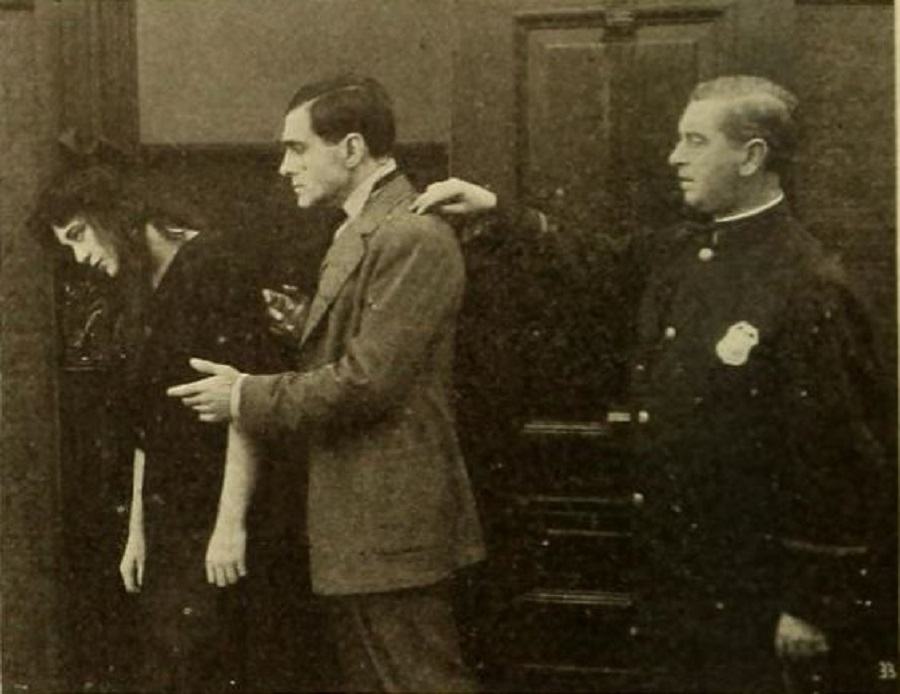
Dir: Kenean Buel
This picture opens on the big, helpless humanity which is huddled together in Blossom Street, in the East Side's slums. The sweetest spirit of the thousands dwelling there is Anne, in love with Jimmy Graves, a man she knows is a crook. In warning Jimmy one night that the police are on his trail, she is caught in the maelstrom, brought into court with him and sentenced to jail. When she is released she plots revenge on the man who put her behind the bars, Judge Marcus, about to be nominated for a higher position in public service. Through a ruse, she obtains employment in the Marcus household. The Judge does not recognize in his wife's secretary the same woman who was once just a "poor, Blossom Street thing." He finds that he is rapidly falling in love with her. Anne is approached by a stool pigeon working for Marcus's political opponents, who are trying to fasten a scandal upon the Judge. Anne promises to aid them. She agrees to put him in a compromising position that evening, when witnesses will be on hand. Meantime, Jimmy Graves is released. He has been living through the years of his prison term, with the face of Anne always before him. He learns that the girl is at the Marcus home, and starts for the house. As the hour for the denouement draws near, Anne realizes she loves Marcus. He kisses her again and again. She notices the clock and pushes him from her just before the curtains are thrust back by the politicians and Mrs. Marcus. Jimmy arrives, and in the face of her love for Marcus, she sacrifices herself that the judge may win.
View DetailsAnalysis relative to The Marble Heart
| Film Title | Atmosphere | Complexity | Similarity |
|---|---|---|---|
| Wolfe; or, the Conquest of Quebec | Ethereal | Dense | 90% Match |
| The Veiled Marriage | Gritty | Abstract | 88% Match |
| Hypocrisy | Surreal | Abstract | 86% Match |
| Woman, Woman! | Surreal | Dense | 89% Match |
| We Should Worry | Gothic | Abstract | 94% Match |
This guide was algorithmically generated using the cinematic metadata of Kenean Buel's archive. Last updated: 8/16/2026.
Back to The Marble Heart Details →