
DbcultAccessing Vault...
Recommendations
Senior Film Conservator
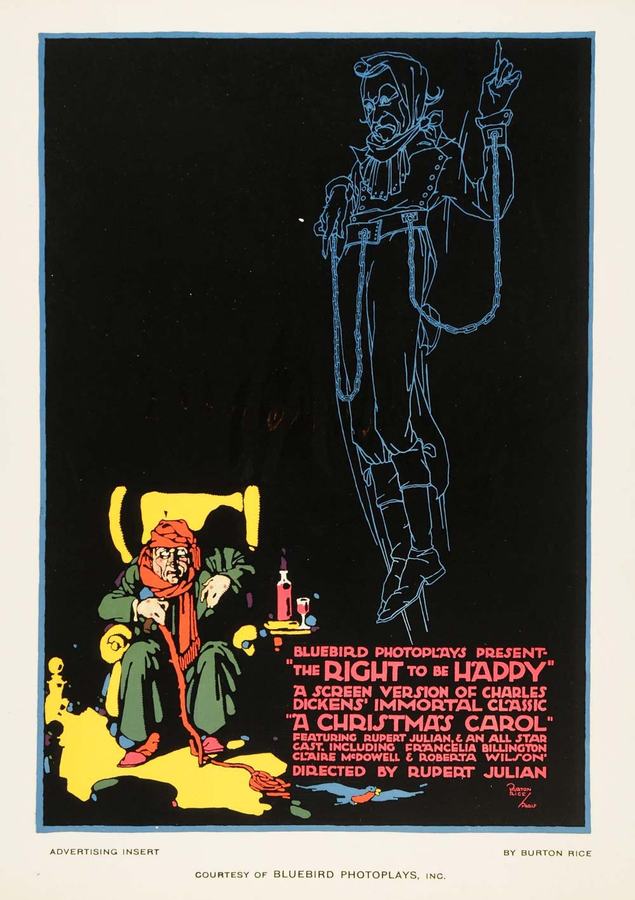
As a cultural touchstone of United States, The Right to Be Happy resonates with its unique vision, its lasting impact ensures that its spirit lives on in modern recommendations. Our archive is rich with titles that mirror the unique vision of Rupert Julian.
For many, the first encounter with The Right to Be Happy is to provoke thought and inspire awe in equal measure.
A heartwarming retelling of Charles Dickens' 'A Christmas Carol' where Ebeneezer Scrooge is visited by three spirits in an attempt to save his soul.
The Right to Be Happy was a significant production in United States, bringing a unique perspective to the global stage. It continues to be a top recommendation for anyone studying cult history.
Based on the unique unique vision of The Right to Be Happy, our vault has identified these titles as the most compelling follow-up experiences for fans of cult cinema:
Dir: Rupert Julian
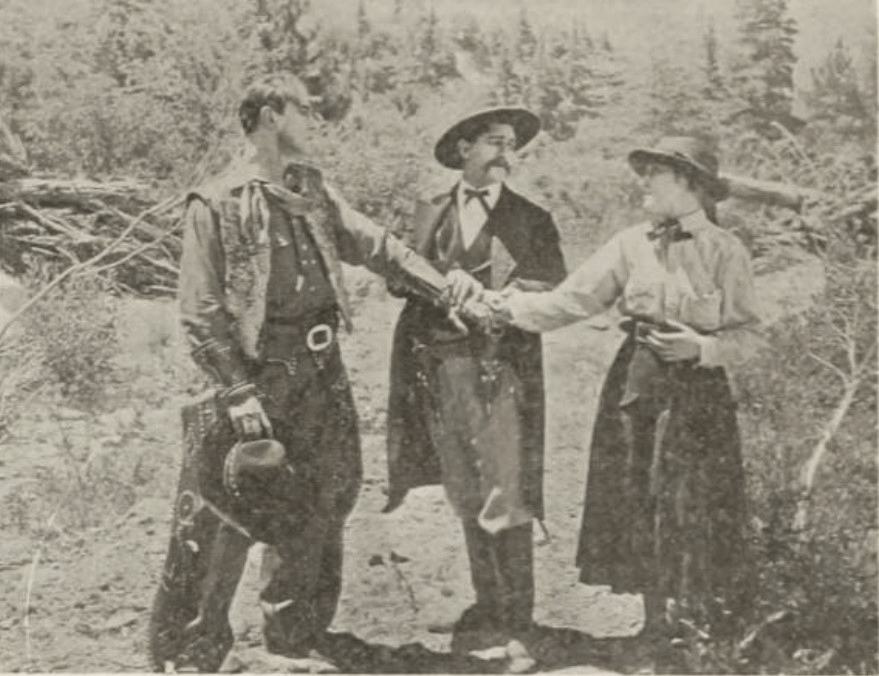
Christoper Foy, who is running away from the authorities, is injured during his escape and takes refuge at the mountain cabin of Colonel Vorhis and his daughter Stella. Stella takes pity on Foy, and the Colonel, admiring Foy's confession of guilt, takes steps to have him pardoned. He and Stella fall in love and Foy remains honest, but when he is accused of cattle stealing, he again runs away. When John Wesley Pringle, who also loves Stella, learns that Foy is innocent but is the object of a conspiracy, he helps Foy by uncovering the plot. Despite his love for Stella, Pringle helps to prove that Foy is innocent so that Stella can find happiness with the man she loves.
View Details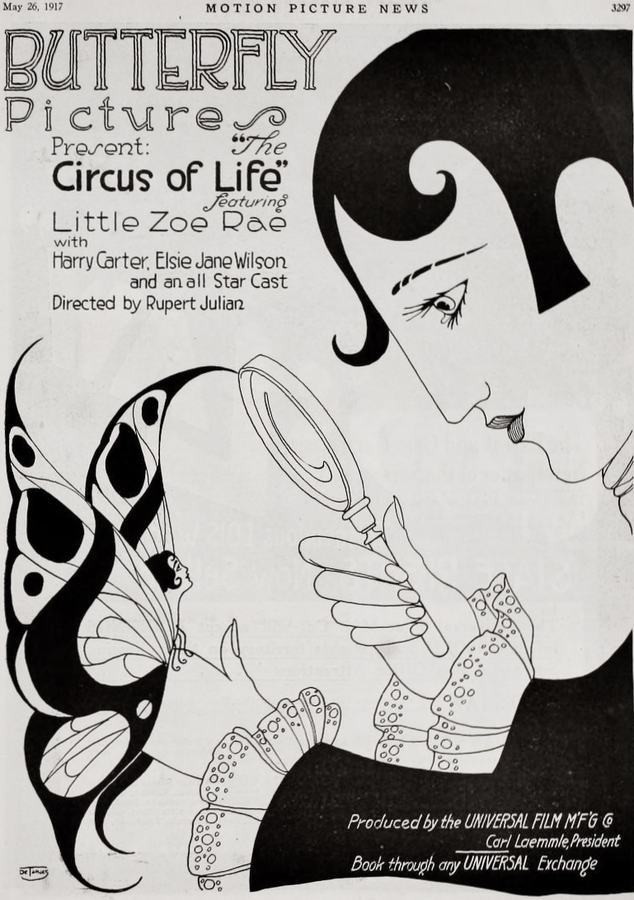
Dir: Rupert Julian
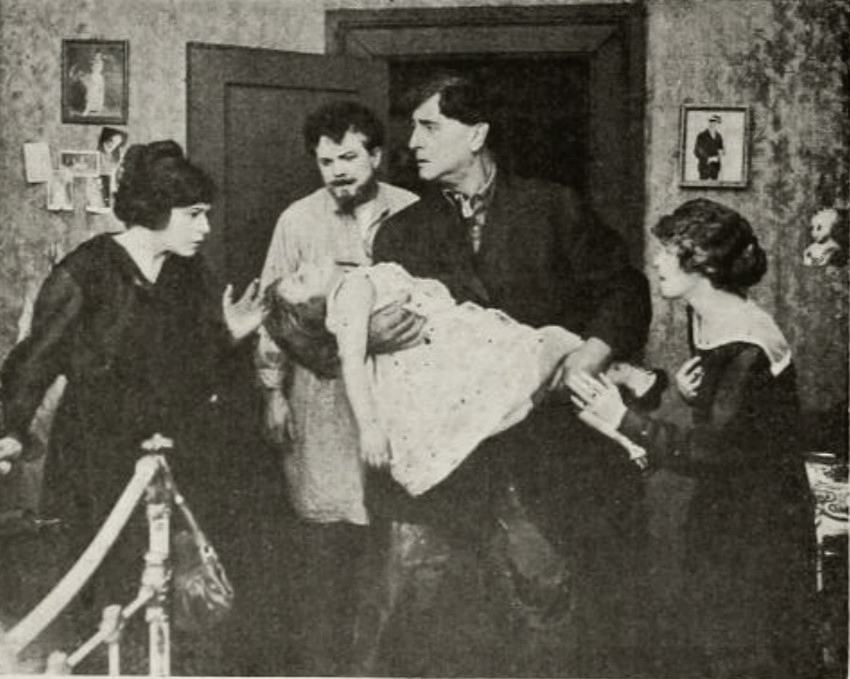
Danny, the driver of a brewery wagon, marries Mamie; soon after, she becomes infatuated with artist Gaston Bouvais. When Marie gives birth to Daisy May, Danny is led to believe at the hospital that the baby is not his. Shattered, he embarks upon a life of drinking and carousing. Nevertheless, he loves the little girl, and as she grows up, Daisy May joins him on the brewery wagon. On one of these trips, Danny drinks too much and loses control of his horses, and Daisy May is injured in the melee. Meanwhile, Bouvais has finally convinced Mamie to run away with him, but Danny's accident finally awakens in her the love she feels for him, and she refuses to go. Rejected, Bouvais marries another woman and happiness is restored to Danny and Mamie. When they reconcile, Daisy May recovers and Danny embarks upon the new career of driving a milk wagon.
View Details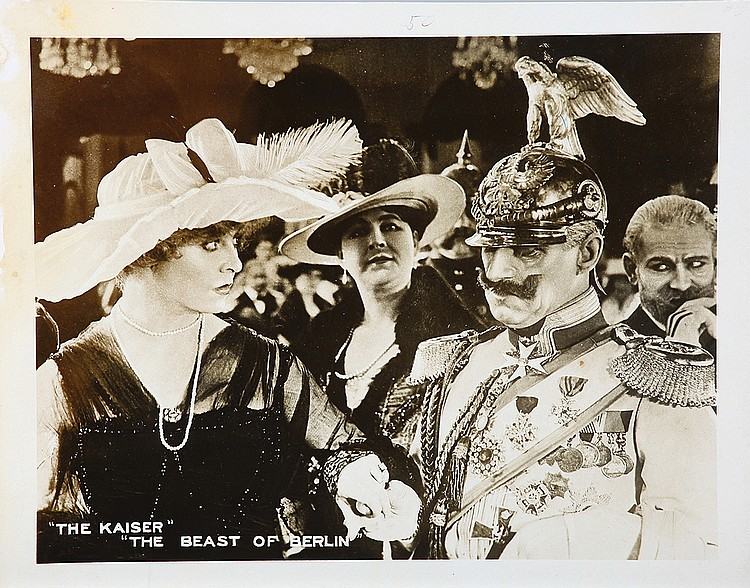
Dir: Rupert Julian
A propagandistic view of the First World War, showing the political greed of the German Kaiser Wilhelm, the resistance of some of his own soldiers, and fanciful prediction of the nature of the war's end.
View Details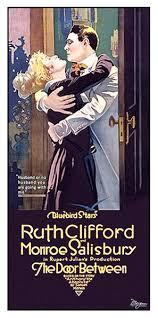
Dir: Rupert Julian
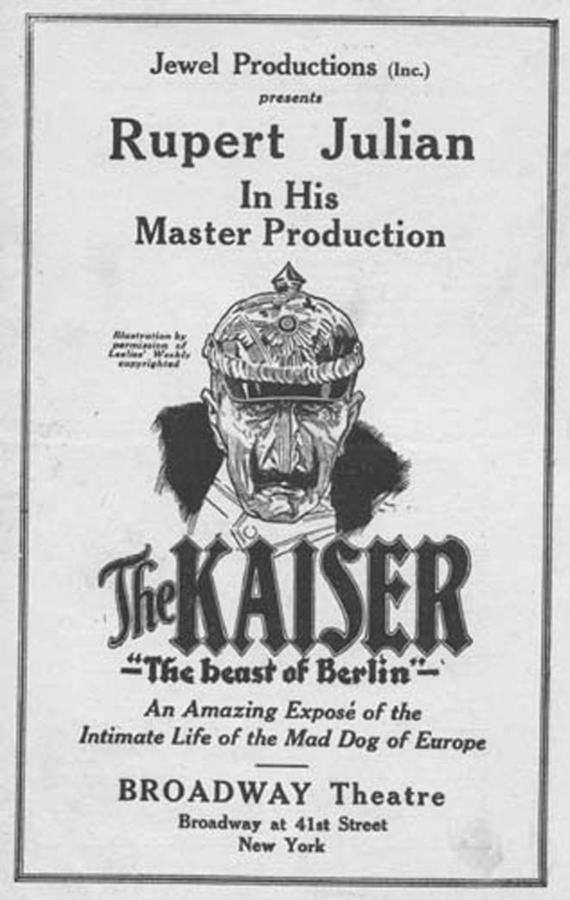
Anthony Eckhart, a student of Oriental music, meets Crocker in a Geisha house where he extricates the intoxicated man from the results of an attack upon a waiter. Crocker explains that his wife has left him and there is only drink left. Anthony discovers a woman with marvelous voice at the hotel and falls in love with her before he finds that she is Crocker's wife. He confesses to Crocker and offers to leave if Crocker will leave her alone. Crocker promises an answer, but comes to kill his wife. Anthony prevents him and at last Crocker proves a man.
View Details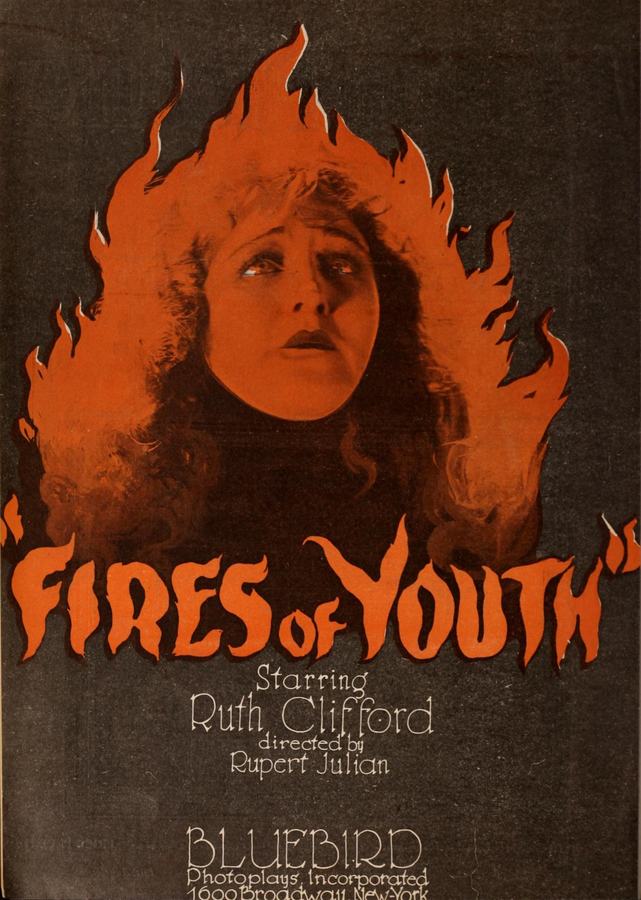
Dir: Rupert Julian
Lucille, a beautiful and romantic young woman, marries John Linforth, a wealthy businessman, who is twice her age, and too distracted by his business affairs to give her the attention she craves. John is pleased when she takes a liking to his young friend, Ronald Standish. After the friendship has grown to romance, however, John tries to keep the two apart. As he is about to depart on a short trip, John orders Ronald from the house. Later that night, Ronald asks Lucille to elope with him, but before they leave, they realize that an illegal union would only lead to unhappiness, and Ronald returns home. A burglar, who, in stealing certain securities from John's desk, witnesses the couple in an embrace, blackmails Ronald into purchasing the bonds. To save her lover, Lucille confesses everything to John, who promises to give his young wife her freedom. A year later Lucille and Ronald marry.
View Details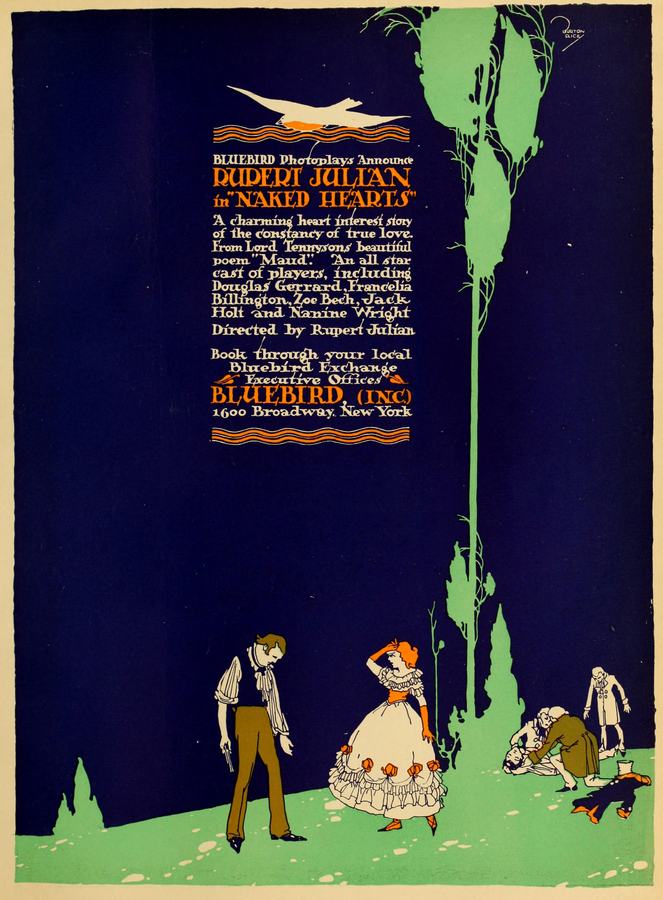
Dir: Rupert Julian
Two families had been neighbors in the South for years; Maud, her brother Howard, and Cecil Lane were playmates. One day as they were playing on the lawn the fathers of Maud and Cecil betroth their children in a bumper of wine. Shortly thereafter Cecil's father loses his fortune through poor speculation and commits suicide. Maud is sent away to school. Cecil begins a musical education, remaining at home and growing up to be the village music teacher. Years later Maud returns home, and soon her brother Howard arrives with a foppish friend, Lord Lovelace, who straightaway lays siege to Maud's heart. Maud and Cecil meet at the village shrine and renew their childhood love. Against her will Maud consents to a betrothal with Lord Lovelace. On the night of the betrothal party Maud and Cecil plan to elope, but their arrangements are discovered and thwarted, a duel between Cecil and Howard developing with in the hour. Maud hears the shots fired, and beholding her brother slightly wounded sends Cecil away in anger. He leaves the village under the impression that Howard will die. Cecil goes far away, and in a great city his musical talents are recognized. Maud, meanwhile, in contrition, would have Cecil return to her, but he keeps his mother poorly informed and Maud is unable to get word to him. When Cecil composes the song, "Come Into the Garden, Maud," his fame is assured. At this time war breaks out and Cecil, Lord Lovelace and Howard become soldiers, eventually meeting on the battlefield. Lord Lovelace knows of Cecil's song and his great fame as its composer, and at the moment he is about to die of his wounds, Lord Lovelace sends word to Cecil, that Maud is waiting for Cecil in the garden. Believing that Cecil has been killed in battle at the same time her brother Howard and Lord Lovelace die of their wounds, Maud decides to dedicate her life to religion and enters a convent. When Cecil ultimately comes home he is too late to reach Maud with any communication. He spends the rest of his life in sorrow going every day to the convent walls and playing his famous song that Maud might hear and know that he thus awaits the final end, faithful to his childhood sweetheart.
View Details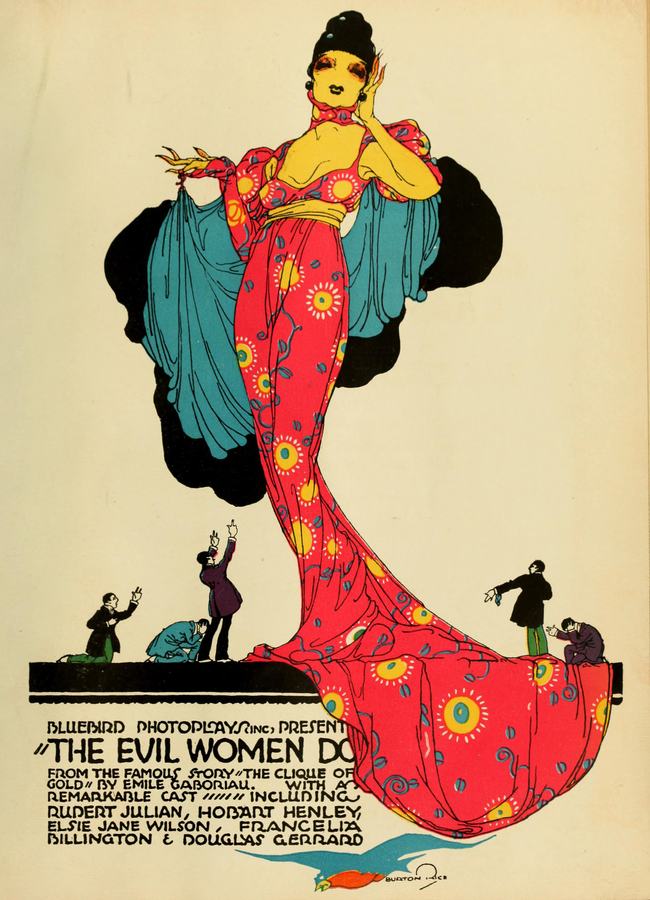
Dir: Rupert Julian
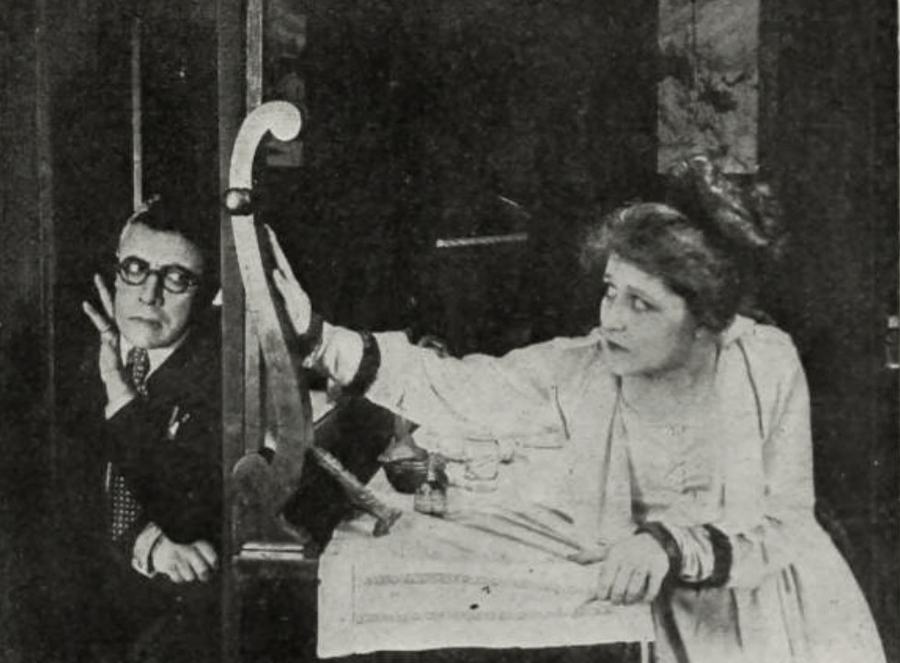
Ernestine Bergot is a child of the Paris streets. One day she begs a few sous from a student of the Latin quarter. He becomes interested in her, takes her to his studio, and declares he will adopt her. Later she meets Justin Chevassat, another artist, and a mutual infatuation springs up. Gradually Ernestine becomes a beautiful "vampire," hardened to any crime. One day she shoves her benefactor out of the studio window after robbing him of a large sum of money. When he dies as a result of the fall, Ernestine and Justin leave the Latin quarter. To further their schemes they take into partnership Sir Thomas Elgin, who poses as Ernestine's uncle. The woman changes her name to Sarah Brandon her reckless adventures soon make her known as the most evil woman in the city. Malgat, a banker's clerk who has access to the funds, is her first victim. Sir Thomas Elgin, acting as Sarah Brandon's decoy, feigns illness one day while walking in Boise de Bologne and attracts the attention of Count Ville Handry, who assists the supposed sick man to Sarah Brandon's home, where the woman proceeds to practice her wiles upon the old nobleman. In the end Count Handry asks her to marry him, and their engagement is announced. The Count's daughter Henriette objects, especially when Daniel Champcey, her betrothed, a French naval officer, informs her of Sarah Brandon's reputation. The Count persists, Daniel is ordered to China, and Henriette is left alone in her father's home with the mistress of the house and all the servants (by Sarah's conniving) turned against the daughter. Before leaving Daniel has mistakenly entrusted Henriette to the "tender" mercies of Chavessat, tool of Sarah. When Henriette is no longer able to endure the humiliation she suffers in her father's home, she begs Chavessat to take her away to some quiet spot where she can live respectably until she can get word to Daniel in China. Chavessat's treachery imprisoned Henriette in a house of ill repute, where he threatens, by starvation, to compel the girl to submit to his will. In the same building where Henriette is confined lives Malgat, the banker's clerk Sarah ruined, and it is through his discovery of Henriette's identity and his further activities in association with the Parisian police that Sarah is finally exposed at the moment when Count Handry, ruined by her iniquity, is about to commit suicide. Daniel has hurriedly returned to Paris in response to Henriette's appeal, and with Malgat and the girl, faces Sarah Brandon in Count Handry's home. Rather than submit to arrest Sarah Brandon drinks from a vial of poison and falls dead, as the police lead away to prison Chavessat and her other accomplice, Sir Thomas Elgin.
View Details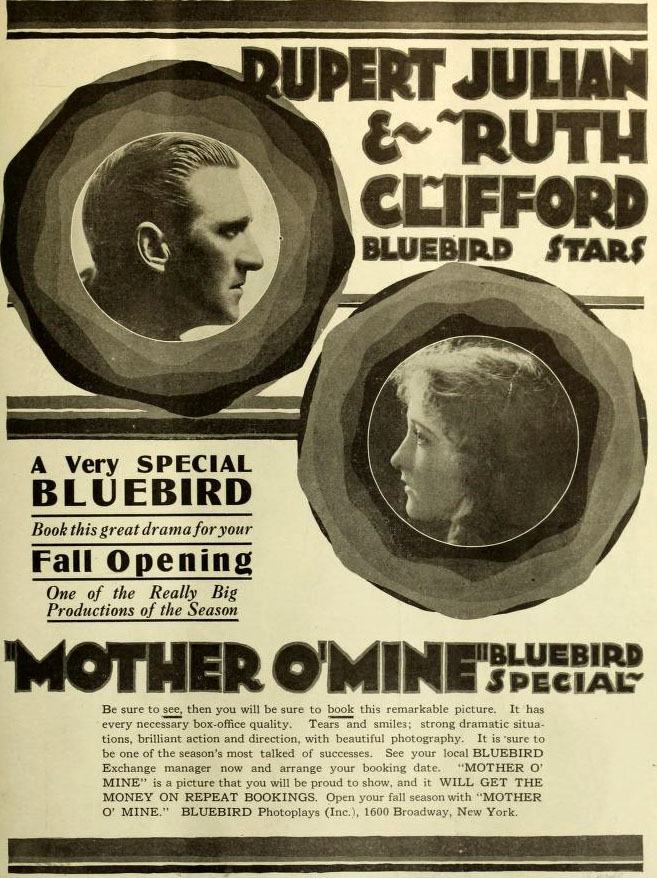
Dir: Rupert Julian
Mrs. Standing, an old-fashioned country mother, sacrifices to put her son John through college so he can have a better life. Upon completing school John goes to the city, where his financial success blinds him to the basic values his mother taught him. During an important social event one evening, Mrs. Standing comes to her son's house carrying wicker basket full of homemade jams. Ashamed, John tells his wealthy fiancée, Catherine Thurston, that the old lady was his childhood nurse. Mrs. Standing overhears her son's deception and goes home devastated. John, remorseful, follows with the firm resolution to devote future years to the care of his mother. Learning the truth, Catherine, accompanied by her own mother, visits the Standings' country home and all is forgiven.
View Details
Dir: Rupert Julian
After the death of her father, a young girl goes to live with her uncle in Kentucky. She immediately comes into conflict with her uncle's shrewish wife.
View Details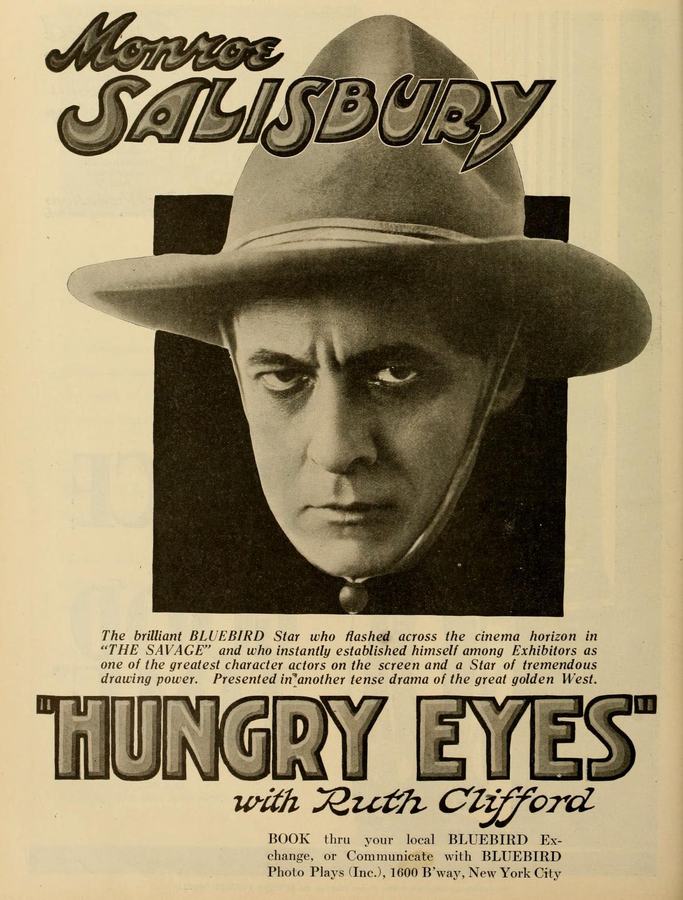
Dir: Rupert Julian
Ex-convict Dale Revenal arrives at Dudley Appleton's ranch bearing a letter of introduction from John Silver, Appleton's old friend. Appleton hires Dale, who, through his winning manner, soon wins the respect of the ranch hands and the love of the ranch owner's daughter Mary Jane. Believing himself unworthy of her, Dale tells Mary Jane that he has a wife and child in Arizona, and she reluctantly agrees to marry Jack Nelda, a local rancher. Nelda realizes that Mary Jane is still in love with Dale and plots with Bessie Dupont and her brother Pinto to kill him. Bessie, however, warns Dale, but when he confronts Nelda at the saloon, Pinto shoots him, wounding him in the shoulder. John Silver comes to Dale's aid and Nelda is killed. Silver reveals that Dale's "wife" in Arizona is really his sister, and Dale finally accepts Mary Jane's love.
View DetailsAnalysis relative to The Right to Be Happy
| Film Title | Atmosphere | Complexity | Similarity |
|---|---|---|---|
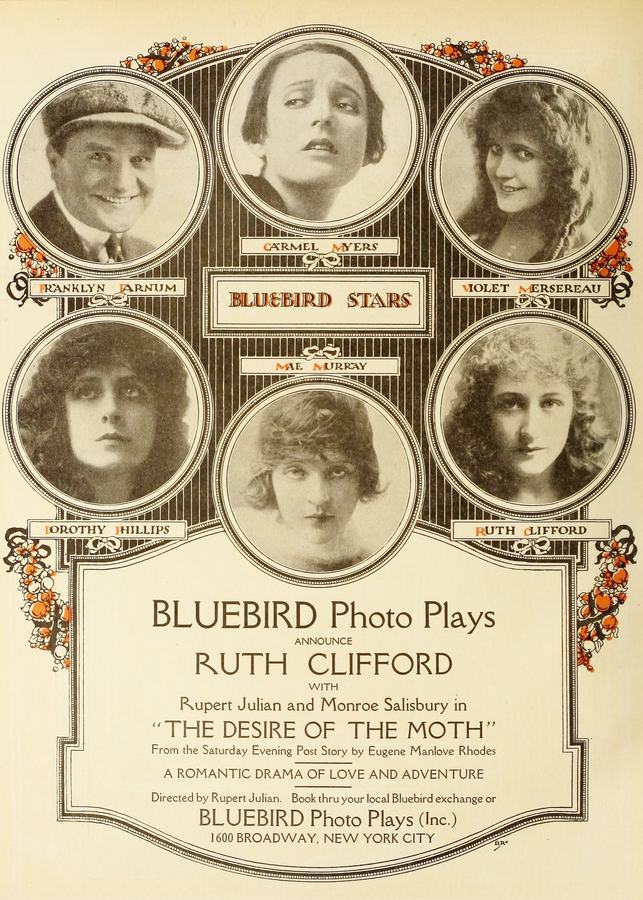
| The Desire of the Moth | Ethereal | High | 91% Match |
| The Circus of Life | Tense | Dense | 98% Match |
| The Kaiser, the Beast of Berlin | Tense | Dense | 96% Match |
| The Door Between | Surreal | Dense | 87% Match |
| Fires of Youth | Gritty | Dense | 95% Match |
This guide was algorithmically generated using the cinematic metadata of Rupert Julian's archive. Last updated: 6/22/2026.
Back to The Right to Be Happy Details →