
DbcultAccessing Vault...
Recommendations
Senior Film Conservator
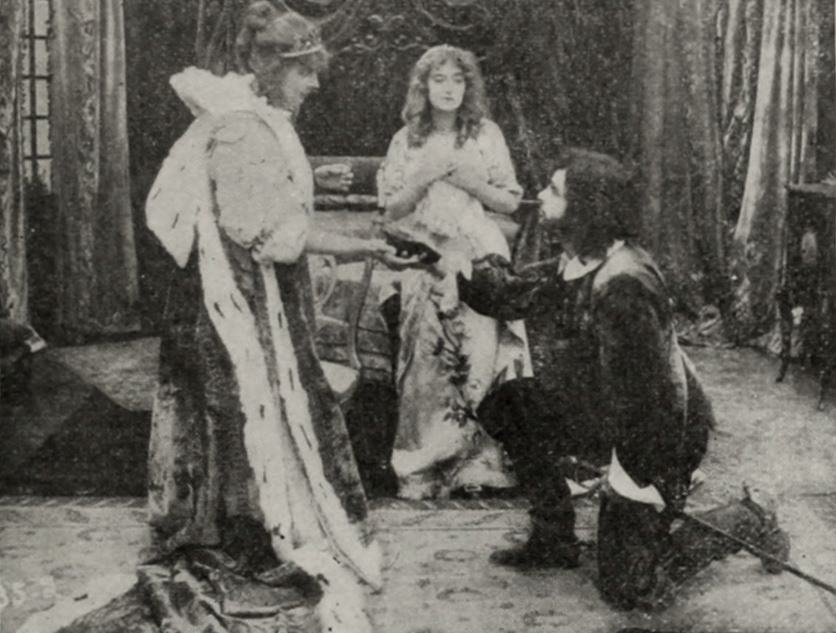
The United States-born brilliance of The Three Musketeers offers a unique cinematic excellence, the profound questions raised in 1916 still require cinematic answers today. Our curated selection of recommendations echoes the very essence of The Three Musketeers.
In the Pantheon of cult cinema, The Three Musketeers to provide a definitive example of Charles Swickard's stylistic genius.
D'Artagnan goes to Paris and becomes a member of the famous King's Musketeers. The Queen sends him on a dangerous mission to England. His three companions are either captured or put out of commission in the course of fights on foot and horseback. D'Artagnan reaches London and recovers from the Duke of Buckingham a pair of studs the Queen gave him as tokens of regard. On the ship on which he returns the hero is captured by his deadly enemy, De Rochfort. Jumping over the side, he clings to the chains of the vessel till it reaches port in France. He restores the studs to the Queen, and she has them put back into the necklace where they belong. Cardinal Richelieu has induced the King to command the Queen to appear wearing the necklace at a great court ball. When he sees the complete necklace, his plan to embarrass the Queen falls through. In addition to obtaining the favor of the Queen, D'Artagnan is rejoiced over the safe return of his comrades and his reward from his sweetheart for his bravery.
The Three Musketeers was a significant production in United States, bringing a unique perspective to the global stage. It continues to be a top recommendation for anyone studying cult history.
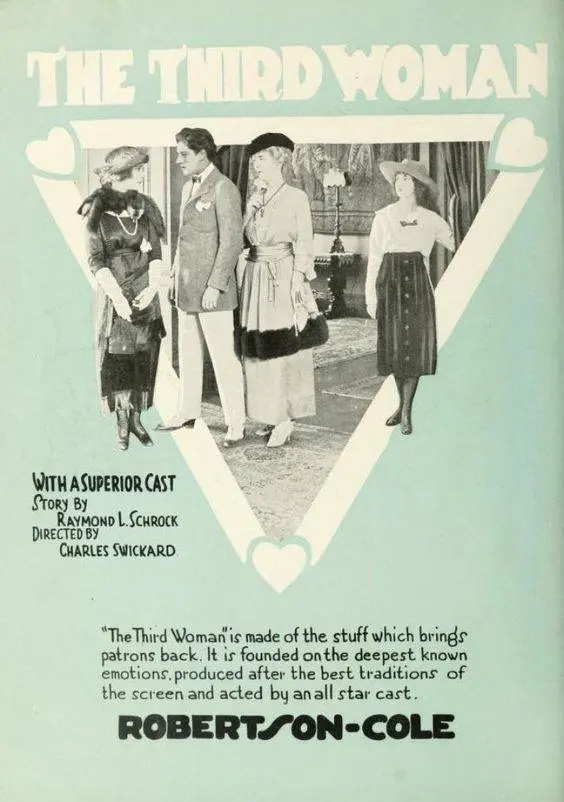
Based on the unique cinematic excellence of The Three Musketeers, our vault has identified these titles as the most compelling follow-up experiences for fans of cult cinema:
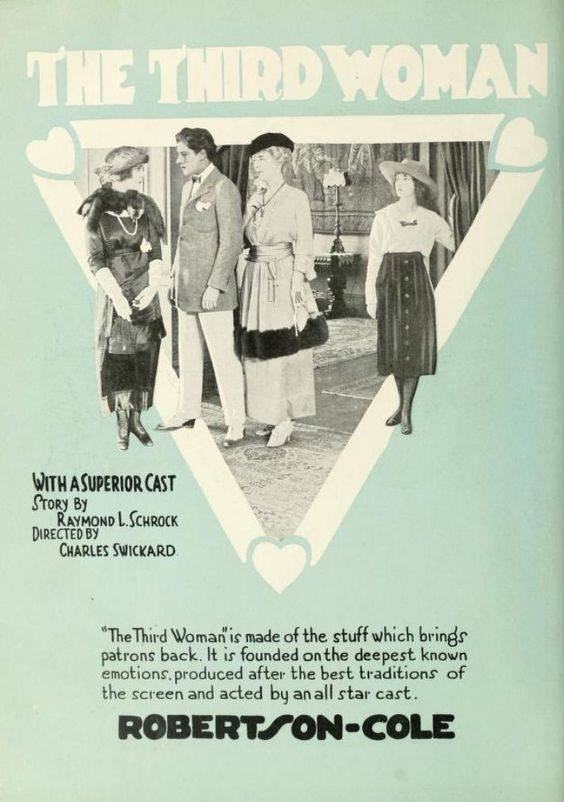
Dir: Charles Swickard
Although fond of childhood playmate Marcelle Riley, Luke Halliday, whose father made his fortune as an Arizona miner, becomes engaged to Eleanor Steele, a New York society belle. When Scar Norton arrives from Arizona and discloses that Luke's mother was an Indian, Luke is so traumatized that he breaks his engagement and ventures West to live among his mother's people. About to marry the Indian maiden Mo-Wa, Luke discovers that he cannot go through with the ceremony and retreats to the Settlement of Lost Hope, where he again encounters Scar Norton. Enraged when Scar taunts him over being a half-breed, Luke is about to kill his accuser when Marcelle and her father arrive and prevent him from committing the crime. Returning home with the Rileys, Luke finally realizes that Marcelle's pure love transcends all boundaries of race.
View Details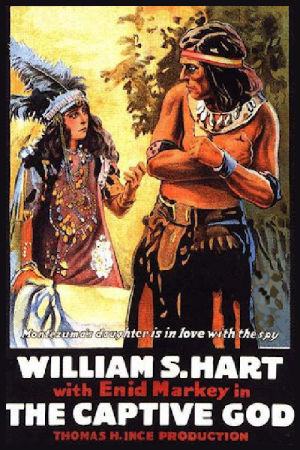
Dir: Charles Swickard
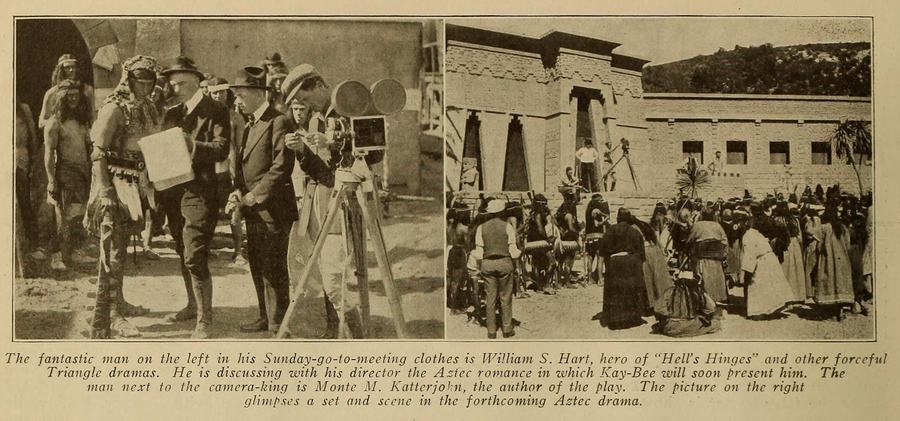
The picture tells the story of a little Spanish boy who is cast upon the shore of the east coast of Mexico early in the sixteenth century, when Mexico was dominated by the Aztec Indians. Never having seen a white person before, the local natives, a tribe called Tehuans, bring him up as a god and call him Chiapa. When he reaches manhood, Chiapa is given authority over his entire tribe. He falls in love with the priestess, Tecolote, and she yields to his advances although she is quite unworthy of him, and encourages other suitors. Then the Aztecs hear that under the white god the Tehuans are very prosperous, and start forth to conquer them. The Aztec army is under command of Mexitli, the chief general of Montezuma, the Emperor, and having conquered the Tehuans, he carried off Tecolote as his personal slave. Chiapa follows as a spy. In the garden of Montezuma, he is wounded by a guard, but Lolomi, the beautiful daughter of the Emperor, saves him. They fall in love. Meanwhile Mexitli has tired of Tecolote, and now seeks the hand of the Princess Lolomi, who would rather die than have him. As the Emperor gives Mexitli his consent, he tries to get the princess by force, and in doing so discovers Chiapa. Luiapa is sentenced to die at the end of the year on the sacrificial stone. But Lolomi, finding her pleas to her father of no avail, sends word to the Tehuans that their god is captive. An avenging army sweeps down, and there is brought about a sequence of thrilling scenes with a smashing finish.
View Details
Dir: Charles Swickard
Engineer Bob Durland, a rival of the wealthy Harold Blake for the hand of Alice Randolph, goes to Mexico during its revolution to prevent Morgan Randolph from losing his oil concession. Harold accompanies him, but when the Mexican insurrectionists threaten the two Americans, he becomes frightened and leaves. Upon his return, he reports that while he himself heroically fought off the revolutionaries, Bob died a coward's death, and Alice, believing her true sweetheart to be dead, agrees to marry Harold. Meanwhile, Bob saves Randolph's mines despite several attempts on his life and then returns to the United States, just in time to prevent his girl from marrying the wrong man. After evening the score with Harold in a fight, Bob takes his place beside Alice at the altar.
View Details
Dir: Charles Swickard
Widow Margaret Dennis, unaware of the abusive nature of Oliver Cathcart, agrees to become his wife. Among other cruelties, Cathcart has ruined the Taylor family in a bad business deal, causing the death of Mrs. Taylor, turning Mr. Taylor into a worthless drunk and embittering their son Raymond, who swears revenge on Cathcart. Margaret's son Jim, learning of all this, forces his mother to choose between him and Cathcart. Choosing the latter, Margaret goes to his country estate, where she finally learns her husband's true nature. Nearby live the Taylors. Raymond is courting Cathcart's maid Milly, and when he comes to the estate one day to visit Milly, Margaret pleads with him to send a message to Jim. Meanwhile, Taylor's sister Steve leaves home, seeking adventure. Receiving Margaret's message, Jim arrives and promises to take his mother away the next day. That night, Cathcart is killed, and on Milly's testimony that Jim had been at the house, he is arrested for the crime. Steve, however, hearing of Jim's arrest, returns and testifies that she and Jim shared refuge from a thunderstorm in an old shack on the night of the murder. Robert Shepherd, the estate gardener, then confesses that he killed Cathcart when he found him struggling with his beloved daughter Bess. Jim is finally freed, and Shepherd acquitted on a plea of temporary derangement.
View Details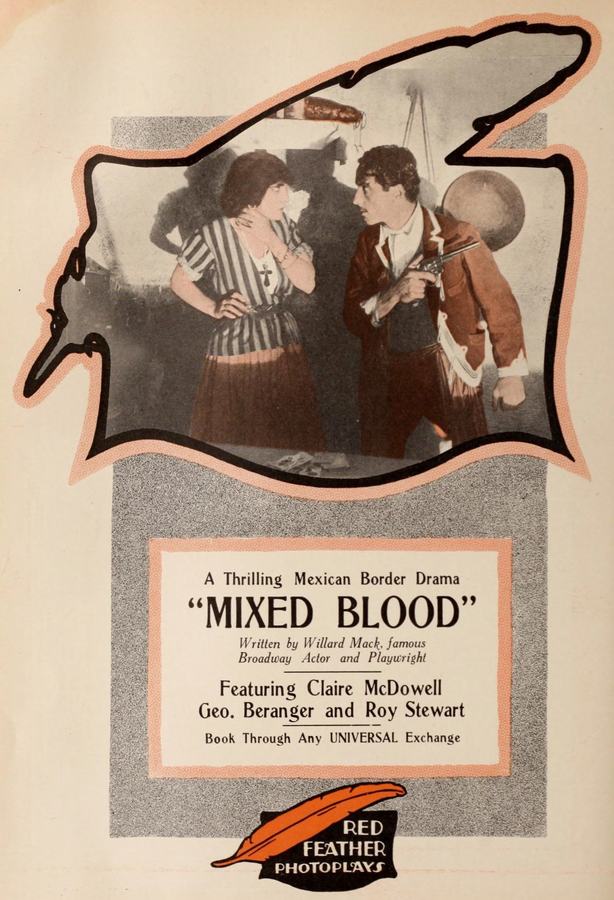
Dir: Charles Swickard
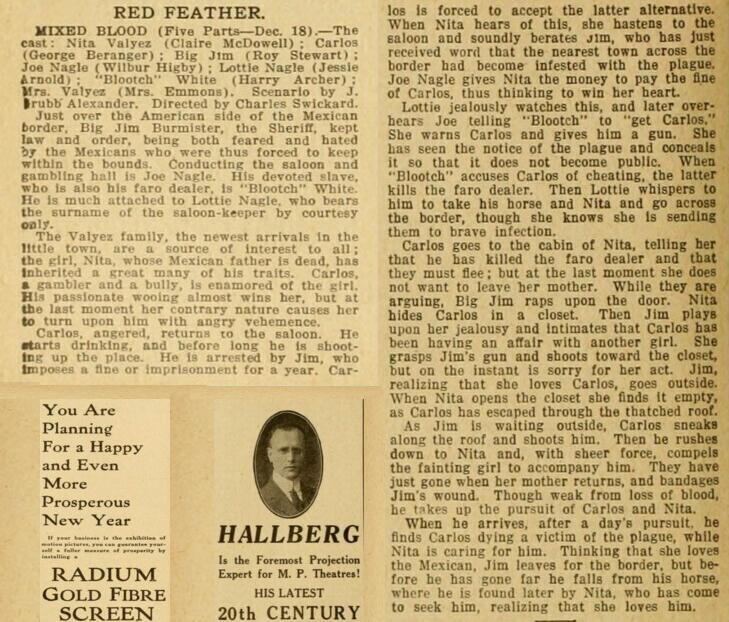
Just over the American side of the Mexican border, Big Jim Burmister, the Sheriff, kept law and order, being both feared and hated by the Mexicans who were thus forced to keep within the bounds. Conducting the saloon and gambling hall is Joe Nagle. His devoted slave, who is also his faro dealer, is "Blootch" White. He is much attached to Lottie Nagle, who bears the surname of the saloon-keeper by courtesy only. The Valyez family, the newest arrivals in the little town, are a source of interest to all. The girl, Nita, whose Mexican father is dead, has inherited a great many of his traits. Carlos, a gambler and a bully, is enamored of the girl. His passionate wooing almost wins her, but at the last moment her contrary nature causes her to turn upon him with angry vehemence. Carlos, angered, returns to the saloon. He starts drinking, and before long he is shooting up the place. He is arrested by Jim, who imposes a fine or imprisonment for a year. Carlos is forced to accept the latter alternative. When Nita hears of this, she hastens to the saloon and soundly berates Jim, who has just received word that the nearest town across the border had become infested with the plague. Joe Nagle gives Nita the money to pay the fine of Carlos, thus thinking to win her heart. Lottie jealously watches this, and later overhears Joe telling "Blootch" to "get Carlos." She warns Carlos and gives him a gun. She has seen the notice of the plague and conceals it so that it does not become public. When "Blootch" accuses Carlos of cheating, the latter kills the faro dealer. Then Lottie whispers to him to take his horse and Nita and go across the border, though she knows she is sending them to brave infection. Carlos goes to the cabin of Nita, telling her that he has killed the faro dealer and that they must flee; but at the last moment she does not want to leave her mother. While they are arguing, Big Jim raps upon the door. Nita hides Carlos in a closet. Then Jim plays upon her jealousy and intimates that Carlos has been having an affair with another girl. She grasps Jim's gun and shoots toward the closet, but on the instant is sorry for her act. Jim, realizing that she loves Carlos, goes outside. When Nita opens the closet she finds it empty, as Carlos has escaped through the thatched roof. As Jim is waiting outside, Carlos sneaks along the roof and shoots him. Then he rushes down to Nita, and with sheer force, compels the fainting girl to accompany him. They have just gone when her mother returns, and bandages Jim's wound. Though weak from loss of blood, he takes up the pursuit of Carlos and Nita. When he arrives, after a day's pursuit, he finds Carlos dying a victim of the plague, while Nita is caring for him. Thinking that she loves the Mexican, Jim leaves for the border, but before he has gone far he falls from his horse, where he is found later by Nita. who has come to seek him. realizing that she loves him.
View Details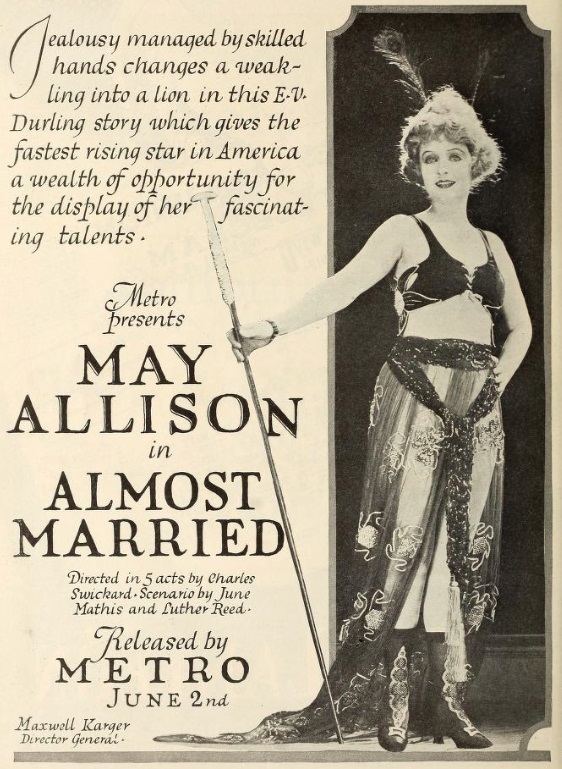
Dir: Charles Swickard
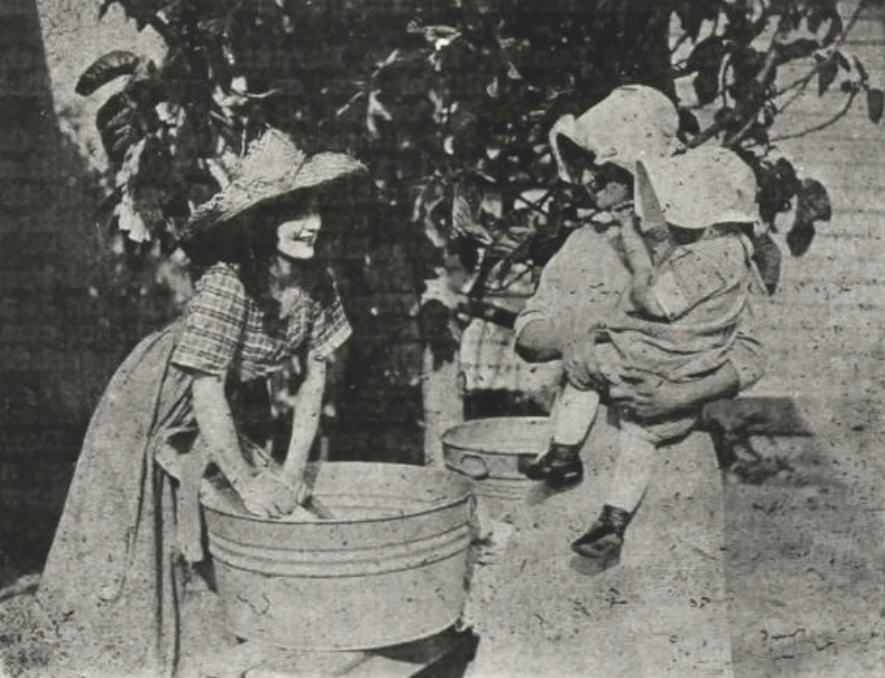
Wealthy young American Carrington O'Connell is traveling Europe with a "social advisor" to become more polished and sophisticated. While stopping at an inn in Switzerland, he is entranced by pretty young Adrienne Le Blanc, whose parents own the inn and in which she entertains travelers. Adrienne falls for him, but his "advisor" warns him against such a socially "unacceptable" relationship, and he reluctantly leaves. Adrienne soon gets a contract with a theatrical agent for appearances at a musical hall in America, where she happens to meet Carrington's wealthy father Michael. Complications ensue.
View Details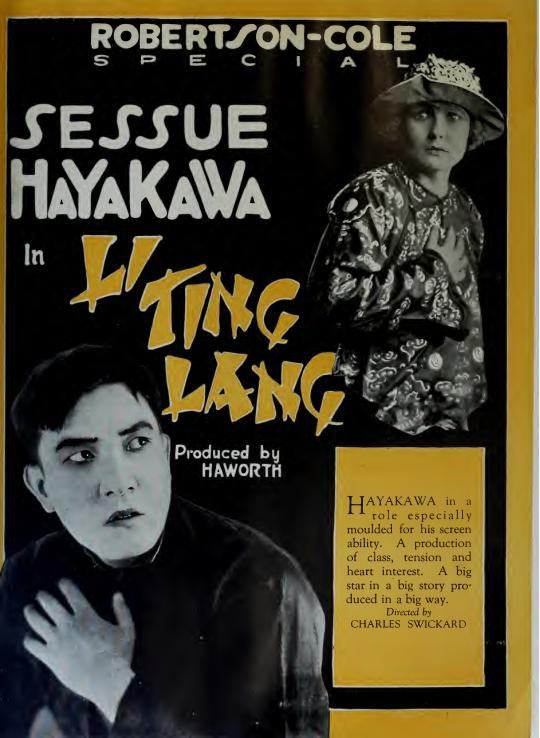
Dir: Charles Swickard
College student Li Ting Lang is a favorite of his friends until his attentions toward socialite Marion Halstead bring forth protests on all sides. In defiance, Marion announces her engagement to Li Ting Lang. Gradually, she becomes socially isolated and Li, realizing that she will be friendless, releases her from her commitment. Soon after, an emissary to America arrives with instructions to compel Li to return to his native land and administers a drug to Li, who awakens aboard a ship bound for China, while back in America, his friends believe that he has committed suicide. Li arrives in the middle of a revolution and becomes a great military leader. Years later, while visiting the Orient on her honeymoon, Marion sees Li and recognizes him. Venturing to his house, she is followed by one of his enemies who plans to kill the girl and throw the guilt on Li, thereby ruining him. When the plotters arrive, Li defends Marion single handed until a rescue party of his old college chums comes to his aid. After a warm reunion among old friends, Marion departs with her husband, and Li is sadly left alone once again.
View Details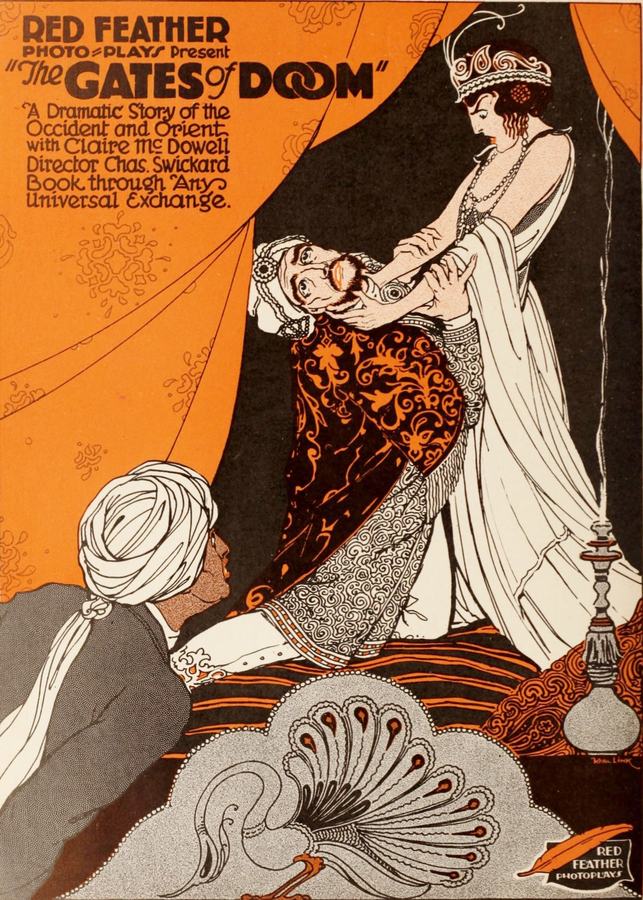
Dir: Charles Swickard
Captain Unger is relating the story of his love for the Hindoo woman, Indore, to Captain Duane and begs him if anything should happen to care for their little girl. When the officers leave the room a Hindoo sent by Indore's husband poisons the decanter of wine. Unger returns and is astonished to see Indore, who has made her way to him. He consents to take her away, drinks the wine, and falls dead. Indore lifts the glass to her lips to die with him, but it is snatched from her by the native, who carries her back to his prince. She is reduced to slavery in the harem. Duane takes the child, Agatha, to England. Agatha develops into a beautiful woman. She is reading a message from Duane with a heavy heart, for it says he is on his way with his bride, Florence, to join his father on his journey to India. En route they meet the Grand Duke Alexis, who has known Florence in the past. Alexis, perceiving that Florence is jealous of Agatha, forces her to think her husband loves the Indian girl. In India, Alexis informs Agatha her mother is not dead and that she might see her. Guided by a native, Agatha confronts the prince and asks for her mother; he parries her question. Looking at her with a lustful smile, he draws near and she retreats in terror. Struggling fiercely, the girl screams as he overpowers her. Indore hears the scream, slips into the room and stabs the prince. She recognizes her child and clasps her in her arms. Thus the guard finds them. Jang Sahib, the hunchback, rushes in when he hears the guard's shriek, and orders the native to spread the news that their prince has been murdered by an English infidel. Soon there is a riot and many white men are slain. Captain Duane, discovering that Agatha has gone to the palace, hastens with a few horsemen. Jang Sahib tells Duane Agatha is not there. Duane fights. Meanwhile Florence, convinced by Alexis of her husband's infidelity, has left on a steamer with him, leaving a note for Duane. While crossing the desert in Sahib's caravan, Indore jumps over the cliff. She is later picked up by some traders still alive, but has lost her memory. At the Walled City Sahib compels Agatha to marry him. On the wedding day she grasps him by the throat and chokes him to death. Duane, crushed by despair, shuns the haunts of white men. He wanders into a native dive, and is startled by the sight of a dancing girl. He staggers to her and, in spite of the curses of the people, leads her out. It is Indore, whom he mistakes for Agatha. She does not even remember her child's name, but when left alone in Duane's home is stabbed by the prince's servant. She is shocked into her right mind and demands to know where Agatha is imprisoned. At the head of a troop, Duane goes to the Walled City in time to snatch Agatha from the funeral pyre into which she is being forced by the subjects of the murdered Sahib. They escape and begin their journey back. Duane and Agatha are happy at seeing each other again.
View Details
Dir: Charles Swickard
A friend of Dick Bailey is killed by a mysterious assailant, whom Dick suspects to be Stack, who is in league with the crooked sheriff. Out on a spree Dick swears he will marry the first woman he sees, who happens to be Ruth Hammond, sister of his dead friend, arriving to take charge of the Hammond ranch. Revolted by his rough proposal,she fires him as the Hammond foreman and she proceeds to the ranch. Stack informs her he has purchased the ranch for the payment of the back-due taxes, and she relents and rehires Dick and his friends to aid her in her fight against Stack.
View Details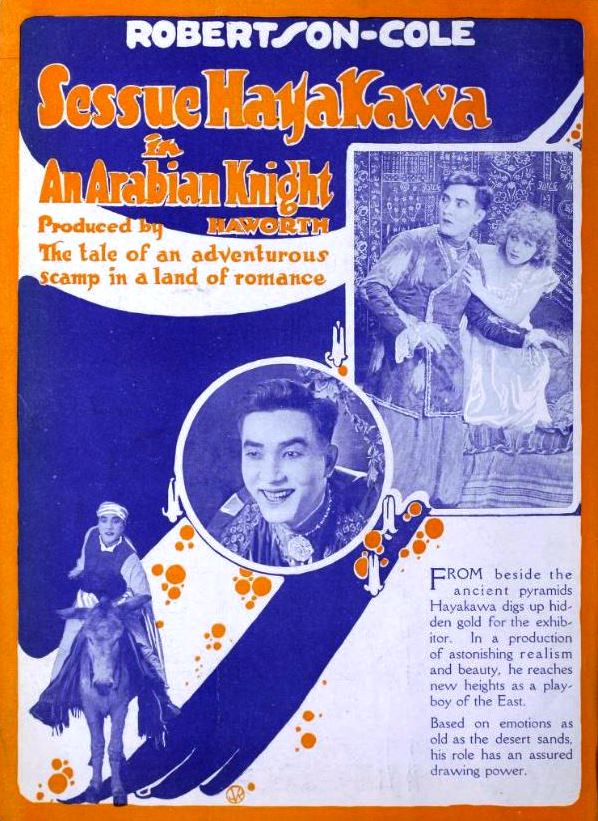
Dir: Charles Swickard
A young Egyptian goes to the rescue of his employers, a wealthy European family, when they are menaced by a local strongman and his gang.
View DetailsAnalysis relative to The Three Musketeers
| Film Title | Atmosphere | Complexity | Similarity |
|---|---|---|---|
| The Third Woman | Gothic | Dense | 98% Match |
| The Captive God | Ethereal | Linear | 89% Match |
| Hitting the High Spots | Tense | Layered | 98% Match |
| The Lair of the Wolf | Tense | Layered | 97% Match |
| Mixed Blood | Ethereal | Abstract | 90% Match |
This guide was algorithmically generated using the cinematic metadata of Charles Swickard's archive. Last updated: 6/26/2026.
Back to The Three Musketeers Details →