
DbcultAccessing Vault...
Recommendations
Senior Film Conservator
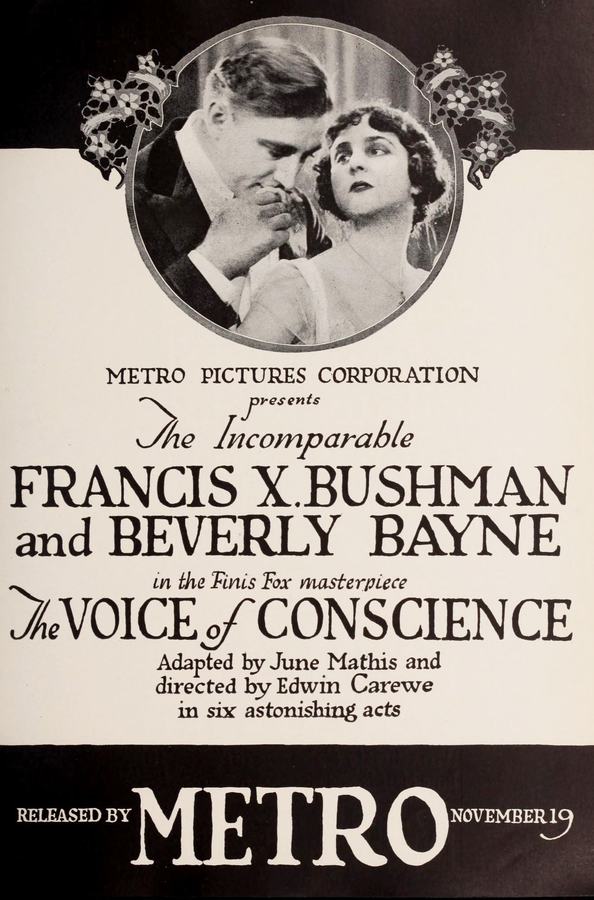
Witnessing the stylistic evolution of Edwin Carewe through The Voice of Conscience is profound, this cult landmark continues to dictate the rules of its category. If the cast impressed you, these next recommendations will too.
The synthesis of form and function in The Voice of Conscience to maintain its cult relevance across several decades.
A daughter is grief-stricken by the loss of her father. His male friend becomes her guardian, and she is taken to live with the friend's mother. Time passes and romance blossoms in the girl's heart for her guardian. However, a love rival arrives from the city and catches his eye, and the drama unfolds.
Based on the unique artistic bravery of The Voice of Conscience, our vault has identified these titles as the most compelling follow-up experiences for fans of cult cinema:
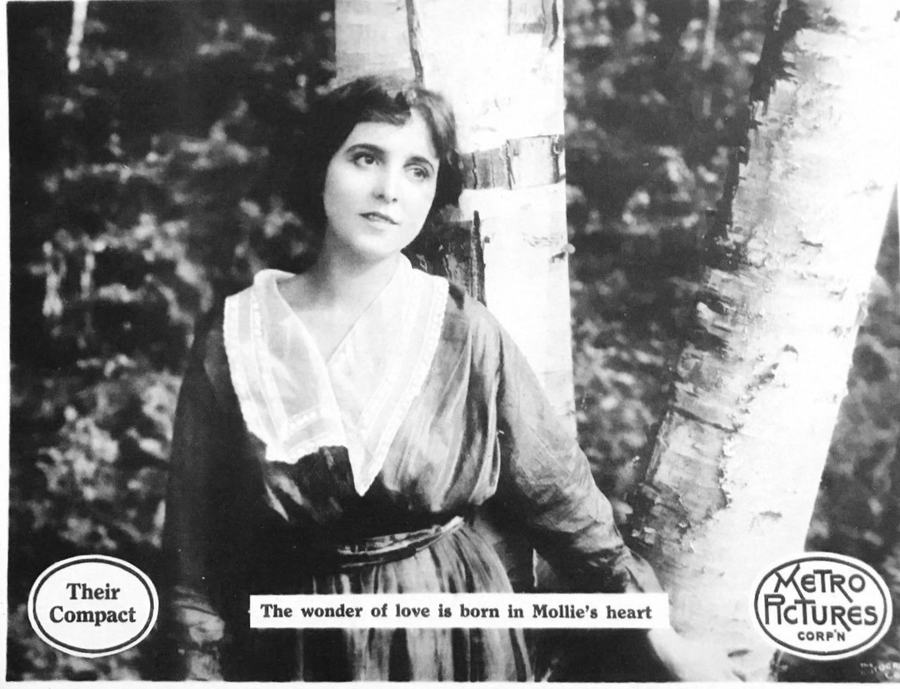
Dir: Edwin Carewe
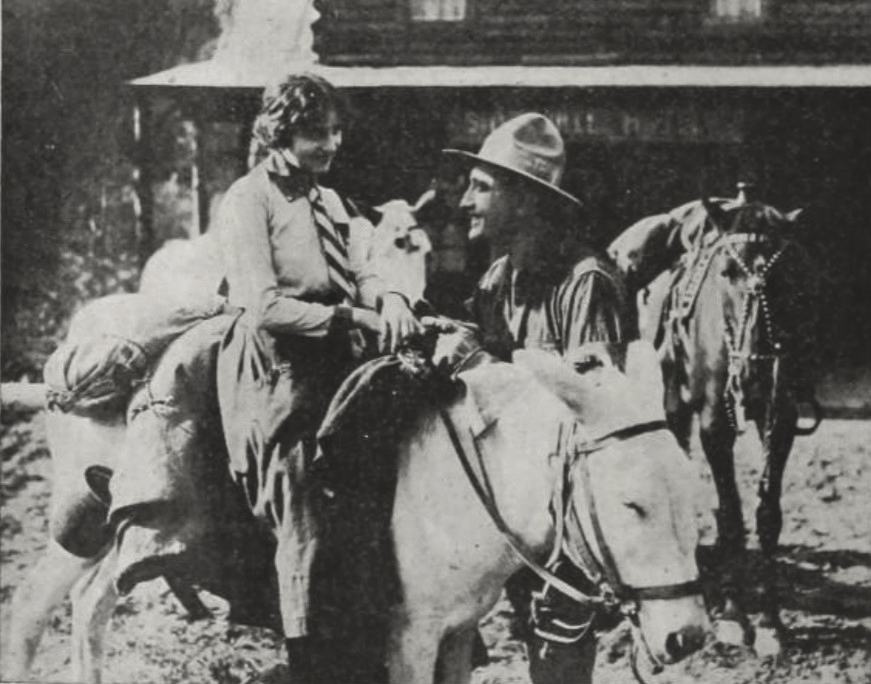
Shortly after arriving in the West, James Van Dyke Moore, an Easterner fleeing from a soured love affair, has his courage tested when "Ace High" Horton, the town bully, threatens to take over the family mine. Forced into battle, the tenderfoot stands his ground against Horton, an act that impresses pretty Mollie Anderson. One day, Robert Forrest arrives from the East with Verda, his bride, who is Moore's former lover. While Forrest is off inspecting his mines, Verda and Horton become lovers and plan an elopement, but upon Forrest's return, Verda informs him that she is leaving town to escape Moore's advances. Because he has vowed not to reveal anything about their past affair, Moore is unable to defend himself. That night, Forrest sees Verda riding away with Horton and shoots him, but Moore is accused and arrested. Through the intervention of Mollie, Moore is released in time to intercept the couple in the desert. After disposing of Horton, Moore returns Verda to the town, whose angry citizens drive her back into the desert, and then proposes to Mollie.
View Details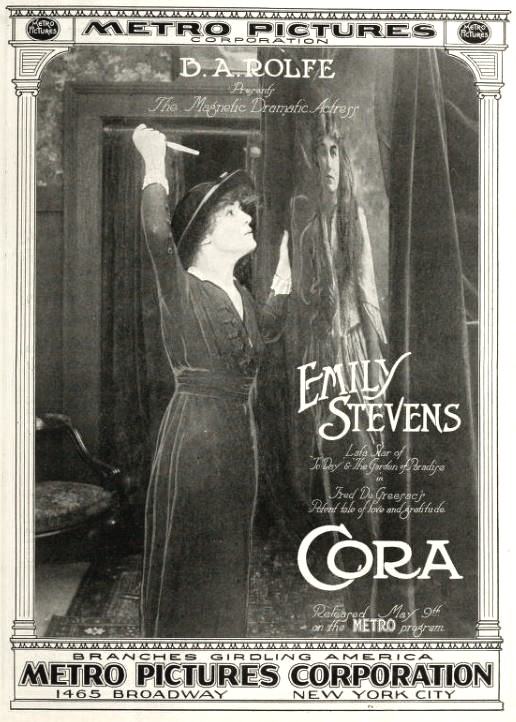
Dir: Edwin Carewe
When her mother, the operatic idol of Paris, takes her to the United States and dies, Cora goes to live with Marie, a model for artist George Garnier. Although George is engaged to wealthy Helen Van Brooks, who is in love with Carl Wilson, a club-man, George and Cora fall in love. When Cora discovers the engagement, however, she leaves and becomes an opera star. Years later, after breaking his engagement, George visits Cora again, causing Mrs. Van Brooks to entreat Cora to give up George. At a wild party, Cora allows Jose, her long-time admirer, to make love to her, which provokes George's disgust until Marie explains Cora's behavior. When Jose, alone with Cora, attacks her, George and Marie burst in to see Jose, hit by a wine cooler hurled by Cora, fall backward through a window, fall to the street and die. After they learn that Helen and Wilson have eloped, Cora and George are able to marry.
Dir: Edwin Carewe
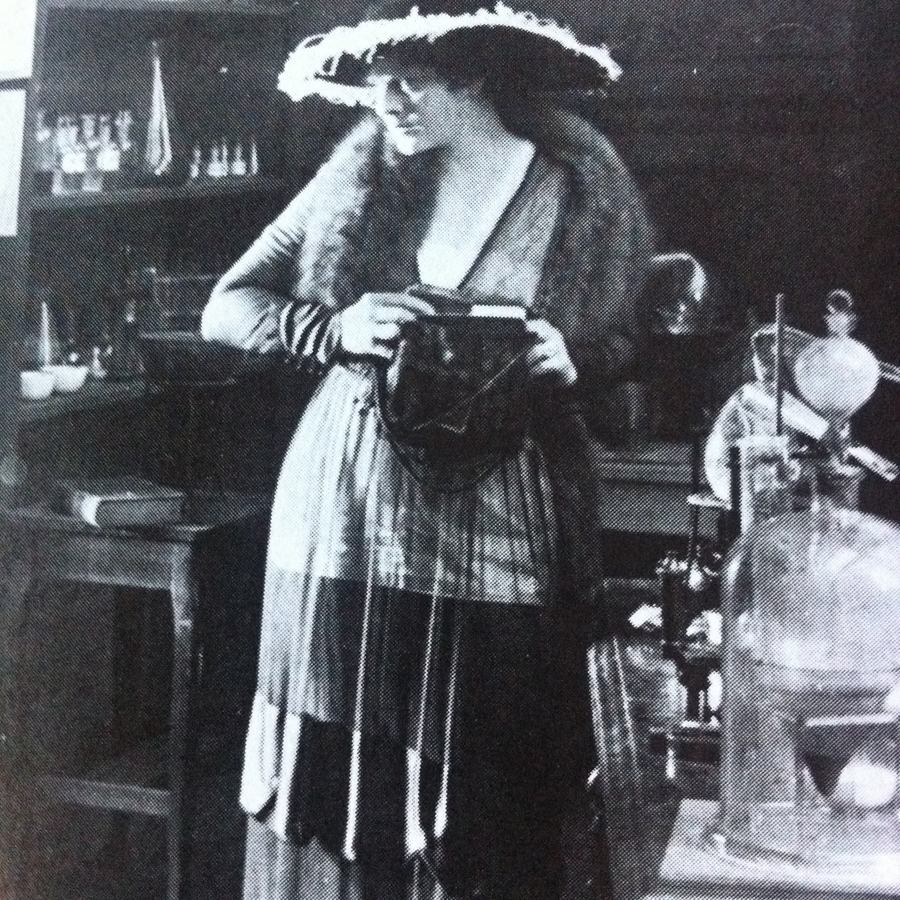
Actress Jane Carleson has three admirers: Henry Strong (a millionaire), Hamilton Ross (a chemist), and Murray Campbell (a district attorney). When Jane weds Campbell, Ross writes an anonymous letter to Campbell, warning him that Strong is after his wife. Ross smears the flap of the envelope with poison. However, Strong is the one who opens the envelope, and dies from the poison. Since Campbell and Strong had quarreled just before the arrival of the letter, Campbell is convicted of the murder. Jane must expose the true murderer and save her husband.
View Details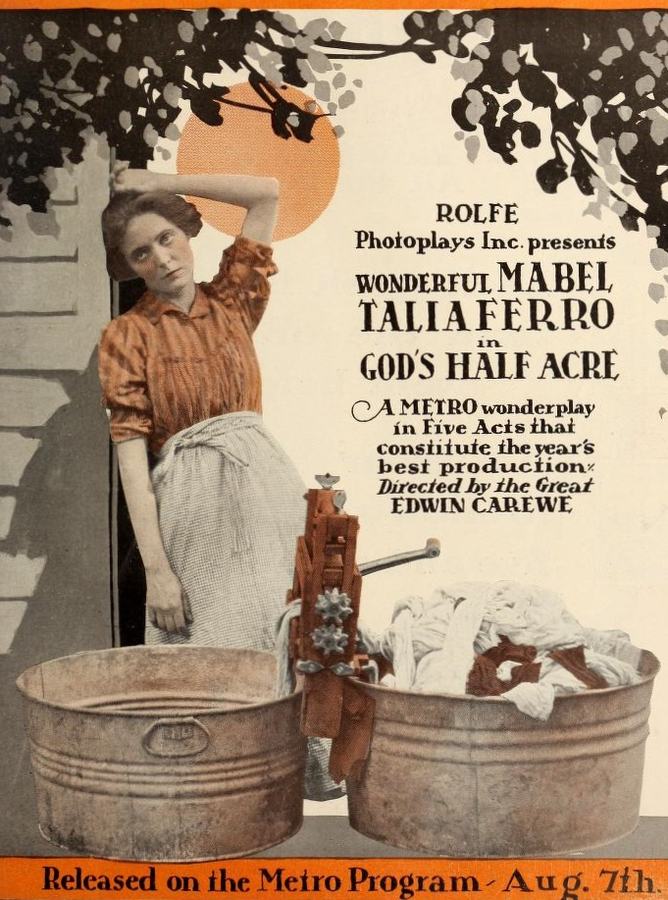
Dir: Edwin Carewe
Leaving his wife Rose for a few weeks and eager to do research for his new novel about the elderly, Henry Norman goes to live in a home for the aged, where Blossom, the home's young maid, falls in love with him. When she lets him know how she feels, however, Henry tells her that he has a wife. When his research is over, he returns to her--and discovers that she has eloped with his friend Perry Westley, and that they were both killed by a lightning bolt that struck Perry's car. While Henry recovers from this double shock, Blossom quits her job and finds work at God's Half Acre, an orphanage. While on a picnic with the children, she once again meets Henry, who realizes that he loves Blossom. They marry.
Dir: Edwin Carewe
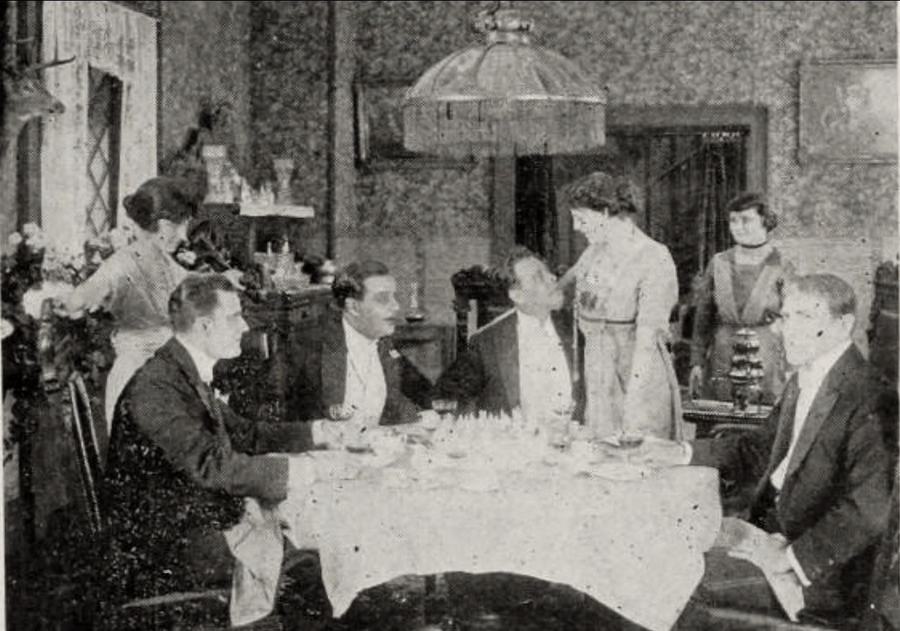
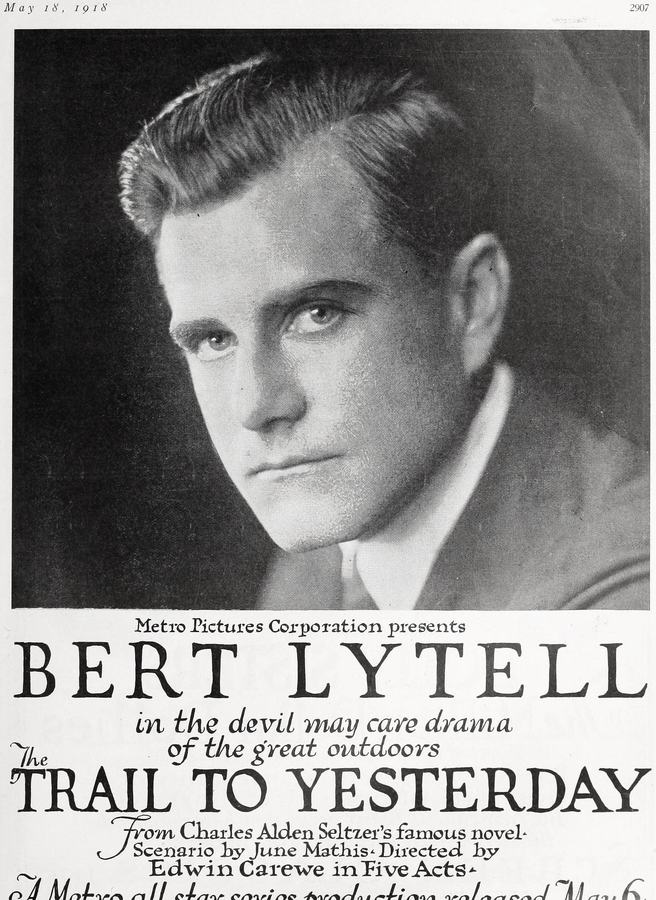
David Langford, a member of the firm of Keegles and Langford, hardware merchants, has a violent quarrel with his partner, and kills him. Ned, Mr. Keegles' son, who has been expelled from college, returns on the night of the murder, and is suspected of the crime. He leaves for the west, where he becomes known as "Dakota." "Texas" Blanca, a Mexican, and John Duncan blacken the name of "Dakota" by unjustly accusing him of cattle stealing. Later, "Dakota" aids a young girl named Sheila during a thunderstorm, and he subsequently learns that she is the daughter of Langford, the murderer of his father. In revenge he forces her to marry him, and then she leaves for the Double R ranch, which her father has purchased. "Dakota" becomes implicated in a number of other diabolical plots, but emerges triumphant, and the climax of the drama shows him and Sheila living happily as man and wife.
View Details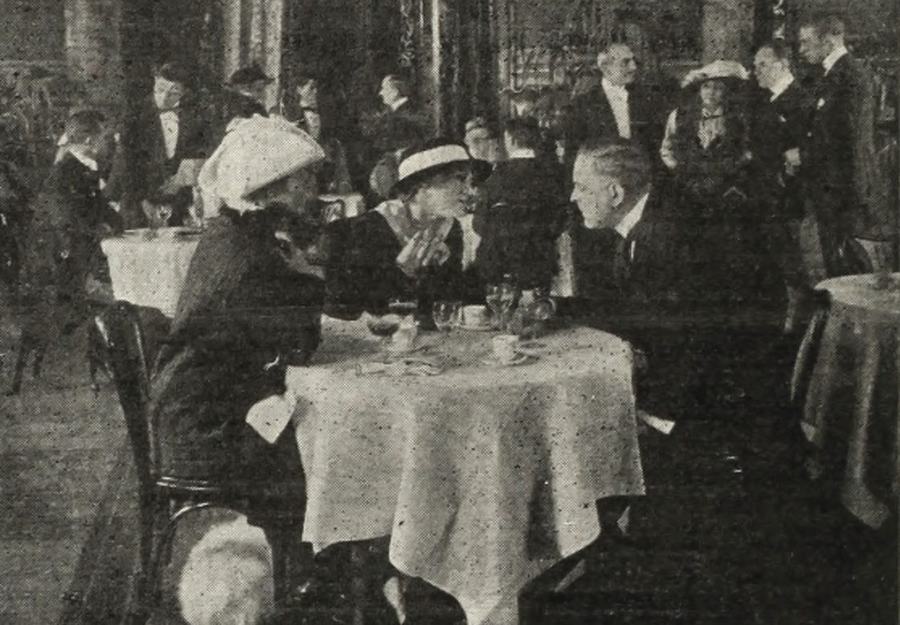
Dir: Edwin Carewe
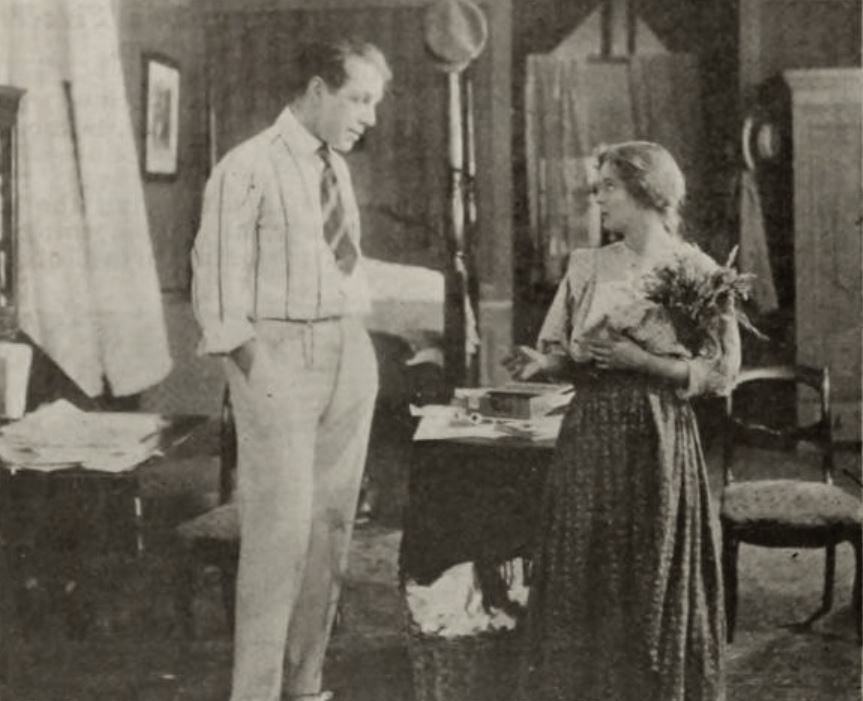
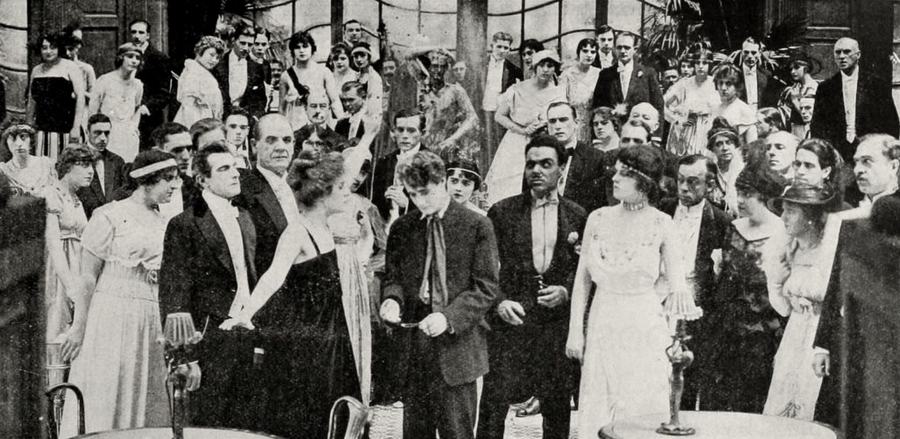
In the House of Tears, there lived Robert Collingwood, his wife, Alice Collingwood, and their baby girl, Gail. In the courts Robert has been granted a decree of divorce and the custody of little Gail, upon evidence that Mrs. Collingwood has been found in a compromising situation with Henry Thorne, and her subsequent admissions. Once free, Mrs. Collingwood openly accepts the attention of Thorne, and they soon marry and go west to live. Thorne takes up the life of a prospector in a mining community, and his consistent failure proves a source of discouragement to him and unhappiness to the woman. Collingwood, his mind upset by domestic troubles, loses his fortune in Wall Street manipulation, and becomes a raving maniac. He drives his employees out of the office, and then goes to his home intending to kill his little daughter. In a chase up a staircase, he falls and is killed. An annuity he had settled on the baby when she was born, and which has been saved from the financial wreck, is the means of her education. Fifteen years later Thorne, who has been plodding along in the west, meeting with little success, wins $15,000 at faro in a desperate plunge one night. He has become tired of the woman he won by intrigue and his sudden prosperity turns his head. He arranges to go back to Wall Street to flirt with fortune, and he tells his wife he will not take her along, but will leave enough money for her to live on. She is horrified at the prospects of his desertion, and at the point of a revolver, demands his money. In a struggle which ensues, she is seriously wounded. Thorne leaves, believing his wife dead by the shot from her own hand. Back in Wall Street, Thorne electrifies other operators by his phenomenal rise to affluence, and he becomes the elegant man of wealth he aspired to be. Gail Collingwood, who has now grown to womanhood, is known under the name of Alice Gail, and employed as a reporter on the Evening News. She is sent to interview Thorne, who is now known as "Edward North." They become very friendly and their acquaintance soon ripens into love. In due time their betrothal is announced. Out in the mining town Thorne's wife has recovered, and she resolves to come back to the scenes of her youth. She is seeking Thorne in the great city, when Gail, who is riding in an automobile loaned her by her fiancé, runs down her mother, a poor, ill-clad, wandering woman. The mother is slightly injured, and she recognizes her daughter. They plan to make "North" face his past. Gail sends word for "North" to come to her home, as she is in trouble. When he arrives he is brought face to face with his wife, whom he believed to be dead. "North" becomes frenzied from fear, as he thinks the sad faced woman is an apparition, and he flees from the house. The apparition continues to haunt him, and in a half-crazed mood he drives his automobile blindly through the streets, ending by running off a bridge when he is hurled to death. Mother and daughter, re-united, then seek a happier existence.
Dir: Edwin Carewe
Standish, an artist, finishes a painting of the Madonna. His wife, Mary, acted as model, and when the Connoisseur and the Parishioner inspect the picture, the former tells Standish that he recognizes in the model a one-time paramour of his. The Connoisseur and the Parishioner buy the painting and after their departure Standish upbraids his wife, who tells him that she believed herself legally married to the Connoisseur. Standish refuses to accept her explanation and ejects her and their baby son. Mary leaves her boy on the steps of a monastery, and seventeen years later, just before becoming a monk, he receives permission to see the world. He wanders into a gay café and succumbs to the charms of Beauty. The other inmates of the place, Lust, Rum, Avarice and Passion are dancing around him when the proprietor enters. It is Mary, his mother. She recognizes him from the crucifix which he wears and which she left with him when he was a baby. Without revealing her identity she persuades him to go back and later when he has become a priest, a bedraggled old woman (his mother) enters his church. She recognizes him and just before she dies her son gives her absolution.
View Details
Dir: Edwin Carewe
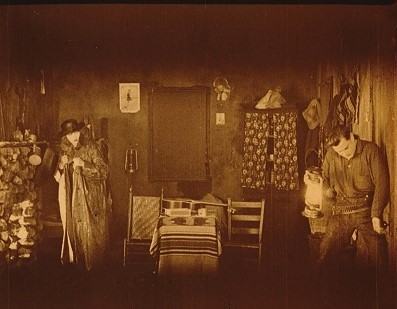
Big-hearted Prue, living in the slums, and Danny O'Maddigan, a reformed crook, want to buy a birthday cake for Prue's 75-year-old grandmother. They live across the hall from Ellen Rutherford, the destitute widow of Steven Rutherford, Jr., who was disinherited by his father, a wealthy candy manufacturer. Prue, who works at the candy factory, gives Ellen the money that was meant for her grandmother's cake so Ellen will be able to care for her son Bobby. Frustrated over the loss of the money, Danny steals the price of a cake from the factory's safe, leaving the safe's door open in his haste to depart. Danny's former gang arrives and cleans out the safe, and Danny is convicted of the crime and sent to prison for four years. While Danny is in prison, Bobby is struck by his grandfather's car and slightly injured. Stricken with remorse, Mr. Rutherford effects a reconciliation with his daughter-in-law and promises to use his influence to bring about Danny's release from prison.
Dir: Edwin Carewe
As Danny Rowland, a tramp, and his partner Dominie, an ex-minister, trudge wearily past the Winnicrest mansion in Tennessee, an old servant called Uncle Alex rushes up to Danny and welcomes him home as his long-lost employer, Richard Castleman. Amused, Danny assumes the role, and he and Dominie are clothed, fed, and generally treated like royalty. The beautiful Jean Logan, who had believed with the rest of the neighborhood that Richard was lost at sea, greets her returning sweetheart with a passionate embrace, and Danny soon falls in love with her. Dr. Harry Chilton, Richard's cousin and rival in love, maintains that Danny is an impostor, but Danny defeats him in a fight and banishes him from the estate. When Danny announces his intention to marry Jean, Dominie is shocked and tells her everything. Forced to confess to the sheriff, "Danny" reveals that he is indeed Richard, earlier robbed of his clothing and money by a crook named Danny Rowland, who died on a voyage to Australia. Relieved, all of the parties--with the exception of the jealous doctor--are reunited.
View Details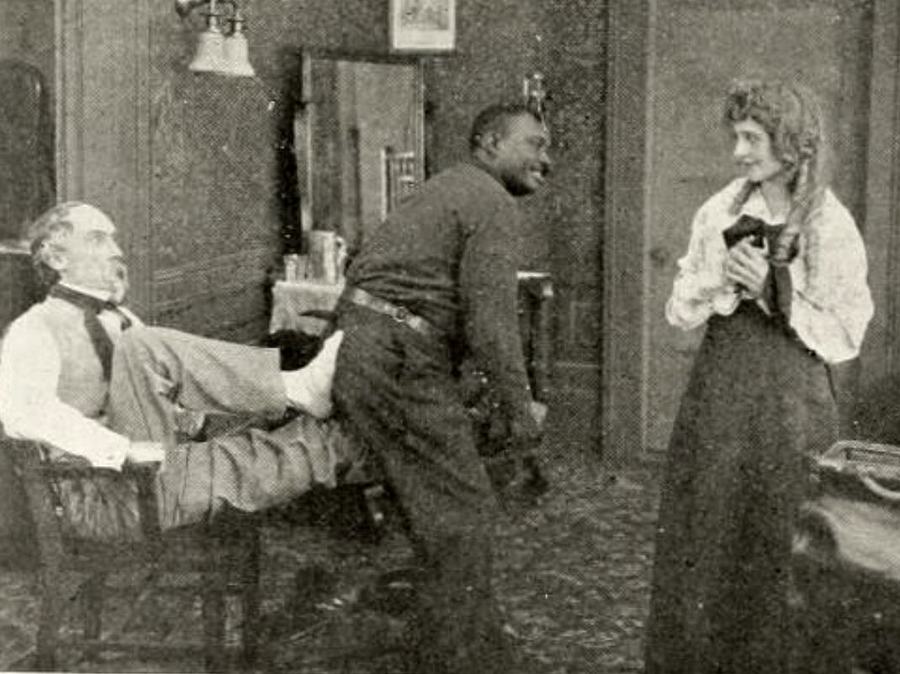
Dir: Edwin Carewe
Proud Confederate Captain Covington Halliday refuses to allow his daughter Martha to marry Northern lawyer Walter Lewis. As a boy, Covington was given an African American servant named Dan, who has always called him "Marse Covington." After the Civil War, Dan refused his freedom and stood by Covington, sharing his misfortunes. Jim Daly, who holds the mortgage on Halliday House, also wants to marry Martha, so he schemes with gambler Edward Bantree to fix a race in which Covington has wagered all his property on his beloved horse, Bess. Although Bess loses, Martha refuses to marry Jim to reclaim her family home. She moves to New York City with her father and Dan, but their savings are soon exhausted and Covington is forced to stand in bread lines. After Dan goes to work for Edward, he learns about the plot to fix the race. He tells Walter, who is later hired to defend Edward for Jim's murder. In lieu of cash, Walter demands the Halliday House deed as payment. Covington returns to his home with Dan, and gives Walter his blessing to marry Martha.
View DetailsAnalysis relative to The Voice of Conscience
| Film Title | Atmosphere | Complexity | Similarity |
|---|---|---|---|
| Their Compact | Ethereal | Dense | 92% Match |
| Cora | Gritty | Abstract | 85% Match |
| The Final Judgment | Surreal | Dense | 97% Match |
| God's Half Acre | Ethereal | High | 87% Match |
| The Trail to Yesterday | Surreal | High | 97% Match |
This guide was algorithmically generated using the cinematic metadata of Edwin Carewe's archive. Last updated: 6/27/2026.
Back to The Voice of Conscience Details →