
DbcultAccessing Vault...
Recommendations
Senior Film Conservator
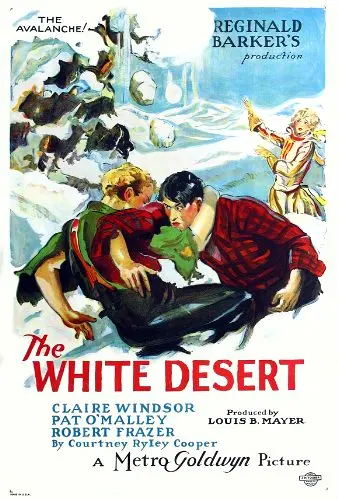
Looking back at the 1925 milestone that is The White Desert, the cinematic shorthand used by Reginald Barker is both ancient and revolutionary. Dive into this collection and find the spiritual successors to Reginald Barker's vision.
As Reginald Barker's most celebrated work, it defines to articulate the unspoken anxieties of United States's 1925 era.
Barry Houston, the superintendent of a gang building a railroad tunnel through a Colorado mountain, warns John Keith, the project engineer, that he is doing too much blasting, thereby placing the crew in danger from avalanches. Attempting to set a record, Keith ignores Barry's advice, and, as a result of continued blasting, there is an avalanche that destroys the line camp, knocking out telegraph lines and the commissary. John and Barry go for help, returning with food and medical aid. Buck Carson, half-crazed by hunger and despair, attacks Robinette, and she throws boiling water in his face; Buck then blindly chases her toward a precipice. Barry saves her from Buck, and she confesses her love for the burly superintendent.
The White Desert was a significant production in United States, showcasing the immense talent of Pat O'Malley, William Eugene, Roy Laidlaw. It continues to be a top recommendation for anyone studying Drama history.
Based on the unique nuanced performance of The White Desert, our vault has identified these titles as the most compelling follow-up experiences for fans of Drama cinema:
Dir: Reginald Barker
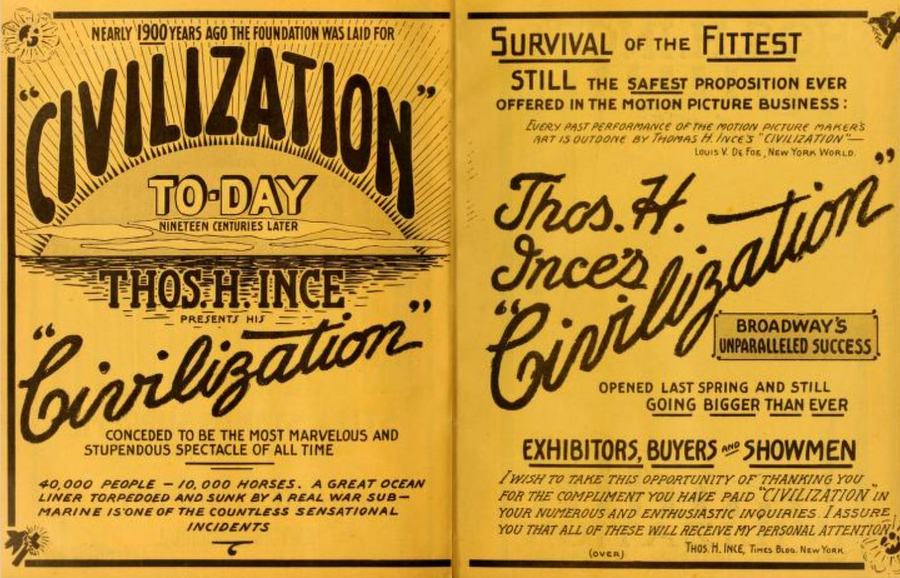
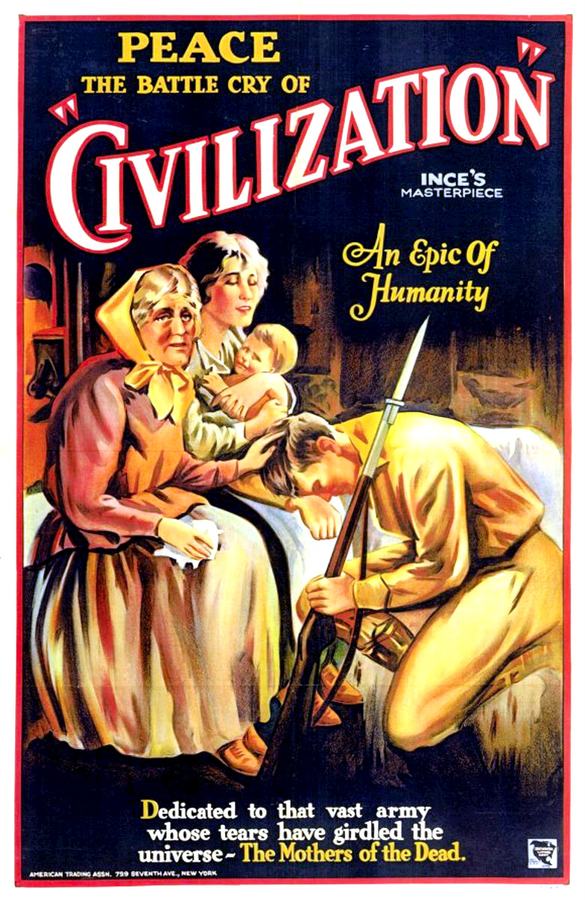
Christ takes on the form of a pacifist count to end a senseless war.
View Details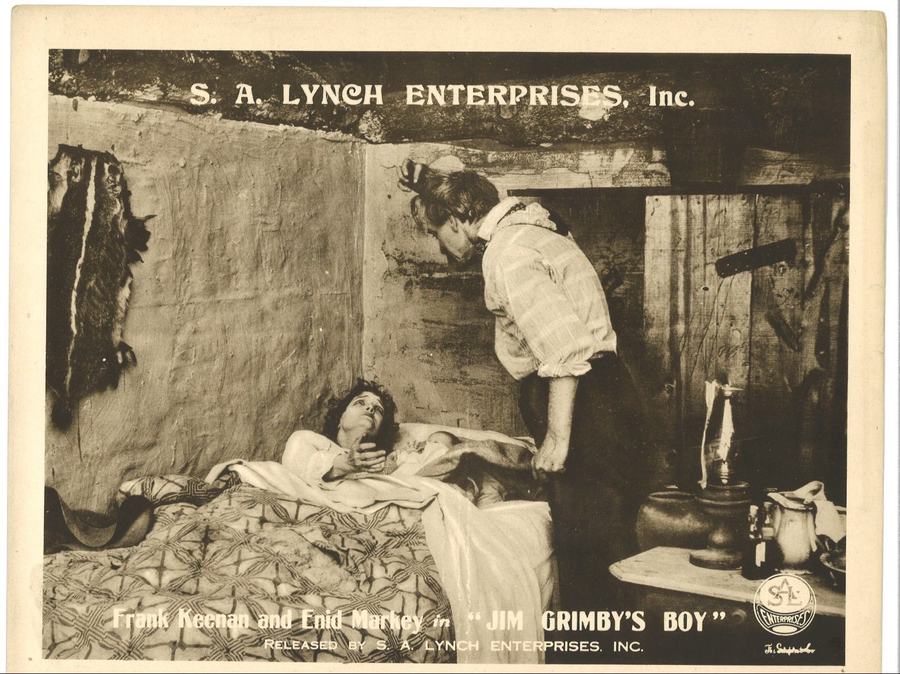
Dir: Reginald Barker
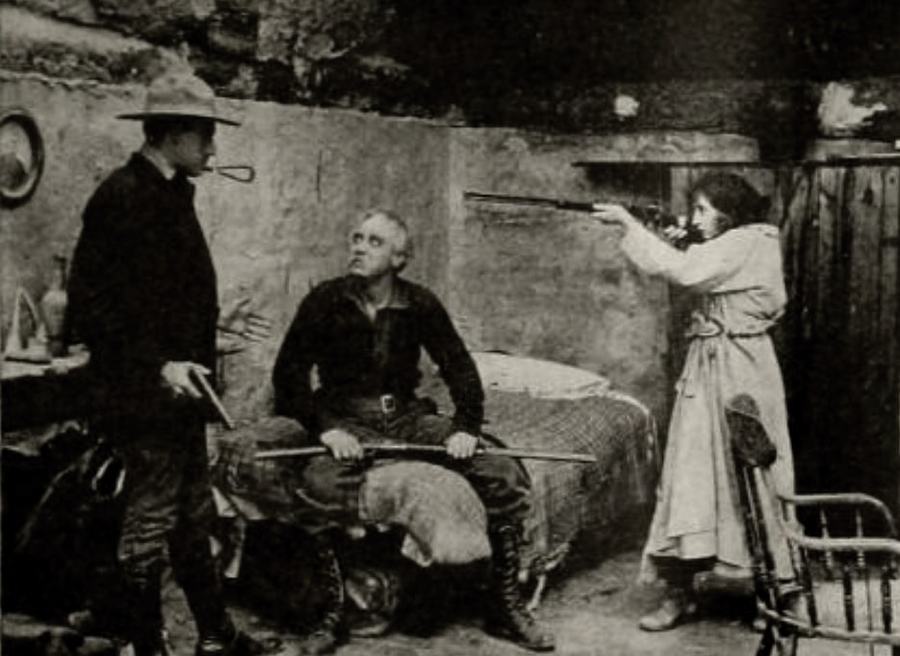
After his wife dies in childbirth, mountaineer Jim Grimsby names his newborn daughter Bill, and raises her as a boy. Remaining a boy in name only, however, Bill soon wants to style her hair and wear the latest fashions. She soon develops a crush on the new sheriff, Waldo Whittier. Appalled at the prospect of his "son" marrying Waldo, Jim decides to test the sheriff's grit, and so, believing that Waldo will be too frightened to come after him, he robs a casino. The sheriff does pursue, however, and, further impressing Jim, Bill pulls a rifle on Waldo to protect her father. Now certain of the sheriff's manliness, and convinced that his daughter has not forgotten how to act like a man, Jim returns the casino's money and agrees to let Bill and Waldo continue their courtship.
View Details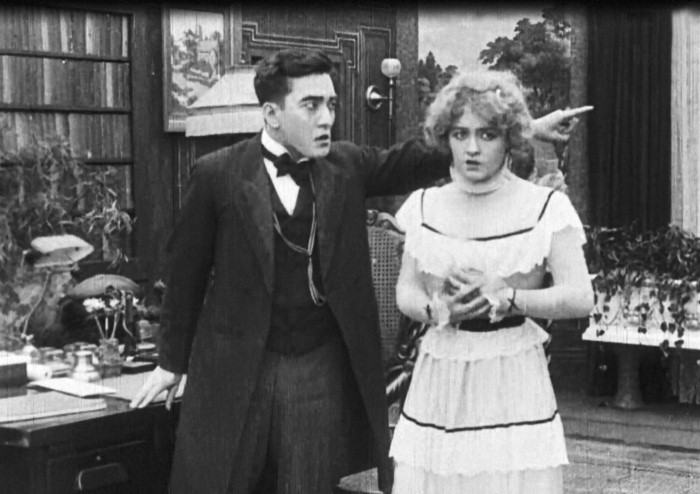
Dir: Reginald Barker
Japanese diplomat Tokoramo ( Sessue Hayakawa ), on a mission to Paris, begins a love affair with chorus girl, Helene ( Gladys Brockwell ), who subsequently rejects her American fiance, Richard Bernisky. When the Japanese discover the affair, they try to force Tokoramo to end it, but Helene refuses to stop visiting him. One night, during one of her visits, Bernisky comes to Tokoramo's apartment and, while Helene hides, rebukes her to her lover. After Bernisky leaves, Tokoramo orders Helene out, but when he realizes his love for her, he calls her back. Suddenly, she rejects and insults him to the point that he strangles her. Tokoramo wants to confess his crime, but he must complete his work, and so his countrymen sacrifice a boy, Hironari, who pleads guilty to the murder and eventually is executed. In the end, Tokoramo also dies and his colleagues burn his valuable papers in order to protect Japan.
View Details
Dir: Reginald Barker
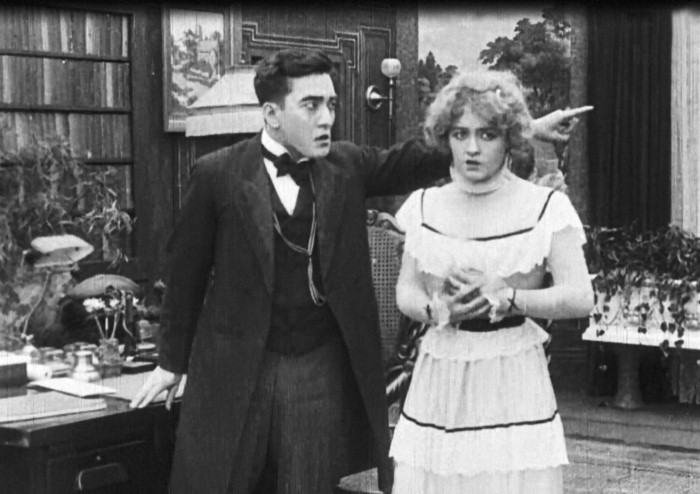
Doris Wingate is featured in a Sunday magazine supplement as the most snobbish girl in America. In reality, Doris is lovable and eager for friends, and it is her Aunt Priscilla who deliberately cultivates the false impression. Realizing this, her uncle ships Doris off to a co-educational college, but unfortunately, her reputation preceded her and she is snubbed by the other students. However, in Robert Lee Hollister, a fellow student who takes in washing to earn his tuition, and his little helper Dolly Temple, Doris finds true friends. Entering into a business partnership with her new friends, Doris spends her happiest hours sorting linen until her Aunt Priscilla arrives to break up the match. Doris defies her aunt and elopes with Bob, thus shattering her image as a snob, and the two settle down to a happy life together.
View Details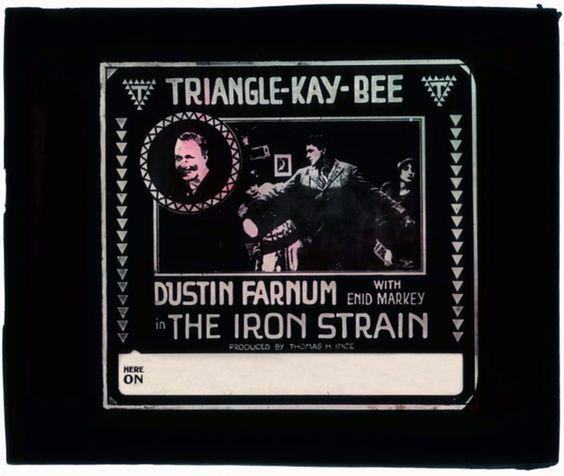
Dir: Reginald Barker
When San Francisco social butterfly Octavia Van Ness falls into decline, on a physician's advice her grandfather, mining king Ezra Whitney, takes her to Alaska, hoping that she will regain health and find a mate more suitable than the gilded youths of the California city. In the far north they meet "Chuck" Hemingway, whom the girl supposes to be a "sourdough," but whom the grandfather recognizes as a young collegian from the east. When she rejects Hemingway's advances, the caveman instinct wakens within him. The day before she is to return to civilization, Hemingway kidnaps her, enters into a forced marriage with her, and installs her in his cabin--where she suffers no more harm than if she were with her mother. Six months later, Octavia is now well and strong and rejoices in housework, but is still antagonist to Chuck. When Kitty Malloy, the queen of the Arctic Cabaret, suddenly arrives in the city, Octavia's jealousy is excited. She realizes his true worth and for the first time loves her husband. They return to California, where they are united with Octavia's family.
View Details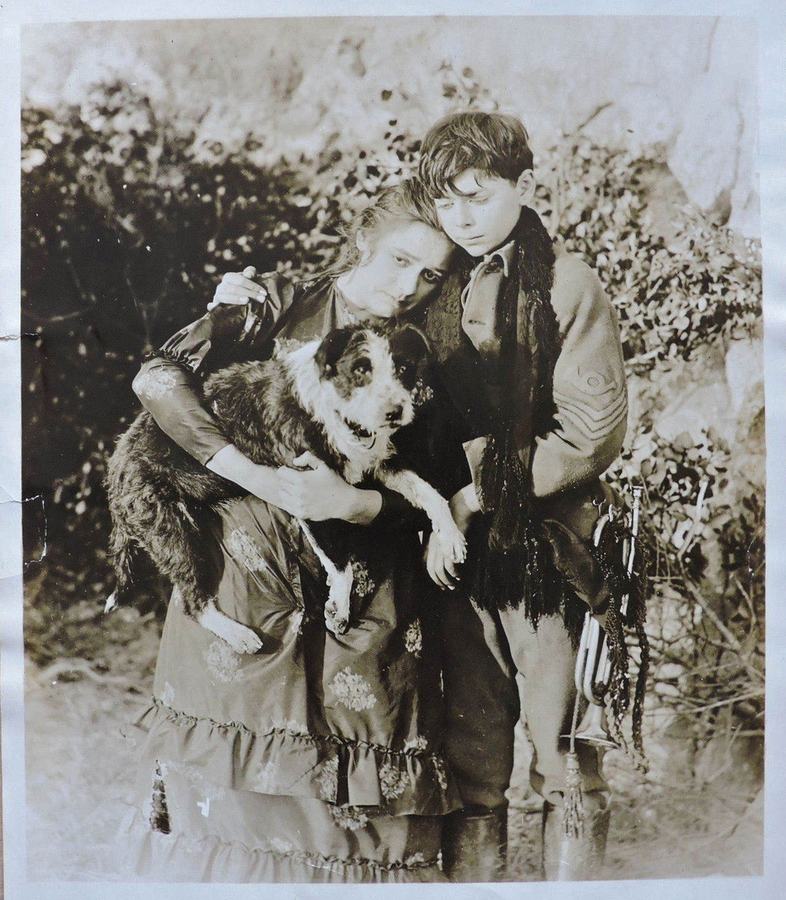
Dir: Reginald Barker

Billy, who is the little son of Captain Andrews, commandant of a western army post, has one ambition in life, and that is to become a good soldier. This he has confided to his friend, Sergeant Hogan, and the sergeant takes pains to foster the idea. He really needs all his courage to face a new situation that has come up in his life. His father is going to marry again. While he knows absolutely nothing about his prospective stepmother, he can conceive of no one worthy of taking the place of his beloved mother, who lies in the little cemetery outside the fort. In spite of Billy, however, the wedding takes place. The newcomer tries in every way to win over the little fellow, but beyond politeness his friendship stops. Soon after the wedding his father is called at the head of his regiment to quell an uprising of the Sioux Indians, forty miles away. He leaves his bride in little Billy's care. The distant trouble is but a ruse on the part of Lame Bear, the Indian chief, and now, with his picked braves, he swoops down on the weakened garrison at the fort. The defenders of the fort are so few in number that it is but a question of time before they must surrender. Billy, bearing in mind the admonition of his father to take care of his stepmother, takes her away from the fort by a secret passage and hides her in a cave in the hills. Suddenly he observes the wavering men at the stockade. Bethinking himself of his bugle and hoping to lead the Indians to believe that his father and the regiment are returning, he blows the signal to charge from a distant knoll outside the fort. The outcome of that bugle call saves the garrison and draws Billy and his stepmother together.
View Details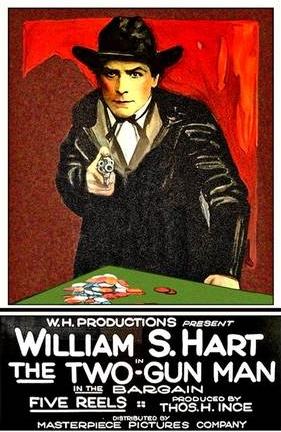
Dir: Reginald Barker
The bandit Jim Stokes, wanting to go straight and settle down with his new bride, strikes a bargain with the sheriff for his freedom.
View Details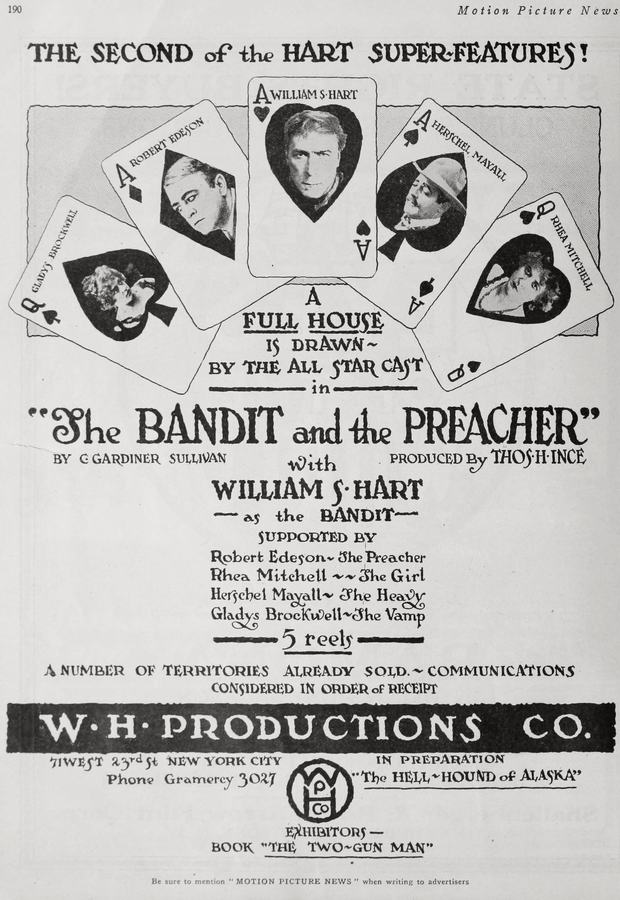
Dir: Reginald Barker
A stagecoach robber falls in love with a saloon girl. However, she falls for a pastor, who converts her; she marries him. The robber is so impressed by this that he decides to turn over a new leaf. However, a shady gambler sets his sights on the former saloon girl, and the robber has to protect her from his advances.
View Details
Dir: Reginald Barker
A poor ditch-digger, Pietro Massena, lovingly raises his motherless daughter Rosina. Phil Griswold, in order to throw a party to celebrate his expected inheritance, induces his friend Robbins to rob the flower shop where he works. After the inheritance goes to Phil's brother William, who refuses Phil money to return to the flower shop, Phil abducts William's daughter Dorothy and sends a "Black Hand" ransom demand to throw suspicion onto Pietro, who earlier frightened Dorothy when he delivered a Christmas tree to William's house. William drives into the slums looking for Pietro and accidentally runs down Rosina. The grieving Pietro goes to the flower shop on Christmas morning to buy a rose for Rosina's coffin and is accused of the kidnapping, because Phil arranged to have a man known by "the sign of the rose" pick up the ransom money there. Pietro threatens to kill the arresting detective so that he can return to his "bambino," when William arrives with news that Dorothy has been found. William offers Pietro compensation, but he refuses and sorrowfully returns home.
View Details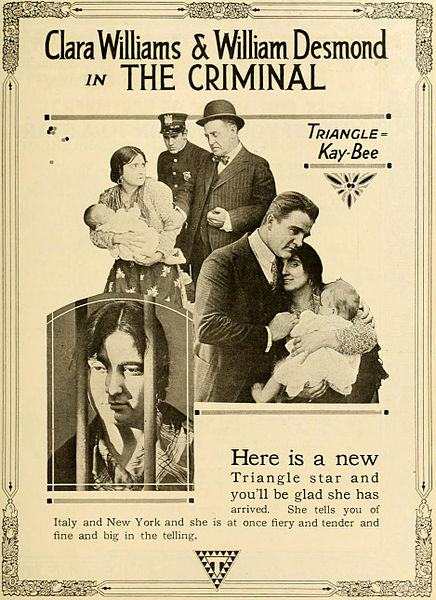
Dir: Reginald Barker
A young Italian immigrant girl, uneducated and superstitious, finds an abandoned baby on the stairs of her tenement, with a note attached explaining the baby is illegitimate. A young newspaper reporter, whom the girl knows from waiting on him at the restaurant where she works, reads the note for her. But the police arrest her, at no evidence whatsoever other than possession of the baby, for kidnapping. She refuses to tell them the baby was abandoned and fatherless, because she was herself, and confesses, in order to save the baby from being branded a bastard, that she stole it. The reporter goes to the jail and elicits the truth from her. And then proposes to her and adopts the baby.
View DetailsAnalysis relative to The White Desert
| Film Title | Atmosphere | Complexity | Similarity |
|---|---|---|---|
| Civilization | Surreal | Dense | 87% Match |
| Jim Grimsby's Boy | Gritty | High | 86% Match |
| The Typhoon | Tense | Abstract | 87% Match |
| Happiness | Tense | Linear | 97% Match |
| The Iron Strain | Surreal | Abstract | 96% Match |
This guide was algorithmically generated using the cinematic metadata of Reginald Barker's archive. Last updated: 8/17/2026.
Back to The White Desert Details →