
DbcultAccessing Vault...
Recommendations
Senior Film Conservator
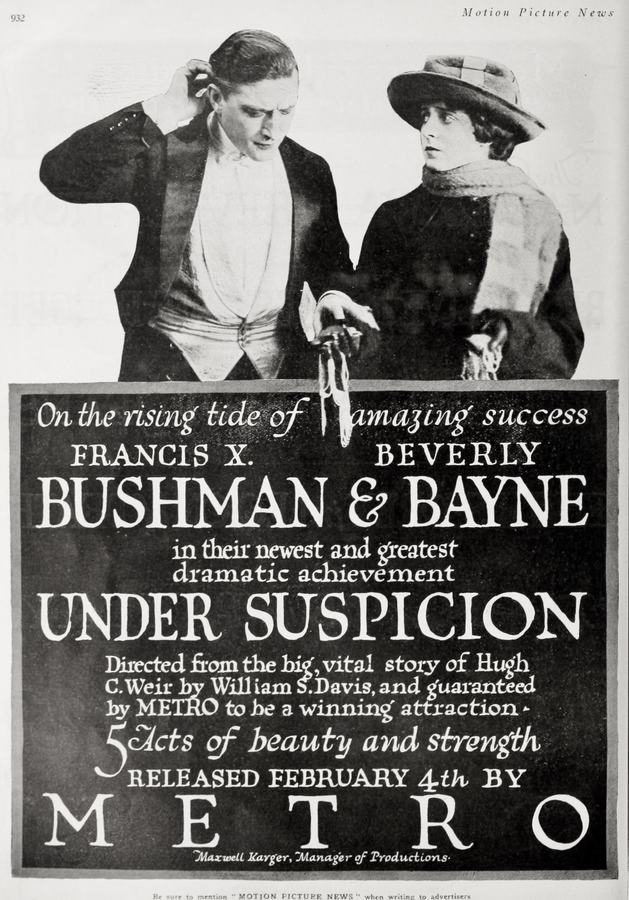
The cinematic DNA of Under Suspicion (1918) is truly one of a kind, the search for similar titles reveals the deep impact of Will S. Davis's direction. Our cinematic experts have identified several titles that reflect the spirit of 1918.
As a pivotal work in United States cinema, Under Suspicion to capture the existential zeitgeist of 1918.
At a high society musicale, millionaire Gerry Simpson meets and falls in love with newspaper reporter Virginia Blake, whose disdain for the "idle rich" causes him to claim that he is a cub reporter on her paper. When the party is interrupted by the announcement that a burglar has stolen hostess Alice Woolworth's jewels, Virginia secures the button torn from the robber's coat by Mrs. Wentworth's pet monkey and is determined to solve the crime. Virginia begins to fall in love with Gerry, who has actually taken a job with the paper, but one day she notices that his coat is missing a button identical to the one that she obtained at the party. Believing him to be the thief, she searches his apartment and locates a cache of jewels. At that moment, however, Gerry's valet Rogers enters, and suspecting that she has discovered his guilt, he attacks her. After Gerry rescues Virginia, Rogers is imprisoned, and Gerry wins his girl's heart by promising to work hard as the editor of the newspaper he has just bought.
The influence of Will S. Davis in Under Suspicion can be felt in the way modern cult films handle cinematic excellence. From the specific lighting choices to the pacing, this 1918 release set a high bar for atmospheric immersion.

Based on the unique cinematic excellence of Under Suspicion, our vault has identified these titles as the most compelling follow-up experiences for fans of cult cinema:
Dir: Will S. Davis
Fernande marries a man and schemes to get his wealth when his expected death occurs. But he dies before he can change his will. She next tries to kill the son who inherits, but he outfoxes her.
View Details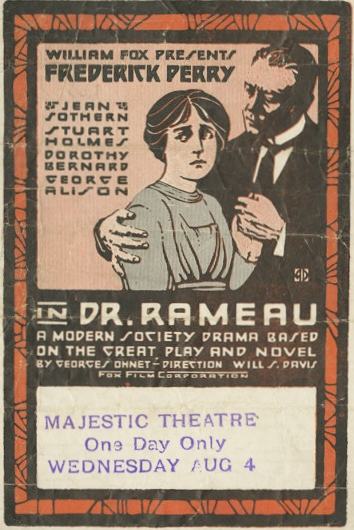
Dir: Will S. Davis
Pierre Rameau, the son of a poor gate-keeper, becomes the foremost physician and surgeon in Paris. Conchita, his wife who he loves above everything else in the world, dies leaving an infant daughter, Pamela. Rameau is inconsolable and keeps the room that Conchita died in inviolate, visiting it only on the anniversary of his wife's death. Twenty years later on one of these visits he discovers, among one of Conhita's letters, proof that she had been unfaithful to him and that Pamela, the girl he had raised from an infant to womanhood, was not his child. The shock drives him out of his mind, and he drives Pamela from his home, refusing to ever see her again. Dr. Talavanne, his best friend, informs him that Pamela is dying and only Rameau's skills as a physician can save her.
View Details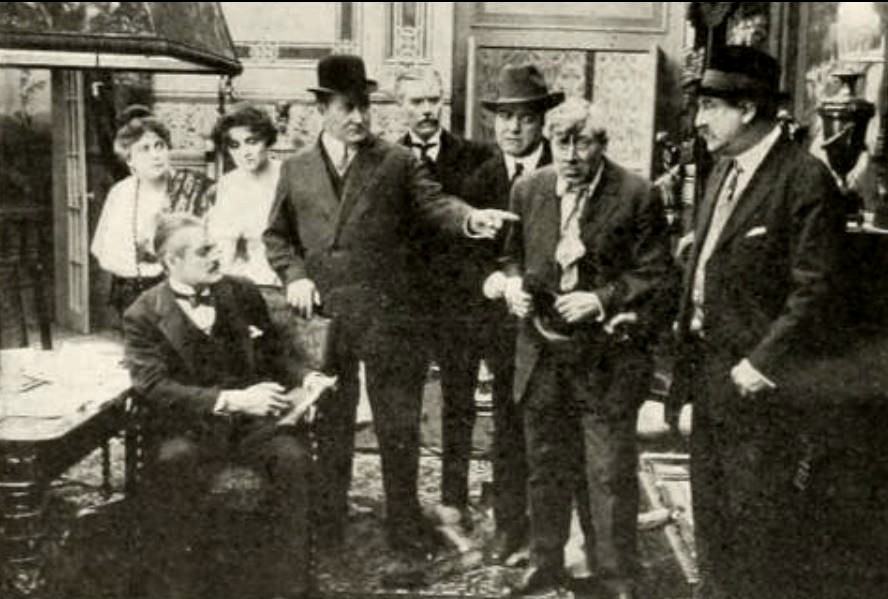
Dir: Will S. Davis
Randolph Legarde, a senior judge of a criminal court, betrothed to Agnes Caverly, is injured by the kick of a horse at the base of his skull. The injury has the effect of establishing in Judge Legarde a dual personality. Miss Caverly, together with her father, a lawyer, is a guest of Judge Legarde and his sister at their apartments. In his courtship, inspired by a feeling of affectionate sentiment, he requests that her "good night" wishes to him be expressed by her playing on the piano, Schubert's Serenade. A few evenings after the accident, as she is rendering this selection, and he listening, he feels an uncontrollable impulse stealing over him to perform some act of lawlessness or violence. The dual personality has its inception, and Judge Legarde, with distorted countenance and the carriage of a thief, suddenly becomes metamorphized into a being of the underworld. He steals out of his house, and on his ramblings through the city, ultimately finds himself the habitué of a den known as the "Lame Duck." Each night this same impulse steals over him, and each morning finds him unconscious at his desk, restored to his original personality. He endeavors to fight off and battle with this evil influence, but without avail. Several thefts and acts of violence occur in the city, which the police authorities are unable to settle upon any one man, but of all these, Judge Legarde is the moving spirit. Allying himself with this band of denizens of the underworld, he becomes infatuated with Amelia, a girl of bewitching beauty, who at the time when Judge Legarde was presiding over his court, was sentenced by him to prison for the theft of a necklace from Miss Caverly, whose maid she was at one time. Amelia meets Legarde in "The Lame Duck" and there charges him with being Judge Legarde. Under the influence of the dual personality he cannot recognize the truth of the accusation, and the girl and the other habitués of the place, impressed by his vehement denial, fail to pursue the subject. He plans a robbery of his own home with the air of "Big Charles" and others. "The Quill," a stool pigeon of the police, reveals the plan of the contemplated theft. They arrive at Judge Legarde's house just at the moment that Big Charles and his pals attempt to escape, and when Judge Legarde undergoes the transformation from the thief to his former good self. Miss Caverly and her father are under the belief that over work and attention to his professional duties are the causes of his strange lapses of memory which Judge Lagarde is subjected to, but never suspecting the real truth. Miss Caverly's marriage to Judge Legarde is deferred until his complete restoration to health. Caverly engages, without Legarde's knowledge, the services of an eminent brain specialist who undertakes to eradicate the dual personality, and at a time when the good personality is about to pass away and the evil one to find its inception, the specialist merges the two into one, finally restores Judge Legarde to permanent health. His marriage to Miss Caverly is consummated.
View Details
Dir: Will S. Davis
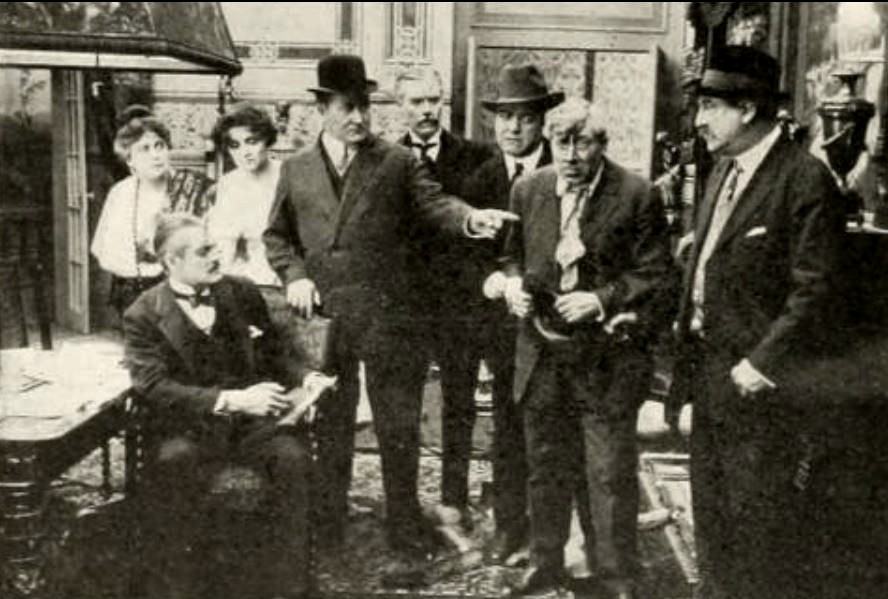
Richard Tremaine, by forging a letter, compromises Helene Blair brings about her divorce from her husband and her separation from her children, and then secures her consent to marry him. She discovers, then, that he already has a wife; that he it was who destroyed her home life by his slanderous lies; she starts out deliberately to revenge herself on him. This she does by inducing his son to fall in love with her. The father is then brought face to face with the dilemma of seeing his son marry a woman with whom he had been intimate, or having his own disgrace brought put into the light. The three finally meet in Helene's apartments, and the son is accidentally shot and killed by a revolver with which the father was attempting to end his own life. The father is charged with the murder of his son, and Helene is the chief witness against him. John Blair, Tremaine's counsel, learns from his wife's testimony of the perfidy of Tremaine. After the latter is sentenced to death, Helene, in a fit of remorse, tells Blair, with whom she is now reunited, that the killing was accidental. Tremaine is freed, and Helene goes back to her rightful place as Blair's wife.
View Details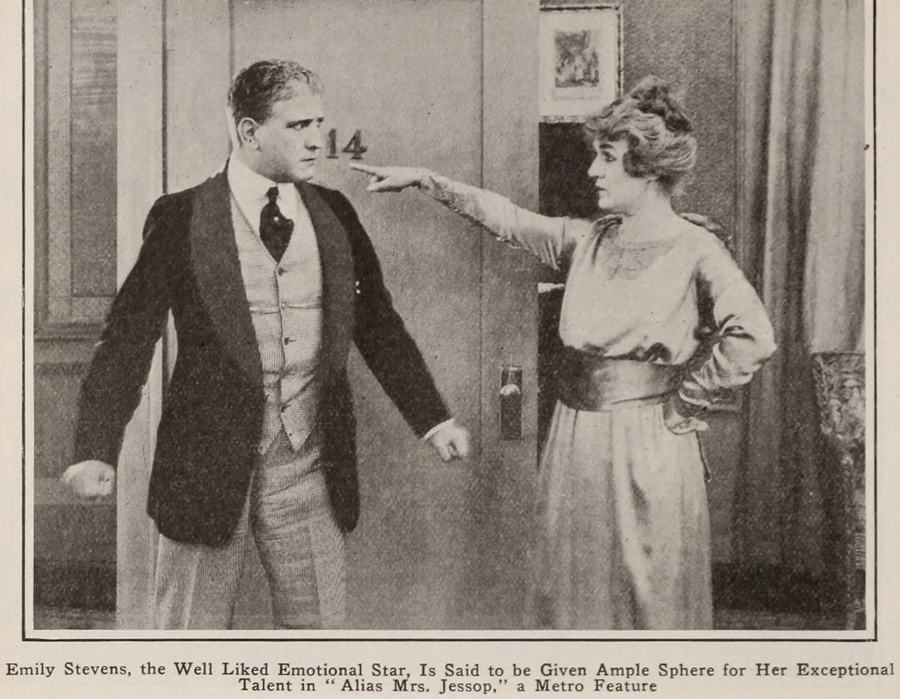
Dir: Will S. Davis
Janet Ford, a penniless orphan, is reared with her mischievous identical cousin Lillian by Lillian's affluent parents. While Mr. Ford treats Janet kindly, Mrs. Ford remains cold. When Lillian is caught in a gambling raid, she convinces Janet to bear the blame, and Mrs. Ford orders Janet to leave. Lillian marries Sir Anthony Jessop and settles in England. Jessop, who soon tires of Lillian's frivolity, finds fulfillment with their son Bobby. When he rebukes Lillian for her midnight revels, she orders him to leave. Under the pretense of visiting her dying father, Lillian travels to America, followed by her lover, Raymond Fleury, and they travel West together after she persuades Janet to impersonate her at Ford's deathbed. When Janet learns that Bobby has been hurt, she sails to England and cares for him. After Jessop's uncle dies, he returns as the Earl of Devon, and grows to love Janet, who he thinks is Lillian. Janet is terrified because she also loves him. Hearing of Jessop's good fortune, Lillian returns. After Fleury pursues and shoots her, Jessop proposes to Janet that they quietly marry and keep their past secret.
View Details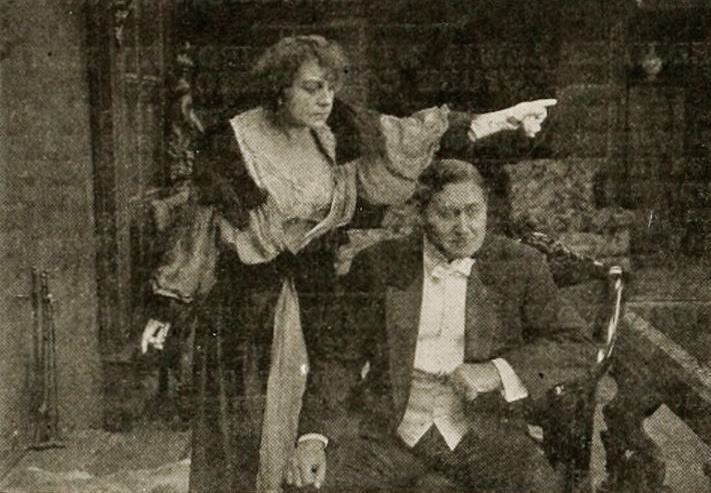
Dir: Will S. Davis
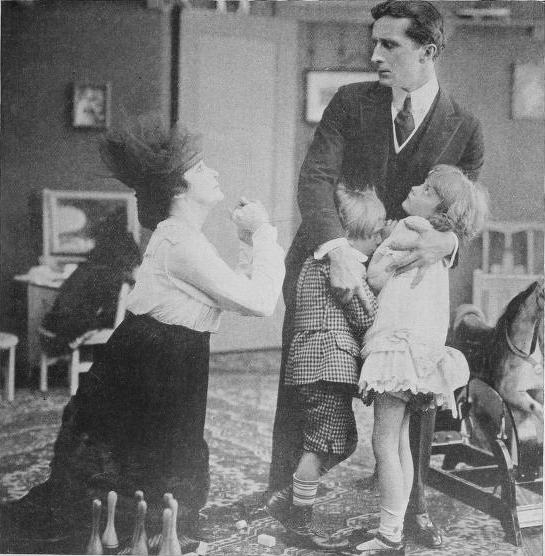
John Malvin Grey, a member of the New York Stock Exchange, pays court to Clara Fenton, who returns his affection. Miss Fenton, aspiring to extreme wealth and social distinction contrary to the dictates of her heart, accepts the proposal of marriage of Peter Vaughan, a millionaire of somewhat advanced years. Helen Barrington, possessing a secret attachment for Grey, finally becomes his wife, when he realizes that his affection for Miss Fenton can be of no avail. After her marriage to Vaughan, Clara, unable to subdue her deep love for Grey, at every opportune moment appears in his company, endeavoring to continue her love affair with him, despite the fact that she is now married. At a dinner she gives, Peter Vaughan is shocked to observe his wife's carrying-on and her persistent advances to Grey. At a climax, his attention being called to the affectionate attitude assumed by his wife toward Grey, his heart gives way, he collapses and expires. In widowhood, regardless of the fact that Grey now leads a happy married life as a beloved husband and father, she pursues her wiles and attention. Being repulsed by Grey, she conceives a plan of inveigling him with the aid of Ashton Cameron, in the purchase of Avalanche mining stock, and then to cause the market to drop, reducing Grey to all but ruin, coming to his assistance with her extreme wealth, raising the price of stock and restoring him to affluence. She engages in this plan, believing that thereby she will place Grey under everlasting obligations to her, and possibly serve her ends in having him abandon his wife, to assume relations with her. By various tricks and subterfuges, she arouses the suspicions and jealousy of Mrs. Grey, until the moment arrives, when, believing that her husband is carrying on a secret liaison with Mrs. Vaughan, she determines to divorce him. Grey's young sister Rose is in love with Philip Carlton, and throughout the entire play, reigns as the standby of Grey. Ashton Cameron, also in love with Rose, offers to assist Grey out of his difficulties on Avalanche stock, providing he uses his endeavors to procure Rose's consent to marry him. Grey refuses this assistance at the sacrifice of his sister's future happiness, and Cameron proceeds to carry out his agreement with Mrs. Vaughan to ruin Grey. Polly, a street waif who is injured in an accident by Grey's automobile, is adopted by him into the family as his charge. In the denouement at a gathering at the office of Shaw, Grey's family lawyer, Polly reveals that she has observed Grey repulse Mrs. Vaughan, and declare to her that he loves his wife and will have nothing to do with her. Mrs. Vaughn is confronted with the proof of her various intrigues and diabolical schemes to arouse Mrs. Grey's jealousy, and finally admits the true situation and her own despicable actions. Grey is reconciled to his wife, and Clara Vaughan is left to pursue her way in the world, rejected and alone.
View Details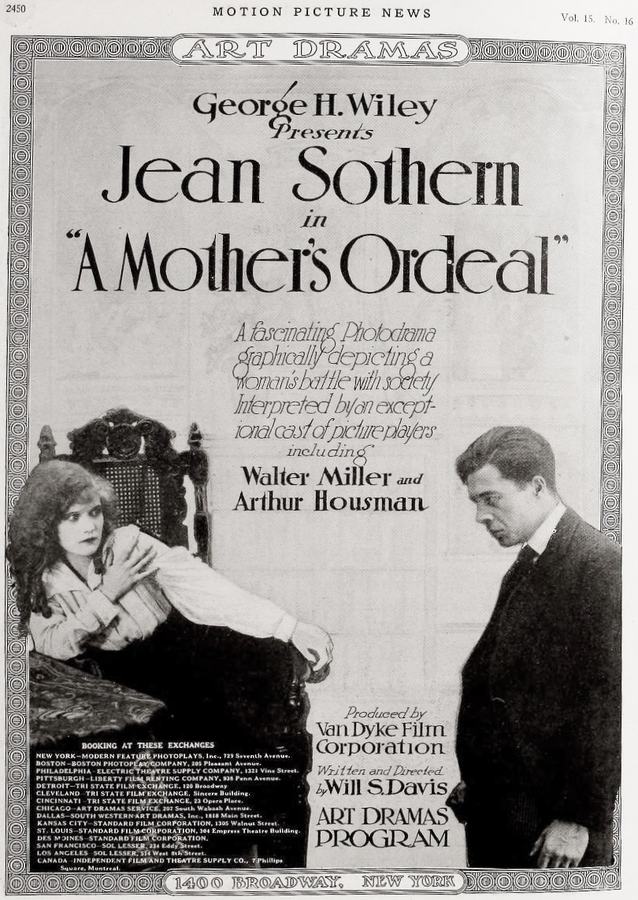
Dir: Will S. Davis
A fascinating piece of cinema that shares thematic elements.
View Details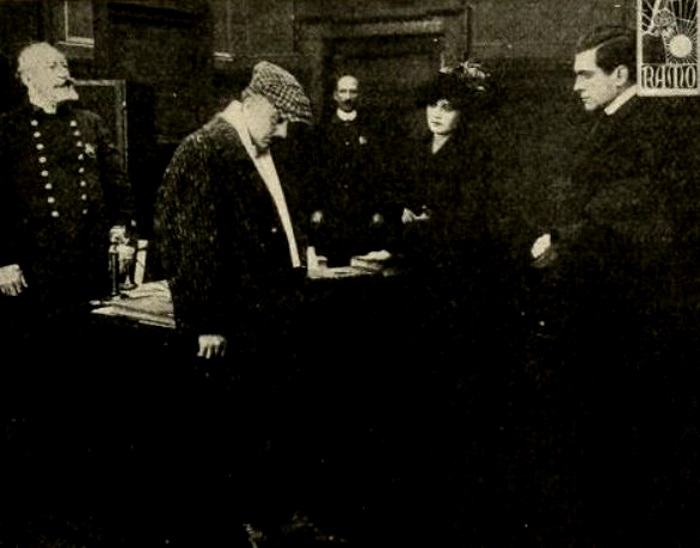
Dir: Will S. Davis

Jim Jepson returns home after serving five years in prison for bank robbery. He manages to live a straight life with his wife and little daughter until misfortune overtakes him. His wife dies, his daughter is forced to work for her living, and at this crisis in his affairs, he meets one of his former pals, Doc Burns, a jailbird, who is wanted in the west for another robbery. Jepson, who has become discouraged, is persuaded by Burns to resume his former life. They rent an old house next to a bank, tunnel through the cellar to the bank, working at night, while Mary, innocent of the life her father leads, continues her work as cashier in an all-night restaurant. Mary, returning home late, is saved from insult by Bob Darrell, a detective, who escorts her home. A man seen loitering in the vicinity, is recognized by Darrell, as "The Worm," a notorious crook. Darrel, who arrested Jepson and Burns twenty years before, follows "The Worm," and seeing him meet Burns, is convinced that there is another plot on foot to rob a bank. Believing Mary to be an accomplice, he causes her discharge so that she will be at home at the time of his raid. Easy access to the house is gained by arresting Mary as she enters the door and Darrell and the detectives descend to the cellar, follow the cracksmen through the tunnel and capture the gang as they are blowing up the bank vaults. Jepson endeavors to exonerate Mary at the trial, but she is given a short sentence while the others receive a long term. Four years elapse. Mary, released from prison, experiences the utmost difficulty in obtaining the bare necessities of life. Sick and starving, she is tempted to snatch a purse, but is saved from the first step in The Criminal Path as the sound of singing in a nearby Mission reaches her ears. She seeks refuge in the Mission, only to faint away. The young minister, Rev. John Horton, sends her to a hospital where he visits her frequently and on her recovery gets her a position with his sister, Mrs. Blair. Morton's interest in Mary ripens into love, while Richard Blair, the husband, attracted by Mary, annoys her with attentions, but she keeps silent to prevent a family scandal and hold her position. Unknown to Mary, Jepson escapes from prison and Darrell believes he can recapture him by watching his daughter. Jepson seeks Mary for help in leaving the country. Darrell obtains an invitation to a reception in the Horton home to watch Mary. Blair, finding Mary alone, insults her. To protect herself she seizes a bronze candelabra from the mantel, but is discovered. Mary, for Horton's sake, makes no accusation. Later a noise is heard in the library and Mary is discovered standing over Blair's dead body, but being unable to give satisfactory explanations, she is arrested for the crime. Meanwhile, Darrell, gathering clues, finds Jepson's trail, and convinced that he killed Blair, pursues him across country through ice and snow. Overtaking him, a terrific struggle ensues. Jepson is the victim of his own wicked design to throw Darrell into the ice hole. Notwithstanding, Darrell rescues him. Dying from exhaustion and learning that his daughter is accused of the crime, Jepson gives the true facts of Blair's death, which convinces Darrell that his conclusions were right and that Mary is innocent. At last, the road to happiness opens to Mary.
View Details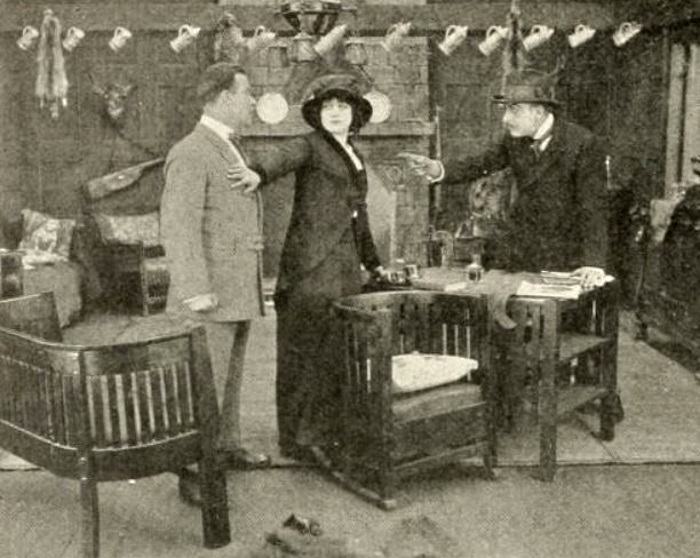
Dir: Will S. Davis
Stuart Homer, backed by the reform party, runs for the assembly. Rev. Richard Walters and his son, Horace, aid him. Homer wants his sister, Alice, knowing nothing of her love affair with Jefferson Blair, a young lawyer. Helen, Homer's wife, knows, however, and opposes the match and an elopement is planned. Helen finds Blair's note to Alice, reading simply, "Come to my bungalow. I love you. We will go away together. Believe me, sincerely, Jeff." Determined to prevent this, Helen starts for his bungalow alone, Homer being at the political meeting. Alice, on her way to Blair, crosses an old bridge to avoid being seen by Walters, who happens in that vicinity. The bridge falls, throwing her unconscious in a deep ravine, where she is exposed to the storm until found by strangers and later brought home. Helen is seen by Walters entering Blair's bungalow. Forming an unjust conclusion, Walters hurries to Homer at the meeting. Homer, not knowing of Blair's love for Alice, goes to the bungalow. Meanwhile Helen has surprised Blair, and shown him the note and told him she intends to wait and take Alice home. At this junction, Homer arrives and upon finding the incriminating note, orders Helen to leave his house and her little girl. Helen is caught in the storm and picked up practically out of her mind by an automobile party of questionable character. Alice is brought home only to die. Her story and Blair's grief convince Homer of his terrible mistake. He is agonized at obtaining no clue to Helen's whereabouts. Helen's despondency makes her a ready convert to the fast life of her companions. After fifteen years, we find Homer as State Governor, his daughter, Mary, away at school, and his wife a leading factor among her associates in their reprehensible career. Fate brings Mary Homer, her daughter, under the consideration of "the Master." Unknowingly she aids in the bringing of Mary into "the Master's" power. Mary's disappearance arouses the Governor's fears, but to avoid the dangers of publicity and disgrace, he puts a detective, Reggie Wilde, on the case. A restaurant is the means of picking the acquaintance of "Crooked Fingers" as Reggie looks easy, and entrance is gained to the house, where "the Master" lives, and Mary is detained. Wilde arrives during an attempted escape of Mary, the result of which is the discovery by Helen of a birthmark on Mary, proving to her that Mary is her own daughter. Helen plans Mary's escape. Meanwhile Wilde, finding the situation with "Crooked Fingers" and his confederates has reached a climax, shows his hand and under forceful "persuasion" the crooks are forced to telephone for the police, and then locked in a closet. "The Master" takes Wilde by surprise, overpowers him in a terrific struggle and stops Helen in her attempt at escaping with Mary. In desperation Helen shoots "the Master" just as the police arrive. Mary has fainted and Helen is arrested for the murder. Wilde takes Mary to the Governor. Blair, now a prominent lawyer, is assigned to the defense of Helen "Smith." On conferring with Helen, he recognizes her, but promises to keep her identity a secret. Mary is the chief witness against Helen "Smith," and during her testimony the Governor recognizes his wife. Tortured and powerless, he hears her testimony, which results in a verdict of guilty. The Governor visits Helen's cell and promises her to keep so that their daughter may not suffer disgrace. Urged by Blair, the Governor decides to pardon Helen, realizing that to do so, he must satisfy the public and get his reasons and thereby bring disgrace on himself and daughter. The decision proves needless, for Helen's weakened condition and refusal of food results in her death before the pardon leaves the Governor's hands. The Governor's Nemesis has disappeared; a Higher Court has assumed jurisdiction; who will be adjudged guilty?
View Details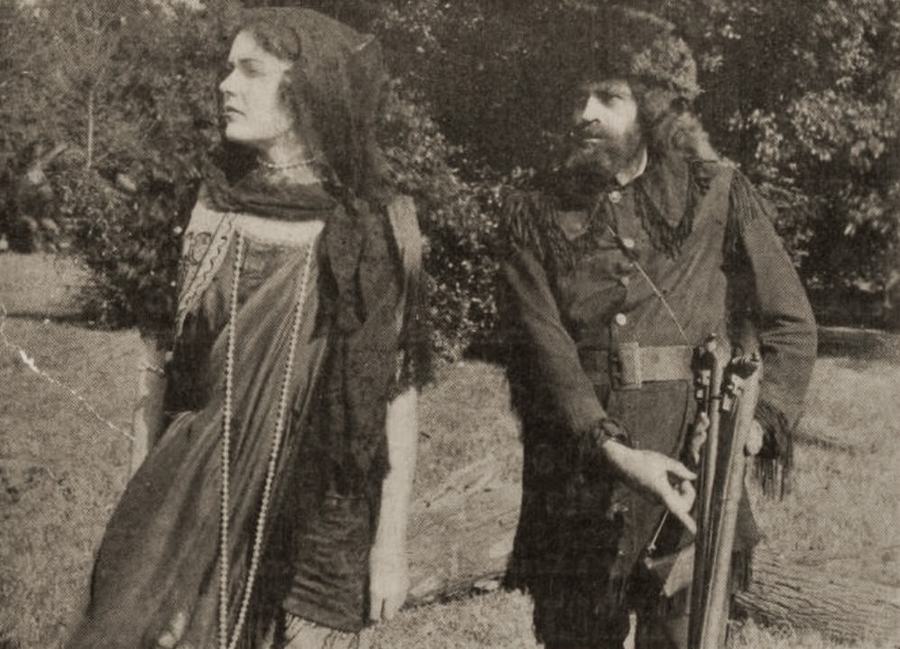
Dir: Will S. Davis
Madeline De Valette is betrothed to her father's cousin, Raoul De Valette, arrangements having been made when she was but a child. Valette requests his cousin's presence at his home to be presented to his fiancée. Raoul has been carrying on a love affair with L'Acadienne, a beautiful Creole who loves him devotedly. Much against his wishes, he is compelled to leave L'Acadienne. In spite of her pleadings and threats, he sets out for the Valette home. Her jealousy prompts her to follow Raoul and disclose their love affair to his fiancée's father, and thus prevent the marriage. Madeline is in the springtime of her youth. She is fully aware of her coming marriage with Raoul, but the realization of what it means does not occur to her. She has been rehearsed daily to prepare for her first meeting with her fiancé. Raoul finally arrives at the Valette home. Although disappointed, she accepts Raoul, as a duty to her father, whose earnest wish is that she shall marry a Val De Valette. At this time the United States is at war, and there is a call for volunteers. Wolf, a backwoodsman, has been recruiting a company of citizens to help Andrew Jackson to fight the enemy at New Orleans. Gilbert Seele, whose father owns the estate adjoining the Valette's has enlisted, unbeknown to his father, who has opposed his going away. Gilbert's father, who has purchased most of the Valette property, learning of Valette's poverty, desires to buy the Valette home. In spite of their previous business transactions, Valette and Steele are not on friendly terms. Steele sends Gilbert to Valette to negotiate the sale of Valette's home. While there. Gilbert meets Madeline. He immediately falls in love with her, and she, in her innocence returns it. Valette is angry at Gilbert for daring to expect love from a lady who was already betrothed. He also refuses to listen to Steele's proposition to buy his home. Gilbert is ordered from the house, enraged at the harsh treatment accorded him. Madeline, who fears that Gilbert is angry at her, runs after him to explain. She is unable to overtake him, but the thought of never seeing him again terrifies her and she continues to follow Gilbert. Gilbert is to join the recruits at sundown. He secretly leaves home, and Madeline, arriving there, finds him gone, but she does not give up her march. In the meantime. L'Acadienne has arrived, and meeting Raoul, she threatens to expose him. Raoul manages to persuade her to remain silent by telling her that his marriage with Madeline will not part them. This satisfies her. Raoul, seeing his opportunity for breaking the betrothal, asserts that Valette could not expect him to marry Madeline now. Valette allows him to depart. He is immediately joined by L'Acadienne and they return to New Orleans. Madeline's condition is serious. Her mind is afflicted by the shock, but her father does not relent, declaring that her condition is her punishment. Crawley's report is soon found to be false for Gilbert, Wolf and the recruits return. They have been victorious. Crawley, fearing Wolf's and the people's wrath, seeks aid from Father O'Mara, who promptly hands him over to Wolf and the people who are searching for him. Crawley receives a just punishment. Gilbert learns of Madeline's condition, and efforts are made to recover her reason. A plan is decided on, the result of which causes Madeline's recovery. Valette, learning the real facts, offers his sanction to the betrothal of Madeline and Gilbert.
View DetailsAnalysis relative to Under Suspicion
| Film Title | Atmosphere | Complexity | Similarity |
|---|---|---|---|
| Destruction | Gothic | High | 98% Match |
| Dr. Rameau | Gothic | Abstract | 88% Match |
| The Curious Conduct of Judge Legarde | Ethereal | Linear | 88% Match |
| Slander | Surreal | High | 93% Match |
| Alias Mrs. Jessop | Surreal | Dense | 94% Match |
This guide was algorithmically generated using the cinematic metadata of Will S. Davis's archive. Last updated: 6/18/2026.
Back to Under Suspicion Details →