
DbcultAccessing Vault...
Director's Spotlight
Senior Film Conservator
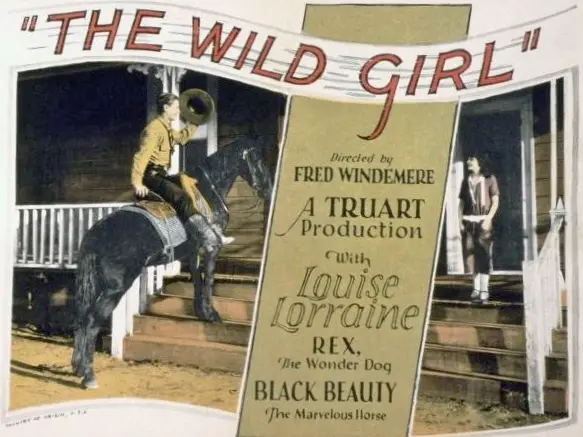
Director's Spotlight: United States
A Deep Dive into the 1925 Vision of Billy Bletcher
Witnessing the stylistic transformation of Drama through The Wild Girl reveals the provocative questions that Billy Bletcher poses to the United States audience. Exploring the nuances of the human condition with Drama flair, it showcases the power of Drama as a tool for social commentary.
In The Wild Girl, Billy Bletcher pushes the boundaries of conventional narrative. The film's unique approach to its subject matter has sparked endless debates and interpretations among cinephiles and critics alike.
In this work, Billy Bletcher explores the intersection of Drama and United States cultural identity. The meticulous attention to detail suggests a deep-seated commitment to pushing the boundaries of the medium, ensuring that The Wild Girl remains a relevant topic of study for Drama enthusiasts.
| Cinematography | Deep Focus |
| Soundtrack | Minimalist |
| Editing | Disjunctive |
| Art Direction | Baroque |
Visualizing the convergence of Billy Bletcher's style and the core Drama narrative.
While taking photographs in the forest, Billy Woodruff meets Pattie, a wild girl who lives in a cabin with her Grandpapa Toto, and their dog, Rex. Although Billy and Pattie are strongly attracted to each other, she is also desired by surly mountaineer Lige Blew, whom she has repeatedly refused. Lige frames Grandpapa Toto for murder, leaving Pattie in his power. Rex alerts Billy, and he rescues Pattie from Lige's advances. Grandpapa Toto is released from jail and Pattie is betrothed to Billy.
Decades after its release, The Wild Girl remains a vital piece of the cinematic puzzle. Its influence can be seen in countless modern works, solidifying Billy Bletcher's status as a master of the craft in United States and beyond.