
DbcultAccessing Vault...
Director's Spotlight
Senior Film Conservator
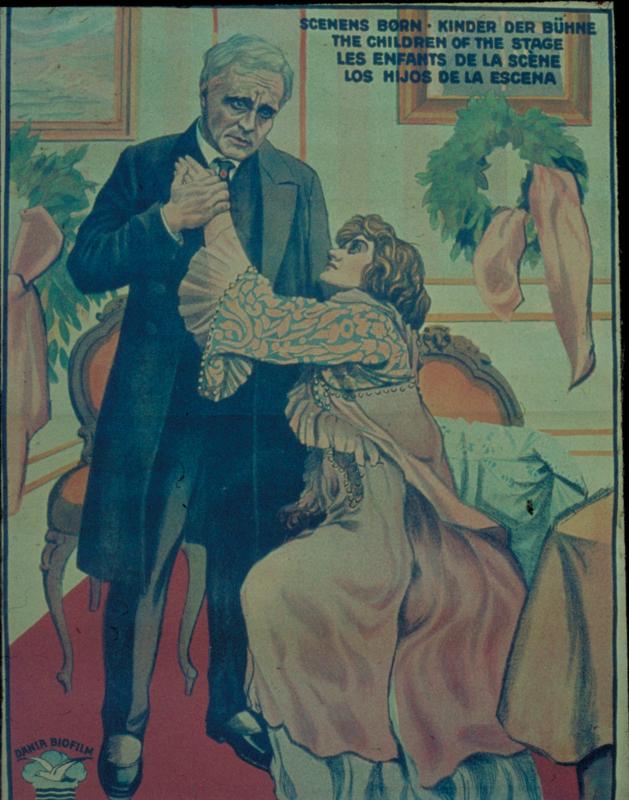
Director's Spotlight: Denmark
A Deep Dive into the 1913 Vision of Bjørn Bjørnson
Few works in Denmark cinema carry the same weight as Children of the Stage; or, When Love Speaks, especially regarding the cultural zeitgeist captured so perfectly by Bjørn Bjørnson in 1913. Utilizing a 1913-specific aesthetic that remains timeless, it serves as a blueprint for future generations of cult directors.
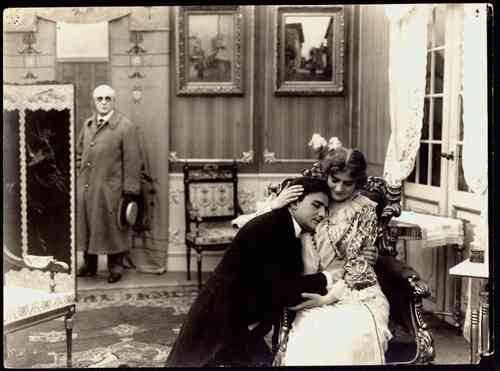
In Children of the Stage; or, When Love Speaks, Bjørn Bjørnson pushes the boundaries of conventional narrative. The film's unique approach to its subject matter has sparked endless debates and interpretations among cinephiles and critics alike.
| Cinematography | Static |
| Soundtrack | Diegetic |
| Editing | Elliptical |
| Art Direction | Expressionist |
Visualizing the convergence of Bjørn Bjørnson's style and the core cult narrative.
Walther and his young wife, Leonie, are both great favorites of the stage. In spite of the great difference in their ages they are very happy together. During a gala performance in which Leonie plays "May," and Walther "Faust," a young actor in the company, Charles Lacour, who is seated in the actors' box, falls in love with Leonie. His passion leads him to enthusiastic applause. His ardor is noticed by Dora, the actress to whom he has been very attentive. After a reception that is given the players behind the scenes, the manager invites them all to a public. In the midst of the gaiety, Walther falls and breaks his leg. The doctor is hopeful of a complete recovery, but to the actor it means that his career is over. Walther's despair increases as the months pass. He is deeply disturbed by Lacour's attention to Leonie and believes that she baa encouraged him. Many disagreeable scenes are enacted between the couple. Leonie realizes all that Walther suffers and excuses him, but it is difficult for her to refuse the attentions of Lacour. At the theater, Leonie and Lacour are to act together, A revolver, which is to be used in the play, is placed on Lacour's dressing table. The jealous Dora sees this and also Lacour, when he gives Leonie a bouquet. Dora goes to Lacour to remind him of their past relations, but he spurns her. She resolves to be revenged. Walther is in his wife's dressing room when Leonie enters with Lecour's flowers. There is a scene when the husband picks up a note which drops from the bouquet and reads, " - Better for us both to make an end of it than to live on in this way." He seizes a revolver and rushes to Lacour's room, where he finds Dora. While waiting the manager enters. During the interruption Dora changes the two revolvers. Lacour soon after comes in, takes the loaded revolver and hurries to the stage. Dora sees that her revenge is at hand. The accident occurs on the stage. Lacour shoots Leonie. The theater is thrown into confusion. The manager rushes for Walther, who in his excitement leaves the compromising note in the dressing room. Dora finds the note and gives it to a detective, who arrests Lacour, Leonie, though seriously wounded, recovers. During her convalescence, Dora visits her and tells her of Lacour's arrest. Walther and Leonie have a stormy scene. "I have never deceived you," Leonie cries, "It is your duty to save Lacour from suffering punishment for a crime he has not committed." The husband promises to do all that is in his power. Dora, overcome by remorse, goes to the judge and confesses. Lacour is released. He meets Leonie for a last farewell. Walther is present and perceives where his duty lies. He writes a note to Leonie telling her that he and not Lacour must say, "Farewell." His note ends, " - I have no right to be in your way. I set you free."
Decades after its release, Children of the Stage; or, When Love Speaks remains a vital piece of the cinematic puzzle. Its influence can be seen in countless modern works, solidifying Bjørn Bjørnson's status as a master of the craft in Denmark and beyond.