
DbcultAccessing Vault...
Director's Spotlight
Senior Film Conservator
Director's Spotlight: United States
A Deep Dive into the 1918 Vision of Bud Fisher
The artistic breakthrough represented by The Kaiser's New Dentist in 1918 highlights the philosophical inquiries that Bud Fisher embeds within the narrative. Framed by the hauntingly beautiful landscapes of the production, it leaves an indelible mark on the soul of the viewer.
In The Kaiser's New Dentist, Bud Fisher pushes the boundaries of conventional narrative. The film's unique approach to its subject matter has sparked endless debates and interpretations among cinephiles and critics alike.
The visual language of The Kaiser's New Dentist is defined by its use of shadows and framing, a hallmark of Bud Fisher's style. By utilizing a 1918-era palette, the film creates an immersive experience that perfectly complements its cult themes.
| Cinematography | High-Contrast |
| Soundtrack | Minimalist |
| Editing | Slow-Burn |
| Art Direction | Brutalist |
Visualizing the convergence of Bud Fisher's style and the core cult narrative.
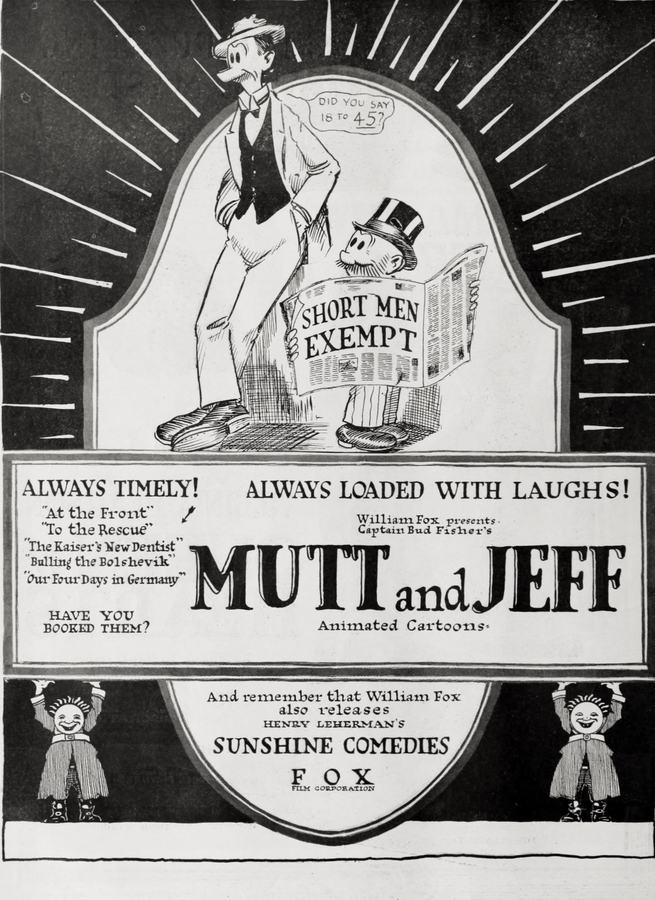
Mutt and Jeff, like the shrewd business men and true patriots that they are, take advantage of the fact that the Kaiser is in need of a good dentist, and, through a ruse, get to Berlin and open an office. First, they prevail upon the Crown Prince to become one of their patients, and their treatment of him is so effective that the greatest long-distance fighter in the German Army persuades his father, the All Highest, to sit in the new dentists' chair. That is what the dentists are waiting for, and shortly after Mutt gets the forceps on the Kaiser's pet molar the audience in any given theatre will be allowed to stand up, and in slow, measured tones chant that ditty: "Good-bye, Kaiser Bill!"
Decades after its release, The Kaiser's New Dentist remains a vital piece of the cinematic puzzle. Its influence can be seen in countless modern works, solidifying Bud Fisher's status as a master of the craft in United States and beyond.