
DbcultAccessing Vault...
Director's Spotlight
Senior Film Conservator
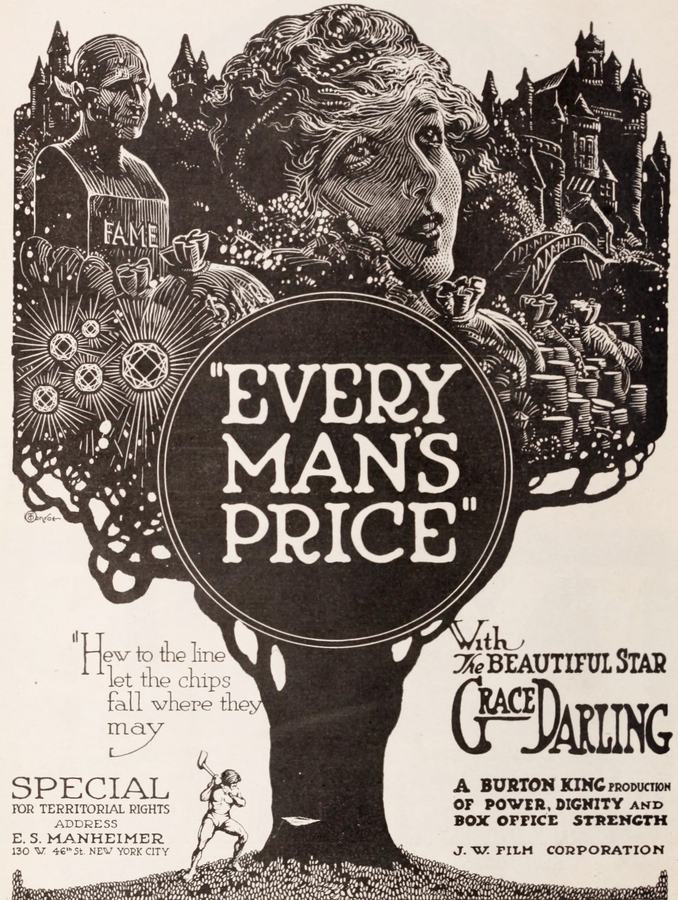
Director's Spotlight: United States
A Deep Dive into the 1921 Vision of Burton L. King
Deciphering the layers of Everyman's Price (1921) reveals a monumental shift in Crime filmmaking spearheaded by Burton L. King. With its avant-garde structure and atmospheric tension, offering layers of thematic complexity that demand repeated viewing.
In Everyman's Price, Burton L. King pushes the boundaries of conventional narrative. The film's unique approach to its subject matter has sparked endless debates and interpretations among cinephiles and critics alike.
To fully appreciate Everyman's Price, one must consider the cinematic climate of 1921. During this period, United States was undergoing significant artistic shifts, and Burton L. King was at the forefront of this Crime movement, often challenging established norms.
| Cinematography | Noir-Inspired |
| Soundtrack | Experimental |
| Editing | Elliptical |
| Art Direction | Expressionist |
Visualizing the convergence of Burton L. King's style and the core Crime narrative.
District Attorney Bruce Steele is concerned about the extent of profiteering in foodstuff. He assigns men to investigate the problem, then dashes off to propose marriage to Ethel Armstrong, who accepts him, but later breaks the engagement when the investigators report that her father, financier Henry Armstong, is one of the profiteers. Bruce interrupts Ethel's father's trial, dismissing the case for lack of evidence. Grateful, Mr. Armstrong arranges to get Bruce and Ethel together again by a plot involving his son and Bruce's brother in a forgery case. The plot proves successful, everyone involved is proven innocent, Henry Armstrong releases the food he has kept from the market, and Bruce and Ethel rediscover their love.
Decades after its release, Everyman's Price remains a vital piece of the cinematic puzzle. Its influence can be seen in countless modern works, solidifying Burton L. King's status as a master of the craft in United States and beyond.