
DbcultAccessing Vault...
Director's Spotlight
Senior Film Conservator
Director's Spotlight: United States
A Deep Dive into the 1920 Vision of Burton L. King
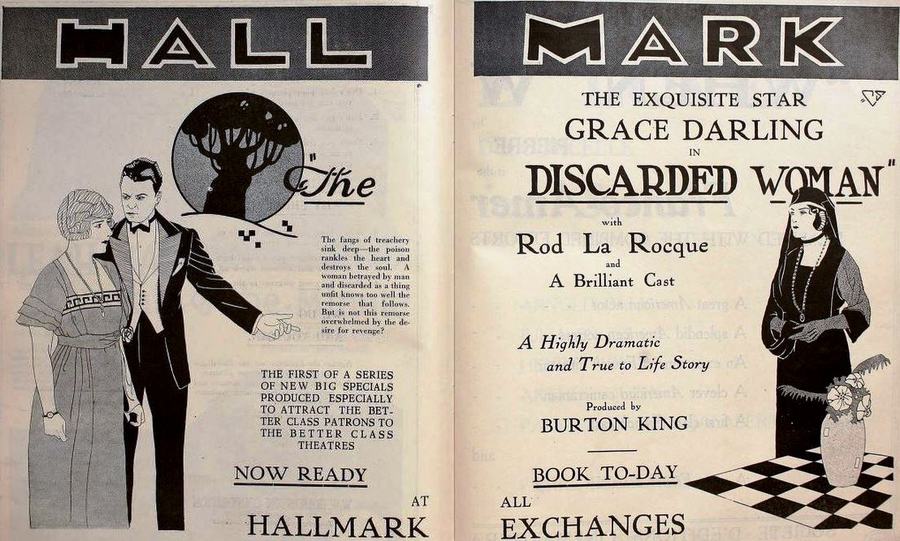
As we revisit the 1920 masterpiece The Discarded Woman, we are struck by the meticulous attention to detail that Burton L. King applied to every frame. Anchored by a narrative that is both personal and universal, it bridges the gap between traditional Drama and contemporary vision.
In The Discarded Woman, Burton L. King pushes the boundaries of conventional narrative. The film's unique approach to its subject matter has sparked endless debates and interpretations among cinephiles and critics alike.
| Cinematography | Handheld |
| Soundtrack | Minimalist |
| Editing | Slow-Burn |
| Art Direction | Brutalist |
Visualizing the convergence of Burton L. King's style and the core Drama narrative.
When Martin Wells tires of his wife Esther, he boards a train with her and then deserts her. When Esther discovers that she has been "discarded," she leaves the train and comes upon the cabin of Samuel Radburn, who soon returns home drunk and attacks her. After he falls asleep, Esther escapes. Later Radburn goes to New York, searching for Martin Wells's wife to deed her half the gold mine that he held jointly with the now-deceased Wells. Radburn meets the pregnant Esther there, and believing that she is carrying his child and unaware of her true identity, he marries her. They are content until the Graeber gang, in an attempt to secure control of the Wells's mine, blackmails Esther with the threat of exposing her true identity. Esther finally confesses to Radburn, who forgives her, and all ends happily.
Decades after its release, The Discarded Woman remains a vital piece of the cinematic puzzle. Its influence can be seen in countless modern works, solidifying Burton L. King's status as a master of the craft in United States and beyond.