
DbcultAccessing Vault...
Director's Spotlight
Senior Film Conservator
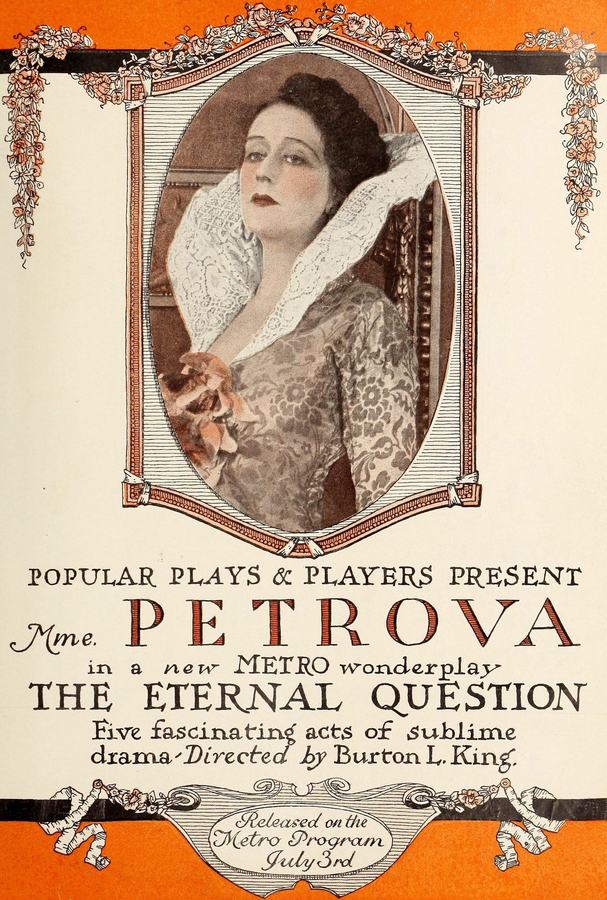
Director's Spotlight: United States
A Deep Dive into the 1916 Vision of Burton L. King
Under the meticulous guidance of Burton L. King, The Eternal Question became the cultural zeitgeist captured so perfectly by Burton L. King in 1916. Driven by an uncompromising commitment to cult excellence, it remains a vital reference point for anyone studying the evolution of Burton L. King.
In The Eternal Question, Burton L. King pushes the boundaries of conventional narrative. The film's unique approach to its subject matter has sparked endless debates and interpretations among cinephiles and critics alike.
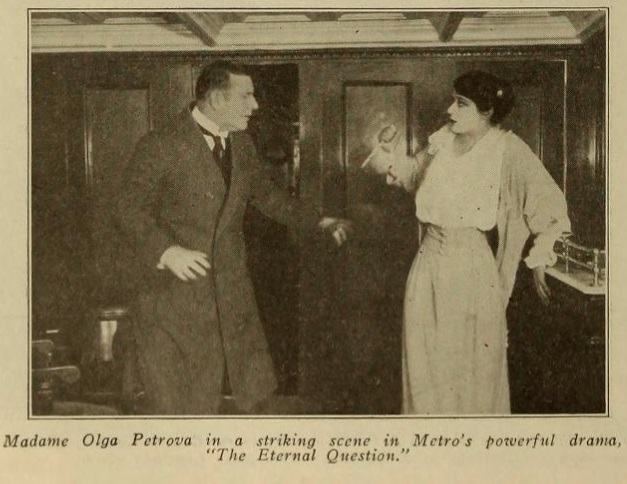
While deeply rooted in United States, The Eternal Question has achieved a global reach, influencing directors from various backgrounds. Its ability to translate cult tropes into a universal cinematic language is why it remains a cult staple decades after its 1916 release.
| Cinematography | Static |
| Soundtrack | Synth-Heavy |
| Editing | Disjunctive |
| Art Direction | Baroque |
Visualizing the convergence of Burton L. King's style and the core cult narrative.
Ralph Courtland and Pierre Felix are sitting in their Fifth Avenue Club discussing the eternal question, woman. Ralph contends that it is birth and breeding that make the gentlewoman, but Felix, who is a designer of fashionable apparel, claims in three months he can make a lady of any one he may happen to pick up on the street, simply by dressing her properly. An old organ-grinder and a young woman, leading a monkey by a string, stop in front of the club to gather some pennies, and Ralph and Felix decide to make her the subject of the test. The wager is for $25,000 and expenses and stakes are placed with Allen Tait, a young lawyer. Ralph goes to California, where his aeroplane is to be entered in a race, and Pierre, fitting out Bianca with beautiful clothes and installing her in a handsome apartment, begins his experiment. Bianca wears her new garments as if born to the purple, and is soon introduced to society at a charity ball and bazaar given by Ralph's mother, Pierre introducing her as a Russian Countess. Ralph returns in time to meet her, and not knowing her identity, is delighted with her. He pays her so much attention that Pierre's jealousy is aroused. Pierre, maddened by her exotic beauty attempts to embrace her, when he escorts her to her new apartments after the ball. She is so infuriated that she returns at once to the old organ-grinder. Pierre apologizes profusely, and persuades her to return, so that he may win the wager. Ralph and Bianca spend a great deal of time together. They are out horseback riding when Ralph's horse becomes frightened and he is thrown. Bianca is so overcome with fear that she rushes to him and pours forth her love in a torrent of words. Ralph is not badly hurt, and returning to consciousness, hears her and is overjoyed. He proposes marriage to her, and she accepts at once. Later Pierre reminds Ralph that he has lost the wager, since Bianca has been accepted by society. Ralph's affairs are in a precarious condition, and this threatens to ruin him. Then Bianca tells him her real identity. She is the daughter of the King of Montenaro. Being ordered to marry the Grand Duke Seridan, she has escaped to America, taking Carlo, an old servant, with her. Ralph rushes back to the club and prevents Allen from paying over the money to Pierre, since he is the one who has lost. Pierre, infuriated, vows revenge. He hurries to Bianca and forces her into an automobile. The Grand Duke has come in search of her, and Pierre promises to deliver Bianca to him. He takes her to the Duke's ship, which is in the harbor. Ralph, who has been notified by Bianca's maid that her mistress has been kidnapped, at once follows in his aeroplane, and Allen Tait gets into communication with the government officials to have the ship stopped within the three-mile limit. A cruiser is sent after the boat and stops it, but not before Ralph has dropped to the deck from his airship and fought his way to Bianca. Their immediate marriage puts a stop to further persecution from the Grand Duke.
Decades after its release, The Eternal Question remains a vital piece of the cinematic puzzle. Its influence can be seen in countless modern works, solidifying Burton L. King's status as a master of the craft in United States and beyond.