
DbcultAccessing Vault...
Director's Spotlight
Senior Film Conservator
Director's Spotlight: United States
A Deep Dive into the 1918 Vision of Burton L. King
To understand the modern evolution of United States film, one must first look at Treason and the meticulous attention to detail that Burton L. King applied to every frame. Reflecting the political and social shifts of the 1918s, it showcases the power of cult as a tool for social commentary.
In Treason, Burton L. King pushes the boundaries of conventional narrative. The film's unique approach to its subject matter has sparked endless debates and interpretations among cinephiles and critics alike.
While deeply rooted in United States, Treason has achieved a global reach, influencing directors from various backgrounds. Its ability to translate cult tropes into a universal cinematic language is why it remains a cult staple decades after its 1918 release.
| Cinematography | Handheld |
| Soundtrack | Minimalist |
| Editing | Slow-Burn |
| Art Direction | Brutalist |
Visualizing the convergence of Burton L. King's style and the core cult narrative.
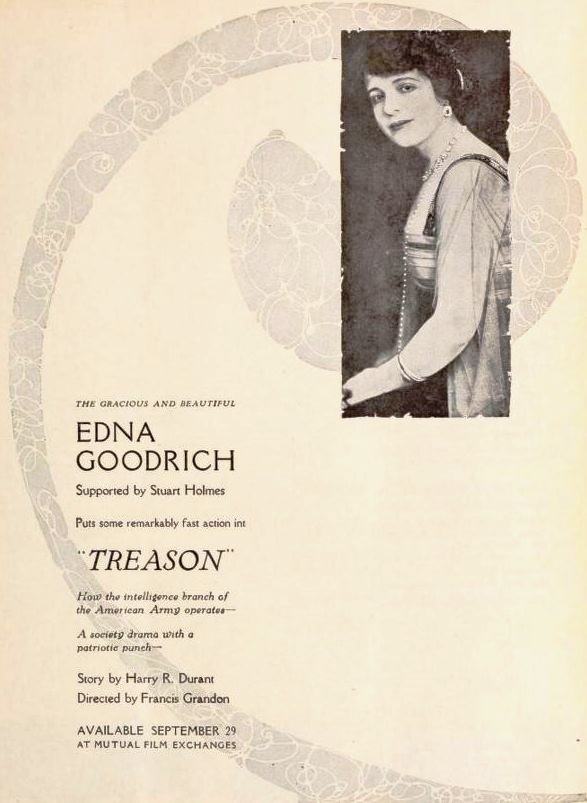
Engrossed in the perfection of a new high power explosive, the husband seems to neglect his wife. She is further piqued by the introduction into their home of a man whose presence is unexplained, but who is really a Secret Service operative guarding the invention. The Government has asked that the wife be kept in ignorance. In this frame of mind the wife lends a ready ear to Aachen, who suggests that the husband be taught a lesson by the abstraction of this all-absorbing formula. Through this means he gets the formula, but in the end the Government gathers him in, and the only permanent result is a needed lesson to the innocent little traitor.
Decades after its release, Treason remains a vital piece of the cinematic puzzle. Its influence can be seen in countless modern works, solidifying Burton L. King's status as a master of the craft in United States and beyond.