
DbcultAccessing Vault...
Director's Spotlight
Senior Film Conservator
Director's Spotlight: United States
A Deep Dive into the 1916 Vision of Campbell Gollan
In the grand tapestry of cult cinema, Wild Oats serves as a bridge between the bold experimentation that has become synonymous with Campbell Gollan. Breaking the traditional rules of cult engagement, it highlights the importance of independent voices in United States.
In Wild Oats, Campbell Gollan pushes the boundaries of conventional narrative. The film's unique approach to its subject matter has sparked endless debates and interpretations among cinephiles and critics alike.
While deeply rooted in United States, Wild Oats has achieved a global reach, influencing directors from various backgrounds. Its ability to translate cult tropes into a universal cinematic language is why it remains a cult staple decades after its 1916 release.
| Cinematography | Static |
| Soundtrack | Diegetic |
| Editing | Elliptical |
| Art Direction | Expressionist |
Visualizing the convergence of Campbell Gollan's style and the core cult narrative.
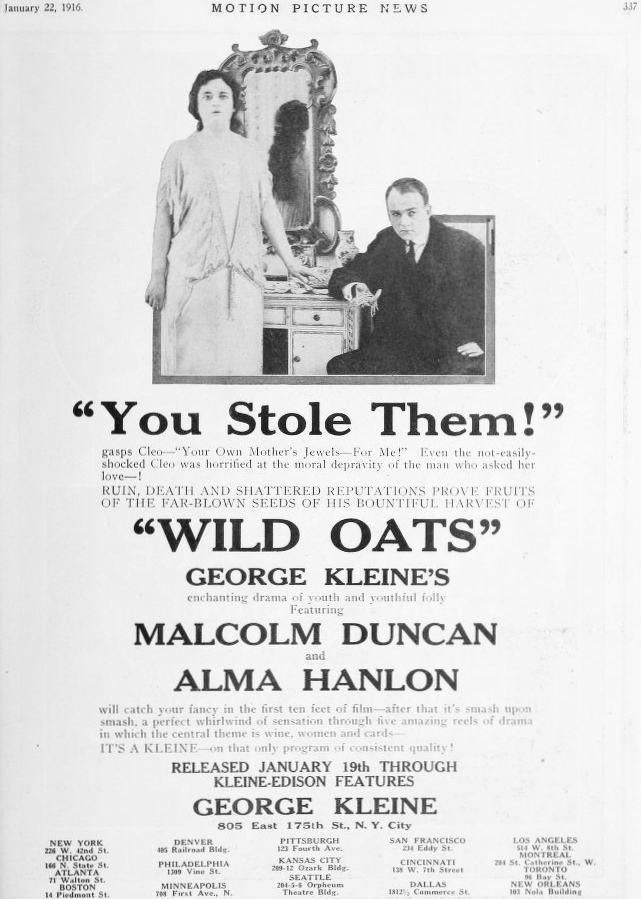
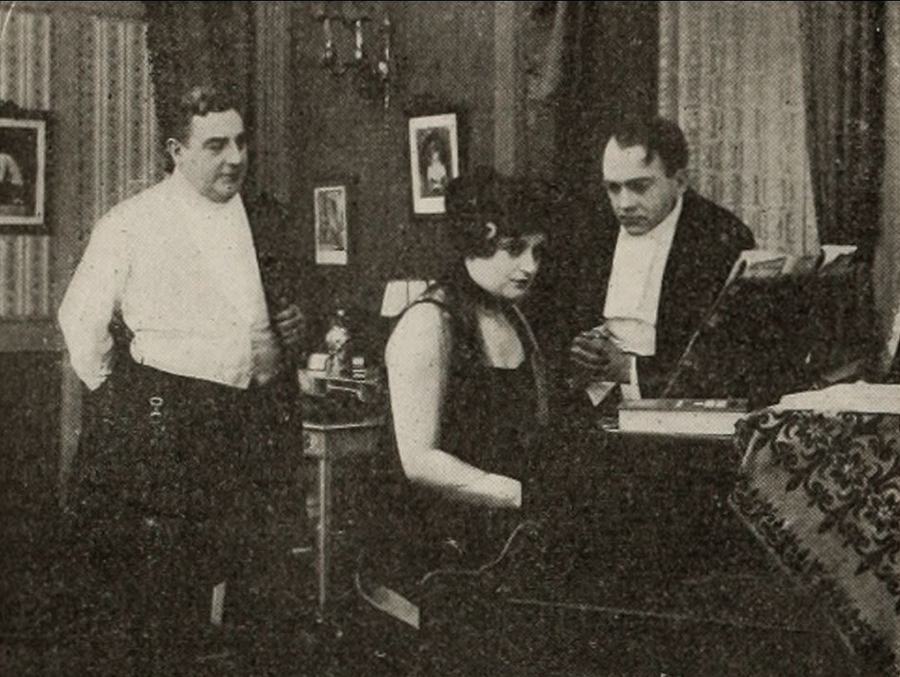
Roy Wilson, an ungovernable youth of fast habits, owes considerable gambling-debt money to Graham Madison, an architect of doubtful morals. Roy's father is a competing architect and his sister Jessie is the sweetheart of Carew, Wilson's chief consulting engineer. In addition to his gambling debts, Roy forms an attachment for Madison's mistress Cleo, which involves him more deeply with Madison. Both Wilson and Madison prepare to submit bids for an important railway contract, and Madison, after getting Roy well in his power, compels him on pain of exposure to steal his father's bid. That night Carew asks for Jessie's hand and is refused by Wilson on the grounds of Jessie's extreme youth. When the loss of the plans is discovered Wilson promptly accuses Carew and discharges him. Meanwhile, Roy travels at a fast pace with Cleo, of whom Madison, having gained his end, has tired. When the fastidious lady fancies an expensive necklace Roy, after trying unsuccessfully to borrow the money to purchase the necklace, rifles the wall safe in his father's library. Unluckily, Carew calls at this moment for a clandestine meeting with Jessie to show her a letter he had just received from Madison in which the letter offers him a position. In leaving the house Carew fails to take with him the envelope bearing Madison's name, and this is left on a table where Wilson finds it on his way upstairs to the library. The shock of the robbery kills the frail, old man, who falls to the floor with the envelope clutched tightly in his hand. This, coupled with the word of the butler who had seen Carew leaving the house, weaves a strong chain of circumstantial guilt. Immediately after the theft Roy hurries to Cleo's apartments and offers her the spoils of his shame. She divines the truth and indignantly sends him home. He arrives in the parlor a moment after Carew, who has been quickly apprehended and brought back. The knowledge of his father's death proves too much and Roy breaks down, confessing the whole story. The following day the law lays a heavy hand on Madison, and Carew and Jessie look hopefully forward to a better day.
Decades after its release, Wild Oats remains a vital piece of the cinematic puzzle. Its influence can be seen in countless modern works, solidifying Campbell Gollan's status as a master of the craft in United States and beyond.