
DbcultAccessing Vault...
Director's Spotlight
Senior Film Conservator
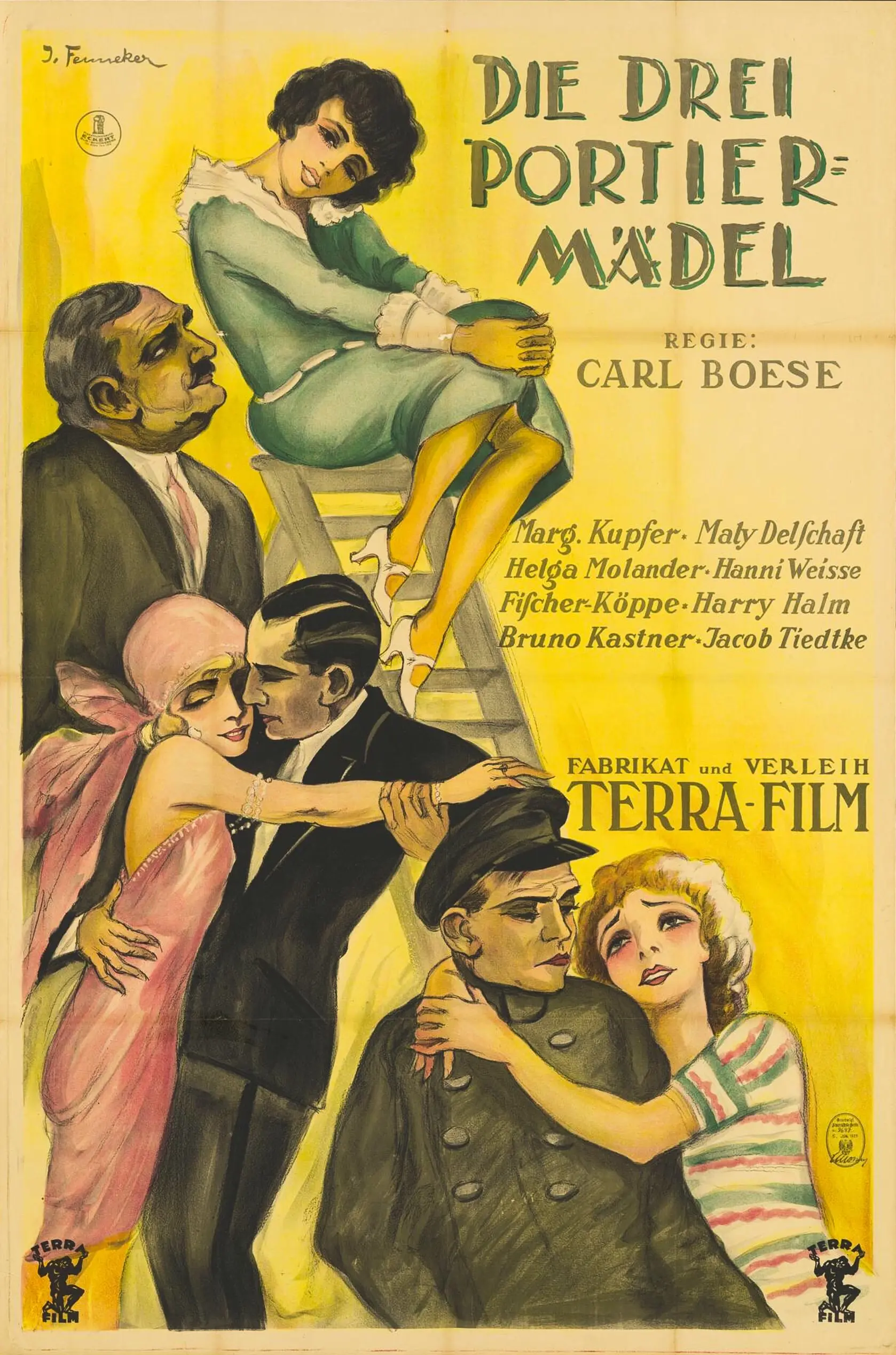
Director's Spotlight: Germany
A Deep Dive into the 1925 Vision of Carl Boese
Few works in Germany cinema carry the same weight as Die drei Portiermädel, especially regarding the cultural zeitgeist captured so perfectly by Carl Boese in 1925. Utilizing a 1925-specific aesthetic that remains timeless, it serves as a blueprint for future generations of cult directors.
In Die drei Portiermädel, Carl Boese pushes the boundaries of conventional narrative. The film's unique approach to its subject matter has sparked endless debates and interpretations among cinephiles and critics alike.
The visual language of Die drei Portiermädel is defined by its use of shadows and framing, a hallmark of Carl Boese's style. By utilizing a 1925-era palette, the film creates an immersive experience that perfectly complements its cult themes.
| Cinematography | Handheld |
| Soundtrack | Diegetic |
| Editing | Rhythmic |
| Art Direction | Naturalist |
Visualizing the convergence of Carl Boese's style and the core cult narrative.
A janitor has three daughters. Amelie is employed in the fashion shop of Leopold Siedentopf who seduces her, Annie works for a photographer and Martha is a launderer and is in love with Franz, a chauffeur who uses the boss's car to drive the three girls to work every morning. When he reports late to work one day, he clumsily tells his boss, Mr. Brandstetter, that he ran over a young girl. When he demands to see the victim, Franz introduces him to Annie and he falls in love with her. They soon get married. Annie's mother, who feels ashamed of her social condition, uses an apartment in her building whose lodgers are on vacation as her own when her son-in-law visits her and pretends she is the widow of a secret service agent. However, when Mr. Brandstetter surprises his chauffeur speaking too casually with his wife, not knowing that he is actually her brother-in-law, gets the wrong idea and Annie, upset with the whole thing, goes back to her mother's. Brandstetter decides to drown his sorrow and goes out to a party where, by chance, he meets Amelie and Martha. When Franz sees his girlfriend with his boss, he too gets upset. Annie and Martha are soon joined by Amelie at their mother's because she also left her husband who, it turns out, was unfaithful. The next day, Brandstetter comes back to the janitor's building where everything is explained. He embraces his new family. Franz and Martha make up and Amelie also finds happiness with Emil the bartender, an old flame of hers whom she always loved.
Decades after its release, Die drei Portiermädel remains a vital piece of the cinematic puzzle. Its influence can be seen in countless modern works, solidifying Carl Boese's status as a master of the craft in Germany and beyond.