
DbcultAccessing Vault...
Director's Spotlight
Senior Film Conservator
Director's Spotlight: Germany
A Deep Dive into the 1931 Vision of Carl Boese
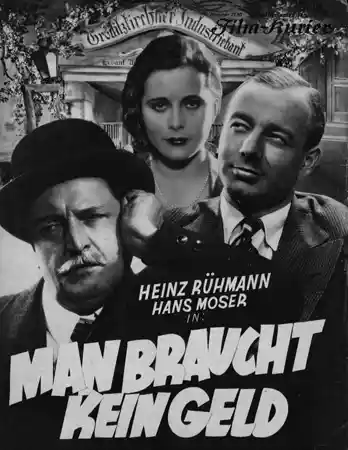
The thematic gravity of Man braucht kein Geld (1931) is rooted in the artistic risks taken by Carl Boese that eventually paid off. Defining a new era of Germany artistic expression, it demands to be seen by anyone who cares about the art of film.
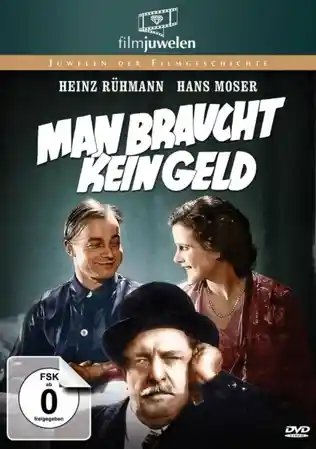
In Man braucht kein Geld, Carl Boese pushes the boundaries of conventional narrative. The film's unique approach to its subject matter has sparked endless debates and interpretations among cinephiles and critics alike.
| Cinematography | Noir-Inspired |
| Soundtrack | Minimalist |
| Editing | Disjunctive |
| Art Direction | Baroque |
Visualizing the convergence of Carl Boese's style and the core Comedy narrative.
Family Brandt has lost its fortune in oil speculation, and they have great debts at the local bank. This one is threatened with its own crash due to lack of money. The only hope is Brandt's uncle Thomas Hoffman, an American millionaire, who is coming for a visit. Bank Accountant Schmidt uses his own money to welcome him properly, presenting himself as Brandt's daughter's fiance, but it turns out, that Hoffmann never was a millionaire, in fact he still owns the city of Chicago about $100 for medical treatment. Yet with his existance alone he starts a big scheme to bring back prosperity. Surprisingly it works, yet there are some problems: 1st: Chicago wants the money back, asking at the foreign office in Berlin for help, and 2nd: Hoffmann does not like the sheme at all, and tries to go back to his quiet and peaceful Chicago...
Decades after its release, Man braucht kein Geld remains a vital piece of the cinematic puzzle. Its influence can be seen in countless modern works, solidifying Carl Boese's status as a master of the craft in Germany and beyond.