
DbcultAccessing Vault...
Film History
Senior Film Conservator
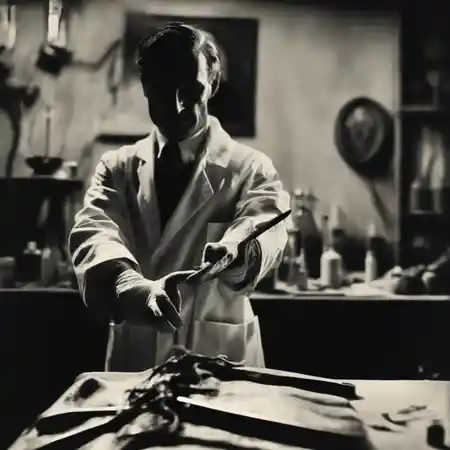
We like to think of body horror as a neon-soaked byproduct of the 1980s, a era of latex and corn syrup. But if you strip away the synth scores and the rubber appliances, the true roots of the genre lie in the silent era’s bone-deep anxiety about the malleability of the human frame. Long before the term 'body horror' existed, directors were playing with the idea that the soul is just an accidental tenant of a very fragile, very corruptible house of meat. This wasn't about monsters from space; it was about the anatomical arrogance of the modern age. We’re talking about the 'Surgical Gothic'—a forgotten niche where the operating table replaced the altar, and the doctor’s scalpel became the ultimate arbiter of morality.
Take a hard look at The Miracle Man (1919). While often remembered for Lon Chaney’s breakout performance, the film is a masterclass in the 'physical grotesque.' Chaney plays 'The Frog,' a character who can dislocate his limbs at will to play a pathetic, twisted beggar. This isn't just a gimmick. It’s a foundational moment for cult cinema because it treats the human body as a piece of performance art. The Frog isn't just a character; he is a biological lie. The scene where he 'cures' himself—snapping his limbs back into place in a grotesque display of theatrical healing—prefigures the bone-crunching transformations we would later see in werewolf cinema or modern body-modification horror.
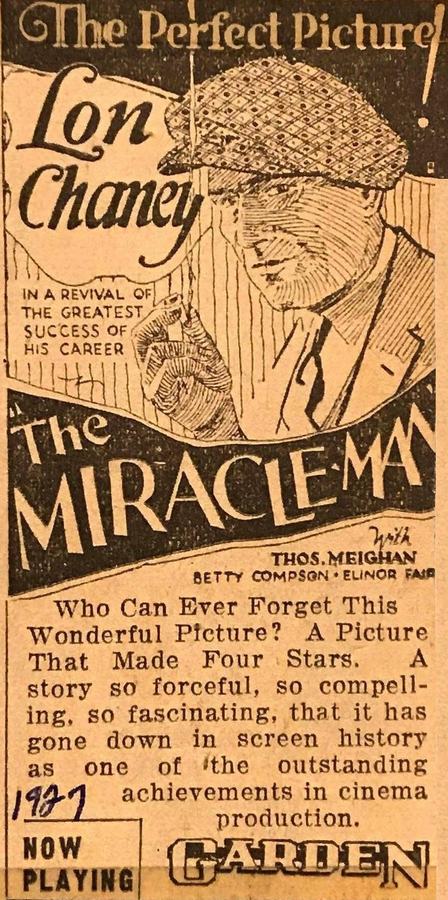
The brilliance of The Miracle Man lies in its cynicism. The gang of swindlers preys on the desperate need for physical salvation. It suggests that our obsession with 'wholeness' is our greatest weakness. In the cult lexicon, the 'broken' body is often more honest than the 'perfect' one. The Frog’s contortions are a visual manifesto for the transgressive: the idea that the skin is merely a costume to be stretched, folded, and rewritten. This is where the 'Gristle Gospel' begins. It’s the moment cinema realized that an audience would pay to see a man defy the natural geometry of his own skeleton.
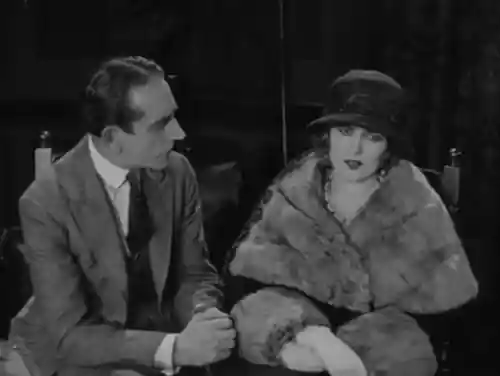
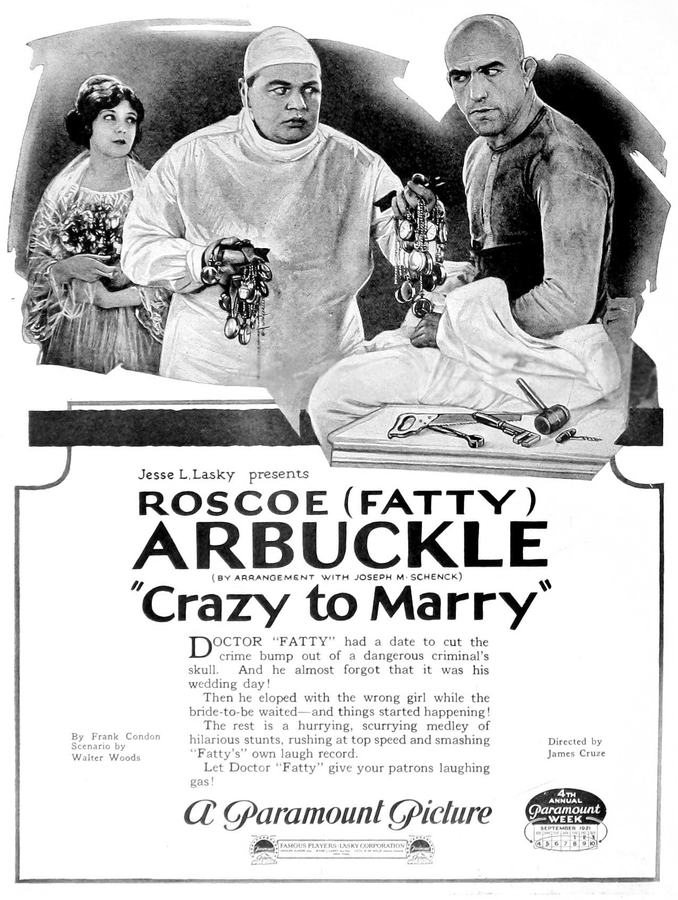
If Chaney was the face of the physical grotesque, then Crazy to Marry (1921) provided the ideological fuel. On its surface, it’s a comedy, but the central premise is pure nightmare fuel. Dr. Hobart Hupp believes he can cure criminals by surgery. He experiments on 'Dago Red,' a criminal promised freedom if the operation succeeds. This isn't just a plot point; it’s a terrifying reflection of the early 20th-century obsession with social engineering. The idea that morality is located in a specific lobe of the brain that can be sliced out is the quintessential 'Surgical Gothic' trope.

The silent era didn't need blood to be visceral; it used the clinical coldness of the gaze to make the viewer feel like a specimen on a slide.
Hupp’s surgical theatre is the ancestor of every 'mad doctor' laboratory in cult history. The film presents the body as a machine that can be tuned, but in doing so, it strips away the humanity of the patient. The 'operation' scenes in these films—often shot with a flat, documentary-like detachment—are far more unsettling than the over-the-top gore of the 80s. There is a specific, quiet horror in seeing a man in a lab coat decide that your personality is a surgical error. This is a debatable point, but I’d argue that Crazy to Marry is more 'body horror' than half of the slashers in the 1990s because it targets the autonomy of the mind through the violation of the flesh.
While the surgeons were busy with the scalpels, the urban environment was doing its own kind of damage. Asphalt (1929), Joe May’s masterwork of the Berlin underworld, treats the city itself as a biological pressure cooker. The 'psychological approach' May takes isn't about dialogue; it’s about the way the environment wears down the human spirit. The characters move through the shadows of Berlin like cells through a diseased organ. The visual style—heavy on shadows and the 'nitrate grime' of the street—suggests that the city is a living thing that feeds on the souls of its inhabitants.
Compare this to the way Journey into the Night handles its descent. Dr. Eigil Borne’s obsession with Lily, the cabaret dancer, is portrayed as a fever, a physical ailment. In silent cult cinema, love isn't a sentiment; it’s a parasite. The way Borne’s face changes throughout the film—becoming more gaunt, more haunted—is a physical manifestation of his internal decay. This is the 'Anatomy of the Unwanted.' The silent camera doesn't just record a performance; it records the slow erosion of a man’s identity. It’s a harsh, unforgiving look at how the 'civilized' man is just one bad decision away from the gutter.
We cannot talk about the roots of transgressive cinema without looking at Manon Lescaut. The religious father’s insistence that Manon enter a convent is the ultimate 'surgical' removal of a person from society. It’s a social lobotomy. The religious trauma depicted in early silent films often serves as a precursor to the body-horror obsession with 'purity' and 'corruption.' Manon’s body is a battleground between her father’s religious fanaticism and her own desires. The convent isn't a sanctuary; it’s a cage for the flesh.
This leads to a harsh truth: cult cinema has always been about the family as a failed experiment. Whether it’s the religious repression of Manon Lescaut or the inherited madness in The Twin Triangle, the silent era was fixated on the idea that we are doomed by our blood. Modern horror often tries to 'fix' its protagonists, but silent cult films were content to watch them burn. There is no redemption in these reels, only the cold comfort of the inevitable. This fatalism is the secret sauce of the midnight movie mindset.
Ultimately, the silent era’s obsession with the 'Physical Grotesque' and 'Surgical Gothic' wasn't a product of technical limitations, but of a genuine, deep-seated fear of the new century. We had discovered the atom, we were mapping the brain, and we were beginning to realize that the body was just another machine that could be hacked. Films like Crazy to Marry and The Miracle Man weren't just entertainment; they were warnings. They suggested that the more we 'improved' ourselves, the more we lost of our actual selves.
Is it debatable to say that silent cinema is the *only* true form of body horror? Perhaps. But consider this: in a silent film, you cannot talk your way out of your biology. You are what you appear to be. When the Frog contorts his spine, or when Dr. Hupp readies his scalpel, there is no dialogue to soften the blow. You are left with the image, raw and flickering on the nitrate. That is the essence of cult cinema—the refusal to look away when the body begins to fail. The 'Nitrate Scar' isn't just a flaw in the film; it’s a mark of the era’s brutal, beautiful honesty about the human condition. We are just meat and light, and the silent era was the first to show us exactly how that meat could be cut.