
DbcultAccessing Vault...
Deep Dive
Senior Film Conservator
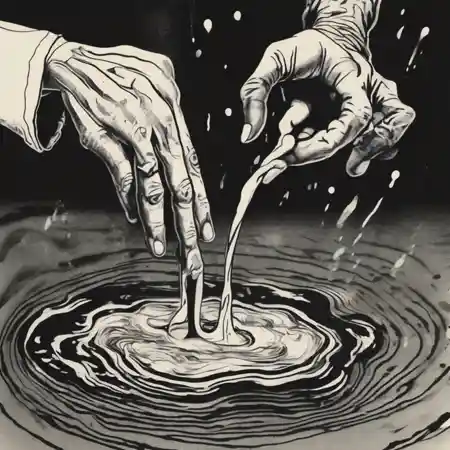
We need to talk about the ink. Not the pristine, digital lines of modern corporate entertainment, but the thick, unstable black fluid of the 1920s. If you watch a restored print of Ko-Ko's Haunted House (1928) or the chaotic frames of Rats in His Garrett, you aren't just seeing 'early cartoons.' You are witnessing the birth of the mechanical uncanny. In the decade of the Jazz Age, animators were less interested in making children laugh than they were in exploring the absolute dissolution of the human form. This wasn't whimsy. It was a high-speed, nitrate-fueled laboratory for what we would later call body horror.
Modern viewers often dismiss these shorts as 'cute' relics. They are wrong. There is a deep, resonant dread in the way a 1920s character can have their head flattened by a mallet, only for it to snap back into place with a sickening, liquid elasticity. This is the 'Rubber-Hose' style, and it is the most transgressive aesthetic in the history of the moving image. It suggests that the body is not a temple, but a malleable, disposable toy. When the artist in Ko-Ko's Haunted House creates a model house and begins tormenting Ko-Ko and Fitz with a 'ghost behind every door,' we are seeing the prototype for the 'slasher in the house' subgenre, but with a meta-textual cruelty that makes most modern horror feel safe.
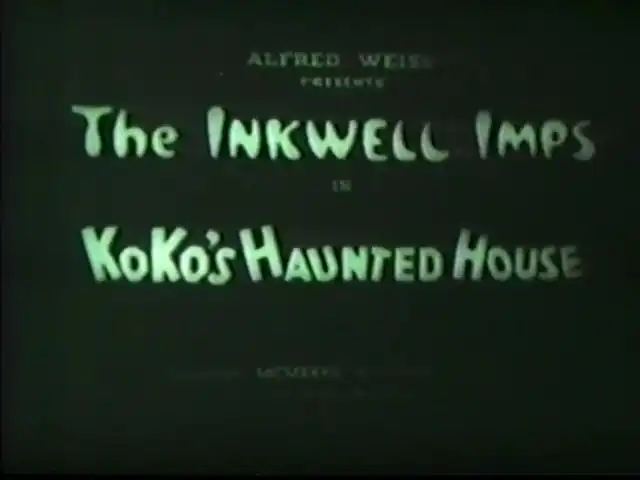
The recurring motif of the 1920s 'Out of the Inkwell' series is the creator’s hand reaching into the frame. This isn't just a clever trick; it’s an existential threat. In Ko-Ko's Haunted House, the artist’s hand is the ultimate antagonist. He builds the prison, populates it with spooks, and watches with detached amusement as his creations suffer. There is a specific scene where Ko-Ko is literally erased and redrawn to suit the artist's whim. This isn't comedy. It’s a depiction of total loss of agency. It mirrors the anxieties of the post-WWI era, where the individual was just a cog in a massive, uncaring industrial machine.
Compare this to the way we view 'torture porn' today. While a film like Hostel focuses on the physical pain of the victim, these 1920s shorts focus on the ontological horror of being a drawing. If your physical form can be altered by a giant eraser, do you even exist? Rats in His Garrett takes this further, using the claustrophobia of a pest-infested room to mirror a mental breakdown. The rats aren't just animals; they are manifestations of a shifting, ink-stained reality that refuses to remain stable.
The 1920s animator didn't want to show you the world as it was; they wanted to show you how easily the world could be liquidated.
Take a look at Jungle Jazz (1927). On the surface, it’s a standard musical short featuring a dog and a cat. But look closer at the 'various weird animals' that capture the protagonists. These creatures don't follow the laws of biology. They are chimeric, their limbs stretching and snapping in ways that suggest a total breakdown of the natural order. When they are 'set upon' by the locals, the violence is rhythmic and hypnotic. The music doesn't soften the blow; it turns the mutilation into a ritual.
This leads me to a debatable opinion: 1920s animation is more authentically surrealist than the works of Salvador Dalí. While Dalí’s dreamscapes are carefully composed and static, the world of Frolics at the Circus (1926) is in a constant state of violent flux. Felix the Cat helping a trainer catch a mouse that chased away an elephant isn't a simple gag. It’s a subversion of power dynamics through physical impossibility. The mouse is the predator; the giant is the victim. The 'frolics' are actually a series of escalating traumas where the very concept of scale is weaponized against the viewer.
We often talk about 'man vs. machine' in the context of The Terminator or The Matrix, but the 1920s short Off His Trolley (1924) got there first. The competition between the jitney bus and the trolley car involves lifting passengers with a derrick. This is mechanical violation. The human body is treated as cargo, a weight to be shifted by cold, iron arms. There is no dignity in this slapstick; there is only the terrifying efficiency of the machine.
Similarly, One Wild Ride (1925) features a taxi business using a horse to pull an engine-less Model T. When the horse is taken, the car becomes a gravity-driven death trap. Farina losing control as the car coasts down a hill is a sequence of pure, unadulterated panic. The comedy comes from the speed, but the horror comes from the lack of brakes. It is the ultimate metaphor for the 'roaring' twenties—a decade hurtling toward a cliff with no engine and no way to stop. The 'engine-less' car is a ghost, a mechanical shell that still functions as a vessel for destruction.
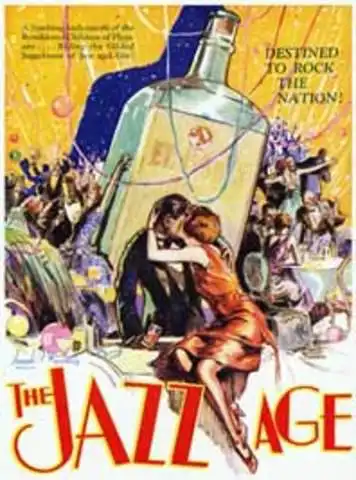
Here is another hard stance: The 'Disney-fication' of animation in the 1930s was a cultural lobotomy. By imposing strict rules of anatomy and 'believable' physics, the industry killed the experimental, nightmarish soul of the medium. The 1920s was a period where an animator could spend five minutes showing a cat's tail detaching itself to become a cane, or a clown's face melting into a pool of ink. This was the true 'wild frontier' of cinema, and it was far more honest about the fragility of the human condition than the polished features that followed.
When we look at Adam Raises Cain or The Wanderer and the Whoozitt, we are looking at the remnants of a lost language. It’s a language of distortion and discomfort. The 'Whoozitt' is a placeholder for the unknowable, a creature that defies categorization. This is the same impulse that drives the best cult cinema—the desire to see something that shouldn't exist, behaving in a way that shouldn't be possible. The 1920s didn't just give us Mickey Mouse; it gave us a blueprint for the grotesque that we have spent the last century trying to suppress.
The tragedy of these films is that so many are lost to time, their nitrate bases literally exploding or melting into vinegar. Jewelled Nights (1925), though a live-action drama, shares that same sense of 'lost' identity, with a high-society woman prospecting in the wilds of Tasmania disguised as a boy. This obsession with disguise, with the fluidity of the self, is the connecting thread between the live-action and animated cults of the era. If you can change your clothes, your gender, or your very species in a single frame, who are you?
We should stop treating 1920s animation as a historical curiosity. It is a warning. It is a reminder that under the skin of our reality, there is only ink and the whim of a creator who might just decide to erase us tomorrow. The next time you watch a modern horror film and feel like something is missing, go back to Ko-Ko. Go back to the inkwell. You’ll find the nightmare you’ve been looking for, waiting behind a door in a house that shouldn't exist.