
DbcultAccessing Vault...
Exploitation
Senior Film Conservator
Long before the grindhouses of 42nd Street started peddling skin and sin under the guise of 'documentary' truth, the silent era had already perfected the art of the hypocritical lure. We are told that early cinema was a time of Victorian restraint, a prim prelude to the real rebellion of the 1960s. That is a lie. If you look at the 'Social Hygiene' and 'Vice' films of the 1910s and 20s, you find the actual blueprint for every cult obsession that followed. These films didn't just show 'vice' to warn the public; they built a ritual out of the forbidden, creating a devotional audience that wanted to see the very things the title cards claimed to condemn.
The 1917 film The Innocent Sinner is a masterclass in this early bait-and-switch. The plot is simple: Mary Ellen Ellis leaves her wholesome country home for the city, lured by the promise of marriage, only to find herself trapped in an underworld milieu. The film postures as a warning against 'white slavery'—the great moral panic of the era—but the camera tells a different story. Director Raoul Walsh (though uncredited in some circles, the DNA is there) focuses on the grit of the city with a fascination that feels almost fetishistic.
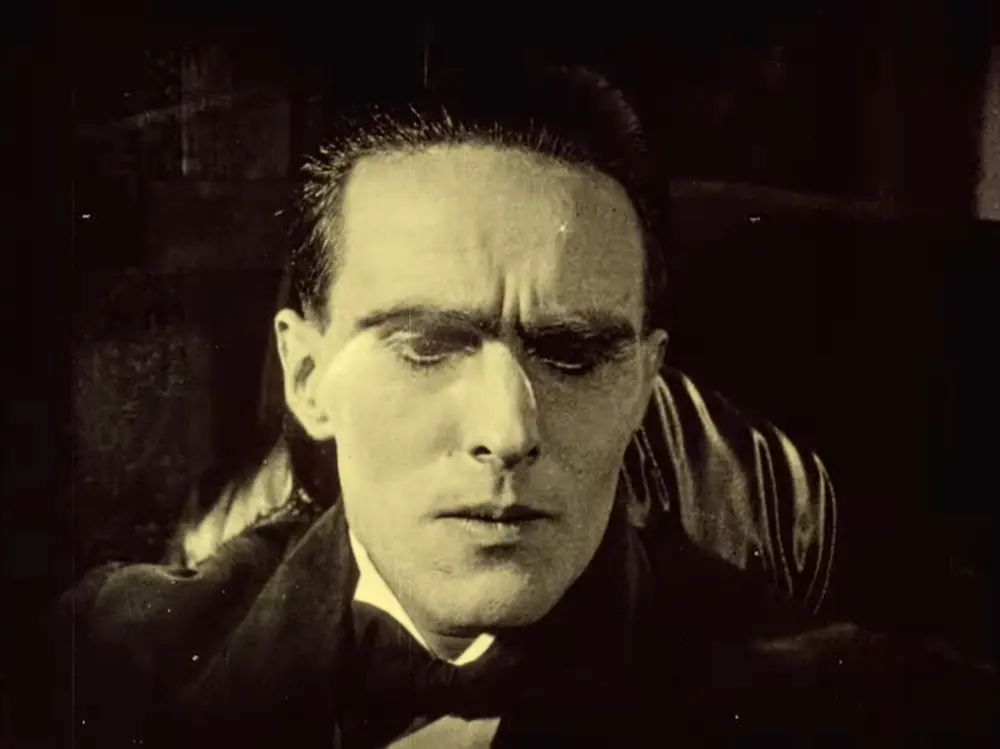
In the scenes where Mary Ellen is introduced to the 'underworld,' the lighting shifts from the flat, honest sun of the countryside to a high-contrast, shadow-heavy aesthetic that would later define noir. This wasn't accidental. It was the birth of the exploitation gaze. The audience wasn't there to learn how to avoid Walter Benton; they were there to see what a 'house of ill repute' looked like from the safety of a theater seat. This is the same logic that drove the success of The Streets of New York (1922), where the spectacle of a crippled Paul Fairweather and the blackmailing Badger provided a thrill that was purely voyeuristic. These films established a rule that cult cinema still follows: the more you condemn a behavior on screen, the more license you have to depict it in graphic detail.
If there is one figure who weaponized the 'educational' film into a tool of high-budget exploitation, it was Cecil B. DeMille. His 1928 film The Godless Girl is, quite frankly, a piece of reactionary trash masquerading as a spiritual awakening. It follows two teenagers—an atheist girl and a Christian boy—who are sent to a brutal reform school. DeMille uses the 'reform' setting to film scenes of physical abuse and psychological torture that would make a later-era women-in-prison director blush.

The reform school fire in 'The Godless Girl' isn't about the power of prayer; it is a calculated exercise in filming young bodies in distress for the maximum possible impact.
The debatable opinion here? DeMille was the first true exploitation mogul. He understood that if you put enough Bibles on screen, you could get away with filming almost anything. The sequence where the reform school burns down is shot with a terrifying, kinetic energy that ignores the 'moral' of the story to focus on the visceral horror of the trapped students. It is a proto-slasher aesthetic. The 'Godless' girl’s eventual conversion feels like a tacked-on excuse for the 80 minutes of cruelty that preceded it. This is the holy grail of the hypocrite's lens: the belief that suffering leads to salvation, which conveniently allows the director to film the suffering with glee.
While the city films focused on vice, another branch of early exploitation looked to the 'uncivilized' for its kicks. A Wild Girl of the Sierras (1916) is a bizarre outlier that prefigures the 'feral child' subgenre. A teenage girl living with grizzly bears in a cave is 'discovered' by a gambler, Jim Hamilton. The film attempts to play this as a clash of nature and corruption, but the real interest lies in the girl’s 'otherness.'
The scenes of the girl interacting with bears—actual bears, not men in suits—carry a tension that feels dangerously real. When Hamilton and his mistress try to sell her to a wealthy buyer, the film shifts into a critique of capitalism, but the camera stays glued to the girl's primitive reactions. It’s a recurring theme in silent cult: the exploitation of the 'natural' to titillate an audience that felt increasingly trapped by modern industrial life. It’s a direct ancestor to films like The Ramblin' Kid (1923), which used the rodeo and the 'doped' hero to create a spectacle of physical endurance and betrayal that went far beyond standard Western tropes.
To understand why these films are 'cult' and not just 'old,' we have to look at the audience rituals of the time. These weren't always screened in the grand movie palaces. Often, 'Social Hygiene' films were shown in rented halls, sometimes with 'men-only' or 'women-only' screenings to emphasize their supposedly 'dangerous' medical content. This created a sense of exclusivity and forbidden knowledge that is the very definition of cult fandom. Consider the following elements that defined these screenings:
Perhaps the darkest corner of this era is the war-time exploitation film. The Despoiler (1915) is a haunting example. Set in war-torn Europe, it features a Colonel seizing a town and an 'Emir of Balkania' threatening defeated soldiers to give up their money. The film uses the 'horror of war' to justify scenes of mass extortion and implied violence. Unlike the patriotic propaganda of later years, The Despoiler feels cynical. It treats the native troops and the defeated Europeans with a cold, almost clinical gaze.
The debatable opinion here? These films were actually more morally bankrupt than the 1970s exploitation boom. In the 70s, the audience and the filmmakers were in on the joke. They knew it was sleaze. In the 1910s, the filmmakers pretended they were doing God’s work while showing the same level of brutality. This 'moral insolvency' as I call it, creates a friction in the film that is deeply unsettling. It’s the same friction found in Our Better Selves (1919), where the 'loving' marriage of French nobility and an American idler is used as a springboard for a critique of aristocratic 'dissatisfaction' that is really just an excuse to show the decadence of the rich.
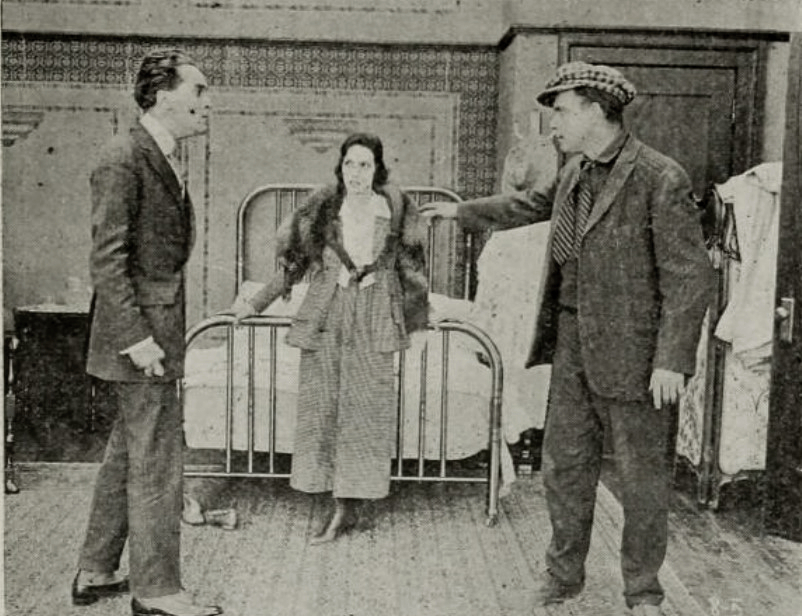
Finally, we must address the 'Society Girl' cycle, exemplified by High Heels (1921). Here, the 'vice' is simply frivolousness. Christine Trevor is a spoiled brat who ignores her family and lives for the party. When her father dies, she is forced into poverty. The film is a 'cautionary tale' about the dangers of neglect and self-centeredness, but its real heart is in the first two acts: the scenes of the Trevor family's indulgence.
The camera lingers on the expensive dresses, the 'idle' lifestyle, and the 'tolerated' father with a mixture of envy and disgust. This is the origin of the 'lifestyle' cult film. It’s the same energy as Ladies of Leisure (1926), where the pressure on Eric to marry the spoiled Marian is framed by a blackmail subplot and a dramatic suicide attempt. These films aren't about 'drama' in the classical sense; they are about the spectacle of a class of people destroying themselves. They offered the audience a chance to be both a judge and a voyeur, a duality that remains the core of the cult experience.
When we watch a film like One Night in Rome (1924), where a duchess flees to London after being accused of infidelity to become a 'fortune teller,' we are seeing the birth of the 'secret identity' cult protagonist. The duke's suicide note and the subsequent prince's denouncement are the kind of operatic, over-the-top plot points that we usually associate with 1960s melodrama or 1970s Giallo. But it’s all here, in the silent era, wrapped in the protective cloth of 'morality.'
The silent 'Social Hygiene' film is not a relic; it is a ghost that still haunts our cinema. It taught us that the best way to show something forbidden is to claim you are trying to stop it. It taught us that the 'underworld' is more interesting than the home. And it taught us that the audience is a creature of deep, dark curiosity that no amount of 'educational' lecturing can truly satisfy. If you want to understand the soul of cult cinema, stop looking at the 1970s. Look at the silent era's hypocrites. They were the ones who really knew how to show us what we weren't supposed to see.