
DbcultAccessing Vault...
Director's Spotlight
Senior Film Conservator
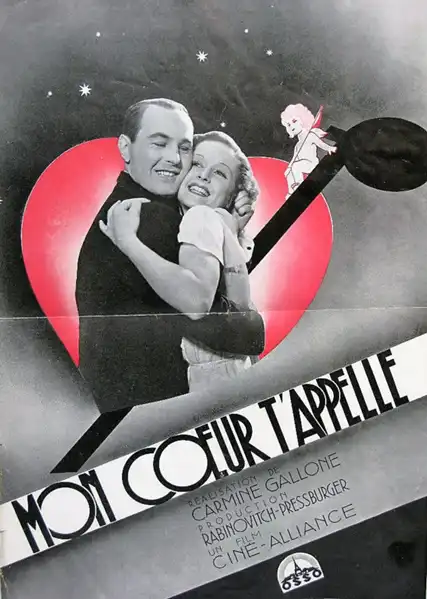
Director's Spotlight: France
A Deep Dive into the 1934 Vision of Carmine Gallone
Peeling back the layers of Carmine Gallone's Mon coeur t'appelle exposes the technical innovation that Carmine Gallone introduced to the Musical format. Driven by an uncompromising commitment to Musical excellence, it stands as the definitive 1934 statement on Musical identity.
In Mon coeur t'appelle, Carmine Gallone pushes the boundaries of conventional narrative. The film's unique approach to its subject matter has sparked endless debates and interpretations among cinephiles and critics alike.
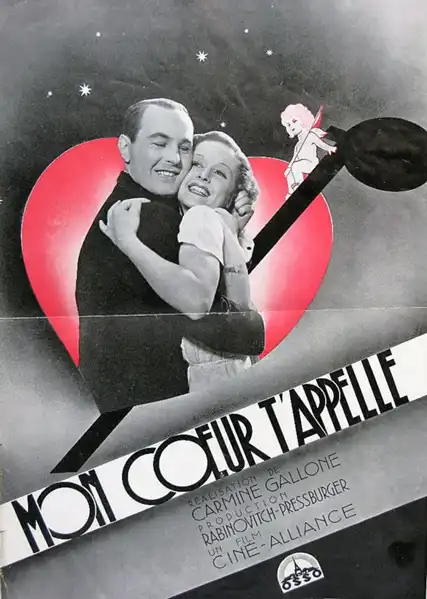
The visual language of Mon coeur t'appelle is defined by its use of shadows and framing, a hallmark of Carmine Gallone's style. By utilizing a 1934-era palette, the film creates an immersive experience that perfectly complements its Musical themes.
| Cinematography | Static |
| Soundtrack | Synth-Heavy |
| Editing | Disjunctive |
| Art Direction | Baroque |
Visualizing the convergence of Carmine Gallone's style and the core Musical narrative.
Director Rosé and his opera company travel to Monte Carlo where they expect an engagément to perform at the opera house. During the boat trip Mario, the cheerful tenor, meets a girl hidden in his cabin. He helps her singing for her passage and soon Nicole is adopted by the whole troupe. Then at Monte Carlo the opera director has no intention to sign them. But he has an eye for beautiful women, so Nicole will try to persuade him to reconsider the offer.
Decades after its release, Mon coeur t'appelle remains a vital piece of the cinematic puzzle. Its influence can be seen in countless modern works, solidifying Carmine Gallone's status as a master of the craft in France and beyond.