
DbcultAccessing Vault...
Director's Spotlight
Senior Film Conservator
Director's Spotlight: United States
A Deep Dive into the 1915 Vision of Charles Brabin
In the storied career of Charles Brabin, Vanity Fair stands as a the atmospheric immersion that Charles Brabin achieves throughout Vanity Fair. Reflecting the political and social shifts of the 1915s, it reinforces the idea that cinema is a medium of infinite possibilities.
In Vanity Fair, Charles Brabin pushes the boundaries of conventional narrative. The film's unique approach to its subject matter has sparked endless debates and interpretations among cinephiles and critics alike.
| Cinematography | Deep Focus |
| Soundtrack | Experimental |
| Editing | Elliptical |
| Art Direction | Expressionist |
Visualizing the convergence of Charles Brabin's style and the core cult narrative.
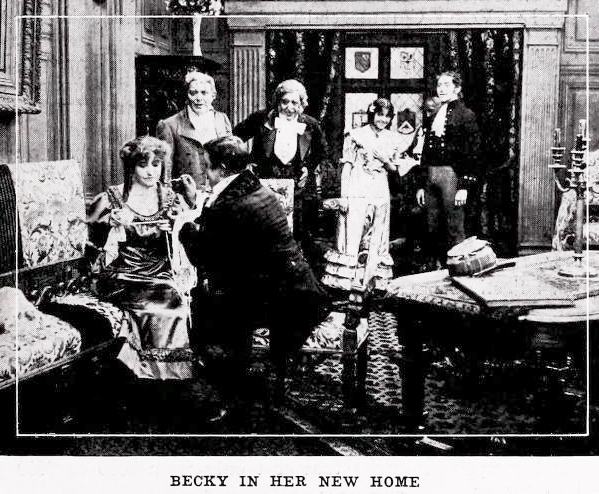
Becky, a child, is left an orphan by the death of her father and is consigned to the tender mercies of the Misses Pinkertons, who conduct a fashionable school for girls. Becky feels keenly the semi-charitable nature of her life, and, when kindly-hearted Amelia Sedley invites her home, she eagerly accepts. It is then that Becky, the child, becomes Becky, the adventuress, cold, calculating and selfish. With the entrance of Becky into the peaceful Sedley home comes misfortune. Sedley goes bankrupt. Old man Osborne promptly breaks the engagement between Amelia and his son, George. Becky lays her traps for Joseph Sedley, Amelia's brother, and nearly succeeds in her designs on that self-satisfied young man. Urged by his faithful friend, Captain Dobbin, George marries Amelia. This change throws Becky into new surroundings. She goes to Queen's Crawley and enters the most active sphere of her existence. Her adventures with old Pit Crawley, her marriage to Rawdon Crawley, their poverty Becky's flirtation with Lord Steyne and her subsequent separation from Rawdon, the Battle of Waterloo and the death of George Osborne are all faithfully portrayed incidents of Thackeray's novel.
Decades after its release, Vanity Fair remains a vital piece of the cinematic puzzle. Its influence can be seen in countless modern works, solidifying Charles Brabin's status as a master of the craft in United States and beyond.