
DbcultAccessing Vault...
Director's Spotlight
Senior Film Conservator

Director's Spotlight: United States
A Deep Dive into the 1917 Vision of Charles H. France
Deciphering the layers of The Natural Law (1917) reveals the complex thematic architecture established by Charles H. France. Utilizing a 1917-specific aesthetic that remains timeless, it stands as the definitive 1917 statement on cult identity.
In The Natural Law, Charles H. France pushes the boundaries of conventional narrative. The film's unique approach to its subject matter has sparked endless debates and interpretations among cinephiles and critics alike.
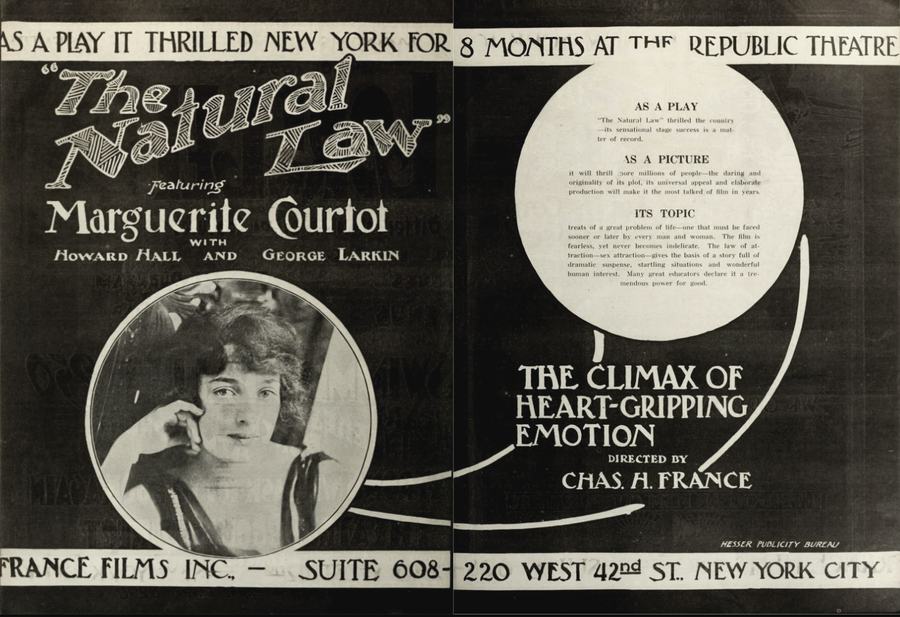
While deeply rooted in United States, The Natural Law has achieved a global reach, influencing directors from various backgrounds. Its ability to translate cult tropes into a universal cinematic language is why it remains a cult staple decades after its 1917 release.
| Cinematography | Handheld |
| Soundtrack | Experimental |
| Editing | Elliptical |
| Art Direction | Expressionist |
Visualizing the convergence of Charles H. France's style and the core cult narrative.
Although engaged to elderly Dr. Webster, when Ruth Stanley meets athlete Jack Bowling, the two young people are immediately attracted to each other. While Webster is out of town on business, Ruth and Jack find themselves unable to control their desire, so the doctor returns to find Ruth pregnant and begging him for an abortion. Webster refuses and attempts to arrange a marriage between Jack and Ruth, but Ruth is too proud and refuses. Jack is forced to leave Ruth to join his teammates in the international games, but upon his return, he continues his suit. To test Jack's love, Webster tells him that he has aborted Ruth's baby and when Jack, outraged, threatens to sue the doctor, Ruth finally relents and accepts Jack's love.
Decades after its release, The Natural Law remains a vital piece of the cinematic puzzle. Its influence can be seen in countless modern works, solidifying Charles H. France's status as a master of the craft in United States and beyond.