
DbcultAccessing Vault...
Film History
Archivist John
Senior Editor
We often think of the survivalist cult movie as a product of the 1970s—a gritty, sweat-stained reaction to the collapse of the American Dream. We point to the desert-bleached nihilism of Mad Max or the claustrophobic dread of The Texas Chain Saw Massacre. But as a historian who has spent decades digging through the nitrate graveyards of the 1920s, I can tell you that the true architecture of survivalism was built in silence. Long before Jigsaw put a reverse bear trap on a victim, silent filmmakers were already obsessed with the image of the 'human zoo.' They were fascinated by the moment a person is stripped of their social standing and reduced to a caged animal. This wasn't just entertainment; it was a visceral exploration of the fragile boundary between civilization and the savage self.
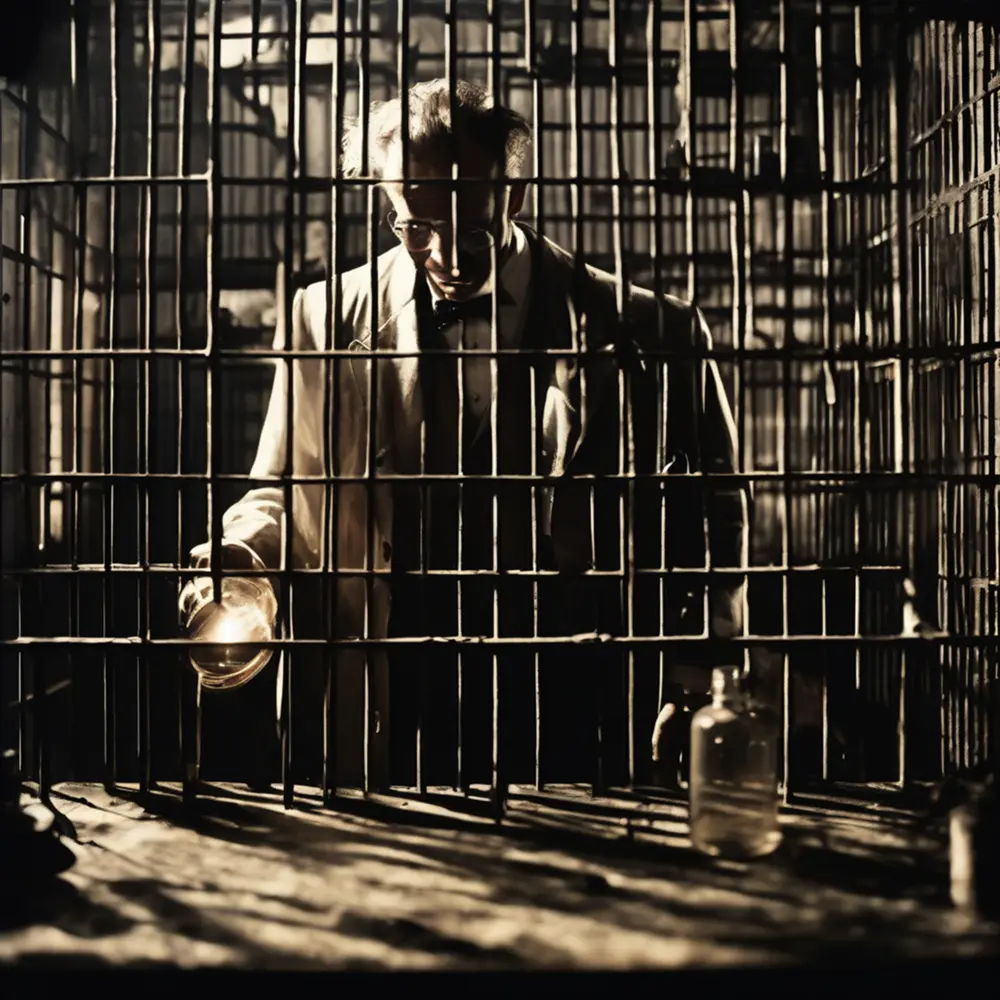
If you want to find the exact point where the survivalist cult film was born, you have to look at the 1925 short The Last Man. This film is a jarring, jagged piece of work that feels decades ahead of its time. The premise is pure nightmare fuel: a man and a woman are captured by a mad scientist who keeps them like caged animals in his personal zoo, hidden deep within the South American jungle. There is no grand philosophical debate here, only the raw, physical reality of captivity. The way the camera lingers on the bars and the panicked eyes of the captives is a direct ancestor to the modern 'escape room' horror genre.
In one particularly haunting scene, the captives are watched by the scientist while they eat, their movements becoming more animalistic as their hope fades. I would argue that this silent depiction of captivity is actually more terrifying than modern body horror. Without the distraction of dialogue or a complex musical score, the viewer is forced to sit in the silence of the cage. It taps into a primal fear of being 'un-humaned.' This film established the trope of the 'observer'—the villain who doesn't just want to kill, but wants to watch the human spirit break under the weight of isolation. It is the secret origin of the voyeuristic survivalism that now dominates cult cinema.
While The Last Man dealt with physical cages, William S. Hart’s 1925 masterpiece Tumbleweeds dealt with the cage of the horizon. Most people categorize this as a standard Western, but they are wrong. Tumbleweeds is a survivalist epic about the desperate, violent scramble for resources. The film’s centerpiece is the 1889 Cherokee Strip land rush, and it is filmed with a kinetic, terrifying energy that mirrors the modern 'Battle Royale' genre. When that gunshot rings out and the settlers charge forward, it isn't a heroic march; it is a frantic, life-or-death race for a claim.

Hart’s performance as Don Carver is steeped in a kind of rugged fatalism. He knows that the government is granting a fringe of terrain to those who can fight for it. The sequence where wagons shatter and horses collapse under the weight of the rush is a masterclass in chaotic survivalism. Here is an unconventional observation: the land rush in Tumbleweeds is the spiritual twin of the opening bloodbath in The Hunger Games. Both depict a society that has decided only the fastest and most ruthless deserve to survive. The 'fringe of terrain' becomes a purgatory where the law of the gun is the only law that remains. This film taught cult audiences that the wilderness isn't just a setting; it’s a character that demands a blood sacrifice.
Survivalism isn't always about escaping a jungle or a land rush; sometimes it’s about surviving the crushing weight of a social sentence. In the Swedish film Samhällets dom (The Judgment of Society), we follow Harald, a man who steals to pay a debt and is cast out of his world. After serving his prison sentence, he realizes that his old life is a corpse. He must travel to America to begin a new life—a literal 'rebirth' in a foreign land. This theme of the 'outcast seeking a new world' is a cornerstone of cult narratives, from the post-apocalyptic wanderer to the undercover fugitive.
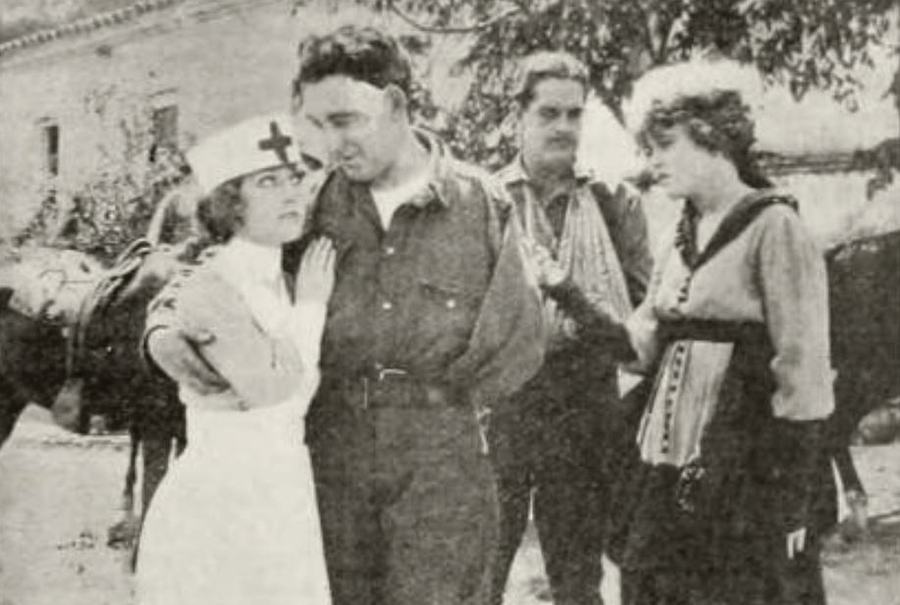
A similar thread runs through Desperate Trails, where Bart Carson goes to jail for a crime he didn't commit, all for the sake of a woman who has betrayed him. The scene where Bart realizes the depth of the deception while sitting in his cell is a brutal moment of psychological survivalism. My debatable stance here is that the 'Wrongly Accused' trope in silent film was far more cynical than its later iterations. In these early films, there is no guarantee of a happy ending or a cleared name. The survival is the reward itself. The character doesn't win back their reputation; they simply survive the ordeal and disappear into the shadows. This anonymity is the ultimate cult virtue—the ability to exist outside the system’s gaze.
We often ignore the domestic sphere when talking about survivalism, but the 1923 film A Woman's Woman proves that the home can be as much of a cage as any jungle zoo. Densie Plummer, after 20 years of being an unappreciated mother and wife, decides to open her own business. This isn't just a career move; it is a survivalist strike against the erasure of her identity. The 'strife' that follows with her husband and children is depicted with a cold, unforgiving lens. The film treats her family as an antagonistic force that she must overcome to remain 'alive' in a spiritual sense.
The silent era understood something that modern cinema often forgets: the most dangerous cages are the ones we build for ourselves through duty and expectation.
In one striking scene, Densie looks at her reflection and doesn't recognize the 'drudge' she has become. This moment of realization is the 'inciting incident' of her survival story. She isn't fighting a mad scientist or a rival settler; she is fighting the creeping rot of domestic boredom. This film is a radical pivot in early cinema, suggesting that the 'cult of the individual' starts with the destruction of the traditional family unit. It is a theme that would later be explored in cult classics like The Stepford Wives or Safe, but A Woman's Woman did it first, and did it with a sharper edge.
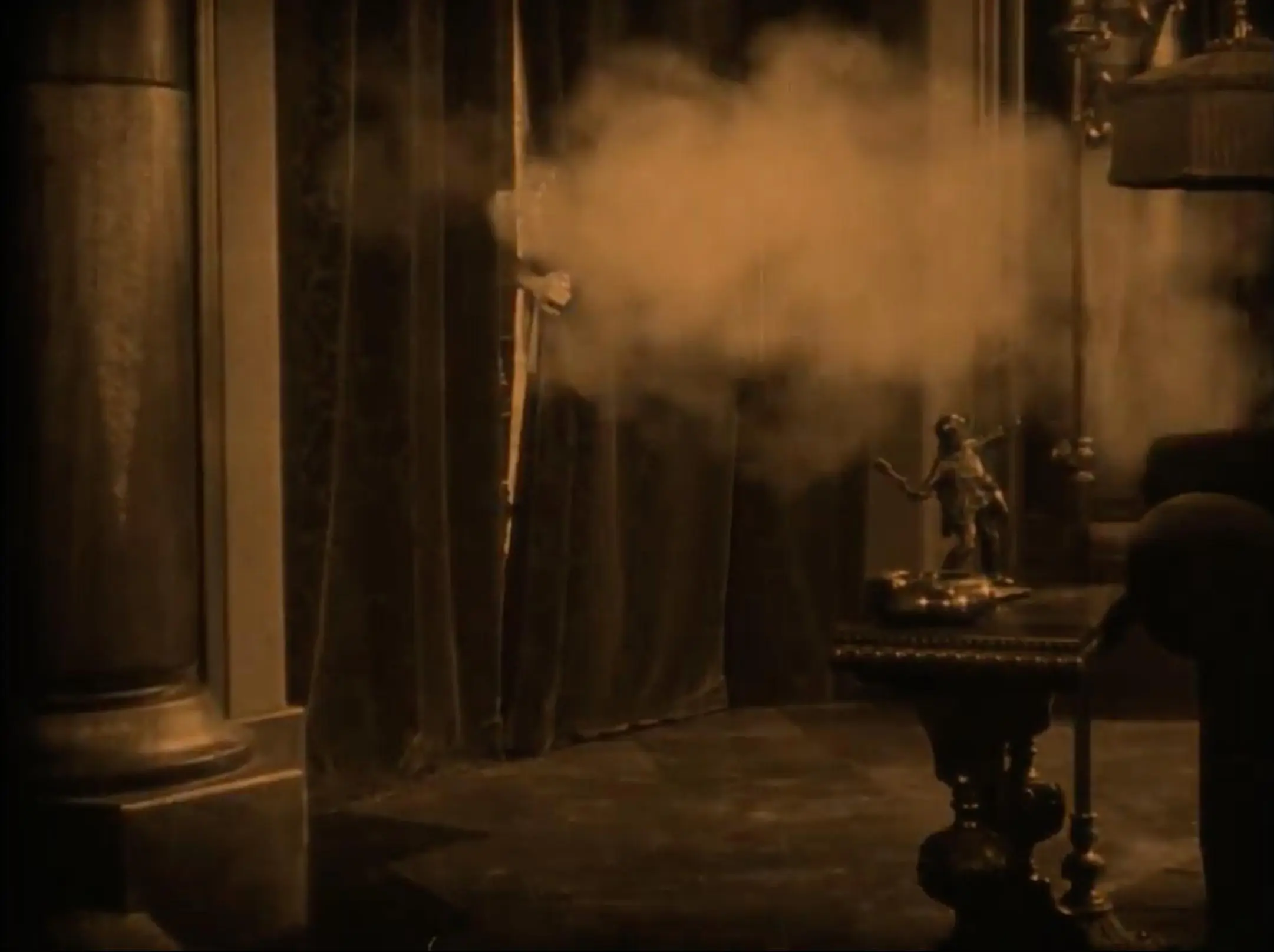
Finally, we must address the survival of the bloodline. In Die Ahnfrau, the long-dead ancestress of a noble family returns to haunt her descendants until the entire family line is extinguished. This is survivalism on a cosmic, generational scale. The last two descendants are trapped in a decaying castle, hunted by a ghost that represents their own history. The visual style of this film—heavy shadows, distorted perspectives, and a sense of inevitable doom—is the blueprint for the 'folk horror' survivalism we see today.

The scene where the ghost appears in the flickering candlelight to the remaining heirs is a masterclass in atmospheric dread. They aren't just trying to survive a spirit; they are trying to survive the sins of their ancestors. This is the ultimate survivalist nightmare: the realization that your own blood is the enemy. It’s a theme that resonates through the works of Ari Aster and Robert Eggers, but it was perfected in the nitrate flickers of the 1910s and 20s. The survival here is impossible, which is exactly why it holds such a powerful grip on the cult imagination. We watch to see how they fall.
The silent era was not a time of innocence. It was a time of profound anxiety about the human condition, expressed through stories of cages, land rushes, and social exile. Films like The Last Man and Tumbleweeds provided the visceral imagery and the moral ambiguity that would eventually define the midnight movie circuit. They taught us that survival isn't about winning; it’s about the endurance of the self when everything else has been stripped away. As we continue to obsess over survivalist narratives in our modern age of anxiety, we would do well to look back at these silent ghosts. They were the first to show us that even in the darkest cage, the human will to exist remains the most powerful spectacle on screen.