
DbcultAccessing Vault...
Director's Spotlight
Senior Film Conservator
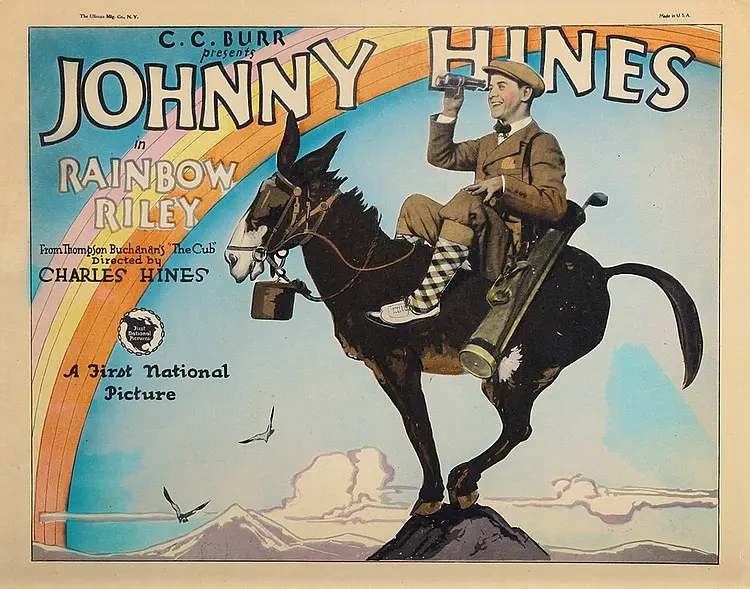
Director's Spotlight: United States
A Deep Dive into the 1926 Vision of Charles Hines
The thematic gravity of Rainbow Riley (1926) is rooted in the historical context that Charles Hines weaves into the Comedy fabric. Synthesizing the best elements of United States and international cinema, it highlights the importance of independent voices in United States.
In Rainbow Riley, Charles Hines pushes the boundaries of conventional narrative. The film's unique approach to its subject matter has sparked endless debates and interpretations among cinephiles and critics alike.
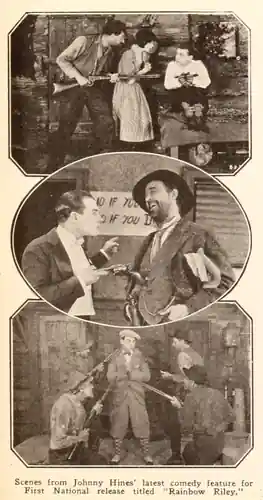
The visual language of Rainbow Riley is defined by its use of shadows and framing, a hallmark of Charles Hines's style. By utilizing a 1926-era palette, the film creates an immersive experience that perfectly complements its Comedy themes.
| Cinematography | High-Contrast |
| Soundtrack | Diegetic |
| Editing | Rhythmic |
| Art Direction | Naturalist |
Visualizing the convergence of Charles Hines's style and the core Comedy narrative.
Nerve lands "Rainbow" Riley a job as cub reporter on the Louisville Ledger. His first big assignment is to cover a feud in the Kentucky mountains between the Ripper and White clans. Thinking that the assignment is in the nature of a vacation, "Rainbow" provides himself with athletic equipment. Arrived at the scene of the hostilities, "Rainbow" is forced to declare his ability to use a boomerang as a weapon of defense instead of a sawed-off shotgun. Because "Rainbow" is in love with Alice Ripper, the village belle and sweetheart of Tilden McFields, known as the "killer" of the Ripper clan, he antagonizes the Rippers. Conversely because he cannot fall in love with Becky White, who loves him, he incurs the enmity of the White faction. Both sides set out to exterminate him. He elopes with Alice, sending a telegram to his newspaper stating that there is unprecedented danger in the mountains. The lovers, however, are captured by McFields, who releases "Rainbow" upon the girl's promise to renounce him. Later "Rainbow" rescues Alice by taking a precarious swing across a deep ravine on the end of a cable wire. Trapped by enraged feudists of both sides, "Rainbow" keeps them temporarily at bay by giving them a fusillade of golf, tennis and base-balls. Meanwhile the telegram telling of the unprecedented danger has been interpreted to read "president in danger," and the militia, and the air force hasten to the scene succoring "Rainbow" and Alice in the very nick of time. "Rainbow" the cub, returns to his paper not only with the biggest scoop of the feud that the paper has ever had, but also with the adorable Alice.
Decades after its release, Rainbow Riley remains a vital piece of the cinematic puzzle. Its influence can be seen in countless modern works, solidifying Charles Hines's status as a master of the craft in United States and beyond.